
 Download PDF
Market Overview
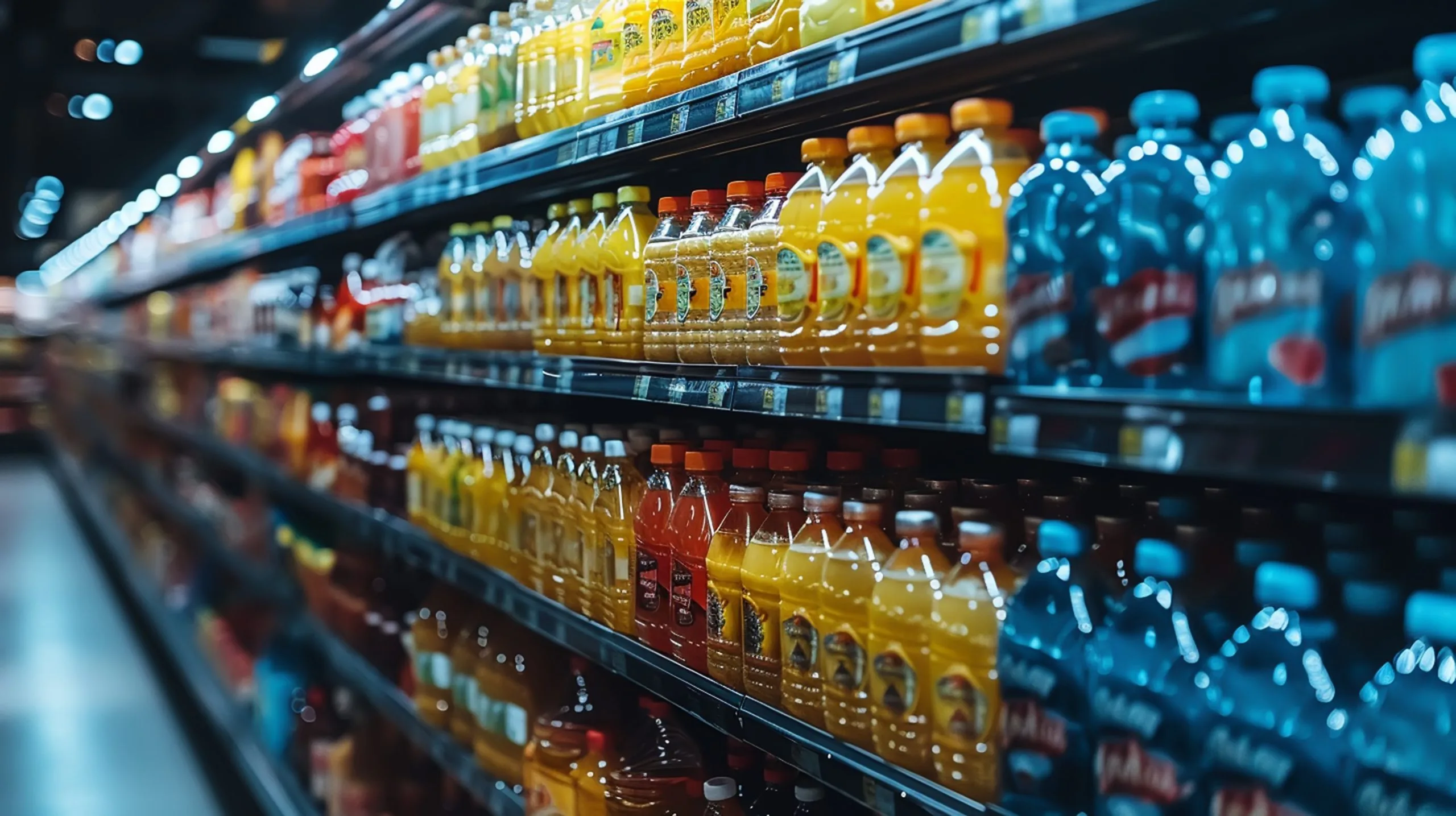
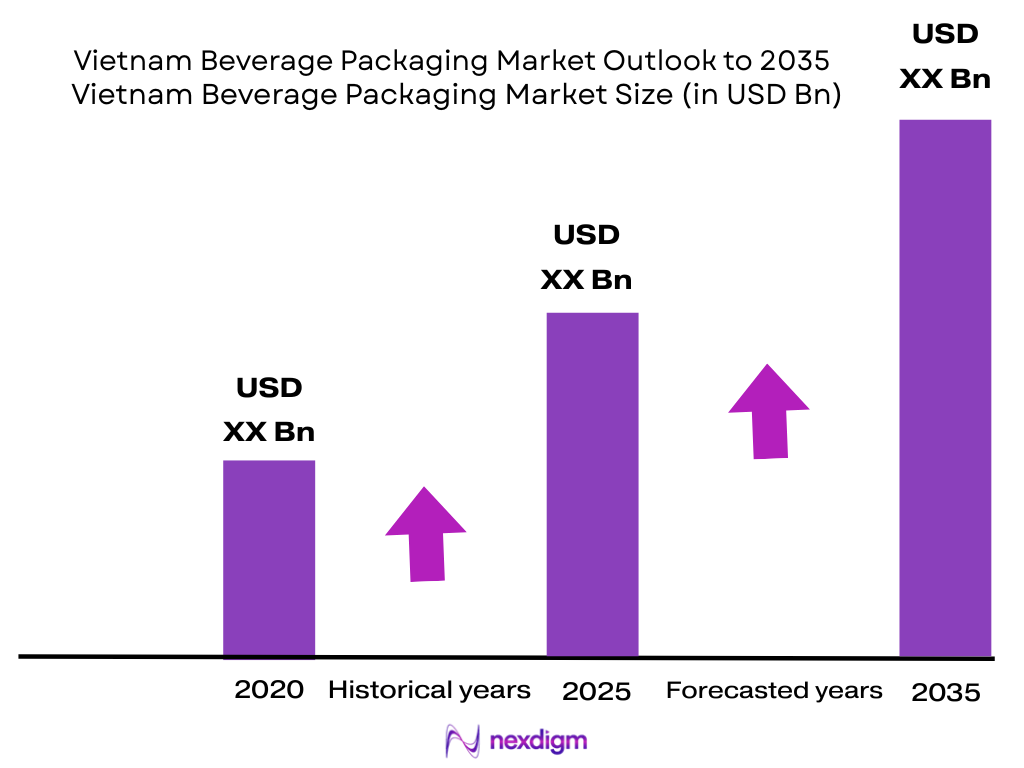
The Vietnam Beverage Packaging Market is valued at approximately USD ~ billion and is forecast to expand at a CAGR of % during 2026–2035. The two latest annual economic readings place nominal GDP at approximately USD 430 billion and USD 476 billion, while the population moved above 100 million people. Packaged water, beer, tea, coffee, dairy, juice, energy drinks and carbonated beverages support demand for PET bottles, cans, glass, cartons, closures, labels and secondary packaging. Ho Chi Minh City, Bình Dương, Đồng Nai, Long An, Hanoi, Bắc Ninh and Hải Phòng dominate Vietnam’s beverage-packaging ecosystem. Southern clusters combine major beverage fillers, PET converters, can manufacturers, carton plants, logistics parks and export infrastructure. Northern clusters serve dense consumer markets and manufacturing corridors connected to China and Hải Phòng Port. Đà Nẵng, Quảng Nam, Khánh Hòa and Cần Thơ provide regional capacity serving central Vietnam, tourism centres and the Mekong Delta.
Market Segmentation
By Packaging Material
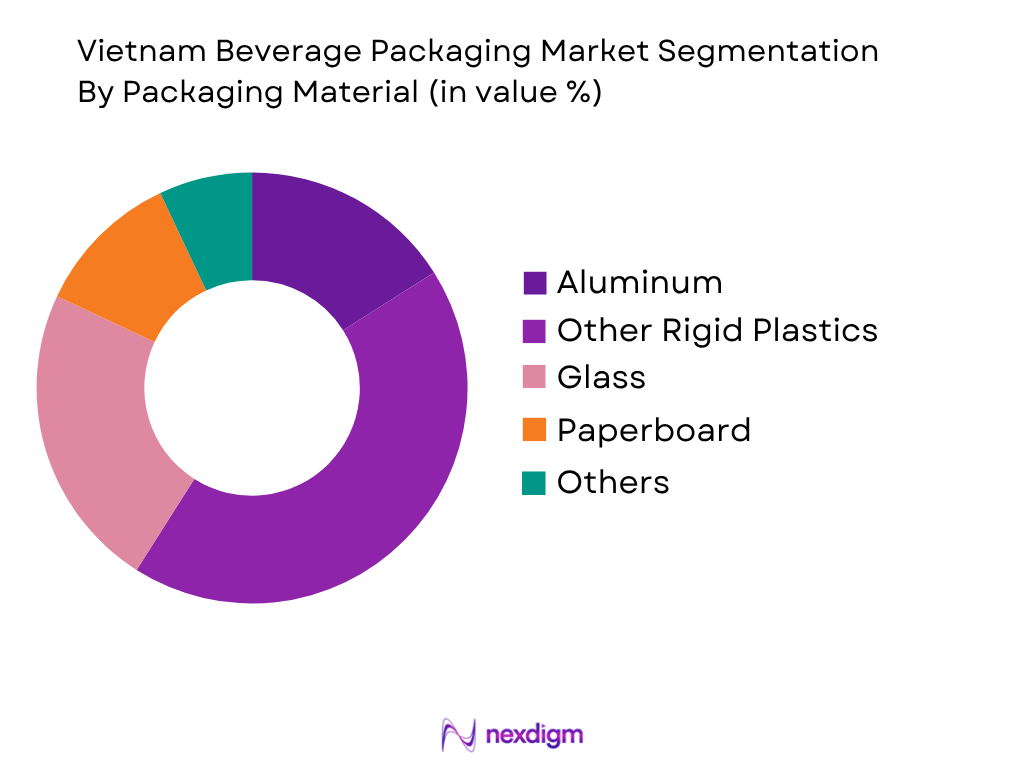
The Vietnam Beverage Packaging Market is segmented into PET and other rigid plastics, aluminium and steel, glass, paperboard beverage cartons, and flexible or composite packaging. PET and other rigid plastics hold the dominant indicative share because packaged drinking water, carbonated soft drinks, ready-to-drink tea, juice, edible liquids and family-size beverages rely extensively on bottles, preforms, closures and labels. PET provides low container weight, transparency, resealability, efficient transportation and compatibility with high-speed filling systems. Aluminium cans are prominent in beer, energy drinks, carbonated beverages and ready-to-drink coffee. Glass remains important for beer, spirits, premium water and returnable systems. Aseptic cartons have a strong role in dairy, soy beverages, juice, coconut water and shelf-stable nutritional products. Flexible packaging is concentrated in beverage concentrates, powdered drink sachets, pouches and bag-in-box applications.
By Beverage Category
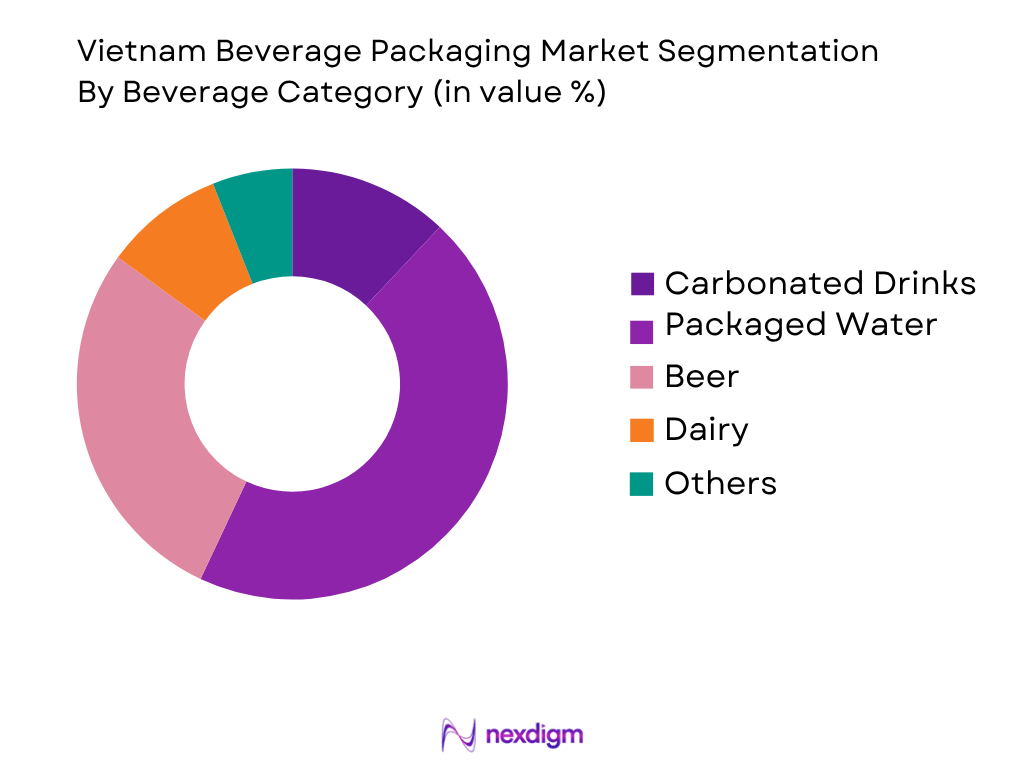
The Vietnam Beverage Packaging Market is segmented into packaged drinking water, beer, carbonated soft drinks, ready-to-drink tea and coffee, dairy and soy beverages, juices and tropical fruit drinks, energy and sports drinks, alcoholic beverages, and functional or traditional drinks. Packaged drinking water holds the dominant indicative position because it is distributed through traditional stores, supermarkets, convenience chains, hotels, restaurants, offices, factories, schools, transport terminals and tourism establishments. The category uses single-serve PET bottles, multi-serve bottles, large refillable containers, caps, labels, shrink films and corrugated cases. Beer creates substantial demand for cans, returnable glass bottles, one-way glass and kegs. Ready-to-drink tea and coffee support hot-fill PET and cans, while dairy, soy and juice products sustain aseptic-carton demand.
Competitive Landscape
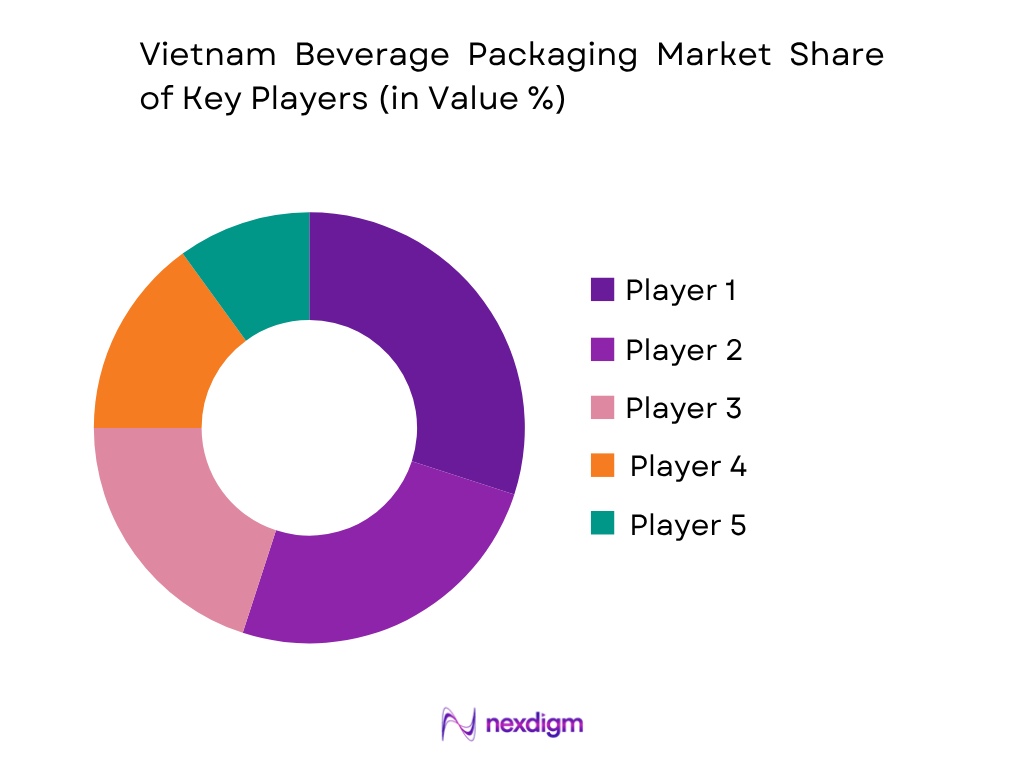
The Vietnam Beverage Packaging Market combines multinational carton, rigid-plastic, flexible-packaging, metal-can and glass-container manufacturers with established domestic converters. Competition is influenced by proximity to filling plants, container capacity, food-contact conformity, import dependence, recycled-material access, high-speed technical support and compliance with extended producer responsibility. Duy Tan, ALPLA, Crown, Tetra Pak and O-I BJC represent major positions across PET, cans, aseptic cartons and glass packaging.
| Company | Establishment Year | Headquarters | Core Beverage Portfolio | Material Capability | Principal Applications | Vietnam Footprint | Circularity Capability | Strategic Differentiation |
| Duy Tan Plastics Manufacturing Corporation | 1987 | Ho Chi Minh City, Vietnam | ~ | ~ | ~ | ~ | ~ | ~ |
| ALPLA Vietnam | 1955 group heritage | Hard, Austria | ~ | ~ | ~ | ~ | ~ | ~ |
| Crown Beverage Cans Vietnam | 1892 group heritage | Tampa, United States | ~ | ~ | ~ | ~ | ~ | ~ |
| Tetra Pak Vietnam | 1951 | Pully, Switzerland | ~ | ~ | ~ | ~ | ~ | ~ |
| O-I BJC Vietnam Glass | 1903 group heritage | Perrysburg, United States | ~ | ~ | ~ | ~ | ~ | ~ |
Vietnam Beverage Packaging System Market Analysis
Growth Drivers
Expansion of Packaged Beverage Production and Urban Distribution
Vietnam’s expanding consumer economy, manufacturing base, and urban distribution network are increasing demand for PET bottles, aluminium cans, glass containers, aseptic cartons, closures, labels, corrugated cases, reusable crates, and filling-line systems. The country recorded GDP of USD 476.39 billion in 2024, GDP per capita of USD 4,717.3, and a population of approximately 101 million people. These macroeconomic indicators support consumption through supermarkets, traditional stores, convenience chains, restaurants, cafés, hotels, offices, factories, airports, bus terminals, tourism centres, and e-commerce channels. Packaged drinking water requires lightweight PET bottles, large refillable containers, closures, labels, shrink film, and transport cases. Beer uses aluminium cans, returnable glass, one-way glass, kegs, crown closures, and paperboard multipacks. Ready-to-drink tea and coffee depend on hot-fill PET, cans, glass, and aseptic formats, while milk, soy beverages, coconut water, juice, and nutritional drinks create demand for cartons with extended shelf-life performance. The system is concentrated around Ho Chi Minh City, Bình Dương, Đồng Nai, Long An, Hanoi, Bắc Ninh, Hưng Yên, and Hải Phòng, where beverage fillers, packaging converters, industrial parks, ports, warehouses, and consumer markets are closely connected. Vietnam’s manufacturing-led economy also supports domestic packaging production and regional exports. Large beverage operations require high-speed depalletising, rinsing, filling, seaming, capping, coding, inspection, case packing, and palletising equipment, while regional brands need flexible co-packing and smaller production runs. Tourism adds another demand layer in Đà Nẵng, Nha Trang, Phú Quốc, Hạ Long, and other destinations, where hotels, restaurants, airports, and entertainment venues consume portable single-serve formats. The growth driver is therefore not merely population expansion. It is the interaction between 101 million consumers, USD 476.39 billion in economic output, dense urban retail systems, export-oriented manufacturing, and beverage categories requiring different barriers, filling temperatures, pressure resistance, serving sizes, and distribution conditions. World Bank data identifies Vietnam’s strong manufacturing and export activity as central to recent economic performance, reinforcing demand for packaging capacity, machinery, technical services, and supply-chain integration.
Mandatory Packaging EPR and Producer-Led Recovery
Vietnam’s extended producer responsibility framework is creating a direct regulatory driver for beverage packaging redesign, material reporting, collection partnerships, and verified recycling. Producers and importers became responsible for recycling covered packaging from 2024, including plastic, metal, glass, paper, and composite formats used for beverages and consumer products. Obligated companies can organise recycling directly, contract capable recyclers, or contribute financially through the Vietnam Environment Protection Fund under the applicable legal framework. This affects PET bottles, aluminium cans, steel containers, glass bottles, aseptic cartons, closures, labels, shrink films, corrugated cases, and imported filled packaging. Companies must understand the material type and weight of each component, calculate applicable responsibilities, maintain contracts and supporting records, and demonstrate that recycling or financial contribution obligations have been fulfilled. The policy already has measurable operational support. Producer Responsibility Organisation Vietnam collected and recycled more than 64,000 tonnes of packaging in 2024, compared with approximately 14,000 tonnes in 2023 and more than 3,000 tonnes in an earlier pilot covering PET bottles and beverage cartons. This expansion shows that formal producer-led recovery can scale beyond isolated collection campaigns when beverage companies, recyclers, retailers, and logistics providers participate in a coordinated system. The Ministry of Agriculture and Environment continued strengthening the framework during 2025, while Decree 110/2026/ND-CP, issued on 1 April 2026, further refined EPR implementation and recycling responsibilities. Packaging companies therefore need to prepare for more detailed traceability, recycling-cost calculations, reporting, and verification. EPR also changes package design priorities. Clear PET, limited pigmentation, smaller labels, compatible caps, wash-off adhesives, easily separated closures, lightweight cans, increased cullet use, and carton structures with established recovery pathways can reduce compliance difficulty. Suppliers capable of providing package-weight data, recyclability assessments, recycled-content declarations, and recycler connections become strategically more important to beverage producers. The system also encourages cooperation with informal collectors and scrap dealers, who currently recover significant quantities of valuable PET, aluminium, cardboard, and glass. Integrating these participants through formal purchase agreements, digital weighing, protective equipment, covered storage, and direct recycler offtake can improve material quality and reporting credibility. The combination of mandatory responsibility from 2024, more than 64,000 tonnes recovered through producer-led activity, and updated rules in 2026 demonstrates that EPR is becoming a structural driver of Vietnam’s beverage packaging system rather than a voluntary environmental initiative.
Market Challenges
Fragmented Collection and Limited Beverage-Grade Recycled Feedstock
Vietnam’s beverage packaging recovery network remains fragmented across municipal collection, informal waste pickers, scrap dealers, aggregators, material recovery operations, producer-funded programs, and authorised recyclers. PET bottles and aluminium cans are frequently collected because they retain commercial value, but low-weight caps, labels, flexible pouches, multilayer laminates, cartons, and contaminated glass are less consistently recovered. An Asian Development Bank study estimated that Vietnam generated approximately 487,714 tonnes of PET packaging waste in 2024. This represents a substantial potential feedstock base, but discarded PET does not automatically become beverage-grade recycled resin. Bottles must be collected, separated by colour, compacted, transported, washed, decontaminated, filtered, pelletised, tested, and connected to preform and bottle manufacturers. Mixed bales can contain PVC, coloured resin, food residue, oils, labels, closures, moisture, sand, and non-bottle plastics. These contaminants affect resin colour, odour, intrinsic viscosity, acetaldehyde performance, and food-contact suitability. Geographic differences worsen the problem. Ho Chi Minh City, Bình Dương, Đồng Nai, Hanoi, and Hải Phòng have stronger access to industrial collectors and recyclers, while smaller provinces and rural areas may be located far from suitable processing capacity. Transporting uncompacted bottles or low-density films over long distances is inefficient because vehicles carry high volume relative to material weight. Glass presents a separate challenge. Vietnam generates approximately 220,000 tonnes of glass waste annually, while an official ministry article reported a glass recycling rate of only 15 parts out of every 100. Glass recovery is constrained by low collection value, breakage, colour mixing, contamination from ceramics and stones, and expensive transport to furnaces. Beverage cartons require specialised hydrapulping equipment capable of recovering paper fibres while treating polymer-aluminium residue. Multilayer beverage pouches may combine PET, polyethylene, aluminium foil, printing inks, and adhesives, making conventional mechanical recycling difficult. The difference between 487,714 tonnes of PET packaging waste and 64,000 tonnes of packaging recovered through one major producer-led system illustrates the remaining collection and processing gap, although the two figures cover different scopes. Beverage companies seeking food-grade rPET may therefore face shortages despite substantial waste generation. Closing the gap requires regional sorting hubs, balers, collection vehicles, automated optical sorting, direct recycler contracts, deposit or buy-back systems, and more formal integration of informal collectors. Without these systems, packaging manufacturers may possess the technical ability to use recycled material but lack consistent, traceable, specification-grade feedstock.
Food-Contact Compliance and Filling-Line Conversion Complexity
Vietnam’s beverage packaging system must satisfy food safety, filling-line performance, shelf-life protection, mechanical strength, humid-climate durability, transportation requirements, and recyclability simultaneously. This creates substantial barriers when beverage companies change materials, reduce package weight, or introduce recycled content. PET bottles used for water, carbonated drinks, tea, juice, and dairy beverages require stable resin quality, controlled preform heating, consistent wall distribution, closure compatibility, and adequate top-load performance. Higher recycled content can affect clarity, colour, odour, intrinsic viscosity, and bottle-blowing behaviour. Excessive lightweighting may cause panel deformation, cap leakage, poor grip strength, or pallet instability during warehouse storage and long road journeys. Switching from PET to aluminium cans requires different depalletising, rinsing, filling, seaming, coding, inspection, and secondary-packing systems. Glass lightweighting must retain pressure resistance, thermal-shock performance, dimensional accuracy, and compatibility with existing washers and fillers. Returnable glass requires bottle deposits, reusable crates, washing systems, automated inspection, crack detection, and distributor backhaul. Aseptic cartons require sterile processing, controlled laminate construction, filling-machine compatibility, and reliable longitudinal and transverse seals. Flexible pouches and bag-in-box systems must maintain tap, spout, and seal integrity while protecting beverages from oxygen, moisture, light, and puncture. The technical risk is amplified by Vietnam’s high-throughput beverage plants and tropical operating environment. High ambient temperature and humidity can affect label adhesion, corrugated-case strength, bottle pressure, condensation resistance, and pallet stability. Food-contact compliance extends beyond the main container material to coatings, inks, adhesives, closure liners, colourants, and printing systems. Packaging manufacturers must therefore maintain material declarations, test reports, traceability, hygiene controls, and intended-use documentation. Vietnam’s economic scale—USD 476.39 billion in GDP and USD 4,717.3 GDP per capita in 2024—supports larger beverage and packaging operations, but it also increases the consequences of technical failure. A small deviation in a can seam, preform neck, cap torque, carton seal, or label position can interrupt lines processing thousands of units per hour. EPR adds another technical layer because a package must not only protect the beverage but also fit an approved recovery route and generate auditable recycling evidence. Smaller beverage companies often lack in-house polymer, glass, food-contact, and filling-line expertise, making them dependent on packaging suppliers and contract fillers. The central challenge is designing a package that is safe, manufacturable, commercially scalable, transport resistant, and realistically recyclable under Vietnam’s current infrastructure.
Market Opportunities
Food-Grade rPET, Automated Sorting, and Bottle-to-Bottle Systems
Vietnam has a substantial opportunity to develop food-grade rPET and bottle-to-bottle systems using its existing PET waste stream, growing beverage production, and EPR obligations. The Asian Development Bank estimated 487,714 tonnes of PET packaging waste in 2024, providing a measurable material base for new collection, sorting, decontamination, and pellet-production capacity. The opportunity is strongest around Ho Chi Minh City, Bình Dương, Đồng Nai, Long An, Hanoi, Bắc Ninh, and Hải Phòng, where beverage fillers, converters, industrial parks, ports, and large consumer markets are concentrated. A bottle-to-bottle system begins with design. Clear PET bottles, limited colour, small compatible labels, wash-off adhesives, and polyethylene or polypropylene caps increase sorting yield and reduce contamination. Collection can be organised through supermarkets, convenience stores, schools, offices, hotels, beverage depots, tourist sites, events, and distributor backhaul. Informal collectors can be integrated through registered aggregation points, transparent weighing, minimum-quality requirements, digital payment, and direct purchase agreements. Automated near-infrared sorting and machine-vision systems can separate PET by colour and identify PVC, multilayer containers, metals, and non-bottle plastics. Hot washing, melt filtration, vacuum decontamination, crystallisation, and solid-state processing can then produce higher-quality recycled resin. Digital traceability platforms can record the producer, bottle specification, collection point, bale supplier, recycling batch, pellet output, preform manufacturer, and final beverage use. Vietnam’s EPR framework creates an additional commercial incentive because beverage companies require verified recovery and may prefer long-term supply agreements with recyclers capable of providing both resin and compliance documentation. Producer-led systems recovered more than 64,000 tonnes of packaging in 2024, demonstrating that organised collection can reach industrial scale. Current GDP of USD 476.39 billion, a population of approximately 101 million, and a large beverage-consumption base provide the demand needed to support regional recycling plants and preform capacity. Bottle-to-bottle development can also reduce dependence on virgin resin and imported secondary material while improving domestic technical capabilities. Supporting opportunities include bale-quality certification, recycler financing, laboratory testing, collector-management software, food-contact validation, reverse logistics, and packaging redesign. Current waste generation, EPR implementation, and producer collection volumes provide a credible foundation for future expansion without requiring speculative market-size projections.
Advanced Can, Carton, and Smart Filling Infrastructure
Vietnam’s expanding beer, energy-drink, ready-to-drink tea, coffee, dairy, soy, juice, and functional-beverage categories create opportunities for specialty cans, aseptic cartons, digital printing, automated inspection, and flexible co-packing infrastructure. Aluminium cans are suited to beer, carbonated beverages, energy drinks, ready-to-drink coffee, and emerging alcoholic formats because they provide pressure resistance, complete light protection, rapid chilling, and a large printable surface. Standard, sleek, slim, and smaller serving formats allow brands to differentiate products across convenience stores, supermarkets, hotels, and tourism locations. Digital can printing and shrink-sleeve decoration reduce the need for large preprinted inventories, supporting regional launches, seasonal flavours, craft beverages, and export products. Aseptic cartons represent a parallel opportunity for milk, soy drinks, juice, coconut water, nutritional beverages, and grain-based products. Tetra Pak’s Bình Dương investment established an initial EUR 120 million packaging-material facility, while the expanded plant’s stated annual capacity increased from 12 billion to 30 billion packages. This capacity demonstrates Vietnam’s potential to serve both domestic beverage companies and regional export markets. Smart filling systems can integrate fill-level inspection, seam analysis, cap-torque measurement, leak detection, barcode verification, package coding, and real-time production monitoring. These technologies reduce rejects, improve traceability, and support compliance with food-contact and EPR requirements. Flexible co-packing facilities are also needed because emerging beverage brands may require several container types and smaller production runs without investing in their own complete filling lines. Plants capable of handling PET, cans, glass, cartons, pouches, and bag-in-box formats can serve craft beer, functional drinks, tropical fruit beverages, coffee, kombucha, and premium water. Secondary packaging creates additional opportunities through paperboard multipacks, clip carriers, moisture-resistant cartons, and lighter corrugated cases that reduce shrink-film use. Vietnam’s GDP of USD 476.39 billion, population of 101 million, and export-oriented manufacturing base support these investments. Producer-led collection of more than 64,000 tonnes of packaging in 2024 also provides a circularity platform for suppliers offering container production, recovery partnerships, and verified material data. The opportunity lies in integrating packaging design, filling machinery, digital inspection, technical service, collection reporting, and regional distribution rather than supplying individual containers in isolation.
Future Outlook
The Vietnam Beverage Packaging Market is expected to develop through 2035 as urban consumption, modern retail, tourism, export manufacturing, dairy processing and beverage diversification increase packaging requirements. PET bottles, aluminium cans, returnable glass, aseptic cartons and recycled-content packaging will remain central to market development. Vietnam’s economy recorded a strong export-led recovery, with the World Bank identifying improved merchandise exports and manufacturing activity as important contributors to economic performance. The country’s expanding industrial base supports additional beverage-filling lines, packaging conversion, warehousing, ports and regional distribution. Vietnam’s packaging EPR regime has applied to covered producers and importers since January 2024. Obligated companies may organise recycling directly, contract authorised recyclers or make prescribed financial contributions through the Vietnam Environment Protection Fund. Packaging categories include paper, metal, glass and plastic structures used for food, beverages and consumer products.
Major Players
- Duy Tan Plastics Manufacturing Corporation
- Duy Tan Recycling
- Ngoc Nghia Industry
- ALPLA Vietna
- Amcor Vietnam
- Tetra Pak Vietnam
- SIG Vietnam
- Crown Beverage Cans Saigon
- Crown Beverage Cans Hanoi
- Ball Asia Pacific Vietna
- O-I BJC Vietnam Glass
- Binh Minh Packaging
- SCG Packaging Vietnam
- Tan Tien Packaging
- Bericap Vietnam
Key Target Audience
- Beverage-container and packaging-material manufacturers
- Packaged-water, beer, dairy, tea, coffee, juice and soft-drink producers
- Contract beverage fillers and co-packaging companies
- Modern retailers, convenience chains, distributors and hospitality operators
- Waste collectors, aggregators, recyclers and producer responsibility organisations
- Investments and venture capitalist firms
- Private-equity and strategic packaging investors
- Government and regulatory bodies
Research Methodology
Step 1: Identification of Key Variables
The first phase maps resin producers, bottle and preform manufacturers, can companies, glass producers, carton suppliers, closure companies, beverage fillers, retailers, collectors and recyclers. Critical variables include container units, beverage volume, package weight, recycled content, returnability, filling technology, EPR status and regional capacity.
Step 2: Market Analysis and Construction
Historical data is compiled by material, container format, beverage category, pack size, filling process, distribution channel and region. Bottom-up analysis evaluates plant capacity, container shipments, filling volumes, material tonnage and company revenues. Top-down analysis reviews GDP, population, beverage manufacturing, retail activity, imports, exports and recycling flows.
Step 3: Hypothesis Validation and Expert Consultation
Market hypotheses are validated through computer-assisted telephone interviews with packaging manufacturers, beverage companies, dairy processors, brewers, contract fillers, retailers, collectors, recyclers and regulatory professionals. Consultations assess capacity utilisation, packaging qualification, recycled-feedstock availability, EPR implementation, regional logistics and material-switching behaviour.
Step 4: Research Synthesis and Final Output
Supply-side and demand-side findings are triangulated to reconcile packaging production, beverage filling, imports, recycled-material availability and customer procurement. Segment shares and forecasts are tested against package weights, plant footprints, filling capacity, regulatory obligations, company disclosures and primary-industry feedback.

- Executive Summary
- Research Methodology (Market Definitions and Assumptions, Beverage Packaging Inclusion and Exclusion Criteria, Abbreviations, Market Sizing Approach, Top-Down Analysis, Bottom-Up Analysis, Beverage Filling Volume Model, Container Unit Conversion Model, Material Tonnage Assessment, Domestic Production Analysis, Import and Export Assessment, Demand-Side Interviews, Supply-Side Interviews, Data Triangulation, EPR Scenario Modelling, Forecasting Framework, Limitations and Future Conclusions)

- Definition and Scope
- Market Evolution and Industry Genesis
- Evolution of Beverage Container Materials
- Development of PET Beverage Bottles
- Expansion of Aluminium Beverage Cans
- Evolution of Returnable Glass Bottles
- Development of Aseptic Beverage Cartons

- Growth Drivers (Urban Beverage Consumption, Packaged-Water Demand, Dairy and Soy Beverage Expansion, Beer Production, Ready-to-Drink Tea and Coffee, Modern Retail, Tourism and Export Manufacturing)
- Market Challenges (Food-Grade rPET Availability, Fragmented Collection, Informal-Sector Dependence, Glass Freight Intensity, Multilayer Recycling, EPR Compliance Capability and Regional Logistics)
- Market Opportunities (Food-Grade rPET, Aluminium Can Expansion, Aseptic Beverage Packaging, Returnable Glass Optimisation, Digital Printing, Fibre-Based Multipacks, Smart Closures and Regional Co-Packing)
- Market Trends (PET Lightweighting, Can Premiumisation, Recycled Content, Aseptic Cartons, Returnable Bottles, Digital Printing, Smart Labels, EPR Reporting and Packaging Carbon Disclosure)
- SWOT Analysis
- Porter’s Five Forces Analysis
- PESTLE Analysis

- By Market Value (2020-2025)
- By Beverage Container Units (2020-2025)
- By Packaged Beverage Volume (2020-2025)

- By Packaging Material (In Value %)
PET
HDPE
Polypropylene
Polyethylene Films
Aluminium
Steel and Tinplate
Glass - By Beverage Category (In Value %)
Carbonated Soft Drinks
Packaged Drinking Water
Natural Mineral Water
Flavoured and Enhanced Water
Energy Drinks
Sports and Isotonic Drinks - By Distribution Channel (In Value %)
Supermarkets and Hypermarkets
Modern Grocery Stores
Traditional Grocery Stores
Convenience Stores
Wholesale Markets
Beverage Distributors
Liquor Retailers - By Region (In Value %)
Northern Vietnam
Red River Delta
North Central Vietnam
Central Coast
Central Highlands
Southeast Vietnam
Mekong Delta

- Market Share of Major Players
- Cross Comparison Parameters (Beverage Container Material and Format Breadth, Annual Beverage Container and Closure Manufacturing Capacity, Vietnam Plant Footprint and Proximity to Filling Clusters, Food-Grade rPET and Closed-Loop Material Capability, Filling-Line Compatibility and High-Speed Technical Support, Beverage Category and Pack-Size Coverage, Food-Contact EPR and Recycling-Contribution Compliance Support, Lightweighting and New-Format Commercialisation Capability)
- SWOT Analysis of Major Players
- Detailed Profiles of Major Companies
Duy Tan Plastics Manufacturing Corporation
Duy Tan Recycling
Ngoc Nghia Industry
ALPLA Vietnam
Amcor Vietnam
Tetra Pak Vietnam
SIG Vietnam
Crown Beverage Cans Saigon
Crown Beverage Cans Hanoi
Ball Asia Pacific Vietnam
O-I BJC Vietnam Glass
Binh Minh Packaging
SCG Packaging Vietnam
Tan Tien Packaging
Bericap Vietnam

- Carbonated Soft Drink Producer Analysis
- Packaged-Water Producer Analysis
- Energy and Sports Drink Producer Analysis
- Juice and Tropical Beverage Producer Analysis
- Dairy and Soy Beverage Producer Analysis
- Ready-to-Drink Tea and Coffee Producer Analysis

- By Market Value (2026-2035)
- By Beverage Container Units (2026-2035)
- By Packaged Beverage Volume (2026-2035)


 Request a Sample
 Ask for Customization
 Get a Quote
 Enquire Now