

 Download PDF
Market Overview
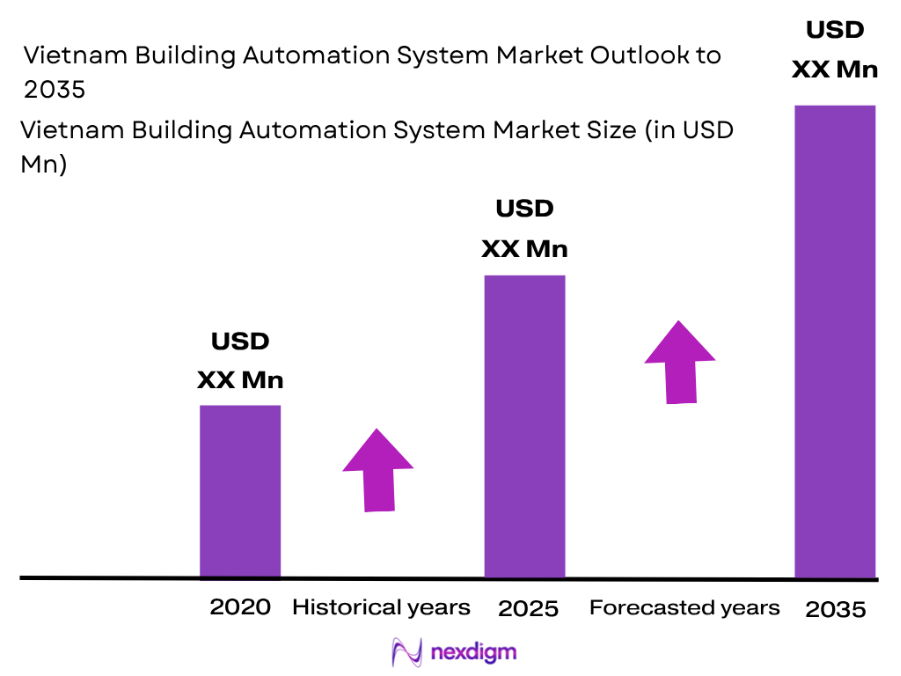
The Vietnam Building Automation System Market is valued at approximately ~USD XX million, supported by expanding commercial and industrial facilities, energy-efficiency requirements, HVAC modernization and digital facility operations. Across the latest two comparable annual observations, realized foreign investment increased from USD 23.18 billion to USD 25.35 billion, while newly established and returning enterprises increased from 217,706 to more than 233,400. This enlarging operating base supports demand for BAS controllers, sensors, metering, supervisory software and integrated HVAC automation.
Ho Chi Minh City, Hanoi, Hai Phong and the northern industrial corridor dominate Vietnam Building Automation System demand because they concentrate offices, hotels, factories, logistics facilities, electronics plants and data centres. Across the latest two annual observations, Ho Chi Minh City attracted USD 5.85 billion and USD 3.04 billion of registered foreign investment, while Hai Phong increased from USD 3.26 billion to USD 4.94 billion, reinforcing their concentration of automation-intensive assets.
Market Segmentation
By System Component
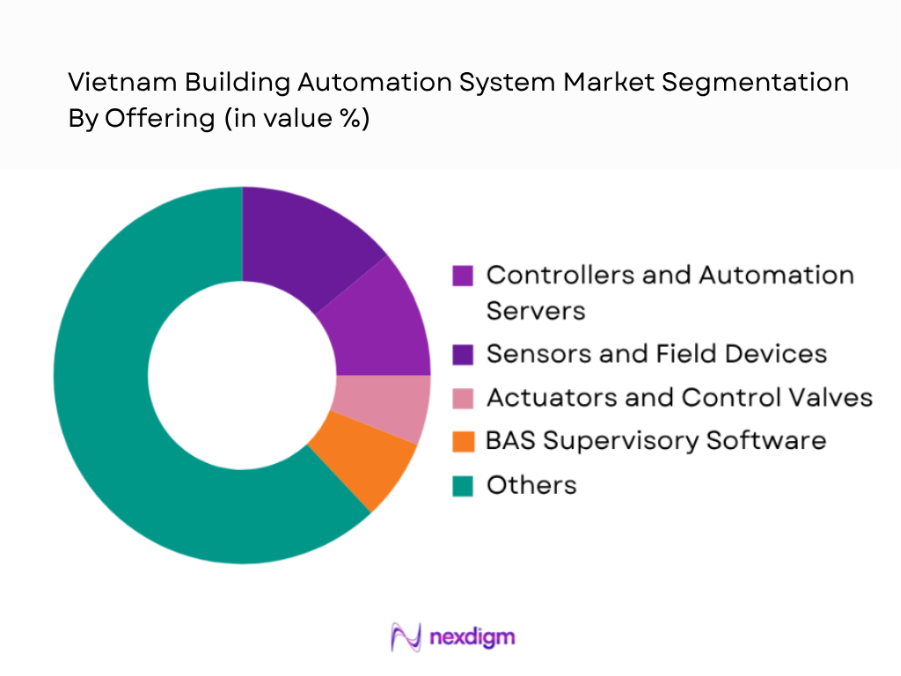
By System Component: The Vietnam Building Automation System Market is segmented into automation controllers and field devices, supervisory software, room automation, energy-metering systems, gateways, cloud analytics and lifecycle services. Automation controllers and field devices hold the dominant market share because BAS performance ultimately depends on physical monitoring and control of chillers, air-handling units, pumps, cooling towers, fan-coil units, valves and dampers. Vietnam’s climate makes cooling and ventilation major building-services functions, particularly in offices, hotels, shopping centres, hospitals and industrial facilities. Controllers also provide the foundation on which BACnet, KNX and Modbus networks, supervisory platforms and cloud analytics operate. Temperature, humidity, CO₂, pressure and occupancy sensors generate the operating data required for automated control. Although cloud software is becoming strategically important, its effectiveness depends on a functioning field and automation layer, keeping controllers, sensors and actuators at the core of BAS expenditure.
By Application
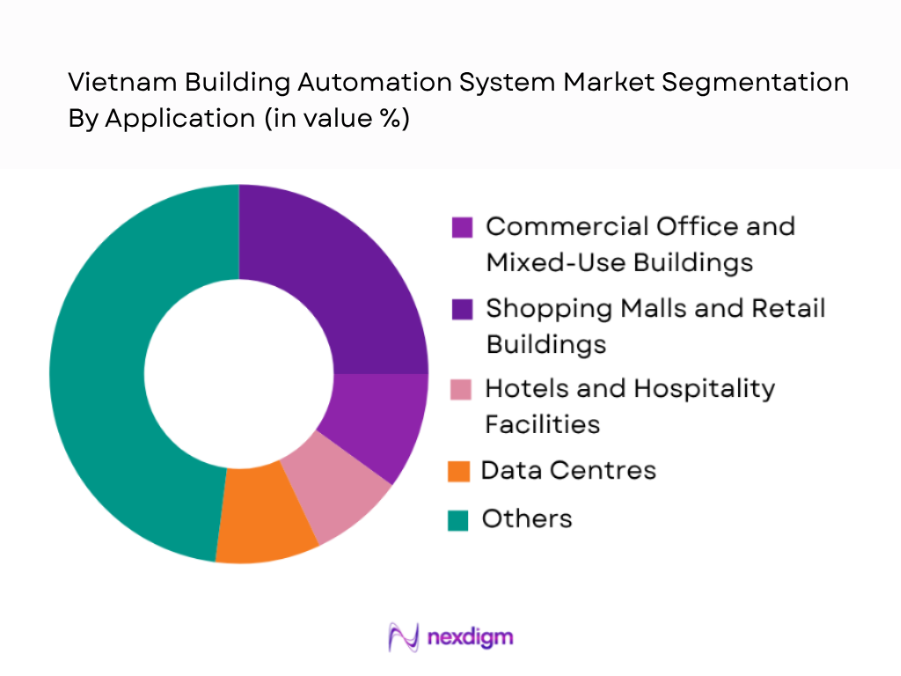
The Vietnam Building Automation System Market is segmented into HVAC and plant automation, room automation, energy monitoring, lighting integration, indoor-air-quality management, mission-critical automation and other integrated systems. HVAC and plant automation hold the dominant market share because cooling equipment is one of the most operationally intensive building systems in Vietnam’s tropical climate. Large hotels, commercial towers, hospitals, malls and data centres commonly operate chillers, cooling towers, pumps, AHUs and fan-coil systems that benefit from centralized scheduling, sequencing and variable-speed control. BAS platforms improve operational visibility by integrating temperatures, pressures, flows, alarms and equipment status into a common interface. Chiller-plant optimization is particularly relevant because equipment performance depends on coordinated operation rather than independent component control. Building-energy regulations and increasing attention to operational efficiency further support centralized HVAC monitoring, while commercial owners seek to reduce manual intervention and improve fault identification.
Competitive Landscape
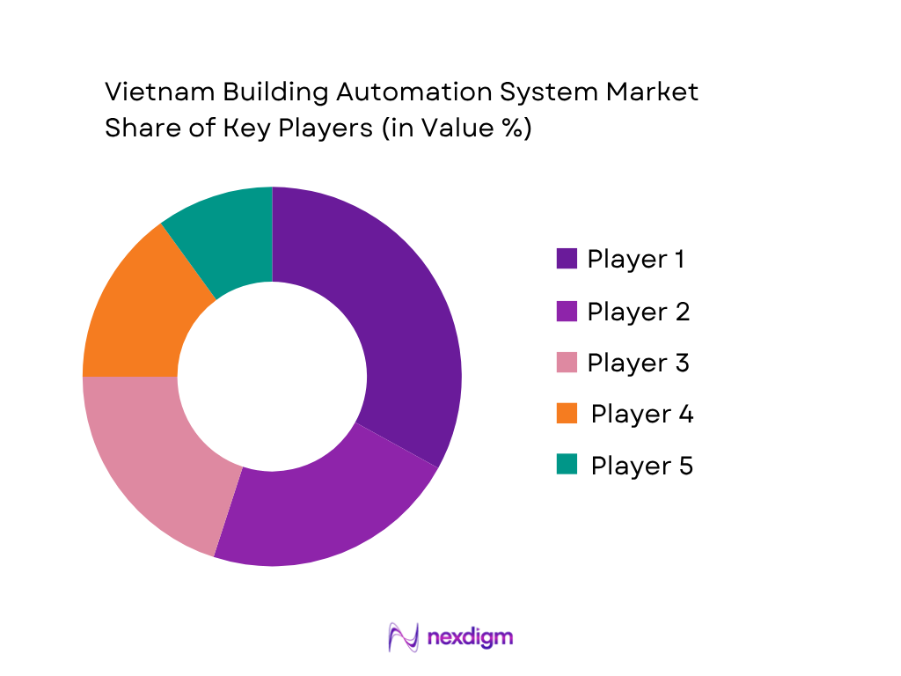
The Vietnam Building Automation System Market combines multinational building-technology vendors with local system integrators, MEP contractors and control-panel specialists. Siemens, Schneider Electric, Honeywell, Johnson Controls and ABB have broad platforms spanning controllers, HVAC automation, supervisory software, open protocols and digital services. Competitive differentiation increasingly depends on chiller-plant expertise, BACnet/KNX/Modbus interoperability, retrofit capability, cloud connectivity, cybersecurity, commissioning quality and the strength of local integration partners. Schneider Electric’s Vietnam portfolio, for example, supports BACnet, Modbus, MQTT and third-party integration within EcoStruxure Building Operation.
| Company | Establishment Year | Headquarters | BAS Portfolio | HVAC Controls | Energy Management | Cloud / IoT | System Integration | India Presence |
| Honeywell | 1906 | Charlotte, USA | ~ | ~ | ~ | ~ | ~ | ~ |
| Siemens | 1847 | Munich, Germany | ~ | ~ | ~ | ~ | ~ | ~ |
| Schneider Electric | 1871 | Rueil-Malmaison, France | ~ | ~ | ~ | ~ | ~ | ~ |
| Johnson Controls | 1885 | Cork, Ireland | ~ | ~ | ~ | ~ | ~ | ~ |
| ABB | 1988 | Zurich, Switzerland | ~ | ~ | ~ | ~ | ~ | ~ |
Vietnam Building Automation System Market Analysis
Growth Drivers
Commercial Real Estate Development and Smart Building Adoption
Vietnam’s expanding construction and commercial real-estate ecosystem is creating a stronger addressable base for Building Automation Systems, particularly across office buildings, hotels, retail complexes, mixed-use developments and industrial facilities. Vietnam’s GDP increased by 7.09% in 2024, while the construction industry expanded by 7.87%, demonstrating sustained building activity. Total social investment reached VND 3,692.1 trillion, while realized foreign direct investment reached USD 25.35 billion, the highest level since 2020. The country also recorded USD 38.23 billion in registered foreign investment, with manufacturing and processing receiving USD 25.58 billion and real estate receiving USD 6.31 billion. These investment flows directly expand the number of new facilities requiring centralized HVAC control, lighting management, access control, energy monitoring, fire integration and facility-management platforms. Industrial and construction employment reached 17.4 million workers, reinforcing the scale of the physical asset base requiring efficient facility operation. Commercial developers are increasingly integrating automation during project design rather than treating controls as isolated HVAC equipment, creating opportunities for interoperable BAS architectures, connected sensors, centralized dashboards and automated building-performance optimization.
HVAC Energy Optimization and Energy-Efficiency Requirements
Energy management is a significant driver for Vietnam’s Building Automation System Market because cooling, ventilation, lighting and mechanical equipment represent major operational loads in commercial, industrial and technology-intensive buildings. Vietnam’s Ministry of Industry and Trade projected national electricity generation and imports at 306.259 billion kWh for 2024, reflecting the scale of electricity infrastructure required to support economic and industrial activity. At the same time, Vietnam’s industrial sector grew by 8.32% in 2024, manufacturing increased by 9.83%, electricity production and distribution increased by 10.05%, and construction expanded by 7.87%. These figures indicate simultaneous growth in electricity-intensive industrial facilities and the broader built environment. BAS platforms can connect chillers, air-handling units, variable-frequency drives, sensors, meters and occupancy controls to reduce unnecessary operation and improve equipment scheduling. The opportunity is particularly relevant to factories, hotels, offices, hospitals and data-intensive facilities where continuous cooling and ventilation are required. Vietnam also had 559 certified green buildings covering more than 13.6 million m² by the end of 2024, creating an established pipeline of buildings where energy monitoring and automated controls can support operational-performance objectives.
Market Challenges
Legacy Building Control Infrastructure and Interoperability Constraints
Vietnam’s Building Automation System Market faces implementation constraints from fragmented building-control architectures, legacy HVAC equipment and incompatible communication protocols. The challenge is particularly relevant to retrofit projects because many existing buildings were designed around standalone chillers, air-conditioning units, lighting systems and security equipment rather than unified BAS platforms. Vietnam’s 2024 housing census recorded 28.1 million households, with 22.9 million households living in homes constructed or first occupied since 2000, while 1.9% of households still occupied homes more than 49 years old. Although these figures concern residential buildings, they demonstrate the breadth and age variation of Vietnam’s built environment and the resulting diversity of installed infrastructure. Commercial and industrial properties likewise contain equipment from multiple generations and manufacturers. Vietnam’s construction industry expanded 7.87% in 2024, increasing the pipeline of new buildings alongside retrofit opportunities. However, integrating existing HVAC controllers, meters, sensors, fire systems and access-control equipment can require gateways, protocol conversion and additional engineering. BAS providers therefore face longer commissioning cycles and project-specific integration requirements. These constraints can delay modernization decisions and make open-protocol compatibility, modular architecture and retrofit-ready controllers important competitive differentiators.
Cybersecurity Vulnerabilities and Skilled BAS Engineering Requirements
Increasing connectivity between HVAC controllers, building-management platforms, IoT sensors, cloud applications and enterprise networks creates cybersecurity and specialist-engineering challenges for Vietnam’s Building Automation System Market. Vietnam’s Ministry of Information and Communications reported 211,000 cyber-attack warnings and 20 serious cyber-attack incidents during the first six months of 2024, while approximately 201,903 data packages were reported as leaked through malware attacks, containing about 12.3 million lines of information. A later 2024 assessment estimated 659,000 cyberattacks against Vietnamese organizations, illustrating the operating environment in which connected building infrastructure must be secured. BAS deployments introduce additional endpoints and network connections that require segmentation, authentication, software updates, monitoring and incident-response procedures. Skilled personnel are another constraint: Vietnam’s labor force aged 15 and above reached 52.4 million in Q1 2024, but only 27.8% of workers held formal training qualifications at that point. BAS projects require specialized knowledge across HVAC controls, electrical systems, networking, cybersecurity, commissioning and software integration. As buildings become more connected, suppliers must therefore provide secure architectures and stronger technical support rather than relying solely on hardware installation.
Market Opportunities
Data Centre BAS and AI-Enabled Energy Optimization
Vietnam’s growing digital infrastructure and technology investment create a high-value opportunity for Building Automation Systems in data centres, where uninterrupted cooling, electrical monitoring, environmental control and equipment optimization are essential. Foreign investors committed USD 38.23 billion across Vietnam in 2024, including USD 25.58 billion in manufacturing and processing and USD 1.42 billion in power production and distribution. The government also highlighted substantial investment in semiconductors, energy, electronic products and other high-technology activities. These developments require facilities with tightly controlled temperature, humidity, electrical loads and equipment operating conditions. BAS platforms can integrate cooling systems, power meters, environmental sensors, alarms and equipment-status information into centralized supervisory environments. AI-enabled analytics can subsequently use this operational data to identify abnormal equipment behavior, optimize cooling schedules and support predictive maintenance. The opportunity is strengthened by Vietnam’s electricity requirements: the Ministry of Industry and Trade projected 306.259 billion kWh of electricity generation and imports for 2024. Data-intensive facilities therefore have a direct incentive to monitor electrical and cooling performance continuously. Cloud-connected BAS, predictive HVAC maintenance, digital twins and automated optimization can extend the role of building controls from basic monitoring toward continuous operational intelligence.
Green Building Retrofits, Indoor Air Quality and Multi-Site Facility Management
Vietnam’s expanding green-building ecosystem creates an opportunity to combine BAS modernization with energy monitoring, indoor-air-quality management and centralized facility operations. By the end of 2024, Vietnam had 559 certified green buildings representing more than 13.6 million m² of certified floor area. This installed base provides a tangible platform for expanding automated HVAC scheduling, occupancy controls, ventilation management, metering and performance monitoring. Vietnam’s construction industry also grew 7.87% in 2024, while total social investment reached VND 3,692.1 trillion, supporting continued development of commercial, industrial and institutional facilities. BAS suppliers can target both new construction and existing buildings requiring modernization. Indoor-air-quality monitoring is particularly relevant for offices, hospitals, schools, hotels and shopping centres because connected sensors can track temperature, humidity, carbon dioxide and other environmental parameters while allowing ventilation systems to respond automatically. Multi-site facility management presents another opportunity for organizations operating geographically distributed buildings, enabling centralized monitoring and fault detection across portfolios. The combination of green-building certification, expanding construction activity and rising digital facility-management capabilities creates a pathway for BAS providers to move beyond individual equipment controls toward integrated energy, comfort, maintenance and portfolio-management platforms.
Future Outlook
The Vietnam Building Automation System Market is projected to expand at approximately ~XX.X% CAGR during 2026–2035. Future demand will increasingly move beyond conventional centralized HVAC control toward connected, interoperable and analytics-driven building operations. Commercial development, industrial investment, data centres, hotel construction, energy-efficiency regulation and modernization of existing building systems are expected to strengthen demand for BAS controllers, metering, cloud platforms and lifecycle services. Vietnam’s regulatory environment will become increasingly important to this transition. The Ministry of Construction issued QCVN 04-3:2026/BXD in July 2026 for energy-efficient civil buildings, with the new regulation scheduled to take effect on 1 February 2027 and replace the earlier QCVN 09:2017/BXD framework. This direction strengthens the role of monitoring, controls and efficient operation of technical building systems within future developments.
Major Players
- Honeywell
- Siemens
- Schneider Electric
- Johnson Controls
- ABB
- Carrier
- Delta Controls
- Bosch Building Technologies
- Legrand
- Mitsubishi Electric
- Daikin
- Azbil Corporation
- Emerson Electric
- Trane Technologies
- Panasonic
Key Target Audience
- Commercial Real Estate Developers and Building Owners
- Data Centre Operators and Infrastructure Developers
- Industrial and Manufacturing Facility Owners
- Facility Management and Integrated Facilities Services Providers
- HVAC and MEP System Integrators
- Investments and Venture Capitalist Firms
- Government and Regulatory Bodies (Bureau of Energy Efficiency, Ministry of Power, Ministry of Housing and Urban Affairs, Central Public Works Department)
- Building Automation Technology Manufacturers and Solution Providers
Research Methodology
Step 1: Identification of Key Variables
The initial phase involves constructing an ecosystem map covering BAS manufacturers, controller suppliers, sensors, actuators, HVAC equipment vendors, system integrators, MEP contractors, property developers and facility operators. Critical variables include installed control points, controller density, building type, protocol mix, HVAC complexity, chiller capacity, metering intensity, cloud connectivity and retrofit requirements.
Step 2: Market Analysis and Construction
Historical Vietnam Building Automation System Market performance is evaluated through top-down and bottom-up approaches. Top-down analysis considers commercial construction, industrial investment, hotel development, data-centre facilities and energy-efficiency regulations. Bottom-up modelling assesses BAS control points, controller counts, field devices, supervisory licenses, integration scope and typical automation intensity across individual building categories.
Step 3: Hypothesis Validation and Expert Consultation
Market hypotheses are validated through CATI-based discussions with BAS manufacturers, system integrators, MEP contractors, facility managers, property developers and technical building-services specialists. These interviews assess BACnet and KNX deployment, chiller automation, controller replacement, energy monitoring, cloud adoption, commissioning requirements and service-contract structures to refine market assumptions.
Step 4: Research Synthesis and Final Output
The final phase triangulates official construction and investment indicators with vendor portfolios, technical specifications and primary industry inputs. Bottom-up connected-point calculations are reconciled with top-down building and investment indicators to establish segmentation, competitive positioning and forecast assumptions for the Vietnam Building Automation System Market.

- Executive Summary
- Research Methodology (Market Definitions and Assumptions, Vietnam BAS Market Classification, Building Automation System Scope, Building Management System Mapping, HVAC Controls Assessment, Lighting Automation Assessment, Security and Access Control Mapping, Fire and Life Safety Integration, Building Energy Management Assessment, Sensors and Field Devices Mapping, Controllers and Automation Hardware Assessment, Communication Protocol Assessment, BACnet and Modbus Integration Mapping, Wired and Wireless Connectivity Assessment, Cloud BAS Assessment, Edge and IoT Architecture Assessment, System Integration Assessment, Installation and Commissioning Assessment, Maintenance and Lifecycle Services Assessment, Smart Building Ecosystem Mapping, Supply-Side Assessment, Demand-Side Assessment, Top-Down Market Sizing, Bottom-Up Market Sizing, Commercial Building Pipeline Assessment, Industrial Facility Assessment, Data Centre Infrastructure Assessment, Green Building Assessment, Primary Industry Interviews, Data Triangulation, Forecasting Framework)

- Definition and Scope
- Vietnam Building Automation Industry Evolution and Development of Building Management Systems, HVAC Automation, Energy Management Systems, Smart Lighting Controls, Integrated Security Systems, IoT-Enabled Building Controls, Cloud-Based BAS Platforms, Smart Building Infrastructure, AI-Enabled Building Analytics, Digital Twin Applications, Connected Facility Management, Building Electrification Controls
- Building Automation System Value Chain Analysis
- Building Automation System Supply Chain Analysis
- HVAC Equipment Manufacturers, Chiller and Cooling Equipment Suppliers, Sensors and Field Device Manufacturers, BAS Controller Suppliers, Smart Meter Providers, Actuator and Valve Manufacturers, Variable Frequency Drive Suppliers, Communication Gateway Providers, BAS Software Developers, System Integrators, MEP Engineering Companies, Electrical Contractors, HVAC Contractors, Facility Management Companies, Real Estate Developers, General Contractors, Data Centre Operators, Industrial Facility Operators, Government Building Owners, Energy Service Companies, Building Certification Organizations

- Growth Drivers (Commercial Real Estate Development, Smart City Development, HVAC Energy Optimization, Data Centre Expansion, Industrial Park Development, Manufacturing Facility Automation, Green Building Adoption, Energy Efficiency Requirements, Facility Management Digitization, IoT Sensor Deployment, Chiller Optimization, Occupancy-Based Building Controls)
- Market Challenges (Legacy Building Control Infrastructure, Proprietary BAS Platforms, Interoperability Constraints, Protocol Compatibility Issues, Skilled BAS Engineer Shortages, Cybersecurity Vulnerabilities, Retrofit Installation Complexity, Fragmented System Integration Ecosystem, Long HVAC Equipment Replacement Cycles, Existing MEP Integration Constraints, Building Data Management Complexity, Limited Building Automation Budgets)
- Market Opportunities (Data Centre BAS, Cloud-Based Building Automation, AI-Enabled Energy Optimization, Predictive HVAC Maintenance, Smart Chiller Controls, Commercial Building Retrofits, Industrial Facility Automation, Indoor Air Quality Monitoring, Occupancy Analytics, Grid-Interactive Buildings, Demand Response Integration, Digital Twin-Based Building Management, Multi-Site Facility Management, Building Electrification Controls, EV Charging and Building Energy Management)
- Market Trends (Smart Building Integration, IoT-Enabled BAS, Cloud-Based Building Management, AI-Driven Energy Optimization, Predictive Maintenance, Smart HVAC Controls, Connected Chiller Management, Occupancy-Based Automation, Digital Facility Management, BIM-to-BAS Integration, Edge Computing, Digital Twin Adoption, Indoor Air Quality Monitoring, Remote Building Operations)
- Government Regulations and Standards (Vietnam Energy Efficiency Law Requirements, QCVN 09 Technical Regulation on Energy-Efficient Buildings, Ministry of Construction Building Requirements, Ministry of Industry and Trade Energy-Efficiency Requirements, Green Building Requirements, Electrical Safety Standards, Fire Prevention and Fighting Requirements, HVAC and Mechanical System Requirements, Data and Cybersecurity Regulations, Environmental Protection Requirements, Smart City Development Policies, Construction and MEP Compliance Requirements)
- SWOT Analysis
- Porter’s Five Forces Analysis
- PESTLE Analysis
- Stakeholder Ecosystem

- By Market Value (2020-2025)
- By BAS Hardware Revenue (2020-2025)
- By BAS Software Revenue (2020-2025)
- By System Integration and Installation Revenue (2020-2025)
- By Maintenance and Lifecycle Services Revenue (2020-2025)
- By Number of BAS-Enabled Buildings (2020-2025)

- By Offering (In Value %)
BAS Hardware
Sensors and Field Devices
Controllers and Automation Servers
Actuators and Control Valves
Smart Meters and Energy Monitoring Devices
Variable Frequency Drives
Communication Gateways
BAS Software
Building Management Software
Energy Management Software
Facility Management Software
Building Analytics and Monitoring Platforms
Cloud-Based BAS Platforms
BAS Services
System Integration Services
Installation and Commissioning Services
Maintenance and Support Services
Managed Building Automation Services - By System Type (In Value %)
HVAC Control Systems
Lighting Control Systems
Building Energy Management Systems
Security and Access Control Systems
Fire and Life Safety Systems
Integrated Building Management Systems
Indoor Air Quality Management Systems
Elevator and Vertical Transportation Integration
Power and Electrical Management Systems - By Communication Technology (In Value %)
Wired BAS Networks
Wireless BAS Networks
BACnet
Modbus
KNX
LonWorks
IP-Based Building Networks
IoT and Edge Connectivity - By Deployment (In Value %)
New Construction BAS - Retrofit and Modernization BAS
On-Premise BAS
Cloud-Based BAS
Hybrid BAS
Single-Building Deployment
Multi-Site Building Management - By Building Type (In Value %)
Commercial Office Buildings
Shopping Malls and Retail Buildings
Hotels and Hospitality Facilities
Residential and High-Rise Buildings
Industrial and Manufacturing Facilities
Warehouses and Logistics Facilities
Data Centres
Hospitals and Healthcare Facilities
Educational Institutions
Government and Public Buildings
Airports and Transportation Facilities
Mixed-Use Developments

- Market Share of Major Players (By Revenue, Hardware Revenue, Software Revenue, System Integration Revenue, Building Type, Application, Communication Technology, Deployment Type, Geographic Coverage, HVAC Automation Capability, Energy Management Capability, Smart Building Platform Capability)
- Cross Comparison Parameters (BAS Product Portfolio Breadth, HVAC Control Capability, Building Energy Management Capability, IoT and Cloud Integration Capability, Open Protocol and Interoperability Support, Smart Building Analytics Capability, System Integration and Lifecycle Service Coverage, Vietnam Project and Installation Footprint)
- SWOT Analysis of Major Players
- Detailed Profiles of Major Companies
Honeywell
Siemens
Schneider Electric
Johnson Controls
ABB
Carrier
Bosch Building Technologies
Delta Controls
Legrand
Mitsubishi Electric
Daikin
Azbil Corporation
Emerson Electric
Panasonic
Larsen & Toubro

- Commercial Real Estate Developer BAS Requirement Assessment
- Building Owner Automation Investment Assessment
- Facility Management Company BAS Requirement Analysis
- HVAC Contractor and MEP Integrator Requirement Assessment
- Data Centre BAS Requirement Assessment
- Industrial Facility Automation Requirement Assessment
- Hotel and Hospitality BAS Requirement Assessment
- Hospital and Healthcare BAS Requirement Assessment

- By Market Value (2026-2035)
- By BAS Hardware Revenue (2026-2035)
- By BAS Software Revenue (2026-2035)
- By System Integration and Installation Revenue (2026-2035)
- By Maintenance and Lifecycle Services Revenue (2026-2035)
- By Number of BAS-Enabled Buildings (2026-2035)


 Request a Sample
 Ask for Customization
 Get a Quote
 Enquire Now
