

 Download PDF
 Download PDF
Market Overview
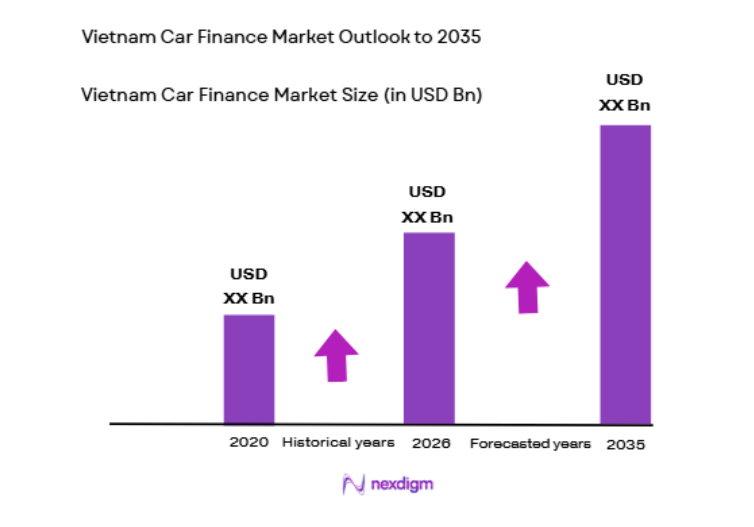
The Vietnam car finance market is projected to reach USD ~ billion based on a recent historical assessment. The market growth is largely driven by the increasing demand for vehicles, rising middle-class income, and favorable lending conditions. Consumer financing options, including vehicle loans and leasing services, have become more accessible due to the support from both local and international financial institutions. Additionally, the development of online platforms for car financing is increasing the convenience and affordability of vehicle purchases.
Key cities such as Hanoi and Ho Chi Minh City lead the market due to their large populations, higher disposable incomes, and robust infrastructure. These urban centers account for a significant portion of vehicle sales and financing activity in the country. The adoption of car financing products is particularly high in these regions due to the demand for personal vehicles and the growth of the automotive industry. With an increasing number of car dealerships and financial institutions offering tailored loan products, these cities are central to the car finance market’s expansion.
Market Segmentation
By Financing Type
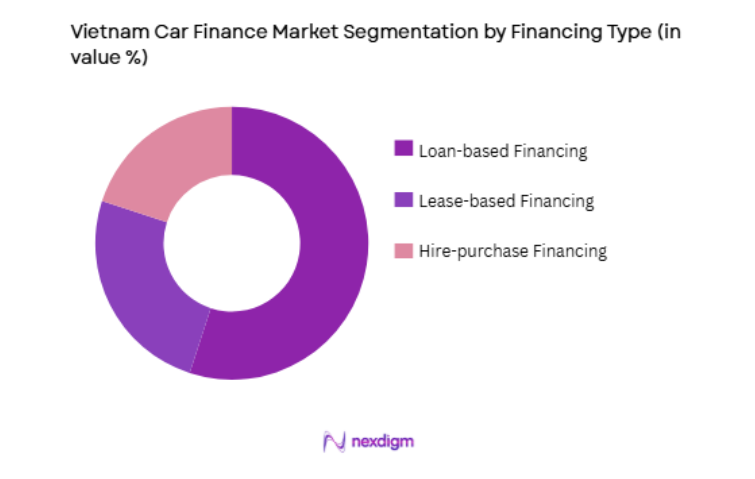
The Vietnam car finance market is segmented by financing type into loan-based financing, lease-based financing, and hire-purchase financing. Recently, loan-based financing has gained a dominant market share due to its widespread availability and lower initial payments compared to leasing options. The popularity of personal loans from banks and financial institutions allows consumers to own cars outright with more flexible repayment terms. The rise in disposable incomes and favorable loan terms have contributed to the increasing adoption of loan-based financing, making it the preferred choice for many Vietnamese consumers seeking to purchase vehicles.
By Vehicle Type
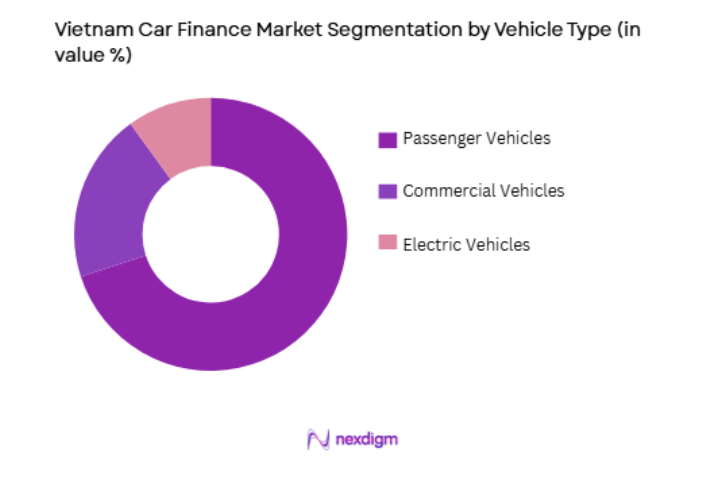
The Vietnam car finance market is segmented by vehicle type into passenger vehicles, commercial vehicles, and electric vehicles (EVs). Passenger vehicles dominate the market share due to the increasing demand for personal transportation in urban and rural areas. Rising incomes, coupled with the growing middle class, are driving consumer preferences for private cars over public transportation. The availability of affordable finance options, along with the expansion of dealerships offering financing solutions for passenger cars, has contributed to their dominance in the market, making them the most financed vehicle type in Vietnam.
Competitive Landscape
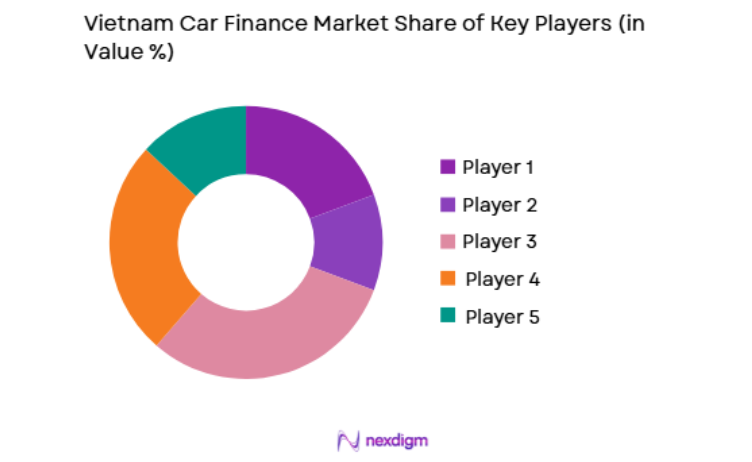
The competitive landscape of the Vietnam car finance market is marked by a mix of established banks, non-bank financial institutions, and global automotive manufacturers offering financing solutions. Local banks dominate the market with their extensive branch networks and strong customer relationships. However, the rise of digital finance platforms is increasing competition by offering streamlined, online-based solutions that cater to younger, tech-savvy consumers. In addition, global car manufacturers are also playing a pivotal role by partnering with banks and financial institutions to offer branded financing packages to customers.
| Company Name | Establishment Year | Headquarters | Technology Focus | Market Reach | Key Products | Revenue | Market-Specific Parameter |
| Vietcombank | 1963 | Hanoi, Vietnam | ~ | ~ | ~ | ~ | ~ |
| Sacombank | 1991 | Ho Chi Minh City | ~ | ~ | ~ | ~ | ~ |
| Shinhan Bank | 1993 | Seoul, South Korea | ~ | ~ | ~ | ~ | ~ |
| VinFast | 2017 | Hai Phong, Vietnam | ~ | ~ | ~ | ~ | ~ |
| Prudential Vietnam | 2008 | Ho Chi Minh City | ~ | ~ | ~ | ~ | ~ |
Vietnam Car Finance Market Analysis
Growth Drivers
Government Support for Car Ownership
The Vietnamese government has introduced various policies to increase car ownership, which has contributed significantly to the growth of the car finance market. These policies include incentives for first-time car buyers, tax reductions for environmentally friendly vehicles, and the promotion of vehicle ownership among middle-class families. With the government’s continued support, the market for car finance has grown as more consumers are able to afford cars through financing options. The easy accessibility of vehicle loans, especially with low interest rates and extended repayment terms, makes car ownership more achievable. In addition, as Vietnam’s economy continues to grow and the middle class expands, the demand for personal cars and financing solutions is expected to rise. Government initiatives to boost domestic automotive production and increase local financing options will further drive the growth of the car finance market, ensuring it remains an essential part of the consumer landscape.
Rapid Urbanization and Middle-Class Expansion
The rapid urbanization of Vietnam, along with the expansion of its middle class, is driving increased demand for personal vehicles. As cities like Hanoi and Ho Chi Minh City continue to grow in both size and affluence, more people are seeking private vehicles for convenience and personal mobility. The expansion of urban areas has made car ownership more desirable, particularly in densely populated cities where public transportation options are often overcrowded or inconvenient. The rising middle class, with higher disposable incomes and an increasing preference for private transport, is fueling the demand for cars. With more consumers able to afford vehicles, car financing has become an essential part of the purchasing process, enabling individuals and families to own vehicles despite the high upfront cost. As urbanization continues to accelerate, demand for car loans and other financing options will grow, driving the expansion of the car finance market in Vietnam.
Market Challenges
High Interest Rates on Car Loans
One of the major challenges facing the Vietnam car finance market is the relatively high interest rates on car loans, which can make it difficult for consumers to afford financing options. While car loans have become more widely available, many borrowers find the interest rates prohibitive, especially for lower-income consumers. Higher interest rates are often a result of the risks associated with car financing, as vehicles are depreciating assets. These rates can make it harder for potential car buyers to secure financing, limiting the market’s growth. Although some financial institutions offer special promotions and lower rates, these offers are typically available only to prime customers, excluding a large segment of the market. In addition, the lack of financial literacy among some segments of the population further exacerbates the challenge, as consumers may not fully understand the long-term costs of car loans.
Limited Financing Options for Electric Vehicles
Although electric vehicles (EVs) are becoming increasingly popular in Vietnam, financing options for EVs are still limited compared to traditional gasoline-powered vehicles. The limited availability of EV financing products can be attributed to the relatively higher cost of EVs and the lack of a robust market for electric vehicles in Vietnam. While the government is encouraging the adoption of EVs through subsidies and incentives, car finance institutions have been slow to adapt to the new market trends. Without a broad range of financing solutions tailored to electric vehicles, many consumers are reluctant to purchase EVs, which limits the growth potential of the electric car finance segment. Financial institutions and car manufacturers must work together to create more accessible and affordable financing options for EV buyers in order to capitalize on the growing demand for electric vehicles in Vietnam.
Opportunities
Growth of Digital Financing Platforms
The rise of digital financing platforms presents a significant opportunity for the Vietnam car finance market. Consumers in Vietnam are increasingly using online platforms for a variety of financial services, including car loans, making it easier to apply for and manage car financing from the comfort of their homes. Digital finance solutions offer a streamlined process, lower operational costs, and the ability to reach a larger audience, including younger, tech-savvy consumers. These platforms allow car buyers to access personalized loan products with competitive interest rates and flexible terms, providing greater accessibility and convenience. The growing popularity of e-commerce and mobile payments in Vietnam has further accelerated the shift toward digital financing solutions, creating a new channel for car finance providers to reach a wider customer base. As more consumers turn to digital platforms, the market for car finance will continue to expand, and financial institutions that embrace this shift will be well-positioned for growth.
Rise in Car Leasing and Subscription Models
The growing popularity of car leasing and subscription models presents an opportunity for the Vietnam car finance market to diversify its offerings. These models allow consumers to access vehicles without the long-term commitment of ownership, providing flexibility and lower upfront costs. Car leasing and subscription services are particularly appealing to younger consumers who prefer not to own cars but still want the convenience and status associated with vehicle use. This trend is supported by the increasing availability of these services through both traditional and digital channels. With leasing and subscription models offering a cost-effective and flexible alternative to traditional car ownership, demand for these products is expected to rise, creating new growth avenues for car finance providers. As more consumers seek alternative ownership models, car finance companies will have the opportunity to innovate and expand their product portfolios to cater to this emerging demand.
Future Outlook
The Vietnam car finance market is poised for significant growth over the next five years, driven by increasing demand for personal vehicles, government incentives, and the rise of digital financing platforms. The shift toward electric vehicles and the growing middle class will further propel the market, providing ample opportunities for financial institutions to expand their offerings. With ongoing improvements in financing products and greater accessibility, more consumers will be able to purchase vehicles, making car finance an integral part of the automotive ecosystem in Vietnam.
Major Players
- Vietcomban
- Sacombank
- Shinhan Bank
- VinFast
- Prudential Vietnam
- Techcombank
- Maritime Bank
- BIDV
- VPBank
- DongA Bank
- HDBank
- Eximbank
- ACB
- NamABank
- SeABank
Key Target Audience
- Investments and venture capitalist firms
- Government and regulatory bodies
- Automotive manufacturers
- Car dealerships
- Financial institutions
- Digital finance platforms
- Leasing companies
- Consumer finance firms
Research Methodology
Step 1: Identification of Key Variables
Define key market drivers, challenges, and opportunities based on the latest market data and industry reports.
Step 2: Market Analysis and Construction
Analyze market trends and demand patterns through both qualitative and quantitative methods to construct a comprehensive market model.
Step 3: Hypothesis Validation and Expert Consultation
Validate assumptions with consultations from industry experts, financial institutions, and automotive industry professionals.
Step 4: Research Synthesis and Final Output
Combine all research findings, insights, and expert opinions into a final report, providing a thorough overview of the market and actionable insights.

- Executive Summary
- Research Methodology (Definitions, Scope, Industry Assumptions, Market Sizing Approach, Primary & Secondary Research Framework, Data Collection & Verification Protocol, Analytic Models & Forecast Methodology, Limitations & Research Validity Checks)

- Market Definition and Scope
- Value Chain & Stakeholder Ecosystem
- Regulatory / Certification Landscape
- Sector Dynamics Affecting Demand

- Growth Drivers
Increasing Middle-Class Population
Growing Demand for Personal Vehicles
Expansion of Online Financing Platforms - Market Challenges
High Interest Rates
Limited Credit Accessibility
Regulatory and Compliance Hurdles - Market Opportunities
Digital Transformation in Car Financing
Government Policies Supporting Electric Vehicle Financing
Partnerships Between Automakers and Financial Institutions - Trends
Adoption of Digital Payment Solutions in Car Financing
Growth of Subscription-based Car Financing Models - Government Regulations
Financing Terms and Interest Rate Guidelines
Consumer Protection Laws in Vehicle Financing
Regulations on Electric Vehicle Financing - SWOT Analysis
- Porter’s Five Forces

- By Market Value, 2020-2025
- By Installed Units, 2020-2025
- By Average System Price, 2020-2025
- By System Complexity Tier, 2020-2025

- By System Type (In Value%)
Leasing Options
Installment Financing
Personal Loans
Fleet Financing
Balloon Financing - By Platform Type (In Value%)
Online Platforms
Banks & Financial Institutions
Automaker Partnerships
Independent Finance Companies
Peer-to-Peer Platforms - By Fitment Type (In Value%)
New Car Financing
Used Car Financing
Refinancing
Flexible Financing Options - By End User Segment (In Value%)
Individual Consumers
Car Dealerships
Fleet Operators

- Market Share Analysis
- Cross Comparison Parameters (System Type, Platform Type, End User Segment, Interest Rates, Loan Tenure, Credit Score Requirements, Loan-to-Value Ratio, Geographic Coverage, Approval Process, Vehicle Type Financing)
- SWOT Analysis of Key Competitors
- Pricing & Procurement Analysis
- Key Players
Vietcombank
BIDV
VPBank
VietinBank
Sacombank
Techcombank
Shinhan Bank
Lotte Finance
HDBank
ACB
HD Saison Finance
Masan Consumer
Toyota Financial Services
Honda Finance
Mercedes-Benz Financial Services

- Increasing Adoption of Car Financing Among Millennials
- Fleet Operators Expanding Their Financing Options
- Government Support for Corporate Car Financing
- Rising Interest in Flexible Payment Schemes

- Forecast Market Value, 2026-2035
- Forecast Installed Units, 2026-2035
- Price Forecast by System Tier, 2026-2035
- Future Demand by Platform, 2026-2035


 Request a Sample
 Ask for Customization
 Get a Quote
 Enquire Now