
 Download PDF
 Download PDF
Market Overview
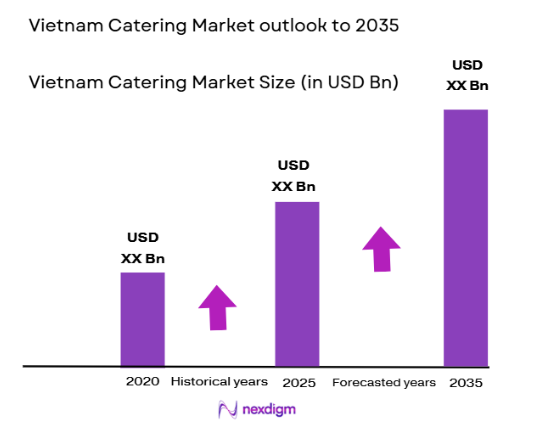
The Vietnam catering market is experiencing substantial growth, driven by an increasing demand for food services across various industries, such as corporate events, healthcare, and private celebrations. The market size is valued at approximately USD ~ billion, reflecting a rapid expansion due to urbanization, rising disposable incomes, and a shift towards convenience. The demand for catering services is also bolstered by the increasing number of businesses, institutional clients, and the growing tourism industry in the country.
Vietnam’s catering market is dominated by key urban centers such as Hanoi and Ho Chi Minh City. These cities lead due to their large population, booming hospitality sectors, and a thriving business environment that drives demand for corporate catering services. The urban lifestyle, along with increasing foreign investments and tourism, has also led to a heightened preference for diverse and quality food offerings. The market in these cities is also supported by a well-established foodservice infrastructure and a high level of consumer spending power.
Market Segmentation
By Product Type:
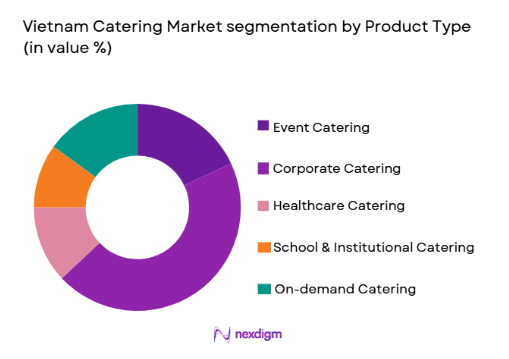
Vietnam catering market is segmented by product type into event catering, corporate catering, healthcare catering, school & institutional catering, and on-demand catering. Recently, corporate catering has a dominant market share due to factors such as the rising number of businesses, a growing professional workforce, and a high demand for food services for corporate meetings and events. The increasing demand for efficient, reliable, and high-quality catering services in corporate settings has propelled this sub-segment to the forefront.
By Platform Type:
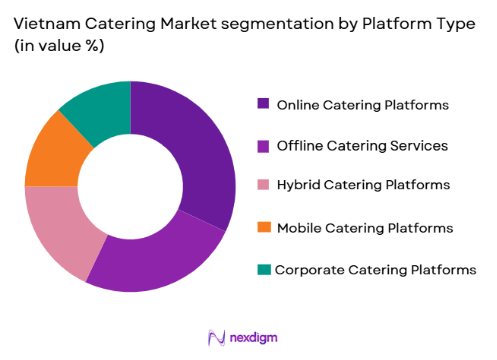
Vietnam catering market is segmented by platform type into online catering platforms, offline catering services, hybrid catering platforms, mobile catering platforms, and corporate catering platforms. Online catering platforms have witnessed substantial growth due to the increasing convenience and accessibility of online ordering and delivery systems. The integration of technology and the rise of mobile apps offering catering services has driven the preference for online platforms, allowing consumers to easily customize their orders and have them delivered efficiently.
Competitive Landscape
The competitive landscape of Vietnam’s catering market is dynamic, with a mix of well-established local players and international food service providers competing for market share. The market sees some consolidation as larger players acquire smaller firms to expand their service offerings and improve efficiency. Key players have heavily invested in technology, service quality, and customer satisfaction to retain their dominance in the market. Several market leaders have also ventured into the online and mobile platform space, offering greater convenience to consumers.
| Company Name | Establishment Year | Headquarters | Technology Focus | Market Reach | Key Products | Revenue (USD) | Additional Market-Specific Parameter |
| The Caterers Group | 2005 | Ho Chi Minh City | ~ | ~ | ~ | ~ | ~ |
| Savoury Catering | 2008 | Hanoi | ~ | ~ | ~ | ~ | ~ |
| Vietcatering Co. | 2010 | Ho Chi Minh City | ~ | ~ | ~ | ~ | ~ |
| Delicious Bites | 2012 | Hanoi | ~ | ~ | ~ | ~ | ~ |
| Epicure Catering | 2006 | Ho Chi Minh City | ~ | ~ | ~ | ~ | ~ |
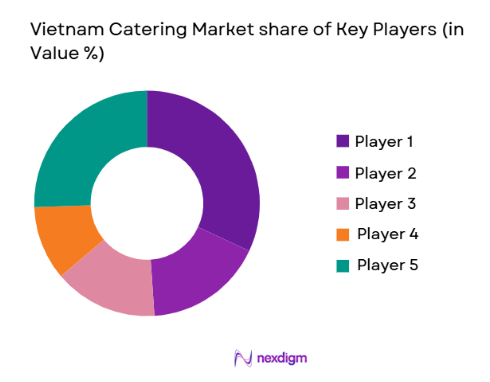
Vietnam Catering Market Analysis
Growth Drivers
Rising Disposable Incomes:
Rising disposable incomes in Vietnam are fueling the demand for quality catering services across various sectors. As more people can afford premium food experiences, catering businesses are benefiting from the increased expenditure on social events, corporate meetings, and institutional catering. People in major cities like Hanoi and Ho Chi Minh City are increasingly willing to spend more on quality and diverse food offerings. This economic growth has led to an uptick in demand for catering services that provide both traditional and modern meal options, contributing to the market’s overall growth. Moreover, as consumers become more discerning in their preferences, catering businesses are adopting innovative food solutions to cater to their evolving tastes, offering healthier, organic, and customized options, all of which align with the rising purchasing power.
Increasing Corporate Events:
The increasing frequency of corporate events, business meetings, and corporate functions is a key growth driver for the catering market in Vietnam. With more companies focusing on building corporate culture and fostering team-building activities, the demand for catering services for seminars, conferences, and other corporate functions has surged. Companies are opting for corporate catering services to ensure that their events are efficiently managed with high-quality food options. The growing corporate culture in Vietnam is driving significant demand for catering services that cater to large corporate gatherings, conferences, and trade shows, all of which require large-scale food production and distribution.
Market Challenges
High Competition and Price Sensitivity:
Vietnam’s catering market is highly competitive, with numerous small and medium-sized businesses competing with large catering companies. The high level of competition leads to price sensitivity among consumers, particularly in the corporate and institutional segments. As more players enter the market, catering services often lower their prices to attract clients, which can result in reduced profit margins for businesses. This price sensitivity limits the ability of catering companies to offer premium services and invest in technology and infrastructure. Furthermore, businesses are under constant pressure to maintain high food quality and service standards while reducing costs, making it difficult for them to stay competitive in the market.
Logistical and Supply Chain Complexities:
Another significant challenge for the Vietnam catering market is managing the logistics and supply chain efficiently. The catering sector is dependent on timely deliveries of fresh ingredients, especially in remote or rural areas, which can be problematic due to the country’s infrastructure limitations. Transportation delays, inconsistent supply of fresh produce, and regulatory hurdles can disrupt operations and negatively impact customer satisfaction. Additionally, catering companies must manage inventory effectively to reduce wastage and ensure food safety, which requires a robust supply chain system and advanced logistics technology.
Opportunities
Expansion of Online Catering Services:
The increasing use of mobile apps and online platforms presents a significant opportunity for catering businesses in Vietnam. Consumers are increasingly turning to online platforms to place orders for both individual and corporate catering services, driven by the convenience of browsing menus, comparing prices, and making payments online. This shift towards digital platforms is expected to continue, with businesses capitalizing on technology to reach a larger customer base. Catering companies that embrace online ordering and delivery systems are likely to see substantial growth, as they cater to the growing demand for tech-driven solutions. The use of AI and machine learning to predict customer preferences and streamline operations can also help businesses optimize their service offerings and enhance customer experience.
Partnerships with Corporates and Educational Institutions:
Vietnam’s growing corporate sector and educational institutions present a substantial opportunity for catering companies. By forming strategic partnerships with businesses and schools, catering firms can secure long-term contracts and steady revenue streams. The demand for healthy, nutritious meals for corporate workers and students is rising, creating a niche for catering companies that specialize in providing quality meal solutions. As corporate culture evolves and educational institutions focus on better nutrition for students, catering companies can meet this demand by offering tailored services and meal options that meet specific dietary requirements, opening new avenues for business growth.
Future Outlook
The Vietnam catering market is expected to continue its growth trajectory over the next five years, driven by increasing urbanization, rising disposable incomes, and the growing demand for convenience. Technological advancements such as mobile platforms, delivery apps, and online ordering will play a crucial role in shaping the future of the market. Moreover, as more businesses and institutions focus on employee well-being and student nutrition, there will be a rise in demand for corporate and educational catering services. Regulatory support for sustainable food practices will also boost the adoption of eco-friendly solutions within the catering sector.
Major Players
- The Caterers Group
- Savoury Catering
- Vietcatering Co.
- Delicious Bites
- Epicure Catering
- Vietnam Food Services
- Catering Co. Vietnam
- Fresh Feast Catering
- Viet Catering Solutions
- Culinary Ventures Catering
- Taste of Vietnam Catering
- Prime Events Catering
- Green Plate Catering
- Cater Me Vietnam
- Savory Catering Solutions
Key Target Audience
- Investments and venture capitalist firms
- Government and regulatory bodies
- Corporates looking for catering services
- Event management companies
- Educational institutions
- Healthcare institutions
- Hospitality and tourism businesses
- Food service technology providers
Research Methodology
Step 1: Identification of Key Variables
Identification of relevant market factors and variables, including consumer preferences, trends, and industry standards.
Step 2: Market Analysis and Construction
Data collection and analysis from primary and secondary sources to build a comprehensive market model.
Step 3: Hypothesis Validation and Expert Consultation
Engaging industry experts and stakeholders to validate the developed hypothesis and market trends.
Step 4: Research Synthesis and Final Output
Consolidating findings and producing the final market report, including actionable insights.

- Executive Summary
- Research Methodology (Definitions, Scope, Industry Assumptions, Market Sizing Approach, Primary & Secondary Research Framework, Data Collection & Verification Protocol, Analytic Models & Forecast Methodology, Limitations & Research Validity Checks)

- Market Definition and Scope
- Value Chain & Stakeholder Ecosystem
- Regulatory / Certification Landscape
- Sector Dynamics Affecting Demand
- Strategic Initiatives & Infrastructure Growth

- Growth Drivers
Rising Disposable Incomes
Increasing Corporate Events
Growth in Hospitality and Tourism
Adoption of Online Catering Platforms
Demand for Sustainable Practices - Market Challenges
High Competition and Price Sensitivity
Logistical and Supply Chain Complexities
Regulatory Barriers
Cultural Preferences and Dietary Restrictions
Cost of Sourcing Quality Ingredients - Market Opportunities
Expansion of Online Catering Services
Rising Demand for Sustainable and Organic Catering
Partnerships with Corporates and Educational Institutions - Trends
Growing Popularity of Healthy and Organic Menus
Integration of Technology in Catering Services
Increased Focus on Sustainability
Rise in Customizable Menus for Clients
Evolution of Corporate Catering Needs - Government Regulations & Defense Policy
Food Safety Regulations
Sustainability and Environmental Impact Guidelines
Licensing and Certification Requirements - SWOT Analysis
- Stakeholder and Ecosystem Analysis
- Porter’s Five Forces Analysis
- Competition Intensity and Ecosystem Mapping

- By Market Value, 2020-2025
- By Installed Units, 2020-2025
- By Average System Price, 2020-2025
- By System Complexity Tier, 2020-2025

- By System Type (In Value%)
Event Catering
Corporate Catering
Healthcare Catering
School & Institutional Catering
On-demand Catering - By Platform Type (In Value%)
Online Catering Platforms
Offline Catering Services
Hybrid Catering Platforms
Mobile Catering Platforms
Corporate Catering Platforms - By Fitment Type (In Value%)
Self-serve Catering
Full-service Catering
Buffet-style Catering
Personalized Catering
Pre-packaged Catering - By EndUser Segment (In Value%)
Corporate Clients
Private Events & Celebrations
Healthcare Facilities
Schools & Educational Institutions
Government and Institutional Clients - By Procurement Channel (In Value%)
Direct Procurement
Online Platforms
Third-party Distributors
Event-based Procurement
Corporate Partnerships - By Material / Technology (In Value%)
Food Service Technology Solutions
Sustainable Packaging
Kitchen Equipment Innovations
Catering Management Software
Robotics & Automation

- Market structure and competitive positioning
- Market share snapshot of major players
- CrossComparison Parameters (Service Type, Market Reach, Technology Adoption, Service Quality, Delivery Speed, Cost Structure, Brand Recognition, Client Relationship Management, Innovation in Services, Sustainability Initiatives)
- SWOT Analysis of Key Players
- Pricing & Procurement Analysis
- Key Players
The Caterers Group
Savoury Catering Solutions
Vietcatering Co.
Delicious Bites Catering
Epicure Catering Services
Vietnam Food Services
Catering Co. Vietnam
Viet Nam Food Group
Fresh Feast Catering
Green Plate Catering
Cater Me Vietnam
Viet Catering Solutions
Culinary Ventures Catering
Taste of Vietnam Catering
Prime Events Catering

- Corporate Clients Seeking Cost-effective Solutions
- Schools and Healthcare Looking for Nutritious Options
- Private Events Focusing on Customization
- Government Clients Demanding Standardized Services

- Forecast Market Value, 2026-2035
- Forecast Installed Units, 2026-2035
- Price Forecast by System Tier, 2026-2035
- Future Demand by Platform, 2026-2035


 Request a Sample
 Ask for Customization
 Get a Quote
 Enquire Now