

 Download PDF
 Download PDF
Market Overview
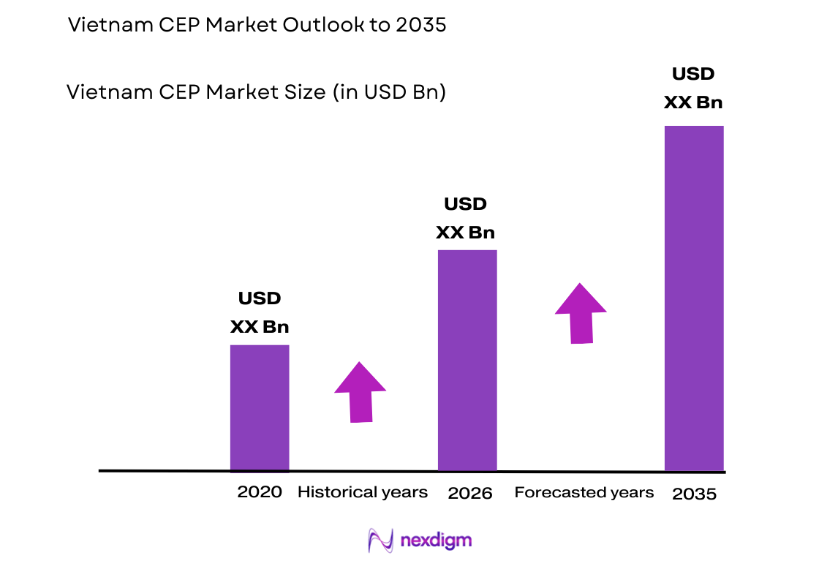
Vietnam’s courier, express, and parcel industry has expanded rapidly as digital commerce, manufacturing exports, and urban consumption increase nationwide logistics activity. Based on a recent historical assessment, the Vietnam CEP market generated approximately USD ~ billion in revenue according to logistics industry statistics compiled by the Vietnam Logistics Business Association and e commerce shipment data reported by the Ministry of Industry and Trade. Rising online retail transactions, cross border parcel flows, and increasing domestic deliveries are major drivers strengthening courier, express, and parcel shipment volumes across Vietnam’s logistics network.
CEP activity is concentrated primarily in Ho Chi Minh City, Hanoi, Hai Phong, and Da Nang where dense consumer populations and manufacturing clusters generate high parcel shipment volumes. Ho Chi Minh City operates as the largest logistics hub because of its extensive e commerce distribution centers and international airport connectivity. Hanoi functions as a major coordination center for northern distribution networks, while Hai Phong supports export logistics through its major port complex. Da Nang strengthens parcel connectivity across the central region through integrated road and air transport networks.
Market Segmentation
By Service Type
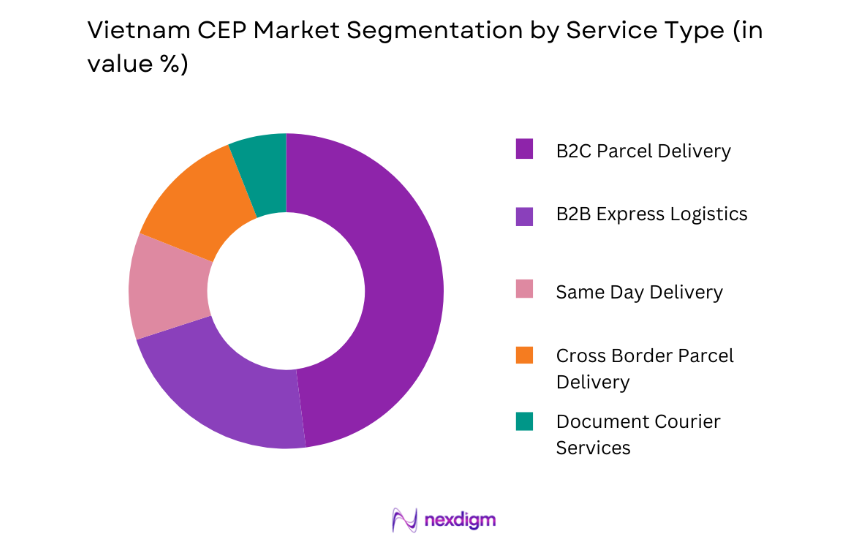
Vietnam CEP market is segmented by product type into B2C Parcel Delivery, B2B Express Logistics, Same Day Delivery, Cross Border Parcel Delivery, and Document Courier Services. Recently, B2C Parcel Delivery has a dominant market share due to factors such as rapid expansion of e commerce platforms, increasing online consumer purchases, and strong logistics integration with digital marketplaces. Online retail platforms generate extremely high shipment volumes involving electronics, fashion products, and household goods delivered directly to consumers nationwide. Courier companies therefore invest heavily in last mile delivery networks, automated parcel sorting hubs, and digital tracking systems capable of handling high daily shipment volumes across urban distribution networks.
By End Use Industry
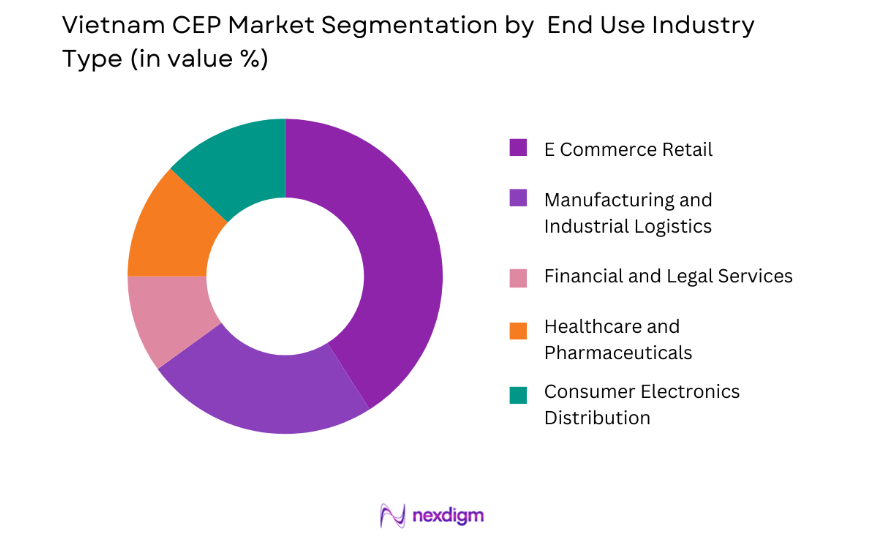
Vietnam CEP market is segmented by product type into E Commerce Retail, Manufacturing and Industrial Logistics, Financial and Legal Services, Healthcare and Pharmaceuticals, and Consumer Electronics Distribution. Recently, E Commerce Retail has a dominant market share due to the strong growth of online shopping platforms and mobile commerce applications that generate extremely high daily parcel shipment volumes. Large online marketplaces depend heavily on courier companies capable of managing nationwide distribution networks that connect fulfillment centers with residential consumers. CEP providers therefore operate automated sorting facilities, digital shipment tracking systems, and large last mile delivery fleets designed to manage rapidly increasing parcel demand.
Competitive Landscape
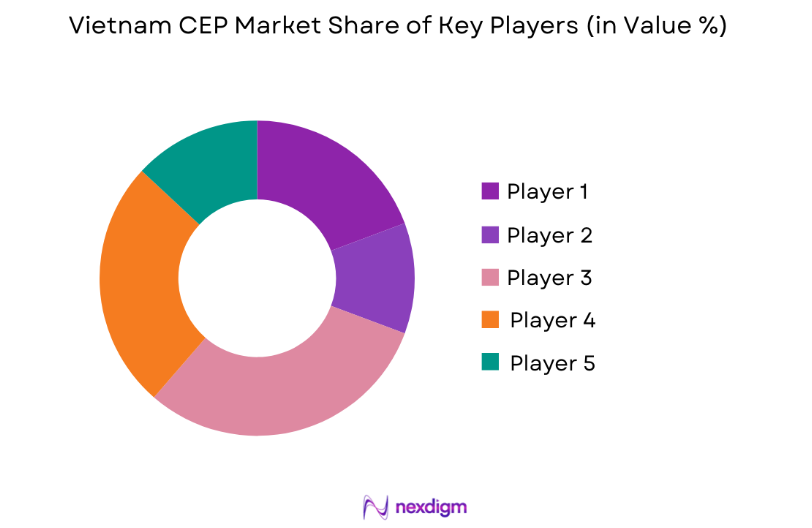
Vietnam’s courier, express, and parcel industry consists of international logistics corporations, regional delivery companies, and rapidly expanding domestic courier startups operating extensive nationwide distribution networks. Major global players leverage strong technology platforms, advanced parcel sorting infrastructure, and integrated international shipping capabilities to maintain competitive advantages. Domestic logistics firms also play a critical role due to their local distribution networks and strong integration with Vietnamese e commerce platforms. Increasing demand for faster delivery and digital tracking systems is encouraging market consolidation and strategic partnerships among logistics providers.
| Company Name | Establishment Year | Headquarters | Technology Focus | Market Reach | Key Products | Revenue | Delivery Network Scale |
| Viettel Post | 1997 | Vietnam | ~ | ~ | ~ | ~ | ~ |
| Vietnam Post | 1945 | Vietnam | ~ | ~ | ~ | ~ | ~ |
| DHL Express | 1969 | Germany | ~ | ~ | ~ | ~ | ~ |
| J&T Express | 2015 | Indonesia | ~ | ~ | ~ | ~ | ~ |
| GHN Express | 2012 | Vietnam | ~ | ~ | ~ | ~ | ~ |
Vietnam CEP Market Analysis
Growth Drivers
Rapid Expansion of E Commerce Platforms and Digital Retail Logistics Demand
Vietnam’s digital retail sector has expanded rapidly as internet penetration and smartphone usage continue increasing across urban and rural populations. Online marketplaces selling consumer electronics, clothing, cosmetics, groceries, and household products generate millions of parcel shipments that require efficient courier, express, and parcel logistics services. CEP companies play a critical role in supporting digital retail supply chains by managing parcel pickup, sorting, transportation, and final delivery to consumers nationwide. E commerce platforms rely heavily on logistics partners capable of processing large shipment volumes within short delivery timeframes. Courier operators therefore invest heavily in automated parcel sorting facilities, last mile delivery fleets, and digital shipment tracking technologies that improve operational efficiency. Rising consumer expectations for faster delivery and real time order tracking further strengthen demand for advanced logistics infrastructure. Digital payment systems and mobile commerce applications also increase transaction volumes that directly translate into higher parcel shipments handled by courier providers. As Vietnamese online retail adoption continues expanding across multiple product categories, the courier, express, and parcel industry will remain a critical logistics backbone supporting the country’s digital commerce ecosystem.
Expansion of Domestic Urban Logistics Networks and Last Mile Delivery Infrastructure
Vietnam’s rapidly expanding urban population and growing consumer economy significantly increase demand for efficient parcel distribution networks capable of serving dense metropolitan markets. Large cities including Ho Chi Minh City and Hanoi generate extremely high volumes of daily parcel deliveries associated with online retail purchases and business shipments. Courier companies therefore invest heavily in last mile delivery infrastructure including distribution warehouses, automated sorting centers, and fleets of motorcycles and delivery vans operating within urban logistics networks. Development of advanced route optimization software enables logistics providers to coordinate thousands of daily deliveries across complex city transportation systems. Urban logistics networks also support rapid delivery services including same day and next day parcel shipping which has become an important competitive advantage for courier operators. Growing demand for quick consumer delivery encourages courier companies to expand local distribution hubs located closer to residential populations. As urban consumer demand continues expanding alongside digital commerce participation, logistics companies will continue strengthening last mile delivery infrastructure across Vietnam’s largest cities.
Market Challenges
Fragmented Logistics Infrastructure and Inefficient Distribution Networks
Vietnam’s courier, express, and parcel industry faces operational challenges due to fragmented logistics infrastructure across certain regions of the country. While major cities maintain well developed transportation networks, many rural and remote areas still lack efficient logistics connectivity capable of supporting rapid parcel delivery operations. Courier companies must therefore manage complex delivery networks that combine multiple transportation modes including road transport, motorcycles, and small scale distribution hubs. These fragmented logistics networks can increase delivery times and operational costs for logistics providers attempting to maintain nationwide parcel coverage. Parcel shipment coordination becomes particularly challenging during peak e commerce shopping seasons when delivery volumes increase significantly. Courier operators must deploy additional vehicles and temporary sorting facilities in order to manage these surges in parcel demand. Infrastructure limitations therefore create operational inefficiencies that affect service reliability and logistics cost structures across the courier industry. As parcel volumes continue increasing nationwide, improving logistics connectivity and infrastructure capacity will remain a critical requirement for sustaining efficient CEP operations.
Rising Operational Costs and Increasing Competition Among Courier Providers
Vietnam’s courier, express, and parcel industry has become highly competitive as numerous domestic and international logistics providers expand operations within the country. Intense price competition among courier companies often leads to lower profit margins as logistics providers attempt to attract e commerce platform partnerships and high volume shipping contracts. Rising fuel prices, vehicle maintenance costs, and labor expenses further increase operational expenditures for courier companies managing large delivery fleets. Logistics firms must also invest heavily in automated sorting technologies, digital tracking systems, and warehouse infrastructure in order to maintain service quality and operational efficiency. Smaller courier companies often struggle to compete with larger logistics providers that possess stronger financial resources and nationwide distribution networks. Market competition also increases pressure on delivery pricing which can affect profitability across the sector. As parcel volumes continue increasing alongside consumer expectations for faster delivery services, logistics providers must continuously optimize operational efficiency to maintain financial sustainability.
Opportunities
Expansion of Cross Border E Commerce Logistics and International Parcel Networks
Vietnam’s growing participation in international digital commerce creates significant opportunities for courier companies specializing in cross border parcel logistics. Online retail platforms increasingly facilitate global trade where Vietnamese consumers purchase products from international marketplaces while domestic merchants export goods to overseas buyers. Courier companies play a critical role in managing international parcel shipments including customs documentation, international air freight coordination, and final delivery within foreign markets. Expansion of global e commerce trade networks therefore creates new revenue opportunities for logistics providers capable of supporting cross border shipping operations. Courier operators that develop strong partnerships with international logistics carriers gain competitive advantages in facilitating international parcel distribution. These capabilities also enable Vietnamese small businesses to access global consumer markets through digital trade platforms. As cross border online retail continues expanding across Asia Pacific markets, courier companies with integrated international logistics networks will experience strong growth opportunities in cross border parcel logistics.
Adoption of Smart Logistics Technologies and Automated Parcel Processing Systems
Technological innovation is transforming courier operations through the integration of digital logistics platforms, artificial intelligence routing systems, and automated parcel sorting technologies. Courier companies increasingly deploy advanced warehouse automation systems capable of processing thousands of parcel shipments per hour with minimal manual intervention. Digital shipment tracking platforms enable customers and e commerce retailers to monitor parcel delivery progress in real time across logistics networks. Smart logistics technologies also improve route optimization and delivery scheduling which significantly reduces transportation costs and operational inefficiencies. Artificial intelligence algorithms can analyze delivery demand patterns and automatically allocate delivery resources across distribution networks. These innovations allow courier companies to increase parcel processing capacity while improving delivery speed and reliability. As parcel shipment volumes continue increasing due to digital commerce expansion, adoption of smart logistics technologies will become a major competitive advantage within Vietnam’s courier industry.
Future Outlook
Vietnam’s courier, express, and parcel industry is expected to expand significantly as digital commerce continues transforming consumer purchasing behavior and supply chain logistics. Increasing investments in logistics infrastructure, automated parcel sorting facilities, and smart delivery technologies will strengthen nationwide parcel distribution capabilities. Government initiatives promoting digital economy development and logistics modernization are likely to further accelerate industry growth. Rising cross border e commerce activity and expanding urban consumer demand will continue driving strong parcel shipment volumes across Vietnam.
Major Players
- Viettel Post
- Vietnam Post
- DHL Express
- J&T Express
- GHN Express
- Giao Hang Tiet Kiem
- Kerry Express Vietnam
- Ninja Van
- Best Express Vietnam
- Lazada Logistics
- Shopee Express
- FedEx Express
- UPS Vietnam
- EMS Vietnam
- CJ Logistics Vietnam
Key Target Audience
- Logistics infrastructure investors
- E commerce platform companies
- Courier and parcel delivery companies
- International logistics providers
- Retail distribution corporations
- Investments and venture capitalist firms
- Government and regulatory bodies
Research Methodology
Step 1: Identification of Key Variables
The research process begins by identifying variables such as parcel shipment volumes, e commerce transaction activity, logistics infrastructure capacity, and courier company revenue performance. These variables determine the operational scale of the Vietnam CEP market. Industry databases, government logistics reports, and trade organizations provide initial data inputs.
Step 2: Market Analysis and Construction
Quantitative logistics data and shipment statistics are analyzed to construct the market framework. Market segmentation is developed based on service types and industry demand patterns. Data triangulation using logistics company disclosures and e commerce shipment activity ensures consistent market structure development.
Step 3: Hypothesis Validation and Expert Consultation
Market assumptions are validated through consultation with logistics professionals, courier operators, and supply chain specialists operating in Vietnam. Expert interviews provide insights into operational trends, delivery infrastructure development, and emerging e commerce logistics patterns influencing the CEP industry.
Step 4: Research Synthesis and Final Output
All quantitative datasets and qualitative industry insights are consolidated into a comprehensive analytical model. This process integrates logistics activity indicators with supply chain infrastructure analysis. The final output presents a structured assessment of Vietnam’s courier, express, and parcel market dynamics and future growth potential.

- Executive Summary
- Research Methodology (Definitions, Scope, Industry Assumptions, Market Sizing Approach, Primary & Secondary Research Framework, Data Collection & Verification Protocol, Analytic Models & Forecast Methodology, Limitations & Research Validity Checks)

- Market Definition and Scope
- Value Chain & Stakeholder Ecosystem
- Regulatory / Certification Landscape
- Sector Dynamics Affecting Demand

- Growth Drivers
Rapid expansion of e commerce platforms increasing parcel shipment volumes nationwide
Growing urban population driving demand for fast and reliable last mile delivery services
Investments in logistics infrastructure including automated sorting centers and distribution hubs - Market Challenges
Urban traffic congestion affecting last mile delivery efficiency in major cities
Rising operational costs including fuel expenses and labor wages for delivery personnel
Fragmented logistics networks limiting operational scale and delivery optimization - Market Opportunities
Expansion of cross border e commerce trade increasing international parcel shipment demand
Adoption of automated parcel sorting technologies and digital logistics platforms
Growth of same day and on demand delivery services across major urban markets - Trends
Integration of artificial intelligence based route optimization and parcel tracking technologies
Expansion of micro fulfillment centers supporting faster urban parcel deliveries - Government Regulations
- SWOT Analysis
- Porter’s Five Forces

- By Market Value, 2020-2025
- By Installed Units, 2020-2025
- By Average System Price, 2020-2025
- By System Complexity Tier, 2020-2025

- By System Type (In Value%)
Courier Services
Express Parcel Delivery
Standard Parcel Delivery
Same Day Delivery Services
Cross Border Parcel Delivery - By Platform Type (In Value%)
Domestic Parcel Delivery Networks
International Parcel Delivery Networks
E Commerce Logistics Platforms
Integrated Digital Logistics Platforms - By Fitment Type (In Value%)
Business to Business Parcel Delivery
Business to Consumer Parcel Delivery
Consumer to Consumer Parcel Delivery
On Demand Delivery Services - By End User Segment (In Value%)
E Commerce Retailers
Manufacturing and Industrial Companies
Individual Consumers

- Market Share Analysis
- Cross Comparison Parameters (Delivery Network Coverage, Sorting Infrastructure Capacity, Digital Parcel Tracking Capability, Last Mile Delivery Fleet Size, Cross Border Logistics Integration, Pricing Strategy, Strategic Partnerships)
- SWOT Analysis of Key Competitors
- Pricing & Procurement Analysis
- Key Players
Vietnam Post
Viettel Post
GHN Express
Giao Hang Tiet Kiem
J&T Express Vietnam
DHL Express Vietnam
FedEx Vietnam
UPS Vietnam
Ninja Van Vietnam
Best Express Vietnam
Kerry Express Vietnam
AhaMove
Lalamove Vietnam
EMS Vietnam
JT Express International

- E commerce retailers depend on CEP operators to manage high parcel shipment volumes and rapid deliveries
- Manufacturing firms utilize parcel networks for spare parts distribution and small cargo shipments
- Small businesses rely on CEP providers to support nationwide product distribution across online marketplaces
- Individual consumers increasingly use parcel services for peer to peer shipping and online retail purchases

- Forecast Market Value, 2026-2035
- Forecast Installed Units, 2026-2035
- Price Forecast by System Tier, 2026-2035
- Future Demand by Platform, 2026-2035


 Request a Sample
 Ask for Customization
 Get a Quote
 Enquire Now