

 Download PDF
Market Overview
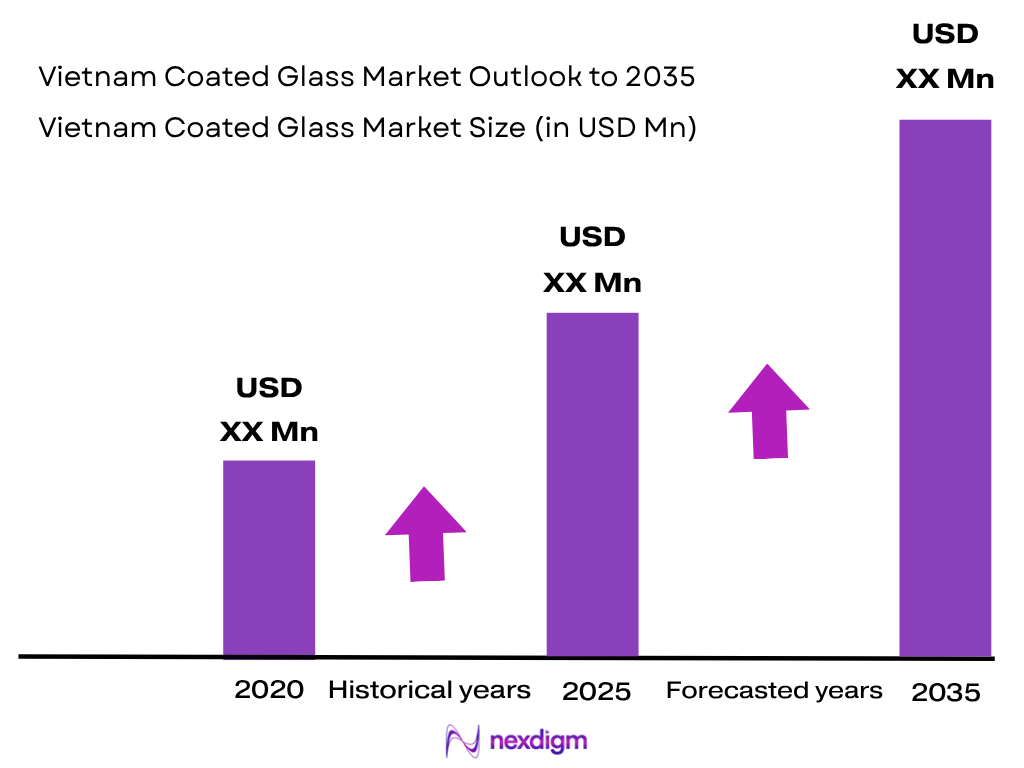
The Vietnam coated glass market is valued at approximately ~USD XX billion, based on historical industry assessment, supported by increasing demand for energy-efficient glazing solutions, commercial construction expansion, industrial infrastructure development, and growing adoption of advanced glass technologies. The market is driven by rising requirements for Low-E glass, solar control glass, and functional coated glass in buildings, automotive applications, and renewable energy projects. Increasing focus on sustainable construction practices and improved building energy performance continues to strengthen demand.
Vietnam coated glass demand is concentrated in major economic and industrial regions including Ho Chi Minh City, Hanoi, Binh Duong, Dong Nai, and Hai Phong due to strong construction activity, manufacturing investments, and industrial park expansion. Ho Chi Minh City and Hanoi represent major consumption centers because of high-rise commercial developments, residential projects, and infrastructure modernization. Southern industrial provinces dominate industrial demand due to automotive, electronics, and solar manufacturing facilities requiring advanced coated glass solutions.
Market Segmentation
By Coating Type
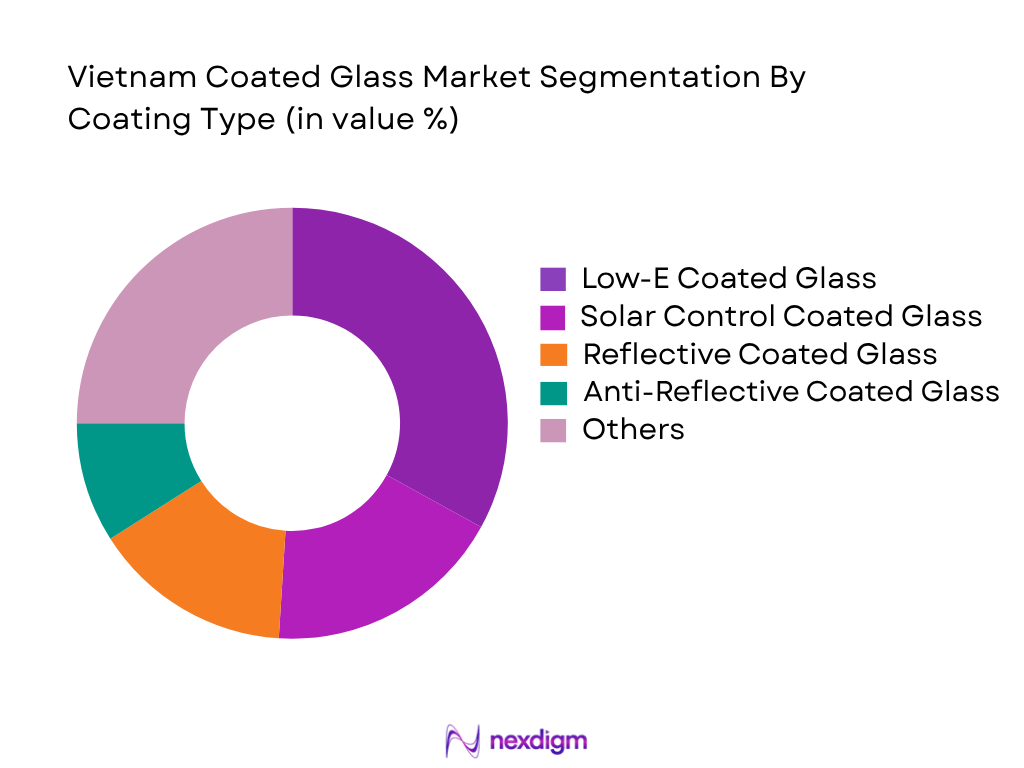
Vietnam coated glass market is segmented by coating type into Low-E coated glass, solar control coated glass, reflective coated glass, anti-reflective coated glass, self-cleaning coated glass, and smart glass coatings. Low-E coated glass holds a dominant market position due to increasing demand for energy-efficient buildings, improved thermal insulation performance, and growing adoption in commercial and residential construction projects. The segment benefits from rising requirements for reducing cooling energy consumption in Vietnam’s tropical climate. Commercial developers, architects, and building owners increasingly prefer Low-E solutions for high-rise buildings, office towers, hotels, and premium residential developments. Government initiatives promoting energy efficiency and sustainable construction practices further support adoption of Low-E coated glass solutions.
By Application
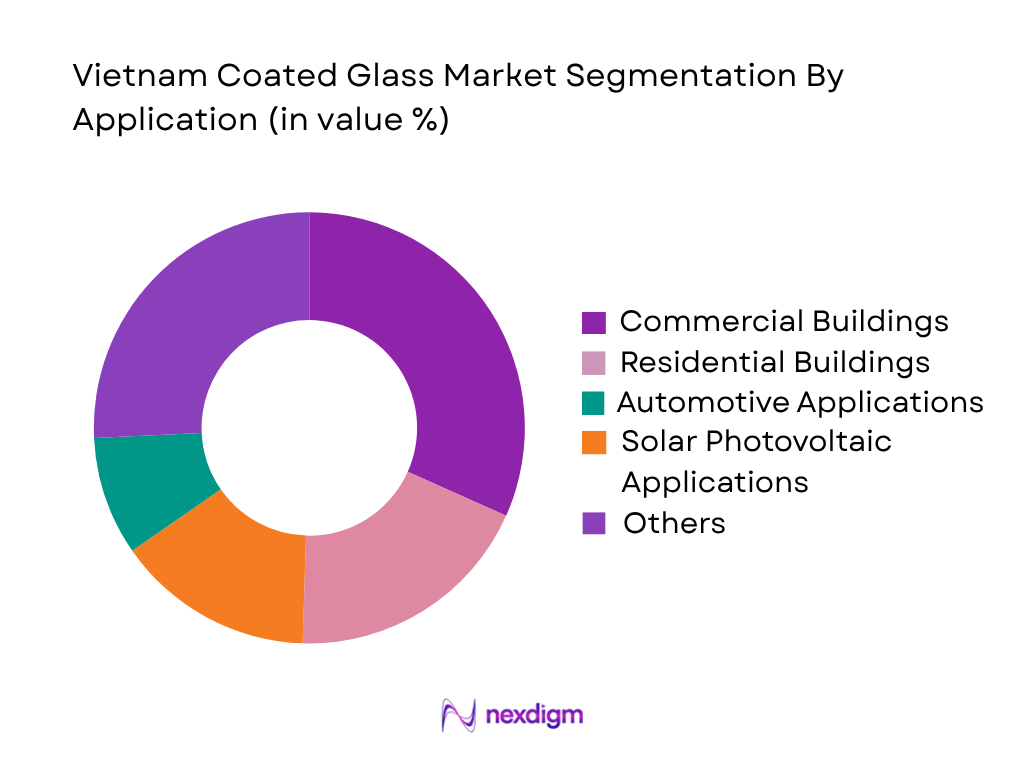
Vietnam coated glass market is segmented by application into commercial buildings, residential buildings, automotive applications, solar photovoltaic applications, electronics and display applications, and specialty industrial applications. Commercial buildings represent the dominant application segment due to increasing urban development, expansion of office towers, retail complexes, hotels, and green building projects. Demand is supported by the need for advanced glazing systems that improve daylight management, reduce solar heat gain, and enhance building aesthetics. Major cities including Ho Chi Minh City and Hanoi are witnessing increased adoption of coated glass in premium construction projects. Additionally, foreign-invested manufacturing facilities and industrial infrastructure projects are contributing to demand for high-performance coated glass solutions.
Competitive Landscape
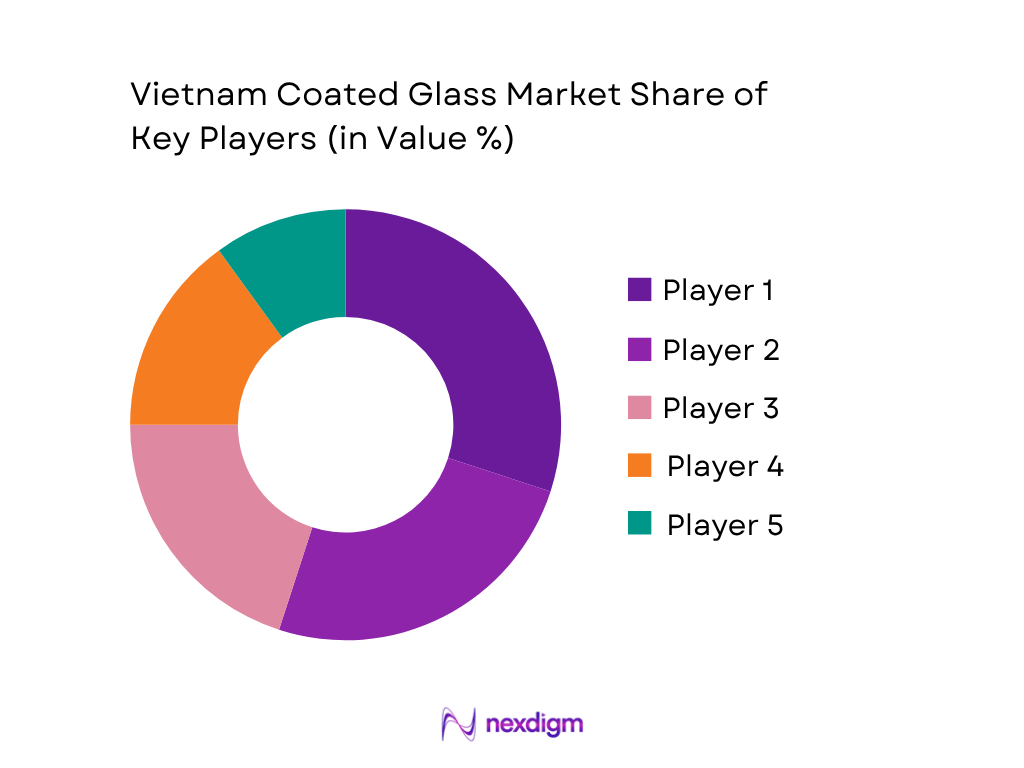
The Vietnam coated glass market is moderately consolidated with participation from international glass manufacturers and domestic producers. Major companies compete through advanced coating technologies, manufacturing capabilities, product innovation, and supply relationships with construction, automotive, solar, and industrial customers. Global players such as AGC Inc., Saint-Gobain, Guardian Industries, and NSG Group have strong technological capabilities, while domestic companies focus on expanding processing capacity and meeting local construction demand.
| Company | Establishment Year | Headquarters | Product Portfolio | Coating Technology | Major Applications | Manufacturing Capability | Market Focus | Distribution Network |
| AGC Inc. | 1907 | Japan | ~ | ~ | ~ | ~ | ~ | ~ |
| Saint-Gobain | 1665 | France | ~ | ~ | ~ | ~ | ~ | ~ |
| Guardian Industries | 1932 | USA | ~ | ~ | ~ | ~ | ~ | ~ |
| NSG Group | 1918 | Japan | ~ | ~ | ~ | ~ | ~ | ~ |
| Viglacera Corporation | 1974 | Vietnam | ~ | ~ | ~ | ~ | ~ | ~ |
Vietnam Coated Glass Market Analysis
Growth Drivers
Increasing Energy Efficient Construction and Green Building Adoption
The Vietnam coated glass market is driven by increasing demand for energy-efficient building materials due to rapid urban development, rising electricity consumption, and growing adoption of sustainable construction practices. Vietnam’s construction sector remains a major contributor to coated glass demand, supported by continued infrastructure and real estate development. According to the World Bank, Vietnam’s GDP reached approximately USD 476.3 billion in 2024, reflecting continued economic expansion supporting commercial and residential construction activities. The General Statistics Office of Vietnam reported that the country’s urban population exceeded 39 million people, increasing demand for high-rise buildings, commercial complexes, and energy-saving building solutions. Coated glass products such as Low-E glass and solar control glass are increasingly specified in modern buildings to reduce heat gain, improve indoor comfort, and optimize energy usage. The Ministry of Construction of Vietnam has promoted energy efficiency through building regulations, encouraging developers to adopt advanced glazing systems. Increasing construction of office towers, hotels, industrial facilities, and premium residential projects in Hanoi, Ho Chi Minh City, Binh Duong, and Da Nang is creating sustained demand for high-performance coated glass solutions.
Expansion of Manufacturing Sector and Industrial Infrastructure Development
The Vietnam coated glass market is supported by strong manufacturing sector expansion, increasing foreign direct investment, and growth of industrial infrastructure requiring advanced glass applications. Vietnam has become a major manufacturing hub for electronics, automotive components, and renewable energy products, creating demand for specialty coated glass solutions. According to the World Bank, Vietnam’s manufacturing sector remains a key contributor to economic growth, supported by export-oriented industrial development. The Foreign Investment Agency under Vietnam’s Ministry of Planning and Investment reported continued foreign investment commitments exceeding USD 38 billion in 2024, strengthening industrial facility construction and manufacturing expansion. Industrial parks across Binh Duong, Dong Nai, Hai Phong, and Bac Ninh are increasing demand for commercial buildings, factories, and energy-efficient infrastructure. Electronics manufacturing facilities require coated glass for displays and specialty applications, while automotive production growth is increasing demand for advanced glazing solutions. The International Energy Agency has highlighted Vietnam’s increasing renewable energy capacity, supporting demand for photovoltaic glass applications. Expansion of industrial infrastructure and manufacturing investments continues to create opportunities for coated glass suppliers serving multiple end-use industries.
Market Challenges
Dependence on Imported Advanced Coating Technologies and High Manufacturing Requirements
The Vietnam coated glass market faces challenges due to limited domestic capability for producing advanced coated glass technologies, resulting in dependence on imported equipment, technology solutions, and specialized materials. Manufacturing products such as Low-E glass, solar control glass, and functional coatings requires advanced magnetron sputtering systems, precise coating processes, and specialized technical expertise. According to the Vietnam General Department of Customs, Vietnam continues to maintain significant trade activity in machinery and industrial equipment imports to support manufacturing expansion. The Ministry of Industry and Trade has identified technology modernization as a key requirement for improving domestic manufacturing competitiveness. Advanced coated glass production requires substantial investment in coating lines, quality control systems, and skilled workforce development. Domestic producers often rely on international technology providers for coating equipment, process optimization, and technical support. The limited availability of local advanced coating infrastructure can increase production complexity and restrict rapid expansion of high-performance coated glass manufacturing. These factors create challenges for domestic companies seeking to compete with established global glass manufacturers possessing advanced coating technologies and integrated production capabilities.
Raw Material Supply Constraints and Energy Intensive Manufacturing Conditions
The Vietnam coated glass market is challenged by raw material availability, energy-intensive production processes, and dependence on stable industrial supply chains. Glass manufacturing requires silica sand, soda ash, metal oxides, and other specialized materials used for coating applications. According to the United States Geological Survey, global industrial mineral demand continues to increase due to construction and manufacturing expansion, influencing availability of critical glass production inputs. Vietnam’s rapid industrial growth has increased demand for construction materials, creating additional pressure on domestic supply chains. The World Bank reported that Vietnam’s industrial sector continues to expand, increasing energy requirements across manufacturing activities. Glass production requires high-temperature furnaces and continuous energy supply, making manufacturers sensitive to energy availability and operational efficiency. Advanced coated glass manufacturing additionally requires specialty materials such as silver compounds and metal-based coating materials that may depend on international supply networks. Transportation infrastructure, import dependency for specialized inputs, and fluctuations in industrial supply availability can affect production planning and operational efficiency for coated glass manufacturers.
Market Opportunities
Rising Solar Photovoltaic Manufacturing and Renewable Energy Expansion
The Vietnam coated glass market has significant opportunities from the expansion of solar photovoltaic manufacturing and renewable energy infrastructure. Solar glass with anti-reflective coatings is increasingly required to improve photovoltaic module efficiency and durability. According to the International Renewable Energy Agency, Vietnam has developed significant renewable energy capacity, supported by increasing solar deployment and clean energy investments. The Electricity and Renewable Energy Authority under Vietnam’s Ministry of Industry and Trade has promoted renewable energy development to strengthen the country’s energy transition. Vietnam’s export-oriented solar manufacturing industry has attracted investments from global renewable energy companies, creating demand for specialized photovoltaic glass products. The World Bank reported continued investment in Vietnam’s energy infrastructure, supporting industrial development and clean energy adoption. Coated glass suppliers have opportunities to serve photovoltaic module manufacturers through anti-reflective glass, high-transmission glass, and durable surface coating technologies. Increasing solar manufacturing activity in industrial regions such as Bac Ninh, Hai Phong, and Ho Chi Minh City is expected to strengthen demand for advanced coated glass solutions across renewable energy applications.
Increasing Demand for Smart Buildings and Energy Efficient Retrofitting
The Vietnam coated glass market presents opportunities through smart building development, energy-efficient retrofitting, and increasing adoption of advanced architectural glazing solutions. Growing urbanization and modernization of existing infrastructure are encouraging developers to integrate high-performance glass systems that improve thermal insulation and reduce energy consumption. According to the World Bank, Vietnam’s urban population continues to expand, increasing demand for modern commercial infrastructure and sustainable urban development. The Ministry of Construction has promoted energy-efficient building practices through national building standards and efficiency programs. Major cities including Hanoi and Ho Chi Minh City are witnessing development of office complexes, hotels, shopping centers, and premium residential projects requiring Low-E glass and solar control glazing. Increasing electricity demand from buildings creates opportunities for coated glass technologies that improve building performance and occupant comfort. The growth of green certification programs and sustainable construction practices is encouraging architects and developers to specify advanced glazing materials. These trends create opportunities for manufacturers offering energy-efficient coated glass solutions for new construction and renovation projects.
Future Outlook
Over the next decade, the Vietnam coated glass market is expected to witness strong growth driven by increasing urbanization, expansion of green buildings, rising foreign manufacturing investments, and growing demand for energy-efficient materials. Adoption of Low-E glass, solar control glazing, and specialty coatings is expected to increase across commercial construction, automotive manufacturing, and renewable energy applications. Domestic manufacturers are likely to enhance production capabilities, supporting greater availability of advanced coated glass solutions.
Major Players
- AGC Inc.
- Saint-Gobain
- Guardian Industries
- NSG Group
- Viglacera Corporation
- Vietnam Glass and Ceramics for Construction Corporation
- Phu My Glass
- Hanoi Glass Joint Stock Company
- Hoa Binh Glass
- Fuyao Glass Industry Group
- Xinyi Glass Holdings Limited
- Central Glass Co., Ltd.
- SCHOTT AG
- Corning Incorporated
- Eastman Chemical Company
Key Target Audience
- Architectural Glass Manufacturers
- Float Glass Manufacturers and Glass Processing Companies
- Automotive Glass Manufacturers and Vehicle Component Suppliers
- Solar Photovoltaic Module Manufacturers
- Construction Developers and Real Estate Companies
- Investments and Venture Capitalist Firms (VinaCapital, Mekong Capital, Dragon Capital)
- Government and Regulatory Bodies (Ministry of Construction of Vietnam, Ministry of Industry and Trade of Vietnam, Ministry of Natural Resources and Environment of Vietnam)
- Industrial Park Developers and Manufacturing Infrastructure Companies
Research Methodology
Step 1: Identification of Key Variables
The initial phase involves developing a comprehensive ecosystem map covering all major stakeholders within the Vietnam Coated Glass Market. This process includes identification of coated glass manufacturers, raw material suppliers, coating technology providers, construction companies, automotive producers, solar module manufacturers, and regulatory authorities. Secondary research is conducted through industry databases, government publications, trade statistics, and company-level information to identify key variables influencing market growth and demand patterns.
Step 2: Market Analysis and Construction
In this phase, historical and current market information related to the Vietnam Coated Glass Market is compiled and analyzed. The assessment includes evaluation of coated glass consumption across architectural, automotive, solar, electronics, and industrial applications. Supply-side factors such as domestic production capacity, import dependency, manufacturing capabilities, and technology adoption are examined to develop a comprehensive market structure.
Step 3: Hypothesis Validation and Expert Consultation
Market assumptions are developed and validated through discussions with industry stakeholders including coated glass manufacturers, glass processors, distributors, construction companies, and end-use industries. These consultations provide operational insights regarding product demand, procurement behavior, technology preferences, competitive dynamics, and future growth opportunities within the Vietnam Coated Glass Market.
Step 4: Research Synthesis and Final Output
The final phase integrates findings from primary and secondary research to generate a detailed assessment of the Vietnam Coated Glass Market. Industry interactions, supply chain analysis, application-level evaluation, and competitive benchmarking are combined to validate market estimates and provide a comprehensive outlook covering market trends, opportunities, challenges, and strategic recommendations.

- Executive Summary
- Research Methodology (Market Definition and Scope, Vietnam Coated Glass Market Classification, Architectural Low-E Glass Demand Assessment, Commercial Building Energy Efficiency Glass Requirement Mapping, Residential Fenestration Coated Glass Consumption Analysis, Automotive Advanced Glazing Demand Assessment, Solar Photovoltaic Coated Glass Requirement Evaluation, Electronics Display Glass Coating Demand Analysis, Domestic Float Glass and Coating Capacity Assessment, Import Dependency Analysis, Magnetron Sputtering Pyrolytic Coating Chemical Vapor Deposition and Physical Vapor Deposition Technology Assessment, Primary Industry Interviews, Data Triangulation, Forecasting Framework, Limitations and Future Conclusions)

- Definition and Scope
- Vietnam Coated Glass Value Chain Analysis
- Vietnam Coated Glass Supply Chain Analysis (Raw Material Suppliers, Glass Manufacturers, Coating Providers, Processors, Fabricators and Distributors)
- Architectural Coated Glass Demand Assessment
- Commercial Building Glass Requirement Analysis
- Residential Construction Glass Demand Assessment
- Automotive Coated Glass Application Analysis
- Solar Photovoltaic Glass Consumption Assessment
- Electronics and Display Glass Coating Requirement Analysis
- Sustainability and Energy Efficiency Glass Adoption Assessment

- Growth Drivers (Rapid Commercial Construction Expansion, Foreign Direct Investment Driven Manufacturing Growth, Increasing Energy Efficient Building Adoption, Expansion of Industrial Parks, Growth of Automotive Manufacturing Sector, Rising Solar Photovoltaic Installation Capacity, Urbanization and Infrastructure Development, Increasing Demand for Premium Architectural Facades)
- Market Challenges (Dependence on Imported Advanced Coating Technologies, Limited Domestic High Performance Coated Glass Production Capacity, High Capital Investment for Coating Facilities, Raw Material Supply Constraints, Technical Expertise Requirements for Advanced Processing, Competition from Conventional Glass Products)
- Market Opportunities (Expansion of Green Building Projects, Growth of Export Manufacturing Facilities, Increasing Solar Module Production, Rising Demand for Energy Efficient Windows, Automotive Glass Localization, Smart Glass Technology Adoption, Building Renovation Activities, Domestic Coating Technology Development)
- Market Trends (Low-E Glass Adoption, Solar Control Glass Integration, Green Building Material Preference, Smart Glass Development, High Performance Facade Expansion, Solar Glass Technology Advancement, Lightweight Automotive Glazing, Sustainable Glass Manufacturing, Digital Building Solutions)
- Government Regulations and Standards (Vietnam National Energy Efficiency Program, Ministry of Construction Building Energy Efficiency Regulations, Vietnam Building Code Requirements, Green Building Certification Standards, Environmental Protection Regulations, Industrial Manufacturing Standards, Renewable Energy Development Policies, Automotive Safety Glass Standards)
Patent and Innovation Landscape (Thin Film Coating Technologies, Multi-Layer Optical Coatings, Low-E Glass Enhancement Technologies, Solar Control Coating Innovation, Smart Glass Technologies, Functional Surface Treatment Solutions)
Import Export Analysis (Coated Glass Import Dependency, Major Import Sources, Domestic Manufacturing Capability, Architectural Glass Trade Flow, Specialty Glass Import Trends, Solar Glass Import Assessment) - SWOT Analysis
- Porter’s Five Forces Analysis
- PESTLE Analysis
- Stakeholder Ecosystem
- Competition Ecosystem

- By Market Value (2020-2025)
- By Coated Glass Consumption Volume (2020-2025)
- By Low-E Coated Glass Consumption Volume (2020-2025)
- By Solar Control Coated Glass Consumption Volume (2020-2025)
- By Architectural Coated Glass Consumption Volume (2020-2025)
- By Automotive Coated Glass Consumption Volume (2020-2025)
- By Solar Photovoltaic Coated Glass Consumption Volume (2020-2025)
- By Domestic Coated Glass Production Volume (2020-2025)
- By Coated Glass Import Value (2020-2025)
- By Average Selling Price (2020-2025)

- By Coating Type (In Value %)
Low-E Coated Glass
Single Silver Low-E Glass
Double Silver Low-E Glass
Triple Silver Low-E Glass
Solar Control Coated Glass
Reflective Solar Control Glass
Neutral Solar Control Glass
High Performance Solar Control Glass
Anti-Reflective Coated Glass
Photovoltaic Anti-Reflective Glass
Display and Electronics Anti-Reflective Glass
Self-Cleaning Coated Glass
Titanium Dioxide-Based Coatings
Hydrophilic Functional Coatings
Electrochromic Smart Glass Coatings
Thermochromic Glass Coatings
Anti-Microbial and Specialty Functional Coatings - By Glass Substrate Type (In Value %)
Float Glass
Tempered Glass
Heat Strengthened Glass
Laminated Glass
Insulated Glass Units (IGUs)
Tinted Glass
Ultra Clear Glass
Patterned Glass - By Coating Technology (In Value %)
Magnetron Sputtering Vacuum Deposition
Pyrolytic On-Line Coating Technology
Chemical Vapor Deposition (CVD)
Physical Vapor Deposition (PVD)
Sol-Gel Coating Technology
Hybrid Multi-Layer Coating Technology - By Application (In Value %)
Commercial Buildings
Office Towers
High-Rise Buildings
Shopping Malls and Retail Complexes
Hotels and Hospitality Infrastructure
Healthcare Facilities
Educational Buildings
Government Infrastructure
Residential Buildings
Single-Family Housing
Multi-Family Apartments
Luxury Residential Projects
Automotive Applications
Passenger Vehicles
Electric Vehicles
Commercial Vehicles
Rail Transportation
Solar Energy Applications
Photovoltaic Modules
Utility Scale Solar Projects
Solar Thermal Applications
Electronics and Display Applications
Smart Displays
Touch Panels
Electronic Devices
Specialty Applications
Marine Glass
Security Glass
Industrial Glass Applications - By Performance Parameter (In Value %)
Solar Heat Gain Coefficient (SHGC) Reduction
Visible Light Transmission (VLT) Performance
U-Value Improvement
Thermal Insulation Efficiency
Infrared Radiation Control
Ultraviolet Radiation Blocking
Energy Saving Performance
Light Management Capability - By Distribution Channel (In Value %)
Direct Manufacturer Sales
Architectural Glass Fabricators
Construction Material Distributors
Specialty Glass Suppliers
Automotive Glass Supply Chain
Solar Module Manufacturers
Industrial Trading Companies - By Region (In Value %)
Northern Vietnam
Hanoi Metropolitan Region
Hai Phong Industrial Region
Central Vietnam
Da Nang Industrial Region
Southern Vietnam
Ho Chi Minh City Metropolitan Region
Binh Duong Industrial Region
Dong Nai Manufacturing Region

- Market Share of Major Players (By Vietnam Revenue, Coated Glass Sales Volume, Low-E Glass Sales Volume, Solar Control Glass Sales Volume, Architectural Glass Application Exposure, Automotive Glass Supply Capability, Solar Photovoltaic Glass Supply Capability, Domestic Manufacturing and Processing Footprint, Distribution and Technical Service Coverage)
- Cross Comparison Parameters (Vietnam Coated Glass Revenue, Low-E and Solar Control Glass Product Portfolio Breadth, Advanced Coating Technology Capability, Domestic Manufacturing and Processing Capacity, Construction and Real Estate Customer Exposure, Automotive and Electric Vehicle Glass Supply Capability, Solar Photovoltaic Glass Application Expertise, Technical Support and Distribution Network Coverage)
- SWOT Analysis of Major Players
- Competitive Positioning Matrix
- Detailed Profiles of Major Companies
AGC Inc.
Saint-Gobain
Guardian Industries
NSG Group
Viglacera Corporation
Vietnam Glass and Ceramics for Construction Corporation (Viglacera)
Phu My Glass
Hanoi Glass Joint Stock Company
Hoa Binh Glass
Fuyao Glass Industry Group
Xinyi Glass Holdings Limited
Central Glass Co., Ltd.
SCHOTT AG
Corning Incorporated
Eastman Chemical Company

- Architectural Glass Procurement Assessment
- Commercial Building Developer Coated Glass Requirement Analysis
- Residential Real Estate Developer Fenestration Glass Demand Assessment
- Automotive Manufacturer Advanced Glazing Requirement Analysis
- Electric Vehicle Manufacturer Solar Control Glass Requirement Assessment
- Solar Photovoltaic Manufacturer Anti-Reflective Glass Consumption Analysis
- Electronics Manufacturing Display Glass Coating Requirement Assessment
- Industrial Infrastructure Glass Application Assessment
- Green Building Developer Energy Efficient Glass Procurement Analysis
- Glass Fabricator and Processor Supply Requirement Assessment

- By Market Value (2026-2035)
- By Coated Glass Consumption Volume (2026-2035)
- By Low-E Coated Glass Consumption Volume (2026-2035)
- By Solar Control Coated Glass Consumption Volume (2026-2035)
- By Architectural Coated Glass Consumption Volume (2026-2035)
- By Automotive Coated Glass Consumption Volume (2026-2035)
- By Solar Photovoltaic Coated Glass Consumption Volume (2026-2035)
- By Domestic Coated Glass Production Volume (2026-2035)
- By Coated Glass Import Value (2026-2035)
- By Average Selling Price (2026-2035)


 Request a Sample
 Ask for Customization
 Get a Quote
 Enquire Now