

 Download PDF
Market Overview
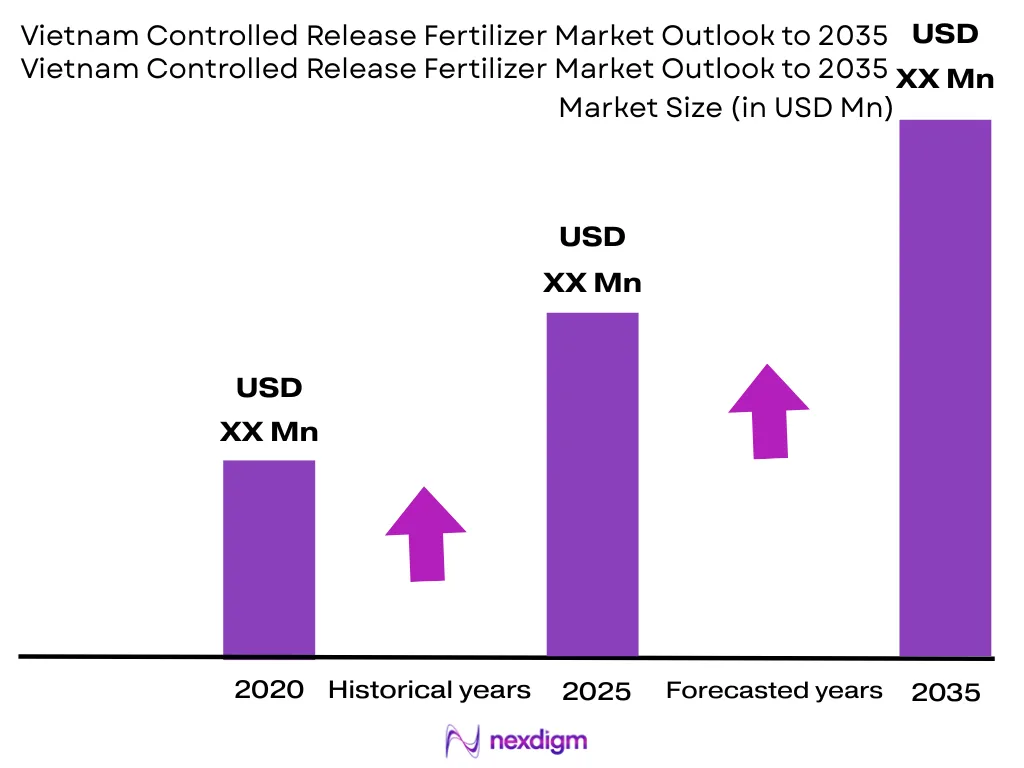
The Vietnam Controlled Release Fertilizer Market is valued at approximately USD ~ Million, supported by the country’s large agricultural sector and rising demand for efficient nutrient management solutions. According to the General Statistics Office of Vietnam, agriculture contributed approximately USD 43 billion to the national economy, while fertilizer consumption exceeded 10 million metric tons annually. Increasing cultivation of high-value crops such as coffee, pepper, fruits, and vegetables, along with government initiatives promoting sustainable farming and nutrient-use efficiency, continues to drive adoption of controlled release fertilizers. Vietnam’s agricultural exports exceeded USD 53 billion and USD 62 billion in consecutive years, creating demand for higher productivity and quality enhancement through advanced fertilizer technologies.
Market Segmentation
By Nutrient Type
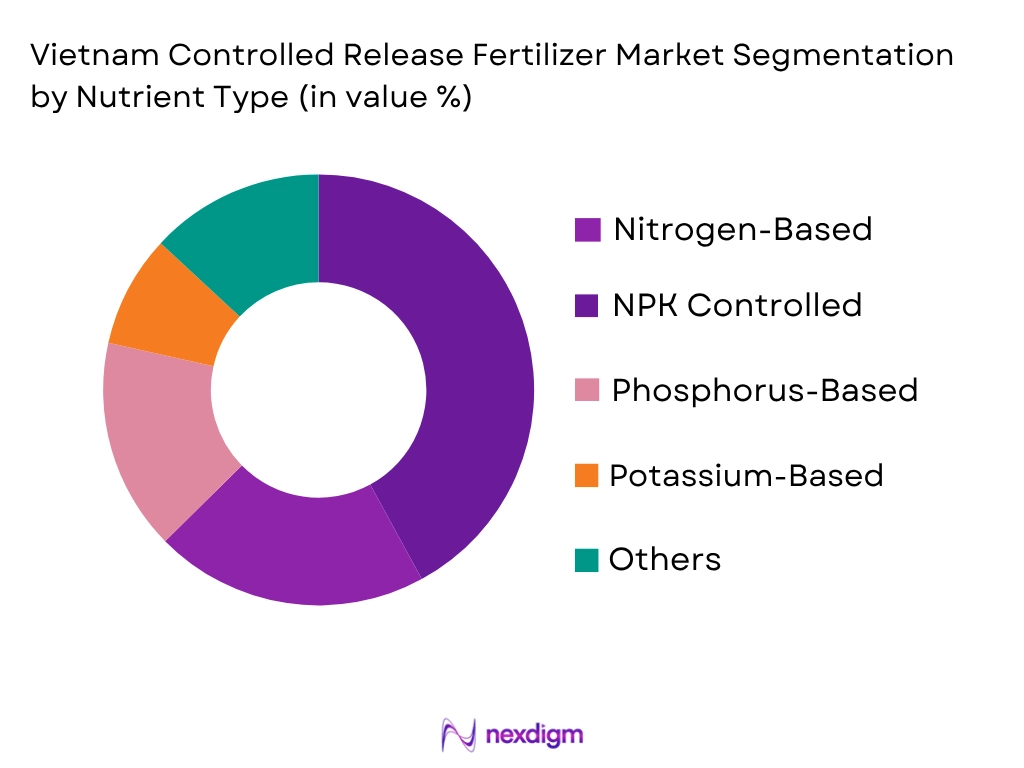
By Nutrient Type, the Vietnam Controlled Release Fertilizer Market is segmented into nitrogen-based controlled release fertilizers, NPK controlled release fertilizers, phosphorus-based controlled release fertilizers, potassium-based controlled release fertilizers, micronutrient controlled release fertilizers, and secondary nutrient controlled release fertilizers. Recently, nitrogen-based controlled release fertilizers have held the dominant market share. Their leadership is attributed to the extensive cultivation of nitrogen-intensive crops such as rice, coffee, maize, and vegetables across the country. Nitrogen remains the most consumed nutrient in Vietnamese agriculture because it directly influences vegetative growth, crop yield, and overall productivity. Controlled release nitrogen products help reduce nutrient losses through leaching and volatilization, which are common challenges in tropical climatic conditions. The increasing focus on improving nutrient-use efficiency and reducing fertilizer application frequency has encouraged farmers to adopt nitrogen-based controlled release solutions. Furthermore, leading fertilizer manufacturers continue to expand their coated urea and enhanced-efficiency nitrogen product portfolios, reinforcing the segment’s dominance in the market.
By Crop Type
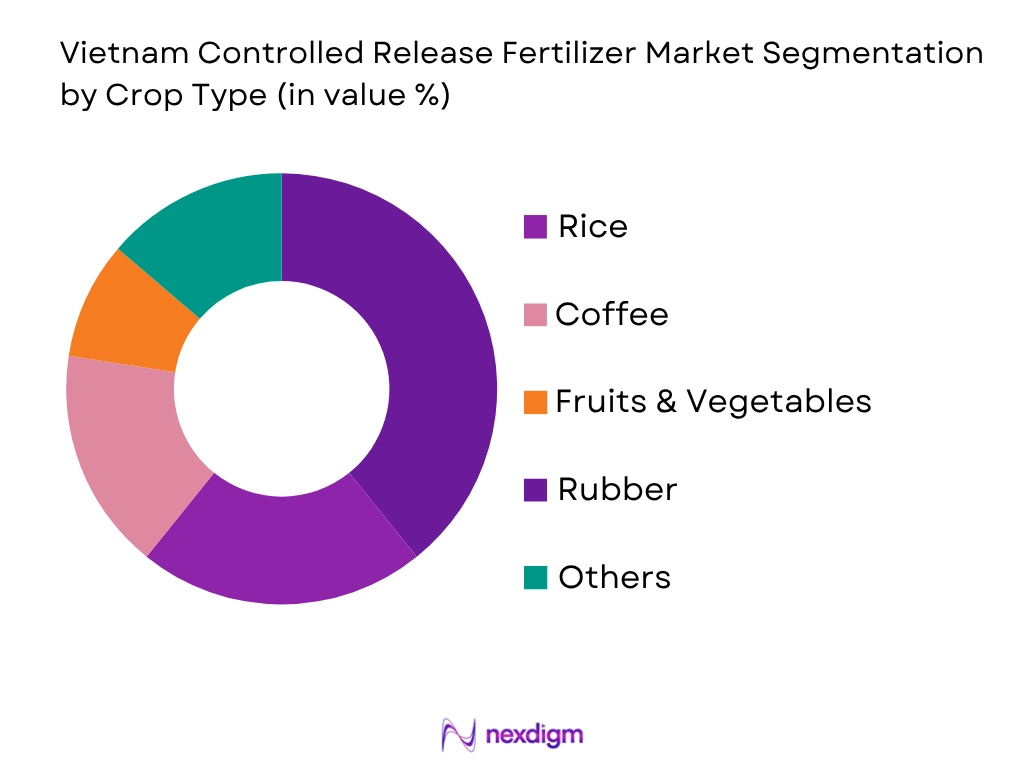
By Crop Type, the Vietnam Controlled Release Fertilizer Market is segmented into rice, coffee, fruits and vegetables, rubber, pepper, cashew, sugarcane, and others. Recently, rice has emerged as the dominant segment due to Vietnam’s position as one of the world’s leading rice producers and exporters. Rice cultivation occupies a substantial share of the country’s agricultural land, particularly across the Mekong River Delta and Red River Delta regions. Controlled release fertilizers are increasingly used in rice farming because they improve nutrient availability throughout crop growth cycles while reducing application frequency and labor requirements. Farmers are adopting these products to enhance yields, optimize fertilizer utilization, and address environmental concerns associated with nutrient runoff. Government-supported sustainable agriculture initiatives and export-quality standards have further encouraged the use of advanced fertilizer technologies in rice cultivation. As rice remains a strategic agricultural commodity, its dominance within the controlled release fertilizer market is expected to continue.
Competitive Landscape
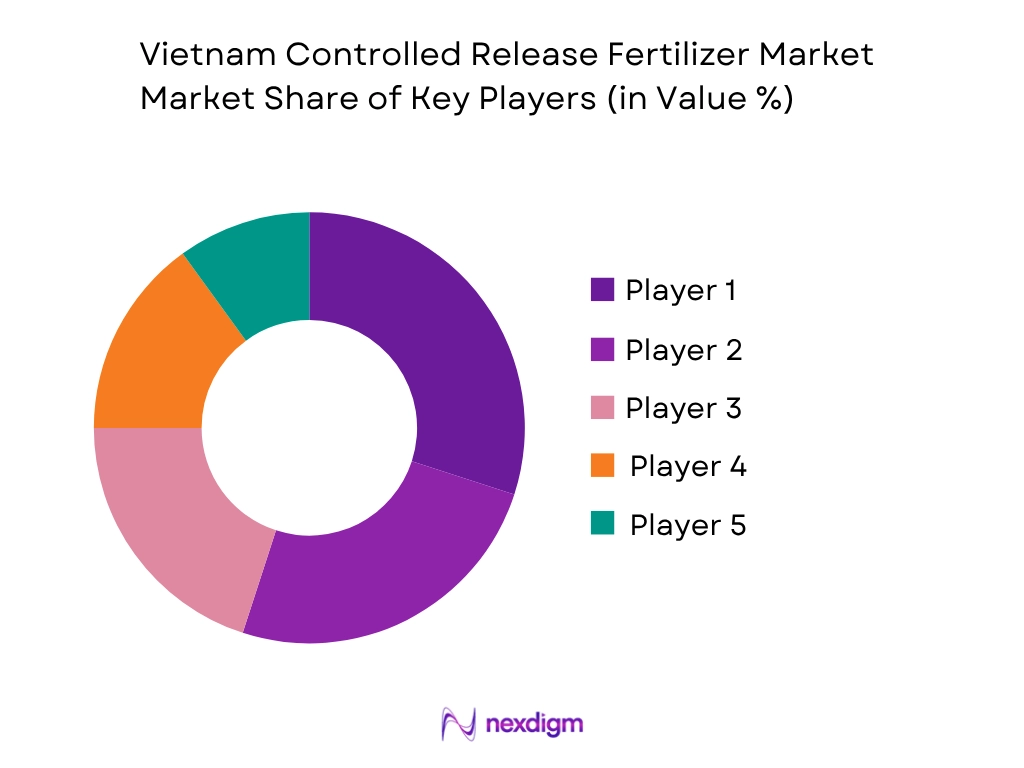
The Vietnam Controlled Release Fertilizer Market is characterized by the presence of both domestic fertilizer manufacturers and international specialty fertilizer companies. Domestic producers leverage extensive distribution networks and local market knowledge, while global participants compete through advanced coating technologies, research capabilities, and specialized crop nutrition solutions. The market remains moderately consolidated, with leading companies focusing on product innovation, strategic partnerships, and expansion into high-value crop segments such as coffee, pepper, fruits, and vegetables.
| Company | Establishment Year | Headquarters | CRF Portfolio | Coating Technology Capability | Production Presence in Vietnam | Crop Focus | Distribution Strength | Sustainability Focus |
| PetroVietnam Fertilizer and Chemicals Corporation (PVFCCo) | 2003 | ~ | ~ | ~ | ~ | ~ | ~ | ~ |
| PetroVietnam Ca Mau Fertilizer JSC | 2011 | ~ | ~ | ~ | ~ | ~ | ~ | ~ |
| Binh Dien Fertilizer JSC | 1973 | ~ | ~ | ~ | ~ | ~ | ~ | ~ |
| Yara Vietnam | 1905 | ~ | ~ | ~ | ~ | ~ | ~ | ~ |
| ICL Group | 1968 | ~ | ~ | ~ | ~ | ~ | ~ | ~ |
Vietnam Controlled Release Fertilizer Market Analysis
Growth Drivers
Expansion of High-Value Crop Cultivation
Vietnam’s controlled release fertilizer market is being driven by the expansion of high-value agricultural crops that require precise nutrient management. According to the General Statistics Office of Vietnam, the country maintained approximately 7.1 million hectares of rice cultivation area, while coffee cultivation exceeded 710,000 hectares and fruit-growing area surpassed 1.3 million hectares during the 2024–2025 period. Vietnam’s agricultural exports reached more than USD 62 billion, with fruits and vegetables contributing over USD 7 billion and coffee exports exceeding USD 5 billion. These export-oriented crops require consistent nutrient supply and higher productivity standards, encouraging farmers to adopt controlled release fertilizers. The World Bank reported Vietnam’s total population exceeded 101 million people, while the labor force remained above 53 million, increasing pressure on agricultural productivity and food security. Controlled release fertilizers help improve nutrient-use efficiency, reduce fertilizer losses, and support uniform crop growth. Major agricultural provinces including Dak Lak, Lam Dong, Dong Nai, Tien Giang, and An Giang continue investing in modern farming practices to enhance yields and export quality. The growing importance of sustainable crop production and increasing demand for premium agricultural products are therefore supporting the adoption of controlled release fertilizer technologies across Vietnam’s farming sector.
Government Support for Sustainable Agriculture and Nutrient Efficiency
Government initiatives promoting sustainable agriculture are creating favorable conditions for controlled release fertilizer adoption in Vietnam. The Ministry of Agriculture and Environment continues implementing programs focused on reducing fertilizer waste and improving nutrient management efficiency. Vietnam possesses approximately 10.3 million hectares of agricultural land, making efficient nutrient utilization critical for long-term productivity. According to the Food and Agriculture Organization, Vietnam remains among the largest agricultural exporters globally, with annual rice production exceeding 43 million metric tons and coffee production surpassing 1.8 million metric tons. The government’s strategy to reduce environmental impacts from excessive fertilizer application is encouraging farmers to adopt enhanced-efficiency products. Additionally, Vietnam’s GDP exceeded USD 470 billion, while agriculture remained a significant contributor to rural employment and export earnings. Increasing investment in irrigation systems, digital farming tools, and climate-resilient agricultural practices is further supporting demand for controlled release fertilizers. These products align with national goals of improving crop yields while minimizing nutrient runoff and soil degradation. As agricultural modernization accelerates across key farming regions, controlled release fertilizers are increasingly recognized as an effective solution for achieving higher productivity and sustainable nutrient management.
Market Challenges
Limited Farmer Awareness and Adoption Barriers
Despite growing interest in advanced agricultural inputs, limited awareness among smallholder farmers remains a major challenge for the Vietnam controlled release fertilizer market. Vietnam has more than 9 million agricultural households, many of which operate on relatively small landholdings. The General Statistics Office indicates that a substantial portion of farms continue to rely on conventional fertilizer application methods due to familiarity and established practices. Although Vietnam’s rural population exceeds 61 million people, access to technical training and precision agriculture knowledge remains uneven across regions. Agricultural production is dispersed among numerous small farms, making large-scale adoption of advanced nutrient technologies more difficult. The country’s cultivated land area remains above 10 million hectares, creating a significant requirement for farmer education regarding nutrient-use efficiency and long-term soil health. Controlled release fertilizers often require different application techniques and understanding of crop nutrient demand, which can slow adoption among traditional farmers. Furthermore, extension services and technical support are more concentrated in major agricultural provinces, leaving some regions with limited exposure to advanced fertilizer technologies. This knowledge gap continues to restrain widespread penetration of controlled release fertilizers throughout Vietnam’s agricultural sector.
Dependence on Imported Advanced Fertilizer Technologies
The Vietnam controlled release fertilizer market faces challenges associated with dependence on imported coating materials, production technologies, and specialty fertilizer formulations. While Vietnam possesses a strong domestic fertilizer industry, many advanced polymer coating technologies and specialized nutrient-release mechanisms originate from international suppliers. Vietnam’s merchandise imports exceeded USD 380 billion, reflecting the country’s integration into global supply chains. The agricultural sector remains sensitive to disruptions affecting specialty raw materials used in enhanced-efficiency fertilizers. According to the World Bank, Vietnam’s economy continues to expand rapidly, increasing demand for modern agricultural inputs and imported technologies. However, domestic manufacturers may face challenges in acquiring advanced production equipment and specialized coating materials required for controlled release fertilizer manufacturing. The country’s industrial sector contributes significantly to GDP, yet local development of high-end fertilizer technologies remains comparatively limited. Import dependence can affect supply consistency and create challenges in scaling production of advanced nutrient products. As Vietnam seeks to strengthen agricultural sustainability and productivity, investment in domestic research, innovation, and fertilizer technology development will become increasingly important. Until local manufacturing capabilities expand further, reliance on imported technology may continue to constrain broader market development.
Market Opportunities
Growth of Precision Agriculture and Smart Farming Practices
The increasing adoption of precision agriculture presents a significant opportunity for Vietnam’s controlled release fertilizer market. Vietnam’s digital transformation initiatives are expanding across agricultural regions, supported by rising internet penetration and technology investment. The country’s population exceeds 101 million, while mobile subscriptions are above 120 million, facilitating the deployment of digital farming tools. The Ministry of Agriculture and Environment continues encouraging precision irrigation, remote sensing, and data-driven crop management to improve agricultural productivity. Vietnam’s agricultural exports surpassed USD 62 billion, increasing the need for consistent product quality and efficient resource utilization. Controlled release fertilizers complement precision farming systems by delivering nutrients in a regulated manner that aligns with crop growth requirements. High-value crops such as coffee, fruits, vegetables, pepper, and rice are increasingly being cultivated using modern nutrient management techniques. In provinces such as Dak Lak, Lam Dong, and Dong Thap, investments in agricultural technology are supporting the transition toward sustainable production systems. As farmers seek higher yields, reduced nutrient losses, and improved environmental performance, controlled release fertilizers are positioned to benefit significantly from the expansion of precision agriculture practices throughout Vietnam.
Rising Demand for Sustainable and Export-Oriented Agriculture
Vietnam’s growing focus on sustainable agriculture and export competitiveness creates strong opportunities for controlled release fertilizer adoption. Agricultural exports exceeded USD 62 billion, with major contributions from rice, coffee, fruits, vegetables, seafood, and pepper. International buyers increasingly emphasize sustainable farming practices, traceability, and environmental stewardship within agricultural supply chains. Vietnam’s cultivated agricultural area remains above 10 million hectares, creating significant potential for improved nutrient management technologies. The country produces over 43 million metric tons of rice annually and remains one of the world’s leading coffee exporters with production above 1.8 million metric tons. Controlled release fertilizers support sustainability objectives by improving nutrient-use efficiency and reducing losses associated with conventional fertilizer applications. Vietnam’s GDP exceeded USD 470 billion, enabling continued investment in agricultural modernization and climate-resilient farming practices. Export-oriented producers are increasingly adopting advanced agricultural inputs to meet international quality standards and improve productivity. As government agencies, agricultural cooperatives, and commercial farms focus on sustainable production systems, controlled release fertilizers are expected to gain broader acceptance as an effective tool for balancing productivity, environmental performance, and export competitiveness.
Future Outlook
The Vietnam Controlled Release Fertilizer Market is expected to witness robust growth over the forecast period, supported by increasing demand for sustainable agriculture, nutrient-use efficiency, and precision farming solutions. Expansion of export-oriented crop production, particularly in coffee, fruits, vegetables, and rice, is expected to accelerate adoption. Government initiatives aimed at reducing fertilizer wastage and environmental impact will further strengthen demand. Technological advancements in polymer-coated and bio-based controlled release fertilizers, coupled with increasing awareness among farmers, are likely to create significant growth opportunities. Additionally, the integration of digital agriculture and precision nutrient management practices is expected to support long-term market expansion.
Major Players
- PetroVietnam Fertilizer and Chemicals Corporation (PVFCCo)
- PetroVietnam Ca Mau Fertilizer JSC (PVCFC)
- Binh Dien Fertilizer JSC
- Lam Thao Fertilizers and Chemicals JSC
- Southern Fertilizer JSC
- Ha Bac Fertilizer and Chemicals JSC
- Que Lam Group
- Ninh Binh Fertilizer Company
- Yara Vietnam
- ICL Group
- Haifa Group
- COMPO Expert
- EuroChem Group
- Kingenta Ecological Engineering Group
- SQM Vietnam
Key Target Audience
- Fertilizer Manufacturers
- Specialty Fertilizer Producers
- Agricultural Cooperatives
- Commercial Farm Operators
- Plantation Companies
- Agri-Input Distributors and Retailers
- Investment and Venture Capitalist Firms
- Government and Regulatory Bodies (Ministry of Agriculture and Rural Development, Plant Protection Department, Ministry of Industry and Trade)
Research Methodology
Step 1: Identification of Key Variables
The study begins with the development of a comprehensive ecosystem map covering fertilizer manufacturers, distributors, importers, agricultural cooperatives, plantation operators, and regulatory agencies. Secondary research is conducted to identify variables affecting demand, adoption rates, crop-specific fertilizer requirements, and technological developments within the Vietnam Controlled Release Fertilizer Market.
Step 2: Market Analysis and Construction
Historical industry data is collected and analyzed to estimate market size, fertilizer consumption patterns, production capacities, import-export activities, and crop-wise nutrient demand. Market revenues are derived through a combination of volume assessment, product penetration analysis, and average pricing evaluations across key fertilizer categories.
Step 3: Hypothesis Validation and Expert Consultation
Market assumptions and forecasts are validated through interviews with fertilizer manufacturers, agronomists, distributors, agricultural cooperatives, and industry experts. These consultations provide insights into product adoption trends, competitive positioning, farmer preferences, and future technological developments.
Step 4: Research Synthesis and Final Output
The final stage integrates findings from primary and secondary research to create a comprehensive market assessment. Data triangulation techniques are applied to validate market estimates, segment shares, and growth assumptions, ensuring a reliable and actionable analysis of the Vietnam Controlled Release Fertilizer Market.

- Executive Summary
- Research Methodology (Market Definitions and Assumptions, Abbreviations, Market Sizing Approach, Top-Down Analysis, Bottom-Up Analysis, Demand-Side Assessment, Supply-Side Assessment, Primary Industry Interviews, Agronomist Consultations, Fertilizer Dealer Surveys, Data Triangulation, Forecasting Framework, Limitations and Future Conclusions)

- Definition and Scope
- Market Evolution and Industry Genesis
- Timeline of Major Industry Developments
- Controlled Release Fertilizer Industry Ecosystem
- Vietnam Fertilizer Value Chain Analysis

- Growth Drivers (Expansion of High-Value Crop Cultivation, Rising Coffee and Pepper Production, Government Focus on Sustainable Agriculture, Increasing Nutrient Use Efficiency Awareness, Precision Agriculture Adoption, Export-Oriented Agricultural Production, Growing Fertigation Practices, Soil Health Improvement Initiatives)
- Market Challenges (High Product Cost Relative to Conventional Fertilizers, Limited Awareness Among Smallholder Farmers, Dependence on Imported Coating Technologies, Fragmented Agricultural Land Holdings, Counterfeit Fertilizer Concerns)
- Market Opportunities (Smart Agriculture Expansion, High-Tech Agricultural Zones Development, Specialty Crop Productivity Enhancement, Sustainable Farming Programs, Climate-Resilient Agriculture, Digital Agronomy Platforms, Precision Nutrient Management, Greenhouse Farming Expansion)
- Market Trends (Polymer-Coated Fertilizer Adoption, Nano Fertilizer Development, Controlled Nutrient Release Technologies, Precision Fertigation Integration, Crop-Specific Nutrient Solutions, Environmentally Friendly Coatings, Digital Farm Advisory Services, Yield Optimization Programs)
- Government Regulations (Fertilizer Management Regulations, Sustainable Agriculture Policies, Import and Registration Requirements, Quality Certification Standards, Environmental Compliance Requirements, Specialty Fertilizer Approval Framework, Agricultural Modernization Programs)
- SWOT Analysis
- PESTLE Analysis
- Porter’s Five Forces Analysis
- Stakeholder Ecosystem
- Competition Ecosystem

- By Market Value (2020-2025)
- By Volume Consumption (2020-2025)
- By Average Selling Price (2020-2025)

- By Nutrient Type (In Value %)
Nitrogen-Based Controlled Release Fertilizers
Phosphorus-Based Controlled Release Fertilizers
Potassium-Based Controlled Release Fertilizers
NPK Controlled Release Fertilizers
Micronutrient Controlled Release Fertilizers
Secondary Nutrient Controlled Release Fertilizers - By Coating Technology (In Value %)
Polymer-Coated Fertilizers
Sulfur-Coated Fertilizers
Polymer-Sulfur Coated Fertilizers
Resin-Coated Fertilizers
Bio-Based Coated Fertilizers
Nano-Coated Fertilizers - By Distribution Channel (In Value %)
Fertilizer Dealers and Retailers
Agricultural Cooperatives
Direct Company Sales
Agri-Input Distributors
Digital Agriculture Platforms - By Crop Type (In Value %)
Rice
Coffee
Fruits & Vegetables
Rubber
Pepper
Cashew
Sugarcane
Tea - By Application Method (In Value %)
Soil Application
Fertigation
Drip Irrigation Application
Broadcast Application
Integrated Nutrient Management Programs

- Market Share of Major Players (By Value, Volume, Nutrient Type, Crop Segment, Coating Technology)
- Cross Comparison Parameters (Controlled Release Technology Capability, Product Portfolio Breadth, Crop-Specific Fertilizer Solutions, Nutrient Use Efficiency Performance, Distribution Network Strength, Manufacturing Capacity, Agronomic Advisory Support, Sustainable Coating Technology Capability)
- SWOT Analysis of Major Players
- Pricing Analysis by Nutrient Grade and Crop Application
- Detailed Profiles of Major Companies
PetroVietnam Fertilizer and Chemicals Corporation (PVFCCo)
PetroVietnam Ca Mau Fertilizer JSC (PVCFC)
Binh Dien Fertilizer JSC
Lam Thao Fertilizers and Chemicals JSC
Ninh Binh Fertilizer Company
Southern Fertilizer JSC
Ha Bac Fertilizer and Chemicals JSC
Que Lam Group
Yara Vietnam
ICL Group
Haifa Group
COMPO Expert
EuroChem Group
Kingenta Ecological Engineering Group
SQM Vietnam

- Fertilizer Consumption and Utilization Assessment
- Farmer Economics Assessment
- Purchasing Behaviour Analysis
- Plantation Crop Nutrient Management Analysis
- Soil Health Management Assessment
- End User Pain Point Analysis
- Product Attribute Preference Analysis
- Purchase Decision-Making Framework
- Agronomist and Dealer Influence Analysis

- By Market Value (2026-2035)
- By Volume Consumption (2026-2035)
- By Average Selling Price (2026-2035)


 Request a Sample
 Ask for Customization
 Get a Quote
 Enquire Now