
 Download PDF
 Download PDF
Market Overview
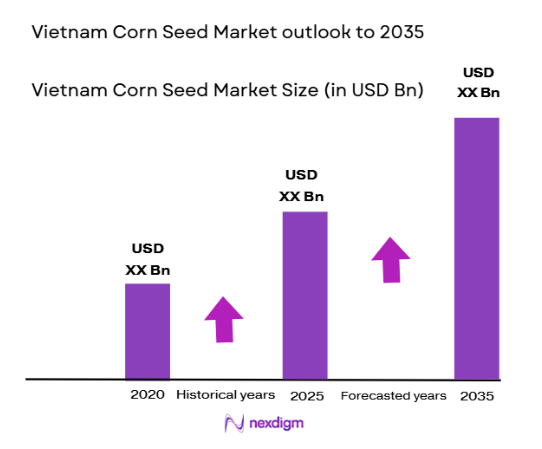
The Vietnam Corn Seed Market is expected to reach a value of approximately USD ~ billion based on a recent historical assessment, driven by increasing demand for high-quality corn seed varieties. This demand is mainly fueled by advancements in seed technology and a growing preference for high-yielding, drought-resistant corn. Furthermore, government initiatives to enhance agricultural productivity and modernize farming practices are also propelling the market forward, creating a favorable environment for market growth.
In Vietnam, the corn seed market is dominated by major agricultural regions such as the Mekong Delta and the Central Highlands. These regions are well-suited for corn cultivation due to their favorable climatic conditions and strong agricultural infrastructure. The dominance of these areas is attributed to their established farming practices, access to advanced seed technologies, and efficient distribution channels that support widespread corn cultivation. These areas benefit from government policies aimed at boosting agricultural output and attracting investments in seed research and development.
Market Segmentation
By Product Type:
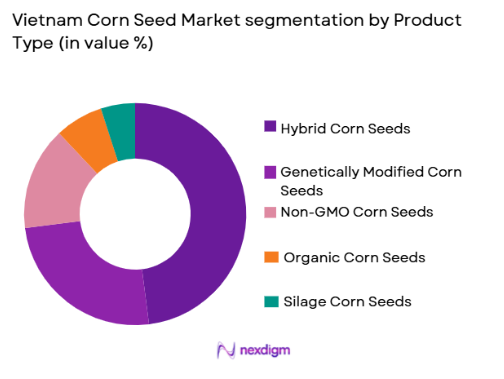
The Vietnam Corn Seed Market is segmented by product type into hybrid, genetically modified (GM), non-GMO, organic, and silage corn seeds. Recently, hybrid corn seeds have dominated the market share due to their higher yield potential, resistance to diseases, and adaptability to varying climatic conditions. These factors, combined with a growing demand for high-efficiency crops in both domestic and export markets, have driven the adoption of hybrid corn seeds, particularly in large-scale farming operations. Farmers are increasingly prioritizing hybrid varieties as they offer superior performance and more profitable returns, making them the preferred choice for the majority of the market.
By Cultivation Method:
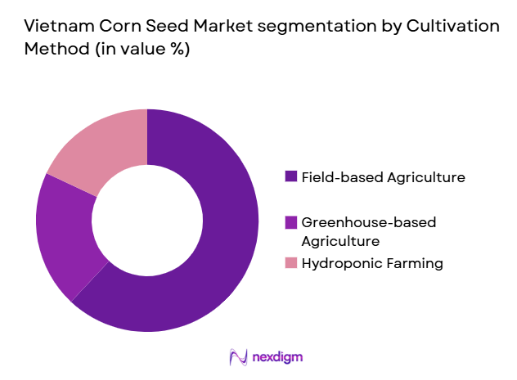
The market is also segmented by cultivation method, including field-based, greenhouse-based, and hydroponic methods. The field-based cultivation method holds a significant share of the market, as it is the traditional and most widely used method for corn cultivation in Vietnam. This method is particularly dominant in rural and semi-urban areas where large-scale corn production is common. The growth of greenhouse and hydroponic methods, while notable, is still in the early stages, and these methods are primarily used by high-tech farms and research institutions aiming to optimize yield per square meter under controlled environments.
Competitive Landscape
The competitive landscape of the Vietnam Corn Seed Market is shaped by both local and international players vying for market share. Consolidation is seen as several major global seed producers collaborate with local distributors and agricultural stakeholders to expand their reach. Key players influence the market by driving innovations in seed technology and offering a variety of high-yielding and drought-resistant seeds. Partnerships and collaborations are vital as these companies focus on strengthening their market position and responding to evolving customer needs.
| Company Name | Establishment Year | Headquarters | Technology Focus | Market Reach | Key Products | Revenue (USD) | R&D Investments |
| Syngenta | 2000 | Switzerland | ~ | ~ | ~ | ~ | ~ |
| BASF | 1865 | Germany | ~ | ~ | ~ | ~ | ~ |
| Corteva Agriscience | 2019 | USA | ~ | ~ | ~ | ~ | ~ |
| DuPont Pioneer | 1926 | USA | ~ | ~ | ~ | ~ | ~ |
| Limagrain | 1942 | France | ~ | ~ | ~ | ~ | ~ |
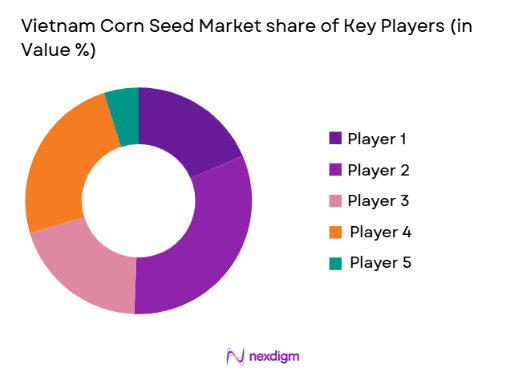
Vietnam Corn Seed Market Analysis
Growth Drivers
Government Support for Agricultural Innovation:
Government policies aimed at enhancing agricultural productivity have significantly contributed to the growth of the Vietnam Corn Seed Market. These policies include funding for seed research, modernization of farming practices, and the establishment of agricultural extension services that provide farmers with access to advanced farming technologies. This governmental backing has helped foster a favorable environment for the adoption of innovative seed technologies such as hybrid and genetically modified corn. The government’s strategic plans to improve the agricultural sector’s infrastructure, including irrigation systems, also help in boosting corn production. The government’s efforts to increase export capacity and ensure food security further bolster the demand for high-quality corn seeds, encouraging both local and foreign investments in the sector. With a robust framework in place, the market continues to benefit from these growth-driving policies, enhancing the overall productivity of corn cultivation.
Technological Advancements in Seed Production:
Another significant driver of the Vietnam Corn Seed Market is the continuous advancement in seed technology. Research and development in genetically modified (GM) corn, hybrid varieties, and drought-resistant seeds have led to a surge in demand for superior seed types. These advancements have made it possible to grow corn in less-than-ideal conditions, increasing yields and helping farmers meet the growing food demand in Vietnam. The introduction of precision farming techniques, which incorporate technology for better seed planting and crop management, further supports the growth of the seed market. These technological improvements provide significant benefits in terms of higher productivity, disease resistance, and improved profitability for farmers. As these technologies continue to evolve, they are expected to further drive the market for high-quality corn seeds.
Market Challenges
High Initial Investment in Seed Technology:
One of the major challenges facing the Vietnam Corn Seed Market is the high initial investment required for advanced seed technologies. Hybrid and genetically modified seeds typically come with a premium price tag due to their enhanced properties such as higher yield, disease resistance, and drought tolerance. While these seeds offer better returns on investment in the long term, the upfront costs can be prohibitive for small-scale farmers or those in rural areas with limited access to financing options. This challenge hinders the adoption of advanced seed technologies among a large section of the farming community, slowing overall market growth. The market must find ways to address these financial barriers, such as through government subsidies, microfinancing, or partnerships with agribusiness firms to make these seeds more affordable and accessible.
Climate Change and Unpredictable Weather Patterns:
Another significant challenge impacting the Vietnam Corn Seed Market is the unpredictability of weather patterns caused by climate change. Corn, being a highly sensitive crop, is particularly vulnerable to changes in temperature, rainfall, and the frequency of extreme weather events such as droughts and floods. These climatic factors can affect the germination and growth of corn seeds, leading to lower yields and crop failures. While advancements in drought-resistant and climate-adaptive seeds are helping mitigate some of these risks, the overall impact of climate change remains a major challenge for corn farmers. The market will need to continue investing in research to develop seeds that can thrive under increasingly volatile weather conditions, while also addressing the wider environmental concerns that exacerbate these challenges.
Opportunities
Expansion of Organic Farming Practices:
The increasing global demand for organic products presents a unique opportunity for the Vietnam Corn Seed Market, particularly in the production of organic corn seeds. As consumer preferences shift towards healthier, chemical-free food options, the demand for organically grown crops has surged. In response, farmers are turning to organic farming methods, which include the use of organic seeds. This market shift has opened up significant opportunities for seed producers to develop and supply certified organic corn seeds that meet both local and international organic standards. With increasing consumer awareness about food safety and environmental sustainability, the organic segment of the corn seed market is expected to experience steady growth. As the market for organic products continues to expand, corn seed producers who focus on developing and promoting organic varieties stand to benefit greatly.
Integration of Precision Agriculture Techniques:
Precision agriculture, which leverages technologies such as GPS, sensors, and data analytics to optimize crop production, presents a significant opportunity for the Vietnam Corn Seed Market. As precision farming practices gain traction, the demand for seeds that can be tailored to specific environmental conditions and farming practices has increased. This includes the use of high-performance seeds that can work seamlessly with precision agriculture tools to maximize yield and reduce input costs. With the increasing adoption of smart farming technologies, there is a growing need for corn seeds that can perform optimally in highly controlled, data-driven environments. This integration of precision farming techniques into the agriculture sector is expected to boost the demand for technologically advanced corn seeds, creating new growth opportunities in the market.
Future Outlook
The future outlook for the Vietnam Corn Seed Market is positive, with expected growth driven by advancements in agricultural technology, government support, and increasing demand for high-quality corn seeds. Over the next five years, the market is likely to see further adoption of genetically modified and hybrid corn varieties, as well as a growing emphasis on sustainable farming practices. The continued integration of precision farming technologies will also contribute to improved crop yields and greater efficiency in corn production. As the government continues to back agricultural innovation and infrastructure development, the market for corn seeds is positioned for continued growth, particularly in emerging rural regions and export markets.
Major Players
- Syngenta
- BASF
- Corteva Agriscience
- DuPont Pioneer
- Limagrain
- Bayer CropScience
- Dow AgroSciences
- KWS Saat SE
- East-West Seed
- WinField United
- Monsanto
- Rallis India
- Zhengzhou Kexing Seed Co.
- China National Seed Group Corporation
- Mahyco
Key Target Audience
- Investments and venture capitalist firms
- Government and regulatory bodies
- Agricultural producers
- Seed distributors
- Retailers of agricultural products
- Research and development organizations
- Agribusiness companies
- Commercial farmers
Research Methodology
Step 1: Identification of Key Variables
This step involves identifying the key variables that influence the corn seed market, such as seed technology, climate patterns, and government policies. The variables are defined and studied to guide further analysis.
Step 2: Market Analysis and Construction
This phase focuses on conducting a thorough analysis of the current market landscape, including segmentation, growth drivers, challenges, and opportunities, to construct a detailed market model.
Step 3: Hypothesis Validation and Expert Consultation
The insights from market analysis are validated by consulting industry experts, key players, and stakeholders to ensure the accuracy and feasibility of the hypotheses developed.
Step 4: Research Synthesis and Final Output
In this final step, all collected data, expert inputs, and insights are synthesized to generate the final research report that offers actionable recommendations and market forecasts.

- Executive Summary
- Research Methodology(Definitions, Scope, Industry Assumptions, Market Sizing Approach, Primary & Secondary Research Framework, Data Collection & Verification Protocol, Analytic Models & Forecast Methodology, Limitations & Research Validity Checks)

- Market Definition and Scope
- Value Chain & Stakeholder Ecosystem
- Regulatory / Certification Landscape
- Sector Dynamics Affecting Demand
- Strategic Initiatives & Infrastructure Growth

- Growth Drivers
Increasing demand for high-yield corn varieties
Government support for agricultural modernization
Advances in seed biotechnology
Rising global corn consumption
Expanding agricultural export opportunities - Market Challenges
Unpredictable climatic conditions
High initial investment for seed technology
Regulatory and certification complexities
Limited infrastructure for cold storage
Supply chain inefficiencies - Market Opportunities
Expansion of genetically modified seeds
Integration of precision agriculture techniques
Growth in organic farming markets - Trends
Shift towards drought-resistant corn varieties
Rise of precision farming techniques
Increased focus on sustainable agricultural practices
Growth in digital farming platforms
Adoption of autonomous farming machinery - Government Regulations & Defense Policy
Seed certification and regulatory processes
Government funding for agricultural innovation
Policy support for sustainable farming practices - SWOT Analysis
- Stakeholder and Ecosystem Analysis
- Porter’s Five Forces Analysis
- Competition Intensity and Ecosystem Mapping

- By Market Value, 2020-2025
- By Installed Units, 2020-2025
- By Average System Price, 2020-2025
- By System Complexity Tier, 2020-2025

- By System Type (In Value%)
Hybrid Corn Seeds
Genetically Modified Corn Seeds
Non-GMO Corn Seeds
Organic Corn Seeds
Silage Corn Seeds - By Platform Type (In Value%)
Field-based Agriculture
Greenhouse-based Agriculture
Indoor Farming Platforms
Vertical Farming Platforms
Hydroponic Farming Platforms - By Fitment Type (In Value%)
Direct Sowing
Seedling Planting
Greenhouse/Plastic Tunnel Planting
Hydroponic Fitment
Vertical Planting Systems - By EndUser Segment (In Value%)
Commercial Farmers
Research Institutions
Agricultural Cooperatives
Government Initiatives
Private Sector / Agribusiness Firms - By Procurement Channel (In Value%)
Direct Procurement
Retail Distribution
Agricultural Dealer Networks
Online Bidding Platforms
Third-party Distributors - By Material / Technology (In Value%)
Organic Fertilizers & Biocides
Precision Agriculture Technologies
Bio-based Technology
Climate-Smart Agricultural Techniques
Genetic Modification Technologies

- Market structure and competitive positioning
- Market share snapshot of major players
- CrossComparison Parameters (System Type, Platform Type, Procurement Channel, EndUser Segment, Fitment Type, Material / Technology, Market Share, Pricing Strategies, Distribution Channels, Geographic Presence)
- SWOT Analysis of Key Players
- Pricing & Procurement Analysis
- Key Players
Syngenta
BASF
Monsanto (now part of Bayer)
DuPont Pioneer
Corteva Agriscience
Limagrain
Mahyco
East-West Seed
KWS Saat SE
Bayer CropScience
Zhengzhou Kexing Seed Co.
WinField United
Groupo DLA
Rallis India
Dunhuang Seed Co.

- Commercial farmers’ demand for high-yielding seeds
- Government initiatives to support agricultural productivity
- Private sector engagement in research & development
- Research institutions focusing on genetic improvements

- Forecast Market Value, 2026-2035
- Forecast Installed Units, 2026-2035
- Price Forecast by System Tier, 2026-2035
- Future Demand by Platform, 2026-2035


 Request a Sample
 Ask for Customization
 Get a Quote
 Enquire Now