
 Download PDF
Market Overview
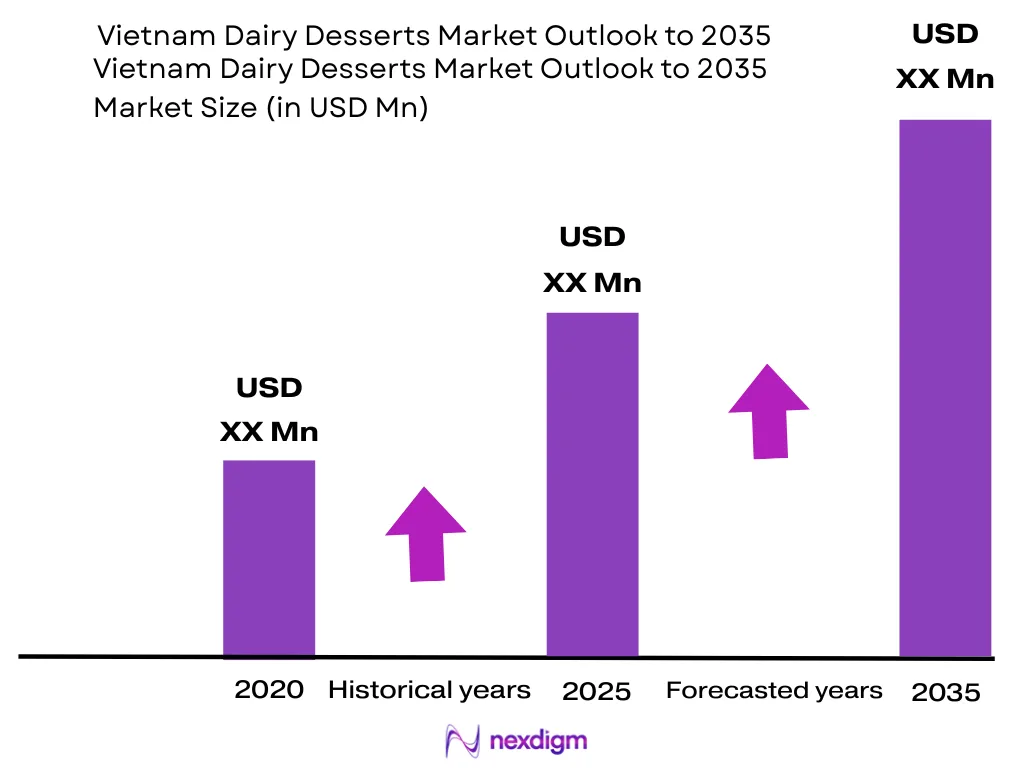
The Vietnam Dairy Desserts Market was valued at approximately USD ~ Million in 2024, compared to USD ~ Million in 2023, based on industry consumption trends, dairy product sales, and refrigerated dessert category performance. The market is primarily driven by increasing urbanization, rising disposable incomes, expanding modern retail channels, and growing consumer preference for convenient ready-to-eat dairy products. Vietnam’s dairy industry recorded milk production of more than 1.2 million tons, while per-capita dairy consumption exceeded ~ liters annually, creating a strong foundation for dairy dessert consumption. The expansion of supermarkets, convenience stores, and cold-chain logistics has further improved product accessibility and category penetration.
Market Segmentation
By Product Type
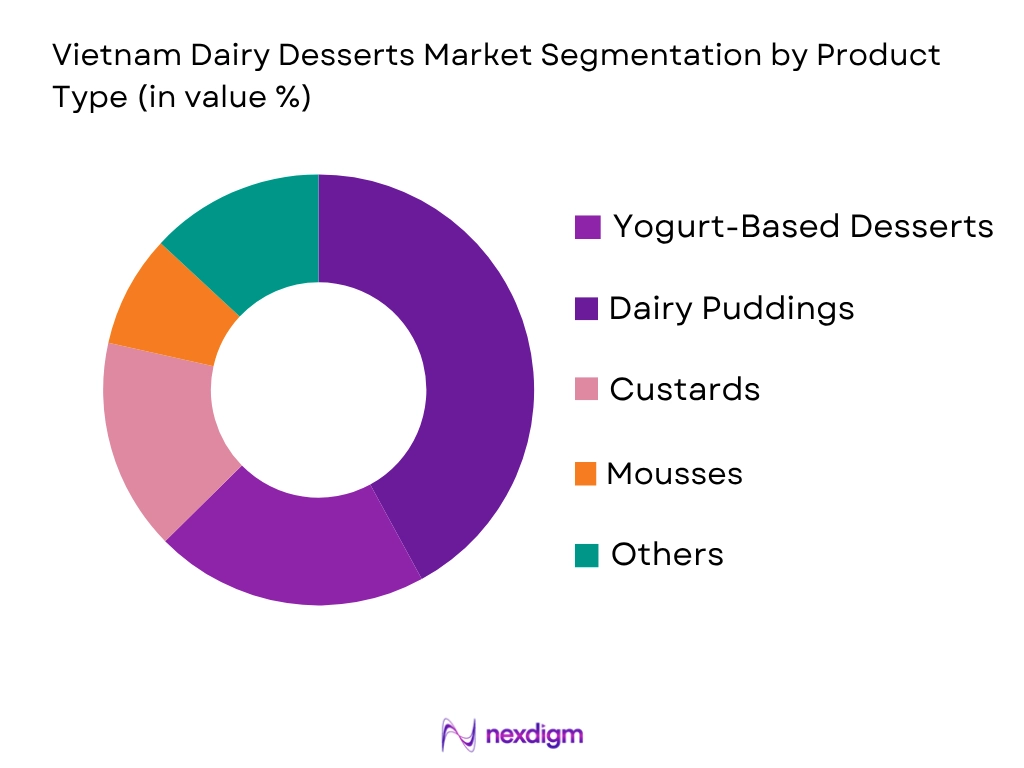
Vietnam Dairy Desserts Market is segmented by product type into yogurt-based desserts, dairy puddings, custards, mousses, flans, dairy jelly desserts, cheesecakes, and traditional dairy sweets. Recently, yogurt-based desserts have held the dominant market share under this segmentation. Their leadership is attributed to widespread consumer familiarity with yogurt products, increasing health consciousness, and strong distribution by leading dairy brands such as Vinamilk, TH True Milk, and Dutch Lady. Consumers increasingly perceive yogurt desserts as healthier alternatives to traditional sweet desserts due to probiotic benefits and lower perceived calorie content. In addition, yogurt products are available across all retail channels, including supermarkets, convenience stores, traditional stores, and foodservice outlets. Continuous flavor innovation, premium packaging formats, and the introduction of protein-enriched variants further strengthen the dominance of this segment across both urban and semi-urban markets.
By Distribution Channel
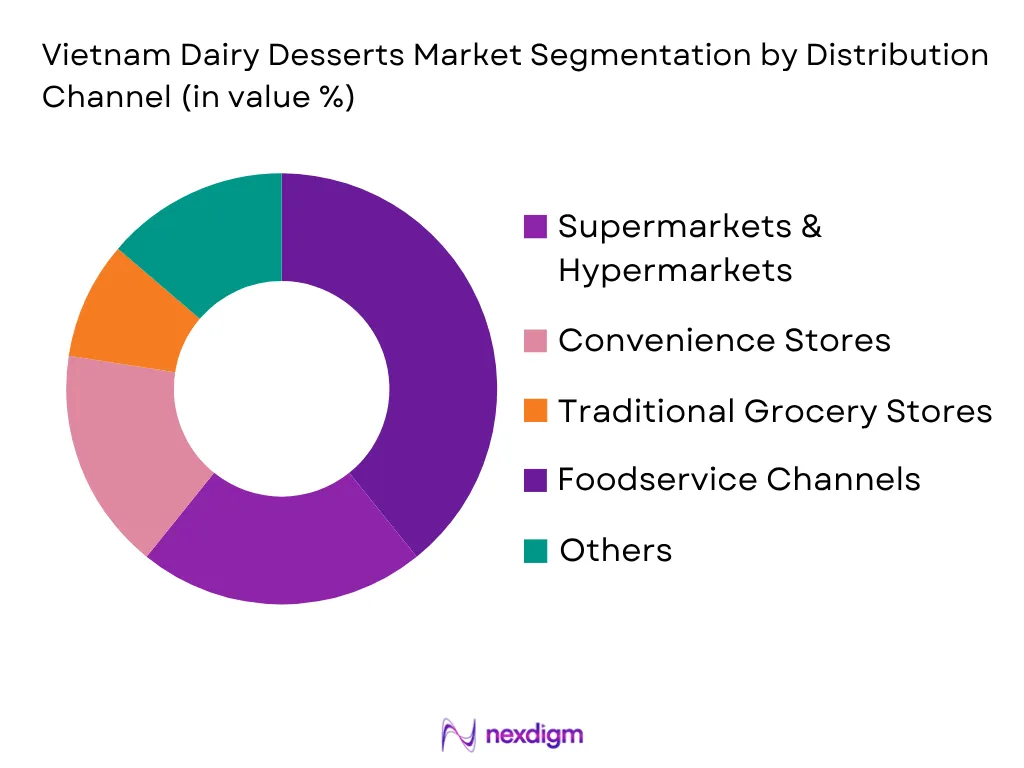
Vietnam Dairy Desserts Market is segmented by distribution channel into supermarkets and hypermarkets, convenience stores, traditional grocery stores, online retail, specialty stores, and foodservice channels. Recently, supermarkets and hypermarkets have maintained a dominant market share due to their extensive product assortment, reliable cold-storage facilities, and ability to offer both premium and mass-market dairy desserts under one roof. Major retail chains such as Co.opmart, WinMart, GO!, AEON, and Lotte Mart have significantly expanded their refrigerated food sections, making dairy desserts more accessible to consumers. These stores also provide promotional campaigns, private-label offerings, and premium imported dessert products, attracting a broad consumer base. Furthermore, the expansion of organized retail across urban centers continues to strengthen the position of supermarkets and hypermarkets as the primary sales channel for dairy desserts.
Competitive Landscape
The Vietnam Dairy Desserts Market is moderately consolidated and dominated by established dairy manufacturers with strong cold-chain capabilities, nationwide distribution networks, and extensive product portfolios. Local dairy leaders such as Vinamilk and TH True Milk compete alongside multinational companies including Nestlé, Danone, and FrieslandCampina. Product innovation, premiumization, functional dairy ingredients, and distribution expansion remain key competitive strategies.
| Company | Establishment Year | Headquarters | Manufacturing Facilities | Product Portfolio | Distribution Reach | Premium Product Presence | Cold Chain Strength | Brand Recognition |
| Vinamilk | 1976 | ~ | ~ | ~ | ~ | ~ | ~ | ~ |
| TH True Milk | 2009 | ~ | ~ | ~ | ~ | ~ | ~ | ~ |
| FrieslandCampina Vietnam | 1995 | ~ | ~ | ~ | ~ | ~ | ~ | ~ |
| Nestlé Vietnam | 1912 | ~ | ~ | ~ | ~ | ~ | ~ | ~ |
| Danone Vietnam | 1919 | ~ | ~ | ~ | ~ | ~ | ~ | ~ |
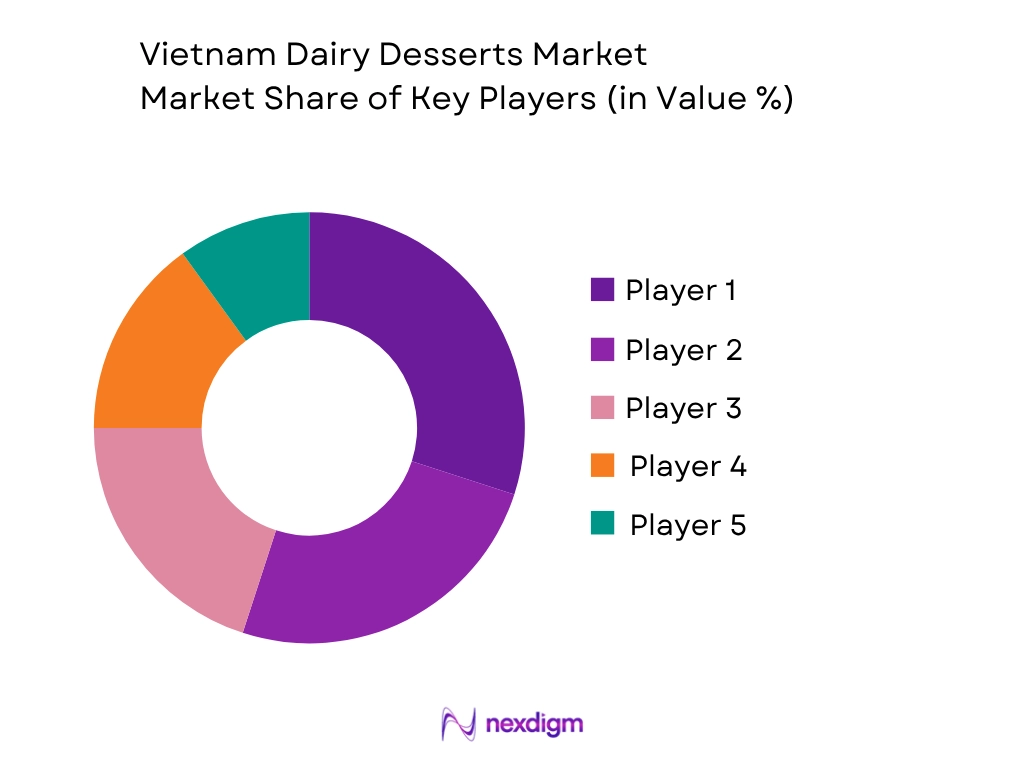
Vietnam Dairy Desserts Market Analysis
Growth Drivers
Rising Urban Population and Expanding Middle-Class Consumer Base
Vietnam’s rapid urbanization continues to support demand for convenient dairy dessert products. According to the General Statistics Office of Vietnam, the country’s population exceeded 101 million, with more than 39 million people residing in urban areas. Ho Chi Minh City and Hanoi collectively account for over 17 million residents, creating substantial demand for packaged and refrigerated food products. The World Bank reported Vietnam’s GDP surpassed USD 430 billion, while GDP per capita exceeded USD 4,300, reflecting increasing purchasing power among consumers. Rising disposable incomes have encouraged spending on premium food categories, including yogurt desserts, puddings, mousses, and dairy-based snacks. The Ministry of Industry and Trade reported continued expansion of modern retail infrastructure through supermarkets, hypermarkets, and convenience stores, improving accessibility of dairy desserts across urban centers. Furthermore, Vietnam’s household final consumption expenditure exceeded USD 290 billion, demonstrating strong consumer spending capacity. The growing urban workforce, changing lifestyles, and increasing preference for ready-to-eat products continue to strengthen demand for dairy desserts. These demographic and economic developments create favorable conditions for manufacturers to introduce premium and innovative dairy dessert offerings targeting younger consumers and working professionals.
Growth of Organized Retail and Cold Chain Infrastructure
The expansion of organized retail and cold chain logistics remains a key growth driver for the Vietnam Dairy Desserts Market. Vietnam operates more than 1,300 supermarkets, over 300 shopping centers, and thousands of convenience stores, significantly improving distribution capabilities for refrigerated food products. The Ministry of Industry and Trade has identified cold-chain development as a strategic priority due to growing consumption of temperature-sensitive food categories. Vietnam’s merchandise retail sales exceeded VND 6 quadrillion, demonstrating strong consumer activity across food and beverage categories. The country also handled more than 800 million tons of freight annually, supporting nationwide food distribution networks. Foreign investments in logistics and warehousing continue to expand refrigerated storage capacity, enabling dairy manufacturers to reach secondary cities and provincial markets more effectively. The dairy industry processed more than 1.7 billion liters of liquid milk annually, creating synergies with dessert production and distribution systems. The availability of modern retail outlets allows manufacturers to showcase premium products, launch new flavors, and maintain product quality through controlled temperature environments. Continued investments in logistics infrastructure and organized retail expansion support wider penetration of dairy desserts throughout Vietnam.
Market Challenges
Dependence on Imported Dairy Ingredients and Raw Material Volatility
Vietnam remains dependent on imported dairy ingredients to support domestic dairy processing activities. The Ministry of Agriculture and Rural Development reported national milk production of approximately 1.2 million tons, while domestic demand for dairy ingredients continues to exceed local supply. As a result, manufacturers rely heavily on imports of milk powder, whey proteins, cream, and other dairy ingredients from New Zealand, Australia, the European Union, and the United States. Vietnam’s total agricultural import value exceeded USD 40 billion, reflecting the importance of imported raw materials across food processing sectors. Fluctuations in international commodity markets, transportation costs, and supply chain disruptions can affect production planning and inventory management for dairy dessert manufacturers. The country’s trade activities surpassed USD 780 billion, exposing food processors to currency fluctuations and global logistics disruptions. Premium dairy desserts often require specialized ingredients that are not widely available locally, further increasing dependency on imports. This reliance creates operational challenges for manufacturers seeking consistent supply, quality standards, and production stability while maintaining competitive product offerings in the domestic market.
Competition from Traditional Desserts and Health-Conscious Consumption Trends
Vietnam has a long-established culture of consuming traditional desserts such as chè, sweet soups, coconut-based desserts, sticky rice sweets, and local puddings. These products remain widely available through street vendors, local restaurants, and traditional retail channels. According to the General Statistics Office, household expenditure on food continues to represent a major component of consumer spending, but increasing health consciousness is influencing purchasing decisions. Urban consumers are becoming more attentive to sugar intake, calorie consumption, and ingredient transparency. The Ministry of Health continues to promote nutrition awareness programs aimed at reducing excessive sugar consumption and encouraging healthier dietary habits. This trend creates challenges for dairy dessert manufacturers whose products are often perceived as indulgent or high in sugar content. Additionally, plant-based dessert alternatives are becoming more visible in modern retail channels as consumers explore alternative dietary options. The growing availability of low-sugar beverages, protein snacks, and functional food products intensifies competition for consumer attention. Manufacturers must therefore balance indulgence, taste, nutrition, and product innovation to remain competitive within Vietnam’s evolving food landscape.
Market Opportunities
Expansion of Functional and Protein-Enriched Dairy Desserts
The increasing consumer focus on nutrition and wellness presents significant opportunities for functional dairy dessert products. Vietnam’s population exceeds 101 million people, with a large proportion under the age of 40, creating strong demand for health-oriented food innovations. The Ministry of Health continues to emphasize nutrition improvement and healthy eating practices, encouraging consumers to seek products with additional health benefits. Functional dairy desserts enriched with probiotics, protein, vitamins, minerals, and digestive health ingredients are gaining attention among urban consumers. Vietnam’s healthcare expenditure exceeded USD 20 billion, reflecting growing awareness of health and wellness among households. The country’s expanding fitness industry, health-conscious middle class, and increasing participation in active lifestyles support demand for protein-enriched food products. Dairy manufacturers can leverage existing yogurt and dairy expertise to introduce innovative dessert products targeting consumers seeking indulgence combined with nutritional value. Functional positioning enables premium pricing opportunities and stronger differentiation within a competitive marketplace. This trend creates favorable conditions for launching high-protein puddings, probiotic mousses, fortified yogurt desserts, and reduced-sugar dairy snacks tailored to evolving consumer preferences.
Growth of E-Commerce and Premium Dessert Consumption
Vietnam’s digital economy continues to expand rapidly, creating new distribution opportunities for dairy dessert manufacturers. The country has more than 78 million internet users and over 70 million social media users, supporting widespread adoption of digital commerce platforms. E-commerce gross merchandise value exceeded USD 30 billion, making online retail an increasingly important sales channel for food and beverage products. Major delivery platforms and quick-commerce operators are investing heavily in cold-chain delivery capabilities, enabling efficient transportation of refrigerated dairy products. Rising household incomes and growing exposure to international food trends are also increasing demand for premium dairy desserts. Urban consumers in Ho Chi Minh City, Hanoi, and Da Nang are showing greater interest in gourmet dessert products, imported flavors, and premium packaging formats. The tourism sector welcomed more than 17 million international visitors, increasing exposure to international dessert concepts and consumption habits. Manufacturers can capitalize on these developments by launching premium dessert ranges, limited-edition flavors, and digitally targeted product campaigns. The combination of digital retail growth and premium consumption trends provides substantial expansion opportunities across Vietnam’s dairy desserts sector.
Future Outlook
The Vietnam Dairy Desserts Market is expected to witness strong expansion through 2035, supported by increasing urbanization, rising disposable incomes, expanding refrigerated retail infrastructure, and growing demand for convenient snack products. The category is likely to benefit from premiumization trends, innovation in functional dairy ingredients, and growing consumer preference for healthier indulgence products. Manufacturers are expected to focus on protein-enriched desserts, lactose-free variants, and clean-label formulations to attract health-conscious consumers.
Major Players
- Vinamilk
- TH True Milk
- FrieslandCampina Vietnam
- Nestlé Vietnam
- Danone Vietnam
- Nutifood
- Moc Chau Milk
- IDP International Dairy Products
- Ba Vi Milk
- Hanoimilk
- Yakult Vietnam
- Fonterra Brands Vietnam
- Lof Milk
- Abbott Nutrition Vietnam
- Tetra Pak Dairy Solutions
Key Target Audience
- Dairy Dessert Manufacturers
- Dairy Ingredient Suppliers
- Refrigerated Food Distributors
- Supermarket and Hypermarket Chains
- Convenience Store Operators
- Foodservice and Café Chains
- Investments and Venture Capitalist Firms
- Government and Regulatory Bodies (Ministry of Health, Vietnam Food Administration, Ministry of Industry and Trade)
Research Methodology
Step 1: Identification of Key Variables
The initial phase involves constructing an ecosystem map encompassing all major stakeholders within the Vietnam Dairy Desserts Market. Extensive desk research is conducted using secondary databases, industry publications, company reports, trade statistics, and government publications. The objective is to identify variables influencing demand, supply, pricing, consumption behavior, and distribution dynamics.
Step 2: Market Analysis and Construction
Historical market data is collected and analyzed to estimate overall market size, category penetration, and revenue generation. Product-wise consumption patterns, retail sales performance, distribution channel effectiveness, and pricing trends are evaluated. This stage helps establish reliable baseline estimates for market sizing and segmentation.
Step 3: Hypothesis Validation and Expert Consultation
Market assumptions and preliminary findings are validated through primary interviews with manufacturers, distributors, retailers, dairy ingredient suppliers, and industry experts. These consultations provide insights into operational dynamics, consumer preferences, product innovation, and future growth prospects, ensuring accuracy and reliability.
Step 4: Research Synthesis and Final Output
The final stage combines findings from both top-down and bottom-up methodologies. Market estimates are triangulated using demand-side and supply-side analysis. The final report incorporates validated market intelligence, competitive benchmarking, segmentation analysis, and future forecasting to provide a comprehensive view of the Vietnam Dairy Desserts Market.

- Executive Summary
- Research Methodology (Market Definitions and Assumptions, Abbreviations, Market Sizing Approach, Bottom-Up Analysis, Top-Down Validation, Primary Research Framework, Expert Interviews, Demand-Supply Assessment, Data Triangulation Model, Forecasting Methodology, Limitations and Future Conclusions)

- Definition and Scope
- Market Genesis and Evolution
- Timeline of Key Industry Developments
- Vietnam Dairy Industry Overview
- Dairy Desserts Consumption Lifecycle

- Growth Drivers (Rising Demand for Ready-to-Eat Dairy Snacks, Expansion of Modern Retail and Cold Chain Infrastructure, Increasing Premiumization of Dairy Consumption, Growing Urban Population and Disposable Income, Rising Demand for Convenient Indulgent Food Products)
- Market Challenges (Raw Milk Supply Volatility, Cold Chain Logistics Constraints, Competition from Traditional Vietnamese Sweet Desserts, Shelf-Life Management Challenges, Rising Input and Packaging Costs)
- Market Opportunities (Protein-Enriched Dairy Desserts, Functional and Probiotic Dessert Categories, Premium Gourmet Dessert Innovations, Expansion Through E-Commerce and Quick Commerce Channels, Regional Flavor-Based Product Development)
- Market Trends (Premium Chilled Dessert Cups, High-Protein Dairy Dessert Launches, Clean Label Product Development, Fusion of Traditional Vietnamese and Western Dessert Formats, Lactose-Free and Reduced Sugar Innovations)
- Government Regulations (Vietnam Food Administration Food Safety Standards, Ministry of Health Dairy Product Regulations, Nutritional Labeling Requirements, Food Hygiene and Cold Chain Compliance Standards, Dairy Import and Quality Certification Regulations)
- SWOT Analysis
- Porter’s Five Forces Analysis
- PESTLE Analysis
- Stakeholder Ecosystem
- Competition Ecosystem

- By Market Value (2020-2025)
- By Volume Consumption (2020-2025)
- By Average Selling Price (2020-2025)

- By Product Type (In Value %)
Yogurt-Based Desserts
Dairy Puddings
Custards
Mousses
Flans
Dairy Jelly Desserts
Cheesecakes and Premium Dairy Desserts
Traditional Dairy-Based Sweet Desserts
Ready-to-Eat Refrigerated Desserts - By Flavor Type (In Value %)
Chocolate
Vanilla
Strawberry
Mango
Caramel
Coffee
Mixed Fruit
Local Vietnamese Flavors - By Distribution Channel (In Value %)
Supermarkets and Hypermarkets
Convenience Stores
Traditional Grocery Stores
Specialty Dairy Stores
Online Retail and E-Commerce
Quick Commerce Platforms
Foodservice and Café Chains - By Region (In Value %)
Northern Vietnam
Southern Vietnam
Central Vietnam
Red River Delta
Mekong Delta
Major Urban Cities - By Packaging Type (In Value %)
Single-Serve Cups
Multi-Pack Cups
Tubs
Pouches
Glass Containers
Family Packs

- Market Share of Major Players (By Value, Volume, Product Category, Distribution Channel )
- Cross Comparison Parameters (Product Portfolio Breadth, Dairy Dessert SKU Count, Manufacturing Capacity, Distribution Reach, Cold Chain Network Strength, Innovation Pipeline, Premium Product Portfolio, Sustainability and Packaging Initiatives)
- SWOT Analysis of Major Players
- Pricing Analysis by SKU and Product Category
- Detailed Profiles of Major Companies
Vinamilk
TH True Milk
Dutch Lady Vietnam
Nestlé Vietnam
Nutifood
IDP International Dairy Products
Moc Chau Milk
Lof Milk
FrieslandCampina Vietnam
Abbott Nutrition Vietnam
Fonterra Brands Vietnam
Yakult Vietnam
Danone Vietnam
Ba Vi Milk
Hanoimilk

- Consumption Behavior Assessment
- Demographic Consumption Trends
- Household Dairy Expenditure Analysis
- Urban vs Rural Consumption Patterns
- Consumer Preferences by Product Category
- Premium vs Mass Market Demand Assessment
- Health and Wellness Influence on Purchasing Decisions
- Brand Loyalty Assessment
- Consumer Pain Point Analysis
- Decision-Making Process Analysis
- Purchase Frequency Analysis

- By Market Value (2026-2035)
- By Volume Consumption (2026-2035)
- By Average Selling Price (2026-2035)


 Request a Sample
 Ask for Customization
 Get a Quote
 Enquire Now