
 Download PDF
Market Overview
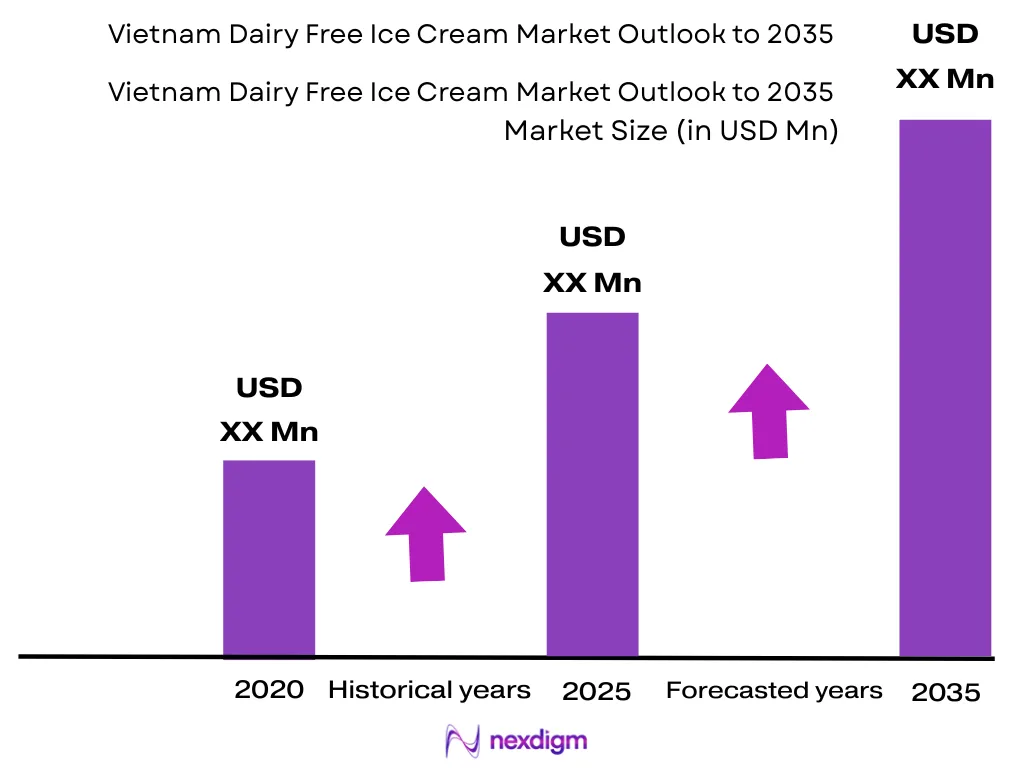
The Vietnam Dairy Free Ice Cream Market was valued at approximately USD ~ million in 2024 and is emerging as a niche but rapidly expanding segment within the broader frozen dessert and plant-based food industry. The market is driven by increasing consumer interest in lactose-free and vegan food products, rising disposable income, and the expansion of modern retail infrastructure. Vietnam’s GDP increased from approximately USD 430 billion to USD 476 billion, while household final consumption expenditure exceeded USD 290 billion, supporting greater spending on premium food products. The growth of convenience store chains, supermarkets, and e-commerce platforms has improved product accessibility. Increasing awareness of health-conscious eating habits and demand for innovative plant-based frozen desserts made from coconut, oat, almond, and soy ingredients continues to strengthen category expansion.
Market Segmentation
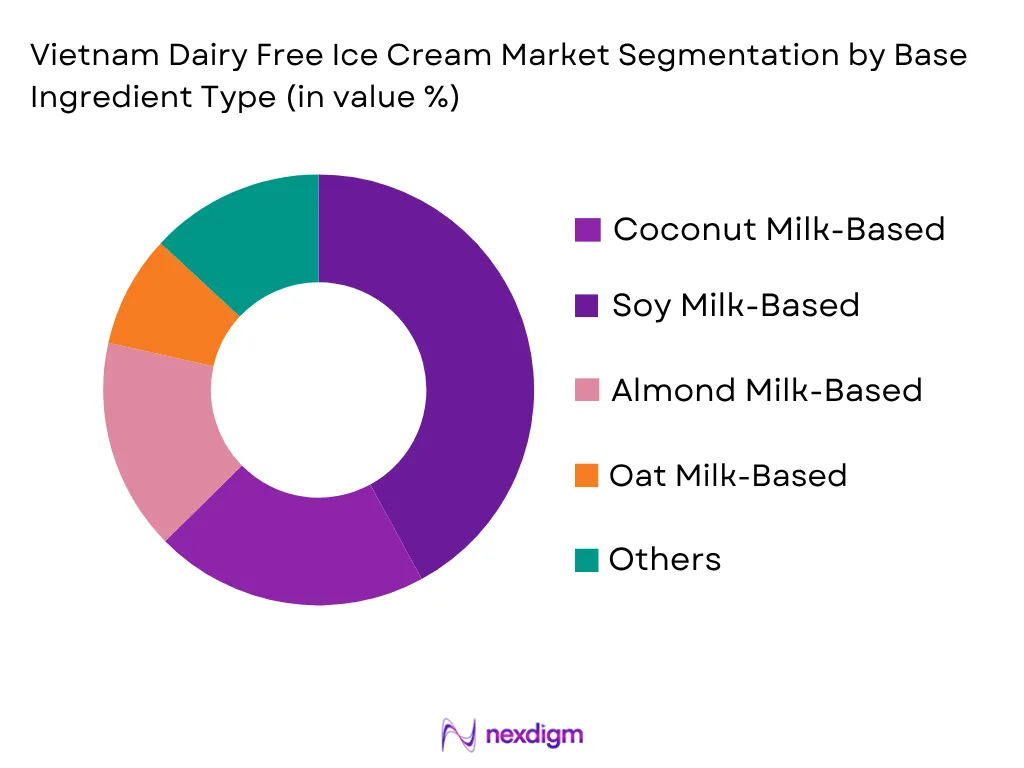
By Base Ingredient Type
Vietnam Dairy Free Ice Cream Market is segmented into coconut milk-based ice cream, soy milk-based ice cream, almond milk-based ice cream, oat milk-based ice cream, cashew milk-based ice cream, pea protein-based ice cream, and mixed plant-based formulations. Recently, coconut milk-based ice cream has a dominant market share under this segmentation due to Vietnam’s strong domestic coconut production and consumer familiarity with coconut-derived food products. Coconut milk provides a creamy texture that closely resembles traditional dairy ice cream while offering a naturally plant-based formulation. Vietnamese consumers have historically incorporated coconut into desserts, beverages, and confectionery products, which has accelerated acceptance of coconut-based frozen desserts. Manufacturers also benefit from lower sourcing complexity compared to imported almond and oat ingredients. The segment has gained traction among health-conscious consumers seeking lactose-free alternatives while maintaining authentic flavor and texture. The ability to integrate tropical fruit flavors and local ingredients further strengthens the appeal of coconut milk-based products, supporting its leadership position within the dairy-free ice cream category.
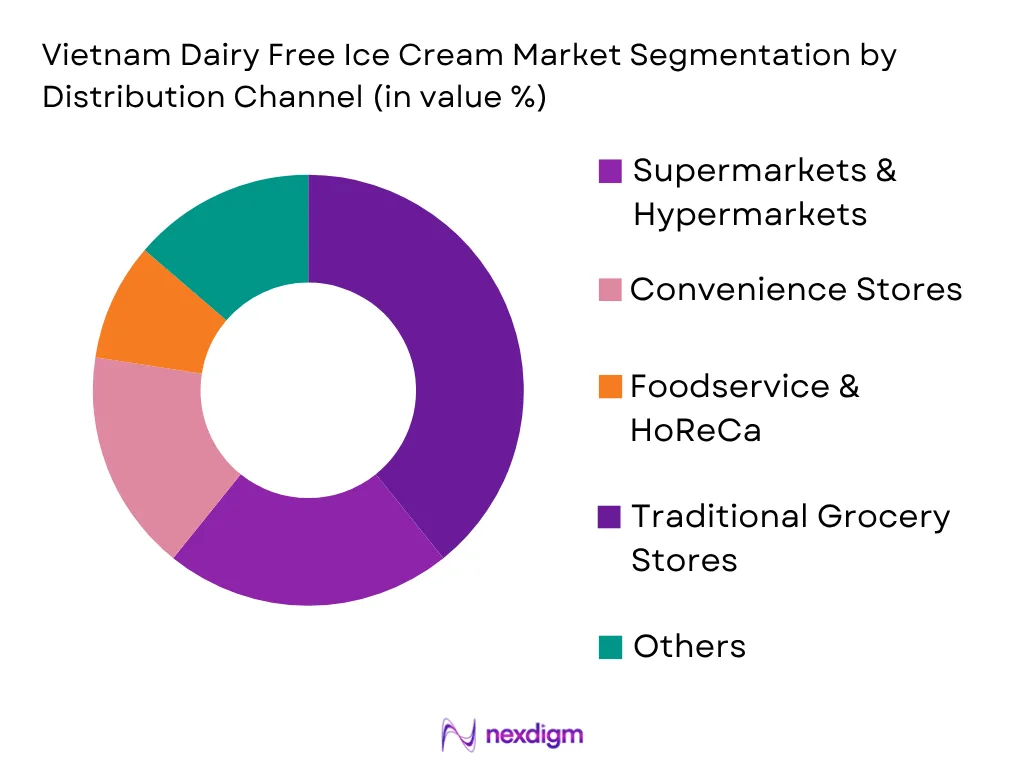
By Distribution Channel
Vietnam Dairy Free Ice Cream Market is segmented into supermarkets & hypermarkets, convenience stores, traditional grocery stores, health & organic stores, online retail platforms, foodservice establishments, dessert chains, and quick commerce channels. Recently, supermarkets and hypermarkets have a dominant market share under this segmentation due to their strong cold-chain infrastructure, wide product assortment, and growing presence across major Vietnamese cities. Retailers such as Co.opmart, GO!, Lotte Mart, WinMart, and AEON provide consumers with access to both domestic and imported dairy-free frozen dessert brands. These stores serve as the primary channel for premium food products because they offer better product visibility, dedicated health-food sections, and opportunities for consumers to compare multiple brands. The increasing expansion of modern retail networks in urban centers has strengthened consumer access to vegan and lactose-free products. Additionally, supermarkets frequently introduce imported premium brands, making them the preferred channel for consumers seeking innovative plant-based frozen dessert options.
Competitive Landscape
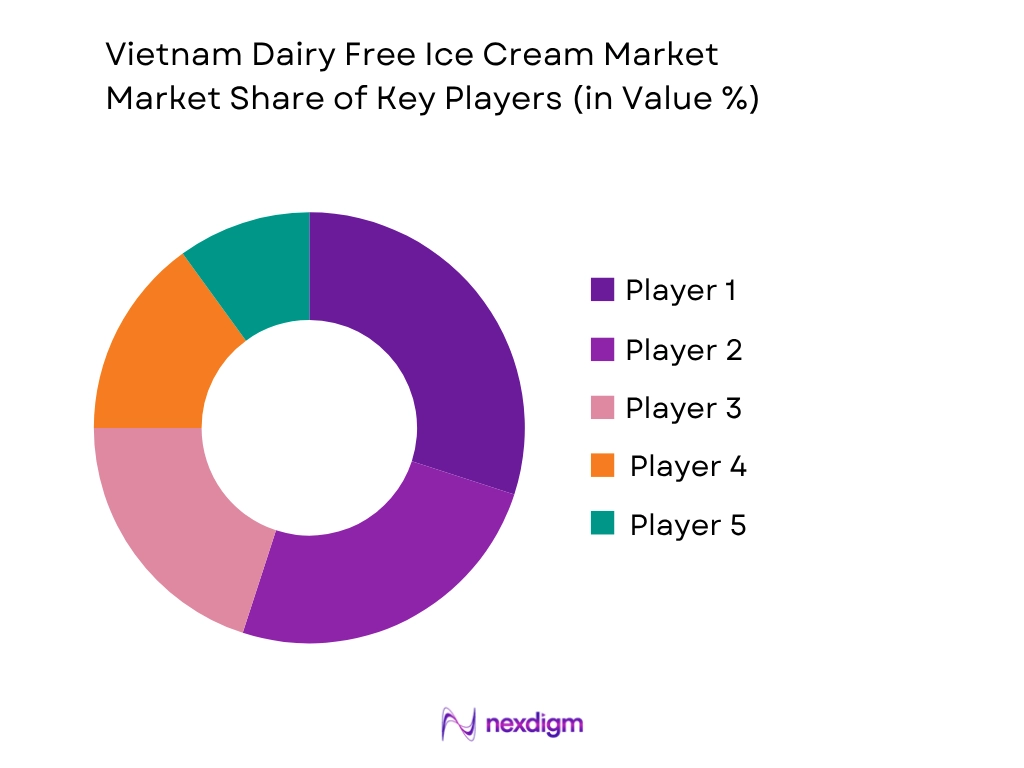
The Vietnam Dairy Free Ice Cream Market remains at an early stage of development and is characterized by a mix of domestic dairy companies expanding into plant-based products and international dairy-free frozen dessert brands. Competition is centered around product innovation, premium positioning, ingredient sourcing, and distribution expansion through modern retail channels. As plant-based consumption gains momentum, both local and international players are increasing their presence within the category.
| Company | Establishment Year | Headquarters | Plant-Based Base Portfolio | Dairy-Free SKU Count | Distribution Reach | Premium Product Portfolio | Vegan Certification | Packaging Sustainability |
| Vinamilk Plant-Based Frozen Desserts | 1976 | ~ | ~ | ~ | ~ | ~ | ~ | ~ |
| TH true VEG | 2009 | ~ | ~ | ~ | ~ | ~ | ~ | ~ |
| Ben & Jerry’s Non-Dairy | 1978 | ~ | ~ | ~ | ~ | ~ | ~ | ~ |
| Magnum Vegan | 1989 | ~ | ~ | ~ | ~ | ~ | ~ | ~ |
| Oatly | 1994 | ~ | ~ | ~ | ~ | ~ | ~ | ~ |
Vietnam Dairy Free Ice Cream Market Analysis
Growth Drivers
Rising Urbanization, Expanding Middle-Class Population, and Premium Food Consumption
The Vietnam Dairy Free Ice Cream Market is benefiting from rapid urbanization and increasing consumer spending on premium food products. Vietnam’s total population exceeded 101 million people, while the urban population surpassed 41 million people, creating a large consumer base concentrated in major cities such as Ho Chi Minh City, Hanoi, Da Nang, and Hai Phong. According to IMF estimates, Vietnam’s nominal GDP reached approximately USD 506 billion in 2024, compared to around USD 430 billion in 2023, reflecting strong economic expansion and improving purchasing power. GDP per capita exceeded USD 5,000, supporting greater expenditure on premium and health-oriented food categories. Household final consumption expenditure remained above USD 290 billion, indicating strong domestic demand. The rapid growth of modern retail infrastructure, including supermarkets, hypermarkets, and convenience store chains, has increased the accessibility of plant-based frozen desserts. Urban consumers are increasingly exposed to global food trends and premium consumption habits, encouraging experimentation with dairy-free alternatives. These factors have accelerated demand for innovative frozen desserts made from coconut, almond, oat, and soy bases, positioning dairy-free ice cream as an emerging premium segment within Vietnam’s evolving food and beverage landscape.
Increasing Health Awareness and Growth of Plant-Based Food Consumption
The Vietnam Dairy Free Ice Cream Market is also driven by rising health awareness and increasing interest in plant-based nutrition. Vietnam’s labor force exceeded 53 million people, while internet users surpassed 78 million, allowing health and wellness trends to spread rapidly through digital platforms and social media channels. The country’s healthcare expenditure exceeded USD 22 billion, reflecting growing consumer attention toward nutrition and preventive health measures. Rising awareness regarding lactose intolerance, digestive health, and clean-label food products has encouraged consumers to seek alternatives to conventional dairy products. Vietnam is also one of Southeast Asia’s leading producers of coconuts, with annual coconut production exceeding 1.9 million tonnes, providing a strong raw material base for dairy-free product innovation. The country’s food and beverage manufacturing sector continues to expand alongside rising disposable incomes, creating favorable conditions for premium product launches. Consumers increasingly associate plant-based products with wellness, sustainability, and modern lifestyles. This has encouraged manufacturers to expand dairy-free ice cream offerings across coconut-based, soy-based, almond-based, and oat-based formulations, thereby strengthening the category’s growth trajectory and increasing product availability through both retail and foodservice channels.
Market Challenges
Limited Consumer Awareness Beyond Major Urban Centers
The Vietnam Dairy Free Ice Cream Market faces challenges related to uneven consumer awareness and limited penetration outside major metropolitan areas. Although Vietnam’s population exceeds 101 million people, a substantial share resides outside primary urban consumption centers such as Ho Chi Minh City and Hanoi. The country’s rural population remains above 59 million people, where awareness of vegan and lactose-free food categories is comparatively lower. Traditional dairy products continue to dominate consumer preferences due to familiarity, widespread availability, and established consumption habits. Additionally, Vietnam’s retail ecosystem includes a large number of traditional grocery stores that often prioritize mainstream frozen dessert products over emerging specialty categories. While internet penetration has expanded significantly, awareness regarding plant-based frozen desserts remains concentrated among younger, urban, and higher-income consumers. Manufacturers entering secondary cities must invest heavily in consumer education, sampling campaigns, and brand-building initiatives to increase category understanding. The challenge is further intensified by competition from conventional ice cream brands that benefit from strong distribution networks and longstanding consumer trust. These factors collectively slow adoption rates and present barriers to nationwide market expansion.
Dependence on Imported Specialty Ingredients and Cold Chain Constraints
The dairy-free ice cream category in Vietnam remains dependent on imported specialty ingredients such as almonds, oats, plant proteins, and natural stabilizers used in premium formulations. Vietnam’s total imports exceeded USD 380 billion, highlighting the importance of international supply chains for food manufacturing. While coconut and soy ingredients are available domestically, several premium dairy-free ice cream formulations rely on imported inputs, exposing manufacturers to supply chain disruptions and inventory management challenges. Furthermore, Vietnam covers approximately 331,000 square kilometers, creating logistical challenges for frozen food distribution. The country’s cold-chain infrastructure continues to improve but remains concentrated around major urban centers and export-oriented food industries. Maintaining consistent product quality during transportation and storage is essential for dairy-free frozen desserts because plant-based formulations can be sensitive to temperature fluctuations. Distribution into smaller cities and provincial markets requires additional investments in refrigerated warehousing and transportation systems. These operational challenges increase complexity for manufacturers seeking nationwide market coverage and can affect product availability in emerging consumption regions.
Market Opportunities
Expansion of Modern Retail, Convenience Stores, and E-Commerce Channels
The continued expansion of modern retail and digital commerce presents a significant opportunity for the Vietnam Dairy Free Ice Cream Market. Vietnam operates more than 3,000 convenience stores and continues to witness rapid growth in organized retail formats. The country’s retail sales value exceeded VND 6 quadrillion, reflecting strong consumer spending across food and beverage categories. Internet users surpassed 78 million, while smartphone adoption exceeded 70 million users, creating favorable conditions for online grocery and food delivery services. Retail chains such as WinMart, Co.opmart, GO!, AEON, and Lotte Mart are expanding premium food sections and introducing a broader range of plant-based products. Additionally, food delivery and e-commerce platforms have increased accessibility for premium frozen desserts that were previously available only in select urban outlets. Dairy-free ice cream manufacturers can leverage these channels to reach consumers without relying solely on traditional distribution networks. The combination of modern retail expansion, digital commerce adoption, and improved cold-chain delivery services creates a strong foundation for increasing market penetration and expanding the consumer base for plant-based frozen desserts across Vietnam.
Rising Demand for Functional Foods and Premium Plant-Based Nutrition
The growing demand for functional nutrition products represents a major opportunity for dairy-free ice cream manufacturers in Vietnam. The country’s food processing industry contributes substantially to manufacturing output and continues to attract investment into value-added food categories. Vietnam produces more than 19 million tonnes of fruits annually, providing manufacturers with access to tropical ingredients suitable for premium frozen dessert innovation. The country’s young demographic profile includes over 55 million people of working age, supporting strong demand for health-focused and convenience-oriented food products. Consumers are increasingly seeking foods that combine indulgence with perceived health benefits such as reduced sugar, plant-based protein, clean-label ingredients, and natural flavor profiles. Premiumization trends are also encouraging demand for innovative products featuring coconut, tropical fruits, coffee, nuts, and functional ingredients. Manufacturers that develop dairy-free ice creams aligned with wellness, sustainability, and premium consumption trends can capitalize on evolving consumer preferences. As awareness of plant-based nutrition continues to increase, functional dairy-free frozen desserts are well positioned to gain broader acceptance within Vietnam’s premium food and beverage sector.
Future Outlook
The Vietnam Dairy Free Ice Cream Market is expected to demonstrate strong growth over the forecast period driven by increasing urbanization, rising disposable incomes, and growing awareness of plant-based nutrition. The expansion of modern retail channels, convenience stores, and e-commerce platforms is expected to improve product availability across the country. Manufacturers are likely to focus on coconut-based innovation, premium product development, low-sugar formulations, and localized flavors tailored to Vietnamese consumer preferences. Rising demand for lactose-free products and increasing exposure to global health and wellness trends are anticipated to support sustained market development. The market is projected to register a CAGR of ~% during 2026-2035.
Major Players
- Vinamilk Plant-Based Frozen Desserts
- TH true VEG
- Oatly
- Ben & Jerry’s Non-Dairy
- Magnum Vegan
- Häagen-Dazs Non-Dairy
- Alpro
- Coconut Bliss
- Booja-Booja
- So Delicious Dairy Free
- Halo Top Dairy Free
- Cado
- Van Leeuwen Non-Dairy
- Lotte Dairy-Free Frozen Desserts
- Baskin Robbins Non-Dairy Range
Key Target Audience
- Dairy-Free Ice Cream Manufacturers
- Plant-Based Food & Beverage Companies
- Frozen Dessert Manufacturers
- Modern Retail and Supermarket Chains
- Convenience Store Operators
- Foodservice and HoReCa Companies
- Investments and Venture Capitalist Firms
- Government and Regulatory Bodies (Ministry of Health Vietnam, Vietnam Food Administration, Ministry of Industry and Trade, Ministry of Agriculture and Rural Development)
Research Methodology
Step 1: Identification of Key Variables
The initial phase involves constructing an ecosystem map encompassing all major stakeholders within the Vietnam Dairy Free Ice Cream Market. Extensive desk research is conducted using industry publications, trade statistics, company disclosures, retail audits, and regulatory databases. The objective is to identify critical demand-side and supply-side variables influencing market development.
Step 2: Market Analysis and Construction
In this phase, historical market data relating to frozen desserts, plant-based foods, retail penetration, and consumption behavior is compiled and analyzed. Revenue generation patterns, product penetration levels, and distribution channel performance are evaluated to estimate market size and segment shares. Multiple data sources are cross-validated to ensure analytical consistency.
Step 3: Hypothesis Validation and Expert Consultation
Market assumptions are validated through primary interviews with manufacturers, distributors, retailers, foodservice operators, and ingredient suppliers. These discussions provide insights into production trends, consumer preferences, innovation strategies, and operational challenges. The information gathered is utilized to refine forecasts and strengthen market accuracy.
Step 4: Research Synthesis and Final Output
The final phase combines findings from primary and secondary research to generate a comprehensive market assessment. Data triangulation techniques are used to reconcile top-down and bottom-up estimates. The output includes market sizing, segmentation analysis, competitive benchmarking, future projections, and strategic recommendations for industry stakeholders.

- Executive Summary
- Research Methodology (Market Definitions and Assumptions, Abbreviations, Market Sizing Approach, Top-Down Analysis, Bottom-Up Analysis, Demand-Side Assessment, Supply-Side Assessment, Retail Audit Analysis, Consumer Purchase Tracking, Primary Industry Interviews, Data Triangulation, Forecasting Framework, Limitations and Future Conclusions)

- Definition and Scope
- Market Evolution and Industry Genesis
- Timeline of Major Industry Developments
- Dairy-Free Frozen Dessert Ecosystem
- Industry Value Chain Analysis

- Growth Drivers (Rising Lactose Intolerance Awareness, Expanding Vegan and Flexitarian Population, Growth of Plant-Based Food Consumption, Increasing Disposable Income, Expansion of Modern Retail Channels, Rising Health & Wellness Expenditure)
- Market Challenges (Premium Product Pricing, Limited Consumer Awareness Outside Major Cities, Plant-Based Ingredient Dependency, Cold Chain Infrastructure Constraints, Taste and Texture Replication Challenges, Limited Product Availability)
- Market Opportunities (Growth of Functional Dairy-Free Products, Expansion Through Convenience Store Networks, E-Commerce Penetration, Foodservice Adoption, Premium Product Innovation, Tourism-Driven Consumption Growth)
- Market Trends (Coconut-Based Product Innovation, Clean Label Formulations, Low-Sugar Frozen Desserts, Premium Vegan Product Launches, Sustainable Packaging Adoption, Protein-Enriched Dairy-Free Ice Cream, Tropical Flavor Development)
- Government Regulations (Vietnam Food Safety Regulations, Product Labeling Requirements, Vegan Product Compliance Standards, Import Regulations for Food Ingredients, Packaging Waste Regulations, Consumer Protection Standards)
- Raw Material Analysis (Coconut Supply Dynamics, Soy Ingredient Availability, Oat Ingredient Imports, Almond Procurement Trends, Natural Sweetener Utilization, Plant Protein Adoption)
- Consumer Preference Mapping (Taste Preference, Texture Acceptance, Ingredient Transparency, Health Benefits, Sustainability Considerations)
- Supply-Demand Gap Assessment
- SWOT Analysis
- Porter’s Five Forces Analysis
- PESTLE Analysis
- Stakeholder Ecosystem
- Competition Ecosystem

- By Market Value (2020-2025)
- By Volume Consumption (2020-2025)
- By Average Selling Price (2020-2025)

- By Base Ingredient Type (In Value %)
Coconut Milk-Based Ice Cream
Soy Milk-Based Ice Cream
Almond Milk-Based Ice Cream
Oat Milk-Based Ice Cream
Cashew Milk-Based Ice Cream
Pea Protein-Based Ice Cream
Mixed Plant-Based Formulations
Other Alternative Bases - By Flavor Type (In Value %)
Chocolate
Vanilla
Coconut
Tropical Fruit Flavors
Coffee Flavors
Matcha and Asian-Inspired Flavors
Nut-Based Premium Flavors
Limited Edition and Seasonal Flavors - By Distribution Channel (In Value %)
Supermarkets and Hypermarkets
Convenience Stores
Traditional Grocery Stores
Health & Organic Food Stores
Online Retail and Direct-to-Consumer
Foodservice and HoReCa
Ice Cream Parlors and Dessert Chains
Quick Commerce Platforms - By Region (In Value %)
Northern Vietnam
Southern Vietnam
Central Vietnam
Hanoi
Ho Chi Minh City - By Packaging Type (In Value %)
Tubs
Cups
Multipack Formats
Stick and Bar Packaging
Family Packs
Sustainable Packaging Formats

- Market Share of Major Players (By Value, Volume, Product Format, Distribution Channel, Plant-Based Base Type)
- Market Concentration Analysis (Top Brand Contribution, Regional Brand Presence, Private Label Penetration, Premium Brand Dominance)
- Cross Comparison Parameters (Plant-Based Base Portfolio, Dairy-Free SKU Count, Distribution Reach Across Vietnam, Production Capacity, Vegan Certification Portfolio, Premium Product Penetration, Innovation & New Product Launch Frequency, Presence in Convenience Store Networks)
- SWOT Analysis of Major Players
- Pricing Analysis by SKU, Pack Size and Product Category
- Detailed Profiles of Major Companies
Vinamilk Plant-Based Frozen Desserts
TH true VEG
Oatly
Ben & Jerry’s Non-Dairy
Magnum Vegan
Häagen-Dazs Non-Dairy
Alpro
Coconut Bliss
Booja-Booja
So Delicious Dairy Free
Halo Top Dairy Free
Cado
Van Leeuwen Non-Dairy
Lotte Dairy-Free Frozen Desserts
Baskin Robbins Non-Dairy Range

- Consumption Behavior Assessment (Purchase Frequency, Consumption Occasions, Household Penetration, Repeat Purchase Rate, Seasonal Consumption Patterns)
- Demographic Consumption Trends (Age Group, Income Segment, Household Composition, Urban-Rural Split, Lifestyle Preferences)
- Purchasing Power Analysis (Disposable Income, Premium Product Affordability, Food & Beverage Spending, Frozen Dessert Expenditure)
- Premium vs Mass Market Demand Analysis (Willingness to Pay, Premium Brand Adoption, Trading-Up Behaviour, Value Perception)
- Brand Loyalty Assessment (Repeat Purchase Behaviour, Brand Switching Trends, Retention Drivers, Trial Conversion Rates)

- By Market Value (2026-2035)
- By Volume Consumption (2026-2035)
- By Average Selling Price (2026-2035)


 Request a Sample
 Ask for Customization
 Get a Quote
 Enquire Now