

 Download PDF
 Download PDF
Market Overview
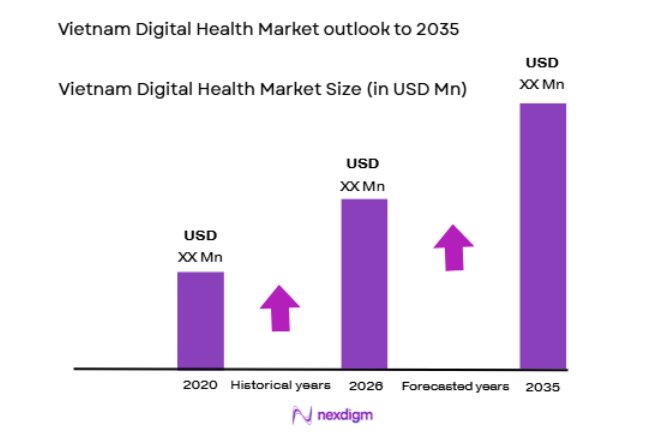
Based on a recent historical assessment, the Vietnam Digital Health Market is valued at approximately USD ~ million. The market is driven by the rapid adoption of digital health solutions, including telemedicine, electronic health records (EHR), wearable health devices, and health information technology. The growing demand for better healthcare delivery, coupled with government support for digital health initiatives, is accelerating the market’s growth. Advancements in mobile and internet connectivity also play a significant role in driving digital health adoption.
Ho Chi Minh City and Hanoi are the dominant cities in the Vietnam Digital Health Market, acting as hubs for digital health innovation and service delivery. These cities have robust healthcare infrastructure, a high concentration of tech startups, and strong government initiatives supporting digital health. The integration of technology into healthcare in these cities is further enhanced by public-private partnerships and a growing tech-savvy population. Both cities are at the forefront of digital health adoption in Vietnam, making them pivotal to the market’s development.
Market Segmentation
By Product Type
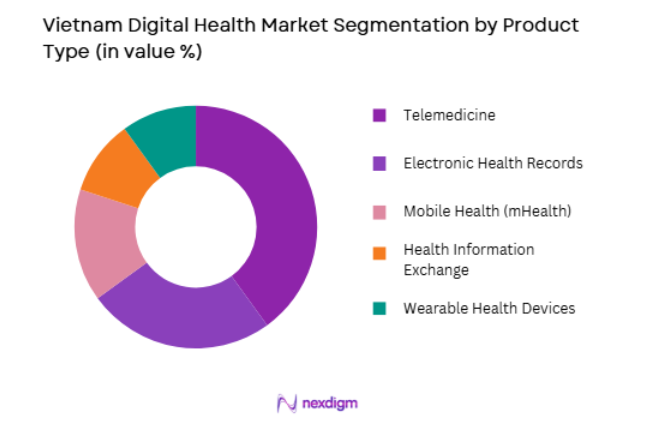
Vietnam Digital Health market is segmented by product type into Telemedicine, Electronic Health Records (EHR), Mobile Health (mHealth), Health Information Exchange (HIE), and Wearable Health Devices. Recently, Telemedicine has a dominant market share due to increasing demand for remote healthcare services, especially in rural areas where access to healthcare facilities is limited. Telemedicine platforms enable patients to consult with healthcare professionals remotely, improving healthcare access and reducing the strain on physical healthcare infrastructure. As internet connectivity improves and the adoption of mobile health applications increases, telemedicine’s reach has expanded significantly. The Vietnamese government’s focus on enhancing healthcare access through digital platforms has further accelerated the adoption of telemedicine services, making it the dominant product type in the market.
By End User
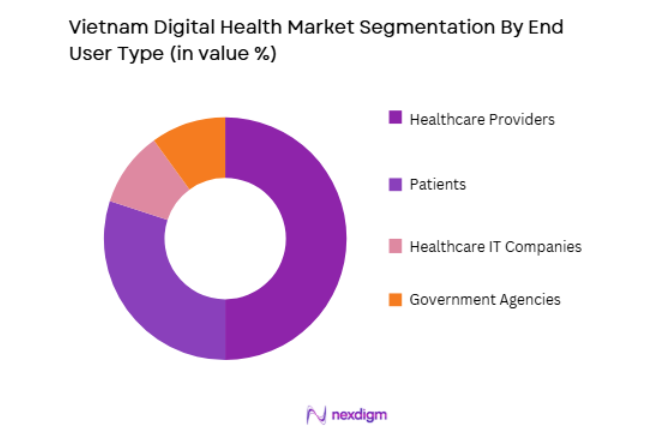
Vietnam Digital Health market is segmented by end user into Healthcare Providers, Patients, Healthcare IT Companies, and Government Agencies. Recently, Healthcare Providers have a dominant market share due to their central role in adopting digital health solutions to improve patient care and operational efficiency. Hospitals, clinics, and diagnostic centers are increasingly implementing electronic health records (EHR), telemedicine platforms, and mHealth applications to streamline workflows, enhance diagnostic capabilities, and provide more efficient services to patients. With the healthcare sector increasingly digitalized, healthcare providers are at the forefront of driving digital health adoption across Vietnam. The government’s initiatives to improve healthcare access and efficiency further bolster the adoption of digital health solutions by healthcare providers, making them the largest end-user group.
Competitive Landscape
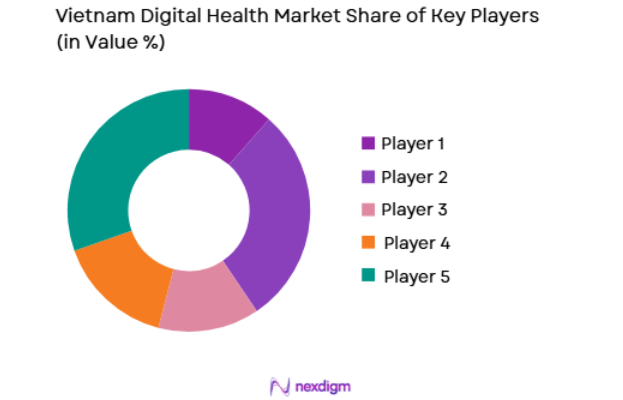
The Vietnam Digital Health Market is competitive, with both local and international companies offering a range of digital health solutions. Key players include telemedicine platforms, health IT companies, and providers of wearable health devices and software solutions. The market is expected to witness increasing consolidation, as established companies seek partnerships with smaller startups to expand their product offerings. The Vietnamese government’s strong push for digital health integration in the national healthcare system will continue to foster innovation and investment in the sector, creating a dynamic competitive landscape.
| Company Name | Establishment Year | Headquarters | Technology Focus | Market Reach | Key Products | Revenue | Market-Specific Parameter |
| Viettel Group | 2004 | Hanoi | ~ | ~ | ~ | ~ | ~ |
| Doctor Anywhere Vietnam | 2017 | Ho Chi Minh City | ~ | ~ | ~ | ~ | ~ |
| Vinmec Healthcare System | 2012 | Hanoi | ~ | ~ | ~ | ~ | ~ |
| Medlink Vietnam | 2016 | Ho Chi Minh City | ~ | ~ | ~ | ~ | ~ |
| Hanoi Medical University | 1902 | Hanoi | ~ | ~ | ~ | ~ | ~ |
Vietnam Digital Health Market Analysis
Growth Drivers
Government Support for Digital Health Integration
Government Support for Digital Health Integration is a key growth driver in the Vietnam Digital Health Market. The Vietnamese government has committed to the development and expansion of digital health technologies as part of its broader healthcare reform initiatives. Policies aimed at improving healthcare accessibility and efficiency, particularly in rural areas, have led to the adoption of telemedicine platforms, electronic health records (EHR), and mHealth solutions across the healthcare system. The government’s digital health agenda also includes funding for the integration of digital solutions into existing healthcare infrastructure, promoting public-private partnerships, and providing incentives for the adoption of digital health technologies. These government-led efforts have been instrumental in encouraging healthcare providers to adopt digital health solutions, resulting in rapid market growth.
Technological Advancements in Healthcare
Technological Advancements in Healthcare, particularly in telemedicine, electronic health records (EHR), and wearable health devices, have significantly contributed to the growth of the Vietnam Digital Health Market. The rapid evolution of mobile technology, broadband internet access, and cloud computing has made it easier for healthcare providers to implement digital health solutions that improve patient care and operational efficiency. Innovations in telemedicine platforms, such as AI-based diagnostic tools, virtual consultations, and mobile health applications, have enhanced the accessibility of healthcare services, especially in underserved regions. As healthcare technology continues to advance, the scope of digital health services will expand, offering new opportunities for growth and market development.
Market Challenges
Regulatory and Data Privacy Challenges
Regulatory and Data Privacy Challenges are significant obstacles in the Vietnam Digital Health Market. The rapid growth of digital health technologies has outpaced the development of regulatory frameworks to ensure the security and privacy of patient data. The Vietnamese government has introduced regulations aimed at protecting patient data and ensuring the proper use of digital health platforms. However, healthcare providers and digital health companies must navigate a complex landscape of national and international data protection laws, which can be time-consuming and costly. Ensuring compliance with these regulations is particularly challenging for smaller players in the market, which may lack the resources to implement robust data security measures. Data breaches or violations of privacy regulations could undermine public trust in digital health platforms, hindering market growth.
High Initial Costs of Digital Health Integration
High Initial Costs of Digital Health Integration represent another major challenge in the Vietnam Digital Health Market. Implementing digital health solutions such as telemedicine platforms, EHR systems, and wearable health devices requires significant upfront investment in technology infrastructure, software, and staff training. For smaller healthcare providers, particularly in rural areas, these initial costs can be prohibitive. While the long-term benefits of digital health, such as cost savings, improved patient care, and operational efficiency, are clear, the high initial costs remain a barrier to entry for many healthcare providers. The lack of financial resources and access to funding options for digital health integration presents a challenge to the broader adoption of these technologies in Vietnam.
Opportunities
Expansion of Telemedicine Services in Rural Areas
Expansion of Telemedicine Services in Rural Areas presents a major opportunity for the Vietnam Digital Health Market. Many rural areas in Vietnam suffer from limited access to healthcare facilities and specialists. Telemedicine offers a solution to these challenges by enabling patients to consult with doctors remotely, reducing the need for long travel distances to access medical care. The government’s push to improve healthcare infrastructure in underserved areas has created opportunities for telemedicine providers to expand their services to rural populations. As digital connectivity improves in rural areas, the demand for telemedicine services is expected to grow, providing significant opportunities for telemedicine platforms to capture new markets and improve healthcare accessibility.
Growth in Wearable Health Devices
Growth in Wearable Health Devices represents another key opportunity for the Vietnam Digital Health Market. The increasing popularity of fitness trackers and health monitoring devices is driving the adoption of wearable health technology in Vietnam. These devices allow individuals to monitor their health metrics, such as heart rate, sleep patterns, and physical activity levels, providing valuable insights for preventive care. As the Vietnamese population becomes more health-conscious, the demand for wearable health devices is expected to rise. Additionally, healthcare providers are increasingly incorporating wearable devices into patient care, using them to track chronic conditions and provide remote monitoring services. The growing awareness of the benefits of wearable health devices presents a significant growth opportunity for companies operating in the digital health sector.
Future Outlook
The Vietnam Digital Health Market is poised for continued growth, driven by increasing government support, technological advancements, and rising demand for healthcare services. The expansion of telemedicine services in rural areas, along with the growing adoption of wearable health devices and mobile health applications, will contribute to the market’s development. As digital health technologies become more integrated into Vietnam’s healthcare system, both public and private sector players will benefit from expanding opportunities in the digital health space.
Major Players
- Viettel Group
- Doctor Anywhere Vietnam
- Vinmec Healthcare System
- Medlink Vietnam
- Hanoi Medical University
- FV Hospital
- Phyathai Hospitals
- Samitivej Hospitals
- Raffles Medical Group
- Aetna Healthcare
- Sun Life Vietnam
- Global Healthcare Vietnam
- Docter Raksa
- Hoa Sen Healthcare
- TechMed
Key Target Audience
- Investments and venture capitalist firms
- Government and regulatory bodies
- Healthcare providers
- Digital health technology developers
- Medical device manufacturers
- Pharmaceutical companies
- Insurance companies
- Healthcare IT providers
Research Methodology
Step 1: Identification of Key Variables
Key variables such as healthcare access, population health needs, government initiatives, technological advancements, and market trends were identified to assess the market’s growth drivers and challenges.
Step 2: Market Analysis and Construction
Market analysis was conducted by examining patient demand, healthcare facility needs, telemedicine adoption rates, and government healthcare policies across Vietnam.
Step 3: Hypothesis Validation and Expert Consultation
Assumptions were validated through consultations with healthcare providers, digital health experts, and government officials to confirm trends and challenges in the market.
Step 4: Research Synthesis and Final Output
Data was synthesized from primary and secondary sources to provide a comprehensive view of the Vietnam Digital Health Market, integrating expert insights, market data, and government initiatives.

- Executive Summary
- Research Methodology (Definitions, Scope, Industry Assumptions, Market Sizing Approach, Primary & Secondary Research Framework, Data Collection & Verification Protocol, Analytic Models & Forecast Methodology, Limitations & Research Validity Checks)

- Market Definition and Scope
- Value Chain & Stakeholder Ecosystem
- Regulatory / Certification Landscape
- Sector Dynamics Affecting Demand

- Growth Drivers
Government Support for Digital Health
Rising Healthcare Awareness Among Consumers
Adoption of AI and Big Data in Healthcare - Market Challenges
Data Privacy and Security Concerns
Lack of Healthcare IT Infrastructure in Rural Areas
Technological Integration Barriers - Market Opportunities
Increasing Demand for Remote Healthcare Services
Partnerships Between Healthcare Providers and Technology Companies
Expansion of Mobile Health Solutions - Trends
Integration of AI and IoT in Digital Health
Growth of Telemedicine and Remote Monitoring Solutions - Government Regulations
- SWOT Analysis
- Porter’s Five Forces

- By Market Value, 2020-2025
- By Installed Units, 2020-2025
- By Average System Price, 2020-2025
- By System Complexity Tier, 2020-2025

- By System Type (In Value%)
Telemedicine Platforms
Remote Patient Monitoring Systems
Mobile Health Applications
Digital Therapeutics
Healthcare Wearables - By Platform Type (In Value%)
Cloud-Based Platforms
Web-Based Platforms
Mobile Applications
Integrated Platforms
On-premise Solutions - By Fitment Type (In Value%)
On-demand Solutions
Subscription-Based Solutions
Customizable Solutions
Cloud-Based Solutions - By End User Segment (In Value%)
Hospitals and Healthcare Providers
Patients
Telemedicine Service Providers
Insurance Companies

- Market Share Analysis
- Cross Comparison Parameters (System Type, Platform Type, End User Segment, Fitment Type, Procurement Channel, Technological Advancements, Service Delivery Model, Customer Satisfaction, Healthcare Regulations, Pricing Strategy)
- SWOT Analysis of Key Competitors
- Pricing & Procurement Analysis
- Key Players
Vinmec Healthcare System
Bệnh viện Chợ Rẫy
Hoan My Medical Corporation
Hanh Phuc International Hospital
The Vietnam Ministry of Health
Bệnh viện Đại học Y Dược
Medlatec Group
Sai Gon General Hospital
Viet Health Group
Bệnh viện Từ Dũ
Kangnam Hospital
Bệnh viện Phụ Sản Trung Ương
Hanoi Medical University Hospital
PV Gas Medical Center
Bệnh viện Việt Đức

- Increasing Demand for Telehealth Services
- Growing Role of Healthcare Providers in Digital Health Solutions
- Consumer Demand for Healthcare Accessibility
- Telemedicine Providers’ Focus on Cost-Effective Solutions

- Forecast Market Value, 2026-2035
- Forecast Installed Units, 2026-2035
- Price Forecast by System Tier, 2026-2035
- Future Demand by Platform, 2026-2035


 Request a Sample
 Ask for Customization
 Get a Quote
 Enquire Now