

 Download PDF
Market Overview
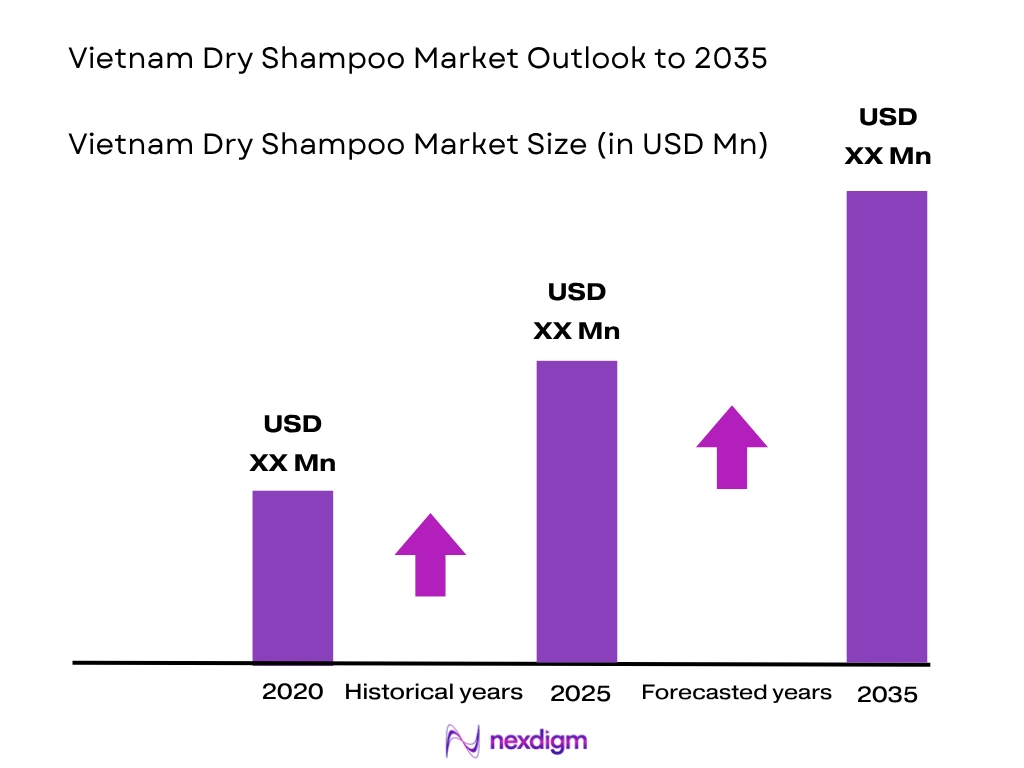
The Vietnam Dry Shampoo Market is valued at USD ~ million in 2025, as per published Nexdigm Report, which tracks historical revenues and volumes for this segment using verified industry data. This valuation reflects a steady increase from 2023 figures, driven by rising disposable income, urban population growth, and an increasing shift toward time‑saving personal care products among young and working consumers. Urban lifestyles and the influence of global grooming trends continue to elevate dry shampoo consumption across Vietnamese cities.
Leading urban centers such as Ho Chi Minh City and Hanoi dominate dry shampoo demand due to higher concentrations of trend‑driven consumers, stronger retail infrastructures, and broader availability of international and premium brands. These metropolitan areas have larger populations of working professionals and students who favour quick, waterless haircare solutions to suit busy lifestyles and frequent social engagements. Additionally, Vietnam’s coastal cities see heightened usage due to climate‑associated hair oiliness and humidity‑related grooming challenges.
Market Segmentation
By Form Type
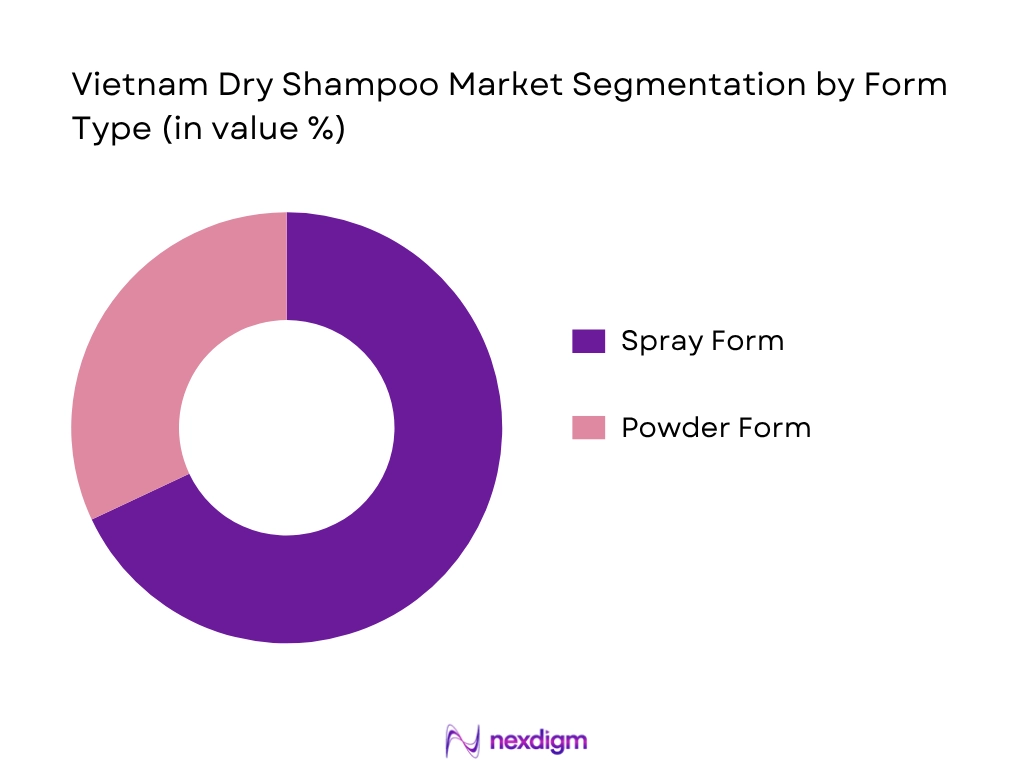
Spray Form dominates this segment in Vietnam due to its convenience, familiarity among global and local brands, and strong consumer preference for aerosol applications that deliver quick refresh and oil absorption without residue. The ease of use in busy urban life, coupled with extensive marketing and product availability in modern retail and online channels, supports its larger share. Spray formulations are frequently marketed by international beauty brands and local launch partners, which strengthens consumer trust and purchase frequency, especially among female shoppers and young professionals seeking rapid results between washes. Furthermore, aerosol sprays benefit from perceived performance advantages in humid environments like Vietnam’s climate, where oil buildup occurs quickly, making them a go‑to choice.
By Distribution Channel
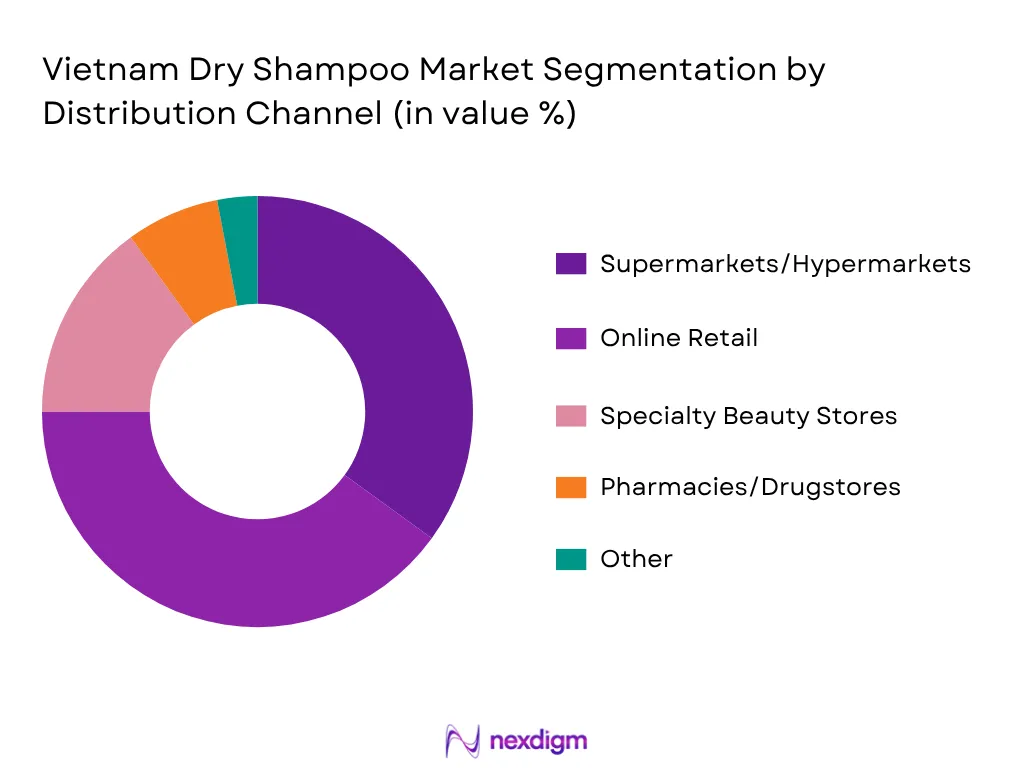
Online Retail leads distribution due to the accelerated adoption of e‑commerce across Vietnam, including major marketplaces and beauty‑focused platforms. Urban consumers increasingly use digital channels for personal care purchases driven by product variety, user reviews, promotions, and convenient delivery. Influencer marketing and direct‑to‑consumer campaigns on social commerce have further solidified online retail’s share, especially among Gen Z and millennial buyers familiar with digital discovery and mobile shopping. Several brands leverage targeted digital advertising, subscription offers, and bundled deals, which enhance online conversion rates and repeat purchases. Retail expansion by digital marketplaces also improves access in tier‑2 and tier‑3 cities where physical speciality store presence is limited. Offline channels like modern trade still capture notable share due to trial and impulse purchases at large format stores and convenience for in‑store brand comparison.
Competitive Landscape
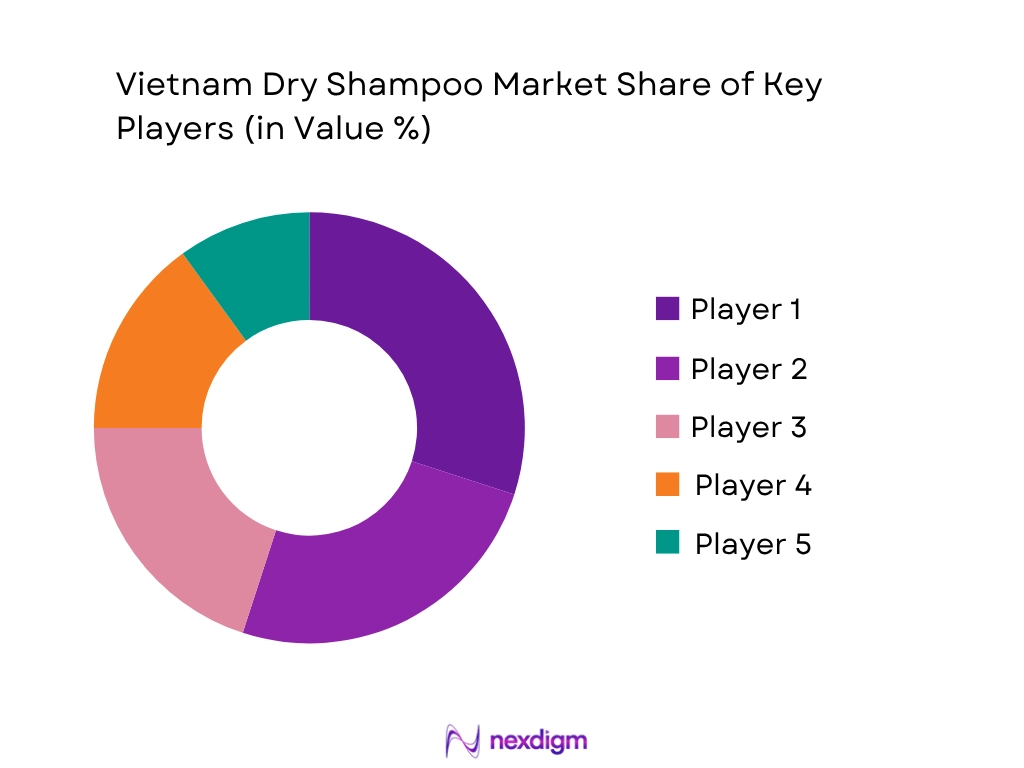
The Vietnam Dry Shampoo Market features established global personal care multinationals and regional players, reflecting both brand diversification and local distribution presence. The competitive environment is characterized by a mix of international heritage brands and focused haircare specialists. This consolidation around a few major players reflects the importance of strong distribution networks, formulation innovation (e.g., clean beauty claims), and localized marketing execution.
| Company | Est. Year | Headquarters | Key SKU Portfolio Breadth | Distribution Coverage | Vietnam‑Specific Marketing Presence | Ingredient Innovation Index | E‑commerce Penetration Score | Retail Channel Penetration |
| Unilever | 1930 | London, UK | ~ | ~ | ~ | ~ | ~ | ~ |
| Procter & Gamble | 1837 | Cincinnati, USA | ~ | ~ | ~ | ~ | ~ | ~ |
| L’Oréal | 1909 | Clichy, France | ~ | ~ | ~ | ~ | ~ | ~ |
| Henkel | 1876 | Düsseldorf, Germany | ~ | ~ | ~ | ~ | ~ | ~ |
| Shiseido | 1872 | Tokyo, Japan | ~ | ~ | ~ | ~ | ~ | ~ |
Vietnam Dry Shampoo Market Analysis
Growth Drivers
Increasing Urbanization & Busy Lifestyle
Vietnam’s rapid urbanization is a fundamental driver of evolving personal care behaviors that benefit the dry shampoo category. In 2024, Vietnam’s urban population reached approximately 40.6 million people, accounting for around 40.2 percent of the total population, up from 39.5 percent in 2023, according to United Nations and World Bank demographic estimates. This acceleration of city living is closely linked with changing consumer routines; urban dwellers face higher daily mobility, congested commuting patterns, and compressed personal schedules that incentivize quick and convenient grooming solutions. Urban metro areas such as Ho Chi Minh City and Hanoi host some of Vietnam’s densest and fastest‑growing populations, where modern retail outlets, salons, and e‑commerce ecosystems are most developed, making dry shampoo more visible and accessible to consumers. Additionally, Vietnam’s overall median age of approximately 32.9 years reflects a relatively young and active cohort driving demand for convenient haircare alternatives that suit frequent social and professional engagements. These urban demographic trends and mobility constraints create conditions where dry shampoo is seen not just as a cosmetic choice, but a functional solution integrated into daily grooming regimens.
Rising Millennial Grooming Consciousness
Vietnam’s demographic composition significantly shapes the grooming market, particularly among Millennials and younger cohorts. As of 2024, Vietnam’s total population was approximately 100.99 million, with a large segment under 35 years of age characterized by exposure to digital media, beauty influencers, and global lifestyle trends. According to UN and population data, nearly half of Vietnam’s population falls within the working‑age and youth segments that are most active in fashion, lifestyle, and personal care experimentation. This demographic demonstrates heightened grooming consciousness and willingness to adopt products that enhance convenience and appearance, underpinning the growing acceptance of dry shampoo as a complement to traditional hair washing routines. Furthermore, the presence of 78.44 million internet users reported in 2024 fuels online discovery, social commerce influence, and direct‑to‑consumer engagement, which, in turn, amplifies interest in trending personal care solutions like dry shampoo. This digital penetration effectively accelerates the grooming culture among Millennials who value both functionality and the social perception of well‑groomed hair in professional and social contexts. The convergence of a digitally connected, youthful population with urban lifestyles fosters a market segment that actively seeks innovative and time‑efficient personal care products, a fertile ground for dry shampoo adoption.
Market Challenges
Limited Awareness of Product Benefits Among Older Demographics
Despite the vibrancy of Vietnam’s grooming market among younger cohorts, older demographic segments demonstrate lower awareness and adoption of specialized personal care innovations like dry shampoo. Population data indicates that significant portions of the population remain either in rural areas or within older age brackets that traditionally prioritize conventional hair cleansing methods over newer, convenience‑oriented products. Cultural grooming norms ingrained among older consumers emphasize routine wet hair washing, which limits the perceived utility of dry shampoo a product designed primarily for time‑constrained users rather than habitual heavy hair care users. In addition, Vietnam’s median age (~32.9 years) and evolving age structure suggest that while a large young population actively engages with grooming trends, older segments may not yet be fully integrated into modern beauty consumption patterns, especially for alternative haircare solutions. This demographic gap in product familiarity and acceptance leads to restrained growth potential in segments where awareness is insufficient to drive trial and repeat purchase behavior. Older populations also tend to exhibit more price‑conscious purchasing behaviors rooted in traditional usage habits rather than experimentation with newer personal care formats. Consequently, education and targeted marketing campaigns designed to bridge this awareness gap are essential to unlock broader market potential across all age groups in Vietnam’s maturing personal care landscape.
Price Sensitivity
Price sensitivity among Vietnamese consumers represents a key constraint on rapid market expansion for specialized haircare products such as dry shampoo. Vietnam’s GDP per capita was approximately USD 4,717 in 2024, which, while indicative of rising purchasing power relative to past decades, still places a substantial portion of the population in a bracket where discretionary spending is carefully assessed against everyday needs. Many consumers prioritize essential goods and necessities over premium or supplementary personal care items, particularly in price‑competitive retail environments where conventional shampoo and cleansing products are significantly cheaper on a unit basis. This economic reality is especially relevant in non‑urban and lower‑income segments where disposable income remains constrained, and spending on niche grooming categories is limited. The sensitivity to price points is further heightened in segments where dry shampoo is positioned as a mid‑to‑premium alternative in a market dominated by cost‑effective traditional haircare. Therefore, pricing strategies and product tiering play a decisive role in adoption, with affordability appearing as a critical barrier in broader market penetration, especially outside urban centers. In this context, brands that can offer value‑aligned formulations and targeted entry pricing may be better positioned to mitigate price sensitivity and expand consumer reach across income segments.
Opportunities
Expansion of Natural & Botanical Formulations
Vietnamese consumers are increasingly gravitating toward personal care products that emphasize natural, botanical, and ‘clean’ ingredients, mirroring broader global lifestyle shifts. This trend is supported by demographic and economic indicators that highlight rising disposable income among younger and urban cohorts exposed to digital information and wellness messaging. With approximately 78.44 million internet users in 2024, digital platforms play a pivotal role in educating consumers about ingredient safety and the allure of plant‑based solutions. This digital engagement empowers consumers to make informed choices that align with personal health and environmental preferences. Natural and botanical dry shampoo formulations leveraging plant starches, herbal extracts, and minimally processed ingredients resonate with consumers seeking alternatives to chemical‑heavy grooming products. Since Vietnam’s urban and digitally connected population demonstrates higher purchasing power and awareness, formulations that emphasize natural benefits can be positioned as both efficacious and aligned with wellness values. These products may appeal to consumers wary of synthetic propellants or irritants, particularly in a market where skin and scalp sensitivity are common concerns due to high humidity and heat. Additionally, natural formulations can benefit from regulatory reassurance and marketing narratives that emphasize safety and sustainability, enhancing consumer trust in these offerings. As awareness of sustainable beauty continues to grow, this segment represents a promising avenue for differentiation and deeper market engagement without depending on speculative forecasts.
Premiumization
Vietnam’s evolving consumer spending patterns indicate a progressive shift toward premium and added‑value personal care segments, driven by increasing urban incomes and lifestyle aspirations. As GDP per capita climbed to approximately USD 4,717 in 2024, more Vietnamese consumers in urbanized regions are allocating discretionary income toward grooming and lifestyle enhancement products that convey status, quality, and performance differentiation. Premium dry shampoo offerings can capitalize on consumers’ willingness to invest in products that promise advanced formulations, superior sensory experiences, and brand prestige attributes valued in aspirational urban households. This trend is strengthened by the rising influence of social media, where premium brand storytelling and lifestyle positioning resonate strongly with younger demographics. Premiumization also benefits from broader retail transformations within modern trade and e‑commerce ecosystems in Vietnam, where curated brands and premium assortments are readily discoverable and accessible. By positioning high‑end dry shampoo variants that emphasize unique value propositions such as enriched botanical complexes, luxury fragrance blends, and designer packaging, brands can tap into consumer segments that associate price with performance and lifestyle alignment. This premium layering strategy leverages urban wealth concentration and digital brand discovery to gain traction without relying on future growth estimates, thereby unlocking differentiated consumer engagement within the broader personal care market.
Future Outlook
Over the next decade, the Vietnam Dry Shampoo Market is expected to maintain a positive growth trajectory underpinned by rising urbanization, increasing disposable incomes, and evolving personal care habits that prioritize convenience and efficiency. Consumers are projected to shift preferences toward value‑added formulations (such as color protection and scalp‑friendly ingredients) and premium formats supported by digital discovery and curated online retail experiences. Market development will likely be shaped by sustainability trends, clean beauty claims, and continued e‑commerce expansion, reinforcing competitive differentiation and category penetration across demographic cohorts. The market is forecast to grow at a compound annual growth rate (CAGR) of approximately ~6% during the 2026–2035 period, driven by lifestyle transitions, broader retail access, and increasing adoption across younger audiences seeking quick and effective hair care solutions. This CAGR projection aligns with regional dry shampoo expansion trends observed across the broader Asia‑Pacific region.
Major Players
- Unilever
- Procter & Gamble
- L’Oréal
- Henkel
- Shiseido
- Kao
- Coty
- Revlon
- Church & Dwight
- Batiste (Imported Portfolio)
- Schwarzkopf
- Living Proof
- Amika
- Local Vietnam Beauty Brands
- Emerging Indie Clean Beauty Brands
Key Target Audience
- FMCG Brand Managers (Hair Care & Grooming)
- Retail Category Directors – Modern Trade & E‑commerce Platforms
- Investments and Venture Capitalist Firms (Beauty & Personal Care Investors)
- Private Equity Funds – Consumer Goods Portfolio Teams
- Hair Care Manufacturers & Contract Manufacturers
- Retail Chain Procurement Heads
- Government and Regulatory Bodies (Vietnam Ministry of Industry and Trade – Cosmetics Division)
- Retail Analytics & Shopper Insights Heads
Research Methodology
Step 1: Market Definition & Variable Identification
The review begins with constructing a landscape of stakeholders in the Vietnam Dry Shampoo Market, leveraging verified secondary sources, syndicated research reports, and industry databases to define core variables affecting market size, segmentation, and competitive factors.
Step 2: Data Collection & Historical Compilation
This phase synthesizes historical revenue, distribution, and formulation data from reputable research publications and industry surveys, ensuring consistency across channels. It includes assessment of retail penetration, product launches, and demographic adoption patterns.
Step 3: Expert Consultations & Validation
Draft hypotheses and market assumptions are validated through structured interviews with distribution partners, brand category leads, and industry specialists to refine forecasts, competitive positioning, and consumer behaviour insights.
Step 4: Market Synthesis & Forecast Modeling
Final outputs integrate bottom‑up revenue aggregation with channel share analytics and macroeconomic variables to project future market trajectories, ensuring alignment with regional dry shampoo trends and Vietnam‑specific demand drivers.

- Executive Summary
- Research Methodology (Market Definitions and Assumptions, Research Framework & Data Triangulation, Primary & Secondary Sources Logic, Market Sizing Approaches, Bias Control, Limitations & Confidence Metrics)

- Market Definition & Scope
- Market Genesis (Adoption & Maturation)
- Industry Life Cycle & Maturity Curve
- Value Chain & Supply Chain Mapping
- Ecosystem of Raw Material (Propellants, Starches, Botanical Actives)
- Regulatory & Compliance Landscape (Cosmetic Safety Standards)

- Growth Drivers (Increasing Urbanization & Busy Lifestyle, Rising Youth & Millennial Grooming Consciousness, Growing E‑commerce & Online Beauty Platform Penetration, Preference for Time-Saving Hair Care Solutions, Demand for Travel & On-the-Go Hair Care Formats)
- Market Restraints (Limited Awareness of Product Benefits Among Older Demographics, Price Sensitivity Across Mass & Mid-Tier Segments, Volatility in Import Costs for Aerosol Propellants & Botanical Extracts, Regulatory Compliance & Cosmetic Safety Approvals)
- Opportunities (Expansion of Natural & Botanical Formulations, Premiumization & Niche Segment Development, Private Label Launches by Retailers, Salon & Professional Channel Collaborations, Sustainable Packaging Adoption)
- Emerging Trends (Mini & Travel-Sized Packaging Adoption, Influencer & Social Media Driven Campaigns, Personalized Hair Care Solutions, Clean Beauty & Ingredient Transparency, Form Innovation – Waterless Foams & Solid Powders)
- Regulatory Environment (Cosmetic Product Registration Requirements in Vietnam, Ingredient Safety & Allowed Chemical Limits, Import & Labeling Compliance, Advertising Claims Verification, Packaging Waste Management Regulations)
- Porter’s Five Forces Analysis (Threat of New Entrants, Supplier Power, Buyer Negotiation Leverage, Threat of Substitutes – Traditional Shampoos & Hair Styling Products, Competitive Rivalry Intensity)
- SWOT Analysis (Market Level)
- Value Chain and Supply Chain Analysis (Raw Material Sourcing – Starches, Aerosol Propellants & Botanical Extracts, Domestic vs Imported Ingredients, Manufacturing Nodes – Local vs Contract Manufacturing, Logistics Hubs)
- Consumer Purchase Behavior & Retail Analytics (Purchase Frequency, Usage Patterns by Demographics – Youth vs Adults, Channel Preference Analysis, Brand Loyalty Metrics, Basket Affinity & Cross-Sell Dynamics, Awareness & Trial Conversion Rates)

- By Market Value (2020-2025)
- By Volume (2020-2025)
- By ASP (2020-2025)
- By SKU Depth (2020-2025)

- By Form Type (In Value%)
Spray/Aerosol
Powder
Waterless Foam
Solid Powder - By Product Function/Benefit (In Value%)
Oil Absorption Efficiency
Anti‑Dandruff
Color Protection
Scalp Soothing
Volume Boost - By Ingredient/Composition (In Value%)
Natural/Botanical
Organic
Sulfate‑Free
Silicone‑Free
Functional Additives - By End Consumer Demographic (In Value%)
Women
Men
Youth/Gen Z
Kids
Salon/Professional Use - By Distribution Channel (In Value%)
Modern Retail (GT & MT)
Specialty Beauty Stores
Drugstores/Pharmacie
E‑commerce Platforms
Salons & Professional Channels - By Price Tier (In Value%)
Mass
Mid‑Tier
Premium - By Packaging Format (In Value%)
Can Size
Travel/Portable Formats
Refillable Systems

- Market Share & Positioning (Value & Volume Share of Leading Players, Category Leadership by Form Type, Market Positioning )
- Cross-Comparison Parameters (Company Overview, Portfolio Breadth – Form & Function Coverage, Ingredient & Formulation Innovation, E-commerce Penetration Index, Retail Channel Coverage %, Vietnam-Specific Marketing Investment, SKU Innovation Rate, Sustainability & Packaging Credentials, Distribution Network Reach)
- Pricing Strategy & SKU Architecture (ASP by Segment – Mass, Mid-Tier, Premium; Price Differentiation by Retail Channel – Modern Trade, Specialty Stores, E-commerce; Promotions, Bundling & Loyalty Programs; SKU Depth & Variant Proliferation; Online vs Offline Price Economics)
- Strategic Initiatives & Recent Developments (New Product Launches, Regional Expansion, Marketing Campaigns, Sustainability & Clean Beauty Initiatives, Strategic Partnerships – Salons, Influencers, E-commerce Platforms)
- SWOT Analysis – Major Players (Individual Company SWOT for Performance, Opportunities, Threats & Competitive Risks within Vietnam Market Context)
- Detailed Profiles of Key Competitors
Unilever Vietnam
Procter & Gamble Vietnam
L’Oréal
Kao Vietnam
Henkel Vietnam
Batiste
Got2b
Revlon
Shiseido
Church & Dwight
Coty
The Body Shop
Sunsilk
Luxe Organix
Local Vietnam Beauty Brands

- Consumer Demographics & Psychographics (Age Groups – Gen Z, Millennials, Working Adults; Gender Distribution – Male, Female; Urban vs Semi‑Urban Residence; Lifestyle Segmentation – Busy Professionals, Students, Travel Enthusiasts)
- Purchase Drivers (Time-Saving Hair Care Solutions, Oil & Sweat Absorption Efficiency, Convenience for Travel & Commute, Formulation Preferences, Brand Trust & Recognition, Price-Value Perception)
- Channel Preference & Adoption (Modern Retail – Supermarkets/Hypermarkets, Specialty Beauty Stores, E-commerce Platforms & Social Commerce, Pharmacies/Drugstores, Salon & Professional Channels, Local Convenience Stores)
- Brand Loyalty & Switching Behavior (Loyalty Metrics by Segment – Premium vs Mass, Trial-to-Repeat Conversion Rates, Brand Switching Triggers – Price, Ingredients, Performance, Promotions)
- Influence of Marketing & Social Media (Impact of Influencer Campaigns, Peer Reviews, User-Generated Content, Digital Ads, Online Video Tutorials, Subscription Models & Online Bundling, Social Commerce Trends)
- Consumer Insights & Unmet Needs (Demand for Travel-Sized & Refillable Packaging, Preference for Scalp-Specific Solutions – Anti-Dandruff/Soothing, Desire for Sustainable & Eco-Friendly Products, Need for Quick Hair Styling Benefits, Localized Fragrance & Formulation Preferences)

- By Value (2026-2035)
- By Volume (2026-2035)
- By Price & Form Innovation (2026-2035)


 Request a Sample
 Ask for Customization
 Get a Quote
 Enquire Now