

 Download PDF
 Download PDF
Market Overview
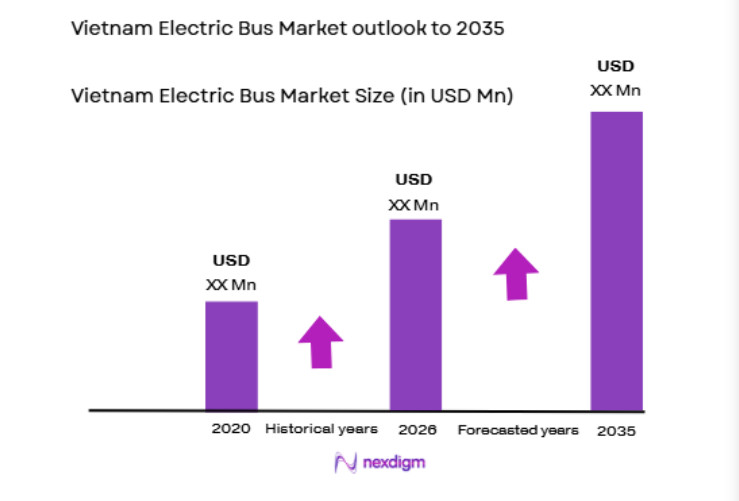
The Vietnam electric bus market is rapidly expanding, with a projected market size of USD ~ million based on a recent historical assessment. The growth of the market is driven by government policies promoting environmental sustainability, as well as the shift towards cleaner public transport options. Electric buses are seen as a cost-effective alternative, given the rising fuel prices and the increased focus on reducing carbon emissions. Additionally, the advancement in battery technologies and charging infrastructure has enhanced the viability of electric buses in Vietnam.
Dominant cities like Hanoi and Ho Chi Minh City are leading the adoption of electric buses, driven by their high population density, public transportation demand, and government-backed initiatives. The government has set ambitious targets to reduce pollution levels, and both cities benefit from infrastructure and financial incentives supporting the transition to electric vehicles. These factors make the urban centers prime locations for the deployment of electric buses, facilitating further market growth.
Market Segmentation
By Bus Type
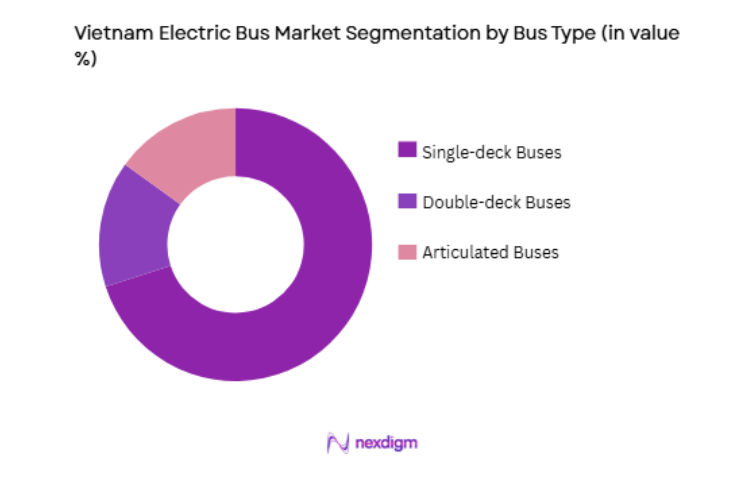
The Vietnam electric bus market is segmented by bus type into single-deck, double-deck, and articulated buses. Recently, single-deck electric buses have gained a dominant market share due to their versatility, affordability, and ability to navigate narrow urban streets efficiently. These buses are commonly deployed for city transport services, making them a preferred option for operators seeking cost-effective solutions. Furthermore, the compact size of single-deck buses allows for more flexibility in route planning and better integration into existing urban infrastructure, further contributing to their dominance in the market.
By Application
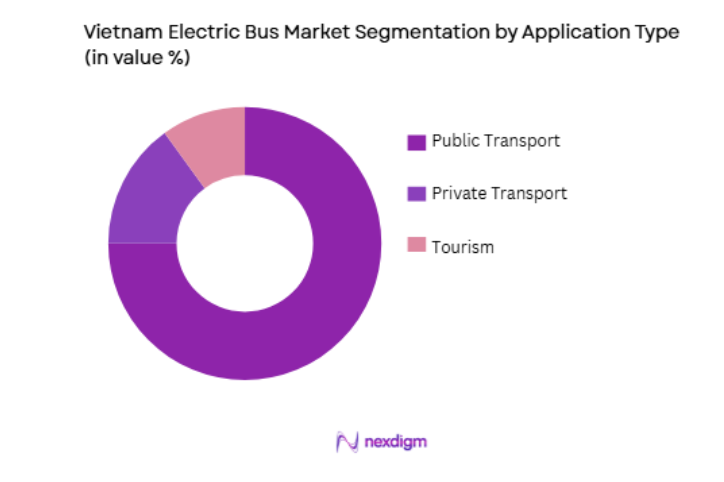
The Vietnam electric bus market is segmented by application into public transport, private transport, and tourism. Public transport dominates the market share, largely due to government subsidies and green transport initiatives aimed at reducing the environmental impact of urban transit. With a strong focus on improving air quality and energy efficiency, the government has been promoting electric buses in cities like Hanoi and Ho Chi Minh City. This focus on public transport infrastructure development has made the public transport segment the largest contributor to the market.
Competitive Landscape
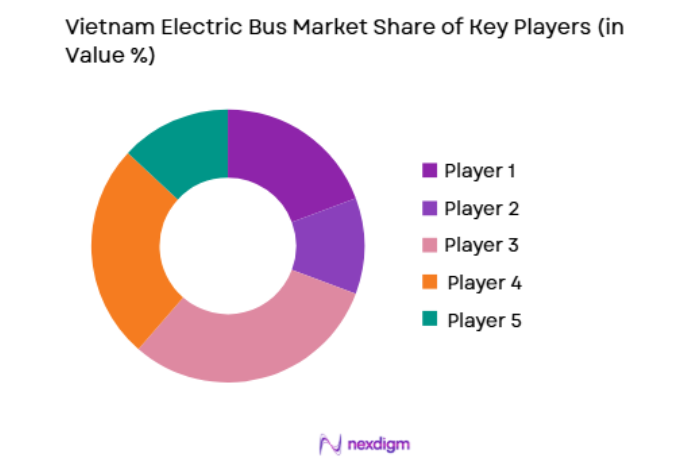
The competitive landscape of the Vietnam electric bus market features a mix of local and international players vying for market share. The market has seen significant consolidation, with major global manufacturers collaborating with local firms to increase production and offer cost-effective solutions. Players such as BYD, VinFast, and Solaris are influential, with their established presence and commitment to technological innovation. The growing demand for electric buses and the supportive regulatory environment are encouraging new entrants into the market, fostering increased competition and further innovation.
| Company Name | Establishment Year | Headquarters | Technology Focus | Market Reach | Key Products | Revenue | Market-Specific Parameter |
| BYD | 1995 | Shenzhen, China | ~ | ~ | ~ | ~ | ~ |
| VinFast | 2017 | Hai Phong, Vietnam | ~ | ~ | ~ | ~ | ~ |
| Solaris | 1996 | Bologna, Italy | ~ | ~ | ~ | ~ | ~ |
| Volvo | 1927 | Gothenburg, Sweden | ~ | ~ | ~ | ~ | ~ |
| ABB | 1988 | Zurich, Switzerland | ~ | ~ | ~ | ~ | ~ |
Vietnam Electric Bus Market Analysis
Growth Drivers
Government Support for Green Transport
The Vietnam government’s active support for green transportation is a key driver for the electric bus market. The government has introduced various incentives, including tax exemptions, subsidies for electric vehicle (EV) purchases, and investment in charging infrastructure to promote cleaner public transport. As part of its long-term strategy, the government aims to reduce emissions and improve air quality in major urban areas, which has led to the formulation of national and local policies supporting electric buses. In addition, various government initiatives have made electric buses a preferred option for public transport operators. With both financial incentives and regulatory backing, the market for electric buses is expected to continue its upward trajectory as more municipalities adopt policies to prioritize electric transportation.
Technological Advancements in Battery and Charging Infrastructure
The significant technological advancements in battery technology and electric bus charging infrastructure are key drivers of growth in the electric bus market. With improvements in battery efficiency, energy density, and cost reduction, electric buses are becoming increasingly viable and affordable for mass transit systems. Moreover, the expansion of fast-charging infrastructure in urban areas allows for quicker recharging times, improving the practicality and operational efficiency of electric buses. The development of high-performance batteries, alongside innovations in smart charging networks, supports the large-scale deployment of electric buses, driving market adoption. This ongoing technological evolution is making electric buses more accessible and sustainable for public transport systems in Vietnam.
Market Challenges
High Initial Investment Costs
The primary challenge facing the electric bus market in Vietnam is the high initial cost of purchasing electric buses. While the total cost of ownership for electric buses is lower than that of conventional diesel buses, the upfront capital investment is significantly higher, posing a barrier for operators, especially in developing economies. The higher cost is mainly attributed to the expensive battery systems used in electric buses. While government subsidies and incentives can help offset the initial cost, they are not always sufficient to fully alleviate the financial burden. The need for long-term financing options and reduced initial costs through economies of scale is critical for increasing the adoption rate of electric buses across the country.
Insufficient Charging Infrastructure
The lack of widespread, accessible charging infrastructure is another major challenge in the electric bus market. Although the government has made efforts to build charging stations in major cities, the charging infrastructure remains insufficient to support the rapid deployment of electric buses in suburban and rural areas. This infrastructure gap limits the operational efficiency of electric buses, particularly for long-distance routes or city networks requiring frequent charging. The absence of universal charging standards and the high costs associated with installing charging stations add to the complexity. For the electric bus market to grow, significant investments in both public and private charging infrastructure are needed to ensure seamless integration and improve operational reliability.
Opportunities
Expansion of Electric Bus Fleets in Public Transport
The expansion of electric bus fleets in public transport offers a major opportunity for growth in the Vietnamese market. With urbanization on the rise and public transport systems under pressure to accommodate increasing passenger numbers, electric buses provide a clean and efficient solution. Cities like Hanoi and Ho Chi Minh City are already integrating electric buses into their fleets, with the government actively supporting these initiatives. Moreover, as fuel costs rise and environmental regulations become stricter, electric buses are becoming an attractive alternative for public transportation operators. The continued development of electric bus fleets in urban areas, along with the introduction of innovative financing models, presents significant opportunities for both local and international players in the market.
Integration with Renewable Energy Sources
The integration of electric buses with renewable energy sources represents a unique growth opportunity. As Vietnam continues to invest in renewable energy sources like solar and wind power, electric buses can be linked to these energy sources to further reduce the environmental impact. Charging electric buses using renewable energy minimizes carbon emissions, contributing to Vietnam’s goal of achieving net-zero emissions by 2050. By utilizing solar power at bus depots or installing wind-powered charging stations, electric buses can become fully sustainable. This alignment with Vietnam’s energy transition goals not only supports the market’s growth but also enhances the attractiveness of electric buses as a long-term sustainable solution for public transportation.
Future Outlook
The Vietnam electric bus market is expected to see significant growth over the next five years, driven by government initiatives, technological advancements, and increasing demand for clean transportation solutions. The market will benefit from continued improvements in battery technology, lower manufacturing costs, and the expansion of charging infrastructure. As cities and regions prioritize sustainable public transport solutions, the demand for electric buses will increase, contributing to the reduction of urban air pollution. In addition, the integration of electric buses with renewable energy sources will play a crucial role in achieving Vietnam’s energy transition goals, positioning electric buses as a key component of the country’s sustainable development.
Major Players
- BYD
- VinFast
- Solaris
- Volvo
- ABB
- Proterra
- New Flyer
- Alexander Dennis
- Daimler AG
- Scania
- MAN SE
- Tata Motors
- Foton Motor
- Yutong
- Geely
Key Target Audience
- Investments and venture capitalist firm
- Government and regulatory bodies
- Public transport operators
- Electric vehicle manufacturers
- Charging infrastructure providers
- Bus fleet management companies
- Environmental NGOs
- Urban planners
Research Methodology
Step 1: Identification of Key Variables
Identify and define the key variables affecting market trends, including government policies, technological developments, and consumer preferences.
Step 2: Market Analysis and Construction
Analyze the market through a mix of qualitative and quantitative methods, constructing a reliable market model based on primary and secondary data sources.
Step 3: Hypothesis Validation and Expert Consultation
Validate the formulated hypotheses by consulting with industry experts and stakeholders to ensure accuracy and relevance.
Step 4: Research Synthesis and Final Output
Synthesize the gathered data, insights, and expert opinions into a comprehensive market report that highlights key findings and strategic recommendations.

- Executive Summary
- Research Methodology (Definitions, Scope, Industry Assumptions, Market Sizing Approach, Primary & Secondary Research Framework, Data Collection & Verification Protocol, Analytic Models & Forecast Methodology, Limitations & Research Validity Checks)

- Market Definition and Scope
- Value Chain & Stakeholder Ecosystem
- Regulatory / Certification Landscape
- Sector Dynamics Affecting Demand

- Growth Drivers
Government Initiatives for Sustainable Transport
Rising Urbanization and Population Growth
Advancements in Battery Technologies - Market Challenges
High Initial Investment Costs
Limited Charging Infrastructure
Battery Life and Range Limitations - Market Opportunities
Government Incentives for Green Vehicles
Growth of Eco-friendly Tourism
Technological Innovations in Charging Solutions - Trends
Shift Toward Autonomous Electric Buses
Increasing Adoption of Electrified Public Transport - Government Regulations
Green Transport Policies
EV Charging Infrastructure Standards
Incentives for Electric Bus Purchases - SWOT Analysis
- Porter’s Five Forces

- By Market Value, 2020-2025
- By Installed Units, 2020-2025
- By Average System Price, 2020-2025
- By System Complexity Tier, 2020-2025

- By System Type (In Value%)
Battery Electric Buses
Plug-in Hybrid Electric Buses
Fuel Cell Electric Buses
Hybrid Electric Buses
Electric Minibuses - By Platform Type (In Value%)
Urban Platforms
Intercity Platforms
Suburban Platforms
Heavy Duty Platforms
Light Duty Platforms - By Fitment Type (In Value%)
Chassis-based Solutions
Complete Bus Solutions
Modular Solutions
Integrated Solutions - By End User Segment (In Value%)
Public Transportation Authorities
Private Transport Operators
Fleet Operators
Tourism & Leisure Sector

- Market Share Analysis
- Cross Comparison Parameters (System Type, Platform Type, End User Segment, Fitment Type, Charging Infrastructure, Battery Technology, Vehicle Range, Price Point, Operational Costs, Geographic Coverage)
- SWOT Analysis of Key Competitors
- Pricing & Procurement Analysis
- Key Players
BYD
Vingroup
Mercedes-Benz
Volvo
Proterra
NFI Group
Geely
King Long
Yutong
Cummins
Solaris
Chinese Bus Corporation
Ashok Leyland
Scania
Iveco

- Government Investment in Electric Public Transport
- Private Sector Adoption of Green Fleets
- Fleet Operators’ Interest in Cost-Effective Solutions
- Tourism Sector’s Focus on Sustainability

- Forecast Market Value, 2026-2035
- Forecast Installed Units, 2026-2035
- Price Forecast by System Tier, 2026-2035
- Future Demand by Platform, 2026-2035


 Request a Sample
 Ask for Customization
 Get a Quote
 Enquire Now