
 Download PDF
 Download PDF
Market Overview
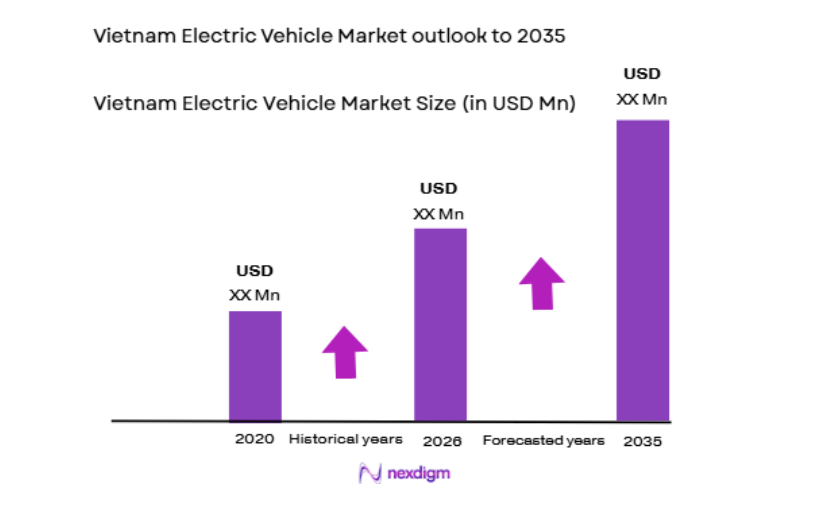
The Vietnam Electric Vehicle Market is experiencing rapid growth, driven by increasing government incentives for green transportation, a rising awareness of environmental issues, and the rapid adoption of electric vehicles (EVs) in both urban and rural areas. Based on a recent historical assessment, the market size is projected to reach approximately USD ~ million in 2024. Government policies such as subsidies, tax breaks, and EV manufacturing support have significantly contributed to the market’s growth, with increasing investments in electric mobility infrastructure across the country.
Dominant cities like Hanoi, Ho Chi Minh City, and Da Nang are key drivers of this market due to their high population densities, government backing, and advanced infrastructure development. The adoption of electric vehicles in these urban centers is accelerating as part of broader sustainability initiatives. These regions are seeing a rise in public and private sector investments in EV infrastructure, such as charging stations and EV manufacturing, further promoting the adoption of electric mobility solutions. The robust public transport system and government-led environmental policies continue to make these cities central hubs for the EV market in Vietnam.
Market Segmentation
By Vehicle Type
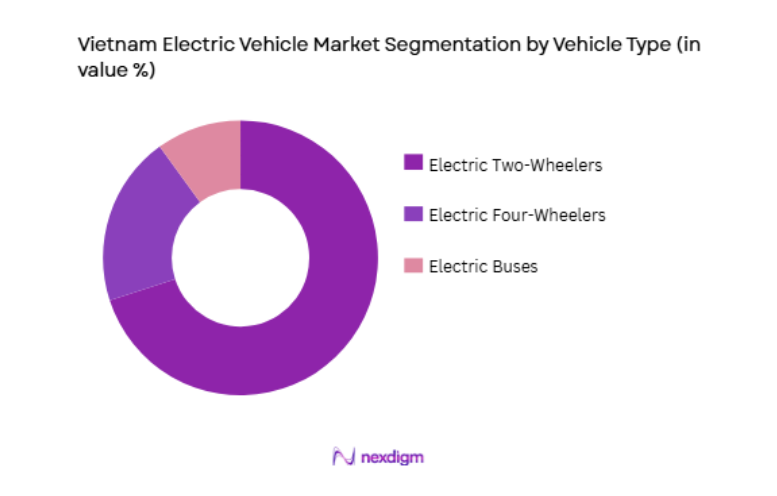
The Vietnam Electric Vehicle Market is segmented by vehicle type into electric two-wheelers, electric four-wheelers, and electric buses. Recently, electric two-wheelers have dominated the market due to their cost-effectiveness, flexibility, and suitability for Vietnam’s densely populated cities. The popularity of two-wheelers as a mode of transport in Vietnam, combined with rising fuel prices and government incentives, has made electric two-wheelers an attractive option for both individuals and businesses. These vehicles offer a more affordable entry point to electric mobility compared to electric cars, which are still seen as too expensive for the average consumer. As electric two-wheelers become more mainstream, the market share for this segment is expected to continue growing, with more EV manufacturers entering the market and expanding their offerings.
By Charging Type
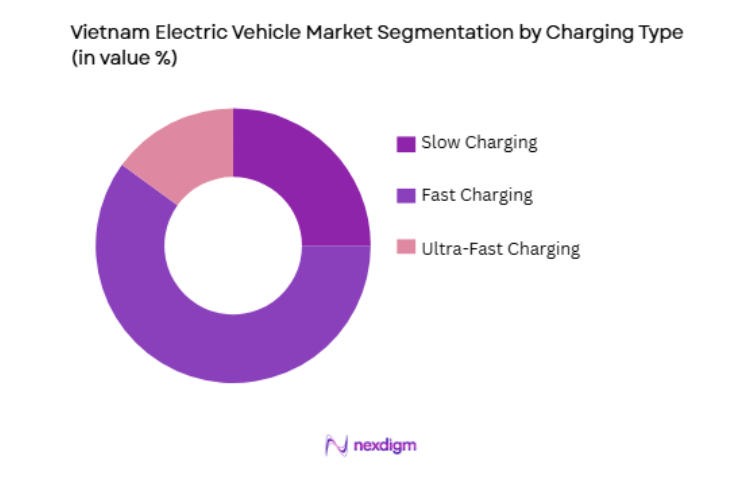
The Vietnam Electric Vehicle Market is segmented by charging type into slow charging, fast charging, and ultra-fast charging. Fast charging has recently emerged as the dominant charging type, mainly due to the need for shorter charging times to accommodate the busy schedules of EV owners. Fast charging stations have been installed across key urban areas such as Hanoi and Ho Chi Minh City to support the increasing number of electric vehicles. The rapid deployment of fast-charging infrastructure, supported by both the public and private sectors, is addressing the concerns of consumers who worry about long waiting times at charging stations. With advancements in fast-charging technologies, the demand for this segment is expected to continue to grow, particularly in high-traffic areas and along major highways.
Competitive Landscape
The Vietnam Electric Vehicle Market is competitive, with both local and international players vying for market share. Consolidation is occurring as global EV manufacturers form partnerships with Vietnamese companies to expand their reach in the growing market. The influence of government incentives and subsidies has encouraged both local and international companies to focus on enhancing their product offerings, increasing battery efficiency, and improving charging infrastructure. As the market matures, competition is intensifying among EV manufacturers, infrastructure developers, and energy companies, with all players aiming to take advantage of the strong growth potential driven by the country’s green transport policies.
| Company Name | Establishment Year | Headquarters | Technology Focus | Market Reach | Key Products | Revenue | Additional Parameter |
| VinFast | 2017 | Hai Phong, Vietnam | ~ | ~ | ~ | ~ | ~ |
| Tesla | 2003 | California, USA | ~ | ~ | ~ | ~ | ~ |
| Nissan | 1933 | Yokohama, Japan | ~ | ~ | ~ | ~ | ~ |
| Hyundai | 1967 | Seoul, South Korea | ~ | ~ | ~ | ~ | ~ |
| BYD | 1995 | Shenzhen, China | ~ | ~ | ~ | ~ | ~ |
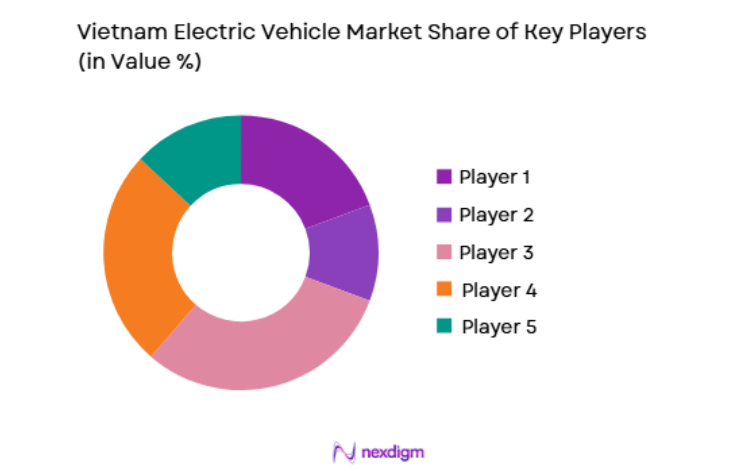
Vietnam Electric Vehicle Market Analysis
Growth Drivers
Government Support for Green Transportation
The growth of Vietnam’s Electric Vehicle Market is largely driven by government support for the adoption of green transportation. The Vietnamese government has introduced several policies and incentives to stimulate the shift towards electric vehicles, such as tax exemptions, subsidies for EV buyers, and incentives for electric vehicle manufacturers. These initiatives are designed to reduce the upfront cost of electric vehicles and make them more affordable for consumers. Additionally, the government is investing heavily in infrastructure development, particularly charging stations, to ensure that the transition to electric vehicles is smooth and convenient for consumers. The government’s commitment to reducing the country’s carbon footprint and improving urban air quality through clean energy solutions is driving the adoption of electric vehicles. As environmental concerns continue to rise, the Vietnamese government is expected to maintain and expand these policies, further promoting the growth of the electric vehicle market in the coming years.
Technological Advancements in EV Manufacturing and Batteries
Another significant growth driver for the Vietnam Electric Vehicle Market is technological advancements in electric vehicle manufacturing and battery technologies. The continuous improvement in battery efficiency, energy density, and charging speed has made electric vehicles more appealing to consumers by increasing their range and reducing charging time. Innovations in battery management systems and the lowering of battery costs have made electric vehicles more affordable for a broader range of consumers. Additionally, advancements in vehicle manufacturing technologies have led to the development of more cost-efficient production processes, which further reduce the cost of electric vehicles. These technological improvements are crucial in overcoming the range anxiety that many potential consumers experience and are expected to continue driving the market’s growth as manufacturers develop more affordable and efficient EV models.
Market Challenges
High Upfront Costs and Limited Charging Infrastructure
One of the key challenges facing the Vietnam Electric Vehicle Market is the high upfront cost of electric vehicles, which remains a barrier for widespread adoption. While electric vehicles offer long-term savings in terms of fuel and maintenance costs, the initial investment is still higher than that of conventional internal combustion engine vehicles. Additionally, the lack of widespread and easily accessible charging infrastructure is a significant barrier to EV adoption, especially in rural areas and smaller cities. Although major urban centers like Hanoi and Ho Chi Minh City are seeing increased investments in charging stations, the availability of charging infrastructure remains insufficient in many parts of the country. Until these challenges are addressed, the pace of adoption in Vietnam may be slower than expected. Continued government intervention, such as subsidies for charging infrastructure and further cost reductions in EV manufacturing, will be crucial to overcoming these barriers.
Consumer Awareness and Adoption
Another challenge in the Vietnam Electric Vehicle Market is the relatively low level of consumer awareness and understanding about the benefits of electric vehicles. While EV adoption is growing, many consumers in Vietnam still have limited knowledge of electric vehicles and their environmental benefits. There is also a lack of awareness about the total cost of ownership, including the savings in fuel and maintenance, which can make EVs an attractive long-term investment. Additionally, range anxiety—the fear of running out of battery during long trips—remains a significant deterrent for potential buyers. These challenges are compounded by the unfamiliarity with EV technologies and the perception that electric vehicles may not be as reliable as traditional gasoline-powered cars. Public awareness campaigns and targeted education initiatives will be essential to overcome these barriers and increase consumer confidence in electric vehicles.
Opportunities
Growing Urbanization and Demand for Sustainable Transportation
The rapid urbanization of Vietnam’s cities presents a significant opportunity for the growth of the Electric Vehicle Market. As more people move to urban centers, the demand for sustainable and efficient transportation solutions is increasing. Electric vehicles offer a promising solution to the growing concerns of traffic congestion and air pollution in these cities. With the Vietnamese government prioritizing sustainability in its urban planning, there is significant potential for the adoption of electric vehicles in both public and private transportation systems. The expansion of electric bus fleets in urban areas, along with the growing popularity of electric two-wheelers, represents a major opportunity for EV manufacturers and infrastructure developers. As urbanization continues and the need for eco-friendly transportation solutions becomes more pressing, the demand for electric vehicles in Vietnam is expected to grow substantially.
Expansion of Charging Infrastructure and Public Transport Electrification
One of the most significant opportunities for the Vietnam Electric Vehicle Market is the expansion of charging infrastructure and the electrification of public transport systems. The government’s focus on creating a robust network of charging stations across the country will make it easier for consumers to adopt electric vehicles. The integration of electric buses into public transport fleets, particularly in major cities, presents a substantial growth opportunity for the electric vehicle market. Additionally, the development of fast-charging technologies will help alleviate concerns about charging time and range anxiety, making electric vehicles more convenient for consumers. With the government’s commitment to green transportation, the growing infrastructure for electric vehicles will support the widespread adoption of EVs across Vietnam.
Future Outlook
The future of the Vietnam Electric Vehicle Market looks promising, with continued growth expected in the coming years. The government’s support for clean energy policies, combined with technological advancements in electric vehicle and battery technologies, will drive the market forward. The expansion of charging infrastructure, along with increased public awareness, will help overcome the current barriers to adoption. As Vietnam continues to focus on sustainable transportation, the demand for electric vehicles will increase, creating new opportunities for manufacturers and infrastructure developers. Over the next five years, the market will likely witness significant growth as electric vehicles become a mainstream solution for urban mobility.
Major Players
- VinFast
- Tesla
- Nissan
- Hyundai
- BYD
- Toyota
- Mitsubishi Motors
- Honda
- Audi
- BMW
- Kia Motors
- Ford
- Mercedes-Benz
- Geely
- ZF Friedrichshafen
Key Target Audience
- Investments and venture capitalist firms
- Government and regulatory bodies
- Electric vehicle manufacturers
- Charging infrastructure developers
- Automotive industry suppliers
- Renewable energy companies
- Fleet operators
- Commercial vehicle manufacturers
Research Methodology
Step 1: Identification of Key Variables
This step involves identifying key factors affecting the EV market, such as government policies, consumer demand, and technological advancements in vehicle and battery technologies.
Step 2: Market Analysis and Construction
The market is analyzed using historical data, current trends, and future projections to build a comprehensive market model that forecasts the growth of the electric vehicle sector.
Step 3: Hypothesis Validation and Expert Consultation
The hypotheses are validated through consultations with industry experts, government representatives, and stakeholders involved in the EV and infrastructure sectors to ensure accurate predictions.
Step 4: Research Synthesis and Final Output
The findings are synthesized into a final report that provides insights on market trends, growth drivers, challenges, and opportunities in the Vietnam Electric Vehicle Market.

- Executive Summary
- Research Methodology (Definitions, Scope, Industry Assumptions, Market Sizing Approach, Primary & Secondary Research Framework, Data Collection & Verification Protocol, Analytic Models & Forecast Methodology, Limitations & Research Validity Checks)

- Market Definition and Scope
- Value Chain & Stakeholder Ecosystem
- Regulatory / Certification Landscape
- Sector Dynamics Affecting Demand

- Growth Drivers
Government Incentives for EV Purchases
Rising Environmental Awareness
Expansion of Charging Infrastructure - Market Challenges
High Initial Cost of Electric Vehicles
Limited Charging Infrastructure in Rural Areas
Battery Technology and Range Constraints - Market Opportunities
Development of Local EV Manufacturing
Partnerships with International EV Players
Growing Investment in Charging Network Expansion - Trends
Shift Towards EV Adoption by Private Consumers
Increasing Interest in Fleet Electrification - Government Regulations
- SWOT Analysis
- Porter’s Five Forces

- By Market Value, 2020-2025
- By Installed Units, 2020-2025
- By Average System Price, 2020-2025
- By System Complexity Tier, 2020-2025

- By System Type (In Value%)
Battery Electric Vehicles
Plug-in Hybrid Electric Vehicles
Electric Motorcycles
Electric Commercial Vehicles
Electric Buses - By Platform Type (In Value%)
Passenger Electric Vehicles
Electric Buses and Coaches
Electric Two-Wheelers
Electric Trucks
Electric Delivery Vans - By Fitment Type (In Value%)
OEM Electric Vehicles
Aftermarket Electric Vehicle Conversion Kits
Hybrid Vehicle Retrofits - By End User Segment (In Value%)
Private Consumers
Commercial Fleet Operators
Public Transportation Services

- Market Share Analysis
- Cross Comparison Parameters (Battery Type, Charging Infrastructure, Vehicle Range, Charging Speed, Cost per Vehicle, Energy Efficiency, Government Subsidies, Market Penetration, Vehicle Performance, Maintenance Cost)
- SWOT Analysis of Key Competitors
- Pricing & Procurement Analysis
- Key Players
VinFast
BYD
Tesla
Nissan Motor
Honda
Toyota
BYTON
BMW
Mercedes-Benz
Hyundai
Kia Motors
Zotye Auto
FOMM
Niu Technologies
SAIC Motor

- Growing Demand from Private EV Buyers
- Increase in EV Adoption by Ride-sharing Companies
- Government Initiatives for Public Transport Electrification
- Logistics and Delivery Companies Transitioning to Electric Fleets

- Forecast Market Value, 2026-2035
- Forecast Installed Units, 2026-2035
- Price Forecast by System Tier, 2026-2035
- Future Demand by Platform, 2026-2035


 Request a Sample
 Ask for Customization
 Get a Quote
 Enquire Now