
 Download PDF
Market Overview
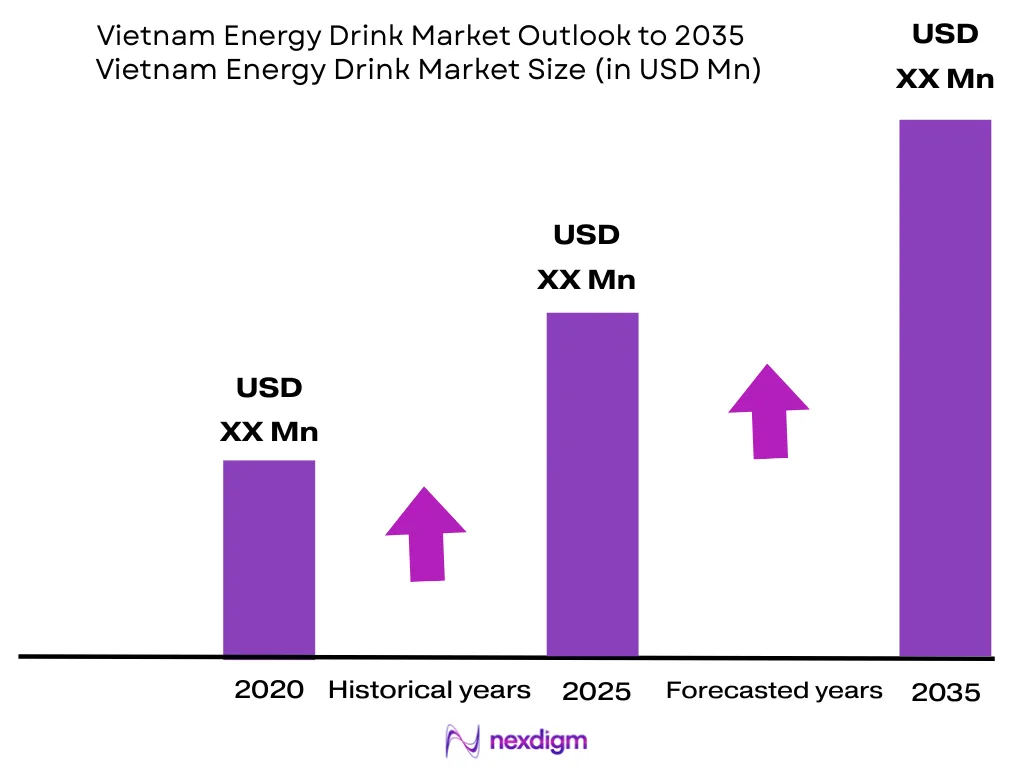
The Vietnam Energy Drink Market is valued at USD ~ million, while the latest published country outlook places the market at USD 252.5 million in the next base period. Demand is driven by young consumers, industrial workers, students, motorbike commuters, nightlife consumers and urban professionals seeking quick alertness and fatigue reduction. The market outlook indicates a 5.14% CAGR for the long-term forecast window toward 2035, based on the available country-specific forecast benchmark. Vietnam Energy Drink Market demand is concentrated in Ho Chi Minh City, Hanoi, Da Nang, Can Tho, Hai Phong, Binh Duong and Dong Nai because these locations combine factories, universities, minimarts, convenience stores, motorbike commuting, cafés, nightlife and tourism. Vietnam’s population reached 101,112,656 people, while GDP reached USD 476.39 billion and GDP per capita reached USD 4,717.3, supporting packaged beverage adoption in dense urban and industrial corridors.
Market Segmentation
By Product Type
| Product Type | Market Share |
| Non-Alcoholic Energy Drinks | 95.0% |
| Alcoholic Energy Drinks | 3.0% |
| Energy Shots | 2.0% |
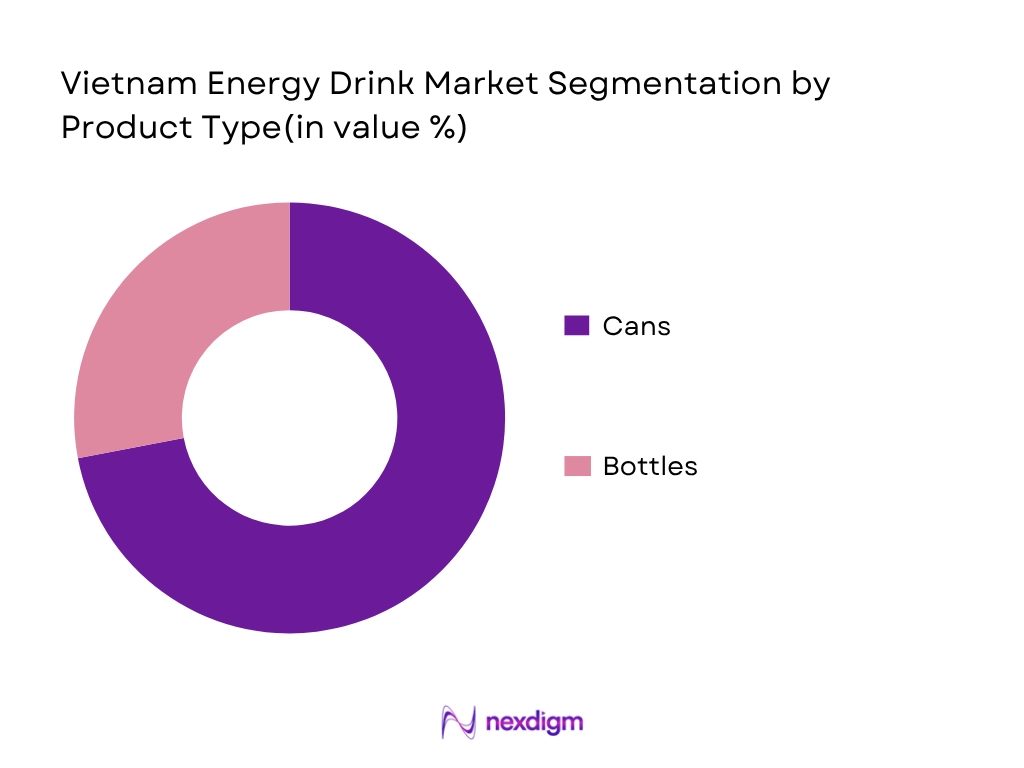
Vietnam Energy Drink Market is segmented by product type into non-alcoholic energy drinks, alcoholic energy drinks and energy shots. Recently, non-alcoholic energy drinks have a dominant market share in Vietnam under the product type segmentation because they are aligned with the country’s mainstream consumption occasions: work fatigue, studying, commuting, factory shifts, delivery work, gaming and nightlife. Products such as Red Bull, Sting, Number 1, Warrior, Monster and Carabao are widely positioned around instant energy and alertness, with strong availability across traditional grocery stores, minimarts, convenience stores, supermarkets, petrol stations and HoReCa outlets. Alcoholic energy drinks remain niche because of regulatory and health sensitivity, while energy shots have limited shelf visibility and serve narrower quick-caffeine missions. Non-alcoholic RTD products dominate due to everyday affordability, mass retail penetration and compatibility with hot-climate refreshment demand.
By Packaging Type
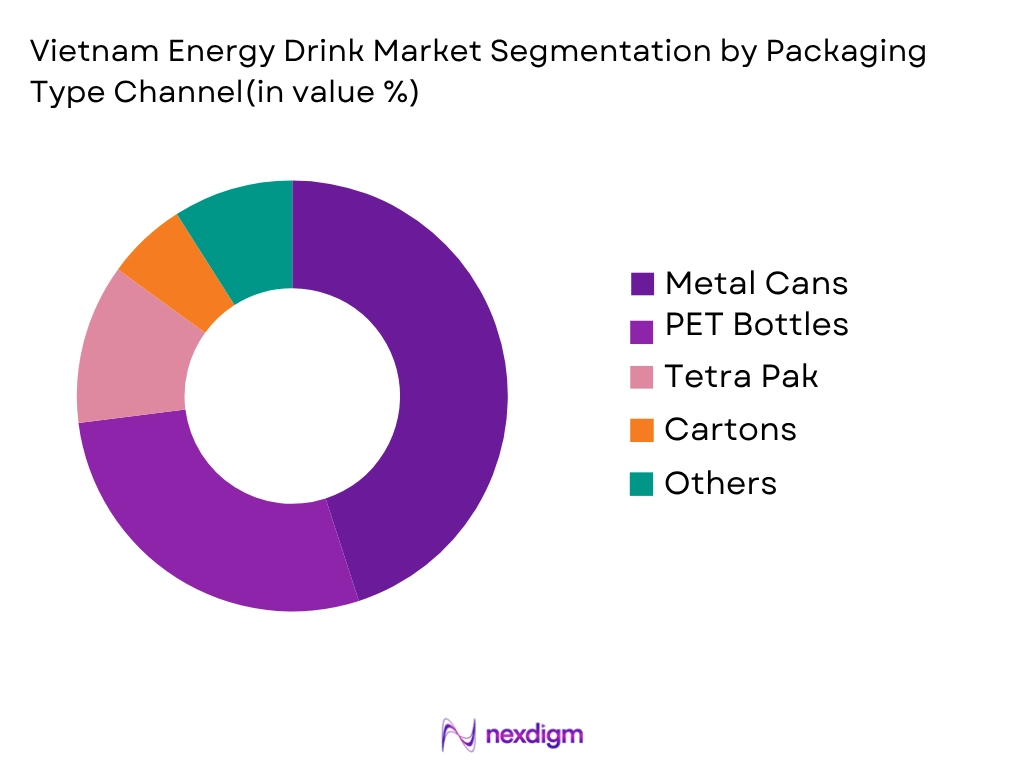
Vietnam Energy Drink Market is segmented by packaging type into metal cans, PET bottles, glass bottles, cartons, mini formats and other packaging. Recently, metal cans have a dominant market share under the packaging type segmentation because they are strongly associated with branded energy drinks, cold-shelf visibility, carbonation retention, impulse purchase and premium-mass positioning. Red Bull, Sting, Monster, Warrior and Carabao use cans as a key format across supermarkets, minimarts, convenience stores, petrol stations and urban foodservice outlets. PET bottles are also important because they offer resealability, portability and suitability for traditional retail and roadside consumption, especially for students, workers and delivery riders. However, cans remain highly effective in Vietnam because they chill quickly, strengthen brand recognition and fit single-serve stimulant beverage occasions.
Competitive Landscape
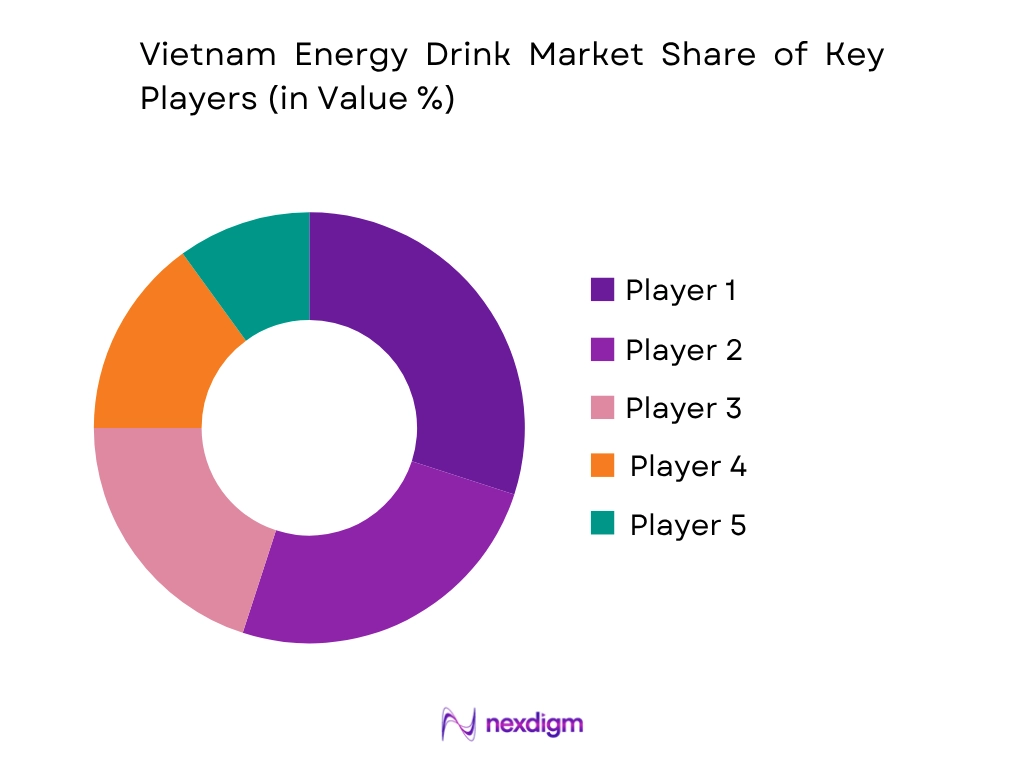
The Vietnam Energy Drink Market is dominated by a mix of Thai-origin, multinational and domestic beverage companies. TCP Vietnam’s Red Bull has strong brand legacy and mass-market recognition, while Suntory PepsiCo’s Sting is highly visible among younger consumers through flavour-led positioning, especially strawberry-flavoured energy drinks. Tan Hiep Phat’s Number 1 provides domestic strength, while Monster, Warrior, Carabao and Wake-Up 247 compete through premium, affordable and coffee-energy propositions. Competition is intense because traditional trade, minimarts and convenience stores allocate limited chilled space to high-velocity SKUs.
| Company | Establishment Year | Headquarters | Core Energy Drink Portfolio | Vietnam Positioning | Packaging Focus | Channel Strength | Product Innovation Focus | Market-Specific Edge |
| TCP Group / TCP Vietnam | 1956 | Bangkok, Thailand | ~ | ~ | ~ | ~ | ~ | ~ |
| Suntory PepsiCo Vietnam Beverage | 2013 | Ho Chi Minh City, Vietnam | ~ | ~ | ~ | ~ | ~ | ~ |
| Tan Hiep Phat Group | 1994 | Binh Duong, Vietnam | ~ | ~ | ~ | ~ | ~ | ~ |
| Monster Energy Company | 1935 | Corona, California, USA | ~ | ~ | ~ | ~ | ~ | ~ |
| Masan Consumer | 1996 | Ho Chi Minh City, Vietnam | ~ | ~ | ~ | ~ | ~ | ~ |
Vietnam Energy Drink Market Analysis
Growth Drivers
Industrial Workforce and Daily Fatigue-Management Demand
Vietnam Energy Drink Market is supported by a large employed base that creates repeat demand for stimulant beverages across factories, logistics, retail, transport, construction, delivery work and service-sector shifts. Vietnam’s National Statistics Office reported 52.4 million employed persons in 2025, after 51.8 million employed persons in 2024, showing a broad workforce base for on-the-go beverage consumption. The World Bank reported Vietnam GDP at USD 476.39 billion and GDP per capita at USD 4,717.3, supporting packaged beverage adoption in industrial and urban corridors. Energy drinks are market-specific to this driver because they are consumed for work fatigue, alertness, shift endurance and heat-exposure occasions.
Retail Expansion and High-Frequency Beverage Availability
Vietnam Energy Drink Market benefits from a large retail consumption base because energy drinks depend on traditional groceries, minimarts, supermarkets, convenience stores, petrol stations and roadside retail for chilled single-serve purchases. Vietnam’s National Statistics Office reported total retail sales of goods and consumer service revenue at VND 6,391.0 trillion in 2024, while the first quarter of 2024 alone reached VND 1,537.6 trillion. These figures support broad FMCG circulation and beverage visibility across formal and informal channels. The World Bank reported Vietnam GDP per capita at USD 4,717.3, which supports urban movement from basic refreshment toward branded energy, vitamin-energy, coffee-energy and reduced-sugar beverage formats.
Market Challenges
Nutrition Labelling and Packaged-Food Compliance Pressure
Vietnam Energy Drink Market faces compliance pressure as packaged beverage brands must adapt to newer nutritional labelling requirements and food-safety expectations. The USDA Foreign Agricultural Service reported that Vietnam’s Ministry of Health Circular 29/2023 requires updated nutritional labelling for pre-packaged foods from January 1, 2026, covering products manufactured, imported and circulated in Vietnam. This matters for energy drinks because labels must communicate sugar, caffeine-adjacent nutritional information, ingredients and functional positioning clearly. Vietnam’s large retail base of VND 6,391.0 trillion in goods and consumer service revenue increases exposure to label checks across traditional trade, minimarts, supermarkets and import channels.
Traditional-Trade Fragmentation and Route-to-Market Complexity
Vietnam Energy Drink Market faces route-to-market pressure because demand is spread across industrial zones, dense cities, tourist corridors and roadside retail, requiring wide distributor coverage and consistent chilled placement. Vietnam’s population reached 101,112,656 people, while the country recorded GDP of USD 476.39 billion, creating a large but operationally fragmented packaged-beverage market. National retail sales of goods and consumer services reached VND 6,391.0 trillion, showing large consumption circulation but also intense competition for shelf space. For energy drink brands, the challenge is maintaining stock rotation, cold visibility, outlet service frequency and pack availability across Ho Chi Minh City, Hanoi, industrial provinces and smaller traditional outlets.
Market Opportunities
Tourism, Nightlife and Coastal-City Energy Drink Demand
Vietnam Energy Drink Market has future growth opportunity in tourism, nightlife, karaoke, hotels, beaches, convenience stores and HoReCa because energy drinks align with late-night, mixer, travel and fatigue-management occasions. Vietnam National Authority of Tourism reported more than 17.5 million international visitor arrivals in 2024, compared with 12.6 million arrivals in 2023. This supports beverage consumption in Ho Chi Minh City, Hanoi, Da Nang, Nha Trang, Phu Quoc and other tourism corridors. Energy drink brands can use this current tourism base for chilled cans, PET bottles, multipacks, bar placements, hotel retail and convenience-store activation without relying on future demand estimates.
Modern Urban Consumption and Reduced-Sugar Functional Energy
Vietnam Energy Drink Market has future growth opportunity in reduced-sugar, zero-sugar, vitamin-energy, coffee-energy and herbal-energy products because Vietnam’s urban and income base supports premium functional experimentation. World Bank reported Vietnam GDP per capita at USD 4,717.3 and GDP at USD 476.39 billion, while the government reported a national population of 101,112,656 people. These current macro indicators support a larger urban packaged-beverage audience with room for functional differentiation beyond traditional full-sugar energy drinks. The opportunity is strongest in minimarts, supermarkets, gyms, offices, universities and e-commerce, where consumers are exposed to ingredient-led products positioned around alertness, focus, work fatigue and wellness-oriented energy.
Future Outlook
The Vietnam Energy Drink Market is expected to expand steadily as energy drinks become embedded in daily fatigue-management occasions across factories, offices, universities, delivery work, gaming, nightlife and motorbike commuting. The forecast outlook indicates a 5.14% CAGR using the closest available country-specific long-term forecast benchmark, supported by modern retail expansion, urbanisation, brand innovation and wider consumer exposure to international beverage formats.
Over the next phase, mass-market energy drinks will remain volume-critical, while reduced-sugar, zero-sugar and functional energy variants will gain stronger visibility in Ho Chi Minh City, Hanoi and other high-income urban markets. Coffee-energy hybrids can grow because Vietnam already has deep coffee consumption culture, while herbal or ginseng-based variants can appeal to consumers familiar with Asian functional ingredients.
Traditional grocery stores and roadside retailers will remain important for affordable packs, but minimarts, supermarkets, petrol stations and e-commerce platforms will become more relevant for premium SKUs, multipacks and imported-style energy drinks. Industrial zones in Binh Duong, Dong Nai, Bac Ninh and Hai Phong provide specific demand clusters because factory workers, transport workers and shift-based employees frequently seek convenient beverages for alertness and fatigue reduction.
Major Players
- TCP Vietnam
- Suntory PepsiCo Vietnam Beverage
- Tan Hiep Phat Group
- Monster Energy Vietnam
- Masan Consumer
- Asia Food and Beverage
- Coca-Cola Vietnam
- Vinut Beverage
- URC Vietnam
- Highlands Coffee / Viet Thai International
- Kirin Vietnam
- Carabao Vietnam
- Lipovitan Vietnam
- Compact Energy Drink
- Samurai Energy Drink
Key Target Audience
- Energy drink manufacturers and brand owners
- Functional beverage companies
- Carbonated soft drink and packaged beverage companies
- Traditional trade, supermarket and minimart retail chains
- Convenience store, petrol station and roadside retail operators
- Packaging manufacturers and aluminum can suppliers
- Investments and venture capitalist firms
- Government and regulatory bodies (Ministry of Health, Vietnam Food Administration, Ministry of Industry and Trade, Directorate for Standards, Metrology and Quality, Vietnam Competition Commission)
Research Methodology
Step 1: Identification of Key Variables
The initial phase involves constructing an ecosystem map for the Vietnam Energy Drink Market, covering brand owners, beverage manufacturers, importers, co-packers, ingredient suppliers, packaging companies, distributors, traditional retailers, minimarts, convenience chains, HoReCa operators and regulators. The objective is to identify critical variables such as pack type, product formulation, caffeine positioning, sugar profile, outlet reach and regional demand clusters.
Step 2: Market Analysis and Construction
In this phase, historical data for the Vietnam Energy Drink Market is compiled through company portfolios, public market sources, SKU-level benchmarking, retailer listings, modern trade availability, convenience-store presence and packaging format analysis. The assessment reviews cans, PET bottles, full-sugar variants, reduced-sugar launches, traditional trade reach, modern retail visibility and key urban consumption corridors.
Step 3: Hypothesis Validation and Expert Consultation
Market hypotheses are validated through computer-assisted telephone interviews with beverage distributors, grocery retailers, supermarket buyers, minimart operators, HoReCa suppliers, gym retailers, e-commerce sellers and co-packers. These consultations provide operational insights into SKU movement, chilled placement, retailer margins, pack-size performance, flavour preference, consumer switching and channel-specific product acceptance.
Step 4: Research Synthesis and Final Output
The final phase involves triangulating top-down market benchmarks with bottom-up brand, pack and channel evidence. Direct engagement with beverage manufacturers, distributors and retail stakeholders helps verify product segmentation, competitive positioning, regional demand, packaging strategy, regulatory compliance and future opportunity areas in the Vietnam Energy Drink Market.

- Executive Summary
- Research Methodology (market definitions and assumptions, RTD energy drink classification, caffeinated beverage scope, stimulant beverage inclusion, Ministry of Health labelling compliance, top-down sizing, bottom-up sizing, retailer audits, distributor interviews, SKU benchmarking)

- Definition and Scope
- Overview Genesis
- Timeline of Major Players
- Business Cycle
- Supply Chain and Value Chain Analysis

- Growth Drivers (young consumers, industrial workers, urban retail, motorbike commuting, convenience stores, heat-climate consumption, gaming, nightlife)
- Market Challenges (sugar scrutiny, caffeine regulation, brand saturation, traditional trade opacity, channel fragmentation, imported SKU volatility)
- Market Opportunities (zero sugar, coffee-energy, herbal energy, industrial zones, e-commerce, convenience retail, tourism, sports energy)
- Market Trends (local flavor innovation, red-bottle dominance, can premiumization, PET affordability, sugar reduction, gaming activation, convenience retail)
- SWOT Analysis
- Porter’s Five Forces

- By Value (2020-2025)
- By Volume (2020-2025)
- By Unit Sales (2020-2025)

- By Product Type (In Value %)
Carbonated RTD Energy Drinks
Non-Carbonated Energy Drinks
Vitamin Energy Drinks
Coffee-Energy Drinks - By Packaging Type (In Value %)
Aluminum Cans
PET Bottles
Glass Bottles
Cartons
Multipacks - By Distribution Channel (In Value %)
Traditional Grocery and General Trade
Supermarkets and Hypermarkets
Minimarts and Convenience Stores
Petrol Stations and Roadside Retail
HoReCa, Bars and Nightlife - By Region (In Value %)
Ho Chi Minh City and Southeast
Hanoi and Red River Delta
Mekong Delta
Central Vietnam
Industrial Provinces

- Market Share of Major Players on the Basis of Value and Volume
- Cross Comparison Parameters (caffeine mg per serving, sugar grams per 100 ml, PET versus can portfolio, traditional trade outlet reach, minimart and supermarket listing depth, local flavor strength, industrial-zone distribution coverage, sports and digital marketing intensity)
- SWOT Analysis of Major Players
- Detailed Profiles of Major Companies
TCP Vietnam
Suntory PepsiCo Vietnam Beverage
Tan Hiep Phat Group
Monster Energy Vietnam
Masan Consumer
Asia Food and Beverage
Coca-Cola Vietnam
Vinut Beverage
URC Vietnam
Highlands Coffee / Viet Thai International
Kirin Vietnam
Carabao Vietnam
Lipovitan Vietnam
Compact Energy Drink
Samurai Energy Drink

- Market Demand and Utilization
- Purchasing Power and Budget Allocation
- Regulatory and Compliance Requirements
- Needs, Desires and Pain Point Analysis
- Decision-Making Process

- By Value (2026-2035)
- By Volume (2026-2035)
- By Unit Sales (2026-2035)


 Request a Sample
 Ask for Customization
 Get a Quote
 Enquire Now