
 Download PDF
 Download PDF
Market Overview
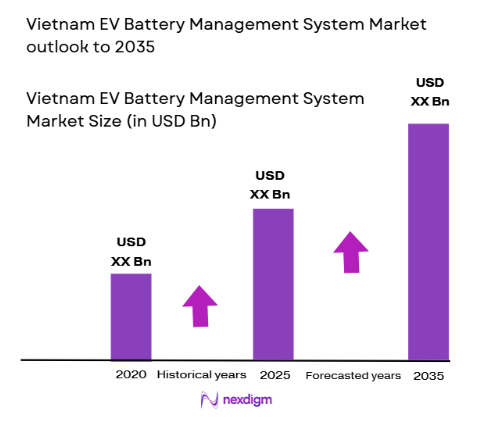
The Vietnam EV Battery Management System Market is poised to experience substantial growth driven by government incentives and the growing adoption of electric vehicles (EVs) across the country. Based on recent assessments, the market size is projected to reach approximately USD ~ billion by the end of the current assessment period. This market expansion is fueled by the increasing demand for sustainable transportation solutions and the government’s push for cleaner energy technologies, as well as improvements in battery technology. The market’s growth is further supported by the expansion of the EV infrastructure, especially in urban areas, which contributes to increased EV adoption.
Dominant countries in the market include Vietnam, with major metropolitan areas such as Ho Chi Minh City and Hanoi playing a significant role in the development and expansion of EV infrastructure. These cities are central to Vietnam’s EV market growth due to their growing demand for eco-friendly transportation options, government support, and the presence of key stakeholders, including automotive manufacturers and charging infrastructure developers. Additionally, collaborations between local and global players in the energy and automotive sectors are fostering innovation and accelerating market development.
Market Segmentation
By Product Type:
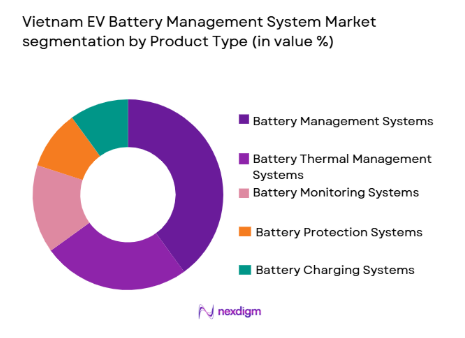
The Vietnam EV Battery Management System Market is segmented by product type into Battery Management Systems, Battery Thermal Management Systems, Battery Monitoring Systems, Battery Protection Systems, and Battery Charging Systems. Recently, Battery Management Systems have dominated the market share due to factors such as increasing adoption of EVs, their need for advanced energy storage solutions, and the critical role these systems play in enhancing battery efficiency, safety, and longevity. This sub-segment’s dominance is also attributed to the growing shift towards electric mobility, backed by favorable government policies and rising consumer interest in eco-friendly solutions.
By Platform Type:
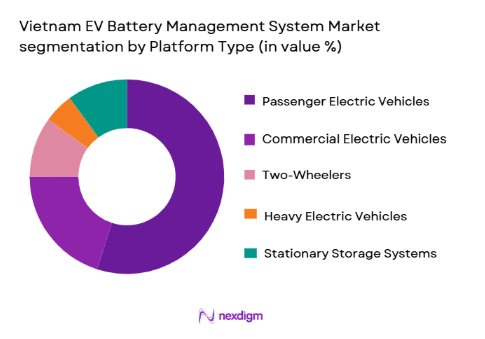
The Vietnam EV Battery Management System Market is segmented by platform type into Passenger Electric Vehicles, Commercial Electric Vehicles, Two-Wheelers, Heavy Electric Vehicles, and Stationary Storage Systems. Recently, Passenger Electric Vehicles have captured the dominant market share due to increasing demand for personal electric vehicles driven by environmental concerns and government subsidies. Additionally, infrastructure improvements in charging networks and the expansion of EV models across various price ranges have made EVs more accessible to the masses, contributing to the growth of this sub-segment.
Competitive Landscape
The Vietnam EV Battery Management System Market is characterized by moderate consolidation, with several key global and local players competing for market share. Major players in the market are continuously innovating and forming strategic partnerships to gain a competitive edge. The influence of major players is strong, particularly as they push for greater EV adoption and improvement in battery management technologies. Strategic alliances and joint ventures in the region have also contributed to market advancements, enabling the expansion of product offerings and increasing market reach.
| Company Name | Establishment Year | Headquarters | Technology Focus | Market Reach | Key Products | Revenue | Additional Parameter |
| LG Chem | 1947 | Seoul, South Korea | ~ | ~ | ~ | ~ | ~ |
| Panasonic | 1918 | Osaka, Japan | ~ | ~ | ~ | ~ | ~ |
| BYD | 1995 | Shenzhen, China | ~ | ~ | ~ | ~ | ~ |
| Samsung SDI | 1970 | Seoul, South Korea | ~ | ~ | ~ | ~ | ~ |
| CATL | 2011 | Ningde, China | ~ | ~ | ~ | ~ | ~ |
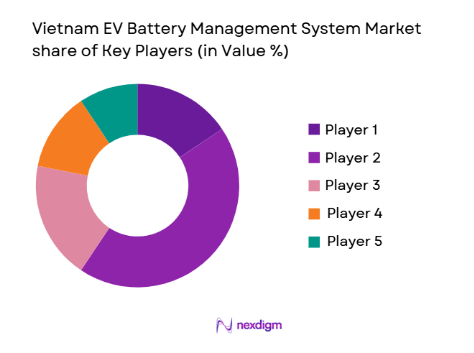
Vietnam EV Battery Management System Market Analysis
Growth Drivers
Government Support for Clean Energy Adoption:
Government incentives and policies aimed at reducing carbon emissions have been a primary driver of the EV Battery Management System Market. The Vietnamese government has set ambitious targets to reduce carbon emissions by promoting electric mobility. These initiatives have led to the establishment of incentives such as subsidies for electric vehicle purchases and the development of EV infrastructure. The push towards clean energy and EV adoption is not only beneficial for environmental goals but also supports the growth of EV-related industries, including battery management systems. Local manufacturers and international suppliers are equally focusing on expanding their presence in Vietnam, making it a favorable market for battery management solutions. Additionally, the construction of charging stations and the provision of subsidies for both consumers and businesses are helping to create a more favorable market environment for EVs. The impact of these government-backed initiatives in fostering a green economy is significantly accelerating market growth.
Technological Advancements in Battery Management Systems:
The advancement of battery management technologies is another key driver for the market. With EVs becoming increasingly popular in Vietnam, there is a growing need for effective and efficient battery management systems that can enhance the performance, lifespan, and safety of batteries. Recent developments in the integration of AI and machine learning in battery management systems have enhanced the capabilities of these systems, enabling real-time monitoring, predictive maintenance, and optimization of battery performance. These innovations have reduced operational costs and improved the overall efficiency of electric vehicles, making them more appealing to consumers. Additionally, as battery production costs continue to fall, the adoption of battery management systems is expected to rise, further boosting market growth.
Market Challenges
High Initial Investment Costs:
One of the major challenges hindering the growth of the Vietnam EV Battery Management System Market is the high initial investment required for setting up EV infrastructure and battery management systems. While the Vietnamese government offers subsidies and incentives, the upfront costs for consumers and manufacturers remain a significant barrier. The expenses related to establishing charging networks, developing advanced battery management systems, and upgrading existing infrastructure can discourage potential investors. This challenge is further compounded by the relatively high costs of advanced battery technologies, such as solid-state batteries, which are expected to play a crucial role in the future of EVs. Despite the long-term cost savings, the financial barrier can limit the widespread adoption of EVs in the country. The high capital expenditure required to build a comprehensive EV ecosystem is slowing down market growth, despite the growing demand for electric mobility.
Regulatory and Technological Barriers:
Regulatory compliance and the need for interoperability between various EV components and infrastructure are significant challenges facing the EV Battery Management System Market. As the market for EVs in Vietnam grows, manufacturers and service providers face increasing pressure to comply with stringent safety, quality, and environmental standards. These regulations can create additional challenges for companies operating in the market, as they must continuously adapt their products to meet new requirements. Furthermore, technological integration issues such as ensuring compatibility between different battery types and charging stations hinder the market’s potential growth. Although the market is expanding, the lack of standardized protocols and interoperability can cause delays in deployment and increase operational costs. The need for continuous innovation to meet evolving regulatory requirements is expected to challenge market players in the coming years.
Opportunities
Expansion of EV Charging Infrastructure:
One of the significant opportunities for growth in the Vietnam EV Battery Management System Market is the expansion of EV charging infrastructure. With the Vietnamese government’s strong push for cleaner energy solutions, the demand for EV charging stations is rising. The development of a comprehensive charging network will be critical in accelerating EV adoption across the country. As more consumers adopt electric vehicles, the need for accessible and efficient charging stations will drive the demand for advanced battery management systems. Infrastructure developers and energy providers are increasingly investing in building out charging infrastructure, thus fostering a supportive environment for the growth of EVs and related technologies. The integration of smart charging systems, which can interact with battery management systems to optimize charging cycles, represents a significant opportunity in this area. The increasing availability of EV charging stations will provide new avenues for market growth, benefiting both local and international stakeholders.
Integration of Renewable Energy into EV Solutions:
The integration of renewable energy sources into the EV ecosystem offers substantial growth opportunities for the Vietnam EV Battery Management System Market. As Vietnam continues to develop its renewable energy infrastructure, there is an increasing emphasis on incorporating renewable energy solutions like solar and wind power into EV charging networks. This synergy between renewable energy and electric mobility helps reduce the carbon footprint of EVs even further, creating a more sustainable transport system. By combining renewable energy with efficient battery management systems, EVs can operate with minimal environmental impact. The deployment of renewable-powered charging stations and the focus on energy storage technologies that enable better integration of renewable energy into the grid will encourage more businesses and consumers to transition to electric vehicles. This growing interest in renewable energy presents an exciting opportunity for companies that can innovate in integrating renewable energy sources with EV battery management systems.
Future Outlook
The future of the Vietnam EV Battery Management System Market looks promising, with strong growth prospects over the next five years. Technological advancements in battery management systems, along with favorable government policies, will likely contribute to a rapid increase in electric vehicle adoption. As EV infrastructure expands, the market will continue to see improvements in charging facilities, energy storage, and system efficiency. Additionally, the push for cleaner energy solutions, coupled with the increasing demand for electric vehicles, will drive investments into research and development in the EV battery management sector. As a result, the market is expected to experience significant growth, with an increasing focus on innovation, sustainability, and cost reduction.
Major Players
- LG Chem
- Panasonic
- BYD
- Samsung SDI
- CATL
- A123 Systems
- Farasis Energy
- SK Innovation
- Toshiba
- Johnson Controls
- Hitachi Chemical
- Murata Manufacturing
- BASF
- Nissan
- BMW
Key Target Audience
- Automotive Manufacturers
- Battery Suppliers
- Electric Vehicle Manufacturers
- Charging Infrastructure Providers
- Energy Storage Providers
- Government and Regulatory Bodies
- Investment Firms
- Research & Development Institutions
Research Methodology
Step 1: Identification of Key Variables
Identify critical market drivers, challenges, and trends impacting the Vietnam EV Battery Management System Market.
Step 2: Market Analysis and Construction
Assess and analyze historical market data, emerging trends, and industry forecasts to build a comprehensive market model.
Step 3: Hypothesis Validation and Expert Consultation
Consult industry experts and key stakeholders to validate market hypotheses and refine market assumptions.
Step 4: Research Synthesis and Final Output
Consolidate findings into a structured and actionable report, providing insights into the Vietnam EV Battery Management System Market.

- Executive Summary
- Research Methodology (Definitions, Scope, Industry Assumptions, Market Sizing Approach, Primary & Secondary Research Framework, Data Collection & Verification Protocol, Analytic Models & Forecast Methodology, Limitations & Research Validity Checks)

- Market Definition and Scope
- Value Chain & Stakeholder Ecosystem
- Regulatory / Certification Landscape
- Sector Dynamics Affecting Demand
- Strategic Initiatives & Infrastructure Growth

- Growth Drivers
Increasing Government Support for EV Infrastructure
Growing Demand for Electric Vehicles
Technological Advancements in Battery Management Systems
Improved Charging Infrastructure
Environmental Regulations Supporting EV Adoption - Market Challenges
High Initial Investment in EV Infrastructure
Limited Availability of Critical Materials for Battery Production
Regulatory Hurdles in Battery Recycling
Technology Integration and Interoperability Issues
Consumer Perception and Awareness - Market Opportunities
Expansion of EV Charging Infrastructure
Collaborations with Renewable Energy Providers
Growth in Commercial EV Adoption - Trends
Development of Advanced Battery Technologies
Rising Integration of AI in EV Battery Management
Demand for Longer Battery Life and Faster Charging
Adoption of Wireless EV Charging Systems
Increase in Government Incentives for EV Adoption - Government Regulations & Defense Policy
Policies Promoting EV Battery Recycling
Government Subsidies for Electric Vehicle Purchases
Regulations on Battery Standards and Safety - SWOT Analysis
- Stakeholder and Ecosystem Analysis
- Porter’s Five Forces Analysis
- Competition Intensity and Ecosystem Mapping

- By Market Value, 2020-2025
- By Installed Units, 2020-2025
- By Average System Price, 2020-2025
- By System Complexity Tier, 2020-2025

- By System Type (In Value%)
Battery Monitoring Systems
Battery Energy Management Systems
Battery Protection Systems
Battery Optimization Systems
Battery Thermal Management Systems - By Platform Type (In Value%)
Passenger Electric Vehicles
Commercial Electric Vehicles
Two-Wheelers
Heavy Electric Vehicles
Stationary Storage Systems - By Fitment Type (In Value%)
OEM Solutions
Aftermarket Solutions
Integrated Systems
Modular Systems
Custom Solutions - By EndUser Segment (In Value%)
Electric Vehicle Manufacturers
Battery Manufacturers
End Users (Commercial and Residential)
Fleet Operators
Charging Infrastructure Providers - By Procurement Channel (In Value%)
Direct Procurement
Online Procurement Platforms
Third-party Distributors
OEM Partnerships
Government Procurement - By Material / Technology (In Value%)
Lithium-Ion Battery Technology
Solid-State Batteries
Graphene Batteries
Lead-Acid Batteries
Sodium-Ion Batteries

- Market structure and competitive positioning
- Market share snapshot of major players
- CrossComparison Parameters (System Type, Platform Type, Procurement Channel, EndUser Segment, Fitment Type, Material / Technology, Region, Price Tier, Battery Type, Performance Metrics)
- SWOT Analysis of Key Players
- Pricing & Procurement Analysis
- Key Players
LG Chem
BYD Company
Tesla
Panasonic
Samsung SDI
CATL
A123 Systems
Farasis Energy
SK Innovation
Toshiba
Johnson Controls
Hitachi Chemical
Murata Manufacturing
BASF
Nissan

- Rising Adoption of EVs by Fleet Operators
- Increasing Investment by Battery Manufacturers
- Strong Government Push for EV Manufacturing
- Growing Interest from Charging Infrastructure Providers

- Forecast Market Value, 2026-2035
- Forecast Installed Units, 2026-2035
- Price Forecast by System Tier, 2026-2035
- Future Demand by Platform, 2026-2035


 Request a Sample
 Ask for Customization
 Get a Quote
 Enquire Now