
 Download PDF
 Download PDF
Market Overview
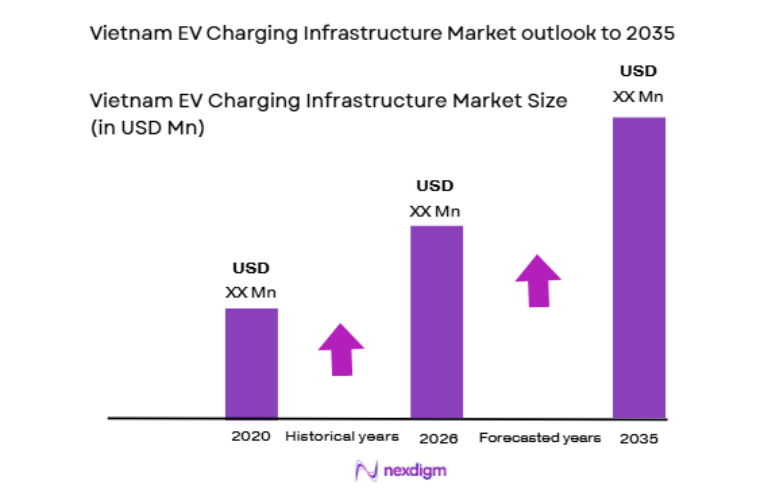
Based on a recent historical assessment, the Vietnam EV Charging Infrastructure Market is experiencing robust growth, driven by an increasing shift towards electric vehicles and government support for green transportation. The market size for 2024 is expected to reach approximately USD ~ million. This growth is underpinned by rising fuel prices, environmental concerns, and efforts to reduce carbon emissions. The demand for EV charging infrastructure is being further boosted by the growing adoption of electric vehicles across the country and the expansion of supporting infrastructure by both public and private sectors.
Vietnam’s major cities, including Hanoi and Ho Chi Minh City, are leading the charge in EV infrastructure development. These cities have become hubs for electric vehicle adoption due to their dense populations, urbanization, and supportive local government initiatives. Additionally, the presence of multinational corporations and strong investments from local companies has accelerated the growth of the EV infrastructure. The urban focus on reducing air pollution and dependence on fossil fuels has made these cities the epicenters for EV charging networks.
Market Segmentation
By Charging Type
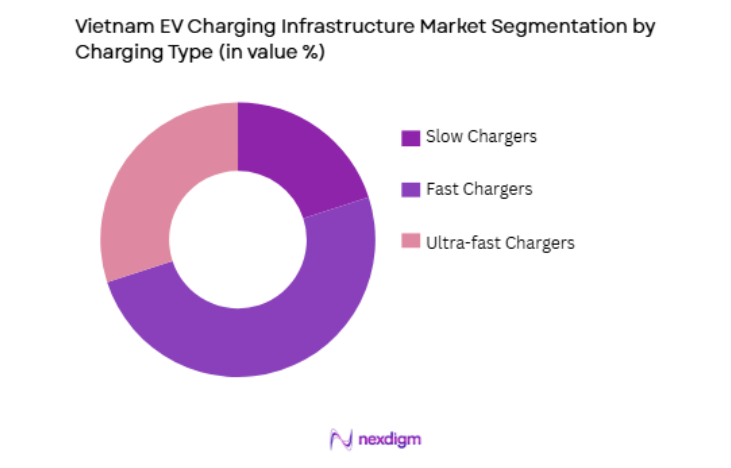
The Vietnam EV Charging Infrastructure Market is segmented by charging type into slow chargers, fast chargers, and ultra-fast chargers. Recently, fast chargers have gained a dominant market share due to their ability to provide quicker charging times, which aligns with consumer demands for convenience and longer driving ranges. This is further supported by the growing number of EVs in the market and the need for widespread, fast-charging networks to complement the increasing EV adoption. Fast chargers are especially preferred by both private and public operators due to their efficiency in handling high-volume traffic, making them a more attractive option for infrastructure development.
By Location
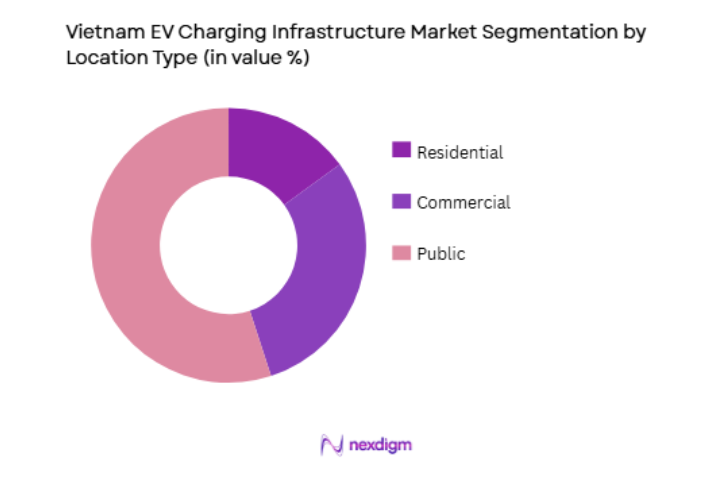
The market is segmented by location into residential, commercial, and public infrastructure. Public infrastructure is currently dominating the market share, driven by government efforts to ensure widespread availability of charging stations to accommodate public EV adoption. Government policies supporting public charging infrastructure, such as subsidies and incentives, have accelerated the establishment of charging networks in key public locations like highways, malls, and city centers. Commercial and residential sectors are growing, but public infrastructure remains the most critical for ensuring the success of EV adoption.
Competitive Landscape
The competitive landscape in the Vietnam EV Charging Infrastructure Market is characterized by the presence of both local and international players. Consolidation is occurring as larger corporations acquire smaller firms to expand their market reach and infrastructure capabilities. Leading players are focusing on innovation, technology partnerships, and government collaborations to establish a competitive edge. The influence of major players is increasing as they secure long-term contracts with local governments and private businesses to install and manage EV charging stations.
| Company Name | Establishment Year | Headquarters | Technology Focus | Market Reach | Key Products | Revenue | Market-Specific Parameter |
| ABB | 1988 | Switzerland | ~ | ~ | ~ | ~ | ~ |
| Siemens | 1847 | Germany | ~ | ~ | ~ | ~ | ~ |
| Schneider Electric | 1836 | France | ~ | ~ | ~ | ~ | ~ |
| Bosch | 1886 | Germany | ~ | ~ | ~ | ~ | ~ |
| VinFast | 2017 | Vietnam | ~ | ~ | ~ | ~ | ~ |
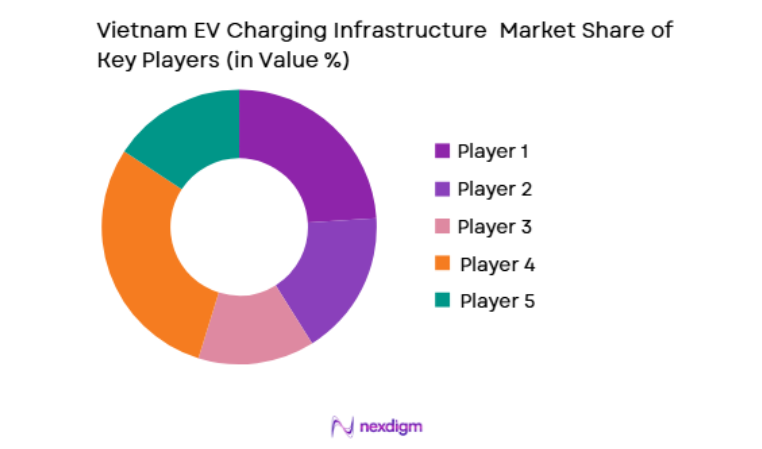
Vietnam EV Charging Infrastructure Market Analysis
Growth Drivers
Government Support for Clean Transportation
Government support for clean transportation is one of the primary growth drivers for the EV charging infrastructure market. With a national agenda to reduce carbon emissions and improve air quality, the Vietnamese government has committed to providing substantial financial incentives and subsidies to both consumers and businesses. These efforts include tax exemptions for EV manufacturers, investments in infrastructure development, and initiatives to increase EV adoption rates. This policy environment creates a favorable landscape for the growth of EV charging networks, as businesses and consumers alike are encouraged to transition to electric mobility. Furthermore, the government’s long-term roadmap includes plans to expand charging stations throughout major cities and along highways, enhancing the convenience of EV ownership and usage across the country. The role of government policies in supporting sustainable transportation will continue to shape the EV infrastructure market and further accelerate its growth.
Technological Advancements in EV Charging Solutions
The ongoing advancements in EV charging technologies are playing a significant role in driving the market. The development of ultra-fast chargers, smart grid systems, and integrated energy solutions is revolutionizing the charging infrastructure. These technologies allow for faster charging times, more reliable networks, and enhanced user experience, making them more attractive to both consumers and service providers. Additionally, improvements in energy efficiency, such as energy storage integration and solar-powered charging stations, are reducing the operational costs of charging stations, making them more viable for business owners. The growth of smart charging systems, which offer real-time tracking, payment integration, and load management, is also helping to meet the increasing demand for charging points. Technological innovations in charging infrastructure are expected to continue evolving, making EV charging more efficient, accessible, and affordable for a growing number of consumers.
Market Challenges
Infrastructure Investment
One of the biggest challenges facing the Vietnam EV charging infrastructure market is the high upfront investment required for establishing widespread charging stations. Building a reliable and efficient charging network across urban and rural areas demands significant capital investment from both public and private sectors. This includes the cost of purchasing and installing charging units, the construction of electrical grid systems, and the establishment of maintenance facilities. Furthermore, the business models for charging stations are still in the early stages, with uncertainty surrounding pricing structures, demand forecasting, and profitability. The lack of a clear financial incentive model for businesses to invest in EV charging stations makes the market difficult to navigate, particularly in less urbanized areas where demand is lower. Overcoming the financial barriers to large-scale infrastructure investment is essential for the continued growth of the market.
Consumer Adoption and Awareness
While the adoption of electric vehicles in Vietnam is growing, consumer awareness and acceptance of EV charging infrastructure remain a challenge. Many potential EV owners are still hesitant to switch from traditional gasoline vehicles due to concerns about the availability of charging stations and the perceived inconvenience of charging times. In addition, there is a lack of understanding about the economic and environmental benefits of electric vehicles, leading to slower adoption rates. Although the government is promoting electric mobility, consumer education campaigns on the advantages of EVs and the convenience of charging infrastructure are necessary to accelerate market penetration. Without significant efforts to increase public awareness and drive consumer adoption of EVs, the growth of the charging infrastructure market may be limited. Raising awareness about the long-term cost savings, environmental impact, and government incentives associated with EV ownership is critical to overcoming these challenges.
Opportunities
Private Sector Investments in Charging Networks
As the demand for electric vehicles continues to grow, private sector investments in EV charging infrastructure present a significant opportunity for the market. Private companies, including energy providers, automotive manufacturers, and technology firms, are increasingly focusing on expanding the charging network to meet consumer needs. Partnerships between local governments and private enterprises can facilitate the development of comprehensive charging infrastructure, ensuring that stations are accessible and affordable for consumers across the country. With the increased availability of venture capital and government incentives, private sector players have an opportunity to secure a larger share of the EV infrastructure market. In particular, commercial establishments such as shopping malls, office buildings, and residential complexes are likely to play a key role in the growth of the charging network, helping to expand the availability of charging stations in urban and suburban areas.
Rise of Renewable Energy Integration
The integration of renewable energy sources into EV charging infrastructure offers a significant growth opportunity for the market. Solar-powered charging stations, for example, are becoming an increasingly attractive solution due to their ability to provide clean, cost-effective energy to power EVs. By harnessing solar energy, charging stations can reduce reliance on the conventional electrical grid, lower operational costs, and contribute to a cleaner, more sustainable energy system. This trend is in line with global efforts to increase the adoption of renewable energy and reduce greenhouse gas emissions. As the demand for electric vehicles grows, so too will the need for sustainable energy sources to power the charging infrastructure. The development of solar-powered or wind-powered charging stations presents a promising opportunity for businesses to enter the market while contributing to environmental goals.
Future Outlook
The Vietnam EV Charging Infrastructure Market is poised for significant growth over the next five years, driven by favorable government policies, increased private sector investments, and ongoing technological advancements. As the demand for electric vehicles continues to rise, the market for charging infrastructure will expand to meet the needs of consumers across the country. The integration of renewable energy sources, such as solar-powered charging stations, is expected to become more prevalent, contributing to a greener energy future. Technological innovations, including ultra-fast chargers and smart grid systems, will further enhance the efficiency and convenience of the charging experience. With continued support from both public and private sectors, the future outlook for Vietnam’s EV charging infrastructure market is positive, with substantial growth expected in the coming years.
Major Players
- ABB
- Siemens
- Schneider Electric
- Bosch
- VinFast
- Delta Electronics
- ChargePoint
- Blink Charging
- Tesla
- Siemens Energy
- Engie
- Hyundai Motor Group
- General Electric
- Schneider Electric
- Toyota
Key Target Audience
- Investments and venture capitalist firms
- Government and regulatory bodies
- Energy suppliers
- Automotive manufacturers
- Commercial real estate developers
- Urban planning authorities
- EV manufacturers
- Technology firms
Research Methodology
Step 1: Identification of Key Variables
This step involves identifying the key drivers, challenges, opportunities, and market dynamics influencing the growth of the EV charging infrastructure market. This includes understanding technological, economic, and regulatory factors that affect the market.
Step 2: Market Analysis and Construction
In this step, comprehensive data is gathered from industry reports, government publications, and company financials to construct a detailed analysis of the EV charging infrastructure market. The data is segmented by various factors such as charging types, locations, and growth drivers.
Step 3: Hypothesis Validation and Expert Consultation
The hypothesis developed in the earlier stages is validated through expert consultations with key stakeholders in the industry, including EV manufacturers, infrastructure developers, and government representatives.
Step 4: Research Synthesis and Final Output
The final research output is synthesized into a cohesive market report that outlines market size, segmentation, growth drivers, challenges, and opportunities. Key insights from the research are presented for stakeholders to make informed decisions.

- Executive Summary
- Research Methodology (Definitions, Scope, Industry Assumptions, Market Sizing Approach, Primary & Secondary Research Framework, Data Collection & Verification Protocol, Analytic Models & Forecast Methodology, Limitations & Research Validity Checks)

- Market Definition and Scope
- Value Chain & Stakeholder Ecosystem
- Regulatory / Certification Landscape
- Sector Dynamics Affecting Demand

- Growth Drivers
Government incentives for EV adoption
Increasing demand for electric vehicles
Expansion of green energy initiatives - Market Challenges
High infrastructure costs
Lack of standardization in charging technology
Regulatory barriers to development - Market Opportunities
Public-private partnerships for infrastructure growth
Development of ultra-fast charging networks
Integration with renewable energy sources - Trends
Growth of home charging solutions
Emergence of ultra-fast and wireless charging - Government Regulations
- SWOT Analysis
- Porter’s Five Forces

- By Market Value, 2020-2025
- By Installed Units, 2020-2025
- By Average System Price, 2020-2025
- By System Complexity Tier, 2020-2025

- By System Type (In Value%)
Charging Stations
Charging Networks
Charging Equipment
Fast Charging Systems
Wireless Charging Solutions - By Platform Type (In Value%)
Public Charging Stations
Private Charging Stations
Fleet Charging Solutions
Mobile Charging Units
Battery Swapping Stations - By Fitment Type (In Value%)
Dedicated Charging Points
Shared Charging Points
Home Charging Solutions
Commercial Charging Solutions - By End User Segment (In Value%)
Individual Consumers
Commercial Fleets
Public Transport

- Market Share Analysis
- Cross Comparison Parameters (Charging Stations, Charging Networks, Fast Charging Systems, Public Charging Stations, Private Charging Stations, Fleet Charging Solutions, Wireless Charging Solutions)
- SWOT Analysis of Key Competitors
- Pricing & Procurement Analysis
- Key Players
ABB
Siemens
Tesla
Trung Nam Group
Vingroup
Powertech Systems
Porsche
BP Chargemaster
BYD
Cenfura
Eaton
Schneider Electric
ChargePoint
WattDrive
Greenlots

- Rising adoption among commercial fleets
- Demand for workplace and residential charging
- Public transport electrification
- Growing need for fast and convenient charging

- Forecast Market Value, 2026-2035
- Forecast Installed Units, 2026-2035
- Price Forecast by System Tier, 2026-2035
- Future Demand by Platform, 2026-2035


 Request a Sample
 Ask for Customization
 Get a Quote
 Enquire Now