
 Download PDF
Market Overview
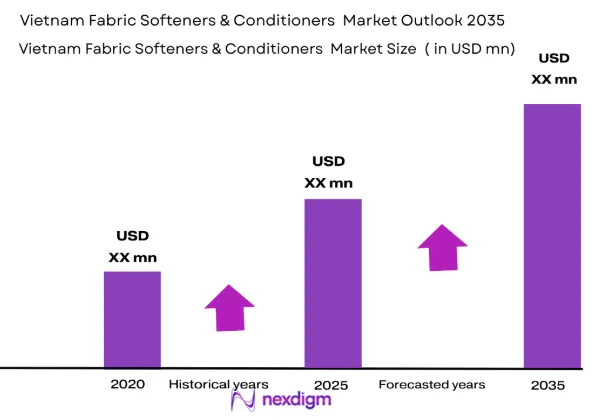
The Vietnam fabric softeners and conditioners market is valued at approximately USD ~ million in 2025, supported by strong demand from household laundry, commercial laundry, hospitality, and modern retail sectors. Vietnam’s population exceeds 100 million, creating significant demand for daily-use home care and laundry care products. The country’s GDP reached USD 476.39 billion in 2024, while GDP per capita stood at USD 4,717.3, supporting growth in consumer spending and premium household care products. Vietnam’s total retail sales of goods and consumer services reached VND 6,391.0 trillion in 2024, reflecting strong domestic consumption and organized retail growth. Additionally, the country’s e-commerce market reached USD 25 billion in 2024, supporting online sales of household and laundry care products.
The Vietnam fabric softeners and conditioners market is concentrated in Ho Chi Minh City, Hanoi, and Da Nang due to higher urbanization, strong retail infrastructure, rising disposable income, and higher washing machine adoption. Ho Chi Minh City dominates as the commercial and FMCG distribution hub, supported by supermarkets, convenience stores, traditional retail networks, and e-commerce platforms. Hanoi contributes through dense urban households, organized retail growth, and premium product consumption. Da Nang supports demand through tourism, hospitality, and commercial laundry services. These regions benefit from high population density, higher household spending, and strong availability of branded fabric care products.
Market Segmentation
By Product Type
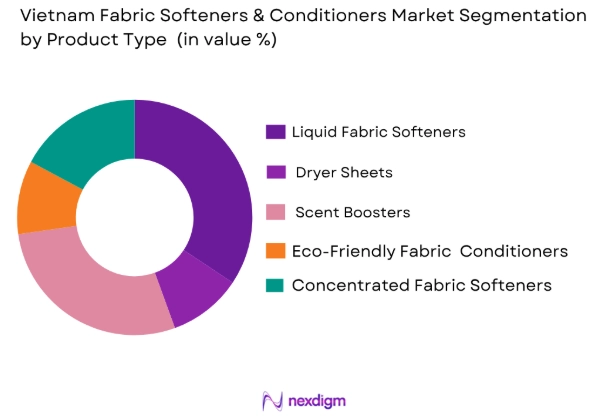
Vietnam fabric softeners and conditioners market is segmented by product type into liquid fabric softeners, concentrated fabric conditioners, dryer sheets, scent boosters, and eco-friendly fabric conditioners. Liquid fabric softeners dominate the market due to their widespread use in household laundry and compatibility with both hand washing and machine washing. Urban households prefer liquid fabric conditioners because they provide softness, fragrance retention, and convenience in daily laundry routines. Concentrated fabric conditioners are also gaining demand due to lower usage per wash, stronger fragrance performance, and premium positioning. Dryer sheets and scent boosters remain smaller segments, but their demand is increasing among urban consumers seeking enhanced fabric fragrance and premium laundry care experiences
By Packaging Type
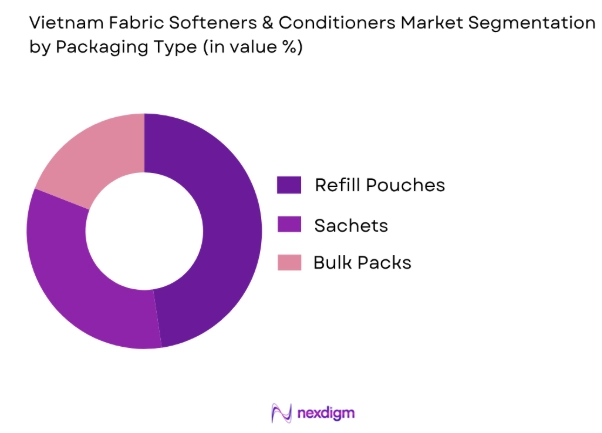
Vietnam fabric softeners and conditioners market is segmented by packaging type into bottles, refill pouches, sachets, and bulk packs. Refill pouches dominate the market due to affordability, convenience, and suitability for price-sensitive consumers. Consumers commonly purchase refill pouches after buying bottles, reducing overall product cost and supporting repeated household usage. Bottles remain important for first-time purchases, premium variants, and organized retail displays. Sachets are used for trial purchases and low-income households, especially in rural and semi-urban areas. Bulk packs are preferred by hotels, laundromats, commercial laundry operators, and institutional buyers requiring high-volume usage.
Competitive Landscape
The Vietnam fabric softeners and conditioners market is highly competitive, with strong participation from multinational FMCG companies, domestic detergent manufacturers, imported brands, and private labels. Global companies dominate due to strong brand recognition, fragrance innovation, promotional spending, and nationwide distribution. Domestic players focus on affordability, local consumer preferences, and strong traditional retail reach. Private labels are emerging through supermarkets, convenience stores, and modern retail chains.
| Company | Establishment Year | Headquarters | Product Focus | Distribution Network | Key Consumer Segment | Import/Local Presence | Competitive Advantage |
| Unilever Vietnam | 1995 | Vietnam / UK Parent | ~ | ~ | ~ | ~ | ~ |
| Procter & Gamble Vietnam | 1995 | Vietnam / USA Parent | ~ | ~ | ~ | ~ | ~ |
| Lix Detergent JSC | 1972 | Vietnam | ~ | ~ | ~ | ~ | ~ |
| NET Detergent JSC | 1968 | Vietnam | ~ | ~ | ~ | ~ | ~ |
| Dai Viet Huong Company | 2003 | Vietnam | ~ | ~ | ~ | ~ | ~ |
| Kao Corporation | 1887 | Japan | ~ | ~ | ~ | ~ | ~ |
| Lion Corporation | 1891 | Japan | ~ | ~ | ~ | ~ | ~ |
| LG Household & Health Care | 1947 | South Korea | ~ | ~ | ~ | ~ | ~ |
| Earth Corporation Vietnam | 1892 | Japan | ~ | ~ | ~ | ~ | ~ |
| Co.opmart Private Label | 1996 | Vietnam | ~ | ~ | ~ | ~ | ~ |
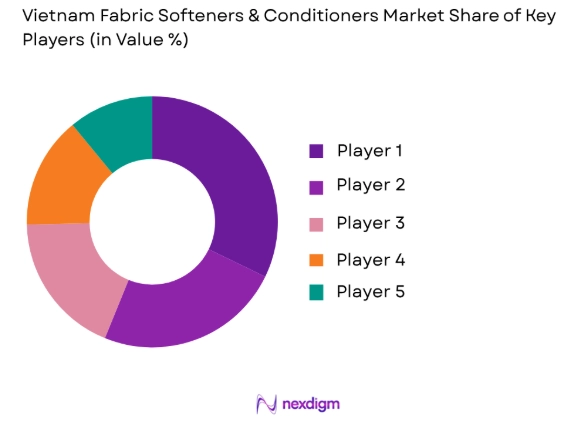
Vietnam Fabric Softeners & Conditioners Market Analysis
Growth Drivers
Rising Urbanization and Modern Laundry Habits
Vietnam’s rapid urbanization is changing household laundry behavior, especially in major cities where washing machine use is rising. Urban consumers increasingly prefer convenient, ready-to-use laundry products that improve fabric softness, fragrance, and overall washing results. As lifestyles become busier, households are shifting from traditional washing practices to branded detergents and fabric conditioners. This supports regular usage of fabric softeners as part of modern laundry routines. Smaller urban apartments also increase the need for clothes that dry fresh and remain pleasant-smelling indoors. These habits are helping fabric softeners and conditioners move from optional products to routine household purchases across urban Vietnam.
Growth of Middle-Income Households and Premium FMCG Consumption
The expansion of Vietnam’s middle-income population is supporting higher spending on premium household and personal-care products. Consumers with stronger purchasing power are more willing to buy fabric conditioners that offer long-lasting fragrance, anti-wrinkle benefits, fabric protection, and skin-friendly features. This trend is especially visible among young families and urban professionals who associate premium laundry products with hygiene, comfort, and lifestyle quality. Instead of choosing only low-cost products, many households are trading up to branded and value-added fabric softeners. Premium FMCG consumption is therefore strengthening demand for differentiated fabric conditioners, including imported brands, concentrated formulas, and fragrance-focused variants.
Market Challenges
High Brand Competition and Price Sensitivity
The Vietnam fabric softeners and conditioners market faces intense competition from multinational brands, local manufacturers, and private-label products. Many brands compete through discounts, bundle offers, and promotional campaigns, making it difficult to maintain strong profit margins. At the same time, many Vietnamese consumers remain price-sensitive, particularly in rural areas and lower-income households. This limits the ability of companies to raise prices, even when raw material or packaging costs increase. New entrants must invest heavily in marketing, retail visibility, and product differentiation to gain share. As a result, competition can restrict profitability and make brand loyalty harder to sustain.
Dependence on Imported Fragrance Ingredients and Packaging Inputs
Fabric softener manufacturers in Vietnam often depend on imported fragrance compounds, specialty chemicals, plastic resins, and packaging materials. This creates exposure to global supply-chain disruptions, currency fluctuations, shipping delays, and raw material price volatility. Since fragrance is a key purchase driver in fabric conditioners, any increase in fragrance ingredient costs can directly affect production expenses. Packaging is also important because consumers evaluate product convenience, appearance, and refill options. When import costs rise, manufacturers may struggle to balance affordability with quality. This challenge is especially difficult in a price-sensitive market, where passing higher costs to consumers can reduce competitiveness.
Opportunities
Growth in Concentrated and Refill-Pack Fabric Conditioners
Concentrated and refill-pack fabric conditioners offer strong growth potential in Vietnam as consumers look for better value and convenience. Concentrated formulas require smaller doses per wash, making them attractive to households seeking longer-lasting products and lower storage requirements. Refill packs can reduce packaging costs and appeal to environmentally aware consumers who want to limit plastic waste. These formats are also suitable for e-commerce because they are lighter and easier to ship than bulky bottles. Brands that clearly communicate cost savings, fragrance strength, and sustainability benefits can gain an advantage. This opportunity supports both mass-market affordability and premium product positioning.
Rising Demand for Baby-Safe and Sensitive-Skin Products
Vietnamese consumers are becoming more aware of skin health, product safety, and the needs of babies and children. This creates opportunities for fabric conditioners positioned as gentle, hypoallergenic, dermatologically tested, or free from harsh chemicals. Parents are especially likely to seek products that soften clothes without causing irritation or strong chemical residue. Sensitive-skin variants can also appeal to adults with allergies or preference for mild household products. Brands can strengthen trust through clear ingredient claims, safety certifications, and transparent packaging communication. As health-conscious purchasing increases, baby-safe and sensitive-skin fabric conditioners can support premium pricing and stronger brand differentiation.
Future Outlook
Over the next five years, the Vietnam fabric softeners and conditioners market is expected to grow steadily due to rising urbanization, increasing household income, modern laundry habits, and growing demand for fragrance-led fabric care. Expansion of supermarkets, convenience stores, and e-commerce platforms will improve product availability and support premium product adoption.
Household laundry will continue to dominate demand, while commercial laundry, hospitality, and institutional buyers will support bulk consumption. Concentrated fabric conditioners, refill pouches, baby-safe variants, and premium fragrance products are expected to gain market share. Domestic manufacturers and private labels will compete in value segments, while multinational brands will continue to lead premium and mass-premium categories.
Major Players
- Unilever Vietnam
- Procter & Gamble Vietnam
- Lix Detergent Joint Stock Company
- NET Detergent Joint Stock Company
- Dai Viet Huong Company
- Kao Corporation
- Lion Corporation
- LG Household & Health Care
- Earth Corporation Vietnam
- Masan Consumer
- Aeon Topvalu
- Co.opmart Private Label
- Bach Hoa Xanh Private Label
- Watsons Vietnam
- Guardian Vietnam
Key Target Audience
- Fabric softener and conditioner manufacturers
- Laundry care product distributors
- Supermarkets and hypermarkets
- Convenience store chains
- Traditional grocery wholesalers
- Online grocery and e-commerce platforms
- Commercial laundry operators
- Hotels and hospitality companies
- Hospitals and institutional laundry operators
- Packaging suppliers
- Fragrance and specialty chemical suppliers
- Investments and venture capitalist firms
- Government and regulatory bodies
Research Methodology
Step 1: Identification of Key Variables
The initial phase involves mapping stakeholders in the Vietnam fabric softeners and conditioners market, including manufacturers, distributors, retailers, e-commerce platforms, household consumers, commercial laundries, and hospitality operators. Secondary data sources such as government publications, retail sales statistics, company disclosures, trade data, and FMCG industry reports are used to identify key variables influencing market demand.
Step 2: Market Analysis and Construction
Historical data is analyzed to understand consumption patterns, household laundry habits, retail channel growth, pricing trends, and product adoption across regions. The study evaluates fabric conditioner usage across households, commercial laundries, hotels, and institutional buyers to construct a reliable market model.
Step 3: Hypothesis Validation and Expert Consultation
Industry experts are consulted to validate assumptions and provide insights into market dynamics. These include FMCG distributors, retail buyers, laundry service providers, hospitality procurement managers, and product category specialists. These interactions help refine demand estimates, pricing assumptions, and future growth drivers.
Step 4: Research Synthesis and Final Output
The final phase integrates primary and secondary research findings to deliver a validated market assessment. Data triangulation ensures accuracy and consistency across market size, segmentation, growth drivers, challenges, opportunities, and competitive analysis.

- Executive Summary
- Research Methodology (Market Definitions and Assumptions, Abbreviations, Market Sizing Approach, Consolidated Research Approach, Understanding Market Potential Through In-Depth Industry Interviews, Primary Research Approach, Limitations and Future Conclusions)

- Definition and Scope
- Market Dynamics Overview
- Market Genesis
- Major Players and Market Timeline
- Business Cycle and Trends
- Supply Chain and Value Chain Analysis

- Growth Drivers
Rising Urbanization and Modern Laundry Habits
Growth of Middle-Income Households and Premium FMCG Consumption
Expansion of Modern Retail and E-Commerce Channels
Increasing Consumer Preference for Fragrance and Fabric Care
Growing Demand from Hospitality and Commercial Laundry Services - Market Challenges
High Brand Competition and Price Sensitivity
Dependence on Imported Fragrance Ingredients and Packaging Inputs
Counterfeit and Low-Quality Products in Informal Retail
Environmental Concerns Around Chemical Formulations and Plastic Packaging - Opportunities
Growth in Concentrated and Refill-Pack Fabric Conditioners
Expansion of E-Commerce and Online FMCG Sales
Rising Demand for Baby-Safe and Sensitive-Skin Products
Premiumization Through Long-Lasting Fragrance Variants
Sustainable Packaging and Biodegradable Formulations - Key Trends
Shift toward concentrated fabric conditioners
Rising demand for refill pouches
Growth in premium fragrance-based products
Increasing adoption of baby-safe and hypoallergenic conditioners
Expansion of online household care product sales - Government Regulations
- SWOT Analysis
- Porter’s Five Forces

- By Value, 2020–2025
- By Volume, 2020–2025
- By Average Price, 2020–2025

- By Product Type (In Value %)
Liquid Fabric Softeners
Concentrated Fabric Conditioners
Dryer Sheets
Scent Boosters
Eco-Friendly Fabric Conditioners - By Packaging Type (In Value %)
Bottles
Refill Pouches
Sachets
Bulk Packs - By Fragrance Type (In Value %)
Floral
Fresh / Ocean
Baby Care / Mild
Luxury Perfume
Natural / Herbal - By Application (In Value %)
Household Laundry
Commercial Laundry
Hospitality
Institutional Laundry
Industrial / Workwear Laundry - By Distribution Channel (In Value %)
Supermarkets and Hypermarkets
Convenience Stores
Traditional Grocery Stores
Online Channels
Direct / Institutional Sales - By Region (In Value %)
Ho Chi Minh City
Hanoi
Da Nang
Mekong Delta
Rest of Vietnam

- Market Share of Major Players by Value/Volume
- Market Share of Major Players by Product Type
- Cross Comparison Parameters (Company Overview, Business Strategies, Recent Developments, Strength, Weakness, Organizational Structure, Revenues, Revenues by Product Type, Number of Touchpoints, Distribution Channels, Number of Dealers and Distributors, Margins, Production Plant, Capacity, Unique Value Offering and Others)
- SWOT Analysis of Major Players
- Pricing Analysis Based on Product Categories for Major Players
- Detailed Profiles of Major Companies
Unilever Vietnam
Procter & Gamble Vietnam
Lix Detergent Joint Stock Company
NET Detergent Joint Stock Company
Dai Viet Huong Company
Kao Corporation
Lion Corporation
LG Household & Health Care
Earth Corporation Vietnam
Masan Consumer
Aeon Topvalu
Co.opmart Private Label
Bach Hoa Xanh Private Label
Watsons Vietnam
Guardian Vietnam

- Market Demand and Utilization
- Purchasing Power and Budget Allocations
- Regulatory and Compliance Requirements
- Needs, Desires, and Pain Point Analysis
- Decision-Making Process

- By Value, 2026–2035
- By Volume, 2026–2035
- By Average Price, 2026–2035


 Request a Sample
 Ask for Customization
 Get a Quote
 Enquire Now