

 Download PDF
Market Overview
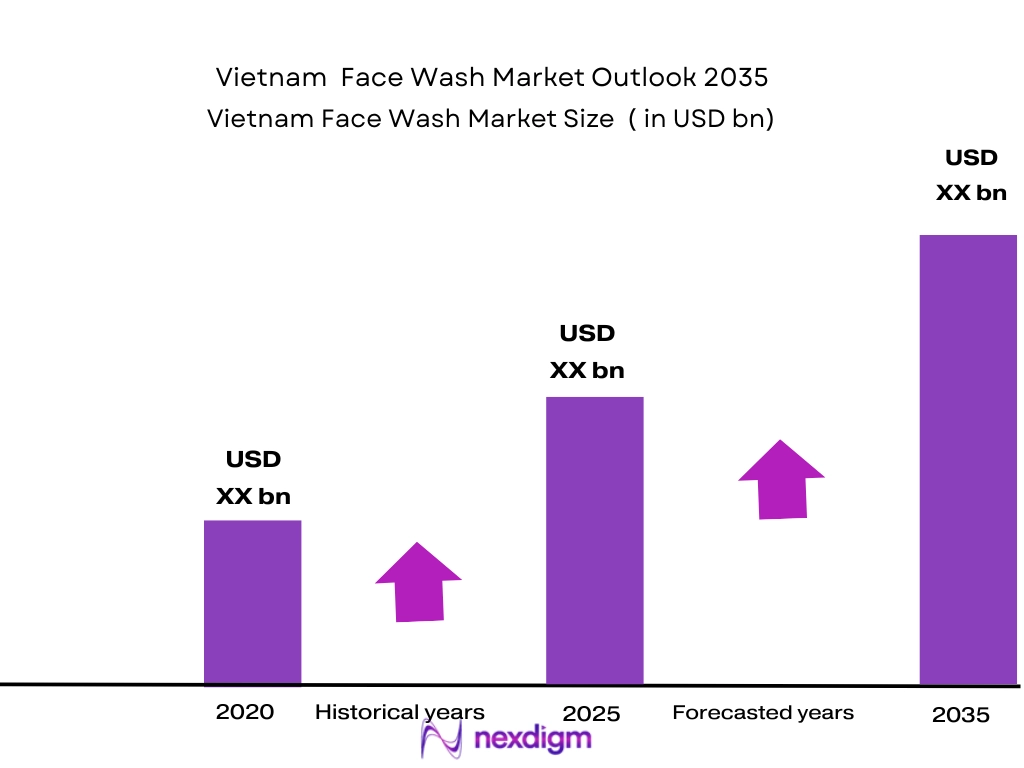
The Vietnam face wash market is valued at USD ~ billion, based on a five-year historical analysis. Growth in the market is driven by increasing consumer awareness regarding personal hygiene, rising disposable income, and expanding skincare product portfolios. The surge in demand for herbal and organic formulations, combined with the growing influence of social media and beauty influencers, has further accelerated adoption across urban and semi-urban populations, resulting in sustained revenue growth.
Major cities such as Ho Chi Minh City, Hanoi, and Da Nang dominate the Vietnam face wash market due to high urbanization, greater disposable income, and the presence of modern retail infrastructure. These cities host concentrated retail chains, e-commerce platforms, and beauty salons that facilitate wider distribution and consumer access. The dominance is also fueled by younger demographics that prioritize skincare routines and are early adopters of premium and international face wash brands.
Market Segmentation
By Product Type
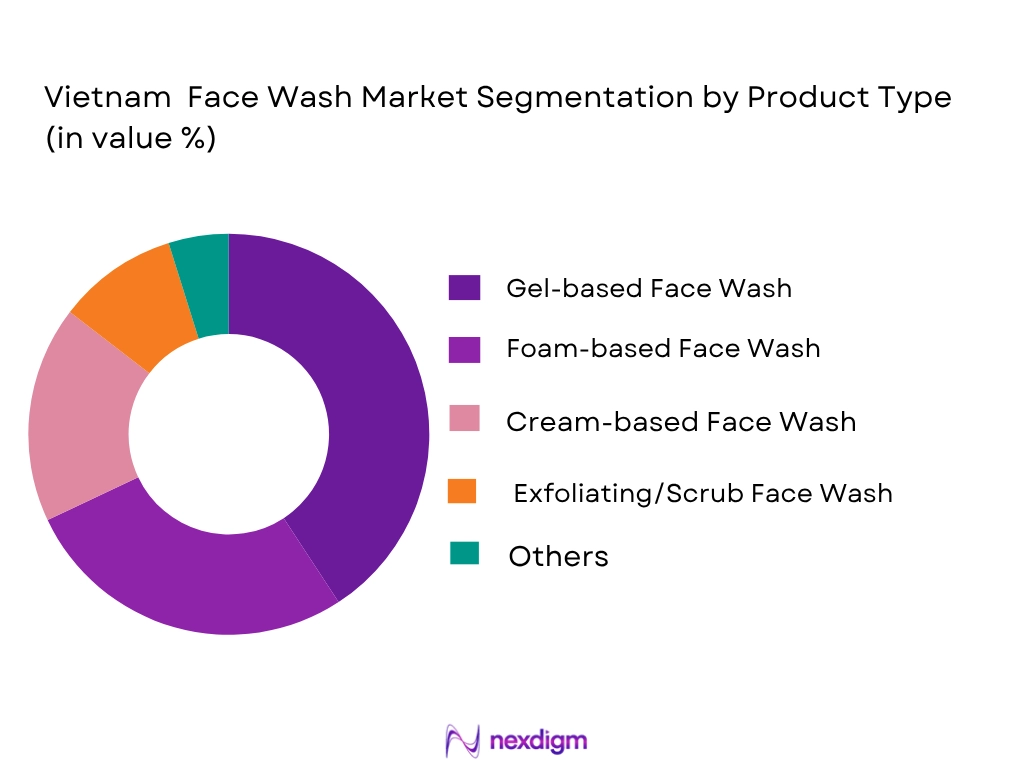
Vietnam face wash market is segmented by product type into gel-based, foam-based, cream-based, and exfoliating/scrub-based face washes. Gel-based face washes hold the dominant market share due to their versatility across skin types and high preference among younger consumers. They are widely marketed as oil-control and acne-preventive solutions, resonating strongly with urban populations. Brands such as L’Oréal, Innisfree, and Pond’s have successfully leveraged advertising campaigns and dermatological endorsements to strengthen the appeal of gel-based products.
By Ingredients Type
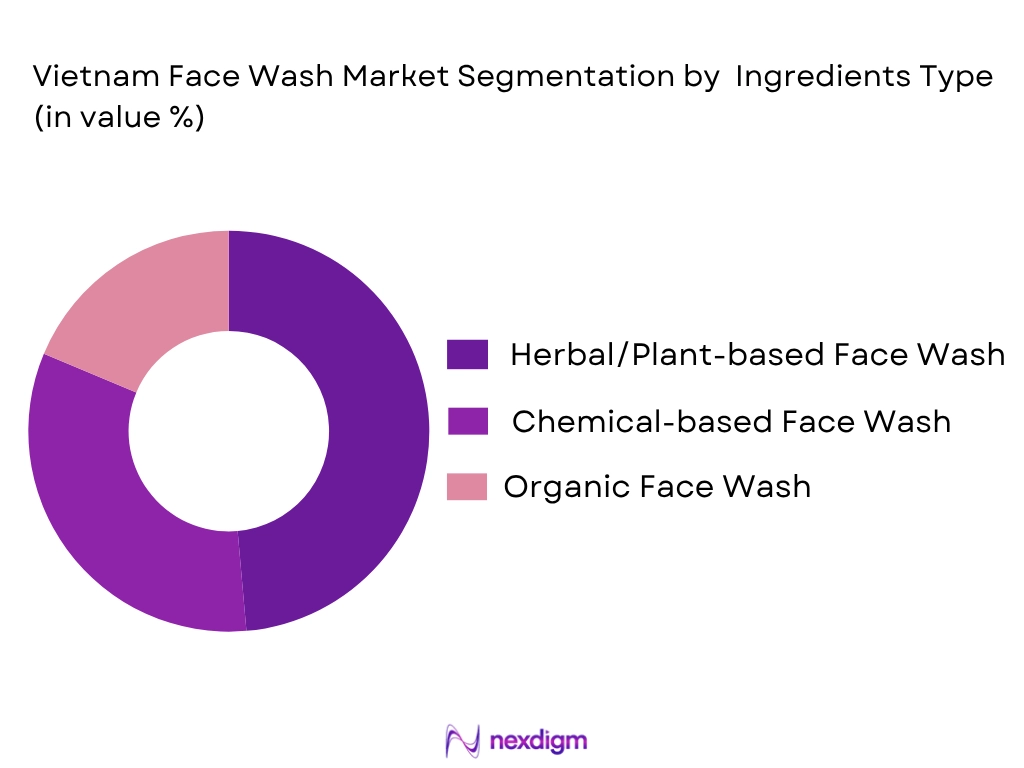
The market is segmented by ingredients into herbal/plant-based, chemical-based, and organic face washes. Herbal and plant-based formulations dominate due to rising consumer preference for natural and safe skincare solutions. Awareness of potential side effects of chemical ingredients has pushed urban consumers toward botanical extracts such as green tea, aloe vera, and chamomile. Companies such as The Face Shop, Innisfree, and Herbalife have actively promoted plant-based lines, enhancing adoption and brand trust among environmentally conscious and health-focused buyers.
Competitive Landscape
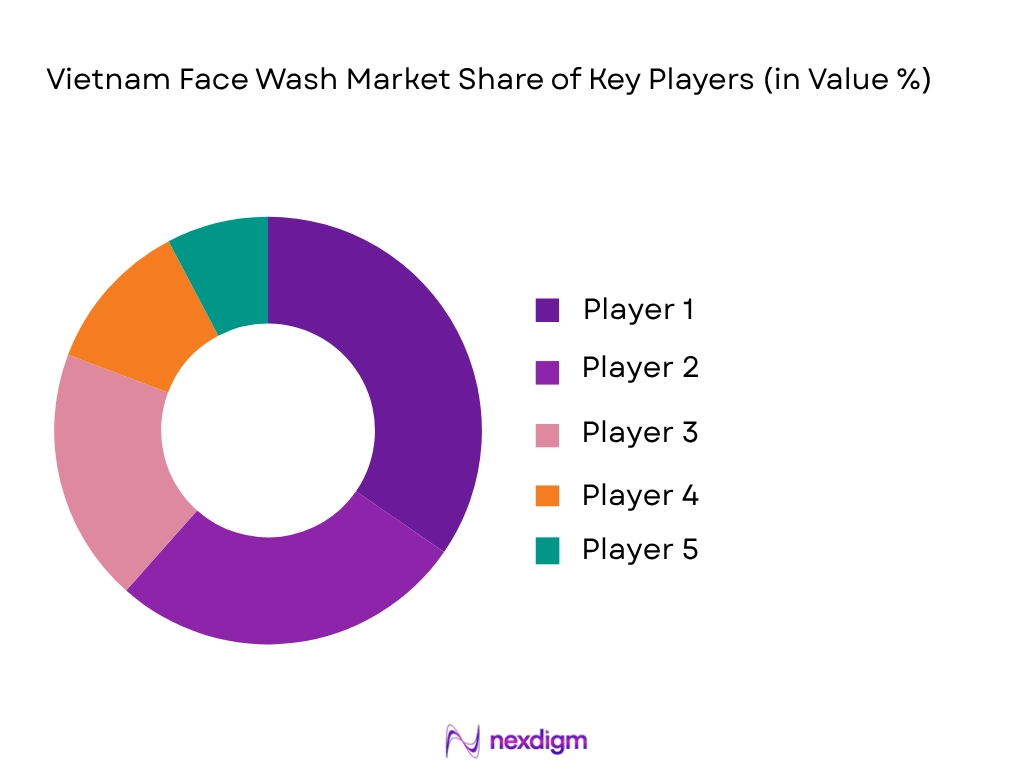
The Vietnam face wash market is dominated by major global and regional players, creating a consolidated environment. Key companies include L’Oréal Vietnam, Unilever Vietnam, Procter & Gamble (P&G) Vietnam, Beiersdorf AG (Nivea), and Shiseido. This consolidation demonstrates the strong influence of established brands with extensive distribution networks, marketing strength, and wide product portfolios that appeal to various consumer segments.
| Company | Establishment Year | Headquarters | Revenue (USD Mn) | Product Portfolio | Distribution Network | Manufacturing Facilities | Brand Recognition | Innovation Initiatives |
| L’Oréal Vietnam | 1909 | Ho Chi Minh City | ~ | ~ | ~ | ~ | ~ | ~ |
| Unilever Vietnam | 1929 | Hanoi | ~ | ~ | ~ | ~ | ~ | ~ |
| P&G Vietnam | 1837 | Ho Chi Minh City | ~ | ~ | ~ | ~ | ~ | ~ |
| Beiersdorf AG (Nivea) | 1882 | Hanoi | ~ | ~ | ~ | ~ | ~ | ~ |
| Shiseido Company, Limited | 1872 | Ho Chi Minh City | ~ | ~ | ~ | ~ | ~ | ~ |
Vietnam Face Wash Market Analysis
Growth Drivers
Increasing Awareness About Skincare and Personal Hygiene
In Vietnam, rising awareness about skincare and personal hygiene is a significant driver of the face wash market. Consumers, particularly in urban areas, are increasingly adopting daily cleansing routines due to educational campaigns, social media influence, and wellness trends. The emphasis on healthy skin, acne prevention, and anti-aging benefits has made face wash an essential component of personal care. Additionally, exposure to international beauty trends and celebrity endorsements has influenced consumer behavior, encouraging regular use. This growing awareness drives demand across age groups, prompting brands to launch targeted marketing campaigns, educational content, and skin-type-specific products to attract and retain customers.
Growth of E-commerce and Online Beauty Retail
The expansion of e-commerce and online beauty retail platforms is accelerating the growth of the Vietnam face wash market. Online channels allow consumers to access a wide range of local and international brands conveniently, offering product reviews, price comparison, and doorstep delivery. Social media and influencer marketing further amplify awareness and engagement, especially among younger demographics. E-commerce platforms also provide opportunities for niche and premium brands to reach markets beyond major cities, complementing offline retail in supermarkets and specialty stores. This integration of digital and physical retail channels improves accessibility, convenience, and overall market penetration, driving higher sales and brand visibility.
Market Challenges
High Competition and Market Fragmentation
The Vietnam face wash market is highly competitive and fragmented, with numerous domestic and international brands competing for consumer attention. This results in price-sensitive behavior, with consumers often switching between brands seeking better deals or perceived quality. New entrants face challenges in differentiating their products, while established brands must continuously innovate to maintain market share. The fragmented market also increases marketing and promotional costs, as brands compete for visibility and customer loyalty. Maintaining profitability while managing brand positioning and customer retention in a crowded and competitive market remains a persistent challenge for manufacturers.
Regulatory Compliance and Safety Standards
Regulatory compliance and product safety standards present challenges for face wash manufacturers in Vietnam. Companies must ensure formulations meet government guidelines, including labeling accuracy, ingredient safety, and stability testing. Non-compliance can lead to penalties, product recalls, or reputational damage, affecting both sales and consumer trust. Additionally, monitoring evolving regulations, particularly for herbal or natural products, adds operational complexity. Ensuring consistent quality while meeting legal and safety requirements demands significant investment in testing, documentation, and quality control, making regulatory adherence a resource-intensive process for both established and emerging players.
Opportunities
Rising Demand for Natural and Organic Face Wash Products
Vietnamese consumers are increasingly seeking natural and organic face wash products as awareness of health, wellness, and sustainability grows. Ingredients such as aloe vera, green tea, turmeric, and herbal extracts are preferred for their skin benefits and minimal side effects. Eco-friendly and cruelty-free practices, coupled with recyclable packaging, enhance brand credibility and appeal. This trend allows manufacturers to differentiate their products, target premium segments, and build long-term loyalty. The growing interest in natural, safe, and sustainable skincare provides a significant opportunity for both local and international brands to expand their product portfolios in the Vietnamese market.
Expansion of E-commerce and Online Retail Platforms
The growing presence of e-commerce and online retail platforms presents opportunities for Vietnam’s face wash market. Digital channels enable brands to reach a broader consumer base, particularly in regions with limited physical retail access. Online marketing, influencer partnerships, and customer reviews help build brand recognition and trust. E-commerce also allows niche and premium products to enter the market efficiently while offering personalized recommendations and promotions. The integration of online and offline retail channels strengthens market penetration, improves convenience for consumers, and provides manufacturers with valuable data insights to optimize product offerings and marketing strategies.
Future Outlook
Over the next 5 years, the Vietnam face wash market is expected to show significant growth driven by rising consumer awareness regarding skin health, expansion of online retail, and continued interest in herbal and organic skincare solutions. Technological advancements in formulations and innovative packaging will further enhance consumer appeal. Growth will also be supported by increased penetration into semi-urban regions and rising disposable incomes, leading to broader adoption of premium products.
Major Players
- L’Oréal Vietnam
- Unilever Vietnam
- Procter & Gamble (P&G) Vietnam
- Beiersdorf AG (Nivea)
- Shiseido Company, Limited
- LG Household & Health Care
- Pond’s Vietnam
- Innisfree Vietnam
- The Face Shop Vietnam
- Olay (Procter & Gamble)
- Mentholatum (Rohto-Mentholatum)
- Oriflame Vietnam
- Herbalife Vietnam
- Revlon Vietnam
- Neutrogena Vietnam
Key Target Audience
- Investments and venture capitalist firms
- Government and regulatory bodies
- Cosmetic and skincare brand managers
- Retail and e-commerce platform executives
- Hospitality industry procurement managers
- Healthcare and dermatology clinics
- Corporate wellness program managers
- Distributors and wholesalers in the beauty and personal care sector
Research Methodology
Step 1: Identification of Key Variables
The initial phase involves constructing an ecosystem map encompassing all major stakeholders within the Vietnam face wash market. Desk research utilizing secondary databases gathers industry-level information to identify critical variables influencing market dynamics.
Step 2: Market Analysis and Construction
Historical data on market penetration, product types, and revenue generation is analyzed. Service quality and consumer preference statistics are incorporated to ensure reliability in revenue estimates.
Step 3: Hypothesis Validation and Expert Consultation
Hypotheses are developed and validated through interviews with industry experts, including dermatologists, brand managers, and distributors. These insights refine and corroborate the market data.
Step 4: Research Synthesis and Final Output
The final phase involves direct engagement with manufacturers and distributors to gather insights on product performance, sales trends, and consumer preferences. This validates the bottom-up data and ensures a comprehensive analysis.

- Executive Summary
- Research Methodology (Market Definitions and Assumptions, Abbreviations, Market Sizing Approach, Consolidated Research Approach, Understanding Market Potential Through In-Depth Industry Interviews, Primary Research Approach, Limitations and Future Conclusions)

- Definition and Scope
- Market Dynamics Overview
- Market Genesis
- Major Players and Market Timeline
- Business Cycle and Trends
- Supply Chain and Value Chain Analysis

- Growth Drivers
Increasing Awareness About Skincare and Personal Hygiene
Rising Disposable Income and Purchasing Power
Growth of E-commerce and Online Beauty Retail
Expansion of Skincare and Cosmetic Industry
Rising Focus on Anti-aging and Acne Treatments - Market Challenges
High Competition and Market Fragmentation
Price Sensitivity Among Consumers
Regulatory Compliance and Safety Standards
Counterfeit and Low-Quality Products - Opportunities
Rising Demand for Natural and Organic Face Wash Products
Expansion of E-commerce and Online Retail Platforms
Introduction of Innovative Product Formulations
Increasing Male Grooming Market
Rising Adoption of Premium and International Brands - Key Trends
Shift Toward Herbal and Organic Face Wash Products
Rising Demand for Acne Control and Anti-aging Products
Preference for Travel-size and On-the-go Face Wash Products
Focus on Skin Hydration and Sensitive Skin Care
Growth of Subscription and Direct-to-Consumer Skincare Models - Government Regulations
- SWOT Analysis
- Porter’s Five Forces

- By Value, 2020–2025
- By Volume, 2020–2025
- By Average Price, 2020–2025

- By Product Type (In Value %)
Gel-based Face Wash
Foam-based Face Wash
Cream-based Face Wash
Exfoliating/Scrub Face Wash
Others - By Skin Type (In Value %)
Normal Skin
Oily Skin
Dry Skin
Combination Skin
Sensitive Skin - By Ingredients Type (In Value %)
Herbal/Plant-based Face Wash
Chemical-based Face Wash
Organic Face Wash - By Application (In Value %)
Daily Skincare
Professional/Salon Use
Dermatology/Medical Use
Others - By Distribution Channel (In Value %)
Retail Pharmacies
Supermarkets and Hypermarkets
Online Channels
Beauty and Cosmetic Stores
Direct Sales - By Region (In Value %)
Northern Vietnam
Central Vietnam
Southern Vietnam
Rest of Vietnam

- Market Share of Major Players by Value/Volume
- Market Share of Major Players by Product Type
- Cross Comparison Parameters (Company Overview, Business Strategies, Recent Developments, Strength, Weakness, Organizational Structure, Revenues, Revenues by Product Type, Number of Touchpoints, Distribution Channels, Number of Dealers and Distributors, Margins, Production Plant, Capacity, Unique Value Offering and Others)
- SWOT Analysis of Major Players
- Pricing Analysis Based on Product Categories for Major Players
- Detailed Profiles of Major Companies
L’Oréal Vietnam
Unilever Vietnam
Procter & Gamble (P&G) Vietnam
Beiersdorf AG (Nivea)
Shiseido Company, Limited
LG Household & Health Care
Pond’s Vietnam
Innisfree Vietnam
The Face Shop Vietnam
Olay (Procter & Gamble)
Mentholatum (Rohto-Mentholatum)
Oriflame Vietnam
Herbalife Vietnam

- Market Demand and Utilization
- Purchasing Power and Budget Allocations
- Regulatory and Compliance Requirements
- Needs, Desires, and Pain Point Analysis
- Decision-Making Process

- By Value, 2026–2035
- By Volume, 2026–2035
- By Average Price, 2026–203


 Request a Sample
 Ask for Customization
 Get a Quote
 Enquire Now