
 Download PDF
Market Overview
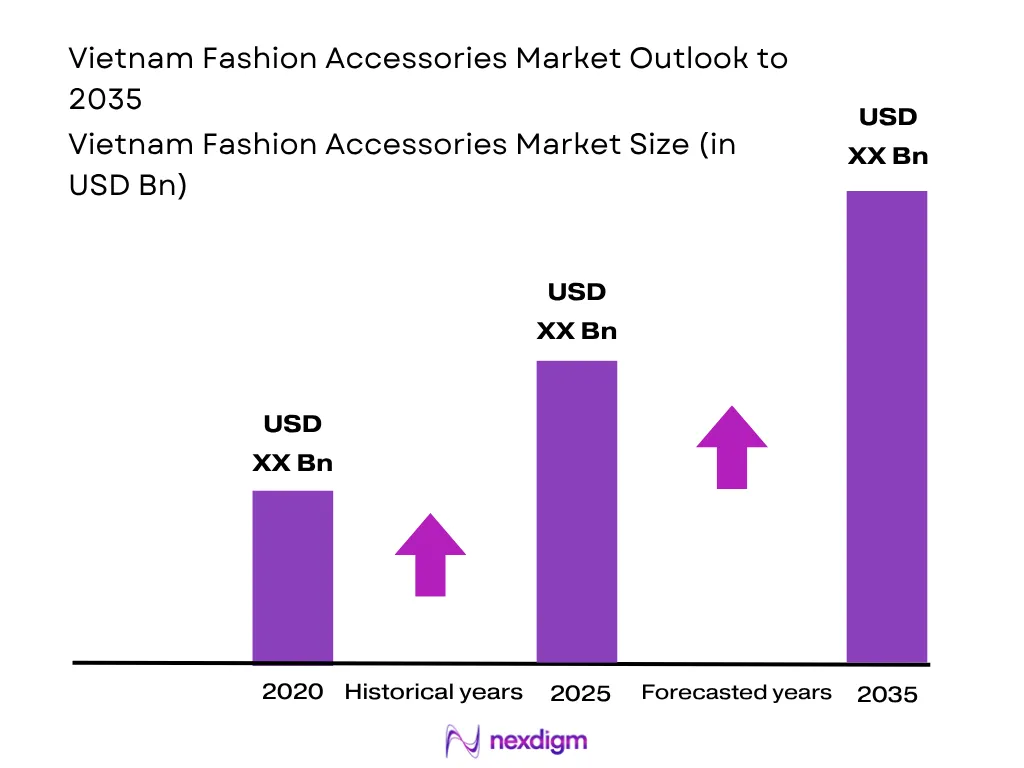
The Vietnam Fashion Accessories Market is valued at USD ~ billion, based on Nexdigm’s five-year historical analysis, and is driven by higher spending on jewelry, handbags, watches, eyewear, hats, scarves, belts and lifestyle accessories. The broader e-commerce market reached USD ~ billion in transaction value across Shopee, TikTok Shop, Lazada and Tiki, while Vietnam’s total e-commerce market reached USD ~ billion, strengthening online accessory discovery, livestream conversion and marketplace-led price comparison.
Ho Chi Minh City and Hanoi dominate the Vietnam Fashion Accessories Market because they concentrate premium malls, luxury storefronts, international brands, jewelry chains, tourist footfall and high-income office consumers. Vietnam had 201 shopping malls nationwide, with Ho Chi Minh City having 54 malls and Hanoi having 37 malls. Ho Chi Minh City also had around 1.49 million sqm of retail space for lease and 92% occupancy, supporting premium accessory retail demand.
Market Segmentation
By Product Category
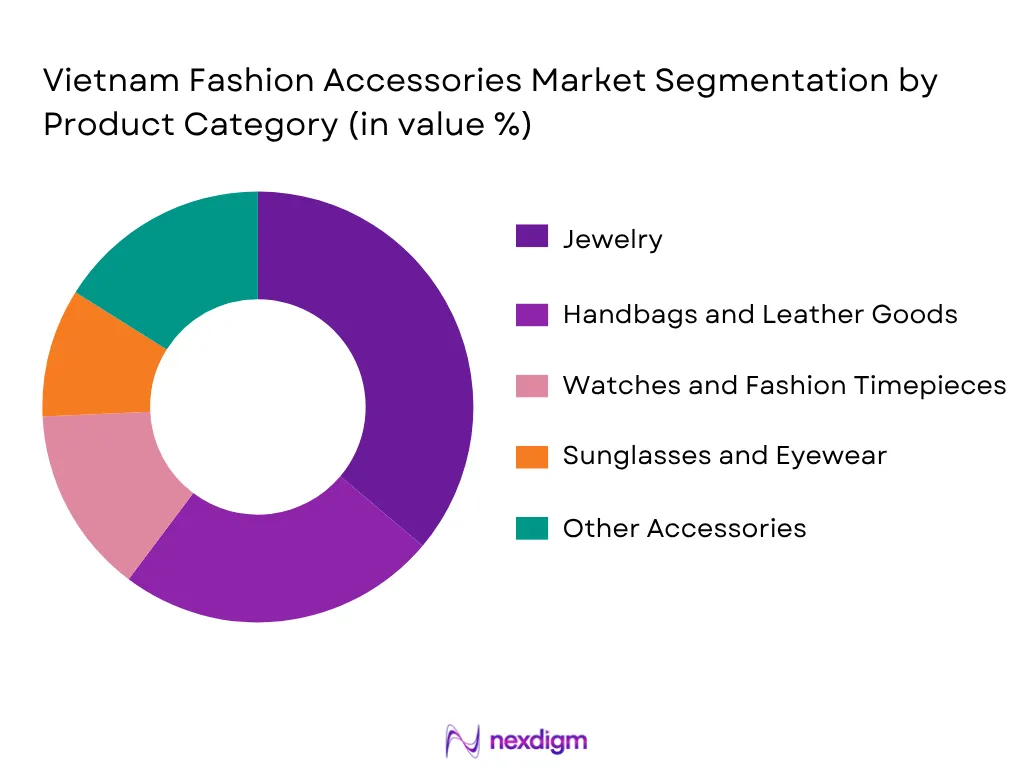
The Vietnam Fashion Accessories Market is segmented by product category into jewelry and costume jewelry, handbags and small leather goods, watches and fashion timepieces, eyewear and sunglasses, belts, scarves, hats, hair accessories, tech-fashion accessories and other lifestyle accessories. Jewelry and costume jewelry dominate the product-category segmentation due to Vietnam’s cultural association of gold and jewelry with gifting, weddings, savings, family ceremonies and personal adornment. The segment benefits from strong local chains such as PNJ, DOJI and SJC, which offer trust, store visibility, warranty, authenticity assurance and wide city coverage. Fashion jewelry is also gaining traction among younger consumers through lower-ticket earrings, rings, bracelets and charm-led collections. This makes jewelry both a traditional investment-linked purchase and a modern fashion-led category, creating stronger revenue density than handbags, watches and headwear.
By Distribution Channel
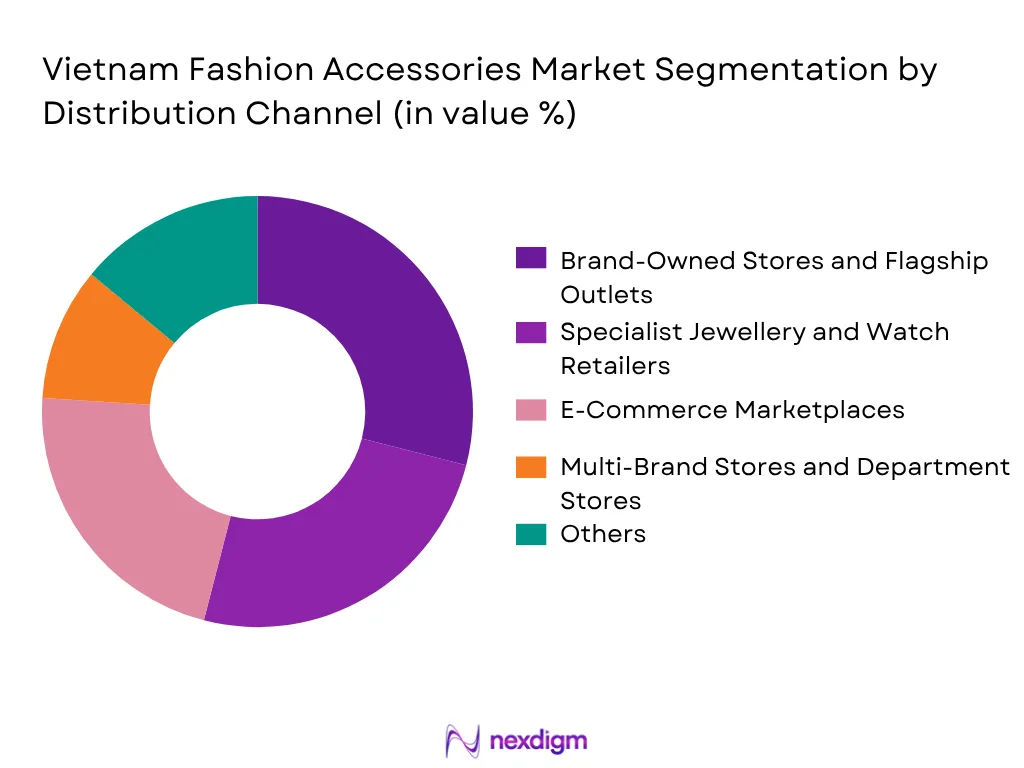
The Vietnam Fashion Accessories Market is segmented by distribution channel into brand-owned stores, flagship outlets, jewelry and watch specialist retailers, e-commerce marketplaces, multi-brand stores, department stores, social commerce, livestream commerce, independent boutiques and informal retail. Brand-owned stores and flagship outlets dominate the channel segmentation because fashion accessories are highly dependent on trust, trial, warranty, authenticity and tactile product inspection. Jewelry, watches, handbags and eyewear require confidence in material quality, fit, after-sales service and brand legitimacy. Ho Chi Minh City and Hanoi malls further strengthen formal retail because premium consumers prefer verified products in curated retail environments. However, e-commerce marketplaces and livestream commerce are rapidly increasing influence, particularly for lower-ticket fashion jewelry, hair accessories, bags, sunglasses and impulse accessories purchased through Shopee, TikTok Shop, Lazada and brand official stores.
Competitive Landscape
The Vietnam Fashion Accessories Market is competitive, with strong participation from local jewelry leaders, regional fashion-accessory chains, international accessible-premium brands and marketplace-led sellers. PNJ, DOJI and SJC remain influential in jewelry due to trust, retail networks and category specialization, while brands such as Charles & Keith and Vascara compete strongly in handbags, footwear-adjacent accessories and women’s lifestyle products. Ken Research identifies PNJ, Charles & Keith, Biti’s, CANIFA and Pedro Vietnam as key players in the Vietnam Accessories Market.
| Company | Establishment Year | Headquarters | Core Category | Vietnam Positioning | Channel Model | Product Tier | Market Strength | Accessory-Specific Focus |
| PNJ | 1988 | Ho Chi Minh City, Vietnam | ~ | ~ | ~ | ~ | ~ | ~ |
| DOJI Gold & Gems Group | 1994 | Hanoi, Vietnam | ~ | ~ | ~ | ~ | ~ | ~ |
| SJC | 1988 | Ho Chi Minh City, Vietnam | ~ | ~ | ~ | ~ | ~ | ~ |
| Charles & Keith | 1996 | Singapore | ~ | ~ | ~ | ~ | ~ | ~ |
| Vascara | 2007 | Ho Chi Minh City, Vietnam | ~ | ~ | ~ | ~ | ~ | ~ |
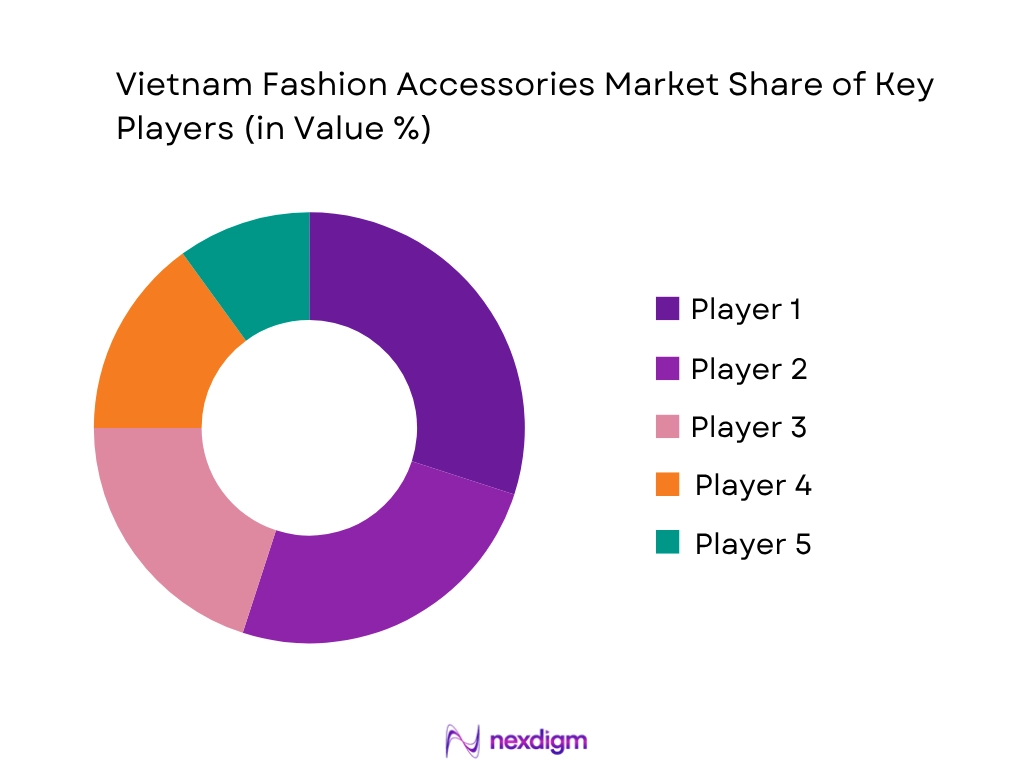
Vietnam Fashion Accessories Market Analysis
Growth Drivers
Urbanization
Urbanization is strengthening the Vietnam Fashion Accessories Market because accessories retail is concentrated around mall corridors, modern high streets, office districts and digitally active urban consumers. Vietnam’s population reached 100,987,686 people in 2024, while the country’s urban population ratio reached 40.2 in 2024, creating a large city-based consumer base for jewelry, handbags, sunglasses, watches, belts and small leather goods. The World Bank also recorded Vietnam’s GDP at USD 476.39 billion and GDP per capita at USD 4,717.3 in 2024, indicating deeper urban spending capacity for discretionary lifestyle categories. This benefits accessory retailers because Ho Chi Minh City, Hanoi and Da Nang combine formal retail, working professionals, youth fashion adoption and tourist-oriented retail outlets. Vietnam’s retail infrastructure also supports this pattern, with 201 shopping malls nationwide, including 54 malls in Ho Chi Minh City and 37 malls in Hanoi, making these cities key physical-distribution anchors for branded accessories. For fashion accessories, urban density directly improves trial-based buying, store visibility, quick delivery, social shopping and brand recall. Accessories such as handbags, jewelry and eyewear also perform better where consumers commute daily, work in service-led industries, visit malls and engage with office, occasion and gifting fashion. Urbanization therefore creates a stronger addressable base for organized accessory retail than rural channels, especially for products where authenticity, material quality, fit, warranty and brand experience matter.
Rising Disposable Income
Rising disposable income is supporting the Vietnam Fashion Accessories Market by increasing consumer ability to spend beyond essential apparel into jewelry, handbags, wallets, sunglasses, watches, fashion jewelry and styling products. The General Statistics Office reported that the average income of employees reached VND 7.7 million per month in 2024, increasing by VND 610,000 from the previous year. Urban workers had stronger income capacity, with average monthly income of VND 9.3 million, compared with VND 6.7 million for rural workers, which explains why premium malls and branded accessory stores are concentrated in urban locations. The World Bank recorded Vietnam’s GDP per capita at USD 4,717.3 in 2024, compared with the lower-middle-income group level of USD 2,544.5, confirming Vietnam’s stronger income position within its income peer group. Inflation remained manageable for discretionary retail planning, with the World Bank reporting consumer-price inflation of 3.62109 in 2024. For fashion accessories, this income expansion is important because consumers usually upgrade first in visible, lower-ticket lifestyle categories before moving to higher-value fashion items. Jewelry gifting, women’s handbags, branded wallets, sunglasses and fashion watches benefit from this progression because they are used for office wear, weddings, festivals, birthdays and self-reward purchases. Rising income also enables consumers to shift from unbranded or informal-market accessories toward brands offering warranties, official invoices, repair services and authenticity assurance.
Market Challenges
Counterfeits
Counterfeits remain a serious challenge for the Vietnam Fashion Accessories Market because handbags, watches, sunglasses, belts, jewelry and logo-led fashion products are among the easiest categories to imitate and distribute through informal stores, tourist markets, social platforms and cross-border e-commerce. Vietnam’s Ministry of Industry and Trade identified counterfeit and fake goods in e-commerce as a policy focus during the National Assembly Standing Committee session in August 2024, specifically emphasizing online marketplaces. In 2024, Vietnam also required cross-border online retailers such as Temu and Shein to register with authorities, with the Ministry of Industry and Trade warning of domain and app blocking for non-compliance; the concern included aggressive discounting and potential counterfeit-product circulation. This directly affects accessories because replica handbags, branded eyewear, watches and fashion items are highly visible in both offline and online channels. The issue continued into 2026, when National Steering Committee 389 reported nearly 44,000 cases related to smuggling, trade fraud and counterfeit goods during January-April, along with 1,464 criminal cases involving 2,277 suspects. For branded accessory companies, this weakens trust, compresses margins, confuses consumers and forces greater investment in official stores, serialized products, warranty cards, marketplace brand protection and consumer education. Counterfeits also reduce the effectiveness of premium positioning because consumers encounter lookalike products at informal locations before reaching authorized retailers. Sources: Ministry of Industry and Trade, National Steering Committee 389 and Reuters.
Price-Sensitive Consumers
Price-sensitive consumers challenge the Vietnam Fashion Accessories Market because accessories are discretionary purchases and many shoppers compare official-store products with marketplace sellers, informal boutiques and imported low-ticket alternatives. Vietnam’s average employee income reached VND 7.7 million per month in 2024, but the urban-rural income gap remained wide, with urban workers earning VND 9.3 million monthly and rural workers earning VND 6.7 million monthly. This gap matters for accessories because branded handbags, jewelry, watches and eyewear have stronger traction in high-income city clusters, while lower-income consumers often prefer unbranded, discounted or fast-replacement products. The World Bank reported consumer-price inflation of 3.62109 in 2024, while Vietnam’s GDP per capita stood at USD 4,717.3 in 2024, showing improved spending capacity but still a measured income base for premium discretionary categories. The IMF’s Vietnam profile shows GDP per capita at USD 5.12 thousand in 2026, indicating upward income movement, but fashion-accessory brands still need accessible price ladders because consumers often purchase multiple accessories across occasions rather than one high-value item. This creates pressure on brands to manage entry SKUs, bundle offers, seasonal promotions, marketplace discounts and installment options without damaging perceived quality. Price sensitivity also increases exposure to counterfeits and grey-market goods, especially in logo-led handbags, watches and sunglasses.
Opportunities
Social Commerce Scale
Social commerce scale creates a strong future growth opportunity for the Vietnam Fashion Accessories Market because accessories are visual, impulse-led, easy to demonstrate and highly compatible with short-video and livestream selling. Vietnam had 78.44 million internet users in January 2024 and 72.70 million social media users, giving accessory sellers a large discovery base for handbags, fashion jewelry, hair accessories, sunglasses, caps, wallets and styling products. Digital infrastructure has also deepened: Vietnam had 110.5 million mobile broadband internet subscriptions in 2026, and 91.3 out of every 100 of those subscriptions used smartphones, according to the Ministry of Science and Technology. That level of mobile connectivity is critical for social commerce because consumers can discover accessories through creator videos, join livestream sessions, compare reviews, save products, message sellers and complete orders without visiting a store. Vietnam’s e-commerce market reached USD 25 billion in 2024 according to the Government Portal, confirming that online buying behavior is no longer limited to electronics or essentials. For accessories, social commerce is especially relevant because products are compact, lightweight, trend-driven and suited to flash sales, outfit styling, influencer curation and limited drops. Small brands can use livestream commerce to test designs quickly, while established accessory brands can use official accounts to strengthen authenticity and reduce counterfeit confusion.
Branded Affordable Accessories
Branded affordable accessories represent a strong opportunity in the Vietnam Fashion Accessories Market because consumers are gaining income but still require accessible products that offer design, durability, authenticity and after-sales support. Vietnam’s GDP per capita reached USD 4,717.3 in 2024, while the lower-middle-income group benchmark stood at USD 2,544.5, showing Vietnam’s stronger consumer-spending position versus comparable income markets. Employee income also improved, with the General Statistics Office reporting average monthly employee income of VND 7.7 million in 2024 and urban employee income of VND 9.3 million. These figures support demand for branded but attainable handbags, silver jewelry, plated accessories, wallets, belts, watches, sunglasses and office-use accessories. The opportunity is not purely premium; it lies in converting informal accessory buyers into official-brand customers through transparent product materials, warranty terms, repair support, exchange policies and marketplace official stores. Vietnam’s consumer-price inflation of 3.62109 in 2024 also means brands must remain careful with value communication, because consumers are still selective about non-essential purchases. Affordable branded accessories can bridge this gap by offering aspirational design without luxury-ticket commitment. The segment is especially relevant for working women, Gen Z consumers, young office professionals and gifting buyers in Ho Chi Minh City, Hanoi and tier-2 cities.
Future Outlook
The Vietnam Fashion Accessories Market is expected to grow steadily through 2035, supported by rising middle-class consumption, organized retail expansion, social commerce adoption and increased consumer preference for branded accessories. Growth will be strongest in jewelry, handbags, fashion eyewear, watches and lifestyle accessories that combine affordability, design freshness and authenticity. Ho Chi Minh City and Hanoi will remain premium-accessory hubs, while tier-2 cities will support volume growth through malls, marketplaces and regional store expansion. The market’s future will be shaped by five forces: first, e-commerce and livestream commerce will reduce discovery barriers for small brands; second, gold and jewelry will retain cultural strength; third, mall retail will remain relevant for premium categories; fourth, counterfeit-control and platform registration rules will influence foreign sellers; and fifth, consumers will increasingly seek durable, personalized and sustainable accessory designs. Vietnam’s tighter scrutiny of foreign e-commerce platforms such as Shein and Temu indicates that regulatory control, tax compliance and counterfeit prevention will become more important for accessory sellers.
Major Players
- PNJ
- DOJI Gold & Gems Group
- SJC
- Vascara
- Juno
- Charles & Keith Vietnam
- Pedro Vietnam
- LYN Vietnam
- CANIFA
- Biti’s
- Nón Sơn
- Pandora Vietnam
- Cartier Vietnam
- Bvlgari Vietnam
- Coach Vietnam
Key Target Audience
- Fashion accessories manufacturers and brand owners
- Jewelry, watch and eyewear retailers
- Handbag, leather goods and lifestyle-accessory companies
- E-commerce marketplaces and social commerce platforms
- Shopping mall developers and retail real estate investors
- Investments and venture capitalist firms
- Government and regulatory bodies (Ministry of Industry and Trade, General Department of Vietnam Customs, National Competition Commission, Directorate for Standards, Metrology and Quality)
- Luxury fashion groups and international accessory brands planning Vietnam expansion
Research Methodology
Step 1: Identification of Key Variables
The initial phase involves constructing an ecosystem map for the Vietnam Fashion Accessories Market, covering jewelry brands, handbag retailers, watch sellers, eyewear chains, e-commerce platforms, mall operators, importers, distributors and informal sellers. Key variables include category revenue, ASP, purchase frequency, city concentration, retail footprint, online GMV, authenticity controls and consumer cohort behavior.
Step 2: Market Analysis and Construction
Historical market performance is compiled using published market reports, e-commerce GMV indicators, retail real estate data, company-level benchmarking and category-level SKU scans. The market is constructed through both top-down and bottom-up approaches, including accessory-category revenue pools, brand store mapping, marketplace presence, channel participation and city-wise retail intensity.
Step 3: Hypothesis Validation and Expert Consultation
Market hypotheses are validated through interviews with fashion accessory retailers, jewelry chain executives, marketplace sellers, mall leasing specialists, importers, distributors and category managers. These consultations help verify category dominance, channel share, price-tier movement, demand seasonality, counterfeit risks, product margins and consumer purchase triggers across online and offline channels.
Step 4: Research Synthesis and Final Output
The final phase synthesizes secondary research, primary interviews, public data, proprietary assumptions and competitive benchmarking into an integrated market model. Data points are cross-checked across market size, channel behavior, city dominance, category split and company positioning to produce a validated, decision-ready view of the Vietnam Fashion Accessories Market.

- Executive Summary
- Research Methodology (Market definitions and assumptions, product inclusion and exclusion criteria, fashion accessories taxonomy, top-down market sizing approach, bottom-up brand/channel build-up, SKU benchmarking, store-count mapping, marketplace GMV triangulation, import-export validation, mall-retail audit, social commerce tracking, expert interviews, consumer cohort survey, limitations and future conclusions)

- Definition and Scope
- Overview Genesis
- Evolution of Vietnam Fashion Accessories Consumption
- Timeline of Major Local, Regional and Global Players
- Business Cycle
- Supply Chain and Value Chain Analysis
- Category Flow from Design, Sourcing, Import, Merchandising, Retailing and After-Sales
- Role of Ho Chi Minh City, Hanoi, Da Nang and Tier-2 Urban Retail Clusters

- Growth Drivers (Urbanization, rising disposable income, Gen Z fashion adoption, jewelry-led gifting, marketplace penetration, tourism recovery)
- Market Challenges (Counterfeits, grey imports, price-sensitive consumers, low brand loyalty, platform fee pressure, fast-fashion inventory risk)
- Opportunities (Social commerce scale, branded affordable accessories, men’s accessories, sustainable materials, travel retail, omnichannel loyalty)
- Trends (TikTok-led discovery, Korean and minimalist styling, micro-bags, charm jewelry, smart accessories, local designer brands)
- Regulatory and Compliance Landscape (E-commerce registration, VAT on foreign platforms, IP enforcement, hallmarking, labeling, product safety)
- E-Commerce Platform Compliance (Foreign platform registration, seller verification, tax compliance)
- SWOT Analysis (Brand equity, omnichannel reach, counterfeit risk, marketplace acceleration)
- Stakeholder Ecosystem (Designers, importers, manufacturers, wholesalers, marketplace sellers, mall operators, influencers, logistics providers, payment providers)
- Porter’s Five Forces (Supplier power, buyer power, threat of substitutes, threat of new entrants, competitive rivalry)
- PESTLE Analysis (Consumer spending, foreign retail policy, digital payments, cultural gifting, sustainability pressure, IP enforcement)
- Unit Economics and Margin Stack (Gross margin, marketplace commission, return loss, inventory carrying cost, discount depth, last-mile delivery cost)
- Pricing and SKU Architecture (Entry SKU, core SKU, premium SKU, bundle pricing, limited-edition pricing, gold-linked price volatility)
- Distribution and Channel Economics (Store productivity, GMV per seller, conversion rate, average basket size, livestream order velocity)
- Import, Local Sourcing and Manufacturing Dynamics (China sourcing, ASEAN sourcing, domestic leather goods, jewelry manufacturing clusters)
- Counterfeit and Grey-Market Risk Mapping (Replica hubs, marketplace seller risk, luxury watch and handbag exposure)
- Technology Adoption in Fashion Accessories Retail (AR try-on, CRM, loyalty apps, marketplace analytics, social listening, SKU demand forecasting)

- By Value (2020-2025)
- By Volume (2020-2025)
- By Average Selling Price (2020-2025)
- By Gross Merchandise Value Across Online Fashion Accessories (2020-2025)
- By Offline Retail Sales Through Malls, Flagship Stores and Multi-Brand Stores (2020-2025)
- By Imported Versus Locally Branded Accessories Sales (2020-2025)

- By Product Category (In Value%)
Jewelry and Costume Jewelry
Handbags and Small Leather Goods
Watches and Fashion Timepieces
Eyewear and Sunglasses
Hair, Headwear and Styling Accessories - By Price Positioning (In Value%)
Mass and Value Accessories
Bridge-to-Premium Accessories
Accessible Luxury Accessories
Luxury Accessories - By Distribution Channel (In Value%)
Brand-Owned Stores
Multi-Brand Fashion and Lifestyle Stores
E-Commerce Marketplaces
Social Commerce and Livestream Commerce
Jewelry and Watch Specialist Retailers - By Consumer Cohort (In Value%)
Gen Z Trend-Led Shoppers
Millennial Working Professionals
Women’s Occasion and Gifting Buyers
Male Accessories Buyers
High-Income and Luxury Buyers - By Gender and Usage Orientation (In Value%)
Women’s Fashion Accessories
Men’s Fashion Accessories
Unisex Accessories
Kids and Teen Accessories - By Region and City Cluster (In Value%)
Ho Chi Minh City
Hanoi
Da Nang and Central Vietnam
Southern Tier-2 Cities
Northern Tier-2 Cities - By Material and Product Build (In Value%)
Precious Metal Accessories
Leather and PU Accessories
Metal, Alloy and Plated Accessories
Fabric, Textile and Woven Accessories
Sustainable and Recycled Materials - By Purchase Occasion (In Value%)
Daily Fashion Use
and Business Use
Wedding and Ceremonial Use
Travel and Tourism Use
Luxury Self-Purchase and Gifting

- Market Share of Major Players (Value share, volume share, GMV share, store-network share, online visibility share, Product Category, Channel, Price Tier)
- Cross Comparison Parameters (Product category coverage, price architecture and ASP bands, store footprint by city, marketplace official-store presence, livestream commerce capability, counterfeit and authenticity controls, warranty and after-sales service, influencer and KOL collaboration strength)
- SWOT Analysis of Major Players (Brand strength, category specialization, retail reach, online execution, product innovation, pricing risk)
- Pricing Analysis Basis SKUs for Major Players (Handbag SKUs, jewelry SKUs, watch SKUs, eyewear SKUs, wallet SKUs, belt SKUs, hair accessory SKUs)
- Channel Benchmarking of Major Players (Store count, mall presence, Shopee Mall presence, TikTok Shop presence, website commerce, social commerce, franchise model)
- Product Portfolio Benchmarking (Core collections, seasonal drops, capsule collections, premium collections, gifting collections)
- Marketing and Brand Positioning Benchmarking (KOL usage, livestream frequency, TikTok content strategy, festival campaigns, loyalty programs)
- Detailed Profiles of Major Companies
PNJ
DOJI Gold & Gems Group
SJC
Vascara
Juno
Charles & Keith Vietnam
Pedro Vietnam
LYN Vietnam
CANIFA
Biti’s
Nón Sơn
Pandora Vietnam
Cartier Vietnam
Bvlgari Vietnam
Coach Vietnam

- Demand and Usage Analysis (Daily wear, workplace use, occasion wear, travel use, gifting use)
- Purchasing Power and Budget Allocation (ASP tolerance, basket value, installment use, discount sensitivity)
- Needs, Desires and Pain Point Analysis (Design freshness, durability, authenticity, warranty, size-fit comfort, return convenience)
- Decision-Making Process (Influencer discovery, marketplace reviews, brand trust, peer validation, store trial)
- Customer Journey Mapping (Awareness, consideration, try-on, purchase, delivery, after-sales, repeat purchase)
- Brand Loyalty and Switching Behavior (Price promotion, new collections, celebrity collaboration, marketplace ranking)
- Online Buyer Persona Analysis (TikTok-first shopper, Shopee value buyer, luxury browser, wedding jewelry buyer)
- Offline Buyer Persona Analysis (Mall shopper, jewelry-store family buyer, premium boutique consumer, tourist buyer)

- By Value (2026-2035)
- By Volume (2026-2035)
- By Average Selling Price (2026-2035)
- By Online GMV (2026-2035)
- By Offline Retail Sales (2026-2035)
- By Branded Accessories Penetration (2026-2035)


 Request a Sample
 Ask for Customization
 Get a Quote
 Enquire Now