

 Download PDF
Market Overview
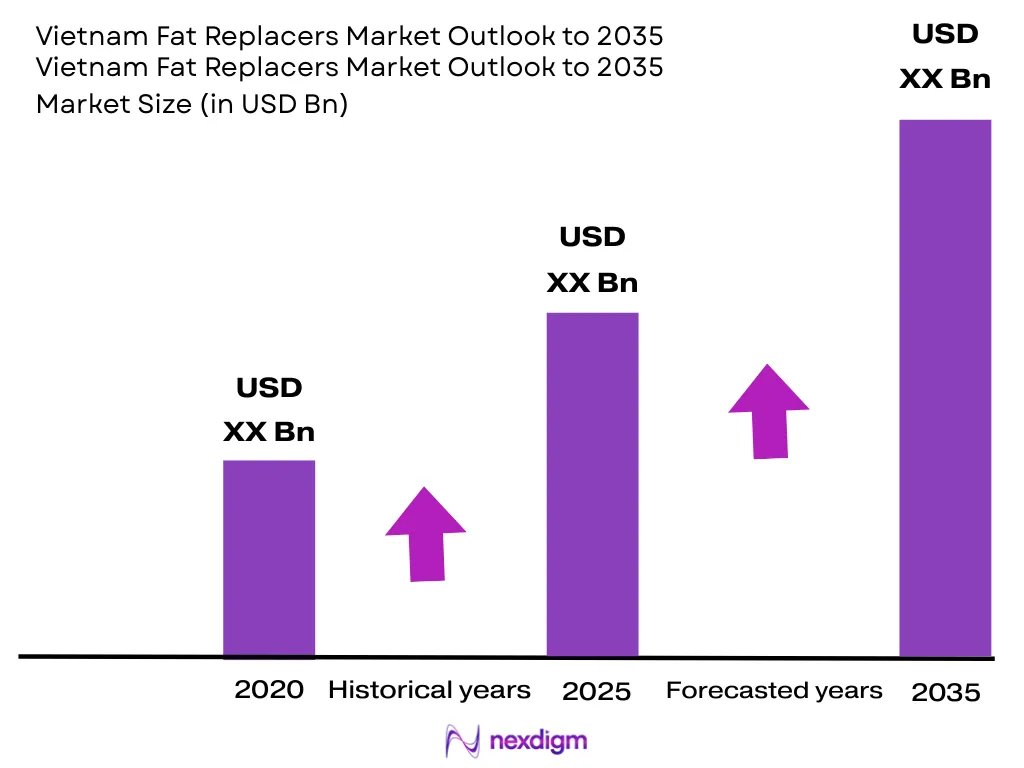
The Vietnam fat replacers market was valued at USD ~ million in 2024 and is projected to expand at a CAGR of ~% during the 2026–2035 forecast period. According to data published by the Ministry of Industry and Trade and the Vietnam Food Association, Vietnam’s food and beverage processing sector is among the fastest growing in Southeast Asia, with total industry output consistently expanding at rates above GDP growth as domestic consumption upgrades, export markets deepen, and modern food manufacturing capacity continues to expand across the country’s industrial provinces. Fat replacers, encompassing carbohydrate-based, protein-based, and lipid-based functional ingredients that replicate the textural, mouthfeel, and functional properties of fat at lower caloric density, are gaining adoption across Vietnam’s dairy, bakery, processed meat, seafood, sauce, and snack food manufacturing segments. Demand is driven by a combination of rising health consciousness among urban Vietnamese consumers, expansion of reduced-fat and low-calorie product lines by domestic and multinational food manufacturers, tightening export market quality and clean label requirements from major destination markets including Japan, South Korea, and the European Union, and government nutritional policy frameworks targeting reductions in non-communicable disease rates linked to excessive fat and calorie consumption across Vietnam’s rapidly urbanising population.
Market Segmentation
By Source
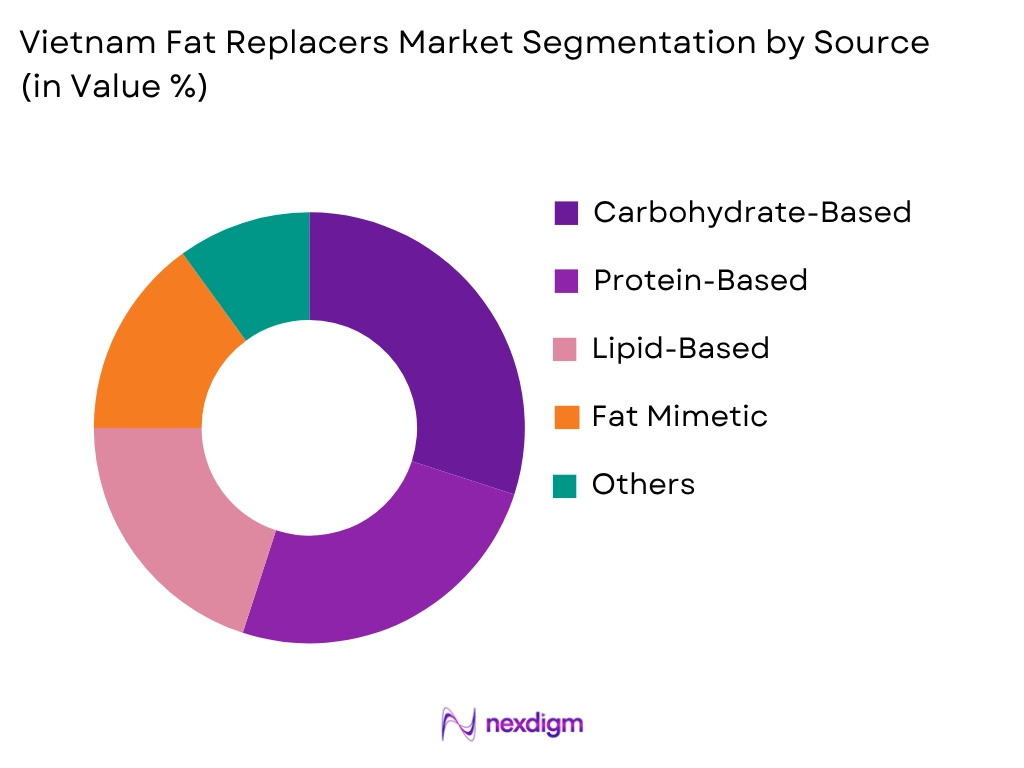
Carbohydrate-based fat replacers dominate the Vietnam fat replacers market by volume and value, reflecting the widespread availability and cost competitiveness of starch and fibre-based ingredients that can be derived from Vietnam’s abundant domestic agricultural raw material base including cassava, rice, and corn. Modified starches produced from cassava, which Vietnam cultivates as one of the world’s leading producers with annual output exceeding 10 million tonnes of fresh roots, represent the most widely adopted fat replacer ingredient category among Vietnamese food manufacturers, offering effective water-binding, gel-forming, and fat-mimicking properties at a price point accessible to both large industrial producers and smaller regional food processing companies. Maltodextrins, pectin, inulin, beta-glucan, and soluble dietary fibres constitute the higher-functionality sub-segments within the carbohydrate-based category, commanding premium pricing relative to commodity starches but offering superior fat-mimetic performance, clean label positioning, and additional nutritional benefits including prebiotic fibre content that resonates with health-conscious Vietnamese consumers and export market buyers. Protein-based fat replacers, including whey protein concentrates, soy protein isolates, and microparticulated egg white proteins, represent the fastest-growing fat replacer category by value, driven by the dual functionality of simultaneously increasing protein content while reducing fat, a positioning that aligns strongly with Vietnam’s expanding sports nutrition, functional food, and dietary supplement manufacturing segments. Lipid-based fat replacers, including structured lipids and reduced-calorie fat systems, remain a smaller and more specialised category, primarily adopted by larger multinational food manufacturers with the technical formulation capability to integrate complex lipid modification systems into their product lines.
By Application
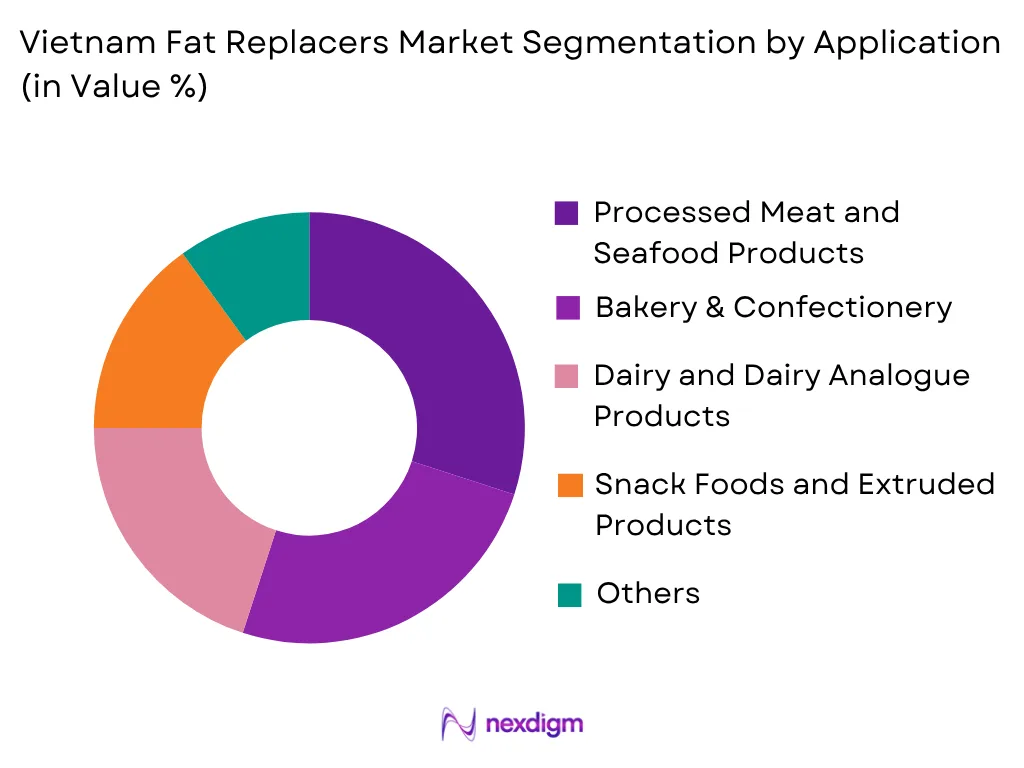
Processed meat and seafood products represent the largest application segment for fat replacers in Vietnam by volume consumed, reflecting the country’s enormous and rapidly expanding seafood processing industry which serves both domestic consumption and major export markets including the United States, Japan, the European Union, South Korea, and China. Vietnam is among the world’s leading seafood exporters, with annual seafood export revenues consistently exceeding USD 8 billion, and surimi-based products including fish balls, crab sticks, and seafood paste represent a significant and fat replacer-intensive sub-category within this broader export industry. Surimi manufacturers routinely incorporate starch-based fat replacers and texture modifiers to achieve the characteristic springy, cohesive mouthfeel expected by consumers while managing fat content and production cost within tight export price parameters. The dairy and dairy analogue segment is the fastest-growing application category by value, driven by the rapid expansion of Vietnam’s domestic dairy consumption, dominated by Vinamilk, TH True Milk, and an expanding range of imported and local plant-based dairy alternatives, where fat replacers enable the production of reduced-fat yoghurts, low-fat flavoured milk drinks, and lower-calorie ice cream variants at competitive prices. Bakery and confectionery, sauces and dressings, and snack food applications collectively represent significant additional demand segments, with the Tet festive season and Mid-Autumn Festival mooncake production period creating notable seasonal demand peaks for bakery-grade fat replacers.
Competitive Landscape
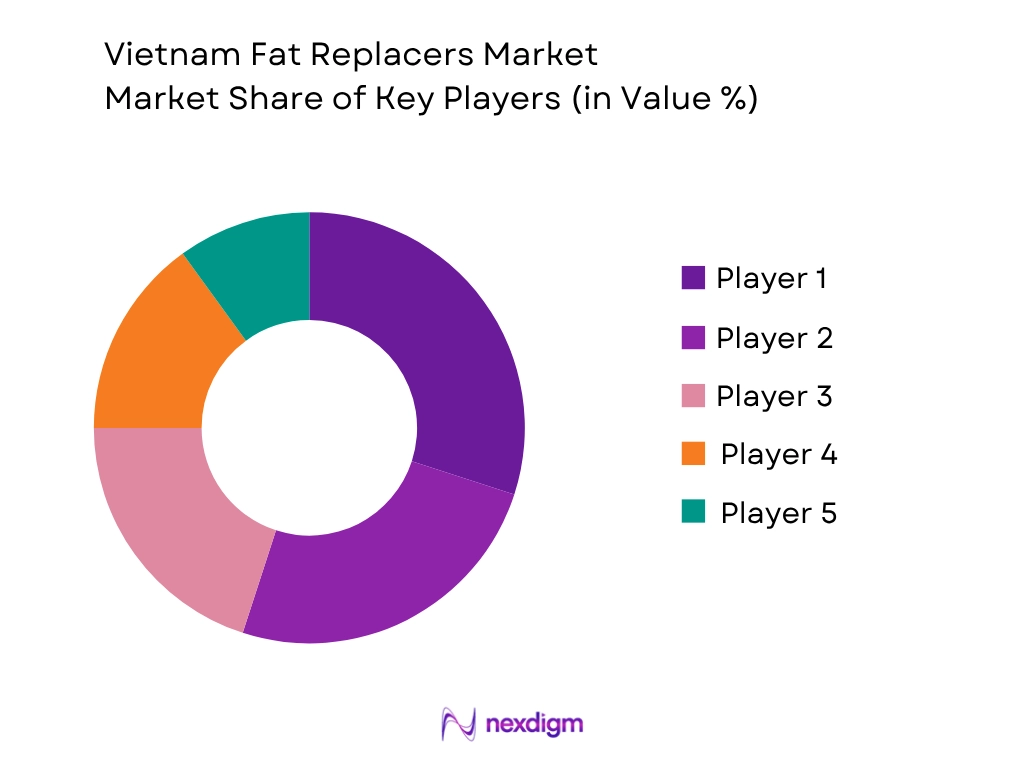
The Vietnam fat replacers market is moderately fragmented, with a combination of global ingredient multinationals, regional Asian ingredient suppliers, and domestic Vietnamese trading and distribution companies competing across different product categories and customer segments. Global ingredient companies including Ingredion, Cargill, Kerry, Tate and Lyle, and Roquette operate through local representative offices, established distributor networks, and direct sales teams serving large food manufacturers across Ho Chi Minh City, Hanoi, and Vietnam’s major food processing industrial zones. Regional Asian suppliers from China and Thailand offer competitive pricing on commodity starch derivatives and modified starches, while domestic Vietnamese companies including Vedan Vietnam and specialised ingredient trading houses serve price-sensitive smaller food manufacturers with locally sourced and imported ingredients. Continuous investments in application technical support, clean label ingredient portfolios, regulatory compliance documentation, and local formulation development services represent key competitive differentiators for premium ingredient suppliers seeking to retain large manufacturing customers.
| Company | Establishment Year | Headquarters | Primary Fat Replacer Portfolio | Key Application Industries
|
Manufacturing Presence | R&D Capability | Distribution Network | Clean Label Solutions |
| Ingredion Vietnam | 2012 | ~ | ~ | ~ | ~ | ~ | ~ | ~ |
| Cargill Vietnam | 1995 | ~ | ~ | ~ | ~ | ~ | ~ | ~ |
| Tate & Lyle | 2008 | ~ | ~ | ~ | ~ | ~ | ~ | ~ |
| Roquette Vietnam | 2015 | ~ | ~ | ~ | ~ | ~ | ~ | ~ |
| Kerry Vietnam | 2010 | ~ | ~ | ~ | ~ | ~ | ~ | ~ |
Vietnam Confectionary Market Analysis
Growth Drivers
Rising Health and Wellness Awareness and Urbanisation-Driven Dietary Change
Vietnam’s rapid urbanisation and expanding middle-income consumer class are driving a significant structural shift in dietary habits and nutritional awareness that is creating sustained demand for reduced-fat and lower-calorie food products, and consequently for the fat replacer ingredients used to formulate them. The World Bank estimates Vietnam’s urban population share at approximately 38 percent and rising at one of the fastest rates in Southeast Asia, with the United Nations projecting that more than half of Vietnamese will reside in urban areas before 2035. Urban Vietnamese consumers, particularly those aged 25 to 45 with rising disposable incomes and greater exposure to nutrition information through social media, digital health platforms, and modern retail labelling, are demonstrating increasing preference for food products positioned as low-fat, reduced-calorie, light, or better-for-you, a preference shift that is gradually but meaningfully influencing food manufacturer product development priorities. The International Monetary Fund estimates Vietnam’s nominal GDP at more than USD 430 billion and projects sustained annual growth rates above 6 percent over the forecast period, supporting continued household income growth that enables consumers to make purchase decisions based on perceived health benefits rather than price alone. The Ministry of Health’s National Nutrition Strategy 2021-2030 explicitly targets reductions in the prevalence of overweight and obesity among Vietnamese adults and children, setting measurable outcome targets and encouraging food industry participation in reformulation initiatives that align with public health goals. Non-communicable disease rates linked to dietary excess including cardiovascular disease, type 2 diabetes, and hypertension are rising across Vietnam’s urban population, as documented by the National Institute of Nutrition, increasing consumer motivation to reduce fat and calorie intake through product choices. These converging trends are encouraging domestic and multinational food manufacturers operating in Vietnam to expand their reduced-fat product portfolios and invest in fat replacer formulation capabilities, creating a progressively growing demand base for functional fat replacer ingredients across multiple food categories.
Expanding Processed Food Manufacturing and Export-Oriented Production
Vietnam’s rapidly expanding food and beverage processing sector, driven by both domestic consumption growth and increasing integration into global food export supply chains, is creating a broadening industrial customer base for fat replacer ingredients across multiple food manufacturing segments. The Vietnam Food Association reports that the country’s food processing industry has grown at consistently high rates over the past decade, with total output value and export revenues expanding as both domestic and foreign-invested food manufacturers increase production capacity across industrial zones in Binh Duong, Dong Nai, Long An, and Bac Ninh. Vietnam is among the world’s largest seafood exporters, with the Vietnam Association of Seafood Exporters and Producers reporting annual export revenues exceeding USD 8 billion, and the seafood processing industry’s reliance on fat replacers and texture modifiers in surimi, fish ball, crab stick, and seafood paste production represents one of the largest and most consistent industrial demand segments in the Vietnam fat replacers market. The dairy industry, led by Vinamilk, TH True Milk, and an expanding base of both domestic and foreign-invested dairy processors, is growing rapidly as Vietnam’s per capita dairy consumption rises toward regional averages, creating increasing demand for reduced-fat dairy product lines where fat replacers play a critical role in maintaining acceptable texture, mouthfeel, and sensory properties in the absence of full fat content. Export-oriented food manufacturers supplying supermarket private label, foodservice, and food ingredient customers in Japan, South Korea, the European Union, and the United States face increasingly stringent quality, clean label, and nutritional specification requirements from their buyers, encouraging the adoption of higher-performance imported fat replacer ingredients that meet international food additive standards and traceability requirements. The General Statistics Office of Vietnam reports continued strong inflows of foreign direct investment into the food and beverage processing sector, with multinational food companies establishing or expanding Vietnam production facilities to serve both domestic consumption and regional export markets, bringing with them global ingredient procurement standards that typically include established relationships with multinational fat replacer suppliers.
Market Challenges
High Import Dependency and Price Sensitivity of Domestic Food Manufacturers
The Vietnam fat replacers market faces a significant structural challenge arising from the country’s high dependency on imported specialised fat replacer ingredients combined with the pronounced price sensitivity of the majority of domestic food manufacturing customers, creating a persistent tension between the ingredient performance levels achievable at accessible price points and the formulation quality targets of manufacturers seeking to develop competitive reduced-fat products. While Vietnam produces substantial volumes of commodity starches and modified starches from its large cassava and rice agricultural base, the higher-performance fat replacer ingredients required for advanced dairy, bakery, and processed food applications including microparticulated whey protein, high-purity inulin and chicory fibre, pectin, and specialty modified starches with precise gelatinisation and viscosity profiles are predominantly imported from suppliers in Europe, the United States, China, and Thailand, with import costs including freight, customs duties, and distributor margins significantly increasing the landed cost of these ingredients relative to their price in major food manufacturing economies. The General Statistics Office of Vietnam estimates that a large proportion of the country’s food and beverage manufacturers are small and medium enterprises with annual revenues below USD 5 million, and these companies typically operate on tight formulation budgets that limit their ability to adopt premium imported fat replacer ingredients when locally available commodity alternatives or full-fat formulations remain cheaper on a cost-per-tonne basis. Price increases triggered by global ingredient supply disruptions, foreign exchange movements between the Vietnamese Dong and major trading currencies including the US Dollar and Euro, and shipping cost volatility can rapidly erode the commercial viability of fat replacer adoption for price-sensitive Vietnamese food manufacturers, leading to formulation substitution back toward conventional full-fat or standard starch-based approaches. This price sensitivity dynamic constrains market growth in the short to medium term and requires ingredient suppliers to develop compelling value propositions that justify premium pricing through demonstrated formulation performance, technical support, and quantifiable cost-efficiency benefits across the production process.
Evolving Regulatory Framework and Limited Domestic Formulation Expertise
The regulatory environment governing food additives, processing aids, and functional ingredients in Vietnam continues to evolve, creating compliance uncertainty for both ingredient suppliers and food manufacturers seeking to adopt newer fat replacer technologies and formulation approaches. The Ministry of Health’s food safety regulatory framework, including Decree 15/2018/ND-CP on food safety management and the associated national technical regulations for food additives, sets out permitted ingredient categories and maximum usage levels that do not always align with the more permissive additive frameworks of major export markets or the ASEAN harmonised food additive standards, creating situations where ingredients permitted and widely used in the European Union, Japan, or the United States face unclear or pending regulatory status in Vietnam. Novel functional ingredients including certain specialty fibres, microparticulated protein systems, and lipid-based fat mimetics may require product dossier registration with the Ministry of Health before commercial use, adding regulatory lead time and administrative cost to the adoption of advanced fat replacer technologies by Vietnamese food manufacturers. The domestic food science and formulation development ecosystem in Vietnam, while growing rapidly at major universities including the Hanoi University of Science and Technology and Ho Chi Minh City University of Technology, has not yet produced a large enough pool of food technologists with specialised expertise in fat replacer formulation across diverse food matrices to meet the growing technical support requirements of the food manufacturing sector. Many smaller Vietnamese food manufacturers lack in-house food scientists capable of independently evaluating fat replacer performance, designing optimised usage protocols, or troubleshooting formulation challenges arising from ingredient interactions, texture defects, or shelf-life performance shortfalls, creating dependency on ingredient supplier technical support services that can be difficult to scale cost-effectively across a large and geographically dispersed small manufacturer customer base.
Market Opportunities
Domestic Cassava and Rice-Derived Fat Replacer Ingredient Development
Vietnam’s position as one of the world’s leading producers of cassava and rice, combined with its rapidly expanding food ingredient processing sector, creates a significant and strategically important opportunity to develop domestically produced fat replacer ingredients derived from these abundant local agricultural raw materials, reducing import dependency and improving the price competitiveness of fat replacer adoption among Vietnamese food manufacturers. Vietnam’s cassava production, concentrated in the Central Highlands, the South East, and parts of the North East, generates substantial volumes of both native cassava starch and a growing range of modified starch derivatives including acetylated starch, hydroxypropylated starch, cross-linked starch, and starch phosphate monoesters, all of which can serve as effective fat mimetics and texture modifiers in low-fat food formulations across bakery, dairy, processed meat, and sauce applications. The Vietnam Cassava Association and the Ministry of Agriculture and Rural Development have identified value-added cassava starch processing as a national agricultural development priority, supporting investments in modern wet milling and starch modification facilities that can produce food-grade modified starch ingredients meeting the quality and consistency standards required by the food processing industry. Rice flour and rice starch, increasingly recognised globally as clean label, gluten-free, and naturally derived fat replacer ingredients, represent a further opportunity for domestic ingredient development leveraging Vietnam’s status as a major rice-producing and exporting nation, particularly given the growing demand for gluten-free and allergen-friendly fat replacer solutions from export market food manufacturers. Investment in domestic production of higher-value fat replacer ingredients including cassava-derived inulin analogues, modified starch-fibre composite systems, and rice bran-based lipid mimetics would enable Vietnamese ingredient producers to capture a larger share of the growing domestic fat replacer ingredient market while developing export-oriented ingredient businesses serving the broader ASEAN food manufacturing sector.
Low-Fat Dairy, Plant-Based and Functional Food Sector Expansion
The rapid expansion of Vietnam’s dairy industry, plant-based food sector, and functional and fortified food manufacturing segment creates a multi-directional growth opportunity for fat replacer ingredient suppliers across several simultaneously expanding application categories. Vietnam’s per capita dairy consumption has grown consistently over the past decade, supported by government nutrition programs encouraging dairy intake, rising household incomes, expanding modern retail dairy sections, and aggressive product innovation and marketing by leading domestic dairy producers including Vinamilk and TH True Milk as well as international players including Friesland Campina, Abbott, and Mead Johnson. As the dairy market matures and premiumises, consumer demand for reduced-fat yoghurt, low-fat flavoured milk, light ice cream, and reduced-calorie dairy dessert products is increasing, creating application-specific demand for dairy-grade fat replacers including whey protein concentrates, modified starch stabiliser systems, pectin, and carrageenan blends that maintain acceptable texture and mouthfeel in reduced-fat dairy matrices. Vietnam’s plant-based food sector, though smaller than the equivalent markets in China, Singapore, and Thailand, is growing rapidly among urban young professionals and a small but growing vegan and flexitarian consumer cohort, with plant-based milk, tofu, and plant protein-based meat analogue products increasingly appearing in supermarket chains including Co.opmart, Vinmart, and Lotte Mart. Plant-based dairy and meat analogue products frequently rely on fat replacer systems including structured pea protein, modified starch emulsifier blends, and dietary fibre gel systems to replicate the texture and mouthfeel of full-fat animal-derived equivalents, creating a growing ingredient demand stream from this emerging food manufacturing segment. Functional food manufacturers producing protein-enriched, fibre-fortified, and calorie-controlled products targeting Vietnam’s urban health-conscious consumer segment also represent a growing customer base for advanced fat replacer ingredient systems that deliver simultaneous calorie reduction and nutritional enhancement benefits.
Future Outlook
The Vietnam fat replacers market is expected to witness sustained growth throughout the forecast period, supported by expanding domestic food and beverage processing capacity, rising health and wellness consumer awareness, increasing export-market quality requirements driving clean label ingredient adoption, and the progressive development of domestic cassava and rice-derived fat replacer ingredient capabilities. Ingredient suppliers are increasingly investing in local technical application support, regulatory compliance documentation, vernacular-language formulation guidance, and competitive pricing structures tailored to Vietnam’s diverse manufacturer base. Growing demand across reduced-fat dairy, surimi and seafood processing, functional food, bakery, and plant-based food segments is expected to create additional ingredient demand opportunities throughout the forecast period. Continued investments in domestic ingredient production, food technologist talent development, and alignment with ASEAN harmonised food additive regulations will further strengthen the long-term competitiveness and accessibility of the Vietnam fat replacers market.
Major Players
- Ingredion Vietnam
- Cargill Vietnam
- Kerry Group Vietnam
- Tate and Lyle Asia Pacific (Vietnam)
- Roquette Asia Pacific (Vietnam)
- CP Kelco Vietnam
- DuPont Nutrition and Biosciences Vietnam
- BASF Vietnam (Nutrition and Health)
- Beneo GmbH (Vietnam Distribution)
- Shandong Longlive Bio-Technology Vietnam Distribution
- Hai Dang Food Ingredient Company
- Thanh Binh Phu My Joint Stock Company
- Vietnam Starch Industry Corporation (Vedan Vietnam)
- Hung Thinh Phat Food Ingredients
- An Viet Phat Ingredient and Chemical Company
Key Target Audience
- Food and Beverage Manufacturers (Dairy, Bakery, Processed Meat, Seafood, Sauce and Snack)
- Food Ingredient Importers, Distributors and Trading Companies
- Export-Oriented Processed Food Producers
- Nutraceutical and Functional Food Manufacturers
- Food Technologists and Product Development Teams
- Agricultural Starch and Modified Starch Processors
- Investments and Venture Capitalist Firms
- Government and Regulatory Bodies (Ministry of Health (MoH), Ministry of Agriculture and Rural Development (MARD), Ministry of Industry and Trade (MoIT), Vietnam Food Administration (VFA))
Research Methodology
Step 1: Identification of Key Variables
The research begins by identifying the major stakeholders across the Vietnam fat replacers value chain, including domestic cassava and rice starch processors, imported ingredient distributors, multinational ingredient suppliers, food and beverage manufacturers across all relevant application segments, food technologists, regulatory authorities, and industry associations. Extensive secondary research is conducted using Ministry of Health and Ministry of Industry and Trade publications, Vietnam Food Association data, General Statistics Office industry surveys, Vietnam Association of Seafood Exporters and Producers export reports, and proprietary ingredient market databases to establish the key variables influencing market performance.
Step 2: Market Analysis and Construction
Historical market information is compiled and evaluated to estimate the overall market size, ingredient volume consumption by type and application, import and domestic production volumes, average selling prices, distributor margins, and revenue generation across major fat replacer categories and food manufacturing end-use segments. Both demand-side and supply-side indicators are analyzed using bottom-up and top-down market sizing approaches to ensure comprehensive market coverage across all product types, applications, and regional food manufacturing clusters.
Step 3: Hypothesis Validation and Expert Consultation
Preliminary market estimates and analytical assumptions are validated through Computer Assisted Telephone Interviews (CATIs) and structured discussions with food technologists and product development managers at Vietnamese food manufacturers, ingredient sales managers at multinational and regional suppliers, domestic ingredient trading company executives, food safety regulatory consultants, cassava and starch industry representatives, and academic food science researchers. These interviews provide critical on-ground formulation and market insights that strengthen the reliability of market estimates.
Step 4: Research Synthesis and Final Output
The final stage integrates primary research findings with secondary information to develop a comprehensive assessment of market size, segmentation, competitive landscape, customer procurement behaviour, and future opportunities. Multiple validation techniques, including data triangulation across import trade data from the General Department of Vietnam Customs, food industry production statistics from the General Statistics Office, and ingredient supplier revenue disclosures, are employed to ensure the consistency, accuracy, and credibility of the final market report.

- Executive Summary
- Research Methodology (Market Definitions and Assumptions, Abbreviations, Market Taxonomy, Market Sizing Approach, Top-Down Analysis, Bottom-Up Analysis, Demand-Side Assessment, Supply-Side Assessment, Primary Industry Interviews, Secondary Research Validation, Data Triangulation, Forecasting Framework, Limitations and Future Conclusions)

- Definition and Scope
- Market Evolution and Industry Genesis
- Timeline of Major Industry Developments
- Fat Replacer Industry Value Chain Analysis
- Supply Chain Analysis

- Growth Drivers (Rising Health and Wellness Awareness Among Vietnamese Consumers, Expanding Low-Fat and Reduced-Calorie Food Product Development, Growth of Domestic Dairy and Processed Food Manufacturing, Increasing Urbanisation and Middle-Class Expansion, Government Nutrition Policy and Obesity Prevention Initiatives, Rising Export-Oriented Food Processing Demanding Clean Label Ingredients, Growing Foodservice and Quick Service Restaurant Industry, Expanding Modern Retail and Organised Food Trade)
- Market Challenges (Low Consumer Awareness of Fat Replacer Ingredients Among End Consumers, High Import Dependency for Premium and Specialised Fat Replacer Ingredients, Price Sensitivity Limiting Adoption by Smaller Vietnamese Food Manufacturers, Regulatory Framework Still Evolving for Novel Functional Ingredients, Competition from Full-Fat Traditional Vietnamese Food Formats, Limited Domestic Research and Development Capability for Fat Replacer Formulation, Cold Chain and Storage Requirement Constraints for Certain Ingredients, Fragmented Small and Medium Food Manufacturer Customer Base)
- Market Opportunities (Low-Fat Dairy and Plant-Based Dairy Analogue Growth, Reduced-Calorie Snack Food Development, Surimi and Processed Seafood Expansion Using Fat Mimetics, Clean Label and Natural Fat Replacer Demand, Plant-Based Food Sector Expansion, Functional and Fortified Food Development, Export-Oriented Low-Fat Food Product Manufacturing, Cassava and Rice-Based Domestic Fat Replacer Ingredient Development)
- Market Trends (Clean Label and Natural Ingredient Demand, Plant-Based and Vegan Food Product Growth, Reduced Sugar and Reduced Fat Dual Positioning, Functional Fibre Integration in Fat Replacer Systems, Texture Innovation in Low-Fat Dairy and Spreads, Protein-Enriched Reduced-Fat Formulations, Digital B2B Ingredient Procurement Platforms, Domestic Cassava Starch Derivative Utilisation)
- Government Regulations (Ministry of Health (MoH) Food Safety Regulations, Vietnam Food Safety Law No. 55/2010/QH12 and Amendments, National Technical Regulation QCVN on Food Additives and Processing Aids, Ministry of Agriculture and Rural Development (MARD) Food Raw Material Standards, Decree 15/2018/ND-CP on Food Safety Management, National Nutrition Strategy 2021-2030, Ministry of Industry and Trade (MoIT) Food Labelling Regulations, ASEAN Harmonised Food Additive Regulations Compliance)
- Raw Material and Ingredient Supply Analysis (Domestic Cassava Starch and Modified Starch Availability, Rice Flour and Rice Starch Supply, Soy Protein and Isolate Import Dependency, Whey Protein Concentrate Import Sources, Inulin and Chicory Fibre Import Availability, Pectin and Gum Supply from Regional Suppliers, Domestic vs Imported Fat Replacer Ingredient Cost Comparison)
- Food Manufacturing Industry Demand Analysis (Dairy Industry Fat Replacer Consumption, Bakery Industry Demand, Processed Meat and Seafood Industry Usage, Snack Food Industry Adoption, Sauce and Condiment Manufacturer Demand, Institutional and Foodservice Sector Usage)
- Seasonal Demand Analysis (Tet Festive Season Bakery and Confectionery Production Surge, Mid-Autumn Festival Mooncake Production, Summer Dairy and Ice Cream Demand Peak, Year-End Corporate Food Gift Production, Ramadan-Related Processed Food Export Cycles)
- Export Market Analysis (Vietnamese Processed Food Export Destinations, Low-Fat Product Export Opportunity to Japan and South Korea, Surimi and Seafood Export Quality Requirements, ASEAN and EU Market Clean Label Compliance, Fat Replacer Role in Export Product Reformulation)
- Innovation Landscape (Cassava-Derived Functional Fat Mimetic Development, Rice Bran-Based Fat Replacer Innovation, Dual-Function Fat and Sugar Replacer Systems, Plant Protein Microparticulation Technology, Encapsulated Fat Replacer Systems, Clean Label Stabiliser Blends)
- Sustainability Analysis (Domestic Agricultural Raw Material Utilisation, Cassava and Rice By-Product Valorisation, Reduced Saturated Fat in Food Supply Chain, Sustainable Ingredient Sourcing Certification, Packaging Sustainability for Ingredient Delivery, Water Usage Efficiency in Fat Replacer Production)
- SWOT Analysis
- Porter’s Five Forces Analysis
- PESTLE Analysis
- Stakeholder Ecosystem
- Competition Ecosystem

- By Market Value (2020-2025)
- By Volume Consumption (2020-2025)
- By Average Selling Price (2020-2025)

- By Source (In Value %)
Carbohydrate-Based Fat Replacers
Protein-Based Fat Replacers
Lipid-Based Fat Replacers
Fat Mimetics
Cellulose and Cellulose Derivatives
Maltodextrins and Polydextrose - By Application (In Value %)
Dairy and Dairy Analogue Products
Bakery and Confectionery
Processed Meat and Seafood Products
Snack Foods and Extruded Products
Frozen and Ready-to-Eat Meals
Spreads and Margarines
Infant and Maternal Nutrition Products - By End-Use Industry (In Value %)
Food and Beverage Manufacturers
Foodservice and Quick Service Restaurants
Institutional Catering and Hospital Nutrition
Nutraceutical and Functional Food Producers
Infant and Clinical Nutrition Manufacturers - By Distribution Channel (In Value %)
Direct Sales to Food Manufacturers (B2B)
Ingredient Distributors and Trading Companies
Specialty Food Ingredient Importers
E-Commerce and Digital B2B Platforms - By Region (In Value %)
North Vietnam (Hanoi, Hai Phong, Thai Nguyen, Bac Ninh)
Central Vietnam (Da Nang, Hue, Binh Dinh)
South Vietnam (Ho Chi Minh City, Binh Duong, Dong Nai, Long An, Can Tho)

- Market Share Analysis (By Value, Volume, Ingredient Type, Application Segment, Distribution Channel)
- Cross Comparison Parameters (Fat Replacer Portfolio Breadth, Application Technical Support Capability, Local Regulatory Compliance Track Record, Distribution Network Coverage Across Vietnam, Annual New Ingredient Launches, Domestic vs Imported Product Mix, Clean Label Portfolio Strength, Pricing Competitiveness)
- SWOT Analysis of Major Players
- Pricing Analysis (By Fat Replacer Type, Functionality, Source, Application, Pack Size, Contract Volume)
- Detailed Profiles of Major Companies
Ingredion Vietnam
Cargill Vietnam
Kerry Group Vietnam
Tate and Lyle Asia Pacific (Vietnam)
Roquette Asia Pacific (Vietnam)
CP Kelco Vietnam
DuPont Nutrition and Biosciences Vietnam
BASF Vietnam (Nutrition and Health)
Beneo GmbH (Vietnam Distribution)
Shandong Longlive Bio-Technology Vietnam Distribution
Hai Dang Food Ingredient Company
Thanh Binh Phu My Joint Stock Company
Vietnam Starch Industry Corporation (Vedan Vietnam)
Hung Thinh Phat Food Ingredients
An Viet Phat Ingredient and Chemical Company

- Procurement Pattern Analysis (Ingredient Sourcing Frequency, Fat Replacer Type Preference, Application-Specific Usage Behaviour, Seasonal Procurement Cycles, Annual Ingredient Budget Allocation)
- Demographic and Industry Buyer Analysis (Large Food Manufacturers, SME Food Processors, Foodservice Operators, Nutraceutical Producers, Institutional Caterers)
- Formulation Cost and Functionality Trade-Off Analysis
- Premium Imported vs Domestically Sourced Ingredient Preference
- Supplier and Brand Loyalty Analysis
- Regulatory Compliance-Driven Ingredient Selection Behaviour
- Ingredient Attribute Preference Analysis (Functionality, Organoleptic Performance, Clean Label Status, Certification, Price, Availability, Technical Support, Minimum Order Quantity)
- Domestic Food Manufacturer vs Export-Oriented Producer Procurement Differences
- Digital vs Traditional B2B Ingredient Procurement Behaviour
- Customer Pain Point Analysis
- Procurement Decision-Making Process

- By Market Value (2026-2035)
- By Volume Consumption (2026-2035)
- By Average Selling Price (2026-2035)


 Request a Sample
 Ask for Customization
 Get a Quote
 Enquire Now