

 Download PDF
Market Overview
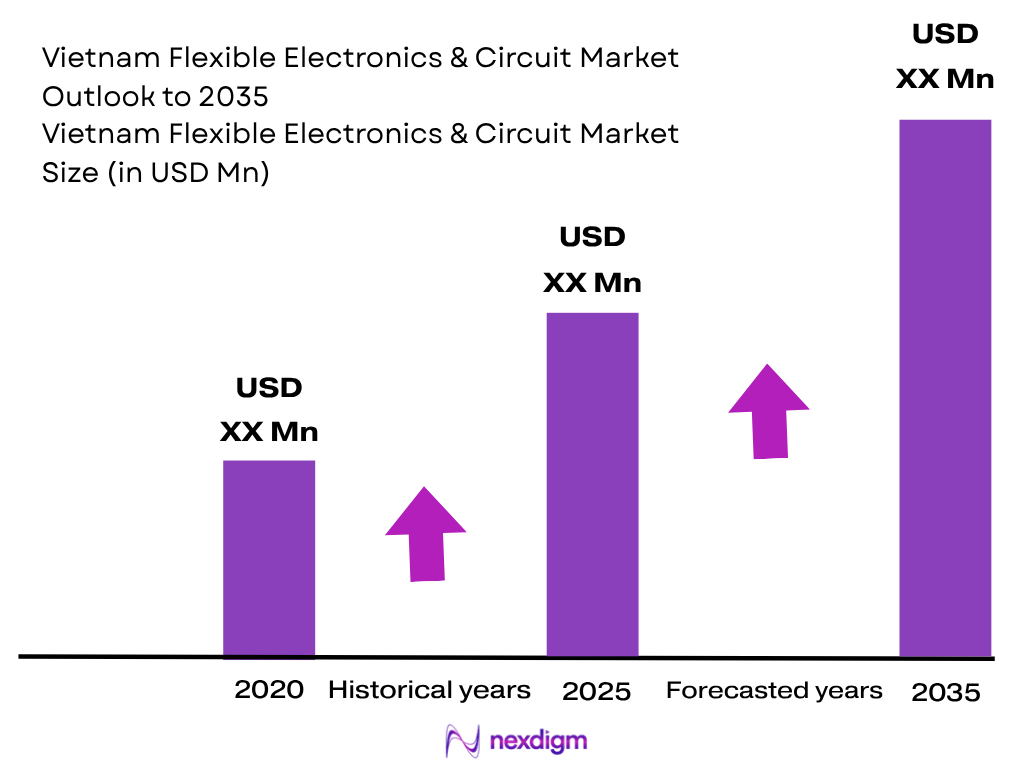
The Vietnam Flexible Electronics & Circuit Market is valued at USD ~ bn based on analysis of flexible printed circuits, flexible displays, wearable electronics components, advanced sensors, and electronic manufacturing applications. The market growth is supported by Vietnam’s expanding electronics manufacturing ecosystem, increasing foreign investment in technology production, and rising demand for compact electronic components. According to the General Statistics Office of Vietnam, the country’s industrial production index increased by 8.4 units in 2024 compared with the previous period, supported by strong manufacturing activity. The electronics sector remains a major contributor due to export-oriented production of smartphones, computers, and electronic components.
The Vietnam Flexible Electronics & Circuit Market is concentrated in major electronics manufacturing regions including Ho Chi Minh City, Hanoi, Bac Ninh, Hai Phong, and Thai Nguyen due to their established industrial infrastructure, electronics manufacturing clusters, skilled workforce availability, and presence of multinational technology companies. Northern Vietnam has become a major electronics production hub because of its proximity to global supply chains and large-scale manufacturing facilities. Southern Vietnam continues to attract electronics assembly, industrial automation, and technology service investments due to developed logistics networks and industrial parks. Vietnam exported approximately USD 132 billion worth of computers, electronic products, and components in 2024, highlighting the importance of the electronics manufacturing ecosystem.
Market Segmentation
By Technology Type
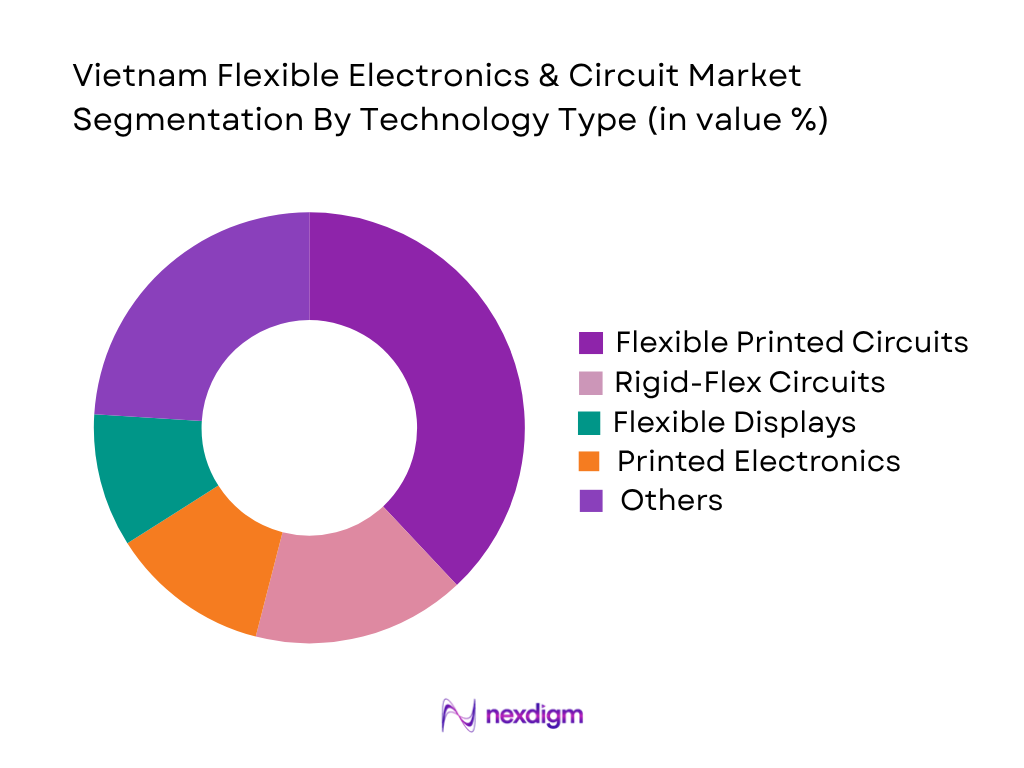
The Vietnam Flexible Electronics & Circuit Market is segmented by technology type into flexible printed circuits, rigid-flex circuits, printed electronics, flexible displays, thin-film electronics, organic electronics, flexible sensors, flexible batteries, conductive ink-based electronics, and other advanced flexible electronic technologies. Flexible printed circuits represent the dominant technology segment due to their extensive use in smartphones, consumer electronic devices, automotive systems, and industrial equipment manufactured in Vietnam. The country has developed a strong electronics assembly ecosystem, particularly for mobile devices and electronic components, creating continuous demand for compact and lightweight circuit solutions. Flexible printed circuits provide advantages including reduced thickness, improved design flexibility, and efficient space utilization compared with conventional rigid circuit boards. Vietnam’s growing electronics export industry, supported by major manufacturing facilities and increasing component localization efforts, is encouraging adoption of advanced circuit technologies across consumer electronics and industrial applications.
By End-Use Industry
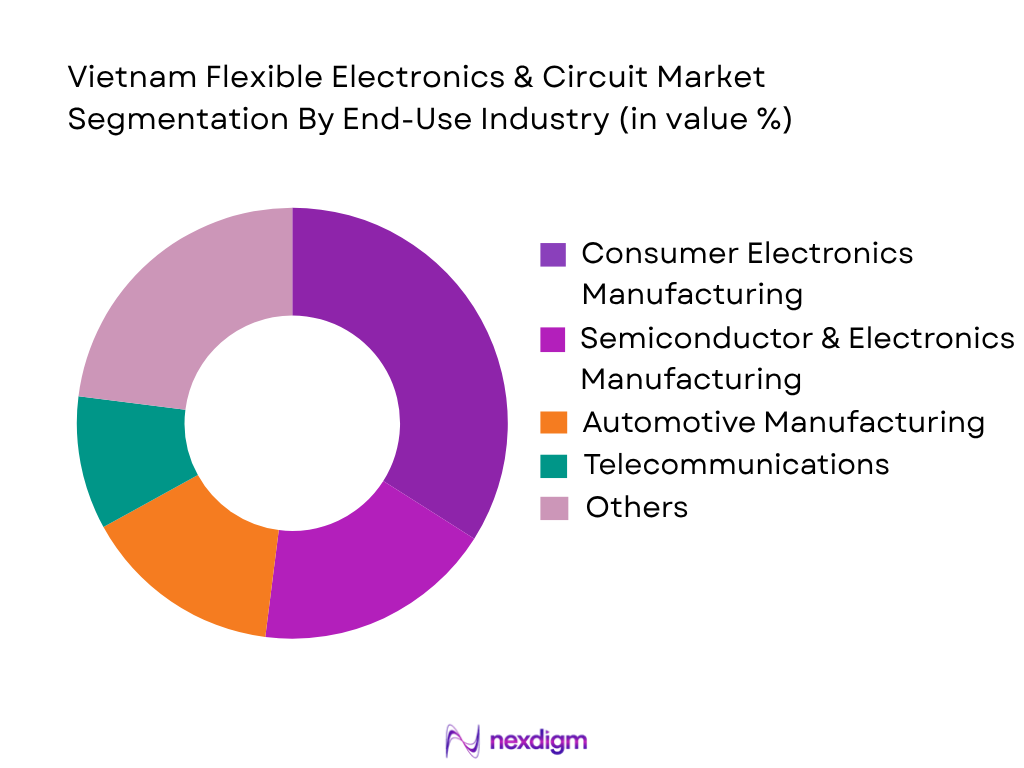
The Vietnam Flexible Electronics & Circuit Market is segmented by end-use industry into consumer electronics manufacturing, automotive manufacturing, healthcare and medical devices, industrial automation, telecommunications, semiconductor and electronics manufacturing, energy systems, packaging industry, aerospace and defense, and research applications. Consumer electronics manufacturing represents the leading segment due to Vietnam’s position as a major global production base for smartphones, tablets, computers, and electronic components. According to the General Statistics Office of Vietnam, electronics and computer products remain among the country’s largest export categories, supported by large-scale manufacturing facilities operated by multinational companies. Flexible circuits are increasingly integrated into consumer devices because they support thinner designs, higher component density, and improved device functionality. Automotive electronics applications are also expanding due to increased vehicle electrification and advanced electronic system integration. Healthcare applications are developing through adoption of wearable monitoring technologies and flexible sensors. The strong presence of electronics manufacturing clusters continues to support demand for flexible electronic solutions.
Competitive Landscape
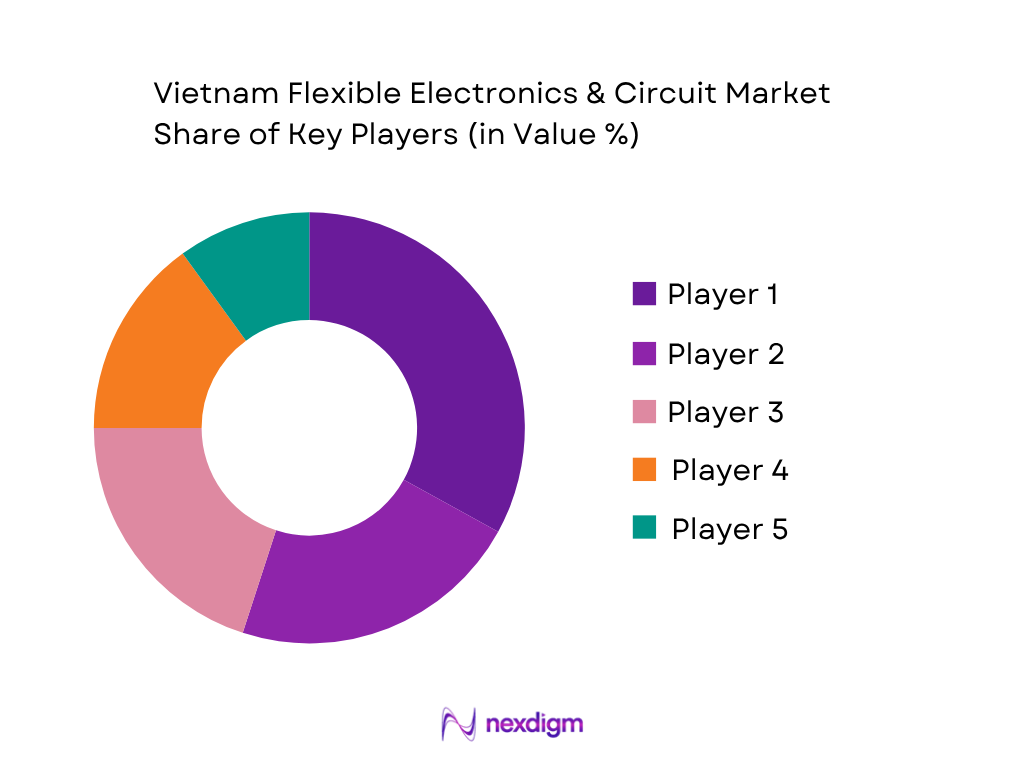
The Vietnam Flexible Electronics & Circuit Market includes global electronics manufacturers, flexible circuit suppliers, semiconductor companies, and contract electronics manufacturers. Competition is shaped by manufacturing capacity, electronics export capabilities, flexible PCB production expertise, supply chain integration, and relationships with multinational technology companies. Leading participants focus on expanding production facilities, improving advanced electronics manufacturing capabilities, and supporting applications across consumer electronics, automotive systems, and industrial technologies.
| Company | Establishment Year | Headquarters | Flexible Circuit Capability | Electronics Manufacturing Capacity | Consumer Electronics Exposure | Automotive Electronics Capability | Semiconductor Ecosystem Integration | Vietnam Manufacturing Presence | R&D Capability |
| Samsung Electronics | 1969 | Suwon, South Korea | ~ | ~ | ~ | ~ | ~ | ~ | ~ |
| Foxconn Technology Group | 1974 | New Taipei City, Taiwan | ~ | ~ | ~ | ~ | ~ | ~ | ~ |
| Intel Corporation | 1968 | California, USA | ~ | ~ | ~ | ~ | ~ | ~ | ~ |
| LG Electronics | 1958 | Seoul, South Korea | ~ | ~ | ~ | ~ | ~ | ~ | ~ |
| Jabil Inc. | 1966 | Florida, USA | ~ | ~ | ~ | ~ | ~ | ~ | ~ |
Vietnam Flexible Electronics & Circuit Market Analysis
Growth Drivers
Expansion of Vietnam’s Electronics Manufacturing Ecosystem
The Vietnam Flexible Electronics & Circuit Market is supported by the country’s rapid expansion as an electronics manufacturing hub, with flexible circuits increasingly integrated into smartphones, wearable devices, automotive electronics, and industrial equipment. Vietnam’s electronics sector benefits from strong export-oriented manufacturing capabilities, supported by foreign direct investment from global technology companies. According to the General Statistics Office of Vietnam, the electronics, computers, and components category remained among the country’s major export contributors, with export turnover reaching approximately USD 72.5 billion in 2024. The World Bank reported that Vietnam’s GDP reached around USD 476 billion in 2024, reflecting continued industrial expansion and manufacturing capacity development. The country also recorded merchandise exports exceeding USD 405 billion in 2024, demonstrating strong participation in global supply chains. Increasing investment in electronics production facilities, semiconductor packaging, and component manufacturing is encouraging adoption of advanced circuit technologies. Flexible electronics manufacturers benefit from Vietnam’s established supplier ecosystem, availability of industrial parks, and increasing integration with multinational electronics production networks. These factors support demand for flexible printed circuits, flexible sensors, and lightweight electronic solutions across multiple industries.
Increasing Foreign Direct Investment in Advanced Electronics and Semiconductor Manufacturing
The Vietnam Flexible Electronics & Circuit Market is driven by increasing foreign investment in advanced electronics manufacturing, semiconductor assembly, and technology infrastructure. The country has become a preferred destination for multinational electronics companies due to competitive manufacturing conditions, improving infrastructure, and participation in regional supply chains. According to Vietnam’s Ministry of Planning and Investment, registered foreign direct investment reached approximately USD 38.2 billion in 2024, with manufacturing and processing industries receiving the largest portion of investment inflows. The semiconductor and electronics sector has attracted significant attention due to government initiatives focused on developing high-value technology industries. Vietnam’s industrial production index increased by approximately 8.4 units in 2024, reflecting expansion in manufacturing activities. The country’s broadband infrastructure and digital transformation programs are also supporting technology adoption, with more than 80 million internet users reported by national digital development agencies. Flexible electronics technologies benefit from these developments as manufacturers require compact, lightweight, and high-performance circuit solutions for next-generation electronic products. Increasing localization efforts among electronics suppliers further strengthen opportunities for flexible circuit production and component integration.
Market Challenges
Dependence on Imported Advanced Materials and Manufacturing Technologies
The Vietnam Flexible Electronics & Circuit Market faces challenges due to dependence on imported raw materials, specialized equipment, and advanced manufacturing technologies required for flexible electronic production. Flexible circuits require materials including polyimide films, conductive inks, specialty adhesives, and precision fabrication equipment, many of which are sourced from international suppliers. According to Vietnam’s General Department of Customs, the country continues to maintain significant imports of electronic components and production machinery to support its manufacturing sector. The World Bank reported that Vietnam’s manufacturing sector contributes more than 20 units of economic output annually, but domestic value addition remains dependent on imported intermediate goods. Limited domestic production capabilities for high-end semiconductor materials and advanced electronic components create supply chain vulnerabilities. Additionally, flexible electronics manufacturing requires specialized technical expertise in areas such as printed electronics, material engineering, and microfabrication processes. While Vietnam has developed a strong electronics assembly ecosystem, local suppliers face challenges in moving toward higher-value manufacturing activities. Improving domestic capability development, technology transfer, and skilled workforce availability remains important for strengthening the flexible electronics supply chain.
Limited Domestic Research and Development Capabilities for Advanced Flexible Electronics
The Vietnam Flexible Electronics & Circuit Market encounters challenges related to limited domestic research and development capabilities in advanced flexible electronic technologies. The development of flexible displays, printed sensors, wearable electronics, and next-generation circuit architectures requires substantial investment in research infrastructure, specialized laboratories, and engineering expertise. According to UNESCO statistics, Vietnam’s research and development expenditure remains below the level of advanced manufacturing economies, limiting domestic innovation capacity in high-technology segments. The World Bank reported that Vietnam’s economy continues transitioning toward higher-value manufacturing, but technology-intensive industries require further development of domestic innovation networks. The country’s education and industrial systems are expanding technical capabilities, with Vietnam having more than 100 million residents supporting a growing engineering workforce; however, advanced semiconductor and flexible electronics expertise remains concentrated among multinational corporations. The absence of a large domestic ecosystem of flexible electronics research institutions and specialized suppliers creates barriers for indigenous technology development. Companies operating in this market must often collaborate with international technology providers for product development, process optimization, and advanced manufacturing solutions.
Market Opportunities
Growth of Automotive Electronics and Smart Mobility Applications
The Vietnam Flexible Electronics & Circuit Market has significant opportunities through increasing adoption of automotive electronics, electric vehicles, and smart mobility technologies. Flexible circuits are increasingly utilized in vehicle displays, battery management systems, sensors, lighting systems, and compact electronic modules due to their lightweight design and space-saving characteristics. Vietnam’s automotive sector is expanding alongside rising vehicle production and electric mobility adoption. According to the Vietnam Automobile Manufacturers Association, domestic automobile sales exceeded 300,000 units in 2024, reflecting continued demand for advanced vehicle technologies. The International Energy Agency reported that global electric vehicle adoption continued expanding, increasing demand for supporting electronic components and battery-related technologies. Vietnam’s GDP growth of approximately 7% in 2024, reported by the General Statistics Office, supports rising industrial investment and consumer adoption of advanced transportation solutions. Flexible electronics suppliers can capitalize on increasing demand from automotive manufacturers seeking efficient electronic architectures. Expansion of electric vehicle manufacturing, charging infrastructure, and automotive component production creates opportunities for flexible circuit integration across mobility applications.
Increasing Adoption of Wearable Electronics and Healthcare Technologies
The Vietnam Flexible Electronics & Circuit Market is gaining opportunities from rising adoption of wearable electronics, healthcare monitoring devices, and smart sensing technologies. Flexible electronic components are increasingly used in fitness trackers, medical monitoring devices, biosensors, and connected healthcare equipment because of their lightweight structure and ability to conform to different surfaces. Vietnam’s digital healthcare transformation initiatives and expanding healthcare infrastructure support demand for advanced medical technologies. According to the Ministry of Health of Vietnam, the country operates more than 1,400 hospitals and continues investing in healthcare modernization and digital health systems. The World Bank reported that Vietnam’s population exceeded 100 million people, creating increasing demand for healthcare services and technology-enabled medical solutions. Growth in smartphone usage and digital connectivity also supports wearable device adoption, with Vietnam maintaining a high level of mobile and internet penetration. Flexible electronics manufacturers can leverage these trends by developing flexible sensors, wearable monitoring systems, and connected healthcare components. Increasing focus on preventive healthcare and remote monitoring creates additional application opportunities for flexible electronic technologies.
Future Outlook
The Vietnam Flexible Electronics & Circuit Market is expected to witness continued expansion driven by the country’s growing electronics manufacturing ecosystem, increasing semiconductor investments, rising adoption of advanced electronic components, and integration of flexible technologies across consumer electronics, automotive systems, and industrial applications. The transition toward lightweight, compact, and high-performance electronic architectures is expected to create additional opportunities for flexible printed circuits, flexible sensors, and printed electronic solutions. Increasing participation of global electronics manufacturers and development of domestic supporting industries will further strengthen Vietnam’s position within the regional flexible electronics supply chain.
Major Players
- Samsung Electronics
- Foxconn Technology Group
- Intel Corporation
- LG Electronics
- Jabil Inc.
- Amkor Technology
- Panasonic Holdings Corporation
- Canon Inc.
- BOE Technology Group
- FPT Corporation
- Vingroup
- Viettel High Tech
- Pegatron Corporation
- Luxshare Precision Industry
- Goertek Inc.
Key Target Audience
- Flexible Electronics Manufacturers
- Flexible Printed Circuit Board Manufacturers
- Semiconductor and Electronics Component Manufacturers
- Consumer Electronics Manufacturing Companies
- Automotive Electronics Suppliers and OEMs
- Investments and Venture Capitalist Firms (Technology Investment Funds, Semiconductor Investment Funds, Electronics Manufacturing Investors)
- Government and Regulatory Bodies (Ministry of Industry and Trade of Vietnam, Ministry of Information and Communications, Ministry of Science and Technology of Vietnam)
- Electronics Manufacturing Service Providers and Industrial Park Developers
Research Methodology
Step 1: Identification of Key Variables
The initial phase involves developing a comprehensive ecosystem map covering flexible electronics manufacturers, flexible PCB suppliers, semiconductor companies, electronics manufacturing service providers, end-use industries, and regulatory stakeholders operating within Vietnam. Extensive secondary research is conducted using government databases, industrial production statistics, trade databases, and company disclosures to identify major market variables including production capacity, technology adoption, application penetration, and supply chain structure.
Step 2: Market Analysis and Construction
This phase involves analyzing historical market trends related to flexible circuits, electronic component manufacturing, export performance, foreign direct investment inflows, and industrial production developments. The assessment includes evaluation of flexible electronics demand from consumer electronics, automotive electronics, telecommunications, healthcare devices, and industrial automation sectors. Supply-side analysis focuses on manufacturing capabilities, technology infrastructure, and regional production concentration.
Step 3: Hypothesis Validation and Expert Consultation
Market assumptions and analytical findings are validated through discussions with industry professionals including electronics manufacturers, component suppliers, flexible circuit producers, and technology solution providers. Expert consultations focus on manufacturing trends, adoption barriers, technology developments, supply chain localization, and future investment opportunities within Vietnam’s flexible electronics ecosystem.
Step 4: Research Synthesis and Final Output
The final stage combines quantitative and qualitative insights collected from manufacturers, industry participants, trade statistics, and technology assessments. The research output evaluates market segmentation, competitive positioning, application trends, and future opportunities while ensuring consistency through data validation and cross-verification of industry information.

- Executive Summary
- Research Methodology (Market Definition and Scope, Vietnam Flexible Electronics & Circuit Market Classification, Flexible Electronics Technology Mapping, Flexible Printed Circuit Assessment, Flexible Substrate Analysis, Conductive Ink Technology Evaluation, Printed Electronics Assessment, Flexible Display Technology Assessment, Organic Electronics Evaluation, Thin-Film Electronics Assessment, Sensor Technology Mapping, Flexible Battery Integration Assessment, Semiconductor Integration Assessment, Manufacturing Process Analysis, Application-Level Demand Assessment, Supply Chain Mapping, Domestic Production Assessment, Import and Export Trade Analysis, Raw Material Supply Analysis, Demand-Side Assessment, Supply-Side Assessment, Top-Down Market Sizing, Bottom-Up Market Sizing, Primary Industry Interviews, Data Triangulation, Forecasting Framework, Market Share Validation, Limitations and Future Conclusions)

- Definition and Scope
- Vietnam Flexible Electronics & Circuit Industry Evolution and Development of Flexible Printed Circuit Manufacturing, Electronics Assembly Expansion, Semiconductor Supply Chain Integration, Consumer Electronics Production, Wearable Electronics Development, Automotive Electronics Adoption, Smart Manufacturing Applications, Advanced Sensor Technologies and Flexible Electronic Solutions
- Flexible Electronics & Circuit Value Chain Analysis
- Flexible Electronics & Circuit Supply Chain Analysis
- Flexible Substrate Suppliers, Polymer Material Manufacturers, Conductive Ink Producers, Semiconductor Component Suppliers, Flexible PCB Manufacturers, Electronics Contract Manufacturers, Display Component Suppliers, Sensor Manufacturers, Automotive Electronics Suppliers, Consumer Electronics Manufacturers, Industrial Automation Providers, Export-Oriented Electronics Assemblers and End-Use Industries
- Flexible Electronics & Circuit Integration Across Smartphones, Wearable Devices, Flexible Displays, Automotive Electronics, Medical Electronics, Industrial Sensors, Smart Packaging, Telecommunications Equipment, Aerospace Electronics and IoT Devices

- Growth Drivers (Expansion of Electronics Manufacturing Hubs, Increasing Foreign Direct Investment in Electronics Production, Growth of Smartphone and Consumer Electronics Manufacturing, Semiconductor Supply Chain Development, Rising Automotive Electronics Adoption, Industrial Automation Expansion, Increasing Wearable Device Demand)
- Market Challenges (Limited Domestic Flexible Electronics Manufacturing Capability, Dependence on Imported Advanced Materials, Semiconductor Supply Chain Dependency, High Technology Investment Requirements, Skilled Workforce Availability Challenges, Complex Manufacturing Processes, Limited Local R&D Infrastructure)
- Market Opportunities (Flexible Electronics Manufacturing Localization, Expansion of Semiconductor Ecosystem, Automotive Electronics Production Growth, Wearable Healthcare Device Development, Smart Factory Implementation, Flexible Display Manufacturing Opportunities)
- Market Trends (Shift Toward Lightweight Electronic Components, Growth of Flexible Printed Circuits, Increasing Electronics Manufacturing Outsourcing, Expansion of Smart Devices, Development of Printed Electronics Technologies, Miniaturization of Electronic Components)
- Government Regulations and Standards (Vietnam Electronics Industry Development Policies, Ministry of Information and Communications Technology Regulations, Ministry of Industry and Trade Electronics Manufacturing Guidelines, Semiconductor Development Strategies, Industrial Standards Compliance, Environmental Regulations for Electronics Manufacturing, Import and Export Regulations)
- SWOT Analysis
- Porter’s Five Forces Analysis
- PESTLE Analysis
- Stakeholder Ecosystem
- Competition Ecosystem

- By Market Value (2020-2025)
- By Volume Consumption (2020-2025)
- By Flexible Printed Circuit Consumption Volume (2020-2025)
- By Flexible Display Component Consumption Volume (2020-2025)
- By Wearable Electronics Component Consumption Volume (2020-2025)
- By Automotive Flexible Circuit Consumption Volume (2020-2025)
- By Industrial Sensor Component Consumption Volume (2020-2025)

- By Technology Type (In Value %)
Flexible Printed Circuits (FPCs)
Rigid-Flex Circuits
Printed Electronics
Flexible Displays
Thin-Film Electronics
Organic Electronics
Flexible Sensors
Flexible Batteries
Conductive Ink-Based Electronics
Other Advanced Flexible Electronics Technologies - By Application Type (In Value %)
Consumer Electronics
Wearable Electronics
Flexible Display Systems
Medical and Healthcare Electronics
Automotive Electronics
Industrial Sensors
Smart Packaging Solutions
Telecommunication Equipment
Internet of Things (IoT) Devices
Aerospace and Defense Electronics - By Material Type (In Value %)
Polyimide Substrates
Polyethylene Terephthalate (PET) Substrates
Polyethylene Naphthalate (PEN) Substrates
Conductive Ink Materials
Copper Foil Materials
Organic Semiconductor Materials
Printed Functional Materials
Advanced Polymer Materials - By End-Use Industry (In Value %)
Consumer Electronics Manufacturing
Automotive Manufacturing
Healthcare and Medical Devices
Industrial Automation
Telecommunications
Semiconductor and Electronics Manufacturing
Energy and Battery Systems
Packaging Industry
Aerospace and Defense
Research and Development Applications - By Manufacturing Process (In Value %)
Photolithography-Based Manufacturing
Printing-Based Electronics Manufacturing
Roll-to-Roll Processing
Laser Patterning Technology
Screen Printing Technology
Inkjet Printing Technology
Assembly and Integration Processes - By Region (In Value %)
Northern Vietnam
Southern Vietnam
Central Vietnam

- Market Share of Major Players (By Vietnam Revenue, Flexible Circuit Production Capacity, Technology Portfolio, Flexible PCB Capability, Manufacturing Facility Presence, Electronics Export Exposure, Automotive Electronics Coverage, Consumer Electronics Customer Base, Semiconductor Supply Chain Integration, Material Technology Capability, R&D Investment, Regional Manufacturing Presence)
- Cross Comparison Parameters (Flexible Circuit Manufacturing Capability, Flexible PCB Product Portfolio, Advanced Material Technology Coverage, Electronics Manufacturing Capacity, Automotive Electronics Application Capability, Consumer Electronics Integration Capability, Semiconductor Supply Chain Connectivity, Research and Development Capability)
- SWOT Analysis of Major Players
- Competitive Positioning Matrix
- Flexible Circuit Product Portfolio and Technology Benchmarking
- Detailed Profiles of Major Companies
Samsung Electro-Mechanics Co., Ltd.
LG Electronics Vietnam Co., Ltd.
Foxconn Vietnam
Luxshare Precision Industry Co., Ltd.
Goertek Vietnam Co., Ltd.
Intel Products Vietnam Co., Ltd.
Jabil Vietnam
Panasonic Vietnam Co., Ltd.
Foster Electric Vietnam Co., Ltd.
Sumitomo Electric Industries Vietnam Ltd.
Molex Vietnam Co., Ltd.
TTM Technologies Inc.
Flex Vietnam Co., Ltd.
Amphenol Corporation
BOE Technology Group Co., Ltd.

- Consumer Electronics Manufacturer Requirement Assessment
- Smartphone and Wearable Device Component Procurement Analysis
- Automotive Electronics Integration Requirement Assessment
- Electric Vehicle Electronics Application Analysis
- Medical Device Flexible Electronics Requirement Assessment
- Industrial Automation Sensor Demand Assessment
- Semiconductor Manufacturing Requirement Analysis
- Electronics Contract Manufacturing Assessment
- Export-Oriented Electronics Assembly Analysis
- IoT Device Manufacturer Demand Assessment
- Flexible Circuit Supplier Qualification Assessment
- OEM Technology Partnership Assessment

- By Market Value (2026-2035)
- By Volume Consumption (2026-2035)
- By Flexible Printed Circuit Consumption Volume (2026-2035)
- By Flexible Display Component Consumption Volume (2026-2035)
- By Wearable Electronics Component Consumption Volume (2026-2035)
- By Automotive Flexible Circuit Consumption Volume (2026-2035)
- By Industrial Sensor Component Consumption Volume (2026-2035)


 Request a Sample
 Ask for Customization
 Get a Quote
 Enquire Now