
 Download PDF
Market Overview
The Vietnam Flexible Pipe Market covers advanced flexible pipeline systems used for transportation of oil, gas, water, chemicals, and other fluids across offshore, subsea, industrial, and energy infrastructure applications. Flexible pipes include reinforced thermoplastic pipes (RTP), composite flexible pipes, bonded and unbonded flexible pipes, and polymer-based pipeline solutions designed for environments requiring high corrosion resistance, pressure tolerance, and operational flexibility. The market is primarily associated with offshore oil and gas production, subsea developments, floating production systems, and emerging offshore renewable energy infrastructure.
The Vietnamese market is shaped by the country’s offshore hydrocarbon activities, including developments in the Cuu Long and Nam Con Son basins, increasing requirements for subsea maintenance, and investments in gas infrastructure. Flexible pipe adoption is supported by advantages over conventional rigid pipelines, including easier installation, reduced corrosion risk, and suitability for complex offshore environments.
Market Segmentation
By Application Type
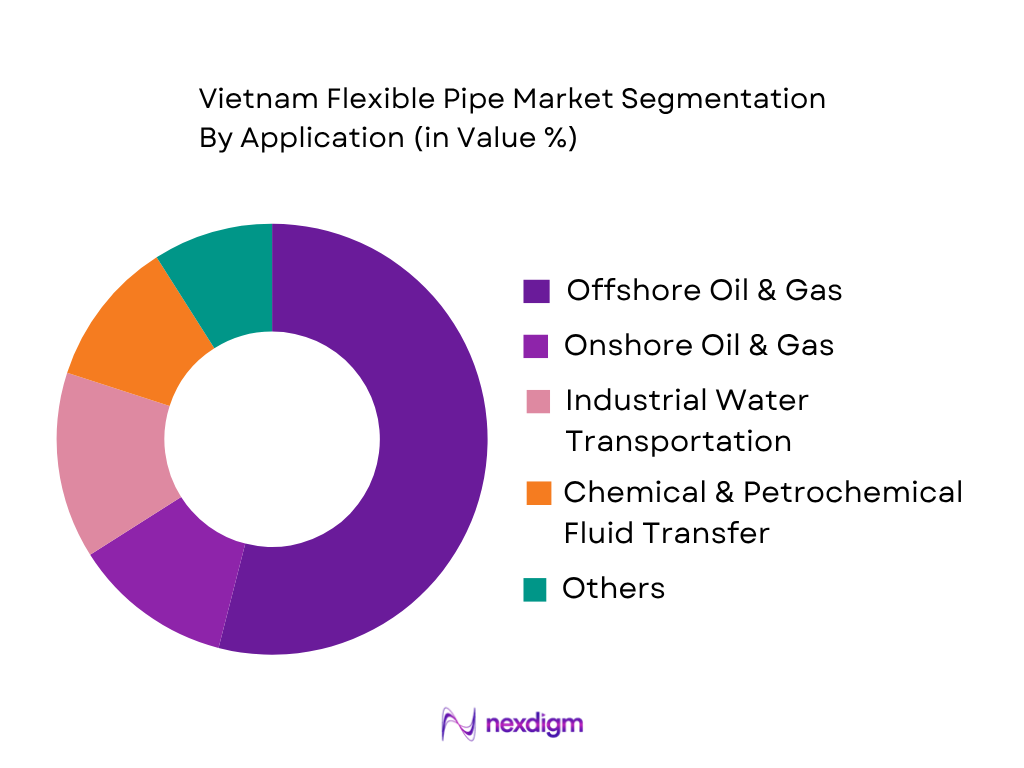
Vietnam Flexible Pipe Market is segmented by application type into offshore oil & gas, onshore oil & gas, industrial water transportation, chemical & petrochemical fluid transfer, and renewable energy infrastructure. Offshore oil & gas represents the largest application segment due to Vietnam’s dependence on offshore hydrocarbon production and the requirement for subsea transportation systems. Flexible pipes are preferred in offshore environments because they can withstand dynamic movements, seabed irregularities, and corrosive marine conditions. Vietnam’s offshore production activities, operated through national and international energy partnerships, continue generating demand for flowlines, risers, and subsea connection systems. The development of offshore gas projects and maintenance activities in mature fields further supports adoption. Flexible pipes are especially relevant for floating production systems and subsea tie-back projects where installation flexibility and operational reliability are critical factors.
By Material Type
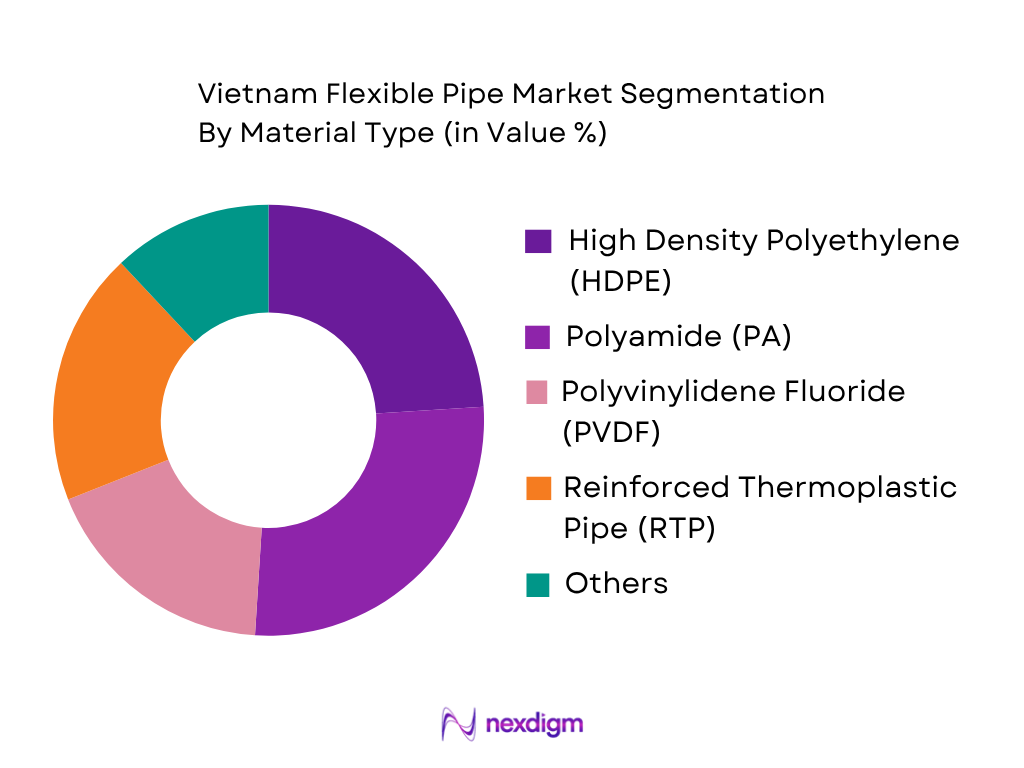
Vietnam Flexible Pipe Market is segmented by material type into HDPE, Polyamide (PA), PVDF, Reinforced Thermoplastic Pipe (RTP), and Composite Flexible Pipe. Polyamide currently represents the leading material segment because of its extensive application in offshore oil and gas flexible pipe systems requiring strong chemical resistance, mechanical strength, and durability. PA-based pressure sheaths provide reliable performance in hydrocarbon transportation applications where exposure to aggressive fluids and offshore environmental conditions is common. The material is widely adopted in flexible flowlines and riser systems because of its balance between flexibility and structural performance. Increasing offshore field maintenance requirements and subsea infrastructure development are supporting demand for advanced polymer-based materials. RTP adoption is also increasing due to lightweight characteristics and suitability for industrial and energy transition applications.
Competitive Landscape
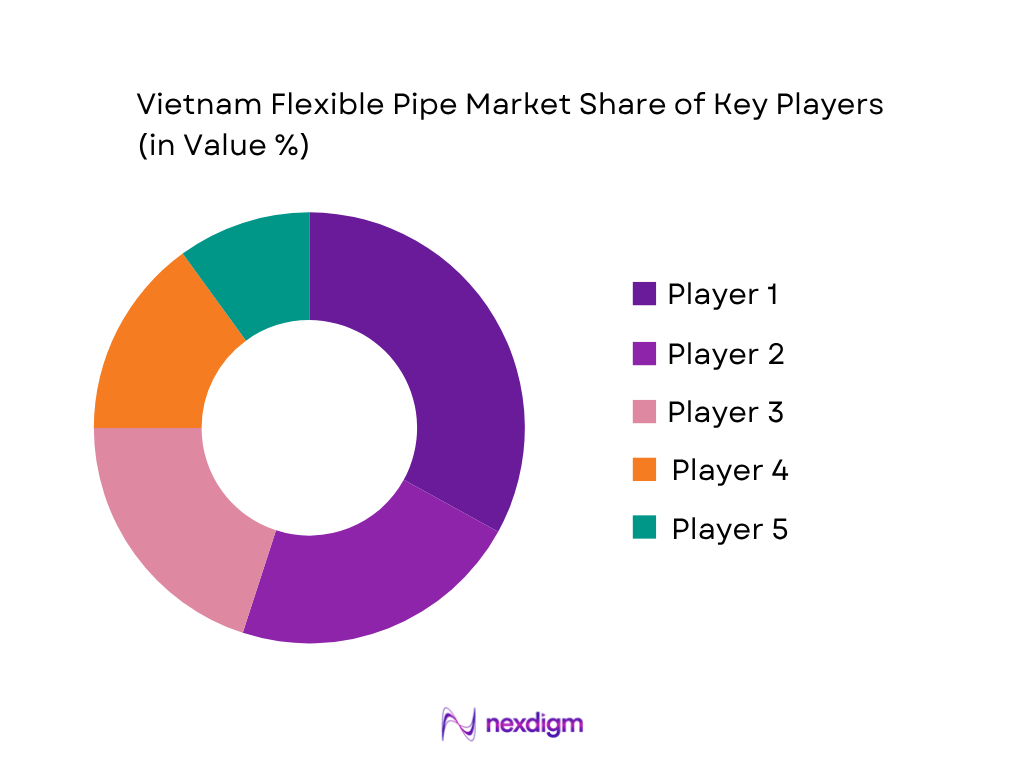
The Vietnam Flexible Pipe Market is characterized by a limited number of global technology providers due to high manufacturing complexity, strict offshore qualification requirements, and significant engineering expertise requirements. International companies dominate the market through advanced flexible pipe manufacturing capabilities, subsea engineering expertise, and long-term relationships with offshore operators. Local companies mainly participate through installation support, fabrication, logistics, and maintenance activities.
| Company | Establishment Year | Headquarters | Key Products | Offshore Capability | Material Expertise | Regional Presence | Installation Support | Key End Users |
| TechnipFMC | 2017 | United Kingdom | ~ | ~ | ~ | ~ | ~ | ~ |
| Baker Hughes | 1987 | United States | ~ | ~ | ~ | ~ | ~ | ~ |
| Aker Solutions | 1841 | Norway | ~ | ~ | ~ | ~ | ~ | ~ |
| NOV | 1862 | United States | ~ | ~ | ~ | ~ | ~ | ~ |
| Prysmian Group | 1872 | Italy | ~ | ~ | ~ | ~ | ~ | ~ |
Vietnam Flexible Pipe Market Analysis
Growth Drivers
Expansion of Offshore Oil and Gas Exploration
Expansion of offshore oil and gas exploration activities is supporting demand for flexible pipe systems due to their suitability in subsea flowlines, risers, and dynamic offshore applications. Australia’s offshore energy sector, particularly projects across Western Australia, Northern Territory, and the Bass Strait region, continues to require advanced pipeline solutions for complex marine environments. The Australian Energy Market Operator reported that natural gas production remains a critical component of the country’s energy system, with gas supply supporting industrial operations and LNG exports. Australia recorded natural gas production of approximately 5,100 petajoules in the latest energy balance period, highlighting the scale of offshore gas infrastructure requirements. The country exported more than 100 million tonnes of LNG in recent years, creating continuous demand for offshore production and transportation infrastructure. Offshore developments require corrosion-resistant and lightweight pipeline technologies to reduce installation complexity and improve operational reliability. Flexible pipes are increasingly relevant for deepwater and harsh environmental conditions where conventional rigid pipelines face installation limitations. Continued offshore exploration activities and maintenance requirements for existing offshore assets are expected to support adoption of flexible pipeline solutions across Australian energy projects.
Increasing Subsea Production Activities and Aging Offshore Pipeline Replacement Requirements
Increasing subsea production activities and replacement of aging offshore pipeline infrastructure are creating additional requirements for flexible pipe technologies in Australia’s offshore sector. Several offshore assets operating in Australian waters have been in service for multiple decades, increasing the requirement for pipeline inspection, maintenance, and replacement solutions. Australia’s Department of Industry, Science and Resources reported that resources exports remained a major contributor to the national economy, with energy commodities continuing to support industrial activity. Australia produced more than 140 billion cubic meters of natural gas annually, supporting extensive offshore production networks and LNG infrastructure. Subsea production systems require flexible flowlines and risers capable of handling movement, pressure variations, and corrosive marine conditions. Flexible pipes provide operational advantages due to their ability to accommodate dynamic loading and seabed movement compared with conventional steel systems. The expansion of offshore maintenance programs is also driven by increasing requirements for asset integrity management across mature offshore fields. As operators focus on extending the operational life of existing assets, flexible pipeline solutions are increasingly considered for repair, replacement, and modernization applications in offshore environments.
Market Challenges
Dependence on Imported Advanced Flexible Pipe Technologies
Dependence on imported advanced flexible pipe technologies remains a key challenge for the Australian flexible pipe market due to limited domestic manufacturing capability for complex offshore-grade systems. Advanced flexible pipes require specialized production facilities, composite material expertise, and qualification processes that are concentrated among international manufacturers. Australia’s manufacturing sector has experienced structural limitations, with the Australian Bureau of Statistics reporting that manufacturing contributed approximately AUD 120 billion in industry value added, but specialized subsea equipment production remains limited. Offshore operators often rely on international suppliers for high-performance flexible pipes used in subsea production systems, dynamic risers, and offshore flowlines. Import dependency increases exposure to international supply chain disruptions, logistics constraints, and longer procurement timelines. The requirement for specialized materials such as high-performance polymers, reinforcement layers, and corrosion-resistant composites further limits local production development. Although Australia has strong engineering capabilities, establishing domestic flexible pipe manufacturing requires significant investment in technology, testing facilities, and skilled workforce development. This dependency creates challenges for project scheduling and increases reliance on global supply networks for offshore infrastructure projects.
Complex Offshore Qualification Requirements and High Installation Costs
Complex offshore qualification requirements and installation challenges create significant barriers to flexible pipe adoption in Australia. Offshore flexible pipes must undergo extensive testing to meet requirements related to pressure resistance, fatigue performance, chemical compatibility, and marine durability. Australia’s offshore petroleum sector operates under strict regulatory oversight, with the National Offshore Petroleum Safety and Environmental Management Authority managing safety and environmental standards for offshore operations. Offshore projects require compliance with engineering specifications and certification processes before pipeline deployment. Australia’s offshore oil and gas infrastructure includes numerous deepwater and remote marine installations, increasing technical complexity associated with transportation, installation, and maintenance activities. The country’s offshore operating environment includes challenging conditions such as cyclonic regions, deepwater fields, and long-distance subsea connections. Flexible pipe installation requires specialized vessels, experienced offshore personnel, and advanced installation techniques. Limited availability of local specialized installation capabilities can increase project complexity and dependency on international service providers. These technical requirements create challenges for smaller operators and infrastructure developers considering flexible pipeline solutions.
Market Opportunities
Deepwater Oil and Gas Field Development
Deepwater oil and gas field development presents significant opportunities for flexible pipe adoption due to increasing requirements for advanced subsea transportation systems. Australia’s offshore resource base includes major developments in regions such as the Browse Basin, Carnarvon Basin, and Bass Strait, where subsea infrastructure plays an important role in resource extraction. The Australian Energy Market Operator reported continued importance of gas supply infrastructure, with natural gas remaining essential for industrial energy requirements and export activities. Australia operates multiple offshore LNG facilities requiring extensive subsea production networks, including floating production systems, subsea wells, and offshore pipelines. Flexible pipes are increasingly suitable for these applications due to their ability to withstand dynamic movements, pressure fluctuations, and challenging seabed conditions. Growing investment in offshore field extensions and maintenance of existing production assets creates opportunities for flexible pipe suppliers. Additionally, operators are focusing on improving asset reliability and reducing downtime, increasing demand for corrosion-resistant and lightweight pipeline technologies. Deepwater developments require specialized solutions that can operate under high-pressure offshore conditions, creating opportunities for advanced flexible pipe systems.
Carbon Capture and Storage Infrastructure and Hydrogen Transportation Networks
Carbon capture and storage (CCS) infrastructure and hydrogen transportation networks represent emerging opportunities for flexible pipe technologies in Australia’s energy transition landscape. Australia has identified carbon management and hydrogen development as important components of future energy infrastructure. The Australian Government’s resources and energy programs have supported development of low-emission technologies, including CCS projects across regions with existing industrial infrastructure. Australia has several proposed CCS developments associated with LNG, hydrogen, and industrial facilities that require reliable pipeline systems for carbon dioxide transportation. Flexible pipes can provide advantages in offshore carbon transportation applications due to corrosion resistance, installation flexibility, and suitability for complex marine environments. Australia’s hydrogen industry is also expanding, supported by renewable energy resources and export-oriented projects. The country generated more than 300 terawatt-hours of electricity annually, providing a foundation for renewable energy-based hydrogen production. Future hydrogen infrastructure may require specialized pipeline systems capable of handling different operating conditions compared with conventional hydrocarbons. Flexible pipeline technologies could support offshore CCS networks, hydrogen transport systems, and industrial decarbonization projects requiring adaptable infrastructure solutions.
Future Outlook
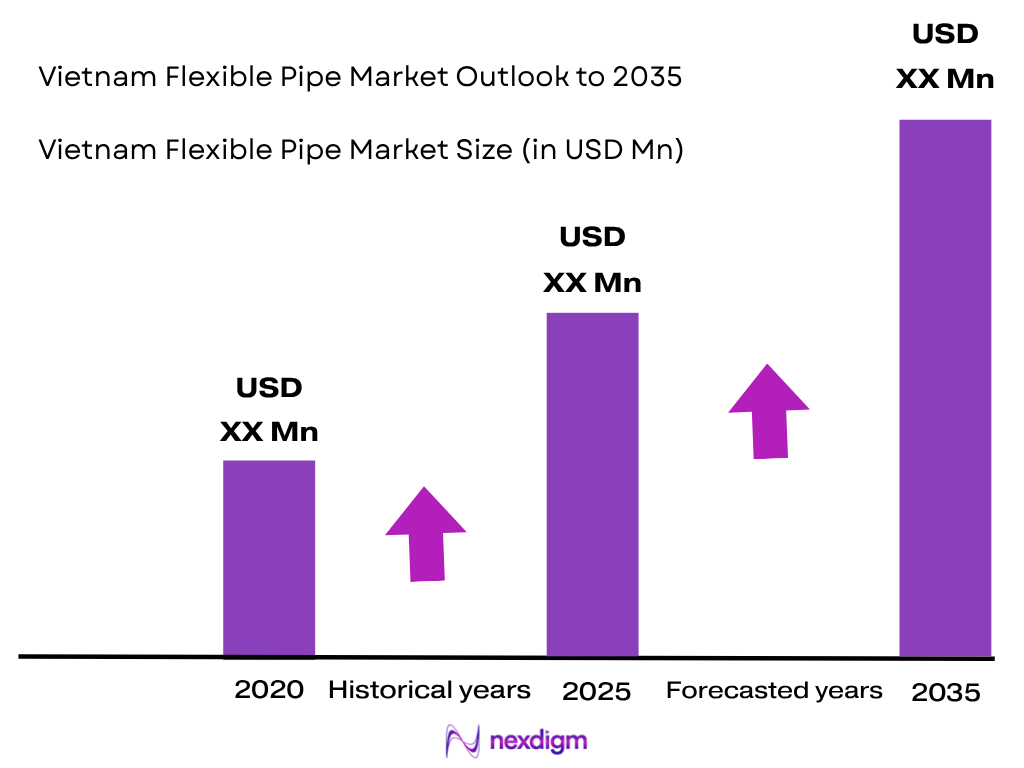
The Vietnam Flexible Pipe Market is expected to experience sustained expansion due to increasing offshore energy activities, subsea infrastructure requirements, and modernization of existing pipeline networks. Future demand will be influenced by offshore gas development, LNG infrastructure expansion, and the requirement for flexible pipeline solutions capable of operating in challenging marine environments. The adoption of reinforced thermoplastic pipes and composite flexible pipes is also expected to increase as industries seek lightweight, corrosion-resistant alternatives for fluid transportation applications. Vietnam’s strategic focus on strengthening domestic energy security and expanding marine infrastructure will continue supporting market development.
Major Players
- TechnipFMC plc
- Baker Hughes Company
- Aker Solutions ASA
- NOV Inc.
- Prysmian Group
- Saipem S.p.A.
- Subsea 7 S.A.
- Trelleborg AB
- Magma Global Ltd.
- Strohm B.V.
- SoluForce B.V.
- Vallourec S.A.
- Tenaris S.A.
- FlexSteel Pipeline Technologies Inc.
- Oceaneering International Inc.
Key Target Audience
- Offshore Oil & Gas Operators
- Petrochemical and LNG Infrastructure Companies
- Subsea Engineering and EPC Contractors
- Marine Installation and Offshore Service Providers
- Pipeline Manufacturing and Technology Companies
- Investments and Venture Capitalist Firms (Energy Infrastructure Investment Funds, Industrial Technology Investment Funds)
- Government and Regulatory Bodies (Vietnam Oil and Gas Group, Ministry of Industry and Trade Vietnam, Vietnam Maritime Administration)
- Industrial Water Infrastructure Developers
Research Methodology
Step 1: Identification of Key Variables
The initial phase involves defining the Vietnam Flexible Pipe Market ecosystem by identifying key stakeholders including offshore operators, flexible pipe manufacturers, EPC contractors, marine installation companies, and regulatory authorities. Extensive secondary research is conducted to evaluate offshore energy developments, pipeline infrastructure requirements, material adoption patterns, and technology trends influencing flexible pipe demand. Market variables such as application type, material composition, installation requirements, and end-user industries are mapped to establish the foundation of the analysis.
Step 2: Market Analysis and Construction
This phase focuses on analyzing historical and current market conditions through demand-side and supply-side assessments. Offshore oil and gas activity, subsea project developments, import dependency, flexible pipe applications, and material preferences are evaluated to determine market dynamics. Bottom-up analysis is performed by assessing industry participants, project requirements, and technology adoption patterns, while top-down analysis validates market direction through energy infrastructure indicators and industrial development trends.
Step 3: Hypothesis Validation and Expert Consultation
Market assumptions are validated through discussions with industry participants including offshore engineering professionals, pipeline specialists, EPC contractors, and energy infrastructure stakeholders. These consultations provide operational insights related to flexible pipe selection, installation challenges, qualification requirements, and technology adoption. Expert feedback is integrated to refine market segmentation, competitive analysis, and future opportunity assessment.
Step 4: Research Synthesis and Final Output
The final stage combines primary and secondary research findings to develop a comprehensive Vietnam Flexible Pipe Market assessment. Data obtained from industry stakeholders, infrastructure developments, regulatory information, and technical evaluations is analyzed through data triangulation. The final report presents market segmentation, competitive benchmarking, growth drivers, challenges, opportunities, and strategic recommendations for business decision-making.

- Executive Summary
- Research Methodology (Market Definitions and Assumptions, Flexible Pipe Market Classification, Offshore Oil and Gas Infrastructure Assessment, Subsea Pipeline Demand Analysis, Deepwater Exploration Activity Mapping, Flexible Riser and Flowline Consumption Assessment, Reinforced Thermoplastic Pipe Technology Evaluation, Domestic Manufacturing Capability Analysis, Import Dependency Assessment, Polymer and Composite Material Supply Assessment, Demand-Side Analysis, Supply-Side Analysis, Industry Expert Interviews, Data Validation Framework)

- Definition and Scope
- Vietnam Flexible Pipe Industry Evolution
- Flexible Pipe Technology Evolution
- Vietnam Flexible Pipe Value Chain Analysis
- Vietnam Flexible Pipe Supply Chain Analysis

- Growth Drivers (Expansion of Offshore Oil and Gas Exploration, Increasing Subsea Production Activities, Development of Deepwater Hydrocarbon Fields, Aging Offshore Pipeline Replacement Requirements, Growing Adoption of Corrosion Resistant Composite Pipeline Systems, Expansion of Petrochemical Infrastructure, Industrial Water Infrastructure Development, Demand for Lightweight and Flexible Pipeline Solutions)
- Market Challenges (Dependence on Imported Advanced Flexible Pipe Technologies, Limited Domestic Flexible Pipe Manufacturing Capability, Complex Offshore Qualification Requirements, High Installation and Maintenance Costs, Dependence on Specialized Polymer and Composite Materials, Competition from Steel Pipeline Systems, Technical Challenges in High Pressure and High Temperature Offshore Conditions)
- Market Opportunities (Deepwater Oil and Gas Field Development, Reinforced Thermoplastic Pipe Manufacturing Expansion, Offshore Wind Infrastructure Development, Pipeline Rehabilitation Projects, Hydrogen Transportation Networks, Carbon Capture and Storage Infrastructure, Industrial Water Pipeline Modernization, Domestic Flexible Pipe Manufacturing Development)
- Market Trends (Advanced Composite Flexible Pipe Adoption, Lightweight Pipeline Technology Development, Offshore Asset Life Extension Programs, Digital Pipeline Monitoring Systems, Corrosion Resistant Material Adoption, Subsea Infrastructure Modernization, Flexible Pipe Recycling and Sustainability Solutions, Local Manufacturing Development)
- Government Regulations (Vietnam Petroleum Industry Regulations, Vietnam Oil and Gas Group Technical Standards, Offshore Environmental Protection Requirements, Maritime Safety Regulations, Pipeline Construction Standards, Industrial Safety Regulations, Environmental Impact Assessment Requirements)
- SWOT Analysis
- Porter’s Five Forces Analysis
- PESTLE Analysis
- Stakeholder Ecosystem
- Competition Ecosystem

- By Market Value (2020-2025)
- By Flexible Pipe Consumption Volume (2020-2025)
- By Offshore Flexible Pipe Consumption Volume (2020-2025)
- By Subsea Flexible Riser and Flowline Consumption Volume (2020-2025)
- By Reinforced Thermoplastic Pipe Consumption Volume (2020-2025)

- By Product Type (In Value %)
Unbonded Flexible Pipes
Bonded Flexible Pipes
Reinforced Thermoplastic Pipes
Composite Flexible Pipes
Flexible Risers
Flexible Flowlines
Flexible Jumpers
Thermoplastic Composite Pipes - By Application (In Value %)
Offshore Oil and Gas Production
Subsea Production Systems
Deepwater Field Development
Floating Production Storage and Offloading Systems
Offshore Platform Connections
Pipeline Rehabilitation Systems
Industrial Fluid Transfer Systems
Water Transportation Systems
Chemical Transfer Systems - By Pressure Rating (In Value %)
Low Pressure Flexible Pipes
Medium Pressure Flexible Pipes
High Pressure Flexible Pipes
High Pressure High Temperature Flexible Pipes
Ultra-High Pressure Flexible Pipe Systems - By End-Use Industry (In Value %)
Petrochemical Industry
Marine and Shipping Industry
Industrial Manufacturing
Water Infrastructure
Renewable Energy
Hydrogen Infrastructure
Carbon Capture and Storage - By Installation Type (In Value %)
Subsea Installation
Offshore Platform Installation
Onshore Installation
Floating Facility Installation
Pipeline Replacement Installation
Pipeline Rehabilitation Installation

- Market Share of Major Players (By Vietnam Revenue, Flexible Pipe Sales Volume, Offshore Application Exposure, Subsea Technology Capability, Product Portfolio, Project Execution Capability, Vietnam Customer Base, Import and Distribution Network)
- Cross Comparison Parameters (Flexible Pipe Technology Portfolio Breadth, Offshore Deepwater Application Capability, Subsea Riser and Flowline Expertise, High Pressure High Temperature Pipe Capability, Reinforced Thermoplastic Pipe Technology Capability, Vietnam Offshore Project Exposure, Manufacturing and Supply Chain Capability, Technical Support and Installation Service Network)
- SWOT Analysis of Major Players
- Detailed Profiles of Major Companies
TechnipFMC
National Oilwell Varco (NOV)
Baker Hughes
Aker Solutions
Prysmian Group
Strohm
Magma Global
Airborne Oil & Gas
Shawcor
Vallourec
Parker Hannifin
Continental ContiTech
Trelleborg
FlexSteel Pipeline Technologies
L&T Energy Hydrocarbon

- Offshore Oil and Gas Operator Flexible Pipe Procurement Assessment
- Vietnam Offshore Basin Pipeline Infrastructure Requirement Analysis
- Subsea Production System Flexible Riser Demand Assessment
- Floating Production Facility Pipeline Requirement Analysis
- Petrochemical Plant Flexible Pipeline Application Assessment
- Industrial Water Infrastructure Flexible Pipe Demand Assessment
- Marine Transportation and Port Infrastructure Pipeline Requirement Analysis

- By Market Value (2026-2035)
- By Flexible Pipe Consumption Volume (2026-2035)
- By Offshore Flexible Pipe Consumption Volume (2026-2035)
- By Subsea Flexible Riser and Flowline Consumption Volume (2026-2035)
- By Reinforced Thermoplastic Pipe Consumption Volume (2026-2035)


 Request a Sample
 Ask for Customization
 Get a Quote
 Enquire Now