
 Download PDF
Market Overview
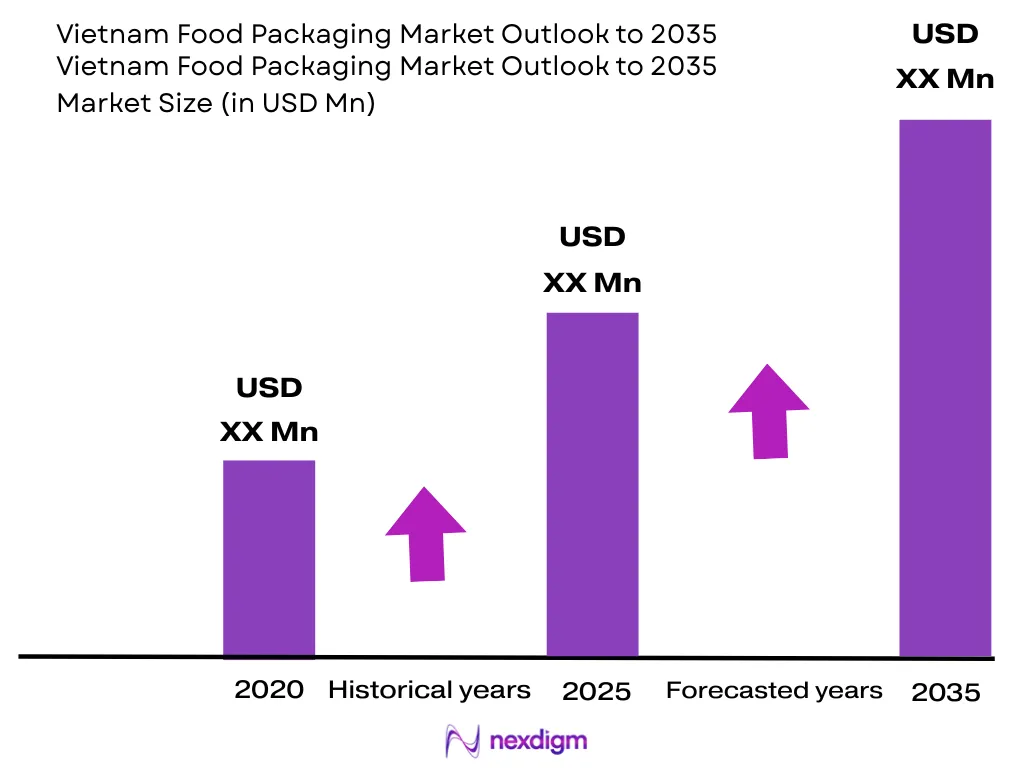
The Vietnam Food Packaging Market was valued at USD ~ Million in 2024 and is anticipated to expand at a CAGR of ~ % during 2026–2035. The market is primarily driven by rising consumption of processed and packaged foods, rapid growth of e-commerce and online food delivery, and increasing regulatory focus on food safety and hygiene. According to industry estimates, the Vietnam food packaging market reached approximately USD ~ million in 2024, supported by a food and beverage sector that recorded 7.4 percent sales growth in 2024 to reach USD ~ billion, according to VietNamNet. Meanwhile, Vietnam’s online retail market reached USD 32 billion in 2024, sustaining strong demand for durable, tamper-evident, and export-compliant food packaging across bakery, dairy, beverages, sauces, seafood, and convenience food applications.
Market Segmentation
By Material
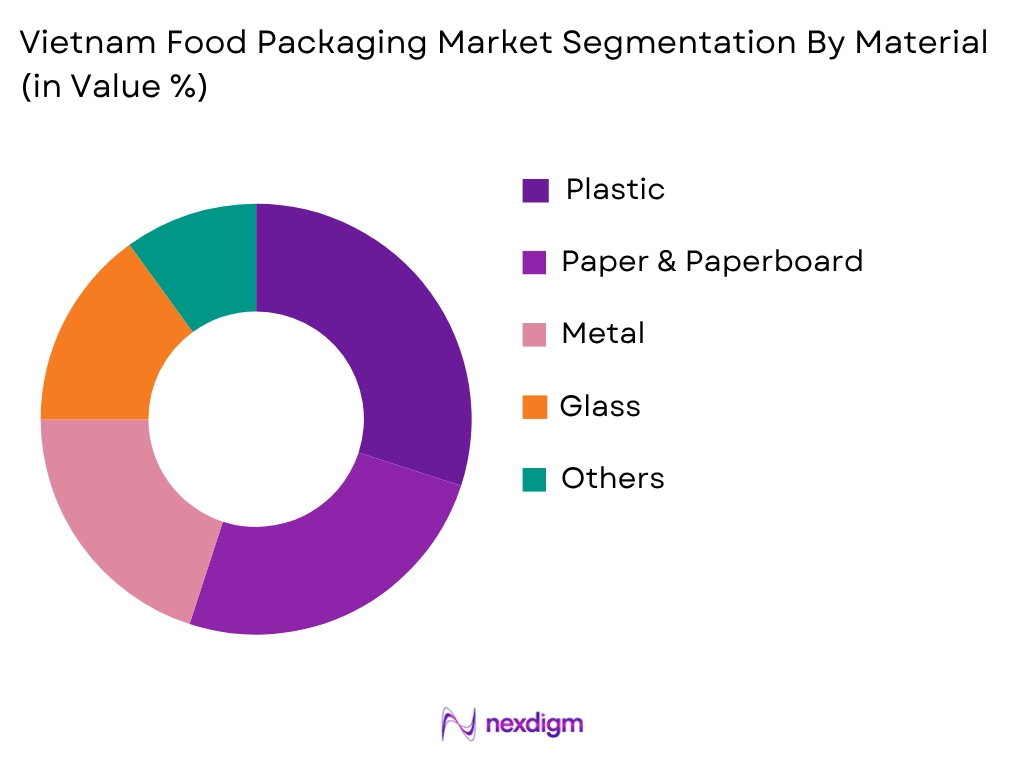
Among these, Plastic Packaging holds a significant share of the Vietnam Food Packaging Market owing to its affordability, durability, and adaptability across rigid and flexible formats used throughout the food supply chain. According to the Vietnam Plastics Association, approximately 460 plastic packaging firms out of roughly 2,000 in the country account for more than 60 percent of annual export sales, reflecting a highly concentrated and export-oriented segment of the industry. At the same time, Paper & Paperboard Packaging is expanding rapidly, with the Vietnam paper packaging market projected to grow from approximately USD 2,650 million in 2024 to USD 4,525 million by 2030, with food applications capturing close to a third of total demand. Large-format investments such as Vina Kraft’s 500,000-tonne packaging paper platform in Binh Duong and Tetra Pak’s Binh Duong aseptic carton facility have strengthened domestic supply capacity, while Extended Producer Responsibility regulations that took effect in 2024 continue to accelerate the shift toward recyclable and fiber-based materials.\
By Application
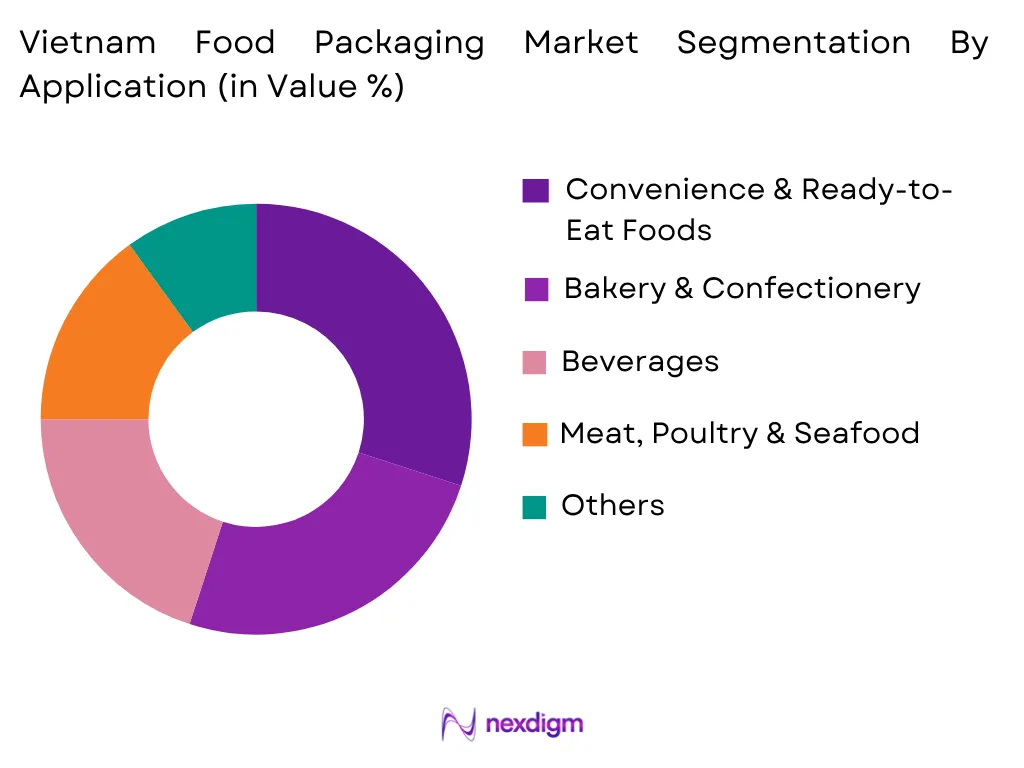
The Convenience & Ready-to-Eat Foods segment holds a leading share, supported by rising urbanization, growing female workforce participation, and the expansion of online food delivery platforms across Ho Chi Minh City, Hanoi, and Da Nang. Flexible packaging, which commanded roughly 31 percent of end-user demand in food applications within Vietnam’s flexible plastic packaging market in 2025, remains the preferred format for snacks, instant noodles, and ready-to-drink beverages due to its lightweight structure and ability to preserve freshness. Processed meat and seafood packaging has also risen sharply, with converters increasingly installing multilayer co-extrusion lines combining polyethylene with EVOH barrier resins to meet ASEAN shelf-life requirements and support Vietnam’s seafood and processed food export growth. Beverage packaging further contributes meaningfully to overall demand, supported by continued expansion of modern retail chains such as Aeon and Lotte.
Competitive Landscape
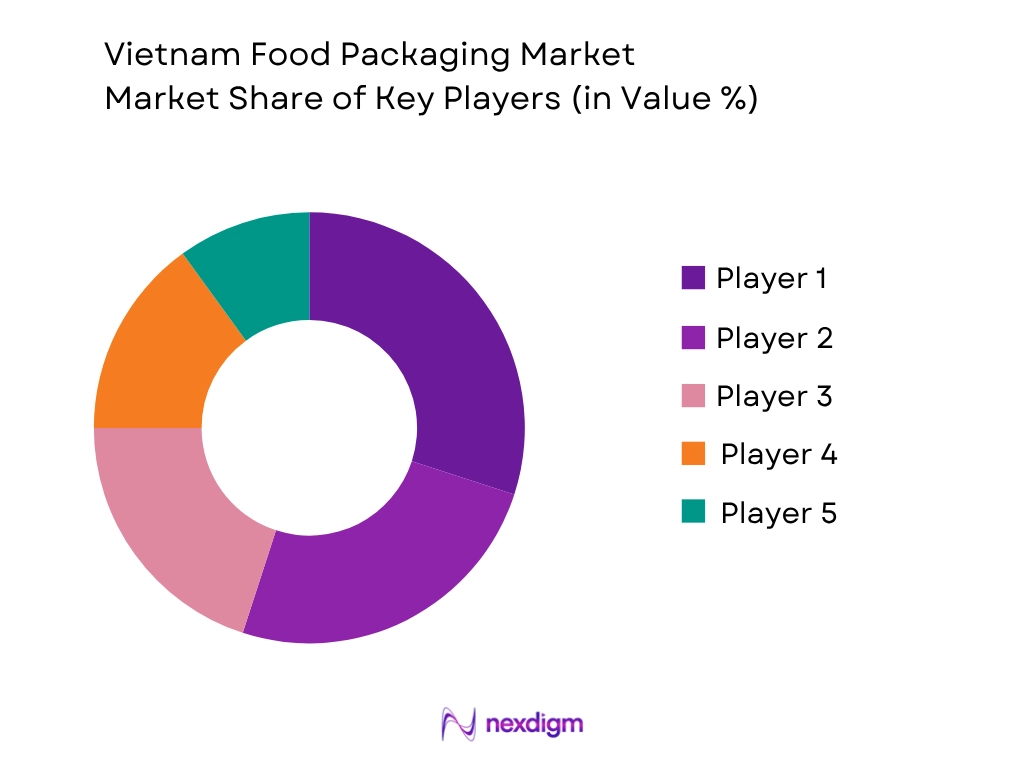
The Vietnam Food Packaging Market is moderately fragmented, with domestic converters, regional Southeast Asian manufacturers, and multinational packaging companies competing across plastic, paper, and aseptic carton formats. Competition is primarily based on cost efficiency, barrier performance, sustainability credentials, regulatory compliance, and the ability to serve both domestic retail and export-oriented food processors. Operational concentration remains decisively southern, with the Ho Chi Minh City, Binh Duong, and Dong Nai cluster accounting for approximately 70 percent of industry concentration due to its combination of mill capacity, converting density, ports, and proximity to large food and beverage manufacturing plants. Companies are increasingly investing in recycled content, mono-material structures, and export-oriented production capacity to differentiate their portfolios and comply with Extended Producer Responsibility mandates.
| Company | Establishment Year | Headquarters | Primary Product Portfolio | Food Packaging Portfolio
|
Manufacturing Presence | Major End-Use Industries | Key Strategic Focus | Certifications & Compliance |
| Tetra Pak Vietnam | 1996 | ~ | ~ | ~ | ~ | ~ | ~ | ~ |
| Crown Holdings Inc. | 1892 | ~ | ~ | ~ | ~ | ~ | ~ | ~ |
| Canpac Vietnam Co. Ltd. | 1999 | ~ | ~ | ~ | ~ | ~ | ~ | ~ |
| An Phat Holdings | 2002 | ~ | ~ | ~ | ~ | ~ | ~ | ~ |
| Vina Kraft Paper | 2006 | ~ | ~ | ~ | ~ | ~ | ~ | ~ |
Vietnam Food Packaging Market Analysis
Growth Drivers
Growing Demand for Processed Foods and E-Commerce Food Delivery
Vietnam’s food packaging market is experiencing sustained growth due to rising consumption of processed and packaged foods alongside rapid growth of e-commerce and online food delivery platforms. According to VietNamNet, Vietnam’s food and beverage sector recorded 7.4 percent sales growth in 2024, reaching USD 79.3 billion and solidifying its role as a key stimulus for packaging demand nationwide. Vietnam’s online retail market reached USD 32 billion in 2024, while total retail sales of goods and services rose to VND 6.39 quadrillion, sustaining strong demand for packaging across food, personal care, and fulfilment-led supply chains. The Vietnam Foodservice Market, valued at USD 24.77 billion in 2025, is projected to reach USD 45.21 billion by 2031, driven by rising disposable incomes, urbanization, and the digital transformation of the restaurant and delivery industry. This combination of expanding food consumption, growing delivery infrastructure, and rising retail sales continues to stimulate demand for durable, tamper-evident, and freshness-preserving food packaging formats across the country.
Expansion of Export-Oriented Manufacturing and Modern Retail
The steady expansion of Vietnam’s export-oriented food manufacturing and modern retail sectors remains a major driver for food packaging consumption. Vietnam’s processed-goods exports reached USD 153 billion in the first five months of 2025 alone, lifting packaging demand across manufacturing hubs, particularly in the southern industrial cluster surrounding Ho Chi Minh City, Binh Duong, and Dong Nai. Modern grocery chains such as Aeon and Lotte expanded store counts aggressively during 2024 and 2025, compelling brand owners to invest in high-graphic flexible packaging formats designed to stand out on well-lit retail shelves. Vietnam’s plastic packaging industry also benefits from a competitive advantage over regional peers following the lifting of European anti-dumping duties on Vietnamese products, encouraging a gradual shift of export customers toward Vietnamese converters. These structural developments continue to strengthen long-term demand for both domestic retail and export-oriented food packaging solutions throughout the country.
Market Challenges
Volatility in Resin and Paper Import Prices
Despite steady demand growth, the Vietnam food packaging market remains vulnerable to fluctuations in resin and imported paper prices, given the country’s continued reliance on imported raw materials for quality and continuity. Polyolefin resin prices rose 15 to 20 percent in 2024, prompting converters to hedge input costs through multi-supplier contracts and to experiment with recycled or bio-based resins. The average import price for paper during the first eight months of 2024 stood at approximately USD 885.3 per tonne, directly affecting converter margins, particularly for short-cycle contracts with weak pass-through provisions. Vietnam also imports over 2 million tons of scrap paper annually for recycling, with new technical regulations under QCVN 33:2024/BTNMT tightening raw-material compliance requirements from 2025 onward, creating higher inspection and handling friction for smaller converters with limited procurement scale. These factors collectively increase production planning complexity and cost volatility for companies operating within Vietnam’s food packaging industry.
Limited Recycling Infrastructure and Regulatory Compliance Complexity
Vietnam’s food packaging industry faces significant challenges related to limited domestic recycling infrastructure and an evolving regulatory compliance landscape. Vietnam generates approximately 1.8 million tons of plastic waste annually, yet only around 27 percent of plastic waste is currently recycled in the country, with roughly 40 percent of plastic waste leaked into the environment or landfills. Extended Producer Responsibility (EPR) regulations, which came into effect in 2024, require packaging manufacturers and brand owners to fund recycling and waste management programs, adding new compliance obligations for companies operating in the market. In addition, Vietnam’s policy direction requires tighter controls on single-use plastic products and non-biodegradable packaging after 2025 in malls, supermarkets, hotels, and tourism areas, requiring manufacturers to accelerate the transition toward paper-based and biodegradable alternatives. These regulatory and infrastructure constraints increase compliance costs and require continuous material reformulation for packaging companies serving the domestic food industry.
Market Opportunities
Rising Investment in Sustainable and Recyclable Packaging
Vietnam’s regulatory direction and growing environmental awareness create significant opportunities for investment in sustainable and recyclable food packaging solutions. The Vietnamese government has set a target to achieve 100 percent use of environmentally friendly bags by 2030, while approximately 75 percent of companies reported investing in green packaging technologies according to industry surveys. Demand for recycled PET (rPET) resin increased by 20 percent in 2023, reflecting growing brand owner commitment to circular economy principles. Companies such as Hiep Phu Green Packaging have already partnered with equipment suppliers to install flexographic printing lines using water-based inks and solvent-free lamination technologies aligned with EPR directives. The molded fiber and pulp packaging format is projected to grow at an 11.78 percent CAGR between 2026 and 2031, creating substantial opportunities for manufacturers investing in fiber-based alternatives to conventional plastic packaging across bakery, dairy, and foodservice applications.
Expansion of Export-Oriented and Smart Packaging Manufacturing
Vietnam’s expanding food and seafood export industry creates substantial long-term opportunities for packaging manufacturers supplying export-oriented food processors. Marubeni expanded its Vietnamese flexible packaging capacity to 400,000 tonnes in January 2025, targeting surging e-commerce and processed-food demand, while Tetra Pak and Doveco commissioned a new aseptic carton line in July 2025 capable of producing 6,000 boxes per hour for preservative-free food products. Export-oriented manufacturers increasingly require internationally compliant packaging with high oxygen barrier performance to satisfy ASEAN and international shelf-life requirements. Simultaneously, smart packaging solutions using QR codes, freshness indicators, and anti-counterfeit features are gaining traction among tech-savvy Vietnamese consumers, offering packaging manufacturers opportunities for premium differentiation. Continued investment in food processing facilities, cold-chain logistics, and industrial automation further strengthens production capacity for value-added food packaging formats across the country.
Future Outlook
The Vietnam Food Packaging Market is expected to witness sustained expansion over the forecast period, supported by continued growth in processed and packaged food consumption, expanding e-commerce and food delivery channels, and increasing regulatory and consumer pressure to adopt recyclable and sustainable packaging materials. Continued investment in fiber-based packaging, recycled content, and smart packaging technologies will further accelerate innovation across the industry. The market is also likely to benefit from Vietnam’s role as a regional export manufacturing hub, enabling greater integration between domestic converters and international food and beverage brands seeking compliant, cost-competitive packaging solutions.
Major Players
- Tetra Pak Vietnam
- Crown Holdings Inc.
- Canpac Vietnam Co. Ltd.
- My Chau Printing and Packaging JSC
- An Phat Holdings
- Vina Kraft Paper
- Batico
- Liksin
- Rang Dong Holding J.S.C
- Tan Phong
- Tapack
- IFC Plastic Packaging Materials Company Limited
- Feliz Plastic Vietnam Co., Ltd.
- SCG Packaging
- Vietnam Packing Group
Key Target Audience
- Food Packaging Manufacturers
- Food & Beverage Processing Companies
- Foodservice Operators and Quick-Service Restaurants
- Retail and Modern Trade Chains
- E-Commerce and Online Food Delivery Companies
- Investment and Venture Capitalist Firms
- Government and Regulatory Bodies (Ministry of Health / Vietnam Food Administration, Ministry of Natural Resources and Environment, Ministry of Industry and Trade (MOIT))
- Packaging Material Suppliers and Industrial Raw Material Distributors
Research Methodology
Step 1: Identification of Key Variables
The research process begins with identifying the complete ecosystem of the Vietnam Food Packaging Market, including raw material and resin suppliers, packaging converters and manufacturers, food and beverage processors, retailers, foodservice operators, and regulatory authorities. Extensive secondary research is conducted using company annual reports, government publications, trade associations, customs statistics, industry journals, and proprietary databases to determine the variables influencing market demand, pricing, production, consumption, and technological developments.
Step 2: Market Analysis and Construction
Historical market information is collected and analyzed to estimate market size, production volumes, import-export activity, application-wise demand, and pricing trends. A combination of top-down and bottom-up approaches is used to estimate market revenues and validate segment-level performance. Consumption patterns across bakery, dairy, beverages, convenience foods, seafood, and sauces are evaluated to establish an accurate representation of the industry.
Step 3: Hypothesis Validation and Expert Consultation
The preliminary findings are validated through Computer-Assisted Telephone Interviews (CATIs) and structured discussions with packaging manufacturers, procurement managers, converters, food technologists, regulatory experts, and senior executives operating within the Vietnamese food packaging industry. These interviews help verify market assumptions, competitive developments, technology adoption trends, pricing dynamics, and future investment opportunities while refining the overall market estimates.
Step 4: Research Synthesis and Final Output
The final stage integrates insights obtained from primary interviews with quantitative information collected through secondary sources. Data triangulation techniques are applied to reconcile differences between supply-side and demand-side estimates, ensuring robust market forecasting. The report is then reviewed through multiple quality assurance checkpoints to deliver a comprehensive analysis covering market size, segmentation, competitive landscape, future outlook, and strategic recommendations for industry stakeholders.

- Executive Summary
- Research Methodology (Market Definitions and Assumptions, Abbreviations, Market Sizing Approach, Top-Down Analysis, Bottom-Up Analysis, Demand-Side Assessment, Supply-Side Assessment, Primary Industry Interviews, Secondary Research Validation, Data Triangulation, Forecasting Framework, Limitations and Future Conclusions)

- Definition and Scope
- Market Evolution and Industry Genesis
- Timeline of Major Industry Developments
- Food Packaging Industry Value Chain Analysis
- Supply Chain Analysis

- Growth Drivers (Rising Consumption of Processed and Packaged Foods, Growth of E-Commerce and Online Food Delivery, Expansion of the Food and Beverage Industry, Increasing Focus on Food Safety and Hygiene, Growing Modern Retail Penetration, Rising Sustainability Awareness)
- Market Challenges (Volatility in Resin and Paper Import Prices, Fragmented Domestic Plastic Packaging Industry, Limited Plastic Waste Recycling Infrastructure, Regulatory Compliance Complexity, Competition from Regional Manufacturers, Cold Chain and Logistics Constraints)
- Market Opportunities (Investment in Domestic Recycling Capacity, Growth in Biodegradable and Compostable Packaging, Expansion of Export-Oriented Packaging Manufacturing, Smart and Interactive Packaging Adoption, Modified Atmosphere Packaging Growth, Mono-Material Packaging Development)
- Market Trends (Shift Toward Flexible Packaging Formats, Rising Adoption of Sustainable Fiber-Based Packaging, Growth in Aseptic Carton Packaging, Smart Packaging with QR Codes and Freshness Indicators, Southern Vietnam Manufacturing Concentration, Industry Consolidation Through Investment)
- Government Regulations (Ministry of Health Food Safety and Packaging Regulations, Extended Producer Responsibility (EPR) Regulations, Single-Use Plastic Reduction Roadmap, Ministry of Natural Resources and Environment Requirements, Import Compliance for Recycled Paper (QCVN Standards), Ministry of Industry and Trade Oversight)
- Import and Export Analysis (Trade Volume, Major Import Sources, Export Destinations, HS Code Analysis, Trade Balance)
- Raw Material Availability Analysis (Plastic Resins, Virgin and Recycled Paperboard, Aluminum, Glass, Bio-Based Materials)
- Technology Landscape (Modified Atmosphere Packaging, Aseptic Carton Technology, Smart and Interactive Packaging, Multilayer Barrier Film Extrusion, Recycled Content Processing)
- Sustainability Assessment (Recyclability and Compostability, Post-Consumer Recycled Content, Carbon Footprint Reduction, Plastic Waste Reduction, Circular Economy Integration)
- PESTLE Analysis
- SWOT Analysis
- Porter’s Five Forces Analysis
- Stakeholder Ecosystem
- Competition Ecosystem

- By Market Value (2020-2025)
- By Volume Consumption (2020-2025)
- By Average Selling Price (2020-2025)

- By Material (In Value %)
Plastic Packaging
Paper & Paperboard Packaging
Metal Packaging
Glass Packaging
Biodegradable & Sustainable Packaging - By Packaging Type (In Value %)
Flexible Packaging
Rigid Packaging - By Product Type (In Value %)
Pouches & Bags
Bottles & Jars
Boxes & Cartons
Trays & Containers
Cans - By Application (In Value %)
Bakery & Confectionery
Convenience & Ready-to-Eat Foods
Dairy Products
Beverages
Sauces, Dressings & Condiments
Seafood & Meat Products
Fruits & Vegetables - By Region (In Value %)
Southeast Vietnam (Ho Chi Minh City, Binh Duong, Dong Nai)
Red River Delta (Hanoi, Hai Phong)
Mekong Delta
Central Vietnam
Rest of Vietnam

- Market Share of Major Players (By Value, Volume, Material Type, Application Industry, Product Category)
- Cross Comparison Parameters (Material Portfolio Breadth, Sustainable Packaging Portfolio, Barrier Performance Capability, Application Technical Support Capability, Manufacturing Capacity, Regulatory Compliance & Certifications, Food & Beverage Customer Base, Innovation & New Product Launch Frequency)
- SWOT Analysis of Major Players
- Pricing Analysis by Product Category and SKU
- Production Capacity Analysis
- Manufacturing Footprint Analysis
- Distribution Network Analysis
- Innovation Benchmarking
- Detailed Profiles of Major Companies
Tetra Pak Vietnam
Crown Holdings Inc.
Canpac Vietnam Co. Ltd.
My Chau Printing and Packaging JSC
An Phat Holdings
Vina Kraft Paper
Batico
Liksin
Rang Dong Holding J.S.C
Tan Phong
Tapack
IFC Plastic Packaging Materials Company Limited
Feliz Plastic Vietnam Co., Ltd.
SCG Packaging
Vietnam Packing Group

- Consumption Pattern Analysis (Industrial Usage, Batch Size, Product Category Penetration, Seasonal Demand, Reformulation Activity)
- Purchasing Criteria (Barrier Performance, Cost Efficiency, Recyclability, Shelf-Life Extension, Regulatory Compliance, Print and Brand Presentation)
- Procurement and Supplier Selection Analysis
- Sustainable Packaging Adoption Assessment
- Premium vs Conventional Packaging Demand
- Product Attribute Preference Analysis (Barrier Properties, Resealability, Portion Control, Recyclability, Print Quality, Shelf Appeal)
- Consumer Sustainability Influence on Packaging Design
- Pain Point Analysis
- Decision-Making Process

- By Market Value (2026-2035)
- By Volume Consumption (2026-2035)
- By Average Selling Price (2026-2035)


 Request a Sample
 Ask for Customization
 Get a Quote
 Enquire Now