

 Download PDF
Market Overview
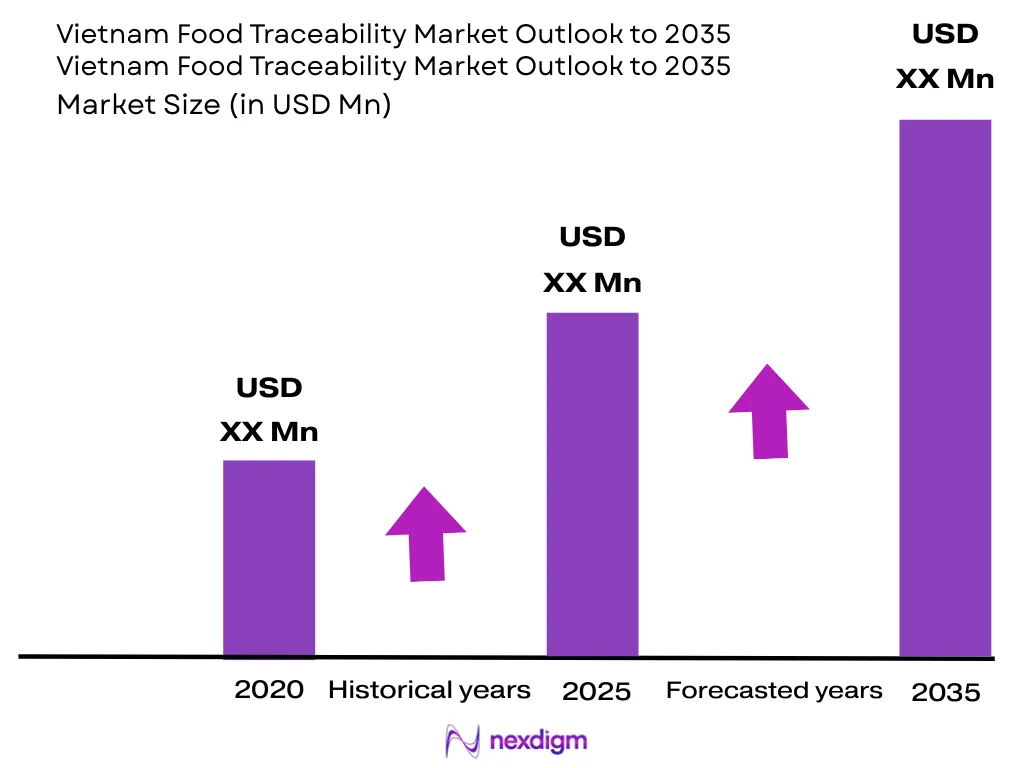
The Vietnam Food Traceability Market was valued at USD ~ Million in 2024 and is anticipated to expand at a CAGR of ~% during 2026–2035. The market is primarily driven by Vietnam’s position as a major net exporter of agriculture, forestry, and fishery products, with export value rising from USD 41.2 billion in 2020 to USD 62.5 billion in 2024 and reaching USD 33.8 billion in just the first six months of 2025, alongside the government’s landmark launch of a National Agricultural Product Traceability System on July 1, 2025. According to Global Market Insights, the global food traceability market was valued at USD 13 billion in 2024 and is projected to grow from USD 15 billion in 2025 to USD 45 billion by 2034, a 13% CAGR, with Vietnam’s rapid digitalisation of its agri-food export sector positioning the country as one of the more dynamic traceability markets in Southeast Asia.
Market Segmentation
By Technology Type
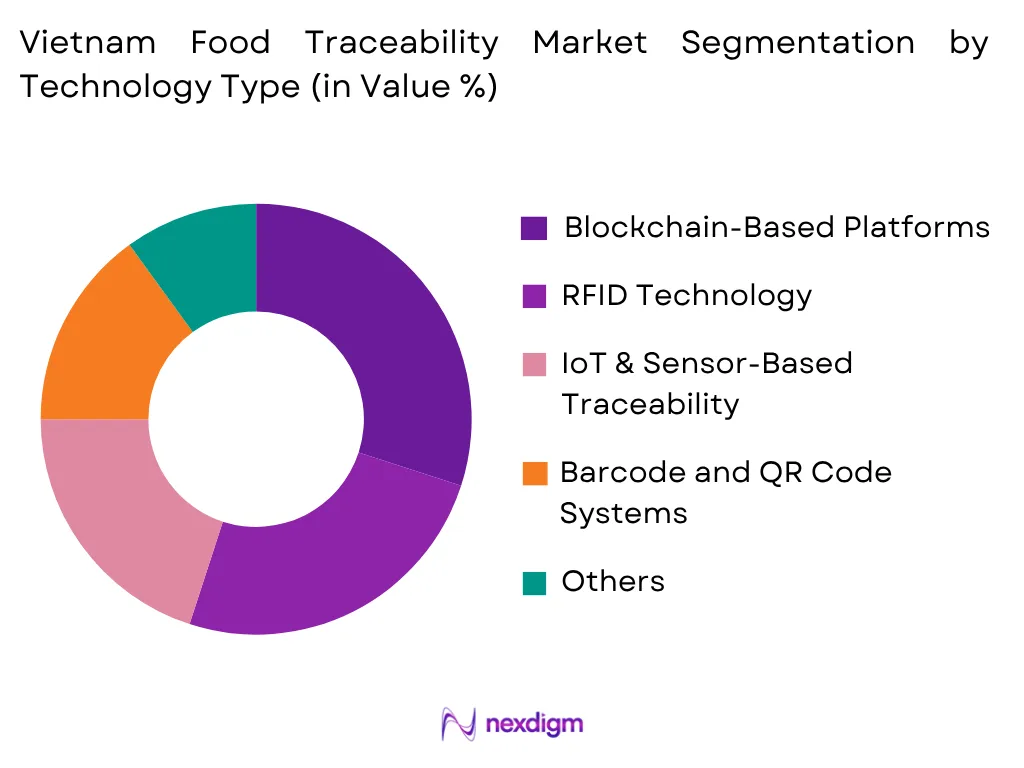
Among these, Blockchain-Based Platforms hold a significant and growing share of the Vietnam Food Traceability Market, anchored by the government’s National Agricultural Product Traceability System, which uses electronic signatures and blockchain technology to authenticate data, alongside product identification based on international GS1 standards and QR codes using GS1 Digital Link. The system is built with a modern, service-oriented architecture capable of handling approximately 1,000 searches per second, 30,000 simultaneous traceability label scans, and more than 85 million scans per day, according to Vietnam’s Ministry of Agriculture and Environment. TE-FOOD International, a Hungarian-Vietnamese joint venture founded in 2016 with deep roots in Ho Chi Minh City, represents the country’s most widely deployed private blockchain traceability platform, serving more than 6,000 business customers, including major retailers such as AEON, Big C, and Lotte Mart, and processing approximately 400,000 business transactions each day across its farm-to-table traceability ecosystem.
By Application
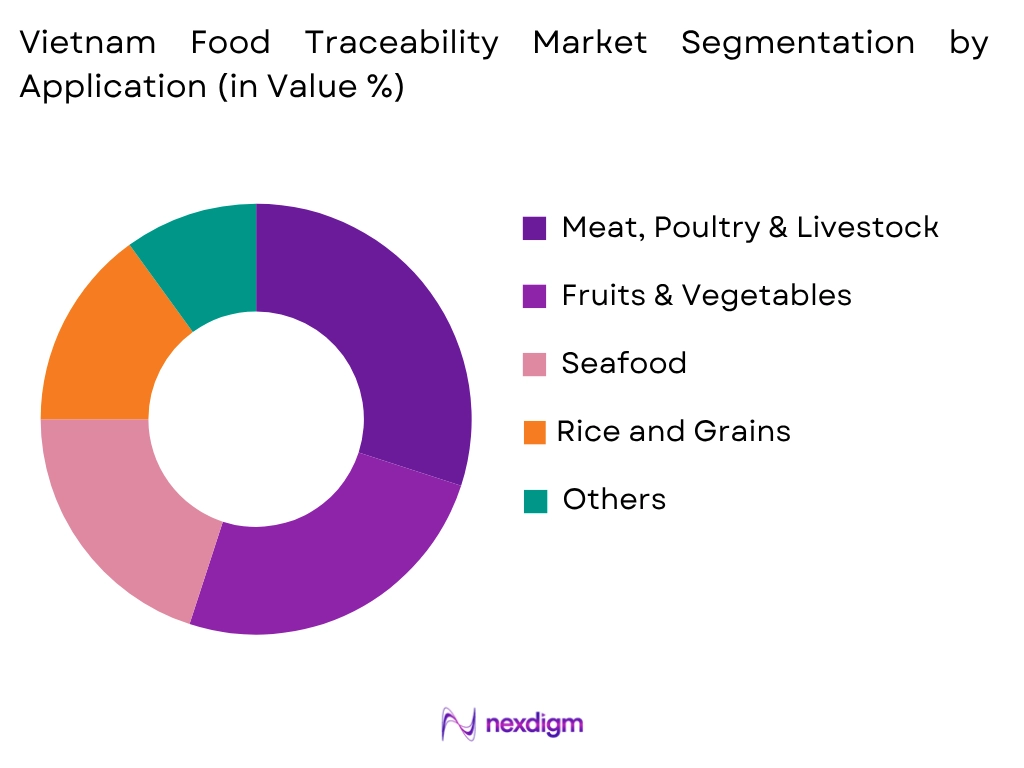
The Fruits and Vegetables segment, alongside Meat, Poultry and Livestock, commands a substantial share of the Vietnam Food Traceability Market, reflecting the country’s status as a major exporter of durian, coffee, rice, cashew nuts, and seafood, with key export markets including China, the European Union, the United States, and Japan. The durian export pilot programme under Vietnam’s National Agricultural Product Traceability System has already enabled 16 businesses to successfully export six containers of traceable durian to the Chinese market through electronic traceability, according to the Ministry of Agriculture and Environment. Masan MEATLife, one of Vietnam’s largest meat processors, is among the first companies connected to the national traceability system, beginning with chicken meat products and working to extend the connection to chilled pork, illustrating the growing formalisation of traceability across Vietnam’s meat and poultry supply chains alongside its already well-established export-oriented fruit and vegetable traceability infrastructure.
Competitive Landscape
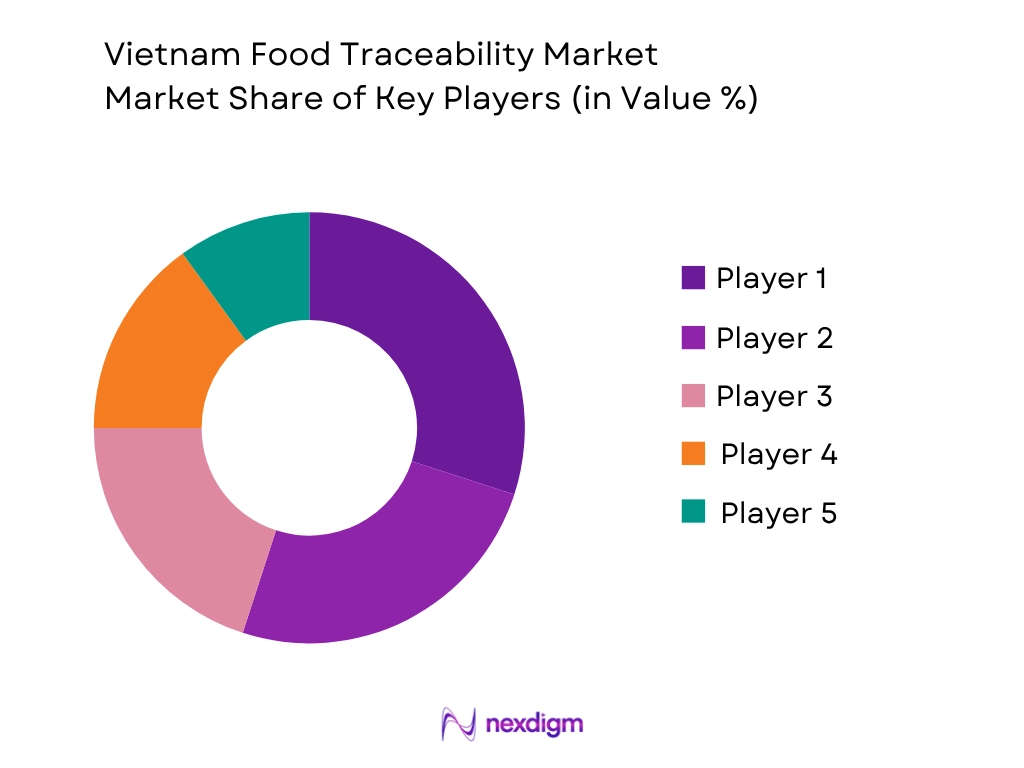
The Vietnam Food Traceability Market combines a dominant homegrown blockchain platform with global enterprise technology providers and a growing ecosystem of domestic agtech developers. TE-FOOD International, co-founded by Vietnamese entrepreneur Dr. Trung Dao Ha and headquartered jointly between Ho Chi Minh City and Budapest, represents the country’s largest publicly accessible farm-to-table traceability system, having rolled out pig and pork traceability in Dong Nai province, Vietnam’s largest pork-producing region, since 2016, with major customers including Vinamilk, CP Group, and leading modern retail chains. TMA Solutions, one of Vietnam’s largest software outsourcing companies, founded in Ho Chi Minh City in 1997, offers blockchain and IoT-based traceability engines through its TMA Innovation division, supporting coffee, rice, seafood, and fruit and vegetable exporters in meeting European Union, United States, and Japanese compliance standards. Global providers including IBM Corporation, Zebra Technologies Corporation, and SGS SA compete on enterprise blockchain infrastructure, RFID and barcode hardware, and international export certification services respectively, while the government’s own National Agricultural Product Traceability System is designed to interoperate with multiple solution providers rather than relying on a single technology vendor.
| Company | Establishment Year | Headquarters | Primary Product Portfolio | Traceability Solution Portfolio
|
Deployment Presence | Major End-Use Industries | Key Strategic Focus | Certifications & Compliance |
| TE-FOOD International | 2016 | ~ | ~ | ~ | ~ | ~ | ~ | ~ |
| IBM | 1911 | ~ | ~ | ~ | ~ | ~ | ~ | ~ |
| SGS SA | 1878 | ~ | ~ | ~ | ~ | ~ | ~ | ~ |
| TMA Solutions (TMA Innovation) | 1997 | ~ | ~ | ~ | ~ | ~ | ~ | ~ |
| Zebra Technologies Corporation | 1969 | ~ | ~ | ~ | ~ | ~ | ~ | ~ |
Vietnam Food Traceability Market Analysis
Growth Drivers
Launch of the National Agricultural Product Traceability System
The Vietnam food traceability market is experiencing a structural inflection point following the official launch of the National Agricultural Product Traceability System on July 1, 2025, after a successful six-month pilot programme for exported durian products. The system, developed by Vietnam’s Ministry of Agriculture and Environment, integrates traceability information for more than 18,500 products across 181 product groups from 170 businesses in 24 of Vietnam’s 34 provinces and cities, and is designed with a shared data platform ensuring connectivity and interoperability with ministries, localities, businesses, and existing traceability solution providers. Deputy Prime Minister Ho Quoc Dung has prioritised the implementation of traceability for key industries and products with high production volume and economic value, particularly targeting major export markets including China, the European Union, and the United States, signalling sustained high-level government commitment to scaling the system nationwide over the coming years.
Rising Agri-Food Export Value and International Compliance Requirements
Vietnam’s rapidly growing agri-food export sector is a significant driver of food traceability adoption, with export value of agriculture, forestry, and fishery products rising from USD 41.2 billion in 2020 to USD 62.5 billion in 2024, and reaching USD 33.8 billion in just the first six months of 2025, according to B&Company research. As demand for Vietnamese exports continues to grow in major markets such as the European Union, United States, and Japan, exporters of coffee, rice, seafood, and fruits and vegetables must meet increasingly stringent traceability, food safety, and data transparency standards that traditional paper-based or siloed digital record-keeping can no longer satisfy. Around 80% of Vietnamese consumers are also willing to pay more for clean and safe, traceable products, according to B&Company, reflecting a domestic market shift that is reinforcing export-driven traceability investment with genuine local consumer demand for origin transparency.
Market Challenges
Fragmented Smallholder Production and Limited Digital Literacy
A significant challenge facing the Vietnam Food Traceability Market is the country’s highly fragmented agricultural production base, dominated by smallholder farms as small as 0.7 hectares, combined with limited digital literacy among farmers and siloed data systems across different government ministries, according to B&Company research. This landscape complicates the design of traceability solutions that must simultaneously serve large export-oriented processors and vast numbers of dispersed smallholder producers and cooperatives. Vietnam’s dairy sector illustrates the scale of the challenge: despite dairy products ranking third in the number of food fraud incidents in the country, there remains little evidence of a comprehensive existing dairy traceability system, according to research published following the 2018 incident in which more than 70 primary school students in Dong Nai were poisoned after consuming contaminated milk products, underscoring the consumer trust gap that persists in categories without robust digital traceability infrastructure.
Interoperability, Cost Barriers, and Infrastructure Limitations
The Vietnam Food Traceability Market continues to face interoperability challenges as government agencies at both central and provincial levels, GS1 Vietnam, private solution providers, and diverse supply chain stakeholders including cooperatives, supermarkets, and traditional traders each operate with varying levels of technology adoption and data standards. Cost barriers, infrastructure limitations, and resistance from small-scale producers remain major challenges to widespread traceability adoption, according to research on Vietnam’s fine dining and premium culinary sectors, even as demand for authenticity, sustainability, and transparency in food sourcing continues to rise among both domestic consumers and international buyers. For technology providers, this fragmented landscape creates both a challenge and an opportunity: solutions must be mobile-first, modular, and affordable enough to serve both a 0.7-hectare rice farm and a large-scale cooperative, requiring significant localisation and interoperability investment beyond what many global enterprise platforms are designed to provide out of the box.
Market Opportunities
Expansion of Fruit, Coffee, and Seafood Export Traceability
Vietnam’s National Agricultural Product Traceability System’s successful durian export pilot, which enabled 16 businesses to export six containers of traceable durian to China, provides a proven template for expanding digital traceability across the country’s other major export commodities, including coffee, rice, seafood, and cashew nuts. TMA Innovation’s blockchain traceability solutions, which verify origin and processing steps for coffee to meet specialty export standards, provide complete cultivation, milling, and storage documentation for rice destined for EU and US buyers, and track cold chain conditions for seafood bound for Japan, illustrate the commercial opportunity available to technology providers capable of tailoring traceability infrastructure to the specific compliance requirements of each export commodity and destination market. As global regulators and buyers increasingly expect transparent, tamper-proof, and real-time traceability from farm to fork, Vietnamese exporters that adopt these solutions are positioned to reduce the risk of recalls or shipment rejection while building lasting buyer confidence.
Cooperative-Level and Domestic Retail Traceability Adoption
Beyond export markets, Vietnam’s domestic traceability adoption is expanding at the cooperative and retail level, exemplified by the Hoàng Long cooperative in Hà Nội, which enhanced food safety through digital traceability using the iCheck Trace application in March 2025, supported by the SAFEGRO project. This mirrors the earlier Ho Chi Minh City-based pork traceability pilot, in which the market management board registered pork sellers and provided them with QR codes to display at food stalls, a model that could be extended to additional wet markets and traditional retail channels across Vietnam’s provinces. With domestic consumers increasingly demanding origin transparency, technology providers that can deliver low-cost, mobile-first traceability tools tailored to cooperatives and traditional market vendors, rather than only large-scale export-oriented processors, are well positioned to capture significant untapped domestic market opportunity alongside continued export-driven demand.
Future Outlook
The Vietnam Food Traceability Market is expected to witness substantial expansion over the forecast period, anchored by the nationwide scale-up of the government’s National Agricultural Product Traceability System beyond its current base of 170 businesses and 24 provinces, continued growth in agri-food export value, and sustained international regulatory pressure from major buyers in the European Union, United States, and Japan. Growing domestic consumer demand for origin transparency, with around 80% of Vietnamese consumers willing to pay more for verifiably clean and safe products, will further support adoption across both export-oriented and domestic retail channels. The market is also likely to benefit from continued investment by both TE-FOOD International’s established blockchain infrastructure and TMA Innovation’s export-compliance-focused solutions, even as the industry continues to navigate smallholder technology access gaps, interoperability challenges across a fragmented provider landscape, and the practical difficulty of extending robust traceability to Vietnam’s vast base of small-scale agricultural producers.
Major Players
- IBM Corporation (IBM Food Trust)
- Zebra Technologies Corporation
- SGS SA
- Bureau Veritas SA
- FoodChain ID Group
- FoodLogiQ Inc. (Trustwell)
- Sensitech Inc.
- Cognex Corporation
- GS1 Vietnam
- TraceX Technologies
- Farmer Connect AG
- TE-FOOD International
- TMA Solutions (TMA Innovation)
- iCheck Vietnam
- Ecotrace
Key Target Audience
- Food Traceability Technology Providers
- Food & Beverage Processing Companies
- Agricultural Exporters and Trading Companies
- Retailers and Supermarket Chains
- Cooperatives and Smallholder Farmer Associations
- Investment and Venture Capitalist Firms
- Government and Regulatory Bodies (Ministry of Agriculture and Environment, GS1 Vietnam, Ministry of Public Security)
- Logistics and Cold Chain Providers
Research Methodology
Step 1: Identification of Key Variables
The research process begins with identifying the complete ecosystem of the Vietnam Food Traceability Market, including hardware and software technology providers, blockchain platform developers, certification and audit bodies, food processors and exporters, retailers, and regulatory authorities. Extensive secondary research is conducted using company annual reports, government publications, trade associations, customs statistics, industry journals, and proprietary databases to determine the variables influencing market demand, pricing, deployment, adoption, and technological developments.
Step 2: Market Analysis and Construction
Historical market information is collected and analysed to estimate market size, deployment volumes, technology adoption rates, application-wise demand, and pricing trends. A combination of top-down and bottom-up approaches is used to estimate market revenues and validate segment-level performance. Adoption patterns across meat and poultry, seafood, fruits and vegetables, rice, coffee, and dairy are evaluated to establish an accurate representation of the industry.
Step 3: Hypothesis Validation and Expert Consultation
The preliminary findings are validated through Computer-Assisted Telephone Interviews (CATIs) and structured discussions with traceability technology providers, procurement managers, food processors, exporters, regulatory experts, and senior executives operating within the Vietnamese food and agribusiness industries, spanning Ho Chi Minh City, Hanoi, and Da Nang. These interviews help verify market assumptions, competitive developments, technology adoption trends, pricing dynamics, and future investment opportunities while refining the overall market estimates.
Step 4: Research Synthesis and Final Output
The final stage integrates insights obtained from primary interviews with quantitative information collected through secondary sources. Data triangulation techniques are applied to reconcile differences between supply-side and demand-side estimates, ensuring robust market forecasting. The report is then reviewed through multiple quality assurance checkpoints to deliver a comprehensive analysis covering market size, segmentation, competitive landscape, future outlook, and strategic recommendations for industry stakeholders.

- Executive Summary
- Research Methodology (Market Definitions and Assumptions, Abbreviations, Market Sizing Approach, Top-Down Analysis, Bottom-Up Analysis, Demand-Side Assessment, Supply-Side Assessment, Primary Industry Interviews, Secondary Research Validation, Data Triangulation, Forecasting Framework, Limitations and Future Conclusions)

- Definition and Scope
- Market Evolution and Industry Genesis
- Timeline of Major Industry Developments
- Food Traceability Industry Value Chain Analysis
- Supply Chain Analysis

- Growth Drivers (Rising Agri-Food Export Value, National Agricultural Product Traceability System Rollout, Growing Consumer Demand for Origin Transparency, Export Compliance Requirements from EU, US and Japan, Government Digital Transformation Policy, Rebuilding Trust After Food Safety Incidents)
- Market Challenges (Fragmented Smallholder Production Base, Limited Digital Literacy Among Farmers, Siloed Data Systems Across Ministries, High Implementation Costs for SMEs, Interoperability Across Solution Providers, Rural Infrastructure Limitations)
- Market Opportunities (Durian and Fruit Export Traceability Expansion, Dairy Supply Chain Traceability Development, Coffee and Rice Export Compliance Platforms, Mobile-First Smallholder Traceability Tools, Seafood Cold Chain Traceability, Integration with National Traceability System)
- Market Trends (National Traceability System Nationwide Rollout, Blockchain-GS1 Standards Convergence, Rise of Domestic Agtech Platforms, QR Code Consumer-Facing Transparency, Cooperative-Level Digital Traceability Adoption, Multi-Commodity Platform Expansion)
- Government Regulations (Ministry of Agriculture and Environment Traceability Requirements, Resolution No. 57-NQ/TW on Digital Transformation, GS1 Vietnam Standards, Food Safety Labelling Requirements, Export Certification Requirements, National Data Center Integration Requirements)
- Import and Export Analysis (Agri-Food Export Value, Major Export Destinations (China, EU, US, Japan), Durian Export Compliance, HS Code Analysis, Trade Balance)
- Technology Landscape (Blockchain Platforms (TrustChain, Private Ethereum), GS1 Digital Link QR Codes, Mobile Application-Based Data Capture, IoT Cold Chain Sensors, National Shared Data Platform Architecture)
- Sustainability Assessment (Deforestation-Free Coffee Verification, Sustainable Aquaculture Certification, VietGAP Certification Integration, Traceability-Linked Export Premiums, Smallholder Inclusion Initiatives)
- PESTLE Analysis
- SWOT Analysis
- Porter’s Five Forces Analysis
- Stakeholder Ecosystem
- Competition Ecosystem

- By Market Value (2020-2025)
- By Volume of Deployments (2020-2025)
- By Average Selling Price (2020-2025)

- By Technology (In Value %)
Blockchain-Based Platforms
RFID Systems
Barcode and QR Code Systems (GS1 Digital Link)
GPS and IoT Sensor-Based Tracking
ERP and Cloud Software Platforms - By Component (In Value %)
Hardware
Software
Services - By Application (In Value %)
Meat, Poultry and Livestock
Seafood
Fruits and Vegetables
Rice and Grains
Coffee
Dairy Products - By End User (In Value %)
Food Processors and Manufacturers
Exporters and Trading Companies
Retailers and Supermarket Chains
Cooperatives and Smallholder Farmer Groups
Government and Regulatory Bodies - By Region (In Value %)
Southern Vietnam
Northern Vietnam
Central Vietnam

- Market Share of Major Players (By Value, Deployment Volume, Technology Type, Application Industry, Customer Segment)
- Cross Comparison Parameters (Technology Portfolio Breadth, Blockchain and Mobile-First Capability, Field Deployment Support, Application Technical Support Capability, Client Base Across Export-Oriented Industries, Regulatory Compliance & Certifications, Customer Base Across Industries, Innovation & New Product Launch Frequency)
- SWOT Analysis of Major Players
- Pricing Analysis by Solution Category
- Deployment Capacity Analysis
- Technology Footprint Analysis
- Distribution and Partner Network Analysis
- Innovation Benchmarking
- Detailed Profiles of Major Companies
IBM Corporation (IBM Food Trust)
Zebra Technologies Corporation
SGS SA
Bureau Veritas SA
FoodChain ID Group
FoodLogiQ Inc. (Trustwell)
Sensitech Inc.
Cognex Corporation
GS1 Vietnam
TraceX Technologies
Farmer Connect AG|
TE-FOOD International
TMA Solutions (TMA Innovation)
iCheck Vietnam
Ecotrace

- Consumption Pattern Analysis (Enterprise Adoption Rate, Cooperative-Level Adoption Rate, Product Category Penetration, Regional Adoption Variation, Reformulation Activity)
- Purchasing Criteria (Export Regulatory Compliance, Interoperability with National System, Cost Efficiency, Mobile Accessibility, Data Security, Scalability)
- Procurement and Supplier Selection Analysis
- Export Market Compliance Adoption Assessment
- Large Enterprise vs Smallholder Adoption Demand
- Product Attribute Preference Analysis (Real-Time Data Capture, Offline and Low-Connectivity Functionality, Blockchain Immutability, Consumer-Facing QR Interface, Multi-Commodity Support, Ease of Integration)
- Consumer Trust and Transparency Influence on Adoption
- Pain Point Analysis
- Decision-Making Process

- By Market Value (2026-2035)
- By Volume of Deployments (2026-2035)
- By Average Selling Price (2026-2035)


 Request a Sample
 Ask for Customization
 Get a Quote
 Enquire Now