
 Download PDF
Market Overview
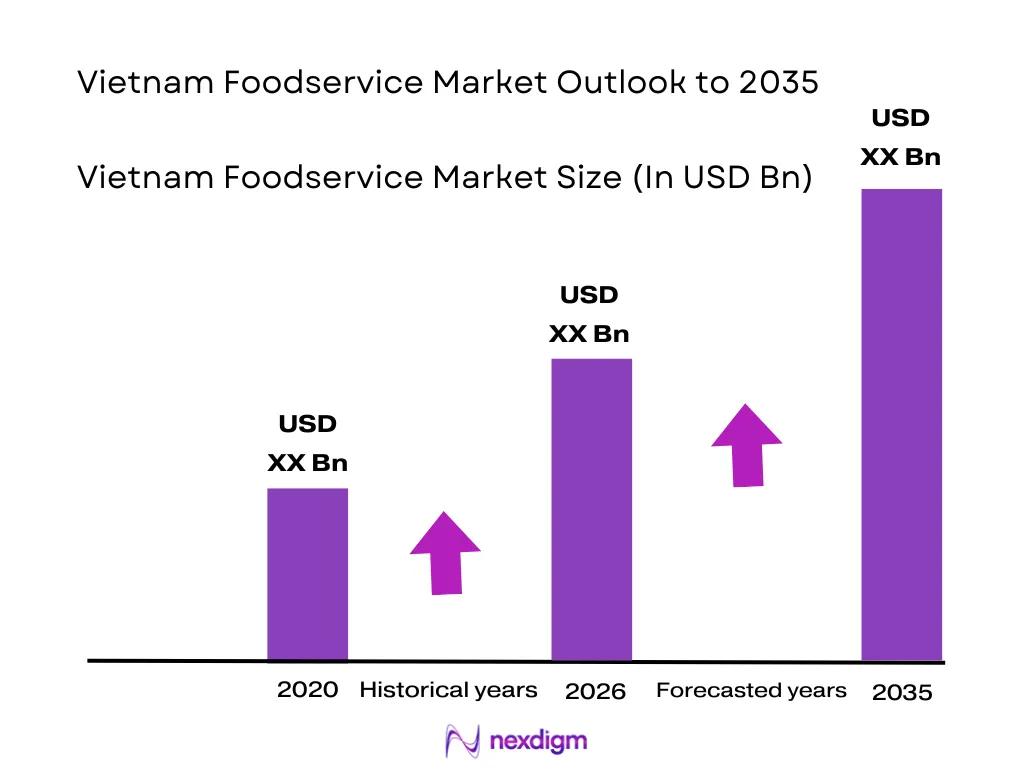
The Vietnam Foodservice Market is valued at approximately USD ~ billion, supported by rising urbanization, increasing tourism inflows, and strong consumer preference for dining-out culture. Vietnam recorded more than 17.5 million international tourist arrivals in 2024, compared to 12.6 million arrivals in 2023, significantly increasing demand for restaurants, cafés, and quick-service dining formats. The country’s GDP exceeded USD 476 billion in 2024, while urban population penetration crossed 40% of the total population, supporting higher consumption across organized foodservice channels. Rapid growth in app-based ordering, digital payments, and café culture has accelerated expansion of dine-in and delivery-focused restaurant models across metropolitan cities.
Cities such as Ho Chi Minh City and Hanoi dominate the Vietnam Foodservice Market due to dense urban populations, tourism concentration, higher disposable income levels, and stronger penetration of organized restaurant chains. Ho Chi Minh City leads in café culture, nightlife dining, and digital food delivery adoption because of its strong commercial ecosystem and international tourism activity. Hanoi remains a key market due to government, corporate, and tourism-driven foodservice demand. Coastal tourism destinations such as Da Nang and Phu Quoc are also emerging rapidly due to increasing hospitality investments, international flight connectivity, and expansion of premium dining and entertainment infrastructure.
Market Segmentation
By Foodservice Format
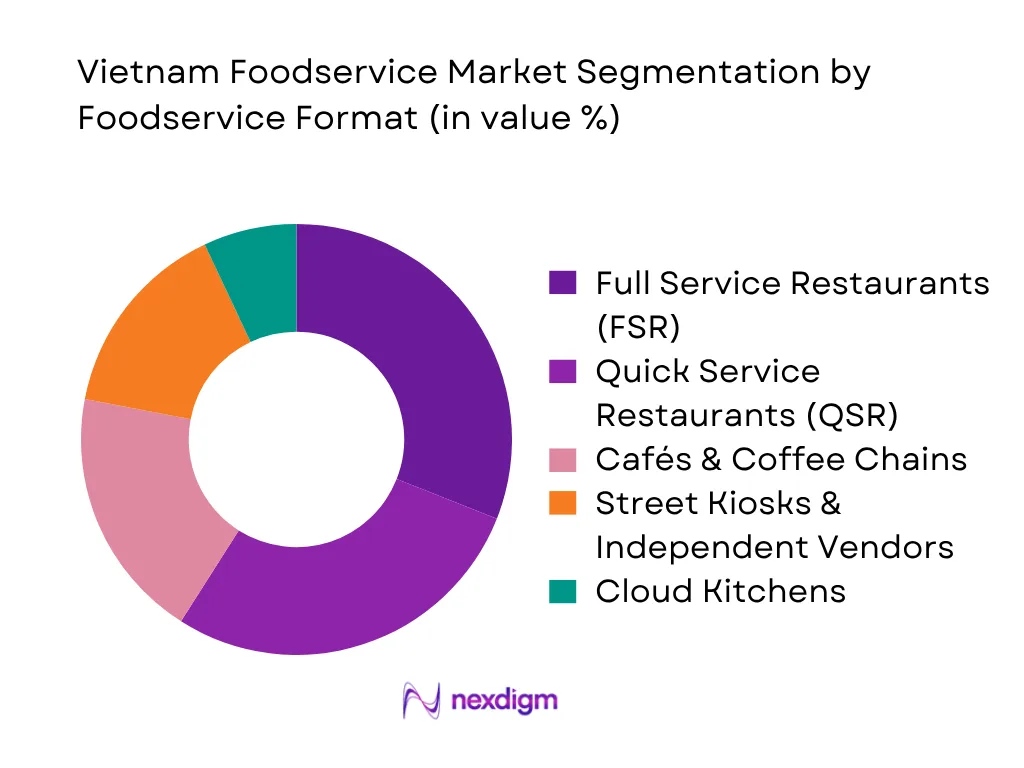
The Vietnam Foodservice Market is segmented by foodservice format into Quick Service Restaurants (QSR), Full Service Restaurants (FSR), Cafés & Coffee Chains, Street Kiosks & Independent Vendors, and Cloud Kitchens. Full Service Restaurants dominate the Vietnam Foodservice Market under the foodservice format segmentation because Vietnamese consumers strongly prefer group dining experiences and traditional sit-down meal occasions. Full-service formats benefit from higher average ticket sizes, broader menu offerings, and stronger tourism-driven consumption across urban and coastal destinations. Rising middle-income consumer spending and increasing expansion of organized dining chains have further strengthened demand for casual dining and premium restaurant concepts. Additionally, Vietnam’s culture of social gatherings and family-oriented dining occasions continues to support strong consumer footfall in full-service restaurant formats across metropolitan cities and tourism hubs.
By Cuisine Type
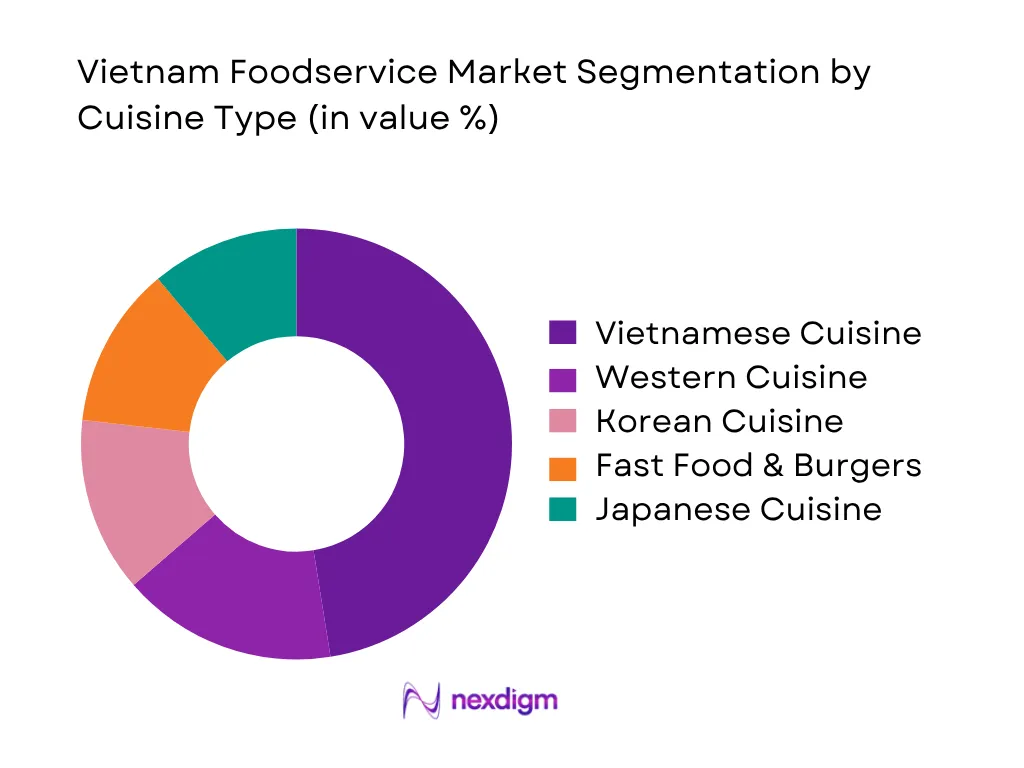
The Vietnam Foodservice Market is segmented by cuisine type into Vietnamese Cuisine, Korean Cuisine, Japanese Cuisine, Western Cuisine, and Fast Food & Burgers. Vietnamese cuisine dominates the Vietnam Foodservice Market because of strong consumer preference for traditional foods such as pho, rice meals, seafood dishes, and noodle-based cuisine. Local cuisine maintains high daily consumption frequency across all income categories due to affordability, accessibility, and cultural familiarity. Tourism demand has also strengthened the position of Vietnamese cuisine, as international travelers increasingly seek authentic local dining experiences. Organized restaurant operators continue expanding premium Vietnamese dining concepts across shopping malls and commercial districts. In addition, the strong presence of independent food vendors and street-food culture supports widespread accessibility and reinforces dominance of local cuisine across urban and regional markets.
Competitive Landscape
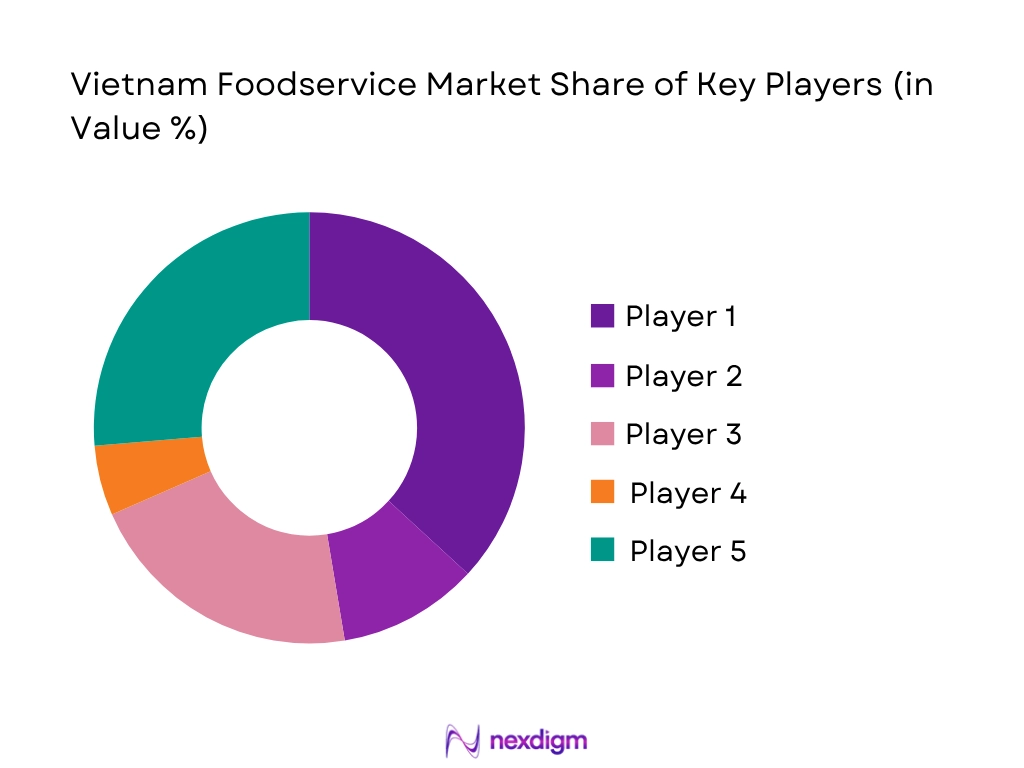
The Vietnam Foodservice Market is moderately consolidated, with strong competition between domestic restaurant operators, café chains, and international quick-service restaurant brands. Major companies are expanding aggressively through outlet network expansion, digital ordering integration, loyalty ecosystems, and menu localization strategies. Café chains and organized dining operators continue strengthening their market presence through premium dining experiences, app-based ordering systems, and strategic expansion into tourism-driven cities. The market is also witnessing increasing competition from cloud kitchens and delivery-focused restaurant brands targeting digitally connected urban consumers.
| Company | Establishment Year | Headquarters | Core Segment | Outlet Presence | Delivery Integration | Franchise Model | Digital Ordering Capability | Premiumization Strategy |
| Golden Gate Group | 2005 | Hanoi, Vietnam | Casual Dining | ~ | ~ | ~ | ~ | ~ |
| Highlands Coffee | 1999 | Ho Chi Minh City, Vietnam | Café Chain | ~ | ~ | ~ | ~ | ~ |
| The Coffee House | 2014 | Ho Chi Minh City, Vietnam | Café Chain | ~ | ~ | ~ | ~ | ~ |
| KFC Vietnam | 1997 | Ho Chi Minh City, Vietnam | Quick Service Restaurant | ~ | ~ | ~ | ~ | ~ |
| Pizza 4P’s | 2011 | Ho Chi Minh City, Vietnam | Premium Casual Dining | ~ | ~ | ~ | ~ | ~ |
Vietnam Foodservice Market Analysis
Growth Drivers
Rising International Tourism and Hospitality Expansion
Vietnam’s foodservice market is strongly supported by the rapid growth of international tourism and domestic travel activity. Vietnam welcomed more than 17.5 million international visitors in 2024, compared to 12.6 million arrivals in 2023, reflecting substantial growth in inbound tourism demand. Ho Chi Minh City and Hanoi remained the largest tourism consumption centers, driving restaurant traffic, café expansion, premium dining demand, and nightlife-related foodservice spending. The recovery in tourism has accelerated demand for seafood restaurants, hotel dining outlets, cafés, and entertainment-linked foodservice venues across coastal tourism destinations such as Da Nang, Nha Trang, and Phu Quoc. Tourism expansion has also strengthened airport dining, delivery demand, and hospitality-linked foodservice operations. South Korea remained one of Vietnam’s largest inbound tourism markets in 2024, increasing demand for Korean cuisine chains and international dining formats. Increasing international flight connectivity and relaxed visa policies have further stimulated restaurant consumption among tourists and expatriates. The tourism recovery has significantly expanded operational opportunities for organized restaurant operators, café chains, and premium dining brands across Vietnam’s hospitality ecosystem.
Urbanization and Rising Consumer Spending Capacity
Rapid urbanization and economic growth continue to support the expansion of Vietnam’s organized foodservice industry. Vietnam’s GDP exceeded USD 476 billion in 2024, while GDP per capita reached USD 4,717, reflecting rising consumer purchasing power and expanding middle-income households. Urban population penetration crossed 40% of the total population in 2024, compared to 39.48% in 2023, supporting higher demand for convenience dining, cafés, and app-based food delivery services. Ho Chi Minh City, Hanoi, Hai Phong, and Da Nang continue witnessing rapid commercial infrastructure development, strengthening restaurant expansion opportunities. Vietnam’s digitally connected population is also accelerating organized foodservice adoption. Internet penetration exceeded 84% in 2024, supporting mobile ordering, digital payments, and social-commerce-driven restaurant discovery. Urban migration patterns and changing work lifestyles are increasing demand for takeaway meals, dine-out consumption, and delivery-focused restaurant models. Additionally, rising female labor participation and increasing office-based employment are strengthening dependence on quick-service dining and convenience-oriented foodservice formats across urban commercial centers.
Market Challenges
Rising Rental Costs and Urban Operating Pressure
One of the major challenges affecting the Vietnam Foodservice Market is the increasing commercial rental burden across prime urban districts. Rapid urbanization and expansion of organized retail infrastructure have intensified competition for premium restaurant spaces in shopping malls, mixed-use developments, and high-footfall commercial streets. Urban population growth exceeded 2.4% annually in 2024, increasing pressure on commercial real estate availability in Ho Chi Minh City and Hanoi. The expansion of café chains, international restaurant operators, and convenience retail formats has further increased leasing competition across major foodservice zones. Restaurant operators are facing operational strain due to higher occupancy costs, rising utility expenses, and increasing logistics costs linked to urban congestion. Independent restaurants and small café operators are particularly vulnerable because they lack scale advantages available to larger chain operators. These cost pressures are limiting profitability and slowing outlet expansion among smaller foodservice establishments operating in Vietnam’s urban centers.
Labor Shortages and Workforce Retention Issues
Vietnam’s foodservice industry continues to face workforce retention and labor availability challenges due to rapid industry expansion and increasing competition for service-sector employees. Vietnam’s unemployment rate remained near 1.5% in 2024, reflecting tight labor market conditions and rising competition for restaurant staff, kitchen employees, and delivery personnel. Rapid tourism recovery and hospitality expansion have significantly increased demand for trained foodservice workers across international dining chains, cafés, and hotel-linked restaurants. High employee turnover is forcing restaurant operators to spend more on recruitment, training, and operational supervision. Expansion of app-based delivery platforms has intensified competition for gig workers and delivery riders across urban centers. In addition, rising labor migration toward larger cities is increasing workforce concentration but still failing to meet rapidly growing demand from foodservice, retail, tourism, and logistics sectors simultaneously. These labor shortages are reducing operational efficiency and affecting service consistency across Vietnam’s organized foodservice ecosystem.
Market Opportunities
Growth of Cloud Kitchens and Virtual Restaurant Models
Vietnam’s rapidly expanding digital economy presents strong opportunities for cloud kitchens and delivery-focused restaurant ecosystems. Internet penetration exceeded 84% in 2024, while smartphone adoption and digital payment usage continued increasing across urban consumer groups. Rising app-based ordering frequency and changing consumer lifestyles are supporting higher demand for convenience-oriented dining and hyperlocal delivery infrastructure. Cloud kitchens offer restaurant operators lower rental exposure and faster scalability compared to traditional dine-in formats. The increasing integration of QR-based payments, loyalty applications, and food delivery aggregators is transforming restaurant operations and consumer engagement. Young urban consumers in Ho Chi Minh City and Hanoi increasingly prefer digitally integrated dining solutions, strengthening opportunities for delivery-first foodservice models and virtual restaurant brands.
Expansion into Tourism-Driven Secondary Cities
The rapid development of tourism infrastructure in secondary cities is creating substantial opportunities for Vietnam’s foodservice market. Cities such as Da Nang, Nha Trang, Hoi An, and Phu Quoc are experiencing increasing tourist inflows due to expanding airport connectivity, coastal tourism investments, and hospitality infrastructure development. International tourist arrivals exceeded 17.5 million in 2024, strengthening demand for cafés, premium restaurants, seafood dining, and nightlife foodservice venues across regional tourism corridors. The expansion of hotels, entertainment districts, and beachfront commercial projects is increasing opportunities for organized restaurant chains beyond Hanoi and Ho Chi Minh City. Government tourism diversification initiatives are also encouraging investment into emerging regional destinations, supporting long-term foodservice expansion opportunities. Growth in tourism-linked retail infrastructure and commercial real estate development is expected to accelerate demand for franchise restaurants, premium dining concepts, and localized foodservice formats across Vietnam’s secondary urban centers.
Future Outlook
The Vietnam Foodservice Market is expected to witness substantial expansion over the coming years due to increasing urbanization, tourism recovery, and rising consumer preference for convenience-oriented dining solutions. Expansion of digital ordering ecosystems, QR-based payment systems, and hyperlocal delivery infrastructure is expected to strengthen demand for organized foodservice formats across metropolitan cities. Premium casual dining, café culture, and cloud kitchens are anticipated to gain significant traction among younger urban consumers and working professionals. Restaurant operators are expected to increasingly focus on menu localization, experiential dining concepts, and sustainable packaging adoption to strengthen customer retention and brand positioning. Tourism growth and hospitality investments across coastal destinations are also expected to accelerate premium restaurant expansion and nightlife-oriented foodservice demand. Technological advancements in restaurant automation, AI-based demand forecasting, and digital loyalty ecosystems are likely to improve operational efficiency and customer engagement across Vietnam’s evolving foodservice industry.
Major Players
- Golden Gate Group
- Highlands Coffee
- The Coffee House
- Phuc Long Coffee & Tea
- Trung Nguyen Legend
- Jollibee Vietnam
- Lotteria Vietnam
- KFC Vietnam
- McDonald’s Vietnam
- Pizza 4P’s
- Starbucks Vietnam
- RedSun ITI Corporation
- Burger King Vietnam
- Domino’s Pizza Vietnam
- Wrap & Roll
Key Target Audience
- Restaurant Chain Operators
- Quick Service Restaurant Franchise Owners
- Food Delivery Platform Companies
- Hospitality and Hotel Groups
- Commercial Kitchen Equipment Manufacturers
- Food Ingredient and Beverage Suppliers
- Investments and Venture Capitalist Firms
- Government and Regulatory Bodies
Research Methodology
Step 1: Identification of Key Variables
The initial stage involved identifying critical variables influencing the Vietnam Foodservice Market, including restaurant expansion, café culture adoption, tourism-driven consumption, digital ordering penetration, and consumer dining frequency. Extensive secondary research was conducted using government tourism publications, foodservice databases, company reports, and hospitality industry sources to understand the market ecosystem and operational structure.
Step 2: Market Analysis and Construction
Historical market analysis was conducted using restaurant revenue data, outlet expansion statistics, tourism consumption trends, and digital food delivery activity. Market estimations were derived using bottom-up calculations based on foodservice formats, cuisine types, regional demand patterns, and consumer spending behavior across organized and unorganized restaurant segments.
Step 3: Hypothesis Validation and Expert Consultation
The preliminary findings were validated through interviews with restaurant operators, café chains, hospitality executives, food delivery platforms, and franchise owners. These consultations provided operational insights regarding menu trends, pricing structures, delivery contribution, customer retention strategies, and future expansion plans within Vietnam’s foodservice industry.
Step 4: Research Synthesis and Final Output
The final phase involved consolidating quantitative and qualitative findings to produce a comprehensive assessment of the Vietnam Foodservice Market. Cross-validation was conducted using tourism statistics, restaurant industry disclosures, commercial infrastructure data, and operational intelligence to ensure reliability and consistency of market estimates, segmentation analysis, and long-term forecasts.

- Executive Summary
- Research Methodology (Market Definitions and Assumptions, Abbreviations, Research Framework, Bottom-Up Market Estimation, Top-Down Validation, Consumption Mapping, Foodservice Outlet Analysis, Tourism and Hospitality Assessment, Primary Interviews with Restaurant Operators and Delivery Platforms, Forecasting Model, Limitations and Assumptions)

- Definition and Scope
- Evolution of Vietnam’s Foodservice Industry
- Industry Ecosystem and Stakeholder Mapping
- Supply Chain and Value Chain Analysis
- Food Ingredient Procurement Landscape

- Growth Drivers
Rising International Tourism and Hospitality Expansion
Urbanization and Rising Consumer Spending Capacity
Expansion of Digital Food Delivery Ecosystem
Growth of Organized Restaurant Chains
Increasing Café Culture and Beverage Consumption - Market Challenges
Rising Rental Costs and Urban Operating Pressure
Labor Shortages and Workforce Retention Issues
Food Safety and Regulatory Compliance Risks
Supply Chain Fragmentation and Procurement Volatility - Market Opportunities
Growth of Cloud Kitchens and Virtual Restaurant Models
Expansion into Tourism-Driven Secondary Cities
Increasing Demand for Premium Dining Experiences
Growth in Health-Focused and Organic Foodservice Concepts - Market Trends
QR-Based Payment Adoption
Growth of Hyperlocal Delivery Platforms
AI-Based Menu Optimization and Demand Forecasting
Sustainable Packaging Adoption
Experiential and Theme-Based Dining Concepts - Government Regulations
Food Safety and Hygiene Compliance
Restaurant Licensing Framework
Labor and Wage Regulations
Alcohol and Beverage Service Policies
Environmental and Packaging Regulations - Porter’s Five Forces Analysis
- Pricing Analysis
- Competition Ecosystem

- By Value, 2020-2025
- By Transaction Volume, 2020-2025
- By Number of Foodservice Outlets, 2020-2025
- By Average Ticket Size, 2020-2025
- By Delivery Contribution, 2020-2025

- By Foodservice Format (in Value %)
Outlet Density
Average Ticket Size
Consumer Footfall
Delivery Penetration - By Cuisine Type (in Value %)
Consumer Preference
Frequency of Consumption
Menu Localization
Average Consumer Spending - By Service Model (in Value %)
Dine-In Utilization
Takeaway Demand
Delivery Order Frequency
Consumer Retention - By Ordering Channel (in Value %)
Mobile Ordering Penetration
Digital Payment Usage
Customer Acquisition
Repeat Ordering Frequency - By Consumer Demographics (in Value %)
Dining Frequency
Spending Capacity
Lifestyle Preference
Digital Affinity - By Price Positioning (in Value %)
Average Bill Value
Consumer Affordability
Premiumization Trend
Margin Structure - By Location Type (in Value %)
Footfall Intensity
Rental Yield
Commercial Accessibility
Tourism Exposure - By Region (in Value %)
Ho Chi Minh City
Hanoi
Central Vietnam
Northern Vietnam
Southern Vietnam
Mekong Delta

- Market Share Analysis of Major Players on the Basis of Revenue and Outlet Presence
- Cross Comparison Parameters (Company Overview, Outlet Network Strength, Average Ticket Size, Delivery Contribution, Menu Localization Strategy, Franchise Expansion, Digital Ordering Capability, Seating Capacity Utilization, Brand Positioning, Consumer Retention Strategy, Operational Efficiency, Sustainability Initiatives, Supply Chain Integration, Pricing Positioning, Innovation Pipeline, Strategic Partnerships)
- Competitive Benchmarking Matrix
- SWOT Analysis of Major Players
- Pricing Analysis by Restaurant Category and SKU
- Detailed Profiles of Major Companies
Golden Gate Group
Highlands Coffee
The Coffee House
Phuc Long Coffee & Tea
Trung Nguyen Legend
Jollibee Vietnam
Lotteria Vietnam
KFC Vietnam
McDonald’s Vietnam
Pizza 4P’s
Starbucks Vietnam
RedSun ITI Corporation
Burger King Vietnam
Domino’s Pizza Vietnam
Wrap & Roll

- Consumption Frequency Analysis
- Consumer Spending and Basket Analysis
- Brand Loyalty and Repeat Dining Behavior
- Purchase Decision Parameters
- Health and Wellness Preference Mapping
- Delivery Versus Dine-In Preference Analysis

- By Value, 2026-2035
- By Transaction Volume, 2026-2035
- By Number of Foodservice Outlets, 2026-2035
- By Average Ticket Size, 2026-2035
- By Delivery Contribution, 2026-2035


 Request a Sample
 Ask for Customization
 Get a Quote
 Enquire Now