
 Download PDF
 Download PDF
Market Overview
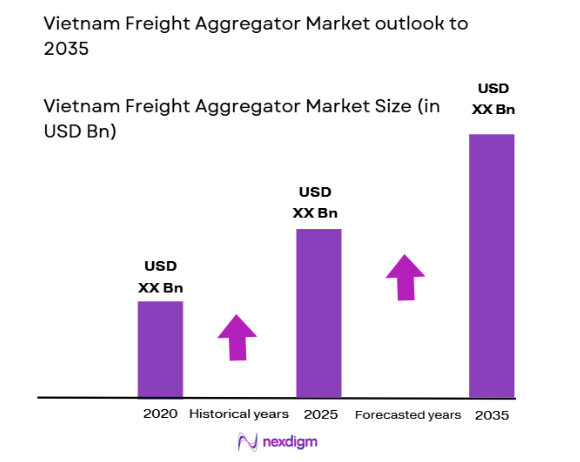
Based on a recent historical assessment, the Vietnam Freight Aggregator market reached USD ~ billion, driven by rapid digitalization in domestic logistics networks and expansion of e-commerce fulfillment demand. Platform-based freight matching improved asset utilization across fragmented trucking fleets while lowering transaction costs for shippers. Increased cross-border trade flows through regional manufacturing supply chains further accelerated aggregator adoption. Investments in logistics technology startups and mobile freight applications strengthened capacity visibility and price transparency across the transport ecosystem.
Major logistics aggregation activity concentrates around Ho Chi Minh City and Hanoi due to dense industrial clusters, export manufacturing hubs, and major seaport connectivity. Ho Chi Minh City anchors southern freight flows through Cat Lai and Cai Mep port corridors, while Hanoi supports northern manufacturing zones and cross-border trade with China. Secondary growth nodes include Da Nang and Hai Phong, benefiting from multimodal infrastructure expansion and industrial park development. Urban congestion and rising delivery expectations further reinforce aggregator platform reliance in these metropolitan regions.
Market Segmentation
By Service Type:
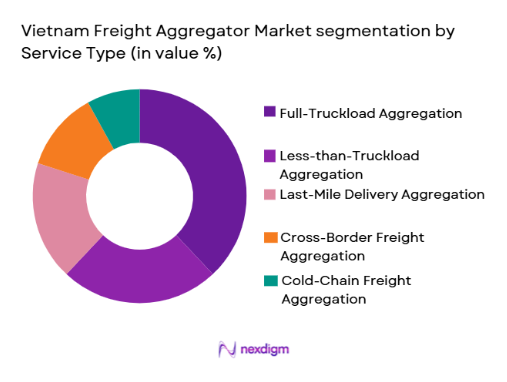
Vietnam Freight Aggregator market is segmented by service type into Full-Truckload Aggregation, Less-than-Truckload Aggregation, Last-Mile Delivery Aggregation, Cross-Border Freight Aggregation, and Cold-Chain Freight Aggregation. Recently, Full-Truckload Aggregation has a dominant market share due to factors such as strong manufacturing shipment volumes, standardized palletized cargo demand, and higher route optimization efficiency across long-haul corridors. Export-oriented industries rely on predictable truck capacity and bulk shipment consolidation, enabling aggregators to scale nationwide carrier networks. Lower handling complexity and established pricing benchmarks also favor full-truckload matching platforms over specialized or fragmented shipment services.
By Platform Type:
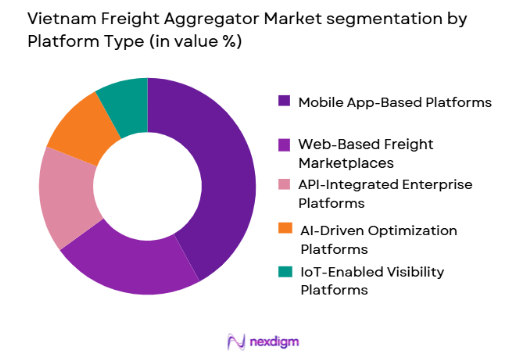
Vietnam Freight Aggregator market is segmented by platform type into Mobile App-Based Platforms, Web-Based Freight Marketplaces, API-Integrated Enterprise Platforms, AI-Driven Optimization Platforms, and IoT-Enabled Visibility Platforms. Recently, Mobile App-Based Platforms has a dominant market share due to factors such as high smartphone penetration among drivers and SMEs, low onboarding barriers, and real-time load matching convenience. Small fleet owners and independent truckers prefer mobile interfaces for job discovery and route updates. Instant communication, digital payments, and location tracking embedded in mobile ecosystems accelerate adoption across decentralized logistics participants.
Competitive Landscape
The Vietnam Freight Aggregator market shows moderate consolidation, with technology-driven logistics startups competing alongside regional courier and express operators expanding digital aggregation capabilities. Platform differentiation centers on carrier network size, route optimization technology, and multimodal integration depth. Large logistics groups leverage infrastructure and brand trust, while domestic tech firms innovate in mobile matching and pricing algorithms. Strategic partnerships with e-commerce platforms and manufacturers shape competitive positioning.
| Company Name | Establishment Year | Headquarters | Technology Focus | Market Reach | Key Products | Revenue | Aggregated Carrier Network Size |
| Logivan | 2017 | Vietnam | ~ | ~ | ~ | ~ | ~ |
| Abivin | 2015 | Vietnam | ~ | ~ | ~ | ~ | ~ |
| EcoTruck | 2017 | Vietnam | ~ | ~ | ~ | ~ | ~ |
| AhaMove | 2015 | Vietnam | ~ | ~ | ~ | ~ | ~ |
| Lalamove Vietnam | 2017 | Hong Kong | ~ | ~ | ~ | ~ | ~ |
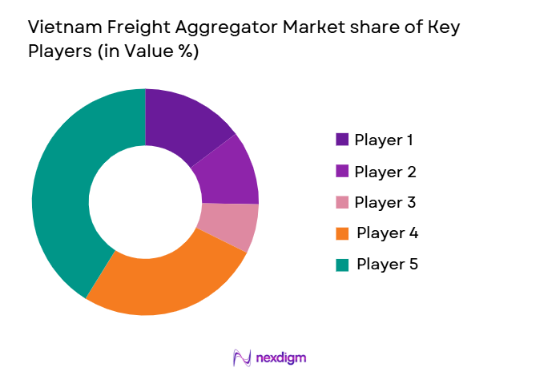
Vietnam Freight Aggregator Market Analysis
Growth Drivers
E-commerce Logistics Expansion and SME Digital Freight Adoption:
The rapid growth of online retail and marketplace-driven commerce has significantly increased shipment volumes requiring flexible and responsive freight capacity across Vietnam’s domestic distribution networks. Small and medium-sized enterprises increasingly depend on digital freight aggregators to access scalable transport without owning fleet assets or managing complex logistics operations. Aggregator platforms reduce search costs, enable instant carrier matching, and provide transparent pricing structures that align with fluctuating shipment demand cycles. Rising consumer expectations for faster delivery timelines push retailers and distributors toward real-time freight visibility and route optimization services. Manufacturing exporters also utilize aggregator platforms to coordinate inland container movements between factories, consolidation centers, and seaports. Increased smartphone penetration among truck drivers and logistics SMEs supports widespread onboarding into mobile-based freight marketplaces. Digital payments integration further enhances transaction trust and settlement efficiency across fragmented logistics participants. These structural shifts in commerce and supply chain behavior collectively strengthen long-term demand for freight aggregation platforms in Vietnam.
Fragmented Trucking Industry Requiring Capacity Optimization Platforms:
Vietnam’s road freight sector consists largely of small fleet operators and independent truck owners with limited network coordination and low asset utilization rates. Freight aggregators address structural inefficiencies by digitally connecting dispersed carriers with shipper demand, improving load consolidation and reducing empty return trips across major transport corridors. Platform-based dispatch systems enable dynamic allocation of cargo based on proximity, vehicle type, and route availability, enhancing operational productivity. Carriers benefit from higher truck utilization and consistent shipment access, while shippers gain reliable capacity and competitive pricing. Aggregators also standardize documentation, tracking, and payment processes across diverse logistics participants. As infrastructure expansion increases interregional freight flows, coordinated digital matching becomes more critical for balancing supply and demand. Integration of telematics and GPS tracking supports real-time fleet visibility across nationwide networks. These industry structural characteristics make digital aggregation platforms essential for modernizing Vietnam’s trucking ecosystem.
Market Challenges
Low Digital Literacy and Platform Trust Barriers Among Small Carriers:
A significant portion of Vietnam’s trucking operators consists of small family-owned fleets and independent drivers with limited exposure to digital logistics platforms and online transaction systems. Adoption resistance arises from unfamiliarity with mobile applications, concerns over payment security, and preference for traditional broker-based relationships built on personal trust. Aggregator onboarding processes require digital documentation, location tracking permissions, and standardized pricing transparency, which some carriers perceive as operational risks. Language barriers and varying levels of technological comfort further slow platform penetration in rural transport corridors. Limited awareness of efficiency benefits also constrains voluntary adoption among legacy operators. Without widespread carrier participation, aggregators face network density challenges affecting load availability and service reliability. Training initiatives and localized support increase operating costs for platform providers. These human and behavioral constraints remain a persistent structural barrier to full digital freight ecosystem integration.
Price Competition and Margin Pressure in Platform-Based Freight Matching:
Freight aggregation platforms operate in a highly price-sensitive environment where shippers prioritize cost reduction and carriers compete intensely for load access. Digital transparency exposes market rates across multiple platforms, encouraging aggressive discounting strategies to attract users and expand network scale. Low switching costs allow both shippers and carriers to move between competing applications, weakening long-term loyalty and pricing power. Platforms often subsidize transactions or reduce commissions to build market share, compressing profitability during expansion phases. Increasing fuel cost volatility and toll expenses amplify pressure on freight pricing stability. Competitive entry from regional logistics providers and last-mile delivery companies further intensifies pricing rivalry. Limited differentiation in basic matching functionality constrains premium pricing opportunities. Sustaining revenue growth while maintaining competitive rates remains a core economic challenge for freight aggregators in Vietnam’s digital logistics market.
Opportunities
Cross-Border Digital Freight Integration Across ASEAN Trade Corridors:
Vietnam’s role as a manufacturing export hub generates substantial cross-border freight flows linking China, Laos, Cambodia, and Thailand through road transport networks. Freight aggregators can expand platform capabilities to coordinate international trucking capacity, customs documentation workflows, and multimodal route optimization across regional corridors. Export manufacturers require reliable inland transport to border checkpoints and seaports, creating demand for integrated cross-border logistics visibility. Digital freight matching reduces border wait times by aligning vehicle availability with cargo readiness schedules. Regional trade agreements and transport facilitation policies support harmonization of logistics standards across ASEAN economies. Aggregators that develop multilingual interfaces and compliance integration tools can capture growing cross-border shipment demand. Enhanced tracking and digital documentation further improve shipment security and predictability for exporters. These regional trade dynamics create strong expansion potential for Vietnam-based freight aggregation platforms beyond domestic logistics markets.
Cold-Chain and Specialized Freight Aggregation for High-Value Supply Chains:
Vietnam’s expanding agricultural exports, seafood processing, pharmaceuticals distribution, and temperature-sensitive consumer goods sectors require reliable cold-chain transport capacity across domestic and export logistics networks. Freight aggregators can develop specialized platforms matching refrigerated vehicles with perishable cargo demand, improving utilization of limited cold-chain assets. Real-time temperature monitoring, route optimization, and compliance tracking enhance quality assurance for sensitive shipments. Producers and exporters increasingly demand transparent cold-chain visibility to meet international safety standards. Specialized aggregation services command higher transaction value due to equipment requirements and service complexity. Integration with warehouse cold storage networks further strengthens supply chain coordination. Urban food distribution and pharmaceutical logistics also require controlled-temperature last-mile delivery aggregation. As Vietnam’s perishable goods trade grows, digital coordination of specialized freight capacity presents a significant market opportunity for aggregator platforms.
Future Outlook
Vietnam Freight Aggregator market is expected to expand steadily as digital logistics adoption deepens across manufacturing, retail, and agricultural supply chains. Continued e-commerce growth and cross-border trade integration will increase demand for real-time freight matching and visibility platforms. Investments in logistics technology, mobile connectivity, and transport infrastructure will enhance platform scalability. Regulatory support for logistics modernization and digital payments will further strengthen aggregator penetration across fragmented trucking networks.
Major Players
- Logivan
- Abivin
- EcoTruck
- Truck365
- AhaMove
- Lalamove Vietnam
- Ninja Van Vietnam
- Viettel Post Logistics
- CJ Logistics Vietnam
- DHL eCommerce Vietnam
- Best Express Vietnam
- Kerry Express Vietnam
- GrabExpress Logistics
- Giaohangtietkiem Logistics
- Scommerce Logistics
Key Target Audience
- E-commercefulfillmentcompanies
- Manufacturing exporters
- Logistics service providers
- Freight forwarding companies
- Cold-chain logistics operators
- Supply chain technology vendors
- Transportation infrastructure operators
- Retail distribution companies
Research Methodology
Step 1: Identification of Key Variables
Primary variables such as shipment volume patterns, platform adoption rates, fleet utilization efficiency, and digital logistics penetration were identified. Secondary variables included infrastructure connectivity, trade flows, and technology investment trends influencing freight aggregation demand.
Step 2: Market Analysis and Construction
Market structure was constructed through mapping of platform providers, carrier networks, and shipper segments. Supply-demand relationships across trucking capacity and shipment requirements were analyzed to estimate platform transaction value and service segmentation shares.
Step 3: Hypothesis Validation and Expert Consultation
Industry experts including logistics operators, freight platform developers, and supply chain managers validated assumptions on adoption barriers, pricing dynamics, and technology impact. Cross-verification ensured realistic alignment with operational logistics conditions in Vietnam.
Step 4: Research Synthesis and Final Output
Quantitative and qualitative findings were synthesized to derive market size, segmentation distribution, and growth outlook. Consistency checks across trade data, logistics infrastructure indicators, and platform economics ensured credible final market assessment outputs.

- Executive Summary
- Research Methodology (Definitions, Scope, Industry Assumptions, Market Sizing Approach, Primary & Secondary Research Framework, Data Collection & Verification Protocol, Analytic Models & Forecast Methodology, Limitations & Research Validity Checks)

- Market Definition and Scope
- Value Chain & Stakeholder Ecosystem
- Regulatory / Certification Landscape
- Sector Dynamics Affecting Demand
- Strategic Initiatives & Infrastructure Growth

- Growth Drivers
Rapid growth of ecommerce driven freight demand
Digitalization push in Vietnam logistics sector
SME adoption of on demand freight platforms
Cross border trade expansion in ASEAN corridors
Government logistics modernization initiatives - Market Challenges
Fragmented trucking and carrier ecosystem
Low digital literacy among small fleet operators
Price competition and thin aggregator margins
Regulatory complexity in cross border transport
Infrastructure bottlenecks and congestion - Market Opportunities
Integration with regional ASEAN freight networks
Expansion into cold chain aggregation services
Value added analytics and visibility services - Trends
Shift toward real time dynamic freight pricing
Adoption of AI driven load matching
Growth of multimodal digital logistics platforms
Integration of fintech and freight payments
Rise of SME focused mobile freight apps - Government Regulations & Defense Policy
National logistics digitalization strategies
Cross border e commerce facilitation policies
Transport data and platform compliance regulations - SWOT Analysis
- Stakeholder and Ecosystem Analysis
- Porter’s Five Forces Analysis
- Competition Intensity and Ecosystem Mapping

- By Market Value, 2020-2025
- By Installed Units, 2020-2025
- By Average System Price, 2020-2025
- By System Complexity Tier, 2020-2025

- By System Type (In Value%)
Digital Freight Matching Platforms
Load Board and Marketplace Platforms
Transportation Management Integrators
Last Mile Aggregation Platforms
Cross Border Freight Aggregators - By Platform Type (In Value%)
Road Freight Platforms
Multimodal Freight Platforms
Urban Logistics Platforms
Cold Chain Freight Platforms
Heavy Cargo and Project Freight Platforms - By Fitment Type (In Value%)
Cloud Based Aggregator Systems
Mobile App Based Aggregator Systems
API Integrated Enterprise Platforms
SaaS Subscription Platforms
Hybrid Managed Platforms - By EndUser Segment (In Value%)
Manufacturers and Exporters
Ecommerce and Retail Companies
SME Traders and Distributors
Logistics Service Providers
Agriculture and Perishable Goods Shippers - By Procurement Channel (In Value%)
Direct Enterprise Contracts
Digital Platform Subscriptions
Third Party Logistics Partnerships
Government and Trade Portals
Freight Broker Integrations - By Material / Technology (in Value %)
AI Based Route Optimization Engines
IoT Enabled Fleet Tracking Systems
Blockchain Freight Documentation
Real Time Pricing Algorithms
Digital Payment and Settlement Systems

- Market structure and competitive positioning
- Market share snapshot of major players
- CrossComparison Parameters (Platform Coverage, Pricing Model, Carrier Network Size, Technology Stack, Service Portfolio, Geographic Reach, Integration Capability, Real Time Visibility, Value Added Services, Customer Segment Focus)
- SWOT Analysis of Key Players
- Pricing & Procurement Analysis
- Key Players
Logivan
Abivin
EcoTruck
Truck365
AhaMove
Lalamove Vietnam
Ninja Van Vietnam
Giaohangtietkiem Logistics
Scommerce Logistics
DHL eCommerce Vietnam
CJ Logistics Vietnam
Viettel Post Logistics
Best Express Vietnam
GrabExpress Logistics
Kerry Express Vietnam

- Manufacturers seeking cost efficient nationwide freight access
- Ecommerce firms requiring scalable last mile aggregation
- SMEs relying on spot freight marketplaces for flexibility
- 3PL providers integrating aggregators to expand capacity

- Forecast Market Value, 2026-2035
- Forecast Installed Units, 2026-2035
- Price Forecast by System Tier, 2026-2035
- Future Demand by Platform, 2026-2035


 Request a Sample
 Ask for Customization
 Get a Quote
 Enquire Now