
 Download PDF
Market Overview
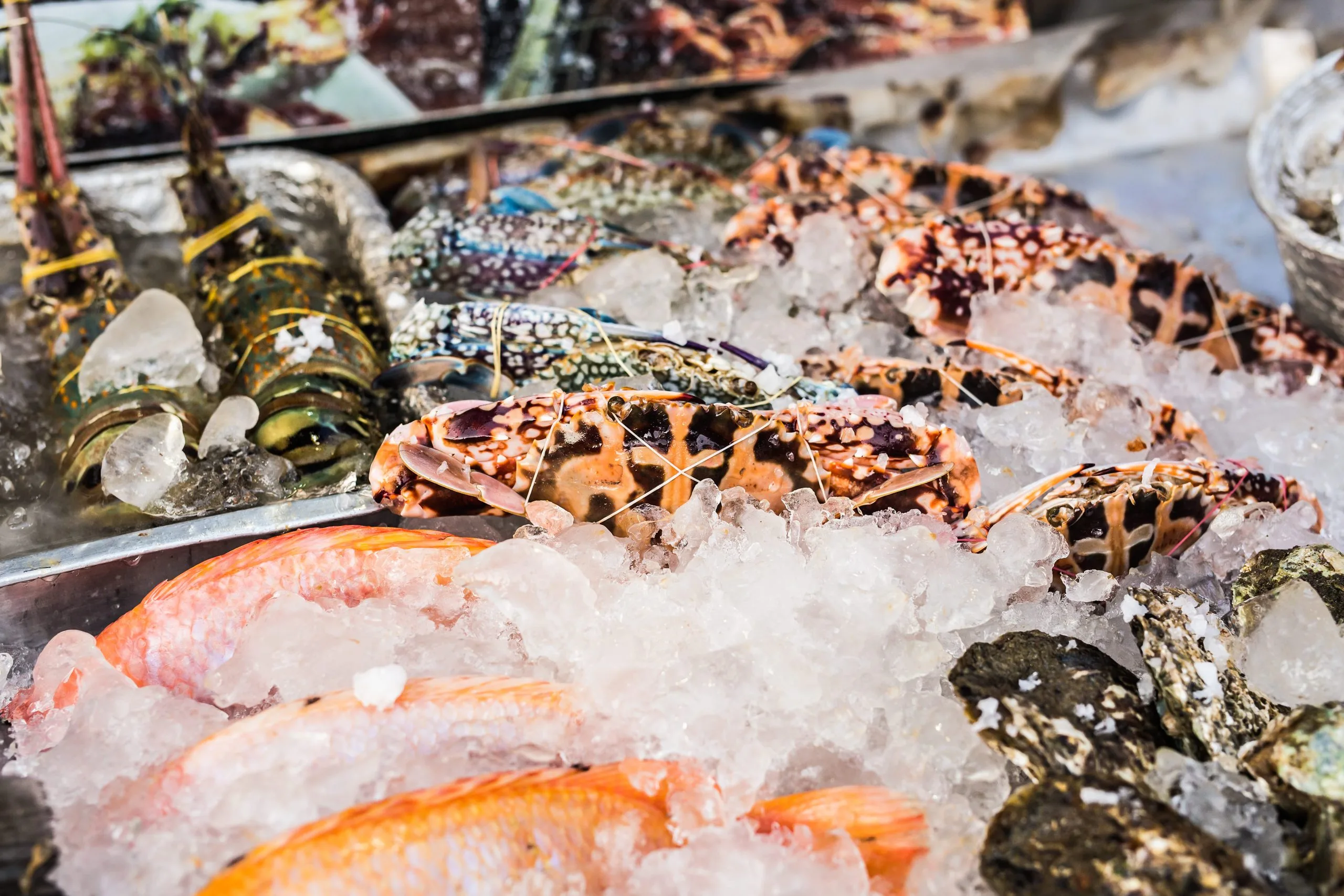
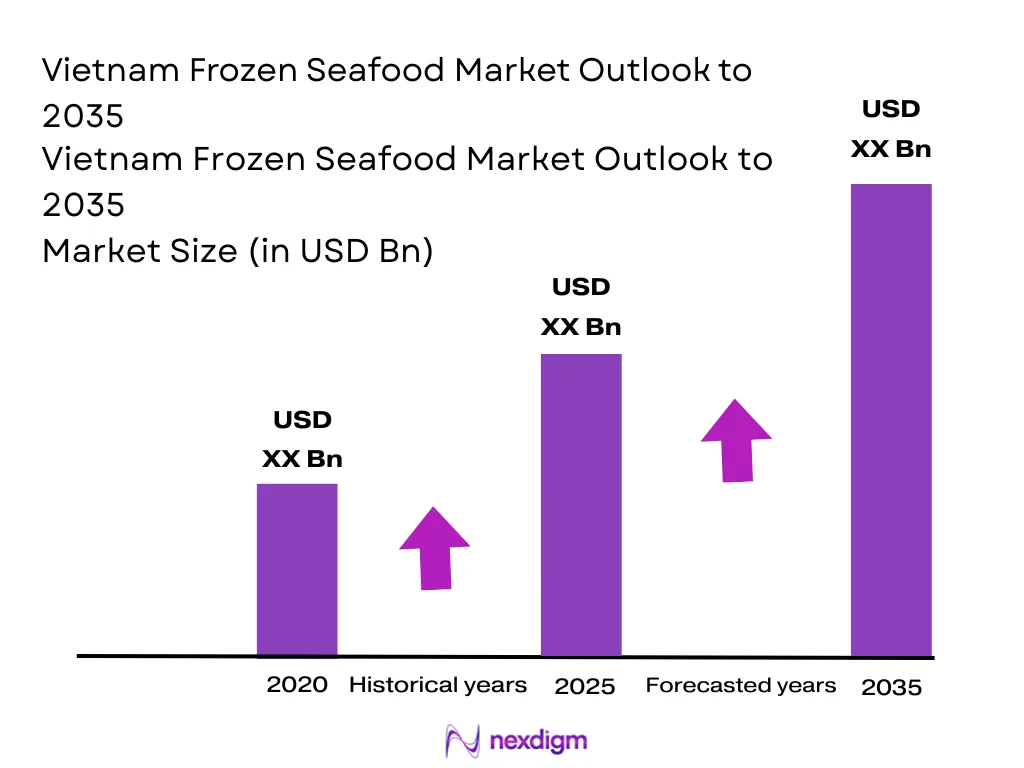
Vietnam Frozen Seafood Market is valued at USD ~ billion, based on the latest completed annual aquatic export base, after an earlier VASEP target of USD ~ billion for the same export cycle. The market is driven by frozen shrimp, pangasius fillets, tuna, squid, octopus and other processed seafood. Shrimp reached USD 4 billion, pangasius reached USD ~ billion, tuna reached USD ~ billion, other fish reached USD ~ billion, and squid and octopus reached USD ~ million. The market is dominated by Mekong Delta provinces such as Dong Thap, An Giang, Can Tho, Ca Mau and Soc Trang due to pangasius ponds, shrimp farms, processing plants and export logistics. Ho Chi Minh City dominates trading, cold-chain coordination and export offices. Internationally, China, the United States, Japan, the European Union and South Korea dominate because they absorb Vietnam’s frozen shrimp, pangasius, tuna, squid, octopus and value-added seafood through established import, retail and foodservice channels.
Market Segmentation
By Product Type
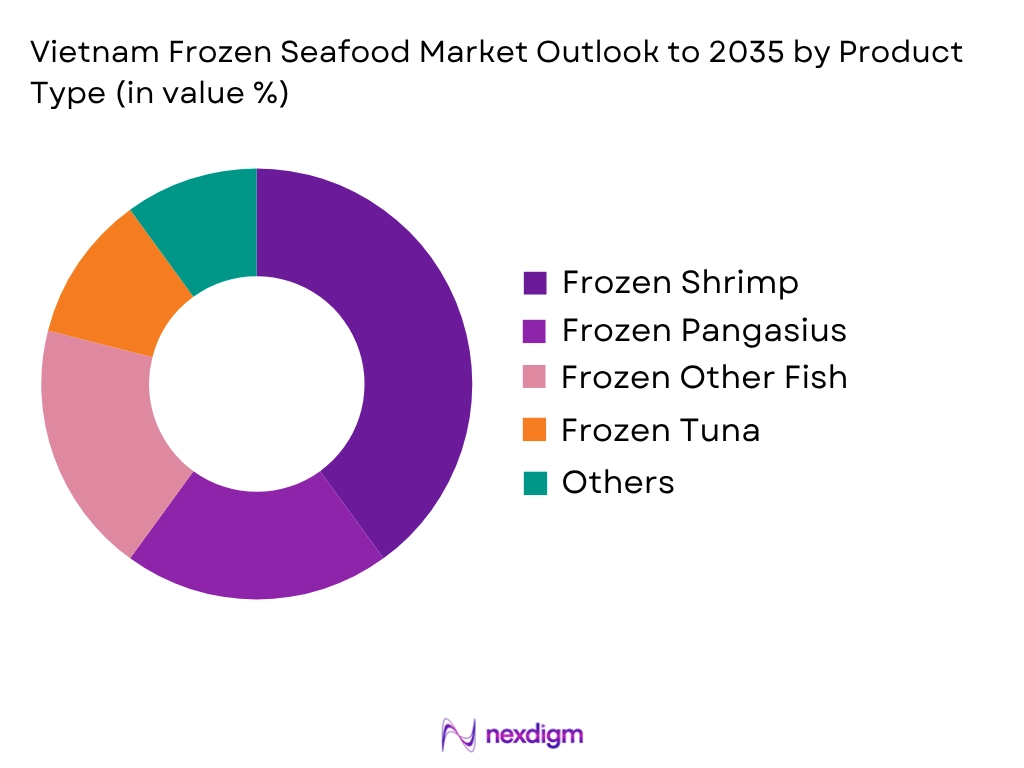
Vietnam Frozen Seafood Market is segmented by product type into frozen shrimp, frozen pangasius, frozen other fish, frozen tuna, frozen squid and octopus, and other frozen seafood. Frozen shrimp has a dominant market share in Vietnam Frozen Seafood Market due to the country’s established whiteleg shrimp and black tiger shrimp farming base, strong Mekong Delta processing ecosystem, and long-standing export relationships with China, the United States, Japan, the European Union and South Korea. Shrimp also supports the widest product mix, including raw frozen shrimp, cooked shrimp, peeled and deveined shrimp, breaded shrimp, Nobashi shrimp and retail-ready IQF packs. VASEP-reported figures show shrimp as the largest seafood export item at USD ~ billion, ahead of pangasius at USD ~ billion and tuna at USD ~ billion, confirming shrimp’s role as the commercial anchor of the frozen seafood industry.
By Export Destination
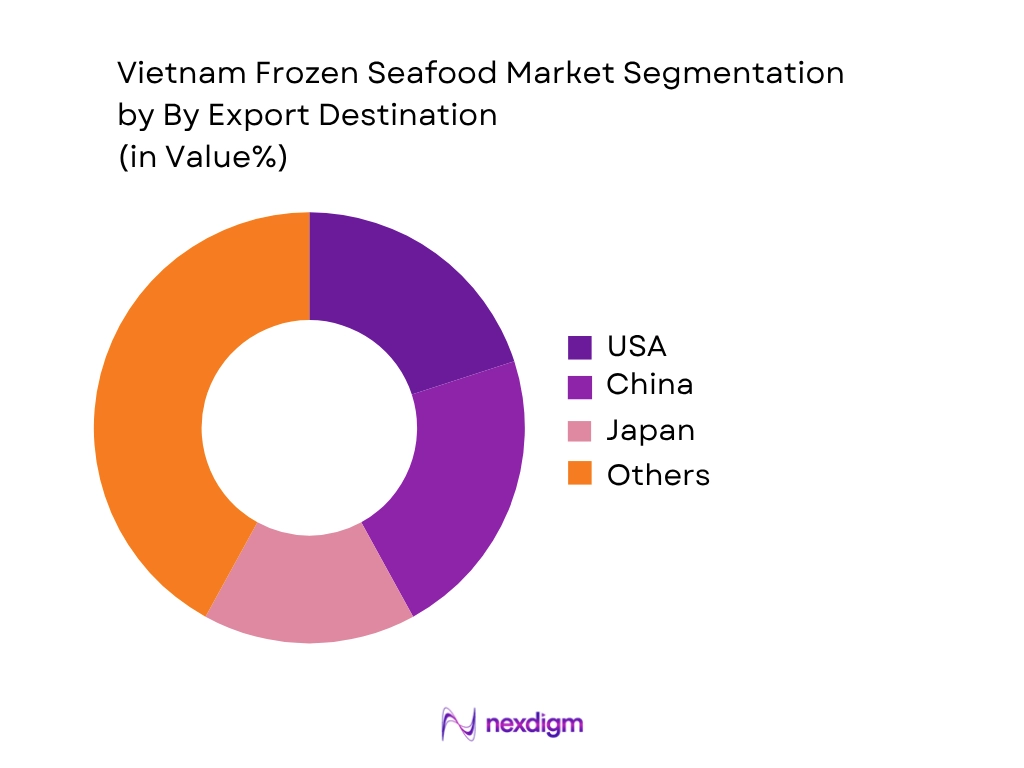
Vietnam Frozen Seafood Market is segmented by export destination into China, United States, Japan, European Union, South Korea, ASEAN and CPTPP markets, Middle East and others. China has emerged as a dominant destination because it absorbs bulk frozen seafood, whole fish, shrimp, lobster and pangasius products through proximity-led trade routes and high-volume import channels. The United States remains critical for frozen shrimp, pangasius fillets and tuna, supported by retail, foodservice and reprocessing demand. Japan and the European Union are quality-sensitive markets that support higher-grade shrimp, tuna, squid, octopus and certified seafood. South Korea remains important for squid, octopus and processed seafood demand. VASEP identifies the United States, Japan, EU, China and South Korea as markets that together account for most of Vietnam’s seafood export sales.
Competitive Landscape
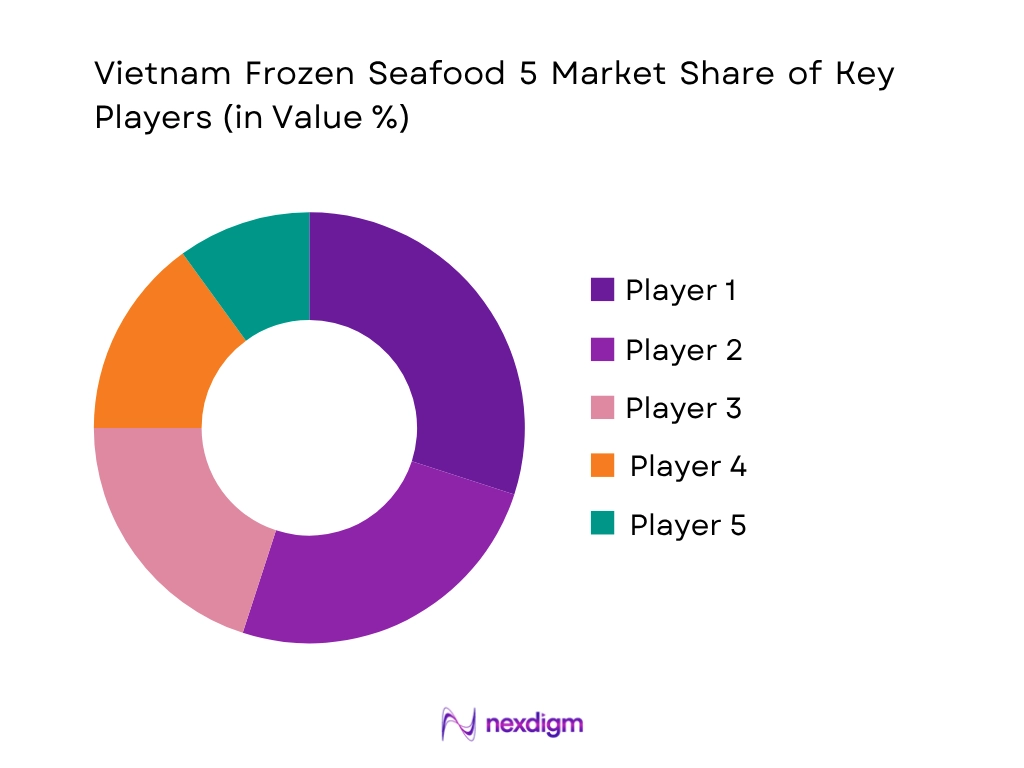
Vietnam Frozen Seafood Market is dominated by integrated processors with strong aquaculture linkages, export certification systems, cold-chain capacity and long-term buyer relationships. Vinh Hoan leads pangasius processing, Minh Phu leads shrimp exports, while Sao Ta Foods, Nam Viet Corporation and IDI Corporation strengthen competition across shrimp, pangasius and value-added frozen seafood. The market is concentrated around export approval, raw material access, processing scale, compliance capability and destination diversification.
| Company | Establishment Year | Headquarters | Core Product Focus | Processing / Capacity Indicator | Export Market Reach | Integration Model | Certification / Quality Positioning | Strategic Strength |
| Vinh Hoan Corporation | 1997 | Dong Thap | ~ | ~ | ~ | ~ | ~ | ~ |
| Minh Phu Seafood Corporation | 1992 | Ca Mau | ~ | ~ | ~ | ~ | ~ | ~ |
| Sao Ta Foods | 1996 | Soc Trang | ~ | ~ | ~ | ~ | ~ | ~ |
| Nam Viet Corporation | 1993 | An Giang | ~ | ~ | ~ | ~ | ~ | ~ |
| IDI Corporation | 2003 | Dong Thap / An Giang region | ~ | ~ | ~ | ~ | ~ | ~ |
Vietnam Frozen Seafood Market Outlook to 2035
Growth Drivers
Aquaculture-Led Raw Material Base Supporting Frozen Shrimp and Pangasius Processing
Vietnam Frozen Seafood Market is supported by a deep aquaculture raw material base, particularly for shrimp and pangasius products used in frozen fillets, IQF shrimp, block frozen shrimp, breaded shrimp and export-ready seafood packs. Vietnam’s seafood production was estimated at over 9.54 million tons, including more than 5.72 million tons from aquaculture and over 3.82 million tons from capture fisheries, according to GSO-referenced reporting. VASEP’s fishery profile states that seafood output reached 9.78 million MT in 2025, including 5.9 million MT from aquaculture and 3.8 million MT from capture fisheries. The Mekong Delta remains structurally important because VASEP notes that the region accounts for 95% of pangasius production and 80% of shrimp production for export. This raw material concentration supports processor scheduling, cold storage utilization, freezing line throughput and buyer-specific order execution. World Bank data also shows Vietnam’s economy at USD 476.39 billion and population at 100,987,686 in 2024, supporting a large production and labor base for seafood processing.
Export-Grade Processing Ecosystem and Large Seafood Workforce
Vietnam Frozen Seafood Market is driven by a mature export-grade processing ecosystem with established freezing, filleting, peeling, glazing, packaging, inspection and shipment capabilities. VASEP states that Vietnam has 600 seafood exporters, a fisheries labor force of more than 4 million people, and about 300,000 workers directly employed in seafood processing and export activities. The country’s seafood base is supported by 3,260 km of coastline, an exclusive economic zone of 1 million sq. km, and 28 coastal provinces, giving processors access to marine species such as tuna, squid, octopus, clams and other fish for frozen processing. The same VASEP profile states that all processing plants apply HACCP, which is important for frozen seafood exports into the United States, European Union, Japan and other compliance-heavy destinations. Vietnam’s macroeconomic position also supports industrial processing: World Bank data records GDP per capita at USD 4,717.3 in 2024 and population growth at 0.6 in 2024, indicating a stable operating base for labor-intensive food processing.
Market Opportunities
Value-Added Frozen Seafood and Retail-Ready Product Expansion
Vietnam Frozen Seafood Market has a strong opportunity in value-added frozen products such as breaded shrimp, cooked shrimp, IQF pangasius fillets, tuna loins, squid rings, octopus portions, seafood sticks and vacuum-packed retail SKUs. VASEP reports that Vietnam has 600 exporters, processing employment of about 300,000 workers, and seafood output of 9.78 million MT in 2025, giving processors enough raw material and operating depth to move from commodity blocks into higher-processing formats. VietnamPlus reported that shrimp shipments reached USD 4 billion, pangasius reached USD 2 billion, tuna reached USD 1 billion, other fish contributed USD 1.9 billion, and squid and octopus generated USD 662 million, showing that processors already operate across multiple frozen seafood categories. This product diversity creates room for frozen meal kits, portion-controlled HoReCa packs and branded modern-retail packs. World Bank data shows 84 individuals using the internet per 100 people in 2024, while Vietnam’s population stood at 100,987,686, supporting app-based seafood delivery, online grocery and frozen retail discovery.
Traceable and Certified Seafood Supply Chains
Vietnam Frozen Seafood Market has a clear opportunity in traceable, certified and compliance-ready frozen seafood because buyers increasingly require farm codes, catch documentation, HACCP records, batch traceability and sustainability credentials. VASEP states that all seafood processing plants apply HACCP and that increasing numbers of farming areas and processing sites have certifications such as ASC, Global G.A.P., MSC and Viet GAP. The same source states that Vietnam participates in 17 free trade agreements, with 14 signed and effective, giving exporters a wide route to reach markets requiring documentation-backed seafood. FAO Globefish reported that Vietnam set a 20 November 2024 deadline for coastal municipalities to address vessels that were not registered, inspected or licensed, indicating a national push toward stronger seafood traceability. This benefits frozen seafood companies able to document farm-to-pack, pond-to-container and vessel-to-plant flows. IMF’s Vietnam country profile lists 2026 country population at 103.077 million, showing a sizeable domestic base alongside export demand, while World Bank records GDP at USD 476.39 billion in 2024.
Market Challenges
IUU Compliance Burden for Marine Frozen Seafood
Vietnam Frozen Seafood Market faces a major challenge from IUU-related compliance requirements, especially for frozen tuna, squid, octopus, crab, clams and other marine-capture products. VASEP states that Vietnam has 28 coastal provinces, fishing output of 3.80 million tons in 2025, a coastline of 3,260 km, and an exclusive economic zone of 1 million sq. km, making vessel monitoring and catch documentation operationally complex. FAO Globefish reported that Vietnam required coastal municipalities to fully address vessels that were not registered, inspected or licensed by 20 November 2024, and authorities said strict action would be taken against vessels switching off monitoring devices or ignoring authorized fishing boundaries. This creates additional documentation pressure for processors because frozen seafood exporters must prove legal raw material origin before serving EU and other compliance-sensitive buyers. World Bank data shows Vietnam’s GDP at USD 476.39 billion and population at 100,987,686 in 2024, indicating a large economy, but one where coastal enforcement must cover a broad production base.
Aquaculture Disease and Mekong Delta Environmental Pressure
Vietnam Frozen Seafood Market is exposed to aquaculture disease and environmental pressure because shrimp and pangasius processing depends heavily on Mekong Delta production. VASEP states that aquaculture output reached 5.9 million MT in 2025 and that the Mekong Delta accounts for 95% of pangasius production and 80% of shrimp production for export. This concentration improves processing scale but increases exposure to localized disease, water quality, salinity and climate risks. Vietfish Magazine reported that, in the first three months of 2024, about 541 hectares of aquaculture area were affected by disease, including over 474 hectares of shrimp farming area across 8 provinces and cities affected by white spot syndrome virus. These issues can disrupt harvest timing, raw material quality, plant utilization and frozen export order fulfillment. World Bank data shows Vietnam’s GDP per capita at USD 4,717.3 in 2024 and inflation at 3.6 in 2024, indicating macroeconomic progress but also reinforcing the importance of stable aquaculture productivity for processors and farming households.
Future Outlook
Over the next decade, Vietnam Frozen Seafood Market is expected to expand through value-added processing, certified aquaculture, cold-chain modernization and export-market diversification. Shrimp and pangasius will remain the principal revenue engines, while tuna, squid, octopus, crab, molluscs and surimi will add product depth. Growth will be supported by IQF processing, breaded seafood, marinated seafood, retail-ready packs and higher demand from foodservice and modern retail channels.
Trade agreements such as EVFTA, CPTPP and RCEP will remain important for tariff competitiveness and rules-of-origin positioning. However, exporters will need to manage US tariff exposure, EU IUU compliance, raw material quality, climate pressure in the Mekong Delta and buyer demand for traceability. Companies with integrated farms, certified plants, product innovation and diversified destination portfolios are expected to gain stronger competitive resilience.
Major Players
- Vinh Hoan Corporation
- Minh Phu Seafood Corporation
- Sao Ta Foods
- Nam Viet Corporation
- IDI Corporation
- Hung Vuong Corporation
- Camimex Group
- Stapimex
- Fimex VN
- Thuan Phuoc Seafoods and Trading Corporation
- Hai Vuong Group
- Bidifisco
- Baseafood
- Seaprodex
- Cadovimex II
Key Target Audience
- Frozen seafood processors and exporters
- Shrimp and pangasius aquaculture companies
- Seafood cold-chain logistics providers
- International seafood importers and distributors
- HoReCa chains, QSR operators and institutional foodservice buyers
- Modern retail chains, online grocery platforms and frozen food distributors
- Investments and venture capitalist firms
- Government and regulatory bodies
Research Methodology
Step 1: Identification of Key Variables
The initial phase involves constructing an ecosystem map covering shrimp farms, pangasius farms, fishing fleets, processors, cold stores, export houses, port operators, importers, retailers and foodservice buyers. The objective is to define the core variables influencing Vietnam Frozen Seafood Market, including product type, species source, export destination, processing technology, certification depth, freezing method and distribution channel.
Step 2: Market Analysis and Construction
In this phase, historical seafood export performance, category-level sales, aquaculture output indicators and company-level operating data are compiled. The analysis covers shrimp, pangasius, tuna, squid, octopus, other fish and value-added frozen seafood. Market construction is conducted through a top-down export-led approach and a bottom-up processor capacity validation approach.
Step 3: Hypothesis Validation and Expert Consultation
Market hypotheses are validated through interviews with seafood processors, aquaculture operators, exporters, cold-chain providers, domestic distributors and foodservice procurement professionals. These discussions are used to verify product demand, export destination priorities, capacity utilization, buyer compliance requirements, processing yield assumptions and evolving SKU preferences.
Step 4: Research Synthesis and Final Output
The final phase integrates secondary research, company intelligence, expert consultation and trade data to develop a validated market model. Segment shares, competitive positioning, future outlook and strategic recommendations are refined through triangulation. This ensures the final Vietnam Frozen Seafood Market report reflects practical industry dynamics and decision-useful business insights.

- Executive Summary
- Research Methodology (Market Definitions and Assumptions, Abbreviations, Market Sizing Approach, Export Data Mapping, VASEP and Customs Data Review, Processor Capacity Mapping, Cold-Chain Assessment, Primary Interviews with Exporters/Processors/Distributors/HoReCa Buyers, Bottom-Up Capacity Utilization Approach, Top-Down Export Reconciliation, Forecasting Framework, Limitations and Future Conclusions)

- Definition and Scope
- Overview Genesis
- Timeline of Major Players
- Business Cycle
- Supply Chain and Value Chain Analysis

- Growth Drivers (Aquaculture Output, Shrimp Export Demand, Pangasius Fillet Demand, Tuna Processing, Cold-Chain Expansion, Trade Agreement Access)
- Market Challenges (Disease Risk, Raw Material Volatility, IUU Yellow Card, Anti-Dumping Duties, Compliance Burden, Buyer Concentration)
- Market Opportunities (Value-Added Seafood, Domestic Frozen Retail, Certified Seafood, Export Diversification, Surimi and Seafood Snacks)
- Market Trends (IQF Adoption, Retail Packs, Sustainable Aquaculture, Digital Traceability, High-Protein Convenience, Private Label Exports)
- Shift from Commodity Blocks to Retail-Ready Packs (IQF Fillets, Portion Packs, Vacuum Packs, Frozen Meal Kits, Branded SKUs)
- Government Regulation (Fisheries Law, Food Safety Law, Export Certification, IUU Controls, Aquaculture Zoning, Processing Plant Licensing)
- SWOT Analysis
- Stakeholder Ecosystem
- Porter’s Five Forces
- Competition Ecosystem

- By Value (2020-2025)
- By Volume (2020-2025)
- By Average Realization (2020-2025)

- By Product Type (In Value %)
Frozen Shrimp
Frozen Pangasius
Frozen Tuna
Frozen Cephalopods
Frozen Molluscs and Shellfish - By Freezing Technology
IQF Frozen Seafood
Block Frozen Seafood
Blast Frozen Seafood
Plate Frozen Seafood
Glazed Frozen Seafood - By End User (In Value %)
Export Buyers
Domestic Retail Consumers
HoReCa and Foodservice
QSR and Cloud Kitchen Operators - By Distribution Channel (In Value %)
Direct Export Channel
Domestic Distributor Channel
Modern Trade Channel
Online and Quick Commerce Channel
HoReCa Direct Channel

- Cross Comparison Parameters (Product Portfolio, Processing Capacity, Export Destination Reach, Certification Portfolio, Aquaculture Integration, Value-Added Product Capability, Cold-Chain Infrastructure, Traceability and Compliance Systems)
- SWOT Analysis of Major Players
- Pricing Analysis Basis SKUs for Major Players
- Detailed Profiles of Major Companies
Vinh Hoan Corporation
Minh Phu Seafood Corporation
Sao Ta Foods
Nam Viet Corporation
IDI Corporation
Hung Vuong Corporation
Camimex Group
Stapimex
Fimex VN
Thuan Phuoc Seafoods and Trading Corporation
Hai Vuong Group
Bidifisco
Baseafood
Seaprodex
Cadovimex II

- Export Buyer Analysis
- Domestic Retail Consumer Analysis
- HoReCa Buyer Analysis
- QSR and Cloud Kitchen Buyer Analysis
- Industrial Processor Analysis
- Decision-Making Process

- By Value (2026-2035)
- By Volume (2026-2035)
- By Average Realization (2026-2035)


 Request a Sample
 Ask for Customization
 Get a Quote
 Enquire Now