

 Download PDF
 Download PDF
Market Overview
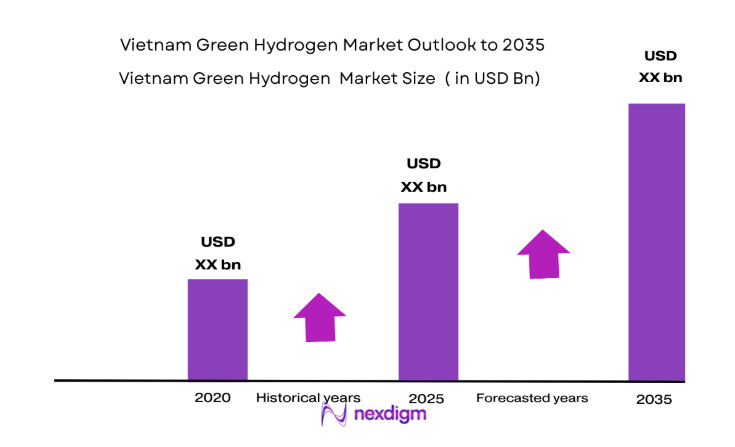
The Vietnam green hydrogen market is experiencing robust growth, driven by a shift towards renewable energy sources and decarbonization initiatives. Based on recent assessments, the market is projected to reach approximately USD ~ billion by the end of the period, with the demand for clean hydrogen solutions accelerating across various industries. Government initiatives to support green hydrogen production, combined with advancements in hydrogen production technologies, are significant drivers of this growth. The market is poised to benefit from the increasing need for sustainable energy alternatives in Vietnam’s industrial and energy sectors.
Vietnam’s dominance in the green hydrogen market is shaped by its strategic initiatives to reduce carbon emissions and transition to cleaner energy. Key cities such as Ho Chi Minh City and Hanoi are leading the way in the development of hydrogen infrastructure, attracting both local and international investment. With government-backed projects and growing demand for hydrogen solutions, Vietnam is positioning itself as a regional hub for green hydrogen production in Southeast Asia. Strong public-private partnerships and the push towards carbon neutrality further bolster the country’s leading role in the market.
Market Segmentation
By Product Type:
The Vietnam green hydrogen market is segmented by product type into hydrogen production systems, storage systems, and distribution systems. Recently, hydrogen production systems have emerged as the dominant sub-segment due to growing government initiatives that prioritize renewable energy sources and green hydrogen technologies. The production systems’ strong market share is largely driven by the increasing adoption of electrolyzers and the growing need for cleaner hydrogen solutions across industrial sectors. This sub-segment has witnessed substantial investments, further reinforcing its dominant position in the market.

By End-User Industry:
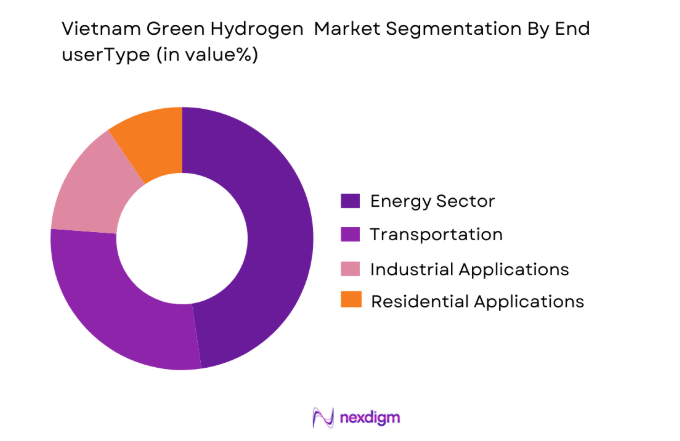
The Vietnam green hydrogen market is segmented by end-user industry into the energy sector, transportation, industrial applications, and residential applications. Among these, the energy sector has the largest market share, driven by the country’s growing commitment to reducing carbon emissions and integrating renewable energy sources into its grid. The energy sector’s dominance is fueled by the ongoing shift from fossil fuels to clean energy, particularly in electricity generation and storage applications. As Vietnam expands its green hydrogen infrastructure, the energy sector’s need for hydrogen solutions is expected to continue to grow.
Competitive Landscape
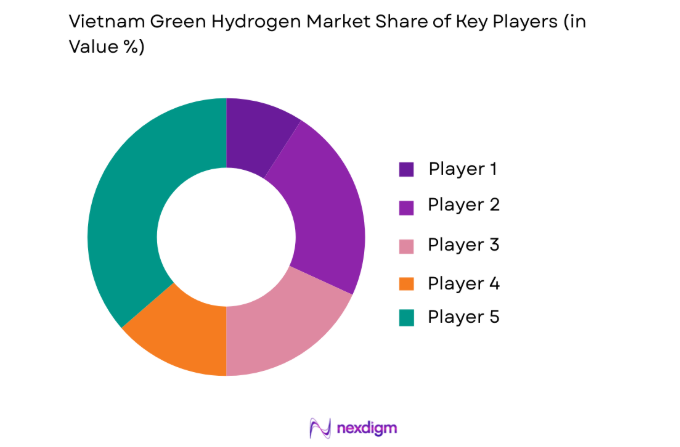
The Vietnam green hydrogen market is witnessing an increase in both local and international players, with consolidation becoming more prominent. Major players such as Siemens, Air Liquide, and Nel Hydrogen are influencing the market through strategic partnerships, technological innovations, and investments in infrastructure. As more players enter the market, the competition intensifies, with companies focusing on production efficiency, cost reduction, and scalability to meet growing demand. The continued collaboration between government entities and private corporations is expected to drive long-term market sustainability.
| Company Name | Establishment Year | Headquarters | Technology Focus | Market Reach | Key Products | Revenue (USD) | Hydrogen Production Capacity (MW) |
| Siemens Energy | 2008 | Munich, Germany | ~ | ~ | ~ | ~ | ~ |
| Air Liquide | 1902 | Paris, France | ~ | ~ | ~ | ~ | ~ |
| Nel Hydrogen | 1927 | Oslo, Norway | ~ | ~ | ~ | ~ | ~ |
| Plug Power | 1997 | Latham, USA | ~ | ~ | ~ | ~ | ~ |
| Linde plc | 1906 | Guildford, UK | ~ | ~ | ~ | ~ | ~ |
Vietnam Green Hydrogen Market Analysis
Growth Drivers
Government Support for Renewable Energy Transition:
Government support plays a critical role in the growth of Vietnam’s green hydrogen market. The government has committed to achieving net-zero emissions by 2050, and the green hydrogen sector is a cornerstone of this strategy. As part of its efforts, Vietnam has introduced multiple policies that promote renewable energy production, including green hydrogen, offering incentives for investments and subsidies for related technologies. The government’s strategic goals aim to reduce reliance on fossil fuels and diversify energy sources, positioning green hydrogen as an essential solution for Vietnam’s energy transformation. This initiative is expected to attract international partnerships and boost local production capacity, positioning the market for long-term growth. Additionally, the integration of green hydrogen into industrial processes offers significant carbon reduction potential, which further aligns with national sustainability objectives.
Private Sector Involvement in Hydrogen Infrastructure:
Alongside government efforts, the involvement of private companies is driving the growth of the green hydrogen market in Vietnam. Domestic and international energy companies are increasingly investing in hydrogen production facilities, storage, and distribution networks, recognizing the long-term profitability of the market. Major energy players are enhancing their green hydrogen portfolios through joint ventures, research, and development activities to ensure they remain competitive in a growing market. Private companies are essential in driving innovation in hydrogen production technologies and reducing production costs, contributing to the market’s rapid expansion. With major investments in the energy sector, the private sector’s role is instrumental in meeting Vietnam’s green hydrogen production goals, addressing infrastructure gaps, and promoting hydrogen adoption across various industries.
Market Challenges
High Initial Investment and Infrastructure Challenges:
One of the main challenges facing the green hydrogen market in Vietnam is the high capital required for hydrogen production and infrastructure development. The initial costs associated with building electrolyzers, storage systems, and distribution networks remain a significant barrier, particularly for smaller players entering the market. Despite government incentives, the high upfront investment poses challenges for companies that are hesitant to commit substantial resources without clear financial returns. Moreover, infrastructure gaps in terms of storage and transportation solutions for hydrogen further exacerbate these cost issues, limiting the scalability of green hydrogen projects in the short term. Without adequate infrastructure, the market will face difficulties in expanding the green hydrogen supply chain, hindering overall growth.
Regulatory and Policy Uncertainties:
Despite strong government support for green hydrogen, regulatory and policy uncertainties remain a challenge in Vietnam’s market development. While the government has implemented favorable policies for renewable energy, the absence of comprehensive and clear regulations specific to hydrogen production, storage, and distribution creates ambiguity for businesses planning to enter the market. The lack of standardized regulations and regulatory frameworks for the green hydrogen sector leads to uncertainty regarding long-term policy stability, which in turn can discourage private investment and slow market adoption. For Vietnam to overcome this challenge, there must be a more structured and transparent regulatory environment that offers long-term visibility to market players, ensuring that investments are protected and that the market can develop sustainably.
Opportunities
Expansion of Green Hydrogen in the Energy Sector:
One of the most promising opportunities for the green hydrogen market in Vietnam is its integration into the energy sector. With the country’s increasing need to diversify its energy sources, green hydrogen presents a viable option for electricity generation and storage. Hydrogen can be utilized to store excess renewable energy produced from solar and wind farms, ensuring grid stability and offering a solution to the intermittent nature of renewable energy sources. The opportunity lies in developing large-scale hydrogen production facilities powered by renewable energy, which can be used to meet domestic energy demand and serve as an export product to neighboring countries. As Vietnam transitions towards a low-carbon energy system, green hydrogen can play a key role in ensuring a sustainable, stable, and diversified energy mix.
Technological Advancements in Hydrogen Production:
Another key opportunity for the green hydrogen market in Vietnam is technological advancements in hydrogen production processes. The rapid evolution of electrolyzer technology and the declining cost of renewable energy are making green hydrogen more cost-competitive. Innovations in electrolysis techniques, such as proton exchange membrane (PEM) and alkaline electrolysis, are improving production efficiency, while the increasing availability of cheap renewable energy sources is driving down operational costs. As these technologies mature, they will make green hydrogen more economically viable, not just for the energy sector but for industrial applications as well. This presents a unique opportunity for Vietnam to capitalize on its renewable energy potential and establish itself as a regional leader in green hydrogen production.
Future Outlook
The future of the green hydrogen market in Vietnam looks promising, with expected significant growth over the next few years. With ongoing government support, the development of hydrogen production infrastructure, and the steady adoption of green hydrogen technologies, the market is set to expand rapidly. Technological advancements in electrolyzer efficiency and falling production costs will further drive the demand for green hydrogen, especially in the energy and industrial sectors. Additionally, Vietnam’s strategic positioning within the Southeast Asian region presents significant opportunities for hydrogen export, particularly to countries looking to decarbonize their energy sectors.
Major Players
- Siemens Energy
- Air Liquide
- Nel Hydrogen
- Plug Power
- Linde plc
- Toshiba Energy Systems & Solutions Corporation
- Shell
- Thyssenkrupp AG
- Mitsubishi Power
- Hyundai Motor Company
- BP
- Chevron
- Sinopec
- TotalEnergies
- Iwatani Corporation
Key Target Audience
- Investments and venture capitalist firms
- Government and regulatory bodies
- Energy companies
- Renewable energy project developers
- Industrial manufacturersseekingto reduce carbon emissions
- Hydrogen technology developers
- Environmental consultants
- Large-scale infrastructure investors
Research Methodology
Step 1: Identification of Key Variables
The research begins by identifying key variables that influence the green hydrogen market in Vietnam, including government policies, technological advancements, and market dynamics.
Step 2: Market Analysis and Construction
Comprehensive market analysis is conducted to understand current trends, the competitive landscape, and key growth drivers, which are essential for constructing a market model.
Step 3: Hypothesis Validation and Expert Consultation
To validate the market hypothesis, consultations with industry experts, government bodies, and market leaders are carried out to ensure that findings are accurate and reflect real-time market dynamics.
Step 4: Research Synthesis and Final Output
The final step involves synthesizing all research findings into a comprehensive market report that provides actionable insights, forecasts, and recommendations for stakeholders in the green hydrogen sector.

- Executive Summary
- Research Methodology (Definitions, Scope, Industry Assumptions, Market Sizing Approach, Primary & Secondary Research Framework, Data Collection & Verification Protocol, Analytic Models & Forecast Methodology, Limitations & Research Validity Checks)

- Market Definition and Scope
- Value Chain & Stakeholder Ecosystem
- Regulatory / Certification Landscape
- Sector Dynamics Affecting Demand

- Growth Drivers
Government Push for Renewable Energy
Technological Advancements in Hydrogen Production
Rising Industrial Demand for Green Hydrogen - Market Challenges
High Capital Investment in Hydrogen Infrastructure
Regulatory and Policy Barriers
Limited Storage and Transportation Solutions - Market Opportunities
Export Potential of Green Hydrogen
Public-Private Partnerships for Infrastructure Development
Advancements in Storage and Transport Solutions - Trends
Increased Adoption of Hydrogen in Transportation
Technological Innovations in Electrolyzers
Growing Interest in Green Hydrogen Export - Government Regulations
- SWOT Analysis of Key Competitors

- By Market Value, 2020-2025
- By Installed Units, 2020-2025
- By Average System Price, 2020-2025
- By System Complexity Tier, 2020-2025

- By System Type (In Value%)
Electrolyzers
Green Hydrogen Production Units
Storage Systems
Distribution Systems
Fuel Cells - By Platform Type (In Value%)
Onshore Platforms
Offshore Platforms
Transport Platforms
Storage Platforms
Integrated Platforms - By Fitment Type (In Value%)
Modular Solutions
Compact Systems
Hybrid Solutions
Standalone Solutions
Integrated Systems - By EndUser Segment (In Value%)
Industrial Manufacturers
Power Generation Companies
Transport Sector
Government & Public Sector
Energy Providers

- Market Share Analysis
- CrossComparison Parameters (System Type, Platform Type, Procurement Channel, EndUser Segment, Fitment Type)
- SWOT Analysis of Key Competitors
- Pricing & Procurement Analysis
- Porter’s Five Forces
- Key Players
Toshiba Energy Systems & Solutions Corporation
Siemens Energy
Plug Power
Nel Hydrogen
Air Products and Chemicals
Linde plc
Ballard Power Systems
Cummins Inc.
Doosan Fuel Cell
Hydrogenics Corporation
ITM Power
McPhy Energy
EDF Renewables
Toyota Tsusho Corporation
Ørsted

- Growth in Industrial Use
- Government’s Role in Hydrogen Policy
- Energy Sector Transformation
- Adoption of Green Hydrogen in Transport

- Forecast Market Value, 2026-2035
- Forecast Installed Units, 2026-2035
- Price Forecast by System Tier, 2026-2035
- Future Demand by Platform, 2026-2035


 Request a Sample
 Ask for Customization
 Get a Quote
 Enquire Now