

 Download PDF
Market Overview
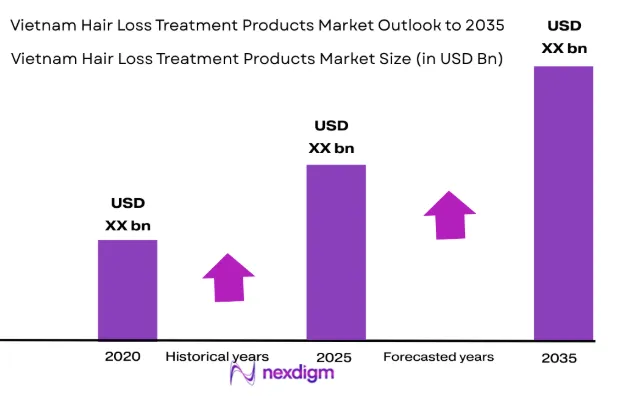
The Vietnam Hair Loss Treatment Products Market is valued at USD ~ billion, based on a thorough historical analysis from credible industry sources. The market is primarily driven by increasing awareness of hair loss solutions, changing consumer preferences, and rising disposable incomes. Demand for both medical treatments such as minoxidil and finasteride and natural alternatives, like herbal oils, has been steadily growing as consumers seek effective solutions. This market growth is further bolstered by an increase in the number of dermatological clinics and beauty salons offering specialized treatments.
Dominating cities and regions in Vietnam include Ho Chi Minh City, Hanoi, and Da Nang. These areas are home to a higher concentration of both dermatological clinics and urban consumers who are more likely to invest in advanced hair care treatments. Ho Chi Minh City and Hanoi, as major urban centers, are witnessing substantial demand for both clinical treatments and home-use hair care products, while Da Nang represents the emerging markets in the central region, further contributing to market expansion. These cities’ dominance is attributed to their advanced healthcare infrastructure and affluent consumer base.
Market Segmentation
By Product Type
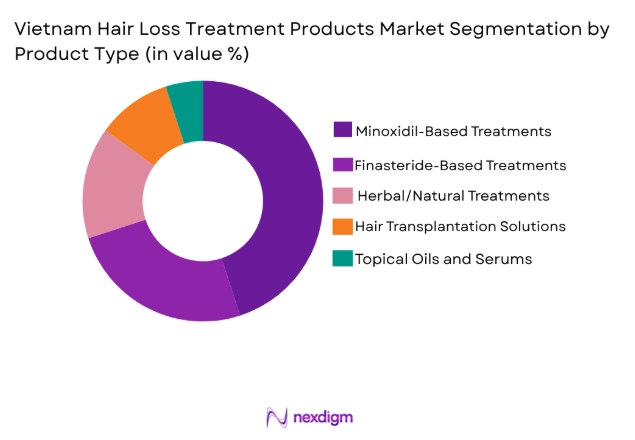
The Vietnam Hair Loss Treatment Products Market is segmented into minoxidil-based treatments, finasteride-based treatments, herbal/natural treatments, hair transplantation solutions, and topical oils and serums. Among these, minoxidil-based treatments dominate the market due to their proven effectiveness in slowing down hair loss and promoting hair regrowth. Minoxidil, available in various forms such as topical solutions and foam, has gained widespread acceptance for its convenience and relatively low cost, making it the go-to choice for a significant portion of the population seeking treatment for hair loss.
By Distribution Channel Type
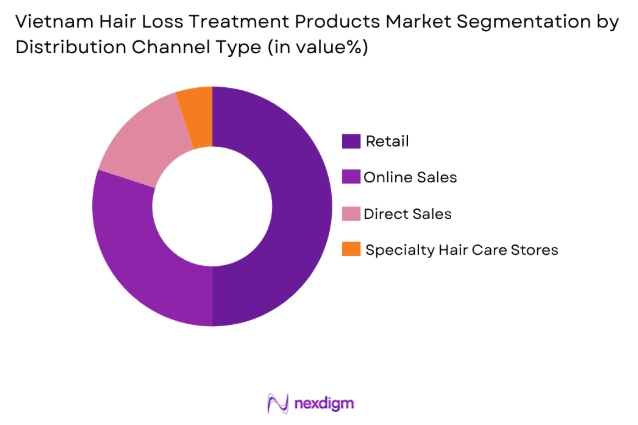
This segment is divided into retail (supermarkets, pharmacies), online Sales, direct sales (clinics, hospitals), and specialty hair care stores. Retail channels, which include pharmacies and supermarkets, hold the dominant market share. These outlets have widespread accessibility and are trusted by consumers for purchasing hair loss treatments. Additionally, the established presence of major pharmaceutical chains in Vietnam has made it easier for consumers to access a variety of hair loss products, further driving the dominance of retail outlets.
Competitive Landscape
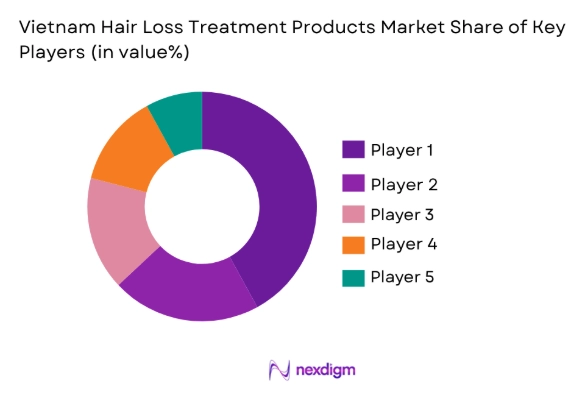
The Vietnam Hair Loss Treatment Products Market is dominated by both local and international brands, with key players including Regenix, Kirkland Minoxidil, Pura D’or, Bosley, and L’Oreal Group. These companies have a significant influence on market dynamics due to their strong distribution networks, trusted brand reputation, and the ability to offer a wide range of products catering to different consumer needs. The market remains competitive, with constant innovation in treatment options and formulations, as well as growing consumer trust in established global brands.
| Company | Establishment Year | Headquarters | Product Range | Market Presence | Revenue in Vietnam (Estimated) |
| Regenix | 1980 | USA | ~ | ~ | ~ |
| Kirkland Minoxidil | 1994 | USA | ~ | ~ | ~ |
| Pura D’or | 2008 | USA | ~ | ~ | ~ |
| Bosley | 1974 | USA | ~ | ~ | ~ |
| L’Oreal Group | 1909 | France | ~ | ~ | ~ |
Vietnam Hair Loss Treatment Products Market Analysis
Growth Drivers
Rising Prevalence of Hair Loss Disorders
Hair loss disorders are becoming increasingly prevalent across different demographics, particularly in urban areas, driven by factors such as stress, genetics, and pollution. In Vietnam, over 20% of the adult population is reported to experience some form of hair loss, with a notable increase among individuals aged 30-50. In 2023, the prevalence of hair loss in men was reported to be as high as 23%, and for women, it is estimated at 13% (Vietnam Ministry of Health). This growing rate of hair loss, coupled with a rising awareness about available treatments, contributes significantly to the demand for hair loss treatment products. With the increase in urbanization, more individuals are exposed to environmental stressors that exacerbate hair loss, driving up the demand for solutions. In 2023, it was estimated that the healthcare sector in Vietnam grew by 8.1%, which indirectly boosts the adoption of dermatological treatments.
Increasing Disposable Income and Beauty Spend
The increasing disposable income in Vietnam, particularly in the urban regions, is driving greater consumer spending on personal care and beauty products. The Vietnamese economy saw a steady growth rate of 7.8% in 2023 (World Bank), which contributed to the growth in disposable income, allowing more people to allocate funds to non-essential categories such as beauty treatments. A significant factor is the rising middle class, with disposable income rising at a rate of 6.5% per year (World Bank, 2023), enabling consumers to spend more on self-care, including hair loss treatments. The growth in beauty spending is evident in the retail sector, where expenditures on beauty products increased by approximately 5.2% in 2023 (Vietnam Ministry of Finance), supporting the surge in the demand for hair loss solutions.
Market Challenges
Regulatory Barriers
One of the primary challenges faced by the hair loss treatment market in Vietnam is regulatory barriers, which can complicate the approval process for new treatments. Vietnam’s regulatory framework for pharmaceutical and cosmetic products requires rigorous safety and efficacy testing, which delays the entry of new products into the market. In 2023, the Vietnam Food and Drug Administration (VFDA) received over 200 applications for product registration, but only 40% were approved within the desired timeline due to stringent regulations. These delays discourage both local and international brands from launching innovative solutions, thus restricting market growth. The VFDA’s tightening of compliance for clinical treatments has added further complexity, particularly for foreign brands.
Low Awareness in Rural Areas
In rural areas of Vietnam, a significant gap in awareness of hair loss disorders and available treatments exists. While major cities like Ho Chi Minh City and Hanoi have seen substantial penetration of hair loss treatment products, rural regions remain largely underserved. The level of awareness about hair loss treatments in rural areas is substantially lower, as indicated by a 2023 survey by the Vietnam Ministry of Health, which showed that over 60% of rural respondents were unaware of non-surgical hair restoration treatments. Additionally, in 2023, only 10% of hair loss treatment product sales came from rural regions, despite these areas housing nearly 70% of the population. This disparity poses a significant challenge for market penetration, as brands focus on urban markets with higher purchasing power, leaving rural areas underserved. Source: Vietnam Ministry of Health.
Market Opportunities
Personalized & Precision Treatment Solutions
The demand for personalized hair loss treatment solutions is on the rise in Vietnam, as consumers increasingly seek tailored approaches to address their unique hair loss conditions. Personalized solutions leverage advanced diagnostics, such as genetic testing and personalized consultations with dermatologists, to create individualized treatment plans. In 2023, the Vietnamese market saw a growing shift towards customized beauty solutions, with over 15% of consumers opting for personalized treatments (Vietnam Beauty Industry Report, 2023). This trend is reinforced by the increasing interest in medical-grade hair loss treatments, which have been shown to offer better results when tailored to specific patient needs. The growth of telemedicine and online consultations in Vietnam also plays a role in expanding the reach of personalized treatments. The rapid adoption of personalized healthcare is expected to continue to fuel demand for precision hair loss treatments, reflecting a shift toward more targeted and effective solutions.
Telehealth / Tele Trichology Service
Telehealth services, particularly in the field of trichology (the study of hair and scalp disorders), present a unique opportunity for growth in the Vietnamese hair loss treatment market. With an increasing reliance on digital platforms for healthcare consultations, tele trichology is becoming a more accessible option for consumers, especially in areas with limited access to specialized clinics. In 2023, the Vietnamese government reported a 25% increase in the use of telemedicine services, driven by the growing penetration of smartphones and internet access (Vietnam Ministry of Health). This growing trend of digital consultations is providing a significant opportunity for businesses to offer remote consultations, follow-ups, and even virtual hair loss treatment programs. The expansion of telehealth services in Vietnam is expected to reach underserved regions, where in-person consultations may be limited, driving the demand for more accessible and affordable treatment options.
Future Outlook
Over the next 5 years, the Vietnam Hair Loss Treatment Products Market is expected to show significant growth driven by continuous advancements in hair treatment technology, increasing consumer demand for non-invasive solutions, and a growing middle-class population that is more willing to invest in personal care. The market is also expected to benefit from innovations in natural and organic treatments, which are gaining traction among the eco-conscious consumer base. Government support in healthcare and wellness is likely to further boost this market, particularly with the growing popularity of clinical treatments like hair transplantation.
Major Players
- Regenix
- Kirkland Minoxidil
- Pura D’or
- Bosley
- L’Oreal Group
- Shiseido
- Viviscal
- Hims
- Propecia
- Rogaine
- Nioxin
- KALO
- HairMax
- Dove Hair Care
- Kiehl’s
Key Target Audience
- Investments and Venture Capitalist Firms
- Government and Regulatory Bodies
- Dermatologists and Hair Care Professionals
- Beauty Clinics and Salons
- Pharmaceutical Companies
- Retailers and Distributors of Personal Care Products
- E-commerce Platforms
- Cosmetic and Hair Care Product Manufacturers
Research Methodology
Step 1: Identification of Key Variables
The initial phase involves constructing an ecosystem map encompassing all major stakeholders within the Vietnam Hair Loss Treatment Products Market. This step relies heavily on secondary research, utilizing public and proprietary databases to gather relevant industry-level information. The goal is to identify critical variables that influence market dynamics.
Step 2: Market Analysis and Construction
In this phase, we will compile and analyze historical data regarding product types, consumer demographics, and distribution channels. This includes evaluating market penetration and sales performance across various product categories, such as minoxidil and finasteride treatments, ensuring accurate revenue generation estimations.
Step 3: Hypothesis Validation and Expert Consultation
Market hypotheses will be validated through consultations with industry experts, including dermatologists and product distributors. These consultations will provide insights into operational practices and market trends, which are vital in refining the market data.
Step 4: Research Synthesis and Final Output
In this final phase, we engage with product manufacturers, distributors, and clinics to gather in-depth insights into their strategies and consumer preferences. This interaction helps to verify the statistics gathered from secondary sources, providing a complete and accurate analysis of the Vietnam Hair Loss Treatment Products Market.

- Executive Summary
- Research Methodology (Market Definitions and Key Terms, Market Taxonomy and Classification, Data Sources and Validation, Primary Research Framework, Secondary Research Protocol, Market Sizing Methodology, Forecasting Models & Assumptions, Limitations and Bias Control)

- Definition and Scope
- Market Genesis and Adoption Curve
- Hair Loss Treatment Product Ecosystem
- Disease Burden & Demographic Drivers
- Hair Loss Etiology and Classification
- Treatment Landscape — Medical, Cosmeceutical, and Surgical Interventions

- Growth Drivers
Rising Prevalence of Hair Loss Disorders
Increasing Disposable Income and Beauty Spend - Market Challenges
Regulatory Barriers
Low Awareness in Rural Areas - Market Opportunities
Personalized & Precision Treatment Solutions
Telehealth / Tele trichology Services - Market Trends
Shift to Cosmeceutical and Natural Formulations
Rising Adoption of Home‑Use Laser Devices - Regulatory Environment & Standards
MOH Medical Device & Therapeutic Regulation
ASEAN Harmonization Initiatives
Good Manufacturing Practices for Cosmeceuticals - SWOT Analysis
- Porter’s Five Forces Analysis

- By Market Value, 2020-2025
- By Unit Volume, 2020-2025
- By Average Selling Price,2020-2025
- By Treatment Category Share, 2020-2025

- By Product Type (in Value %)
Minoxide-Based Treatments
Finasteride-Based Treatments
Herbal/Natural Treatments
Hair Transportation Solutions
Topical Oils & Serums - By Distribution Channel ( in Value%)
Retail
Online Sales
Direct Sales
Specialty Haircare Stores - By End‑User Demographic ( in Value%)
Male Patients
Female Patients
Geriatric Population
Pediatrics & Young Adults - By Pricing Tier ( in Value%)
Premium
Mid‑Tier
Value / Mass Market - By Region ( in Value%)
Northern Vietnam
Central Vietnam
Southern Vietnam

- Market Share Analysis by Value & Volume
- Cross‑Comparison Parameters (Product Portfolio Depth, Clinical Evidence Base, Market Access Footprint, Pricing Architecture, Distribution Reach, Brand Equity Score, R&D Pipeline, Regulatory Approvals, Manufacturing Capacity, Supply Chain Resilience)
Benchmarking Matrix (Innovation Index, Efficacy Claims, Customer Satisfaction Metrics, Loyalty Penetration) - Pricing & SKU Strategy Analysis
- Key SWOT for Major Competitors
- Detailed Profiles of Leading Companies
Johnson & Johnson
Bayer AG
Pfizer
Kythera Biopharmaceuticals
DS Laboratories
Kerastem Technologies
L’Oréal Group
Shiseido Company
Aclaris Therapeutics
Landmark Pharmaceuticals
Histogen Inc.
Kintor Pharmaceutical
Hims & Hers Health Inc.
Follica Inc.
Local Vietnamese Key Players

- Patient Treatment Pathways
- Decision Drivers
- Treatment Adherence and Outcomes
- Channel Preference & Purchase Triggers
- Pain Points and Unmet Needs

- By Market Value, 2026-2035
- By Volume,2026-2035
- By Average Selling Price, 2026-2035
- By Treatment Category Share, 2026-2035


 Request a Sample
 Ask for Customization
 Get a Quote
 Enquire Now