

 Download PDF
Market Overview
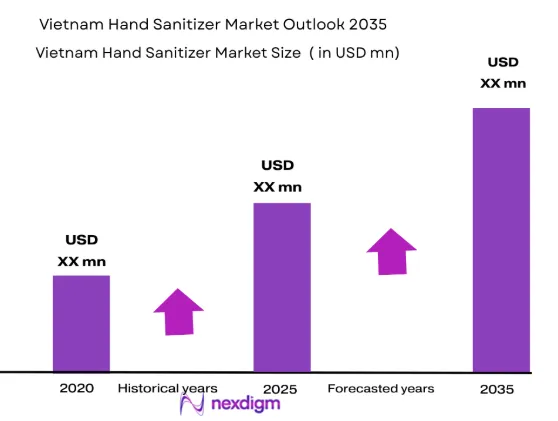
The Vietnam Hand Sanitizer market is valued at approximately USD ~ million in 2025. This growth is primarily driven by heightened public awareness about hygiene and increased demand for sanitization products during health crises, such as the COVID-19 pandemic. The market is propelled by urbanization, an expanding middle class, and rising disposable incomes. This has fueled the demand for hand sanitizers across both consumer and institutional sectors, including healthcare, corporate, and retail industries. Additionally, strong government initiatives promoting hand hygiene have further supported market growth, particularly in the last year.
Vietnam’s dominant cities in the hand sanitizer market include Hanoi, Ho Chi Minh City, and Da Nang. These urban centers contribute significantly to the overall market due to their higher population density, greater disposable income, and stronger healthcare infrastructure. Furthermore, these cities have well-established distribution channels, such as retail outlets, pharmacies, and e-commerce platforms, which further bolster the availability and demand for hand sanitizing products. The growing consumer awareness about hygiene, especially in metropolitan areas, is a major factor driving the market dominance of these cities.
Market Segmentation
By Product Type
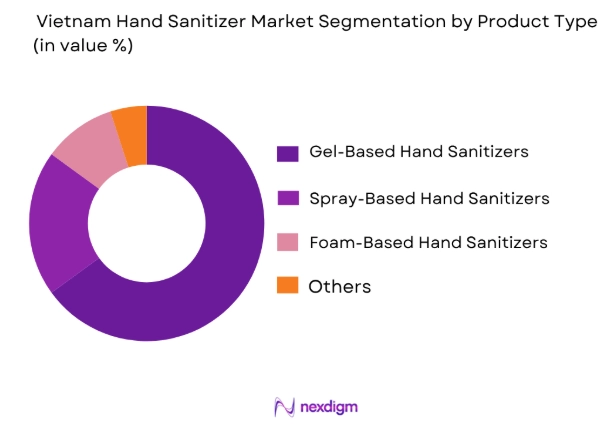
The Vietnam Hand Sanitizer market is segmented by product type into gel-based hand sanitizers, spray-based hand sanitizers, foam-based hand sanitizers, and others. Gel-based hand sanitizers dominate the market due to their widespread availability and ease of use. The gel format is commonly used both in personal and institutional settings due to its ability to be dispensed easily in varying quantities. Brands such as Unilever and Procter & Gamble have played a significant role in driving the popularity of gel-based sanitizers. Additionally, the gel type tends to be more affordable compared to sprays and foams, making it the preferred choice for the price-sensitive segment of consumers.
By End-User Industry
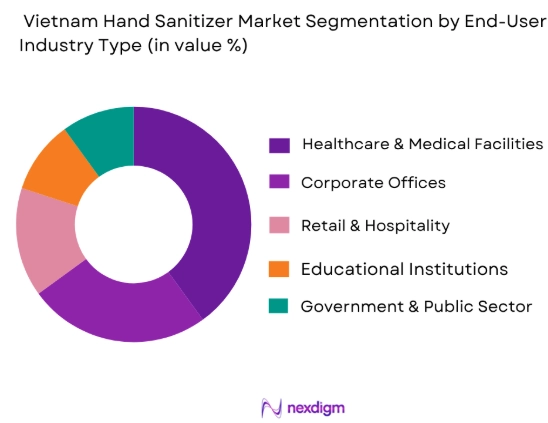
The market is also segmented by end-user industries into healthcare & medical facilities, corporate offices, retail & hospitality, educational institutions, and household use. The healthcare & medical facilities segment has a dominant market share due to the heightened importance of hygiene in these sectors. Hospitals, clinics, and other medical institutions have strict hygiene protocols, leading to consistent demand for hand sanitizers. This sector’s demand is primarily driven by both the need for infection control and government regulations ensuring the availability of hygiene products in healthcare settings. Given the critical role of sanitation in these facilities, healthcare remains the most significant consumer of hand sanitizers in Vietnam.
Competitive Landscape
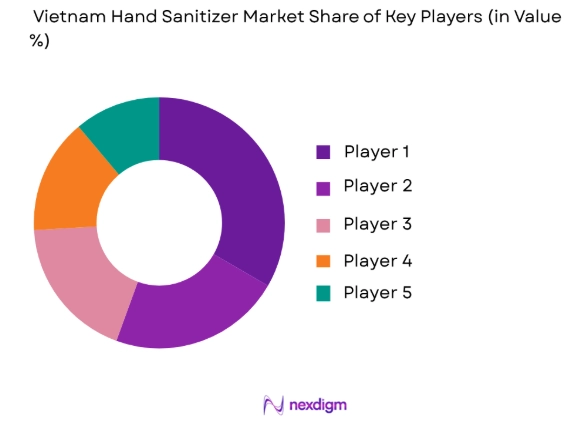
The Vietnam Hand Sanitizer market is dominated by several key players, with a mix of international and local companies vying for market share. Major players include global brands like Unilever, Procter & Gamble, and Reckitt Benckiser, alongside local brands that cater to the price-sensitive segment. These companies have strong distribution networks, ensuring the wide availability of their products across both urban and rural areas. Their extensive marketing and brand recognition further contribute to their dominance in the market. The competition is mainly focused on product innovation, brand loyalty, and pricing strategies.
| Company Name | Establishment Year | Headquarters | Product Portfolio | Distribution Channels | Market Focus | Product Innovation |
| Unilever Vietnam | 1995 | Ho Chi Minh City | ~ | ~ | ~ | ~ |
| Procter & Gamble Vietnam | 1995 | Ho Chi Minh City | ~ | ~ | ~ | ~ |
| Reckitt Benckiser Vietnam | 1996 | Hanoi | ~ | ~ | ~ | ~ |
| Kim Phat | 2002 | Ho Chi Minh City | ~ | ~ | ~ | ~ |
| Biwins Vietnam | 2008 | Hanoi | ~ | ~ | ~ | ~ |
Vietnam Hand Sanitizer Market Dynamics
Growth Drivers
Increased Health Awareness and Hygiene Standards
Vietnam has seen a noticeable increase in health awareness over recent years, particularly in the wake of the COVID-19 pandemic. According to the World Bank, Vietnam has significantly raised its focus on improving public health infrastructure, with increasing investments in sanitation and healthcare services. This focus is reflected in the country’s growing consumption of hygiene products, including hand sanitizers, as part of a broader effort to improve sanitation standards across the population. Additionally, the Vietnamese government’s continued focus on public health education has increased consumer awareness about the importance of regular hand sanitization to prevent the spread of diseases. The implementation of nationwide hygiene awareness programs has driven the demand for hand sanitizers, particularly in urban centers where health awareness is higher.
Government Push for Hygiene and Sanitation Practices
The Vietnamese government has increasingly emphasized the importance of hygiene and sanitation practices in various public health initiatives. The Ministry of Health (MOH) has been actively pushing for improvements in public hygiene, particularly in the wake of the COVID-19 pandemic. Policies encouraging the use of hand sanitizers in public spaces, schools, and government offices have been implemented. For example, the Vietnamese government set up a national hygiene program which includes distributing free hygiene products to schools and hospitals in certain regions. These government actions have increased the penetration of hand sanitizers across diverse sectors, promoting their usage as a preventive measure against viral infections and disease outbreaks. Government-backed hygiene campaigns, such as “Clean Vietnam” which promotes daily health practices, continue to shape consumer behavior, driving market growth.
Market Challenges
Competition from Local and International Brands
The hand sanitizer market in Vietnam is increasingly competitive, with both international brands like Unilever and Procter & Gamble, and local brands vying for market share. International companies benefit from global recognition and established supply chains, while local players leverage competitive pricing and a better understanding of domestic consumer preferences. As Vietnam’s middle class expands, both local and international players are ramping up their marketing efforts to increase brand loyalty. The Vietnamese government also enforces pricing regulations, limiting how much both local and international players can charge, thus intensifying the competition in the market. However, such competitive pricing and the fight for market leadership can negatively impact profitability for both segments.
Regulatory Compliance
In Vietnam, the regulatory landscape surrounding the hand sanitizer market is complex, requiring compliance with multiple standards set by the Ministry of Health and the Vietnam Food Administration. One of the significant regulatory concerns is the approval process for manufacturing hand sanitizers, which requires compliance with specific formulation standards, including concentration of alcohol. Non-compliance with these standards can lead to market withdrawal or penalties, affecting both local and international manufacturers. Additionally, the market also faces challenges related to labeling requirements, where products must disclose ingredient lists, manufacturing processes, and expiration dates. These regulations create barriers to entry for new businesses and increase operational costs for manufacturers already established in the market.
Opportunities
Expansion of E-Commerce and Online Sales Channels
E-commerce in Vietnam has seen rapid growth in recent years, with the country’s internet penetration rate reaching 70% in 2023, according to the International Telecommunication Union (ITU). This growth has led to a significant shift in consumer purchasing habits, particularly in urban areas, with an increasing number of consumers turning to online platforms for shopping. As more people shop online, hand sanitizers are among the fastest-growing product categories on e-commerce platforms. The rise of online marketplaces, such as Shopee and Lazada, has made hygiene products, including hand sanitizers, easily accessible to consumers in both urban and rural areas. Online sales channels offer a great opportunity for brands to reach a broader audience and promote their products, capitalizing on the shift toward digital commerce.
Rising Disposable Income and Health-Conscious Population
Vietnam’s growing disposable income and increasing focus on health and wellness present a significant opportunity for the hand sanitizer market. According to the Asian Development Bank (ADB), the median household income in Vietnam has been rising steadily, with a 10% increase in the past three years. As disposable incomes rise, consumers are more willing to spend on premium hygiene products, including hand sanitizers with higher alcohol content or organic formulations. This trend is being driven by an increasingly health-conscious population that is more proactive about preventing illness and disease. This shift in consumer behavior is expected to fuel demand for specialized and premium hand sanitizers, providing opportunities for companies to innovate and cater to this growing market segment.
Future Outlook
Over the next five years, the Vietnam Hand Sanitizer market is expected to show steady growth. The demand for hand sanitizers will continue to rise, driven by an increasing emphasis on personal hygiene and the ongoing awareness surrounding infectious diseases. Moreover, the government’s commitment to public health and safety will further spur the growth of the hand sanitizer market. Technological advancements in sanitization products, such as alcohol-free and natural hand sanitizers, are also expected to drive market expansion. As urbanization continues and disposable incomes rise, demand from both the consumer and institutional sectors will bolster market growth.
Major Players in the Market
- Unilever Vietnam
- Procter & Gamble Vietnam
- Reckitt Benckiser Vietnam
- Kim Phat
- Biwins Vietnam
- Lavosept
- Hanoitex
- Clever Care
- Vietnam Clean
- BMG Group
- Tetra Pak Vietnam
- HumaClean
- FastCare
- Sontara
- Vinhomes
Key Target Audience
- Investment and Venture Capitalist Firms
- Government and Regulatory Bodies (Ministry of Health, Vietnam)
- Healthcare & Medical Institutions
- Corporate Offices and Commercial Buildings
- Retail Chains and E-commerce Platforms
- Hospitality and Educational Institutions
- Manufacturers of Personal Hygiene Products
- Non-governmental Organizations (NGOs) focusing on Health and Hygiene
Research Methodology
Step 1: Identification of Key Variables
This initial step involves constructing an ecosystem map that includes all major stakeholders in the Vietnam Hand Sanitizer Market. Desk research is performed using secondary databases to gather key market variables, ensuring a comprehensive understanding of the market landscape.
Step 2: Market Analysis and Construction
We compile and analyze historical data from credible sources, focusing on revenue generation, market penetration, and service statistics. We evaluate sales volume and distribution channel data, ensuring all relevant market dynamics are considered in the analysis.
Step 3: Hypothesis Validation and Expert Consultation
Market hypotheses are validated through interviews with industry experts. These consultations provide invaluable operational and market insights, ensuring the accuracy of the data and the market’s future direction.
Step 4: Research Synthesis and Final Output
In this phase, we directly engage with key manufacturers to acquire detailed insights into product segments and market trends. This will help refine our data and provide a reliable, in-depth market analysis.

- Executive Summary
- Research Methodology (Market Definitions and Assumptions, Regulatory Framework Consideration, Market Sizing via Revenue, Product Category Segmentation, Primary Expert Interviews with Manufacturers/Distributors, Data Triangulation Using Industry Reports, Limitations and Forecasting Assumptions)

- Definition and Scope
- Evolution of Hand Sanitizer Usage in Vietnam
- Regulatory Landscape and Licensing Framework
- Market Ecosystem
- Value Chain Analysis
- Role of Hand Sanitizers in Public Health
- Digital Transformation in Product Distribution

- Growth Drivers
Increased Health Awareness and Hygiene Standards
Government Push for Hygiene and Sanitation Practices
Rising Demand from Healthcare Sector
Growth in Online Shopping - Market Challenges
Competition from Local and International Brands
Price Sensitivity
Supply Chain Constraints
Regulatory Compliance
Product Quality Concerns - Opportunities
Expansion of E-Commerce and Online Sales Channels
Rising Disposable Income and Health-Conscious Population
Adoption of Eco-Friendly & Organic Sanitizers
Product Innovation and Customization - Market Trends
Shift Toward Alcohol-Free and Natural Sanitizers
Increased Focus on Sustainable Packaging
Growth in Bulk and Institutional Demand
Integration with Smart Sanitizer Solutions
Increased Demand for Hand Hygiene Products in Workplaces - Regulatory Framework
Compliance with National and International Standards
Product Registration and Certification Process
Impact of COVID-19 on Regulatory Policies
- SWOT Analysis of Key Competitors
- Pricing & Procurement Analysis
- Porter’s Five Forces

- By Revenue, 2020–2025
- By Product Category, 2020–2025
- By Distribution Channel, 2020–2025
- By Market Segments, 2020–2025

- By Product Type ( In value %)
Gel-Based Hand Sanitizers
Spray-Based Hand Sanitizers
Foam-Based Hand Sanitizers
Others - By End-User Industry ( In value %)
Healthcare & Medical Facilities
Corporate Offices
Retail & Hospitality
Educational Institutions
Government & Public Sector
Household Use - By Distribution Channel ( In value %)
Offline Retail (Supermarkets, Pharmacies)
E-Commerce Platforms
Direct Sales via Corporate/Institutional Clients
Institutional & Bulk Sales - By Geography (In value %)
North Vietnam
South Vietnam
Central Vietnam

- Market Share Analysis (By Revenue and Volume)
- Cross Comparison Parameters (Company Overview, Market Share, Product Range, Distribution Channels, Brand Reputation, Innovation Capacity, Environmental Initiatives, Pricing Strategy)
- Competitive Strategies
- Pricing & Product Range Analysis
- Detailed Profiles of Major Companies
Unilever Vietnam
Procter & Gamble (P&G) Vietnam
L’Oréal Vietnam
Clever Care
Hanoitex
Kim Phat
Lavosept
Vietnam Clean
Biwins Vietnam
Tetra Pak Vietnam
BMG Group

- Healthcare and Medical Facilities
- Corporate Offices and Workplace Environments
- Retail and Hospitality Sector
- Educational Institutions and Schools
- Household and Personal Use

- By Revenue, 2026–2035
- By Product Category, 2026–2035
- By Distribution Channel, 2026–2035
- By Market Segments, 2026–2035


 Request a Sample
 Ask for Customization
 Get a Quote
 Enquire Now