

 Download PDF
Market Overview
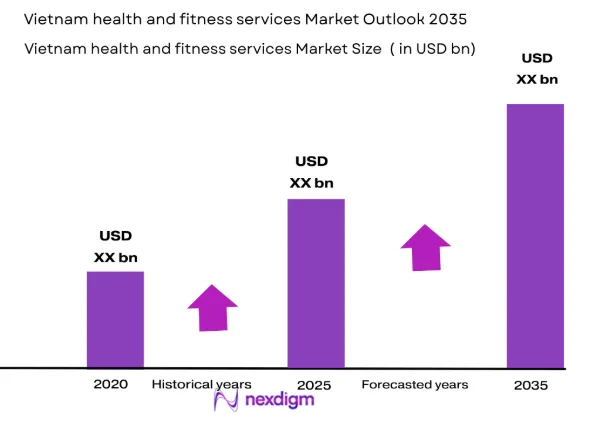
The Vietnam health and fitness services market is experiencing robust growth, valued at USD ~ billion. This growth is primarily driven by the rising health consciousness among the population, with more individuals focusing on physical wellness, fitness, and preventative health. Increasing urbanization, growing disposable incomes, and the expanding middle class further contribute to this upward trend. The growing popularity of fitness clubs, wellness centers, and the increasing acceptance of fitness apps and wearable devices are accelerating the market’s expansion. These developments are supported by government initiatives aimed at promoting a healthier lifestyle, creating a conducive environment for the fitness sector to flourish.
Hanoi and Ho Chi Minh City dominate the Vietnam health and fitness services market due to their large populations, high income levels, and strong demand for fitness solutions. These cities host numerous gyms, fitness studios, and wellness centers, reflecting the urban populace’s inclination towards maintaining an active lifestyle. Additionally, expatriates and young professionals in these cities contribute significantly to the demand for high-end fitness services. The expanding presence of global health and fitness brands in these regions further consolidates their position as the market leaders.
Market Segmentation
By Service Type
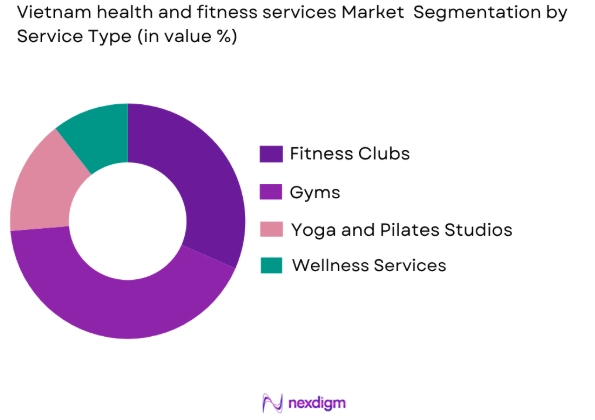
The Vietnam health and fitness services market is segmented by service type into fitness clubs, gyms, yoga and pilates studios, and wellness services. Among these, gyms hold the largest market share due to their widespread popularity and accessibility. The gym sector has witnessed substantial growth due to the increasing number of fitness enthusiasts and the rise of personalized training programs. As urban populations look for convenient and flexible ways to exercise, gym memberships have surged. Additionally, the availability of modern equipment, diverse workout options, and the growing preference for professional trainers have cemented the dominance of this segment in the market.
By End User
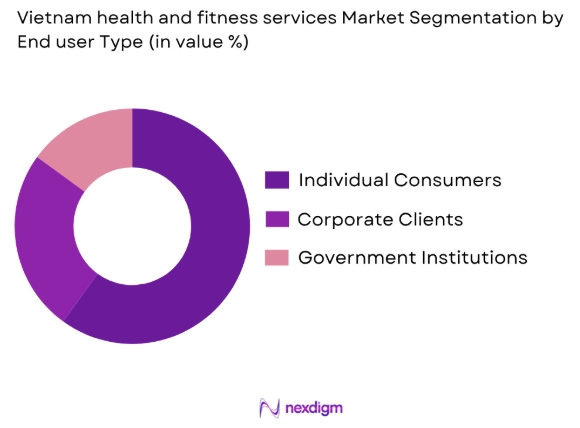
The market is also segmented by end-user into individual consumers, corporate clients, and government institutions. Individual consumers lead this segment, contributing to the majority of the market share. This is driven by the growing trend of personal fitness and wellness, where individuals are increasingly willing to invest in health and fitness services. Additionally, the increasing awareness regarding the importance of physical well-being and mental health has encouraged individuals across various demographics to engage in fitness activities. Corporate clients are also a growing segment, with many companies offering gym memberships and wellness programs to enhance employee well-being.
Competitive Landscape
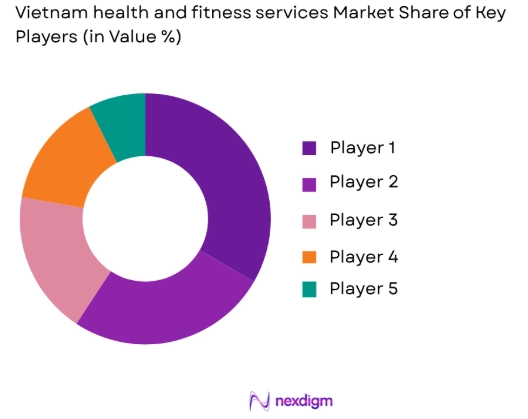
The Vietnam health and fitness services market is highly competitive, with several major players leading the industry. Companies such as California Fitness & Yoga, Elite Fitness, and NShape have a significant presence in the market, offering a wide range of services from basic gym memberships to high-end fitness programs. These companies benefit from strong brand recognition, extensive marketing strategies, and the growing demand for professional fitness services in urban areas.
| Company Name | Establishment Year | Headquarters | Service Ofering | No. of Locations | Membership Base (approx.) | Target Market |
| California Fitness & Yoga | 2003 | Ho Chi Minh City | ~ | ~ | ~ | ~ |
| Elite Fitness | 2006 | Hanoi | ~ | ~ | ~ | ~ |
| NShape | 2010 | Ho Chi Minh City | ~ | ~ | ~ | ~ |
| 24/7 Fitness | 2015 | Hanoi | ~ | ~ | ~ | ~ |
| YoFit | 2017 | Ho Chi Minh City | ~ | ~ | ~ | ~ |
Vietnam Health and Fitness Services Market Analysis
Growth Drivers
Urbanization & Health Awareness
Vietnam’s urban population reached 35.7 million in 2022, representing 36% of the total population, which continues to grow as urbanization drives demand for health and fitness services. Health awareness has increased with urban dwellers seeking better healthcare and fitness solutions. As urban populations grow, there is a significant rise in demand for wellness centers, fitness clubs, and gyms. In 2023, Vietnam’s expenditure on health was approximately VND 171,000 billion (about USD 7.3 billion), indicating a growing market for health-related services. These figures reflect increasing investments in health and fitness infrastructure, which is expected to keep rising in 2024.
Increasing Disposable Incomes
Vietnam’s GDP per capita reached approximately USD 4,700 in 2022, reflecting a steady increase in disposable income. As disposable incomes rise, especially in urban areas, consumers are more willing to spend on health and fitness services, including gym memberships, fitness classes, and wellness programs. The average household income in urban areas has seen an increase of around VND 20 million annually. This increased economic capacity, particularly in cities like Hanoi and Ho Chi Minh City, is driving demand for premium fitness services, health clubs, and wellness centers in the country.
Challenges
High Operational Costs
The operational costs of running health and fitness services in Vietnam have been a major challenge. Gym and wellness center operators face high costs related to rent, equipment, and maintenance, particularly in urban areas where rental prices can be significantly higher. In Ho Chi Minh City, average commercial property rent in 2023 was about VND 1.1 million per square meter per month. Fitness centers also have to invest heavily in marketing, hiring skilled trainers, and maintaining state-of-the-art equipment, all of which increases operating expenses. These factors are limiting the growth potential of smaller operators in the sector.
Competition from Online Fitness Platforms
The rise of digital fitness platforms presents a significant challenge for traditional fitness businesses in Vietnam. Online fitness services saw increased uptake during the COVID-19 pandemic and have continued to grow in popularity as remote working and home fitness trends take hold. In 2023, the number of online fitness subscribers in Vietnam grew by over 20%. These platforms offer flexibility and lower pricing, which appeal to consumers who prefer home workouts over traditional gym memberships. This increased competition is putting pressure on traditional brick-and-mortar fitness centers to innovate and reduce costs.
Opportunities
Corporate Wellness Partnerships
The increasing focus on employee well-being presents an opportunity for growth in the Vietnamese health and fitness market. Corporate wellness programs, which include fitness memberships and health-related services for employees, are gaining traction. In 2022, over 50% of large corporations in Vietnam reported implementing wellness programs for their employees. The integration of fitness services into corporate wellness programs is expected to increase further, especially as companies look to enhance employee productivity and reduce healthcare costs. This trend is expected to drive demand for fitness services targeting the corporate sector.
Integration of AI / IoT in Fitness Services
The adoption of Artificial Intelligence (AI) and Internet of Things (IoT) technologies is revolutionizing the fitness industry in Vietnam. With smart fitness equipment and AI-driven fitness applications, businesses can offer personalized training programs, real-time health monitoring, and data-driven results. In 2023, the number of fitness apps with AI integration increased by 30%, and wearable fitness devices also saw a surge in usage among health-conscious consumers. This technological shift presents an opportunity for fitness service providers to differentiate themselves and attract tech-savvy customers looking for modern, data-driven fitness solutions.
Future Outlook
Over the next 5 years, the Vietnam health and fitness services market is expected to experience significant growth, driven by several factors such as a rise in health consciousness, an increasing number of health-focused apps, and greater accessibility to fitness services. Government initiatives promoting active lifestyles, along with the expansion of wellness tourism, are likely to contribute to the market’s growth. The trend toward personalized fitness experiences and the integration of technology in fitness solutions will further enhance market opportunities. In particular, the growing adoption of virtual fitness platforms and wearable health devices is set to revolutionize the fitness industry in Vietnam, offering consumers more flexibility and personalized options.
Major Players
- California Fitness & Yoga
- Elite Fitness
- NShape
- 24/7 Fitness
- YoFit
- Fit24
- Star Fitness
- Curves Vietnam
- Anytime Fitness Vietnam
- Fitness First Vietnam
- Gold’s Gym Vietnam
- The Yoga Room
- WeFit
- ZenFit
- Body Balance Fitness Center
Key Target Audience
- Investments and Venture Capitalist Firms
- Government and Regulatory Bodies
- Corporate Clients
- Health and Fitness Enthusiasts
- Fitness Service Providers
- Wellness Tourism Operators
- Fitness App Developers
- Healthcare Providers
Research Methodology
Step 1: Identification of Key Variables
The first step involves identifying all the major factors influencing the Vietnam health and fitness services market. This includes understanding the current consumer behavior trends, service providers, pricing models, and the regulatory environment. Secondary data from reports, government publications, and fitness-related databases will be analyzed to define the market structure and influential variables.
Step 2: Market Analysis and Construction
Next, historical market data will be compiled to assess growth patterns, service adoption rates, and consumer spending. An in-depth analysis will be conducted to quantify market trends, penetration levels, and revenue generation by each market segment. Further, we will evaluate geographic variations, focusing on the largest urban centers like Hanoi and Ho Chi Minh City.
Step 3: Hypothesis Validation and Expert Consultation
Market hypotheses will be verified through expert consultations with stakeholders such as fitness club owners, gym trainers, wellness service providers, and regulatory bodies. These interviews, conducted via telephone and video calls, will provide insights into operational challenges, consumer preferences, and future trends.
Step 4: Research Synthesis and Final Output
The final phase involves synthesizing all collected data and expert insights to create a comprehensive market report. This will include detailed projections for the coming years, assessing market drivers, opportunities, and challenges. The data will be cross-referenced with the bottom-up market research to ensure robustness and reliability.

- Executive Summary
- Research Methodology (Market Definitions and Assumptions, Abbreviations, Data Triangulation Approach, Primary & Secondary Research Mix, Sample Frame by Channel and Consumer Cohort, Market Sizing and Forecasting Model, CAGR Validation Protocol, Limitations and Data Convergence Confidence)

- Definition and Scope
- Genesis and Evolution of Health and Fitness Services Adoption in Vietnam
- Integration of Digital Platforms and Consumer Behavior Shifts
- Economic and Lifestyle Drivers Affecting Health and Fitness Services Purchases
- Market Value Chain – From Service Providers to End Consumers
Distribution Infrastructure Overview

- Growth Drivers
Urbanization & Health Awareness
Increasing Disposable Incomes
Remote Work & Home Fitness Trends
Emergence of Digital Health and Fitness Solutions - Challenges
High Operational Costs
Competition from Online Fitness Platforms
Regulatory Compliance and Licensing Issues - Opportunities
Corporate Wellness Partnerships
Integration of AI / IoT in Fitness Services
Fitness Subscription Models
Health and Fitness Tourism Development - Market Trends
Shift Toward Digital Fitness and Hybrid Models
Growth of Boutique Fitness Studios
Corporate Wellness Program Expansion
Influencer Marketing and Social Media Impact - Government Regulation
- SWOT Analysis
- Porter’s Five Forces

- By Revenue, 2020-2025
- By Membership Subscriptions, 2020-2025
- By Average Service Pricing, 2020-2025
- By Channel Contribution, 2020-2025

- By Service Type (In Value %)
Fitness Clubs
Gym
Yoga and Pilates Studios
Wellness Services - By End User (In Value %)
Individual Consumers
Corporate Clients
Government Institutions - By Distribution Channel (In Value %)
Physical Gyms & Fitness Studios
E-commerce & Online Platforms
Corporate Wellness Programs
Direct-to-Consumer Subscriptions
Boutique Fitness Studios - Price Tier (In Value %)
Value / Budget Segment
Mid-Tier Mainstream
Premium / High-End Wellness
Luxury Wellness & Lifestyle Centers - By Geographic (In Value %)
Northern Vietnam
Central Vietnam
Southern Vietnam

- Market Share Analysis – By Revenue / Volume
- Cross Comparison Parameters (Company Overview, Service Portfolio & Service Delivery Depth, Market Reach, Channel Mix, Pricing Architecture & Membership Trends, Digital Fitness Services Integration, Customer Retention Strategies, Marketing and Brand Positioning Metrics, Supply Chain Resilience, R&D Investments & New Service Launches, Strategic Partnerships & Alliances, Financial Metrics)
- SWOT Profiles of Key Competitors
- Pricing & Service Mapping Across Channels
- Detailed Profiles
California Fitness & Yoga
Elite Fitness
Getfit Vietnam
Fit24 Vietnam
True Fitness Vietnam
Saigon Sports Club
VietFitness
Maxfit Gym
The Fitness Company Vietnam
WeFit
Xfitness Vietnam
YOGAPLUS Vietnam
CALI Fitness & Yoga
F45 Training Vietnam
Gold’s Gym Vietnam

- Market Demand and Utilization Patterns
- Purchasing Power and Budget Allocation
- Regulatory and Compliance Requirements for End Users
- Needs, Desires, and Pain Points Analysis
- Decision-Making Process and Influencers

- By Revenue, 2026-2035
- By Membership Subscriptions, 2026-2035
- By Average Service Pricing, 2026-2035
- By Channel Contribution, 2026-2035


 Request a Sample
 Ask for Customization
 Get a Quote
 Enquire Now