

 Download PDF
 Download PDF
Market Overview
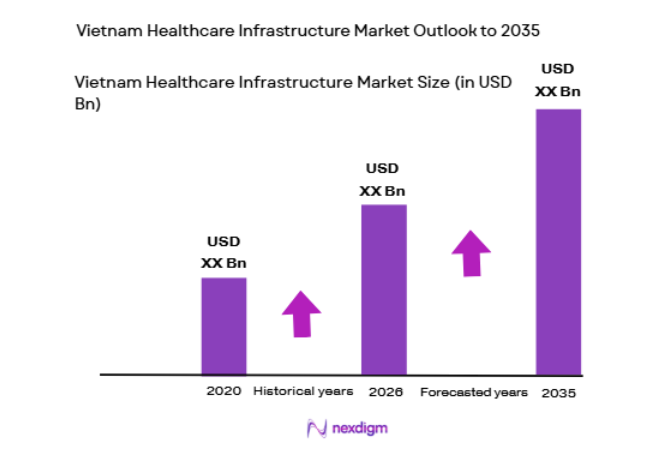
Based on a recent historical assessment, the Vietnam Healthcare Infrastructure Market is valued at approximately USD ~ billion. The market is driven by the government’s commitment to expanding healthcare access and improving healthcare services across the country. This is supported by increased investments in hospital infrastructure, diagnostic centers, and specialized healthcare facilities. As the demand for quality healthcare continues to rise, especially with an aging population and growing chronic diseases, Vietnam’s healthcare infrastructure is expanding to meet these needs, contributing to steady market growth.
Hanoi and Ho Chi Minh City are the dominant cities in the Vietnam Healthcare Infrastructure Market, hosting the majority of the country’s medical institutions and specialized healthcare facilities. These cities benefit from high urbanization, advanced healthcare systems, and the availability of skilled medical professionals. Additionally, both cities are focal points for government healthcare initiatives, driving infrastructure development and investment in the healthcare sector. Their strategic importance in healthcare delivery and access has positioned them as key contributors to market growth.
Market Segmentation
By Facility Type
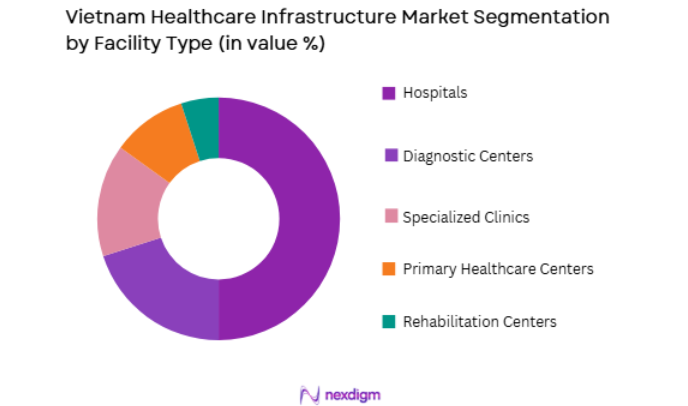
Vietnam Healthcare Infrastructure market is segmented by facility type into Hospitals, Diagnostic Centers, Specialized Clinics, Primary Healthcare Centers, and Rehabilitation Centers. Recently, Hospitals have a dominant market share due to their central role in providing comprehensive medical services across the country. Hospitals cater to a wide range of medical needs, from emergency care to specialized treatments and surgeries. As the population grows and the demand for healthcare services increases, hospitals are increasingly becoming more equipped with advanced medical technologies to provide high-quality care. The government’s continued investment in hospital infrastructure, along with private sector involvement, has contributed to the rapid development of hospital facilities, making them the most significant segment in the market.
By Ownership Type
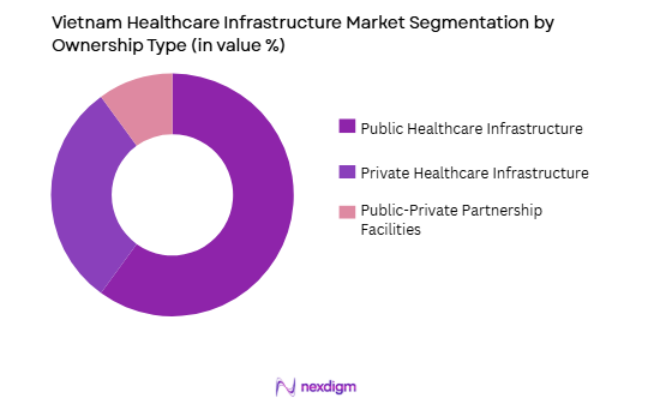
Vietnam Healthcare Infrastructure market is segmented by ownership type into Public Healthcare Infrastructure, Private Healthcare Infrastructure, and Public-Private Partnership (PPP) Facilities. Recently, Public Healthcare Infrastructure has a dominant market share due to the Vietnamese government’s substantial investment in public healthcare facilities. The government is committed to improving healthcare access in both urban and rural areas, particularly by expanding public hospitals, primary healthcare centers, and diagnostic services. Public healthcare institutions, often heavily subsidized, provide affordable and accessible medical care to the population, especially in underserved regions. With the rising demand for healthcare services, the public sector plays a crucial role in ensuring that the healthcare needs of the population are met. Public healthcare infrastructure is expected to remain dominant in the coming years, supported by continued government funding and development plans.
Competitive Landscape
The Vietnam Healthcare Infrastructure Market is becoming increasingly competitive, with both public and private players expanding their reach and improving the quality of healthcare services. The market is characterized by increasing public-private collaborations, as well as investments in the construction and expansion of hospitals, specialized clinics, and diagnostic centers. The government continues to prioritize healthcare infrastructure development, while private healthcare providers are investing in advanced medical technologies and expanding their networks to meet the rising demand for healthcare services. As the market evolves, consolidation and strategic partnerships between private and public players are expected to become more prevalent.
| Company Name | Establishment Year | Headquarters | Technology Focus | Market Reach | Key Products | Revenue | Market-Specific Parameter |
| Vinmec Healthcare System | 2012 | Hanoi | ~ | ~ | ~ | ~ | ~ |
| Hanoi Medical University | 1902 | Hanoi | ~ | ~ | ~ | ~ | ~ |
| FV Hospital | 2004 | Ho Chi Minh City | ~ | ~ | ~ | ~ | ~ |
| Ho Chi Minh City Public Health Department | 1976 | Ho Chi Minh City | ~ | ~ | ~ | ~ | ~ |
| Saigon International General Hospital | 1997 | Ho Chi Minh City | ~ | ~ | ~ | ~ | ~ |

Vietnam Healthcare Infrastructure Market Analysis
Growth Drivers
Government Investment in Healthcare Infrastructure
Government Investment in Healthcare Infrastructure is a key growth driver in the Vietnam Healthcare Infrastructure Market. The government has committed substantial resources to expanding and improving the healthcare sector to meet the growing demand for services. Significant investments are being made in constructing new hospitals, expanding existing facilities, and improving the quality of care in rural areas. These investments are aimed at addressing healthcare access disparities and improving overall healthcare delivery. The government’s focus on upgrading medical facilities and introducing modern technologies is helping Vietnam bridge the healthcare gap and create a more inclusive healthcare system. The continued government backing ensures that healthcare infrastructure development remains a top priority, propelling the growth of the market.
Rising Healthcare Demand Due to Population Growth and Aging
Rising Healthcare Demand Due to Population Growth and Aging is another key growth driver in the Vietnam Healthcare Infrastructure Market. As the Vietnamese population continues to grow and age, there is an increased need for healthcare services, particularly for managing chronic diseases and aging-related conditions. The aging population is expected to drive demand for specialized healthcare services such as geriatrics, rehabilitation, and long-term care. The growing middle class is also contributing to increased healthcare consumption, with individuals seeking better healthcare services and treatments. To meet these demands, the government and private sector are expanding healthcare facilities and services, creating a robust healthcare infrastructure. As the population continues to age, the demand for healthcare services is expected to increase, further fueling the growth of the market.
Market Challenges
High Costs of Healthcare Infrastructure Development
High Costs of Healthcare Infrastructure Development pose a challenge for the Vietnam Healthcare Infrastructure Market. Developing healthcare infrastructure, particularly hospitals and specialized care centers, requires significant financial resources, which can strain both public and private sector budgets. The costs involved in constructing modern healthcare facilities, purchasing medical equipment, and training staff are substantial, and smaller healthcare providers may struggle to afford these investments. While the government has been increasing its spending on healthcare, the high initial capital required for the development of advanced medical facilities can be a barrier to market growth, particularly in rural areas where funding may be limited. As a result, balancing the need for infrastructure expansion with financial constraints remains a key challenge for the healthcare sector.
Regulatory and Compliance Barriers
Regulatory and Compliance Barriers are significant challenges in the Vietnam Healthcare Infrastructure Market. Healthcare providers must comply with a variety of national and international regulations regarding the construction, operation, and maintenance of healthcare facilities. These regulations include standards for medical equipment, safety protocols, and environmental factors, all of which increase the complexity and cost of building and operating healthcare infrastructure. While the government is working to streamline regulations and improve enforcement, the regulatory landscape remains an obstacle for healthcare providers, particularly those seeking to establish or expand healthcare facilities in a competitive market. Compliance with these regulations can result in delays in construction and higher operational costs, impacting the overall growth of the market.
Opportunities
Expansion of Healthcare Services in Rural Areas
Expansion of Healthcare Services in Rural Areas presents a significant opportunity for the Vietnam Healthcare Infrastructure Market. Despite improvements in healthcare infrastructure, rural areas in Vietnam still face challenges in accessing quality healthcare services. There is an increasing need to expand healthcare facilities and services in these areas to improve access to care and reduce regional disparities. The government has been investing in the development of healthcare infrastructure in rural and remote regions, with a focus on building new hospitals, clinics, and healthcare centers. Private sector players are also entering these markets to meet the growing demand for healthcare services. The expansion of healthcare services in rural areas presents a substantial growth opportunity for both public and private sector healthcare providers in Vietnam.
Technological Advancements in Healthcare Infrastructure
Technological Advancements in Healthcare Infrastructure present a major opportunity for the Vietnam Healthcare Infrastructure Market. The adoption of digital health technologies, such as electronic health records (EHR), telemedicine, and medical imaging systems, is transforming healthcare delivery and improving efficiency. These technologies enable healthcare providers to offer better diagnostic services, improve patient care, and reduce operational costs. The integration of AI and machine learning into healthcare infrastructure can further enhance treatment accuracy and streamline hospital operations. As healthcare providers in Vietnam increasingly adopt these technologies, there will be significant opportunities for innovation and investment in the healthcare infrastructure sector. The focus on technological advancements is expected to drive the future growth of the market.
Future Outlook
The Vietnam Healthcare Infrastructure Market is expected to continue growing in the coming years, driven by ongoing government investments, the rising demand for healthcare services, and technological advancements in healthcare delivery. The expansion of healthcare services into rural areas, coupled with the adoption of digital health solutions, will drive further market growth. As the population continues to age and the demand for specialized care increases, the healthcare sector in Vietnam will need to continue evolving to meet the changing healthcare needs of the population.
Major Players
- Vinmec Healthcare System
- Hanoi Medical University
- Vejthani Hospital
- Bumrungrad International
- Aetna Healthcare
- Srinakarin Hospital
- Almedic Hospital
- Siriraj Hospital
- King Chulalongkorn Memorial Hospital
- Chulabhorn Hospital
- Samitivej Sukhumvit Hospital
- Ramkhamhaeng Hospital
- Bangkok Chain Hospital
- Phyathai Hospitals
- Piyavate Hospital
Key Target Audience
- Investments and venture capitalist firms
- Government and regulatory bodies
- Hospital operators
- Healthcare infrastructure developers
- Medical device manufacturers
- Pharmaceutical companies
- Healthcare IT providers
- Insurance companies
Research Methodology
Step 1: Identification of Key Variables
Key market variables, such as healthcare facility demand, population growth, government healthcare policies, and technological advancements, were identified to assess the market’s drivers and challenges.
Step 2: Market Analysis and Construction
Market analysis was conducted by examining healthcare facility needs, population health trends, digital health adoption patterns, and government healthcare policies across Vietnam.
Step 3: Hypothesis Validation and Expert Consultation
Market assumptions were validated through consultations with healthcare providers, technology developers, and industry experts to confirm emerging trends and market growth drivers.
Step 4: Research Synthesis and Final Output
The final report synthesized data from primary and secondary sources, combining expert insights, market data, and government initiatives to assess the Vietnam Healthcare Infrastructure Market.

- Executive Summary
- Research Methodology (Definitions, Scope, Industry Assumptions, Market Sizing Approach, Primary & Secondary Research Framework, Data Collection & Verification Protocol, Analytic Models & Forecast Methodology, Limitations & Research Validity Checks)

- Market Definition and Scope
- Value Chain & Stakeholder Ecosystem
- Regulatory / Certification Landscape
- Sector Dynamics Affecting Demand

- Growth Drivers
Government Investments in Healthcare Infrastructure
Growing Demand for Advanced Medical Equipment
Rising Prevalence of Chronic Diseases - Market Challenges
High Capital Investment for Advanced Healthcare Systems
Regulatory Barriers and Certification Requirements
Shortage of Skilled Healthcare Professionals - Market Opportunities
Expansion of Telemedicine and Remote Healthcare Solutions
Growing Adoption of AI and Big Data in Healthcare
Partnerships Between Government and Private Sector - Trends
Increase in Adoption of Telemedicine
Shift Towards Preventive Healthcare - Government Regulations
- SWOT Analysis
- Porter’s Five Forces

- By Market Value, 2020-2025
- By Installed Units, 2020-2025
- By Average System Price, 2020-2025
- By System Complexity Tier, 2020-2025

- By System Type (In Value%)
Medical Imaging Systems
Patient Monitoring Systems
Laboratory Equipment
Healthcare IT Solutions
Hospital Furniture and Equipment - By Platform Type (In Value%)
Cloud-Based Platforms
Web-Based Platforms
Integrated Platforms
Mobile Healthcare Solutions
On-premise Solutions - By Fitment Type (In Value%)
Stand-Alone Solutions
Integrated Solutions
Modular Systems
Cloud-Based Solutions - By End User Segment (In Value%)
Hospitals
Diagnostic Centers
Private Healthcare Providers

- Market Share Analysis
- Cross Comparison Parameters (System Type, Platform Type, End User Segment, Fitment Type, Procurement Channel, Technological Advancements, Service Delivery Model, Regulatory Compliance, Healthcare IT Integration, Market Penetration)
- SWOT Analysis of Key Competitors
- Pricing & Procurement Analysis
- Key Players
Vinmec Healthcare System
Bệnh viện Chợ Rẫy
Hoan My Medical Corporation
Hanh Phuc International Hospital
The Vietnam Ministry of Health
Bệnh viện Đại học Y Dược
Medlatec Group
Sai Gon General Hospital
Viet Health Group
Bệnh viện Từ Dũ
Kangnam Hospital
Bệnh viện Phụ Sản Trung Ương
Hanoi Medical University Hospital
PV Gas Medical Center
Bệnh viện Việt Đức

- Rising Demand for Advanced Diagnostic and Imaging Equipment
- Government Focus on Expanding Healthcare Access
- Increasing Healthcare Awareness Among the Population
- Private Healthcare Providers Leading Technological Advancements

- Forecast Market Value, 2026-2035
- Forecast Installed Units, 2026-2035
- Price Forecast by System Tier, 2026-2035
- Future Demand by Platform, 2026-2035


 Request a Sample
 Ask for Customization
 Get a Quote
 Enquire Now