
 Download PDF
Market Overview
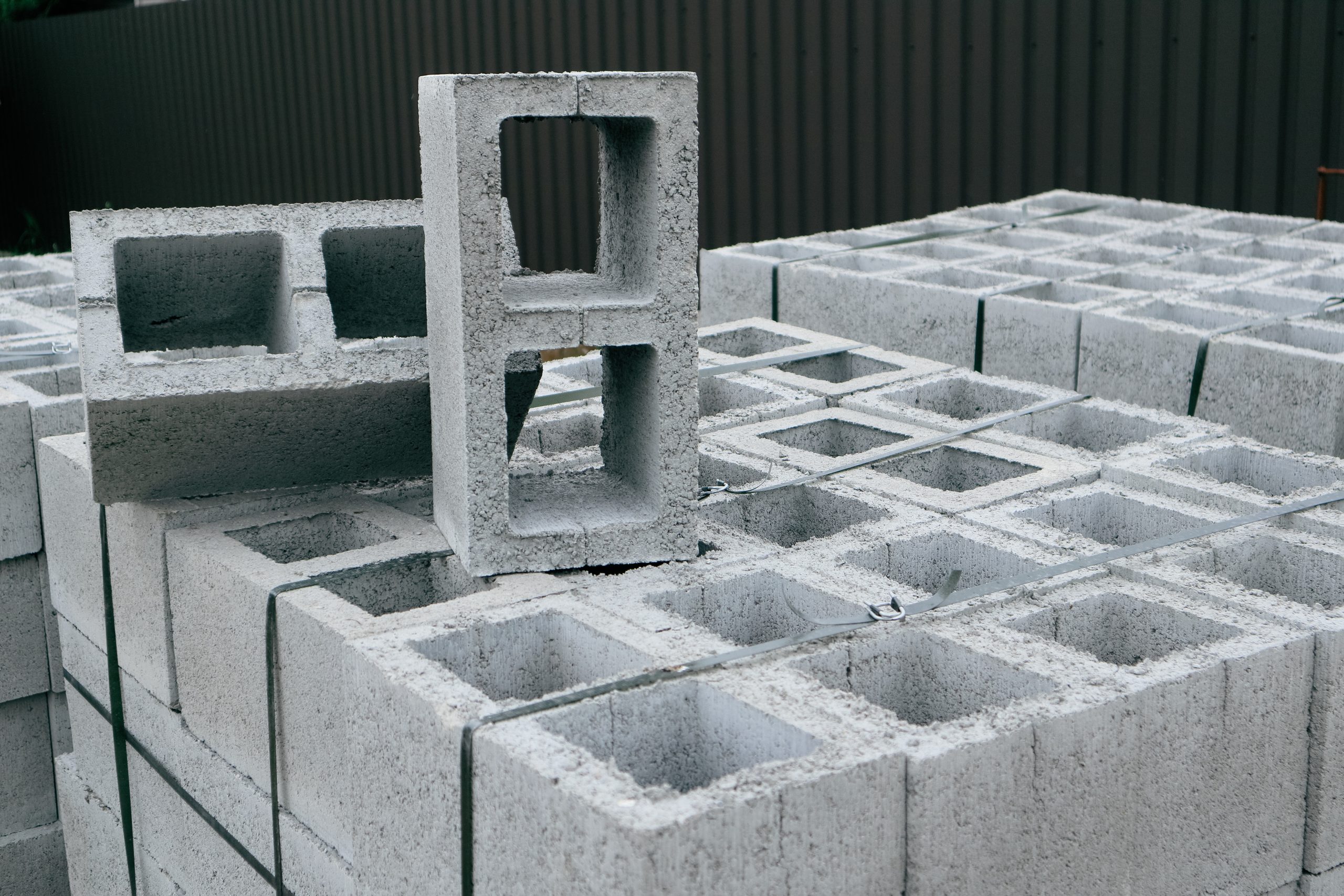
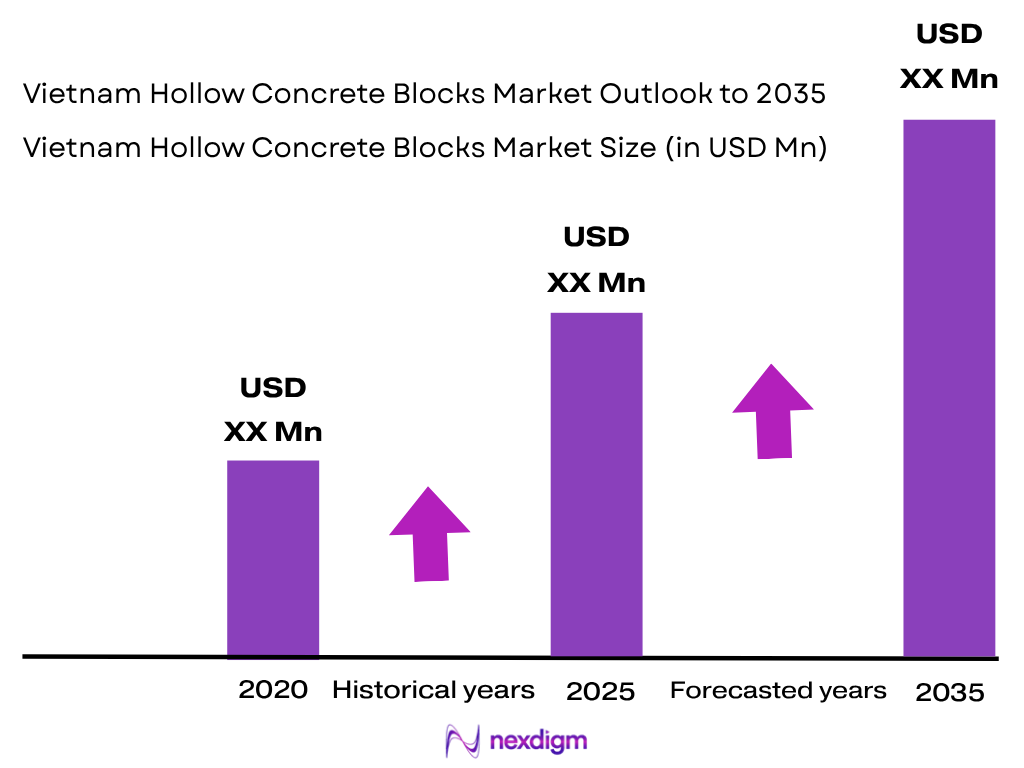
The Vietnam Hollow Concrete Blocks Market is valued at approximately USD ~ billion, based on a five-year historical analysis. Demand is supported by residential, industrial and infrastructure construction alongside national adoption of non-fired building materials. Commercial housing construction strengthened from approximately 58 newly licensed projects to 79 projects, while completed commercial housing projects reached 69 projects comprising 23,041 units. Industrial expansion and factory development further support concrete masonry consumption.
Hanoi, Ho Chi Minh City, Hai Phong, Bac Ninh, Binh Duong and Dong Nai are major demand centers for the Vietnam Hollow Concrete Blocks Market because they combine urban development, industrial parks and manufacturing investment. Vietnam approved 3,375 new foreign-investment projects with USD 19.7 billion registered capital, while processing and manufacturing attracted USD 25.58 billion. Housing construction is also concentrated around major metropolitan and industrial corridors, supporting regional concrete-block production and project-oriented distribution.
Market Segmentation
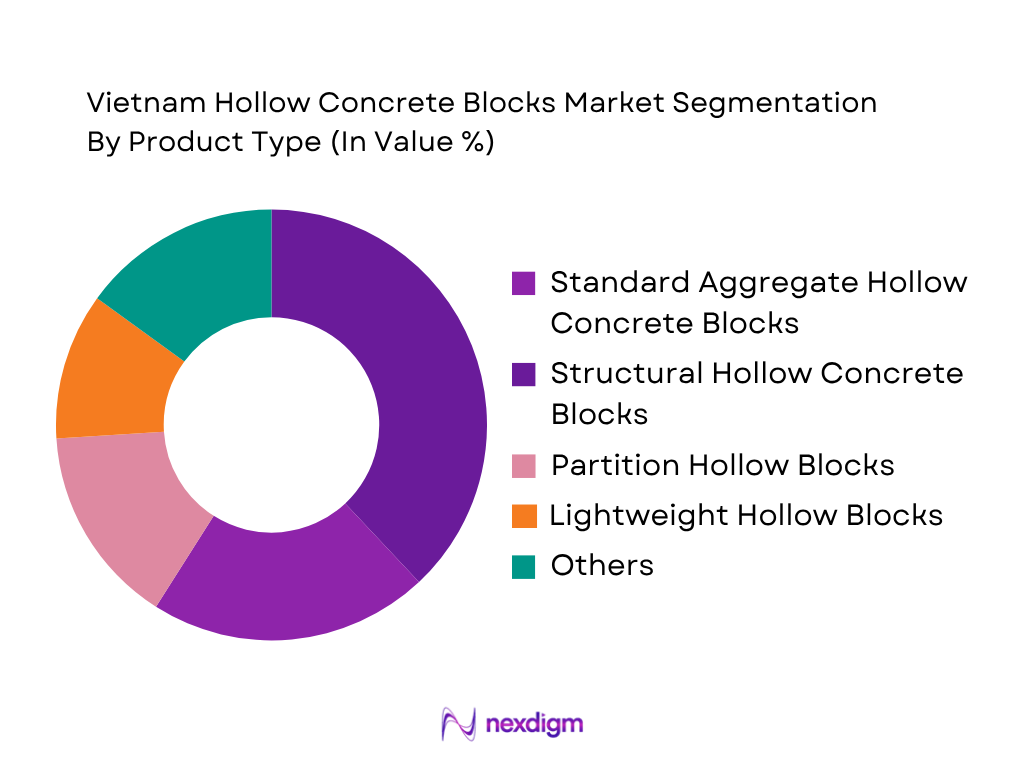
By Product Type
The Vietnam Hollow Concrete Blocks Market is segmented into standard aggregate hollow concrete blocks, structural hollow blocks, partition hollow blocks, lightweight hollow blocks, ventilation blocks and architectural concrete masonry units. Recently, standard aggregate hollow concrete blocks have a dominant market share in Vietnam under product-type segmentation in this report framework because they can serve residential, commercial, industrial and institutional walling applications while fitting Vietnam’s broader transition toward non-fired masonry. Standard units are produced from cementitious binders, aggregates and water through vibration and compression rather than kiln firing. Their cavities reduce concrete consumption compared with equivalent solid units while allowing manufacturers to supply different wall thicknesses and configurations. Structural and higher-strength products address more demanding masonry applications, while thinner partition blocks compete in apartment and commercial interiors. Ventilation and architectural blocks provide additional differentiation for tropical building designs where airflow, shading and decorative concrete surfaces can form part of the architectural concept.
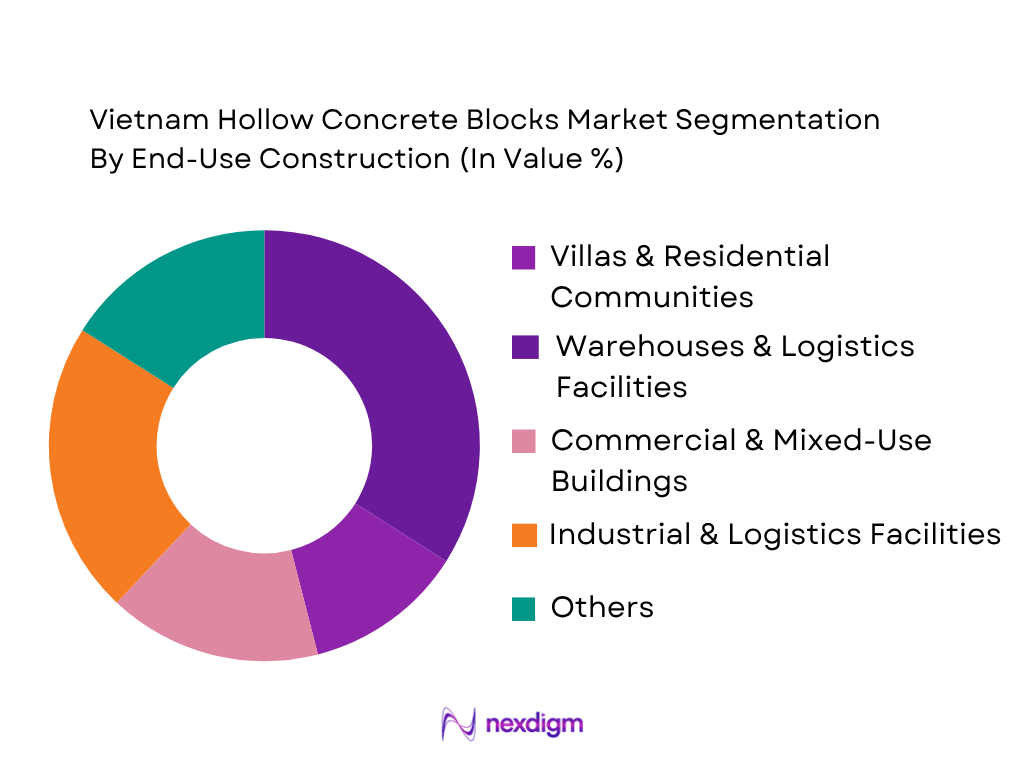
By End-Use Construction
The Vietnam Hollow Concrete Blocks Market is segmented into residential construction, industrial and factory construction, commercial buildings, warehouses and logistics facilities, institutional construction and infrastructure-related structures. Recently, residential construction has a dominant market share in Vietnam under end-use segmentation in this report framework because apartment developments, individual housing and social housing require substantial volumes of internal and external masonry. Concrete blocks can be applied to infill walls, partitions, boundary walls and utility structures. Industrial construction represents another important segment because Vietnam’s manufacturing-oriented investment model generates factories, ready-built production facilities and supporting buildings around industrial parks. Hollow concrete blocks can serve these developments through direct project supply from regional plants. Warehousing and logistics development creates similar requirements for partitions, service buildings and ancillary structures. Commercial and institutional construction additionally supports higher-quality blocks where dimensional consistency, surface finish and standardized strength are important procurement considerations.
Competitive Landscape
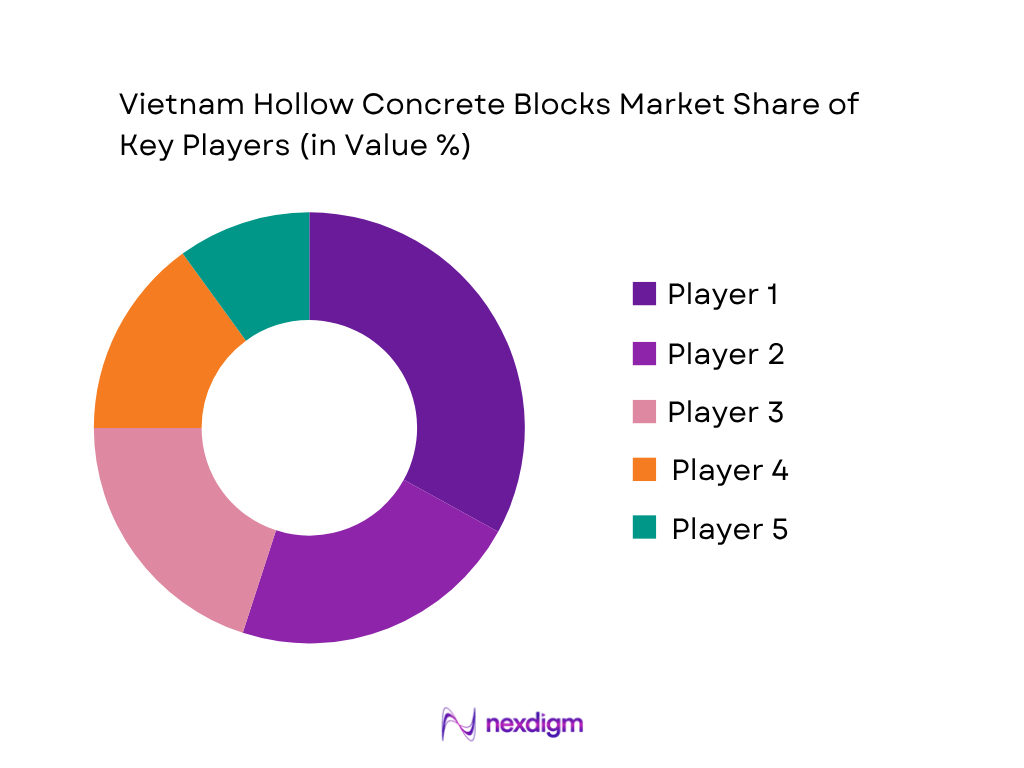
The Vietnam Hollow Concrete Blocks Market combines specialized non-fired concrete-block manufacturers, diversified construction-material groups and regional producers serving local construction clusters. Secoin represents an established concrete-block participant, while companies such as Viglacera compete across the broader walling-material ecosystem. Competition is shaped by manufacturing location because concrete masonry is relatively heavy, making plant-to-project distance important alongside strength grade, dimensional consistency, automated production and contractor relationships.
| Major Player | Establishment Year | Headquarters | Concrete Masonry Exposure | Automated Production Capability | Non-Fired Material Capability | Industrial Project Exposure | Sustainability Capability |
| Secoin Corporation | 1989 | Hanoi | ~ | ~ | ~ | ~ | ~ |
| Viglacera Corporation | 1974 | Hanoi | ~ | ~ | ~ | ~ | ~ |
| Song Da Cao Cuong JSC | 2007 | Hai Duong | ~ | ~ | ~ | ~ | ~ |
| Phan Vu Investment Corporation | 1996 | Ho Chi Minh City | ~ | ~ | ~ | ~ | ~ |
| Xuan Mai Corporati
on |
1983 | Hanoi | ~ | ~ | ~ | ~ | ~ |
Vietnam Hollow Concrete Blocks Market Analysis
Growth Drivers
Non-Fired Building Material Adoption and Urban Housing Construction
Vietnam’s policy-driven transition from fired clay masonry toward non-fired building materials provides a structural demand driver for hollow concrete blocks, particularly cement-aggregate units produced through vibro-compression rather than kiln firing. The relevance of this transition is reinforced by the scale of active housing construction. During 2024, 28 social-housing projects containing 20,284 apartments were completed, while 23 projects containing 25,399 apartments received licenses and commenced construction. Another 113 projects representing 142,450 apartments received investment-policy approval, creating a sizeable pipeline where concrete masonry can compete for infill, partition and external-wall applications. Across the national social-housing program, 645 projects with 581,218 apartments had entered implementation. Vietnam’s broader construction environment was also supportive: the economy expanded strongly during 2024, while construction activity recorded an expansion of 7.87 on the official annual growth measure. Hollow concrete blocks are relevant to this construction base because they combine non-fired production with standardized dimensions and hollow-core configurations that reduce concrete consumption relative to comparable solid units. They can serve apartment partitions, external masonry, boundary walls and ancillary structures while providing manufacturers with opportunities to vary wall thickness, compressive strength and cavity geometry. Vietnam’s non-fired material strategy further reinforces this positioning. Under the national program for development of non-fired building materials, government policy continues to promote substitution of fired clay bricks with concrete and other non-fired masonry, partly to conserve clay resources and reduce emissions associated with kiln-based production. This creates a direct policy connection between urban housing development and hollow concrete block demand. The opportunity is especially relevant around Hanoi, Ho Chi Minh City and surrounding urban-industrial provinces where apartment construction is concentrated and large projects can procure standardized masonry in bulk. As developers increasingly require predictable block dimensions and construction schedules, automated hollow-block plants can provide consistent mould geometry, controlled batching and repeatable compaction. Consequently, Vietnam’s current social-housing pipeline, expanding construction activity and continued policy support for non-fired masonry collectively strengthen the addressable application base for hollow concrete blocks.
Industrial Park Expansion, Manufacturing FDI and Factory Construction
Vietnam’s manufacturing-led investment model is a major demand driver for hollow concrete blocks because foreign-invested factories, industrial parks, warehouses, utility structures and supporting buildings require large quantities of walling materials. During 2024, Vietnam attracted USD 38.23 billion of registered foreign investment, while actual disbursement reached USD 25.35 billion. The country licensed 3,375 new foreign-investment projects with USD 19.70 billion of registered capital, and 1,539 existing projects received USD 14.00 billion of additional capital. Processing and manufacturing alone attracted USD 25.58 billion, directly reinforcing construction requirements for production plants and industrial ancillary facilities. The installed investment base is extensive: Vietnam ended 2024 with 42,002 valid FDI projects carrying USD 502.8 billion of registered capital. Industrial development creates market-specific demand for hollow concrete blocks in factory partitions, perimeter masonry, service rooms, security buildings, utility enclosures, warehouses and ancillary facilities. The industrial-park platform supporting these applications is already substantial. Hanoi alone operated 10 industrial parks covering 1,348 hectares during 2024, containing 733 investment projects with registered investment equivalent to approximately USD 9.3 billion. The city’s industrial parks attracted another USD 768 million during 2024. Vietnam’s broader macroeconomic performance supports this construction environment: real economic activity expanded by 7.1 on the IMF’s 2024 annual growth measure, and growth remained strong at 6.9 during the first quarter of 2025. For concrete-block manufacturers, industrial projects are particularly attractive because wall areas can be substantial and procurement is often concentrated into project-specific delivery schedules. Producers located around Hanoi-Hai Phong-Bac Ninh-Hung Yen and Ho Chi Minh City-Binh Duong-Dong Nai industrial corridors can supply hollow blocks without relying on long-distance transportation. Automated vibro-press production further allows suppliers to manufacture standardized blocks in multiple thicknesses for industrial partitions and external walls. Vietnam’s continuing manufacturing FDI, therefore, translates into a physical construction pipeline that supports direct project sales of dimensionally consistent, non-fired concrete masonry.
Market Challenges
Fired Clay Brick and AAC Block Competition
Hollow concrete blocks face a demanding substitution environment because Vietnam’s construction industry can choose among fired clay bricks, AAC blocks, solid concrete bricks, lightweight wall systems and other non-fired products. The challenge is particularly significant because the underlying construction market is sufficiently large to support multiple competing technologies simultaneously. During 2024, 28 social-housing projects containing 20,284 units were completed, 23 projects containing 25,399 units entered licensed construction, and 113 projects representing 142,450 units received investment-policy approval. Across the broader program, 645 social-housing projects covering 581,218 units had entered implementation. Each of these projects represents walling demand, but hollow concrete blocks do not automatically capture that demand. Fired clay bricks benefit from established contractor familiarity and traditional masonry practices, while AAC products compete strongly where reduced wall dead load and larger unit dimensions are priorities. The challenge extends to quality requirements. Concrete masonry produced under TCVN 6477 is evaluated on characteristics including compressive strength, void ratio, water permeability, water absorption and abrasion, meaning hollow-block producers must maintain controlled manufacturing rather than compete only through availability. Vietnam’s construction activity expanded by 7.87 on the official 2024 annual growth measure, while manufacturing activity expanded by 9.83, creating an attractive construction-material environment that encourages investment across competing masonry technologies. The government’s continued emphasis on replacing fired clay products supports non-fired materials generally, but this policy benefits several competing product categories rather than hollow concrete blocks exclusively. Hollow-block manufacturers therefore need application-specific positioning. Higher-strength aggregate blocks can address industrial and utility structures; lightweight hollow units can improve competitiveness in infill applications; partition blocks can target apartment interiors; and architectural or ventilation blocks can serve differentiated facade applications. Dimensional consistency is particularly important because irregular units can increase mortar and finishing requirements and reduce contractor productivity. As Vietnam’s construction sector becomes more industrialized, contractors can increasingly compare complete wall-system performance rather than merely individual unit characteristics, intensifying competition between hollow concrete masonry, AAC and established clay masonry.
Regional Manufacturing Fragmentation, Material Quality and Heavy Logistics
Hollow concrete blocks are inherently regional construction products because their weight and volume make plant-to-project distance a significant operational consideration. Vietnam’s geographically dispersed construction activity therefore creates a challenge for manufacturers attempting to serve multiple metropolitan and industrial clusters from a limited plant network. The country finished 2024 with 42,002 valid foreign-invested projects, carrying USD 502.8 billion of registered investment, while manufacturing and processing accounted for more than USD 308.76 billion of accumulated registered FDI. These projects are distributed across industrial provinces rather than concentrated in a single construction market, requiring block producers to balance plant utilization with delivery radius. Hanoi demonstrates the localized nature of demand: its 10 operating industrial parks cover 1,348 hectares and contain 733 investment projects, while Can Tho had 5 operating industrial parks, 1 industrial park under construction and 258 valid projects within its industrial parks at the end of 2024. A producer serving these geographically separated clusters must manage truck utilization, loading, unloading, block breakage and delivery sequencing. Raw-material consistency creates another challenge. Hollow concrete blocks depend on controlled combinations of cement, crushed aggregate, manufactured sand, water and supplementary cementitious materials. Variation in aggregate grading or moisture can alter mould filling and vibro-compaction, while inconsistent curing can affect compressive performance and water absorption. Official quality-testing frameworks for concrete bricks specifically include void ratio, compressive strength, water permeability, water absorption and abrasion resistance, demonstrating that performance involves multiple measurable characteristics rather than strength alone. The manufacturing challenge becomes greater for smaller regional plants that rely on semi-automated equipment or inconsistent raw-material sources. Vietnam’s industrial expansion further raises buyer expectations: manufacturing output recorded 9.83 growth on the official 2024 measure, while construction recorded 7.87, supporting increasingly large and professionally procured projects. Organized developers and contractors require thousands of blocks to arrive with repeatable dimensions and predictable performance. Regional manufacturers therefore need to combine proximity with laboratory testing, controlled batching, mould maintenance, systematic curing and disciplined logistics if hollow concrete blocks are to compete effectively against factory-produced AAC and established clay masonry supply chains.
Market Opportunities
High-Strength, Automated and Low-Carbon Hollow Concrete Blocks
Vietnam’s current construction-material ecosystem provides a strong base for future expansion of engineered hollow concrete blocks differentiated by strength, manufacturing precision and lower-carbon raw-material combinations. The opportunity is supported by present construction activity rather than speculative future demand. Vietnam’s construction sector recorded 7.87 growth on the official 2024 measure, while manufacturing recorded 9.83, providing an active customer base for industrialized masonry products. At the same time, USD 25.58 billion of foreign investment entered processing and manufacturing during 2024, generating factory and industrial construction where higher-strength concrete blocks can address partitions, perimeter walls, service buildings and utility structures. Automated production offers a pathway for suppliers to move beyond commodity block manufacturing. Computer-controlled batching, vibro-compression, standardized moulds, mechanized pallet handling and controlled curing can improve repeatability in compressive strength, dimensions and surface quality. Low-carbon material development creates a complementary opportunity. Vietnam continues to promote productive use of ash, slag and gypsum generated by thermal-power, chemical and fertilizer facilities as inputs for construction materials. Current national policy requires thermal-power waste-storage areas to be managed so accumulated material does not exceed an amount equivalent to 2 years of production at design capacity, creating a policy incentive for greater utilization of suitable industrial mineral by-products. Hollow concrete blocks can potentially incorporate qualified fly ash or processed slag within cementitious systems where technical standards and mix performance permit. This aligns with Vietnam’s broader non-fired-material strategy because blocks are produced without conventional clay-brick kiln firing. High-strength products can target industrial construction, while lightweight or optimized-cavity units can improve positioning in apartment infill applications. Manufacturers can also develop documented product families around measurable properties such as compressive strength, void configuration, water absorption and permeability. With 42,002 valid FDI projects operating nationally at the end of 2024, the addressable project ecosystem is sufficiently broad for specialized block producers to build direct relationships with industrial developers, contractors and large property groups rather than depending exclusively on fragmented dealer sales.
Industrial Parks, High-Rise Infill and Green Building Applications
Vietnam’s existing industrial, residential and infrastructure pipeline creates a substantial platform for hollow concrete block manufacturers to expand into project-specific wall systems. During 2024, foreign investors committed USD 38.23 billion to Vietnam, including USD 25.58 billion directed to processing and manufacturing and USD 6.31 billion to real estate activities. The country also licensed 3,375 new FDI projects, providing a current indicator of the continuing pipeline of factories, commercial facilities and associated construction. Hanoi’s industrial parks alone contained 733 projects with approximately USD 9.3 billion of registered investment, while the city attracted another USD 768 million into its industrial parks during 2024. Residential construction provides a parallel opportunity: 23 social-housing projects containing 25,399 apartments commenced licensed construction, while 113 projects representing 142,450 apartments received investment-policy approval. These existing project pipelines support future hollow-block penetration without relying on forecast statistics. Industrial buildings can consume high-strength units for factory partitions, utility buildings, security facilities and perimeter masonry, while high-rise residential projects can use optimized hollow blocks for partitions and selected infill walls. Architectural concrete blocks and ventilation blocks provide another avenue for differentiation, particularly in Vietnam’s warm climate where screened masonry can provide airflow, shading and visual separation. Green building requirements can further increase interest in non-fired blocks incorporating qualified supplementary cementitious materials or recycled mineral inputs. Vietnam’s policy direction reinforces this opportunity: the government continues to promote non-fired building materials as substitutes for fired clay bricks and, in 2025, explicitly directed authorities to accelerate their production and use under the national development program. Automation will be central to capturing these applications because institutional developers require reliable dimensions, surface finish and batch consistency. Producers positioned around major industrial and urban corridors can therefore combine short delivery distances with automated production, differentiated block geometries and lower-carbon formulations, moving hollow concrete masonry from localized commodity supply toward engineered walling solutions for Vietnam’s expanding industrial and urban construction base.
Future Outlook
The Vietnam Hollow Concrete Blocks Market is expected to expand at approximately ~% CAGR during 2026–2035, based on the report framework. Future development will be supported by urban housing, industrial parks, manufacturing facilities, warehouses and Vietnam’s transition toward non-fired construction materials. Automated block production, manufactured-sand integration and industrial by-product utilization should increasingly influence product development. Low-carbon masonry and higher-performance hollow blocks are expected to create additional differentiation. Industrial construction represents a particularly important development pathway. Vietnam continues to attract manufacturing investment requiring factories, industrial parks, utility buildings, warehouses and worker-support infrastructure. Regional block manufacturers positioned around northern and southern industrial corridors can serve these projects without incurring excessive transportation distances.
Major Players
- Secoin Corporation
- Viglacera Corporation
- Song Da Cao Cuong JSC
- Thanh Phuc Construction Material JSC
- Hoa Binh Construction & Materials JSC
- Phan Vu Investment Corporation
- Fecon Corporation
- Xuan Mai Investment and Construction Corporation
- Viet Duc Concrete Corporation
- Duc Thanh Construction Material Company
- Bao Quan Construction Material Company
- Thanh Tuyen Group
- An Phuc Construction Materials
- Tan Ky Nguyen Concrete
- Dong Tam Group
Key Target Audience
- Hollow Concrete Block and Non-Fired Masonry Manufacturers
- Cement, Aggregate and Manufactured-Sand Producers
- Property Developers and Real Estate Groups
- Industrial Park and Manufacturing Facility Developers
- General Contractors and EPC Companies
- Building Material Distributors and Dealers
- Investments and Venture Capitalist Firms
- Government and Regulatory Bodies (Ministry of Construction, Ministry of Agriculture and Environment, Commission for Standards Metrology and Quality of Vietnam, Provincial Departments of Construction)
Research Methodology
Step 1: Identification of Key Variables
The initial phase involves constructing an ecosystem map encompassing cement producers, aggregate suppliers, hollow-block manufacturers, machinery suppliers, distributors, contractors, developers and industrial park operators within the Vietnam Hollow Concrete Blocks Market. Critical variables include block configuration, strength grade, dimensions, raw-material composition, production capacity, manufacturing technology, regional construction activity and substitution from competing masonry materials.
Step 2: Market Analysis and Construction
Historical Vietnam Hollow Concrete Blocks Market information is assessed using housing construction, industrial investment, cement and construction-material production, infrastructure activity and manufacturer-level indicators. Top-down analysis evaluates residential, commercial and industrial construction demand, while bottom-up analysis examines concrete-block plants, manufacturing capacities, product portfolios, regional distribution and project supply to construct the market framework.
Step 3: Hypothesis Validation and Expert Consultation
Market hypotheses are validated through CATIs and structured discussions with concrete-block manufacturers, contractors, developers, distributors, architects and construction-material suppliers. These consultations assess plant utilization, block dimensions, compressive-strength requirements, raw-material usage, project procurement, transportation constraints, contractor preferences and competition from fired clay bricks, AAC blocks and other walling systems.
Step 4: Research Synthesis and Final Output
The final phase triangulates government construction indicators, manufacturer information, regional supply conditions and primary industry findings. Bottom-up plant assessments are reconciled with top-down residential, industrial and commercial construction demand. Forecast assumptions incorporate non-fired masonry adoption, industrial park construction, social housing, automated manufacturing, manufactured sand, supplementary cementitious materials and higher-performance concrete masonry.

- Executive Summary
- Research Methodology (Market Definitions and Assumptions, Hollow Concrete Block Classification, TCVN 6477 Product Mapping, Load-Bearing and Non-Load-Bearing Block Assessment, Hollow-Core Configuration Assessment, Compressive Strength Grade Mapping, Block Dimension Mapping, Aggregate Concrete Block Production Assessment, Manufacturing Capacity Assessment, Cement Consumption Assessment, Aggregate and Manufactured-Sand Assessment, Fly-Ash and Slag Utilization Assessment, Construction Activity Mapping, Housing and Apartment Demand Assessment, Industrial Construction Assessment, Infrastructure Demand Assessment, Supply-Side Assessment, Demand-Side Assessment, Top-Down Market Sizing, Bottom-Up Manufacturer Assessment, Manufacturer and Contractor Interviews, Data Triangulation, Forecasting Framework)

- Definition and Scope
- Vietnam Hollow Concrete Block Industry Evolution
Development of Aggregate Concrete Blocks, Hollow Concrete Bricks, Non-Fired Masonry, Load-Bearing Blocks, Partition Blocks, Ventilation Blocks, Architectural Blocks and Lightweight Masonry - Hollow Concrete Block Industry Value Chain Analysis
- Hollow Concrete Block Supply Chain Analysis

- Growth Drivers (Non-Fired Building Material Adoption, Urban Apartment Construction, Industrial Park Expansion, Manufacturing FDI, Factory Construction, Warehouse and Logistics Development, Infrastructure Investment, Reduction in Fired Clay Brick Dependence, Manufactured-Sand Adoption, Fly-Ash and Slag Utilization, Construction Industrialization, Demand for Dimensionally Consistent Masonry)
- Market Challenges (Fired Clay Brick Competition, AAC Block Competition, Regional Manufacturing Fragmentation, Inconsistent Concrete Block Quality, Cement Input Exposure, Aggregate Quality Variation, Manufactured-Sand Quality Control, Transportation Radius, Contractor Familiarity with Clay Masonry, Plant Capacity Utilization, Water Absorption Control, Dimensional Tolerance)
- Market Opportunities (High-Strength Hollow Blocks, Automated Concrete Block Plants, Fly-Ash-Blended Blocks, Slag-Blended Blocks, Low-Carbon Concrete Masonry, Industrial Park Construction, Factory and Warehouse Walls, High-Rise Infill Applications, Architectural Concrete Blocks, Ventilation Blocks, Recycled-Aggregate Blocks, Green Building Materials)
- Market Trends (Non-Fired Masonry Adoption, Automated Vibro-Compression, Industrial By-Product Utilization, Manufactured-Sand Integration, Larger-Format Masonry Units, Improved Dimensional Accuracy, Architectural Block Development, Green Material Certification, Lower-Clinker Binder Systems, Direct Project Procurement)
- Government Regulations and Standards (TCVN 6477 Concrete Brick Requirements, Cement Quality Requirements, Water Requirements for Concrete and Mortar, Aggregate Requirements, Water Absorption Testing, Compressive Strength Testing, Dimensional Requirements, Non-Fired Building Material Policies, Construction Product Quality Regulations, Environmental Requirements, Green Building Material Policies)
- SWOT Analysis
- Porter’s Five Forces Analysis
- PESTLE Analysis
- Stakeholder Ecosystem

- By Market Value (2020-2025)
- By Hollow Concrete Block Production Volume (2020-2025)
- By Hollow Concrete Block Consumption Volume (2020-2025)
- By Installed Manufacturing Capacity (2020-2025)
- By Effective Production Capacity (2020-2025)
- By Capacity Utilization (2020-2025)
- By Aggregate Concrete Block Volume (2020-2025)

- By Product Type (In Value %)
Standard Hollow Concrete Blocks
Multi-Hole Concrete Blocks
Load-Bearing Hollow Concrete Blocks
Non-Load-Bearing Hollow Concrete Blocks
Lightweight Aggregate Concrete Blocks
Interlocking Concrete Blocks
Architectural and Decorative Breeze Blocks
Specialty Concrete Masonry Units - By Block Size and Wall Thickness (In Value %)
90–100 mm Hollow Blocks
100–120 mm Hollow Blocks
130–150 mm Hollow Blocks
180–200 mm Hollow Blocks
Above 200 mm Heavy-Duty Blocks
Custom-Dimension Concrete Blocks - By Strength and Performance Class (In Value %)
Standard Non-Structural Concrete Blocks
Medium-Strength Masonry Blocks
High-Strength Load-Bearing Blocks
Low-Water-Absorption Blocks
Lightweight Concrete Blocks
Thermal-Performance Blocks
Acoustic-Performance Blocks
Specialty Performance Blocks - By Application (In Value %)
External Masonry Walls
Internal Partition Walls
Load-Bearing Walls
Boundary and Compound Walls
Industrial Building Walls
Warehouse Walls
Utility and Service Structures
Landscape and Architectural Walls - By End-Use Construction (In Value %)
Residential Buildings
Commercial Buildings
Industrial and Manufacturing Facilities
Warehouses and Logistics Facilities
Hotels and Hospitality Buildings
Educational and Healthcare Buildings
Government and Institutional Buildings
Infrastructure and Utility Structures
Industrial Park Developments - By Manufacturing Technology (In Value %)
Semi-Automatic Vibro-Press Production
Fully Automatic Vibro-Press Production
Hydraulic Press Production
Static Press Production
Automated Batching and Mixing
Automated Pallet Handling and Curing
Recycled-Aggregate Block Manufacturing
Fly-Ash-Blended Block Manufacturing

- Market Share of Major Players (By Market Value, Production Volume, Installed Capacity, Non-Fired Block Portfolio, Plant Footprint, Project Sales, Distribution Coverage, Construction Segment Exposure)
- Cross Comparison Parameters (Installed Concrete Block Manufacturing Capacity, TCVN 6477 Product and Strength-Grade Coverage, Hollow-Core and Block-Dimension Portfolio, Automated Vibro-Press Manufacturing Capability, Fly-Ash-Slag and Low-Carbon Material Integration, Plant and Regional Distribution Footprint, Industrial-Residential-Infrastructure Project Penetration, Product Quality Testing and Green Material Credentials)
- SWOT Analysis of Major Players (Production Scale, Technology, Product Portfolio, Geographic Coverage, Raw-Material Integration, Project Relationships)
- Detailed Profiles of Major Companies
Secoin Corporation
Viglacera Corporation
Song Da Cao Cuong JSC
Thanh Phuc Construction Material JSC
Hoa Binh Construction & Materials JSC
Phan Vu Investment Corporation
Fecon Corporation
Xuan Mai Investment and Construction Corporation
Viet Duc Concrete Corporation
Duc Thanh Construction Material Company
Bao Quan Construction Material Company
Thanh Tuyen Group
An Phuc Construction Materials
Tan Ky Nguyen Concrete
Dong Tam Group

- Contractor Procurement Assessment
- Developer Specification Assessment
- Architect and Engineer Specification Assessment
- Substitution Assessment
- Block Plant Capacity Assessment
- Raw Material Assessment

- By Hollow Concrete Block Production Volume (2026-2035)
- By Hollow Concrete Block Consumption Volume (2026-2035)
- By Installed Manufacturing Capacity (2026-2035)
- By Effective Production Capacity (2026-2035)
- By Capacity Utilization (2026-2035)
- By Aggregate Concrete Block Volume (2026-2035)


 Request a Sample
 Ask for Customization
 Get a Quote
 Enquire Now
