

 Download PDF
Market Overview
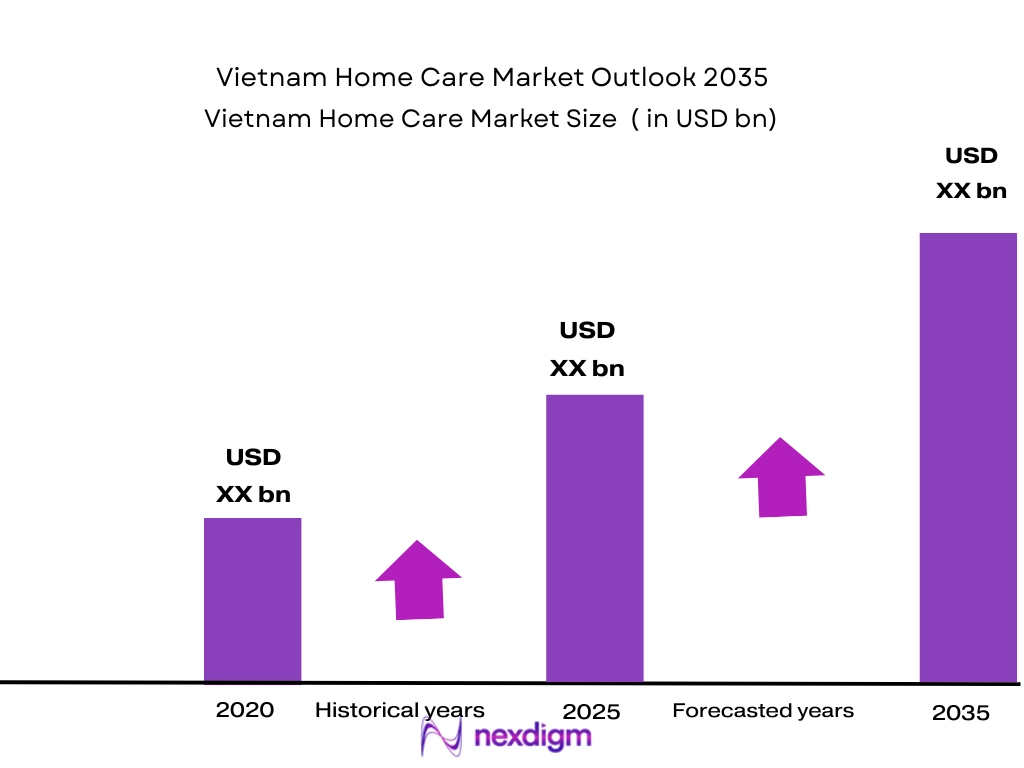
The Vietnam home care market reached approximately USD ~ billion based on a recent historical assessment, supported by rising household expenditure, increasing urbanization, and stronger hygiene awareness among middle-income consumers. Demand for laundry detergents, surface cleaners, dishwashing liquids, and disinfectants expanded steadily through modern retail and digital commerce channels. Multinational brands continued investing in localized product portfolios, while domestic manufacturers improved affordability and distribution reach across urban and semi-urban households. (marketresearch.com)
Ho Chi Minh City and Hanoi remained the dominant consumption centers due to higher disposable income levels, dense retail infrastructure, and wider penetration of premium home cleaning products. Southern Vietnam maintained stronger demand for liquid detergents and convenience-oriented cleaning products because of higher urban household concentration and greater exposure to international brands. Industrial development, rising apartment living, and rapid e-commerce adoption also strengthened demand across Da Nang, Hai Phong, and emerging tier-two urban clusters.
Market Segmentation
By Product Type
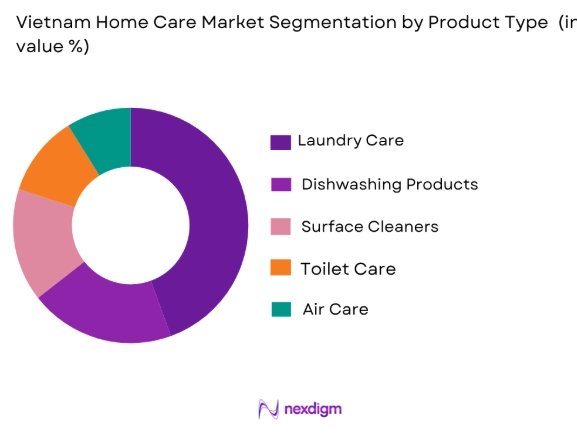
Vietnam home care market is segmented by product type into laundry care, dishwashing products, surface cleaners, toilet care, air care, insecticides, and bleach products. Recently, laundry care has maintained a dominant market share due to widespread household usage frequency, increasing washing machine penetration, stronger brand loyalty, and continuous product innovation by multinational companies. Consumers increasingly prefer liquid detergents and fabric softeners offering fragrance enhancement, stain removal, and fabric protection benefits. The category also benefits from higher repeat purchase rates compared with specialized cleaning products. Major companies such as Unilever and Procter & Gamble continue expanding premium and mid-range detergent portfolios through supermarkets, convenience stores, and online channels. Growing urban populations and rising awareness regarding hygiene standards further strengthen demand for laundry care products across residential households, hospitality facilities, and institutional users throughout Vietnam.
By Distribution Channel
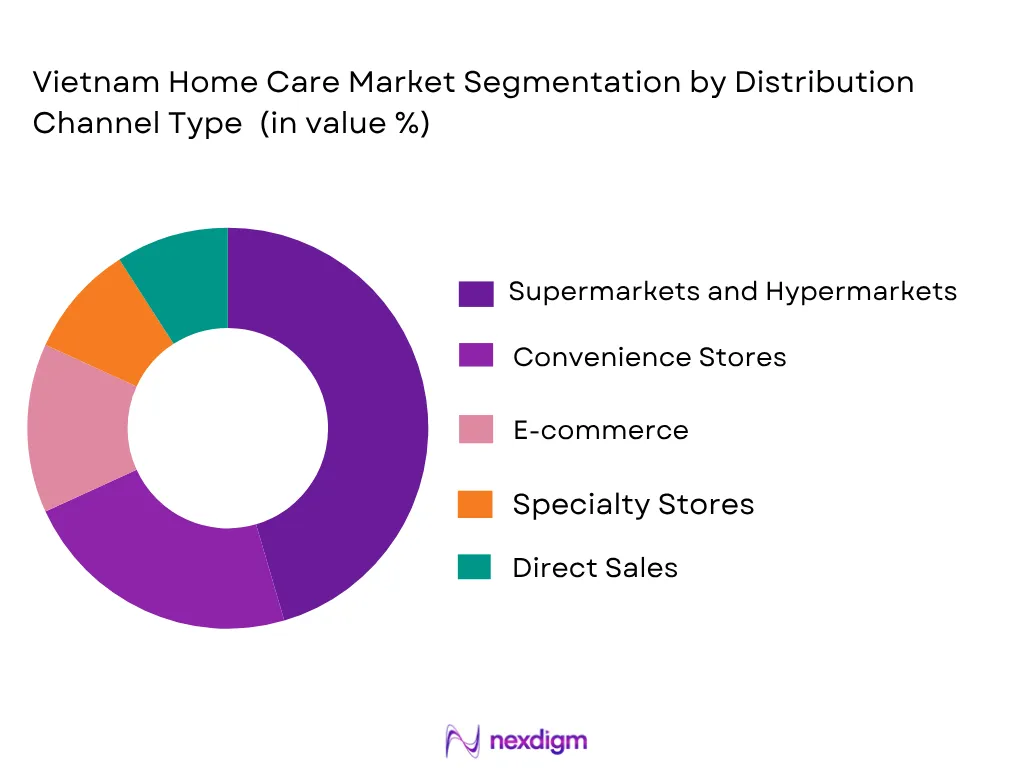
Vietnam home care market is segmented by distribution channel into supermarkets and hypermarkets, convenience stores, traditional grocery stores, e-commerce platforms, specialty stores, and direct sales. Recently, traditional grocery stores have maintained a dominant market share because of extensive neighborhood accessibility, strong consumer familiarity, and widespread rural penetration. Many households continue purchasing home care products through local stores due to convenience, lower transportation costs, and flexible purchasing behavior involving smaller pack sizes. Traditional retail outlets also provide greater availability of economy and mass-market brands preferred by price-sensitive consumers. Despite rapid expansion of e-commerce and modern retail formats, small grocery stores continue benefiting from established supplier networks and frequent household footfall. Manufacturers maintain strong relationships with independent retailers to improve visibility, distribution coverage, and promotional execution across urban and rural provinces.
Competitive Landscape
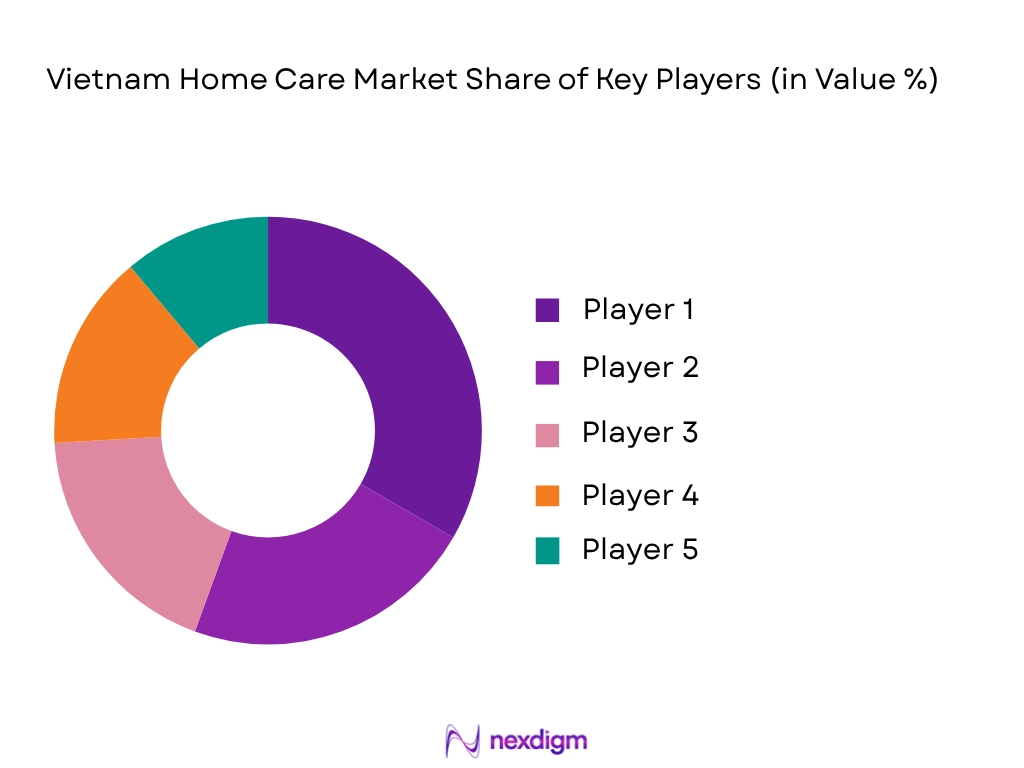
The Vietnam home care market remains moderately consolidated with multinational consumer goods companies controlling significant retail shelf presence through strong distribution networks, marketing investments, and diversified product portfolios. Global players compete aggressively on product innovation, fragrance enhancement, antibacterial formulations, and sustainable packaging, while domestic manufacturers focus on affordability and localized preferences. Strategic partnerships with retail chains and e-commerce platforms continue influencing competitive positioning, particularly in urban markets where premiumization trends are accelerating.
| Company Name | Establishment Year | Headquarters | Technology Focus | Market Reach | Key Products | Revenue | Distribution Strength |
| Unilever Vietnam | 1995 | Ho Chi Minh City, Vietnam | ~ | ~ | ~ | ~ | ~ |
| Procter & Gamble Vietnam | 1995 | Ho Chi Minh City, Vietnam | ~ | ~ | ~ | ~ | ~ |
| Reckitt Benckiser Vietnam | 1998 | Ho Chi Minh City, Vietnam | ~ | ~ | ~ | ~ | ~ |
| LIX Detergent JSC | 1972 | Ho Chi Minh City, Vietnam | ~ | ~ | ~ | ~ | ~ |
| NET Detergent JSC | 1968 | Hanoi, Vietnam | ~ | ~ | ~ | ~ | ~ |
Vietnam Home Care Market Analysis
Growth Drivers
Urbanization Rate
Vietnam’s home care market is supported by a large and still-expanding household base, with the World Bank reporting Vietnam’s total population at 100,987,686 people and GDP at USD 476.39 billion. Urban households are especially relevant for detergents, surface cleaners, toilet care, dishwashing liquids, and air fresheners because smaller apartments, higher washing-machine usage, and denser living conditions increase routine cleaning frequency. The National Statistics Office reported Vietnam’s urban population at 38.7 million people, while the rural population stood at 62.3 million people, creating two distinct demand pools: premium and convenience-led urban buyers, and value-pack rural buyers. World Bank data also shows GDP per capita at USD 4,717.3, supporting higher spending capacity for branded household cleaning products. For home care brands, this means product formats such as liquid detergents, concentrated cleaners, disinfectants, and fabric care products have a stronger addressable base in cities such as Ho Chi Minh City, Hanoi, Da Nang, and Hai Phong. Sources: World Bank, National Statistics Office of Vietnam.
Modern Retail Expansion
Vietnam’s home care demand is directly supported by the expansion of formal consumer retail, as total retail sales of consumer goods and services reached VND 6.4 quadrillion, including retail sales of goods at VND 4.9 quadrillion. This is market-specific because detergents, dishwashing liquids, disinfectants, surface cleaners, and toilet care products are repeat-purchase household goods sold heavily through supermarkets, minimarts, convenience stores, and grocery chains. The same GSO-backed data reported December retail sales at VND 570.7 trillion, indicating strong year-end replenishment demand across FMCG categories, including home care. Accommodation and catering services reached nearly VND 734 trillion, while international arrivals reached 17.6 million, supporting institutional demand from hotels, restaurants, serviced apartments, and facility operators for cleaning chemicals and hygiene products. Modern retail also improves shelf visibility for branded products, multipacks, refills, and premium formulations. For manufacturers, wider retail infrastructure reduces dependence on fragmented distributors and supports stronger product education, promotions, and category expansion. Source: General Statistics Office via Vietnam News.
Market Challenges
Price Sensitivity
Price sensitivity remains a major challenge because Vietnam’s consumer base is large but income distribution still favors mass-market and value-oriented purchasing. World Bank data places GDP per capita at USD 4,717.3, while the National Statistics Office reported average monthly income per capita at around VND 5.4 million in its recent household living standards release. For home care products, this limits rapid migration from detergent powder to premium liquid detergents, from basic dishwashing bars to branded liquid dishwash, and from single-use cleaners to specialized surface and toilet care solutions. Inflation also creates pressure on household wallets, with World Bank reporting consumer inflation at 3.6 on its annual indicator for Vietnam. When food, utilities, and housing costs compete for monthly spending, many households continue buying smaller packs, economy brands, and locally produced detergents. This makes premiumization slower outside major cities and forces brands to maintain sachets, small packs, refill packs, and discount-led promotions. Sources: World Bank, National Statistics Office of Vietnam.
Raw Material Price Volatility
Raw material volatility affects Vietnam’s home care manufacturers because detergents, dishwashing liquids, surface cleaners, toilet cleaners, and disinfectants rely on imported chemicals, plastics, fragrances, surfactants, packaging inputs, and industrial intermediates. Vietnam’s total imports reached USD 380.76 billion, while GSO-linked trade data reported production materials at USD 356.43 billion. Within imported goods, plastics were reported at USD 11.8 billion, fabrics at USD 14.9 billion, and machinery, equipment, tools, and spare parts at USD 48.9 billion, showing Vietnam’s continued dependence on imported industrial inputs. For home care companies, imported plastics affect bottles, caps, refill pouches, and flexible packaging, while imported chemicals influence detergent and cleaner formulation availability. This challenge is market-specific because home care products are high-volume, low-ticket FMCG items where input volatility can quickly affect pack sizing, promotional intensity, and distribution margins. Smaller domestic brands are more exposed because they usually have weaker procurement scale than multinational FMCG companies. Sources: General Statistics Office via Vietnam Briefing, Reuters/GSO.
Opportunities
Eco-friendly and Natural Home Care Products
Eco-friendly home care products present a growth opportunity because Vietnam’s expanding consumer economy is now operating alongside rising environmental pressure. World Bank data reports Vietnam’s CO₂ emissions excluding land-use change at 4.3 tonnes per person, while safely managed sanitation services reached 45 out of every 100 people on the latest World Bank indicator. These indicators support demand for safer toilet cleaners, biodegradable surface cleaners, low-chemical dishwashing products, refill formats, and concentrated detergents that reduce packaging waste. The opportunity is strongest in urban households where branded FMCG penetration is higher and consumers are more exposed to sustainability messaging through supermarkets and e-commerce. Home care companies can use plant-based claims, refill pouches, recyclable bottles, lower-foam formulations, and phosphate-conscious cleaning products to differentiate from economy brands. Institutional buyers such as hotels, serviced apartments, offices, hospitals, and restaurants also have incentives to adopt safer cleaning solutions because hygiene compliance and sustainability reporting are becoming more visible in procurement. Source: World Bank.
Rural Market Expansion
Rural market expansion is a major future opportunity because Vietnam still has a very large non-urban consumer base, with the National Statistics Office reporting 62.3 million rural residents compared with 38.7 million urban residents. This matters for the home care market because rural consumers are gradually shifting from unbranded detergents, traditional washing soaps, and basic cleaning products toward branded detergent powders, dishwashing liquids, fabric softeners, and toilet care products as retail access improves. Vietnam’s total population of 100,987,686 people gives manufacturers a broad household penetration runway, especially through small packs, affordable refill pouches, and local distributor partnerships. Retail sales of goods reached VND 4.9 quadrillion, showing a large formal goods-consumption base that can support deeper FMCG distribution beyond Hanoi and Ho Chi Minh City. For home care companies, rural expansion should focus on durable packaging, low-unit-price SKUs, trusted fragrance profiles, and multipurpose cleaners that match value-oriented household behavior. Sources: National Statistics Office of Vietnam, World Bank, General Statistics Office via Vietnam News.
Future Outlook
The Vietnam home care market is expected to maintain stable long-term growth over the next five years due to rising urbanization, stronger hygiene awareness, and continuous retail modernization. Demand for premium detergents, disinfectants, and eco-friendly cleaning products is projected to increase as middle-income households expand across major cities and secondary urban regions. Technological advancements in concentrated formulations, sustainable packaging, and digital retail integration will continue shaping competitive strategies among leading manufacturers. Regulatory focus on product safety, environmental sustainability, and counterfeit control is also expected to strengthen market transparency and organized sector participation.
Major Players
- Unilever Vietnam
- Procter & Gamble Vietnam
- Reckitt Benckiser Vietnam
- SC Johnson Vietnam
- LIX Detergent JSC
- NET Detergent JSC
- Kao Vietnam
- Lion Corporation Vietnam
- Colgate-Palmolive Vietnam
- Earth Corporation Vietnam
- Amway Vietnam
- My Hao Cosmetics
- Dai Viet Huong
- Wilmar International Vietnam
- Hygiene Vietnam
Key Target Audience
- Investments and venture capitalist firms
- Government and regulatory bodies
- Home care product manufacturers
- FMCG distributors and wholesalers
- Modern retail chains
- E-commerce platforms
- Packaging solution providers
- Chemical raw material suppliers
Research Methodology
Step 1: Identification of Key Variables
The research process identified major variables influencing the Vietnam home care market, including household expenditure, product penetration, retail distribution trends, urbanization levels, pricing structures, and consumer purchasing behavior. Secondary data from company reports, trade publications, retail databases, and government statistics were evaluated to establish market boundaries and segment definitions.
Step 2: Market Analysis and Construction
Market sizing was conducted using a combination of bottom-up retail sales analysis and top-down validation through FMCG consumption trends. Product category performance, distribution channel analysis, and company-level assessments were integrated to construct accurate market segmentation and competitive positioning frameworks.
Step 3: Hypothesis Validation and Expert Consultation
Industry assumptions and analytical findings were validated through discussions with distributors, retailers, manufacturers, and consumer goods specialists operating within Vietnam. Additional verification was completed through comparison of retail data, pricing trends, and regional consumption patterns to ensure consistency and analytical reliability.
Step 4: Research Synthesis and Final Output
Final research outputs were synthesized through triangulation of qualitative insights and quantitative market indicators. Forecasting models incorporated macroeconomic conditions, demographic developments, retail expansion trends, and evolving consumer preferences to generate long-term market outlooks and strategic recommendations.

- Executive Summary
- Research Methodology ( Market Definitions and Scope of Home Care Products, Product Classification Framework, Retail Audit and Household Consumption Data Utilization Approach, Primary Interviews with Manufacturers, Distributors, Retailers, and Consumers, Bottom-Up Volume and Value Modelling, Top-Down FMCG and Household Spending Validation, Assumptions on Pricing, Pack Sizes, and Consumption Frequency, Limitations and Data Triangulation Techniques, TAM/SAM/SOM Modelling Framework Based on Household Penetration and Retail Sales)

- Definition and Scope
- Evolution of Home Care Industry in Vietnam
- Timeline of Market Development and Regulatory Changes
- Household Consumption Lifecycle Integration
- Value Chain Analysis
- Stakeholder Ecosystem

- Growth Drivers
Urbanization Rate
Rising Disposable Income
Household Hygiene Awareness
Modern Retail Expansion
E-commerce Penetration
Premiumization in Home Care Products - Market Challenges
Price Sensitivity
High Competition from Local and International Brands
Raw Material Price Volatility
Counterfeit and Low-Quality Products
Environmental and Packaging Concerns - Opportunities
Eco-friendly and Natural Home Care Products
Concentrated and Refill Formats
Smart Cleaning and Convenience Products
Rural Market Expansion
Private Label Growth
Premium Fragrance and Specialized Cleaning Products - Market Trends
Shift Toward Liquid Detergents
Growth of Online FMCG Sales
Demand for Antibacterial and Disinfectant Products
Sustainable Packaging Adoption
Multi-purpose Cleaner Usage
Localized Fragrance Preferences - Government Regulations
- SWOT Analysis
- Porter’s Five Forces
- Supply Chain and Distribution Analysis
- Consumer Behavior Analysis

- By Value, 2020-2025
- By Volume, 2020-2025
- By Average Selling Price, 2020-2025

- By Product Type (in Value %)
Laundry Care
Dishwashing Products
Surface Cleaners
Toilet Care
Air Care - By Form (in Value %)
Liquid
Powder
Bar
Spray
Gel
Tablets/Capsules - By Price Segment (in Value %)
Economy
Mass
Premium - By Distribution Channel (in Value %)
Supermarkets and Hypermarkets
Convenience Stores
E-commerce
Specialty Stores
Direct Sales - By End User (in Value %)
Urban Households
Rural Households
Commercial and Institutional Users
Hospitality and Foodservice
Healthcare and Education Facilities - By Region (in Value %)
Northern Vietnam
Central Vietnam
Southern Vietnam
Ho Chi Minh City
Hanoi
Tier-2 and Tier-3 Cities

- Market Share of Major Players
- Cross Comparison Parameters (Product Portfolio Breadth, Pricing Strategy, Retail Presence, E-commerce Capability, Brand Awareness, Innovation Pipeline, Sustainability Initiatives, Customer Retention Rate, SWOT Analysis of Major Players, Pricing Benchmarking)
- Detailed Profiles of Major Companies
Unilever Vietnam
Procter & Gamble Vietnam
Reckitt Benckiser Vietnam
SC Johnson Vietnam
Colgate-Palmolive Vietnam
LIX Detergent JSC
Net Detergent JSC
Dai Viet Huong
My Hao Cosmetics
Earth Corporation Vietnam
Kao Vietnam
Lion Corporation Vietnam
Amway Vietnam
VinCommerce Private Labels
Local and Regional Home Care Brands

- Household Consumption Patterns
- Purchase Frequency and Basket Size
- Price Sensitivity and Brand Switching
- Brand Loyalty Analysis
- Pain Point Analysis
- Decision-Making Criteria
- Consumer TAM Analysis

- By Value, 2026-2035
- By Volume, 2026-2035
- By Average Selling Price, 2026-2035


 Request a Sample
 Ask for Customization
 Get a Quote
 Enquire Now