
 Download PDF
Market Overview
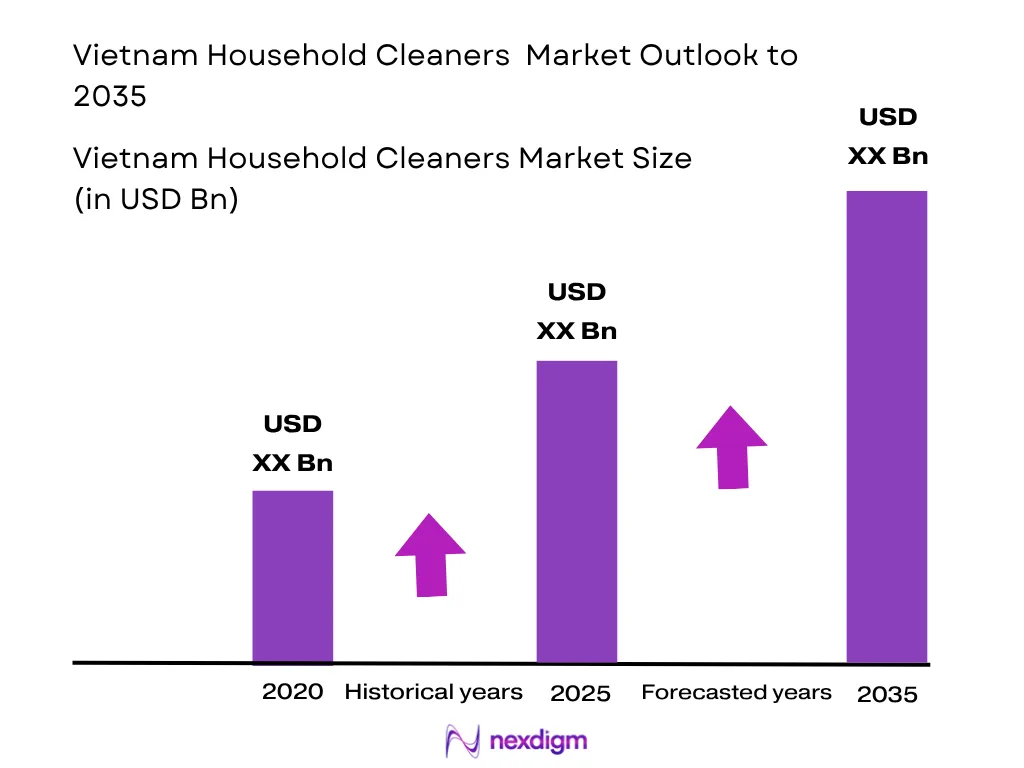
The Vietnam Household Cleaners Market is valued at approximately USD ~ billion in 2025, driven by a combination of factors including increasing urbanization, rising disposable incomes, and an enhanced focus on hygiene. Consumer behavior is shifting towards branded cleaning products, particularly in urban areas like Ho Chi Minh City and Hanoi. The growth of modern retail, especially supermarkets and e-commerce platforms, is making household cleaners more accessible across the country. Additionally, government campaigns promoting cleanliness and sanitation contribute to higher awareness of hygiene, further stimulating demand for cleaning solutions. The rapid urbanization, along with changing lifestyles and increasing dual-income households, has led to a greater demand for time-efficient, effective, and affordable cleaning products, thus further propelling the market’s growth.
Vietnam’s Household Cleaners Market is dominated by major cities such as Ho Chi Minh City, Hanoi, and Da Nang. These urban centers represent the highest consumer demand due to their dense populations, rising disposable incomes, and growing awareness of hygiene. Ho Chi Minh City, being the economic hub of Vietnam, accounts for a significant portion of the demand, driven by the middle class and modern retail expansion. Hanoi, as the capital, also sees substantial demand for household cleaners due to an increasing focus on health and hygiene in both urban and suburban areas. Furthermore, the Southeast region, particularly around Ho Chi Minh City, is the primary contributor to market growth due to urbanization and rising living standards. Additionally, cities like Da Nang, with a growing population and economic activity, are becoming important contributors to market expansion.
Market Segmentation
By Product Type
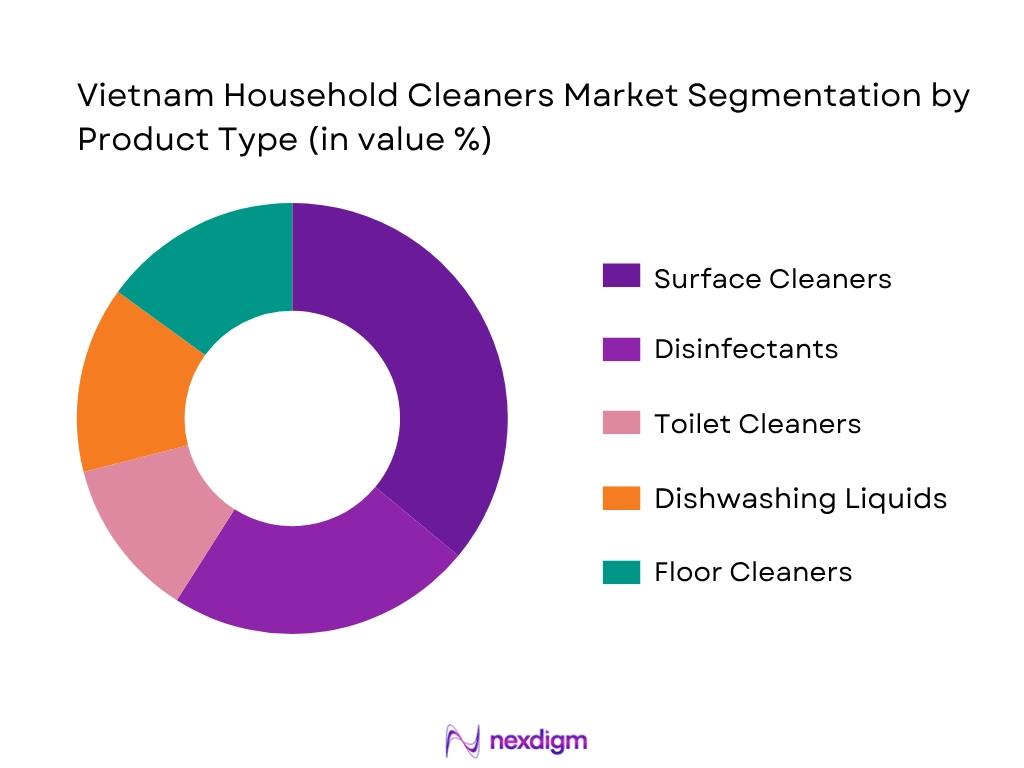
The Vietnam Household Cleaners Market is segmented by product type into surface cleaners, disinfectants, toilet cleaners, dishwashing liquids, and floor cleaners. Surface cleaners, particularly multi-surface variants, dominate the market due to their versatility and widespread use across households. The preference for all-in-one cleaners that can be used on various surfaces in the kitchen, bathroom, and living areas has driven the popularity of surface cleaners. Brands such as Cif, Lysol, and Mr. Muscle have established themselves as leaders in this segment, contributing significantly to the market share. These brands are trusted for their ability to provide convenience and effectiveness, making them the go-to choice for consumers. The increasing focus on convenience, coupled with the post-pandemic demand for hygiene, has significantly boosted the popularity of surface cleaners. Consumers in urban households, where time-saving is prioritized, continue to prefer these all-purpose cleaners for their ease of use and reliability.
By Distribution Channel
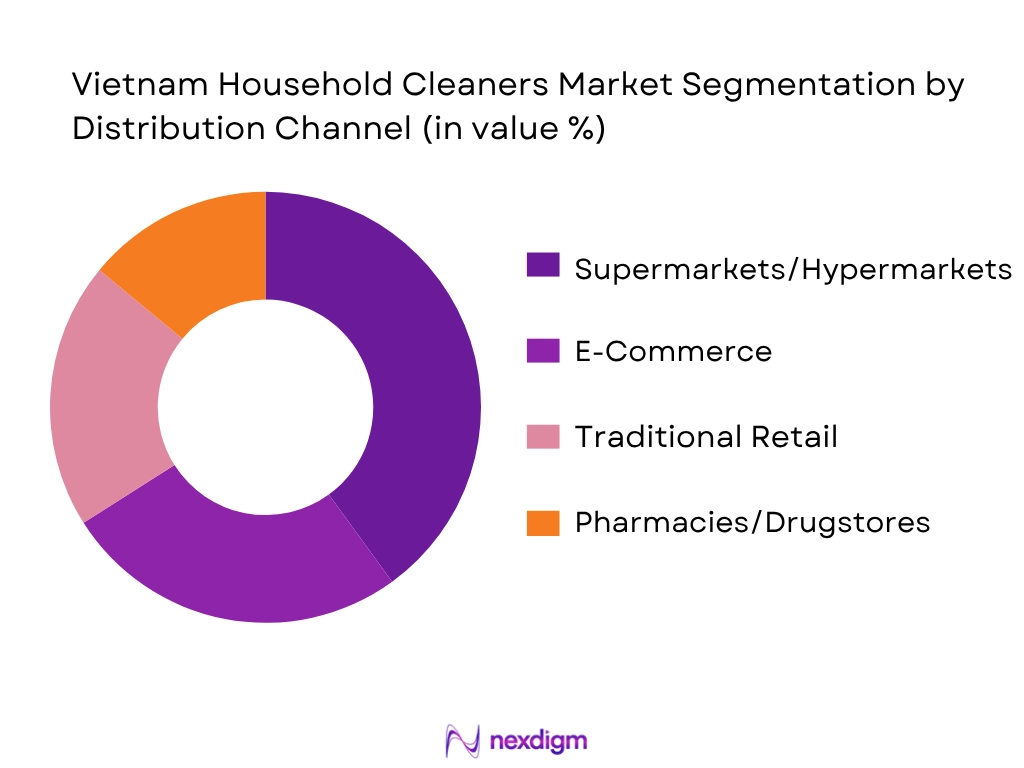
The Vietnam Household Cleaners Market is segmented by distribution channels, including supermarkets/hypermarkets, e-commerce, traditional retail, and pharmacies. Supermarkets and hypermarkets dominate the retail landscape, particularly in urban areas, as they provide a wide range of products under one roof, offering consumers convenience and variety. E-commerce has also seen rapid growth in recent years, driven by the increasing internet penetration in Vietnam. Online platforms like Lazada, Shopee, and Tiki make it easy for consumers to access cleaning products from the comfort of their homes, with the added benefit of competitive pricing and home delivery services. In contrast, traditional retail, including local shops and markets, continues to be a significant channel, especially in rural areas where access to large retail outlets may be limited. Pharmacies and drugstores contribute to the market by providing cleaning products that cater to specific health needs, such as antibacterial solutions. As e-commerce continues to expand, it is expected to play a growing role in the distribution of household cleaning products.
Competitive Landscape
The Vietnam Household Cleaners Market is highly competitive, with a mix of multinational and local players. Major global brands such as Unilever, Procter & Gamble, and Reckitt Benckiser hold a significant share due to their well-established market presence, brand recognition, and expansive distribution networks. These companies are continuously innovating to meet the growing demand for effective, affordable, and eco-friendly cleaning solutions. Local players like Masan Consumer and Vinamilk are also making strides by offering affordable products tailored to the preferences of Vietnamese consumers. The market is characterized by intense competition, especially in urban areas, where consumers are increasingly seeking high-quality, sustainable, and cost-effective products. The rise of e-commerce has further intensified competition by allowing brands to reach a broader customer base, including those in rural and semi-urban regions. Brands are now focusing on improving their online presence, enhancing product offerings, and engaging in promotions to capture a larger market share.
| Company | Establishment Year | Headquarters | Product Portfolio | Market Position | R&D Investment | Distribution Network | Sustainability Initiatives | Pricing Strategy |
| Unilever Vietnam | 1933 | Ho Chi Minh City, Vietnam | ~ | ~ | ~ | ~ | ~ | ~ |
| Procter & Gamble | 1837 | Ho Chi Minh City, Vietnam | ~ | ~ | ~ | ~ | ~ | ~ |
| Reckitt Benckiser | 1823 | Ho Chi Minh City, Vietnam | ~ | ~ | ~ | ~ | ~ | ~ |
| Masan Consumer | 1996 | Hanoi, Vietnam | ~ | ~ | ~ | ~ | ~ | ~ |
| Vinamilk | 1976 | Ho Chi Minh City, Vietnam | ~ | ~ | ~ | ~ | ~ | ~ |
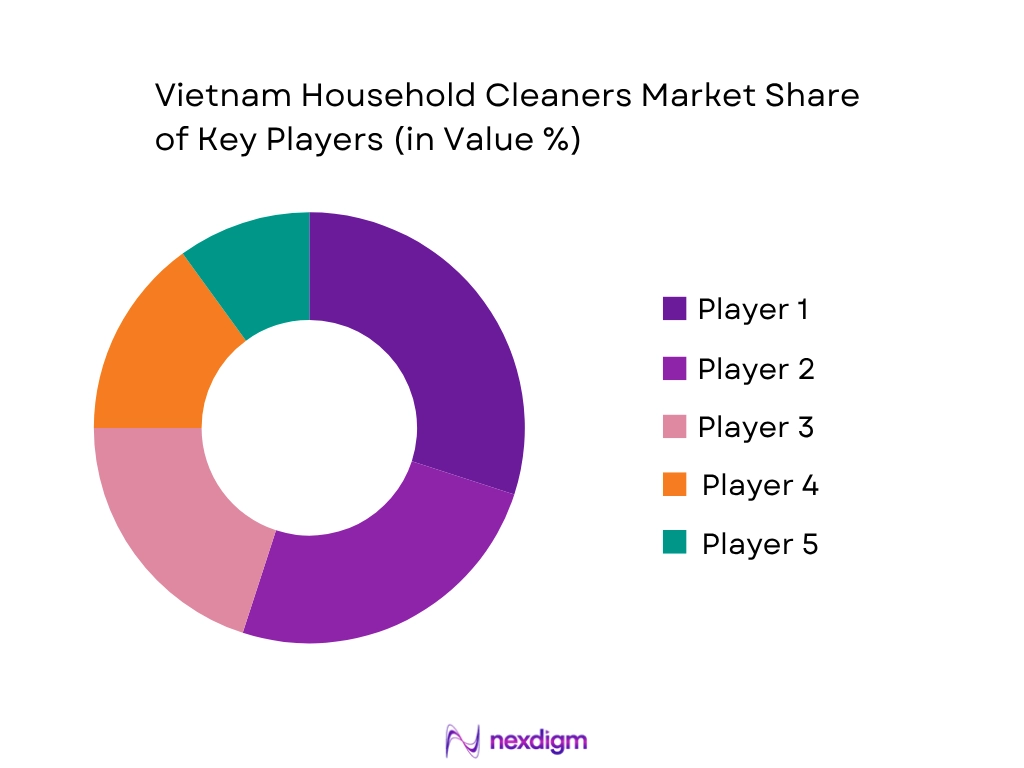
Vietnam Household Cleaners Market Analysis
Growth Drivers
Urbanization and Rising Disposable Income
Vietnam’s urbanization rate has been rapidly increasing, with the World Bank reporting that 36.6% of the population lived in urban areas as of 2023. This urban shift is directly linked to higher demand for household cleaning products, particularly in larger cities like Ho Chi Minh City and Hanoi, where consumers have more disposable income to spend on cleaning products. As of 2024, Vietnam’s per capita income is expected to increase by 7.5%, driven by the growing middle class. The higher purchasing power in these urban areas translates into greater consumer demand for premium cleaning products that offer convenience and better performance. The rise in dual-income households in cities has also contributed to a preference for quick, effective cleaning solutions. With urbanization, the demand for both basic and specialized cleaning products, such as multi-surface cleaners, disinfectants, and floor cleaners, has surged. This urban demographic is more inclined to purchase branded household cleaners, reflecting a shift from traditional cleaning methods to modern, branded products that provide efficiency and reliability. Additionally, the expansion of modern retail outlets, including supermarkets, hypermarkets, and e-commerce platforms, is ensuring easier access to household cleaning products across the country, particularly in metropolitan regions.
Hygiene Awareness
Hygiene awareness in Vietnam has seen a substantial increase, particularly post-pandemic, when personal cleanliness became a top priority for the population. The Vietnamese Ministry of Health has allocated over VND 5 trillion for hygiene and sanitation programs in 2024, significantly increasing the focus on cleanliness across both urban and rural areas. This heightened awareness has led to a surge in the demand for household cleaning products such as disinfectants, surface cleaners, and sanitizing wipes. According to the Ministry of Health’s reports, the adoption of hygiene practices has continued to grow, especially in households with higher incomes, where there is an inclination towards branded, effective, and eco-friendly cleaning solutions. With rising concern over public health and sanitation, the Vietnamese government has promoted awareness campaigns about hygiene practices, including the importance of clean living spaces, directly boosting the household cleaners market. Retailers and e-commerce platforms also reported a spike in sales of disinfecting products, highlighting the growing priority of cleanliness in households. This shift is expected to continue, driven by urbanization, rising incomes, and government initiatives to improve sanitation across the country.
Market Challenges
Raw Material Price Fluctuations
The Vietnam Household Cleaners Market faces challenges related to fluctuations in the prices of raw materials, particularly chemicals and packaging materials. According to the Ministry of Industry and Trade, key raw materials used in the production of household cleaning products, such as surfactants, disinfectants, and plastic packaging, have experienced price volatility due to supply chain disruptions and global inflationary pressures. In 2024, the price of raw chemicals has risen by 5-7% compared to the previous year, impacting manufacturing costs. Vietnam’s dependence on imported raw materials exacerbates this issue, as exchange rate fluctuations increase the cost of imports, which are integral to the production of cleaning products. These increases in production costs have put pressure on manufacturers to either absorb the costs or raise product prices, which could affect consumer demand, especially in price-sensitive segments. Additionally, the cost of plastic packaging, which makes up a large portion of household cleaning products, has been rising due to global shortages of raw materials and tightening environmental regulations in Vietnam regarding plastic waste. These fluctuations in input costs complicate the pricing strategy for manufacturers and could affect the growth of the market if the upward pressure on raw material prices continues.
Regulatory Challenges and Compliance Costs
The regulatory landscape in Vietnam presents several challenges for household cleaner manufacturers, particularly around environmental standards and product safety. The government has introduced stricter regulations concerning the use of chemicals in household cleaners, requiring more comprehensive testing, certification, and compliance with environmental standards. According to the Vietnam Environmental Administration, regulations on plastic waste management have led to the introduction of extended producer responsibility (EPR) laws, which mandate companies to manage the disposal of their product packaging. This adds to the operational costs of manufacturers, as they need to invest in sustainable packaging and waste management systems. Moreover, the rise in consumer demand for eco-friendly and non-toxic cleaning products has also pushed companies to reformulate their products, which requires further investment in R&D. Compliance with these stringent regulations often leads to higher costs for manufacturers, especially for smaller and local producers who may not have the resources to meet the new standards. These regulatory challenges could slow the growth of the household cleaning market if companies are unable to manage the increased costs and navigate complex compliance requirements effectively.
Opportunities
Expansion of E-Commerce and Retail Channels
The expansion of e-commerce in Vietnam presents a significant opportunity for growth in the Household Cleaners Market. E-commerce sales in Vietnam have grown rapidly, with the total value of e-commerce transactions expected to reach over USD 16 billion by 2024, according to the Vietnam E-Commerce and Digital Economy Agency (VECITA). This growth is especially significant in urban areas where consumers are increasingly opting for the convenience of online shopping. E-commerce platforms like Shopee, Lazada, and Tiki are expanding their household cleaning product offerings, making it easier for consumers across the country, including in rural and semi-urban areas, to access a wider range of brands and products. In 2024, over 30% of household cleaning product sales are expected to come from online platforms, with more consumers preferring to purchase through mobile apps or websites due to the convenience and competitive pricing offered by online retailers. Additionally, supermarkets and hypermarkets in major cities such as Ho Chi Minh City and Hanoi are increasing their shelf space dedicated to cleaning products, further expanding the reach of cleaning brands. The integration of online retail with traditional brick-and-mortar stores is helping to create a more seamless shopping experience for consumers, thus driving market growth.
Demand for Eco-friendly and Sustainable Products
The demand for eco-friendly and sustainable household cleaning products is growing rapidly in Vietnam, as consumers are becoming more environmentally conscious. This shift is largely driven by increasing concerns over plastic pollution and the environmental impact of chemical-laden cleaning products. The Vietnamese government has made significant strides in promoting sustainability, with plans to reduce plastic waste and encourage the use of biodegradable and recyclable materials. According to the Ministry of Natural Resources and Environment, over 70% of urban consumers in Ho Chi Minh City are now seeking environmentally friendly products, and this trend is expected to grow in the coming years. In response to this growing demand, many brands are introducing plant-based and non-toxic cleaning products, using eco-friendly packaging to cater to the health-conscious and environmentally aware consumers. The global push for sustainability is further supported by local initiatives, such as the implementation of the “Green Consumption” program, which aims to increase the availability of eco-friendly products in retail outlets. This trend provides an opportunity for brands that specialize in eco-friendly and biodegradable cleaning products to capitalize on the growing market segment, offering products that are not only effective but also safer for the environment.
Future Outlook
Over the next five years, the Vietnam Household Cleaners Market is expected to show significant growth, driven by continuous urbanization, rising disposable incomes, and increasing consumer demand for hygiene and convenience. E-commerce and modern retail will continue to expand, enabling companies to reach consumers in urban and rural regions more effectively. With an increasing focus on sustainability and eco-friendly products, brands that adopt greener production processes and offer environmentally friendly products will have a competitive edge. The demand for innovative cleaning solutions, including multi-purpose cleaners and disinfectants, is also expected to rise, providing further growth opportunities for key players. Additionally, the shift in consumer preference towards convenience and efficiency in cleaning, as well as the increasing number of dual-income households, will continue to drive market expansion in both urban and suburban areas.
Major Players
- Unilever
- Procter & Gamble
- Reckitt Benckiser
- Masan Consumer
- Vinamilk
- SC Johnson
- Amway Vietnam
- Kao Corporation
- Godrej Consumer Products
- Dabur International
- Binh Minh Plastic JSC
- Metro Cash & Carry
- Vingroup
- Thai Hoa Group
- Coty Inc.
Key Target Audience
- Manufacturers of Household Cleaning Products
- Investments and Venture Capitalist Firms
- Retailers (Supermarkets, Hypermarkets, E-commerce Platforms)
- Government and Regulatory Bodies (e.g., Ministry of Health, Ministry of Environment)
- Suppliers of Raw Materials for Household Cleaners
- Private Label Brands
- Distributors and Wholesalers of Household Cleaners
- Brand Managers and Marketing Teams of Consumer Goods Companies
Research Methodology
Step 1: Identification of Key Variables
The initial phase involves identifying the key variables influencing the Vietnam Household Cleaners Market, including consumer preferences, distribution channels, and competitive dynamics. This step is supported by extensive desk research from secondary sources and expert consultations to understand the factors driving demand for household cleaning products in different regions.
Step 2: Market Analysis and Construction
In this phase, we compile and analyze historical data regarding sales volumes, market shares, and product types. This includes assessing how market penetration varies across regions, the ratio of distribution channels, and the growth of retail segments. The goal is to construct a detailed and accurate market forecast.
Step 3: Hypothesis Validation and Expert Consultation
To validate the hypotheses developed in the analysis, we conduct in-depth interviews with industry experts, stakeholders, and key players. This phase involves gathering insights from professionals across various sectors, including manufacturing, retail, and distribution, to fine-tune the accuracy of our predictions and recommendations.
Step 4: Research Synthesis and Final Output
The final phase synthesizes the insights gained from previous stages into a comprehensive, data-driven market report. This includes a detailed assessment of product performance, consumer trends, and market dynamics, ensuring the findings are accurate and actionable for key stakeholders.

- Executive Summary
- Research Methodology (Market Definitions and Assumptions, Abbreviations, Market Sizing Approach, Consolidated Research Approach, Understanding Market Potential Through In-Depth Industry Interviews, Primary Research Approach, Limitations and Future Conclusions)

- Definition and Scope
- Overview Genesis
- Market Size, Growth, and Forecasts
- Supply Chain and Value Chain Analysis
- Dominant Distribution Channels and Retail Landscape
- Brazil Retail Cleaning Basket Structure
- Category Role in Monthly Household Shopping Missions

- Growth Drivers(Urbanization and Rising Disposable Income, Hygiene Awareness and Post-Pandemic Impact, Growth in Online Retail and E-Commerce)
- Market Challenges(Raw Material Price Fluctuations, Regulatory Challenges and Compliance Costs, Informal Competition)
- Opportunities(Expansion of E-Commerce and Retail Channels, Demand for Eco-friendly and Sustainable Products, Refill Economics, Regional Penetration)
- Trends(Multi-Purpose Cleaners and Convenience, Health-Conscious and Sustainable Product Preferences, Digital Retail)
- Government Regulation (Regulatory Policies for Household Cleaners, Packaging and Environmental Laws)
- Supply Chain Analysis (Surfactants, Solvents, Fragrances, Plastic Packaging, Contract Manufacturing, Retail Distribution)
- Value Chain Margin Pool (Raw Material Suppliers, Formulators, Brand Owners, Distributors, Retailers, Marketplaces)
- Pricing Analysis (Price/Liter, Price/Kg, Promo Discount, Pack-Size Premium, Regional Price Index)
- SWOT Analysis (Scale Advantage, Regulatory Barriers, Regional Fragmentation, Eco-Format Opportunity)
- Stakeholder Ecosystem(Manufacturers, Retailers, Distributors, E-Commerce Platforms, Raw Material Suppliers)
- Porter’s Five Forces Analysis (Supplier Power, Retailer Power, Substitution Risk, Entry Barriers, Rivalry Intensity)

- By Value (2020-2025)
- By Volume (2020-2025)
- By Unit Sales (2020-2025)
- By Average Selling Price (2020-2025)
- By Household Penetration (2020-2025)
- By Per-Capita Consumption (2020-2025)

- By Product Type (In Value %)
Surface Cleaners
Disinfectants
Toilet Cleaners
Dishwashing Liquids
Floor Cleaners - By Application (In Value %)
Kitchen Cleaning
Bathroom Cleaning
Surface Cleaning
Floor Cleaning
Multi-Surface and General Use - By Claim Type (In Value%)
Disinfection and Sanitization Claims
Performance Claims
Safety and Sensitivity Claims
Sustainability Claims
Sensory Claims - By Distribution Channel (In Value %)
Supermarkets/Hypermarkets
E-Commerce
Traditional Retail
Pharmacies/Drugstores - By Packaging Type (In Value %)
Bottles
Pouches
Cans
Refill Packs
Sachets - By Price Tier (In Value%)
Economy and Value
Mainstream Branded
Premium Performanc
Natural / Eco Premium
Private Label - By Region (In Value %)
North Region
South Region
West Region
East Region

- Market Share of Major Players (In Value/Volume, By Product Type, Distribution Channel)
- Cross Comparison Parameters (Company Overview, Business Strategies, Recent Developments, Strengths and Weaknesses, Revenues, Distribution Channels, Marketing Strategies, Production Capabilities)
- SWOT Analysis of Major Players (Brand trust, category depth, innovation speed, regulatory exposure, private-label vulnerability, sustainability credibility)
- Pricing Analysis Basis Major SKUs (Trigger sprays, disinfecting wipes, toilet bowl cleaners, glass cleaners, dish liquids, dishwasher pods, floor cleaners, refill packs)
- Product Claim Benchmarking (Disinfects, sanitizes, kills 99.9%, grease-cutting, streak-free, plant-based, fragrance-free, biodegradable, septic-safe, pet-safe positioning)
- Retail Shelf and Digital Shelf Benchmarking (Shelf facings, pack sizes, ratings, review count, search rank, subscription availability, bundle strategy)
- Detailed Profiles of Major Companies
Unilever Vietnam
Procter & Gamble
Reckitt Benckiser
Kao Corporation
SC Johnson
Godrej Consumer Products
Amway Vietnam
Dabur International
Binh Minh Plastic JSC
Vinamilk
Metro Cash & Carry
Vingroup
Thai Hoa Group
Masan Consumer
Coty Inc.

- Market Demand and Utilization (Rooms Cleaned, Cleaning Frequency, Product Repertoire, Monthly Basket Size)
- Purchasing Power and Budget Allocations(Monthly Cleaning Spend, Bulk Purchase, Stock-Up Cycles, Small-Pack Dependence)
- Needs, Desires, and Pain Point Analysis((Efficacy, Price, Fragrance, Surface Safety, Child Safety, Pet Safety, Eco-Claims)
- Decision-Making Process(Brand Trust, Price Promotions, Pack Size, Fragrance Testing, Retail Availability)
- Customer Cohort Analysis (Eco-first buyers, disinfectant-first buyers, fragrance-first buyers, value-first buyers, pet households, premium surface-care buyers)
- Retail Shopper Behavior (Basket attachment, aisle navigation, end-cap response, coupon use, bulk buying, online replenishment)

- By Value (2026-2035)
- By Volume (2026-2035)
- By Average Selling Price (2026-2035)
- By Price per Use (2026-2035)
- By Household Penetration (2026-2035)
- By Channel Sales Mix (2026-2035)


 Request a Sample
 Ask for Customization
 Get a Quote
 Enquire Now