
 Download PDF
Market Overview
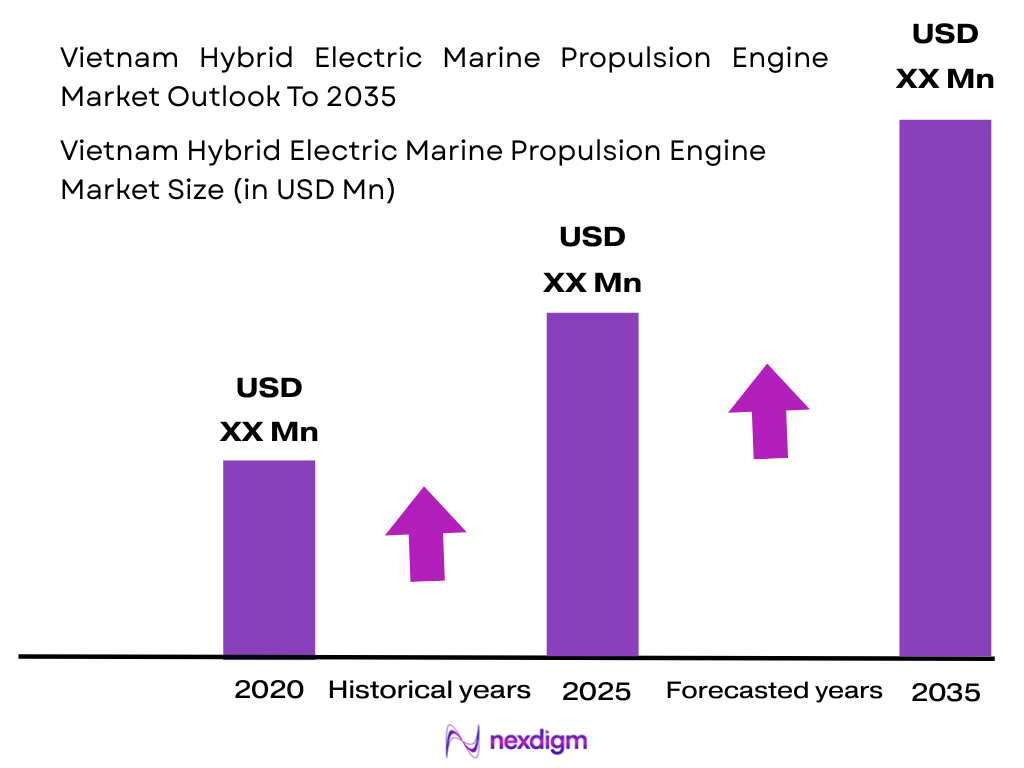
The Vietnam Hybrid Electric Marine Propulsion Engine Market is valued at USD ~ million in 2024 and is expected to expand at a CAGR of ~% during 2026–2035. The market growth is supported by increasing maritime electrification initiatives, rising marine fuel costs, adoption of low-emission propulsion technologies, and modernization of coastal and inland waterway fleets. Hybrid propulsion systems combine conventional marine engines with electric motors and battery storage systems to improve fuel efficiency and reduce emissions. Global marine hybrid propulsion adoption is accelerating due to decarbonization requirements and increasing investment in battery-integrated marine systems.
The Vietnam Hybrid Electric Marine Propulsion Engine Market is concentrated around major maritime and industrial hubs including Ho Chi Minh City, Hai Phong, Da Nang, and Quang Ninh, supported by high vessel activity, shipbuilding infrastructure, and commercial port operations. Ho Chi Minh City dominates due to its extensive inland waterway transportation network and commercial shipping ecosystem, while Hai Phong benefits from shipbuilding clusters and proximity to major northern ports. International technology influence is primarily driven by countries such as Japan, China, South Korea, and European marine technology providers due to their advanced propulsion, battery, and vessel electrification capabilities.
Market Segmentation
By Vessel Type
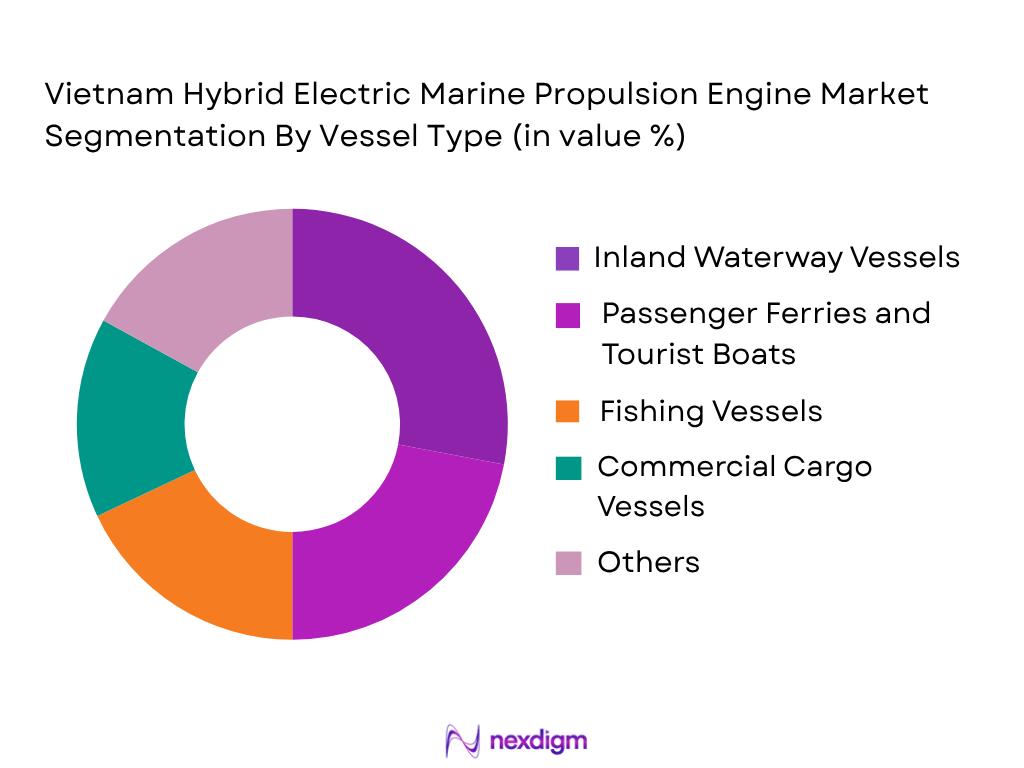
Vietnam Hybrid Electric Marine Propulsion Engine Market is segmented by vessel type into commercial cargo vessels, passenger ferries, fishing vessels, offshore support vessels, inland waterway vessels, recreational boats, and government marine vessels. Inland Waterway Vessels hold the dominant market share due to Vietnam’s extensive river transportation network and increasing requirement for efficient propulsion solutions in short-distance operations. Hybrid systems are particularly suitable for inland vessels because operating routes are predictable, charging infrastructure requirements are manageable, and fuel savings can significantly improve operating economics. Tourist boats and passenger ferries are also adopting hybrid propulsion due to increasing environmental regulations in coastal tourism destinations such as Ha Long Bay. Hybrid propulsion enables quieter operation, lower emissions, and improved passenger experience, making it attractive for tourism operators.
By Propulsion System Component
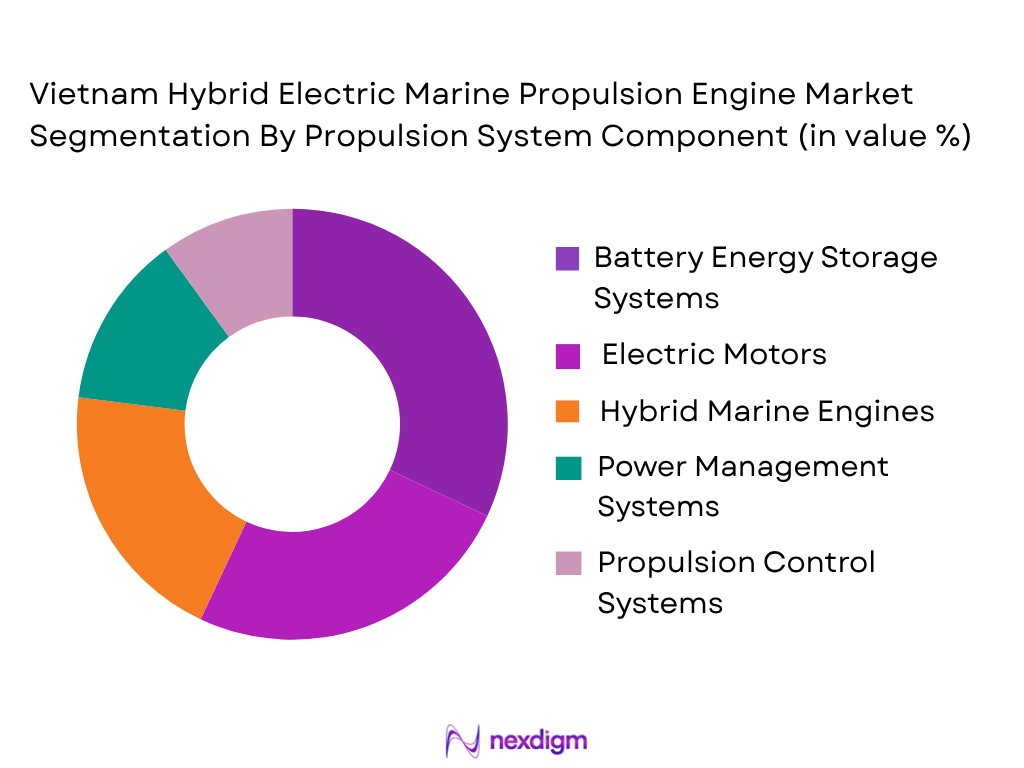
Vietnam Hybrid Electric Marine Propulsion Engine Market is segmented by propulsion system component into hybrid marine engines, electric motors, battery energy storage systems, power management systems, and propulsion control systems. Battery Energy Storage Systems represent the leading segment due to their critical role in enabling hybrid marine operations and improving vessel energy efficiency. Lithium-ion battery technology has become increasingly preferred because of higher energy density, improved lifecycle performance, and compatibility with marine electrification projects. Battery systems allow vessels to operate on electric power during low-load activities such as harbor maneuvering, docking, and short-distance cruising. Growing global investments in marine battery technology and increasing integration of energy management systems are supporting battery adoption in hybrid marine propulsion projects.
Competitive Landscape
The Vietnam Hybrid Electric Marine Propulsion Engine Market consists of global marine propulsion manufacturers, battery technology companies, and regional shipbuilding organizations. The competitive environment is influenced by technology capability, marine integration expertise, battery partnerships, and after-sales service networks. Major international companies dominate advanced propulsion technology supply, while Vietnamese shipyards and marine operators are increasingly participating through technology collaborations.
| Company | Establishment Year | Headquarters | Hybrid Propulsion Solutions | Battery Integration Capability | Marine Electrification Expertise | Vessel Application Coverage | Regional Presence | Service Network |
| ABB | 1883 | Switzerland | ~ | ~ | ~ | ~ | ~ | ~ |
| Wärtsilä | 1834 | Finland | ~ | ~ | ~ | ~ | ~ | ~ |
| Siemens Energy | 1847 | Germany | ~ | ~ | ~ | ~ | ~ | ~ |
| Volvo Penta | 1907 | Sweden | ~ | ~ | ~ | ~ | ~ | ~ |
| MAN Energy Solutions | 1758 | Germany | ~ | ~ | ~ | ~ | ~ | ~ |
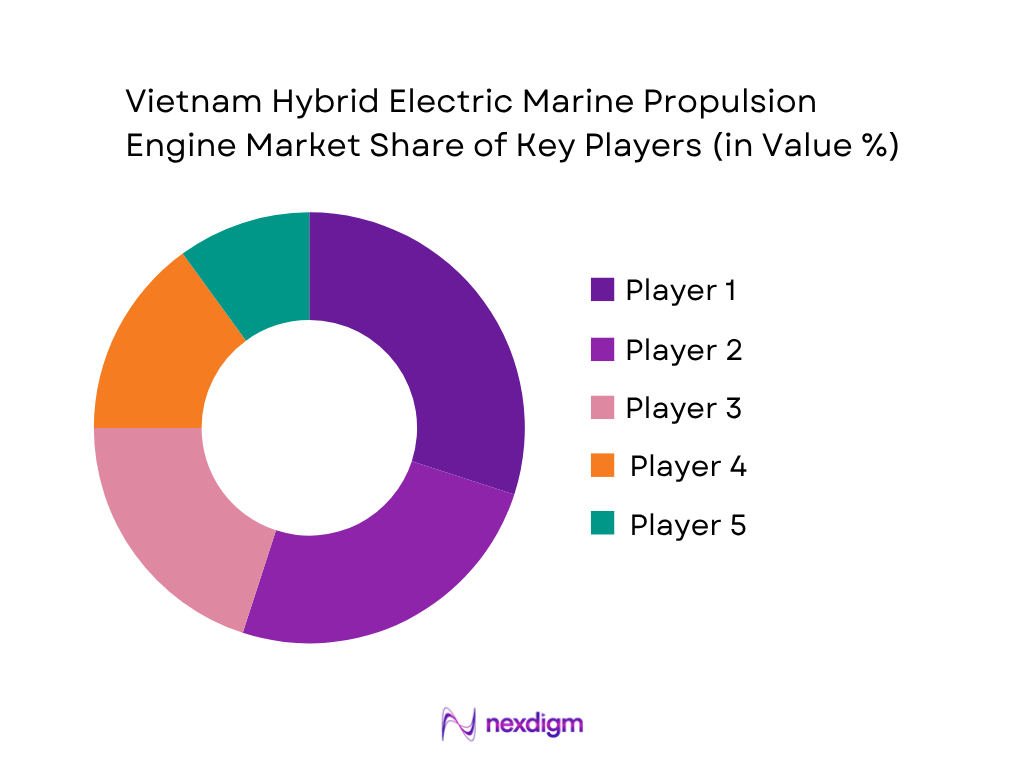
Vietnam Hybrid Electric Marine Propulsion Engine Market Analysis
Growth Drivers
Rising Maritime Trade Activity and Vessel Modernization Demand
Vietnam’s expanding maritime trade ecosystem is supporting the adoption of advanced propulsion technologies, including hybrid electric marine propulsion systems, as vessel operators seek improved fuel efficiency and lower emissions. According to the World Bank, Vietnam’s GDP reached approximately USD 476.3 billion in 2024, reflecting continued industrial and trade expansion that supports demand for commercial marine transportation infrastructure. The country’s merchandise trade value exceeded USD 786 billion in 2024, according to Vietnam Customs, highlighting the importance of maritime logistics networks for export-oriented industries. Vietnam operates more than 3,200 km of coastline and has 34 seaports with over 296 port terminals, according to the Vietnam Maritime Administration, creating a broad operational base for commercial vessels requiring propulsion upgrades. Increasing activity across container transport, inland waterways, passenger ferries, and offshore services is encouraging ship operators to evaluate hybrid propulsion systems that combine diesel engines with electric motors and battery storage. The modernization of aging fleets is becoming increasingly relevant as operators focus on reducing fuel dependency, improving operational efficiency, and meeting environmental compliance requirements. Hybrid propulsion technology is particularly suitable for Vietnam’s short-distance coastal and inland vessel operations where frequent low-speed operation and port maneuvering create opportunities for electric power utilization.
Increasing Focus on Marine Decarbonization and Clean Energy Transition
Vietnam’s commitment toward reducing greenhouse gas emissions and expanding clean energy adoption is encouraging investment in low-emission marine technologies, including hybrid electric propulsion systems. According to the International Energy Agency (IEA), Vietnam’s renewable energy capacity reached approximately 21 GW in 2024, demonstrating the country’s accelerating transition toward cleaner energy sources that can support future marine electrification infrastructure. The Ministry of Natural Resources and Environment reported that Vietnam generated approximately 376 million tonnes of CO₂ equivalent greenhouse gas emissions annually, increasing pressure on high-emission sectors such as transportation and shipping to adopt cleaner technologies. The Vietnamese government has established long-term climate objectives under its Nationally Determined Contributions, targeting stronger emission reduction measures across transportation and industrial sectors. The maritime industry is increasingly aligning with global environmental standards introduced by the International Maritime Organization, particularly regarding carbon intensity reduction and energy efficiency improvements. Hybrid electric marine propulsion systems provide vessel operators with a practical pathway between conventional diesel propulsion and fully electric solutions by enabling reduced fuel consumption during low-power operations. Growth in renewable electricity generation, development of smart port infrastructure, and increasing awareness among ship operators regarding environmental compliance are supporting the transition toward hybrid marine propulsion solutions.
Market Challenges
Limited Marine Electrification Infrastructure and Charging Network Development
The development of hybrid electric marine propulsion systems in Vietnam faces challenges due to limited availability of dedicated marine charging infrastructure and supporting electrical networks. Although Vietnam has experienced rapid electricity infrastructure development, marine-specific electrification facilities remain at an early development stage. According to the World Bank, Vietnam’s electricity access rate reached approximately 100% of the population in 2023, indicating strong national grid coverage, but this infrastructure is primarily designed for residential and industrial demand rather than vessel charging requirements. Vietnam’s power consumption exceeded 280 billion kWh in 2024, according to the Electricity and Renewable Energy Authority, reflecting significant electricity demand growth from industrial activities. However, ports and waterways require specialized high-capacity charging systems, energy storage facilities, and grid management solutions to support hybrid and electric vessels. Many Vietnamese ports currently lack standardized charging facilities capable of supporting commercial vessel operations, creating operational limitations for fleet owners considering propulsion conversion. In addition, differences in vessel operating routes, battery requirements, and port infrastructure availability complicate large-scale deployment. The absence of widespread marine charging infrastructure increases dependence on hybrid configurations that continue using conventional engines, slowing the transition toward higher levels of marine electrification.
High Dependence on Imported Marine Technology and Components
Vietnam’s hybrid electric marine propulsion industry faces challenges due to limited domestic manufacturing capabilities for advanced marine propulsion components, including electric motors, marine batteries, power electronics, and energy management systems. According to the General Department of Vietnam Customs, Vietnam recorded imports exceeding USD 380 billion in 2024, reflecting the country’s continued dependence on imported industrial equipment and technology components. Advanced marine propulsion technologies are largely supplied by international manufacturers due to specialized engineering requirements and limited local production capabilities. Battery technology remains a critical challenge, as Vietnam’s domestic marine-grade battery manufacturing ecosystem is still developing compared with global suppliers. According to the International Renewable Energy Agency (IRENA), global battery manufacturing capacity exceeded 1 TWh annually in 2024, while Vietnam’s participation remains concentrated mainly in automotive and consumer battery applications. The reliance on imported components increases supply chain complexity and requires stronger technical expertise for installation, maintenance, and lifecycle management. Ship operators and marine engineering companies also face challenges in developing local capabilities for hybrid propulsion integration, system diagnostics, and battery management. These factors can slow adoption among smaller vessel owners and limit rapid deployment across Vietnam’s diverse maritime fleet.
Market Opportunities
Expansion of Inland Waterway Transportation Electrification
Vietnam’s extensive inland waterway network provides significant opportunities for hybrid electric marine propulsion adoption, particularly among passenger boats, cargo vessels, and tourism transportation operators. According to the Vietnam Inland Waterway Administration, the country has approximately 42,000 km of inland waterways, creating one of the largest inland transportation networks in Southeast Asia. Inland vessels typically operate predictable routes with frequent stops, making them suitable for hybrid propulsion systems that can utilize electric power during low-speed operations and port movements. The World Bank reported that Vietnam’s logistics sector continues to support economic activity, with transportation infrastructure development remaining a key national priority. Major waterways around the Mekong Delta and Red River Delta support thousands of vessels involved in passenger transport, agricultural logistics, and regional trade. Tourism development also creates opportunities for cleaner propulsion systems, particularly in environmentally sensitive destinations such as Ha Long Bay and river tourism areas. Hybrid marine propulsion can help operators reduce emissions, improve passenger experience through quieter operation, and comply with increasing environmental requirements. Growing investment in sustainable transportation infrastructure and modernization of inland fleets creates a favorable environment for hybrid propulsion suppliers, marine technology providers, and vessel conversion companies.
Development of Green Port Infrastructure and Sustainable Shipping Ecosystem
The expansion of sustainable port infrastructure in Vietnam creates opportunities for hybrid electric marine propulsion adoption by improving the ecosystem required for cleaner vessel operations. According to the Vietnam Maritime Administration, Vietnam’s port system handled more than 800 million tonnes of cargo throughput in 2024, demonstrating the scale of maritime activity requiring efficient and sustainable transportation solutions. Major ports including Hai Phong, Cai Mep–Thi Vai, and Ho Chi Minh City are increasingly focusing on operational efficiency, digitalization, and environmental improvements. The Ministry of Transport has emphasized green transportation development as part of national infrastructure modernization programs. Global maritime regulations are also encouraging ports and shipping companies to reduce emissions from vessel operations, especially during docking and maneuvering activities where hybrid systems provide operational advantages. Vietnam’s industrial production sector contributed approximately 24% of GDP in 2024, according to the World Bank, increasing demand for efficient logistics and marine transportation networks. Green port initiatives create opportunities for integrating shore power systems, battery charging facilities, and hybrid propulsion technologies. As port operators, shipping companies, and shipbuilders collaborate on sustainable maritime infrastructure, hybrid electric propulsion systems are positioned as a transitional technology supporting Vietnam’s move toward cleaner marine transportation.
Future Outlook
Over the next decade, the Vietnam Hybrid Electric Marine Propulsion Engine Market is expected to experience significant expansion driven by maritime emission reduction targets, increasing fuel efficiency requirements, and rising adoption of clean propulsion technologies. The transition toward hybrid marine systems will be supported by improvements in battery technology, development of charging infrastructure, and increasing collaboration between shipbuilders, technology suppliers, and vessel operators. Hybrid propulsion is expected to become a preferred solution for short-distance commercial vessels, passenger transportation, and fleet modernization programs.
Major Players
- ABB
- Wärtsilä
- Siemens Energy
- Volvo Penta
- MAN Energy Solutions
- Cummins
- Rolls-Royce Holdings
- Yanmar
- CATL
- Corvus Energy
- Hyundai Heavy Industries
- Samsung Heavy Industries
- SBIC
- VinFast
- Pha Rung Shipyard
Key Target Audience
- Shipbuilding Companies and Marine Engineering Firms
- Commercial Shipping Operators and Fleet Owners
- Passenger Ferry and Tourism Boat Operators
- Fishing Fleet Owners and Aquaculture Transportation Companies
- Port Authorities and Maritime Infrastructure Developers
- Investments and Venture Capitalist Firms
- Government and Regulatory Bodies
- Battery Technology Providers and Marine Equipment Suppliers
Research Methodology
Step 1: Identification of Key Variables
The initial phase involves developing a comprehensive ecosystem map covering manufacturers, shipyards, vessel operators, battery suppliers, regulatory agencies, and marine technology providers operating within the Vietnam Hybrid Electric Marine Propulsion Engine Market. Extensive secondary research is conducted through industry databases, company publications, maritime reports, and technology assessments to identify critical market variables influencing adoption.
Step 2: Market Analysis and Construction
This phase involves evaluating historical market trends, vessel electrification activities, propulsion technology adoption, and supplier capabilities. Market sizing is developed through bottom-up assessment of propulsion installations, vessel conversion projects, component pricing, and demand patterns across commercial, passenger, and industrial marine applications.
Step 3: Hypothesis Validation and Expert Consultation
Market assumptions are validated through interviews and discussions with shipbuilders, marine equipment suppliers, fleet operators, and technology specialists. These consultations provide operational insights regarding propulsion preferences, investment decisions, technology barriers, and future adoption opportunities within Vietnam’s maritime sector.
Step 4: Research Synthesis and Final Output
The final stage combines primary and secondary findings to generate a validated market analysis. Data triangulation is performed by comparing supplier information, vessel deployment trends, technology adoption patterns, and industry feedback to ensure accurate representation of the Vietnam Hybrid Electric Marine Propulsion Engine Market.

- Executive Summary
- Research Methodology (Market Definitions and Scope, Hybrid Electric Marine Propulsion Engine Classification, Marine Vessel Applicability Framework, Propulsion System Categorization, Market Sizing Approach, Top-Down Analysis, Bottom-Up Analysis, Demand-Side Assessment, Supply-Side Assessment, Primary Interviews with Shipbuilders and Marine Operators, Secondary Research Framework, Data Triangulation, Market Forecasting Model, Assumptions and Limitations)

- Definition and Scope
- Industry Evolution and Technology Development Timeline
- Vietnam Marine Industry Landscape
- Hybrid Electric Marine Propulsion Engine Ecosystem Analysis
- Hybrid Electric Marine Propulsion Engine Value Chain Analysis
- Marine Propulsion Supply Chain Analysis

- Market Growth Drivers (Government Maritime Decarbonization Policies, Rising Fuel Cost Pressure, Reduction in Marine Emissions, Expansion of Electric Vessel Adoption, Development of Green Ports, Growing Tourism Boat Electrification, Modernization of Fishing Fleet)
- Market Challenges (High Initial System Investment, Limited Charging Infrastructure, Battery Lifecycle Concerns, Dependence on Imported Components, Limited Local Hybrid Propulsion Expertise, Vessel Retrofit Complexity)
- Market Opportunities (Electric Ferry Development, Inland Waterway Electrification, Hybrid Fishing Vessel Conversion, Green Shipping Corridors, Battery Technology Localization, Marine Renewable Energy Integration)
- Market Trends (Hybrid Retrofit Demand Growth, Battery Energy Density Improvements, Intelligent Propulsion Management Systems, Autonomous Vessel Technology Integration, Digital Marine Monitoring Platforms, Zero-Emission Vessel Development)
- SWOT Analysis
- Porter’s Five Forces Analysis (Supplier Power, Buyer Power, Competitive Rivalry, Threat of New Entrants, Substitute Technology Threat)
- PESTLE Analysis
- Stakeholder Ecosystem Analysis
- Competition Ecosystem Analysis

- By Market Value (2020-2025)
- By Installed Propulsion Capacity (kW/MW) (2020-2025)
- By Hybrid Propulsion System Shipments (2020-2025)
- By Vessel Electrification Projects (2020-2025)
- By Average System Cost per Vessel (2020-2025)

- By Hybrid Propulsion Architecture (In Value %)
Series Hybrid Propulsion Systems
Parallel Hybrid Propulsion Systems
Series-Parallel Hybrid Propulsion Systems
Plug-In Hybrid Marine Propulsion Systems
Diesel-Electric Hybrid Propulsion Systems - By Power Rating (In Value %)
Below 100 kW Hybrid Propulsion Systems
100–500 kW Hybrid Propulsion Systems
500 kW–1 MW Hybrid Propulsion Systems
1 MW–5 MW Hybrid Propulsion Systems
Above 5 MW Hybrid Propulsion Systems - By Vessel Type (In Value %)
Commercial Cargo Vessels
Passenger Ferries and Tourist Boats
Fishing Vessels
Inland Waterway Transport Vessels
Offshore Support Vessels
Workboats and Utility Vessels
Recreational Boats - By Propulsion Component (In Value %)
Marine Electric Motors
Hybrid Marine Engines
Battery Energy Storage Systems
Power Conversion Systems
Energy Management Systems
Propulsion Control Software - By Installation Type (In Value %)
New Vessel Installation
Retrofit Hybrid Propulsion Conversion - By Region (In Value %)
Northern Vietnam
Central Vietnam
Southern Vietnam

- Market Share Analysis of Major Players
- Cross Comparison Parameters (Product Portfolio Coverage, Hybrid Propulsion System Capacity Range, Marine Vessel Application Coverage, Battery Integration Capability, Electric Motor Efficiency Rating, Propulsion Control System Capability, Retrofit Conversion Expertise, Marine Service Network Strength)
- Pricing Analysis (By Hybrid Propulsion System Capacity, Vessel Application, Battery Configuration, Installation Type)
- Technology Benchmarking Analysis (Energy Efficiency Performance, Propulsion Reliability, Battery Management Capability, Digital Monitoring Integration)
- Partnership and Collaboration Analysis
- SWOT Analysis of Major Players
- Detailed Profiles of Major Companies
Global Hybrid Electric Marine Propulsion Engine Companies
ABB
Siemens Energy
Wärtsilä
Volvo Penta
MAN Energy Solutions
Cummins
Rolls-Royce Holdings
Yanmar
CATL
Corvus Energy
Regional and Vietnam Market Participants
VinFast
Vietnam Engine and Agricultural Machinery Corporation
SBIC
Hyundai Vietnam Shipbuilding
Pha Rung Shipyard

- Marine Operator Adoption Assessment
- Vessel Owner Investment Behaviour
- Hybrid Propulsion Adoption Drivers
- Vessel Electrification Readiness Assessment
- Purchasing Decision-Making Process
- Technology Preference Analysis
- End-User Pain Point Analysis

- By Market Value (2026-2035)
- By Installed Propulsion Capacity (kW/MW) (2026-2035)
- By Hybrid Propulsion System Shipments (2026-2035)
- By Vessel Electrification Projects (2026-2035)
- By Average System Cost per Vessel (2026-2035)


 Request a Sample
 Ask for Customization
 Get a Quote
 Enquire Now