

 Download PDF
Market Overview
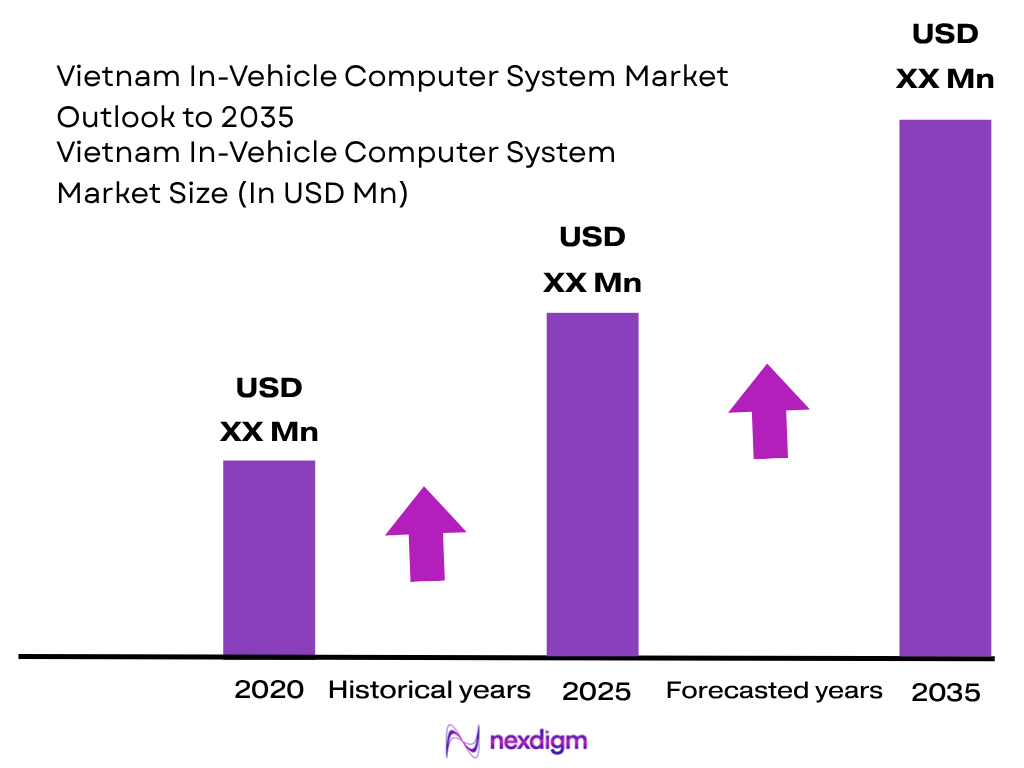
The Vietnam In-Vehicle Computer System Market is valued at approximately USD ~0.XX billion in 2024, supported by increasing adoption of connected vehicles, digital cockpit solutions, and advanced automotive electronics integration. The market size is driven by rising passenger vehicle production, expansion of electric vehicle platforms, and increasing deployment of infotainment, telematics, ADAS computing, and centralized vehicle computing systems. Globally, automotive digital cockpit and vehicle computing platforms are witnessing strong expansion due to integration of connectivity, AI-based features, and software-defined vehicle architectures.
The Vietnam In-Vehicle Computer System Market is concentrated in major automotive manufacturing and technology hubs including Ho Chi Minh City, Hanoi, Hai Phong, and Binh Duong, due to the presence of vehicle assembly plants, industrial parks, electronics manufacturing facilities, and automotive supplier networks. Ho Chi Minh City dominates due to its strong automotive distribution ecosystem and technology infrastructure, while Hanoi and Hai Phong benefit from vehicle manufacturing investments and logistics connectivity. International technology suppliers from Japan, South Korea, Germany, the USA, and China maintain strong influence due to their automotive semiconductor, infotainment, telematics, and vehicle computing capabilities.
Market Segmentation
By System Type
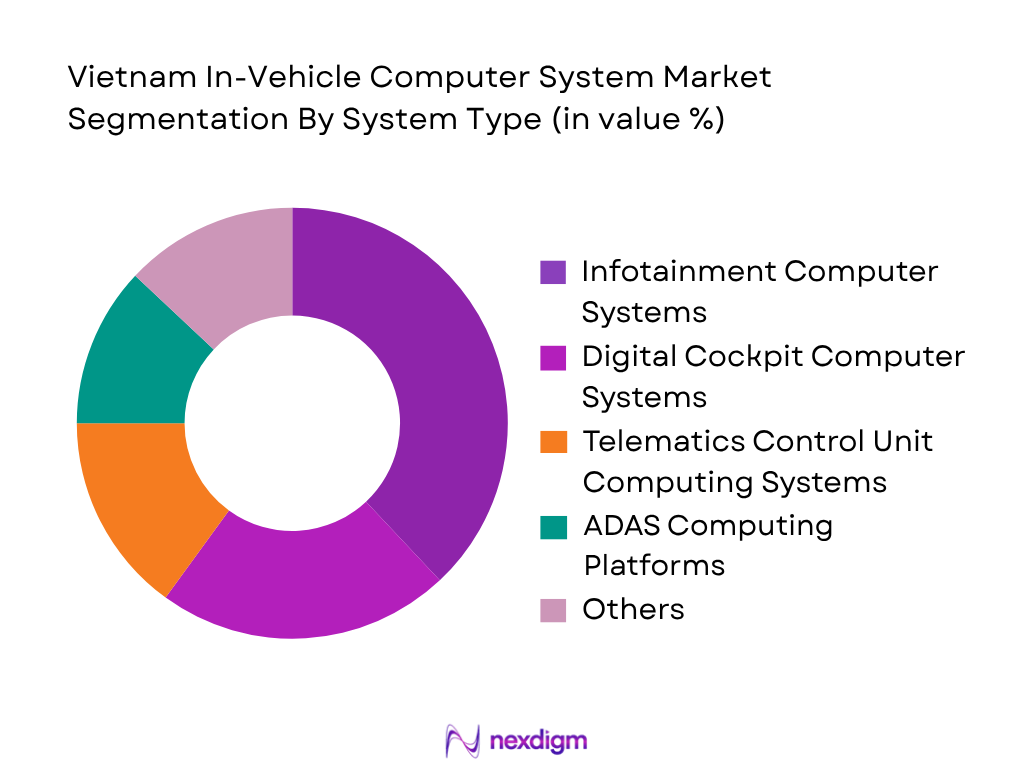
Vietnam In-Vehicle Computer System Market is segmented by system type into infotainment computer systems, digital cockpit computer systems, telematics control units, ADAS computing platforms, vehicle gateway computers, and centralized vehicle computing systems. Recently, infotainment computer systems hold a dominant market share due to their widespread installation across passenger vehicles and increasing consumer demand for connected entertainment, navigation, smartphone integration, and digital user interfaces. Automotive manufacturers are increasingly integrating advanced infotainment platforms as standard vehicle features rather than premium upgrades. The growth of connected services, voice assistance, cloud-based applications, and over-the-air software updates further strengthens demand for infotainment computing solutions. Digital cockpit platforms are also gaining adoption as OEMs shift toward integrated computing architectures combining instrument clusters, displays, and connectivity functions.
By Vehicle Type
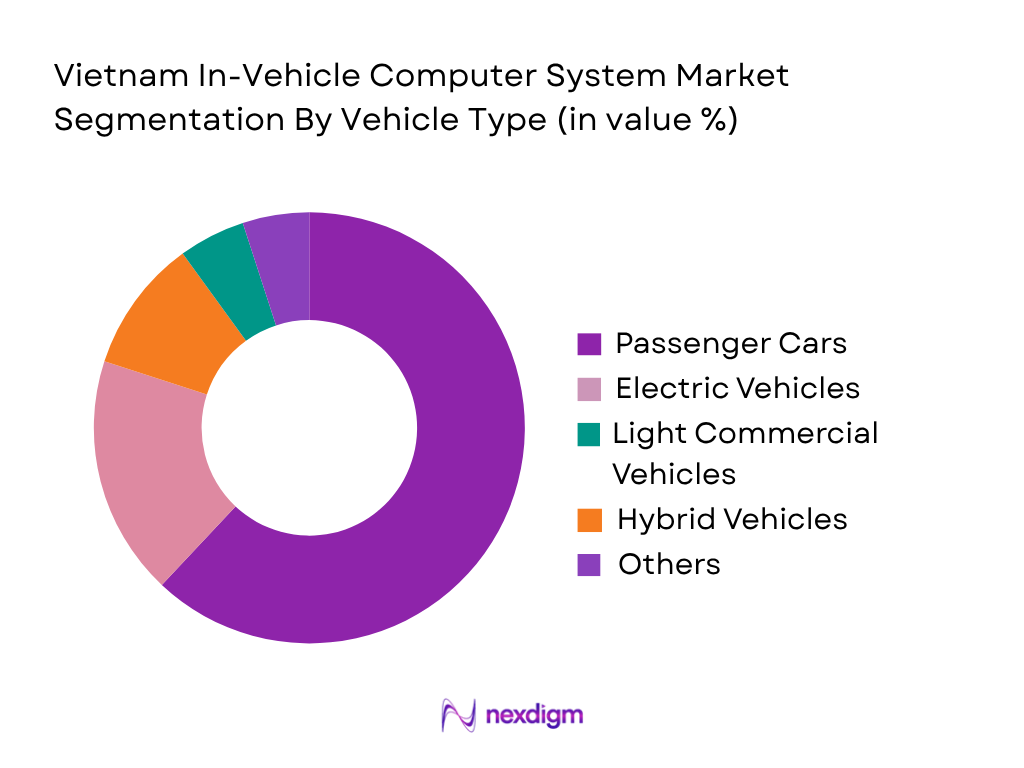
Vietnam In-Vehicle Computer System Market is segmented by vehicle type into passenger cars, electric vehicles, hybrid vehicles, light commercial vehicles, heavy commercial vehicles, buses, and specialty vehicles. Passenger cars dominate the market due to higher vehicle production volumes, increasing middle-class vehicle ownership, and faster adoption of digital features in personal transportation. Passenger vehicle manufacturers are increasingly incorporating touchscreen infotainment systems, connected navigation, driver assistance computing, and digital cockpit technologies to differentiate models and improve user experience. Electric vehicles represent the fastest-growing application area as EV manufacturers require higher-performance computing systems for battery monitoring, connectivity, autonomous driving features, and energy management. Local EV manufacturers and international automotive brands are accelerating adoption of intelligent vehicle platforms, increasing demand for advanced in-vehicle computers.
Competitive Landscape
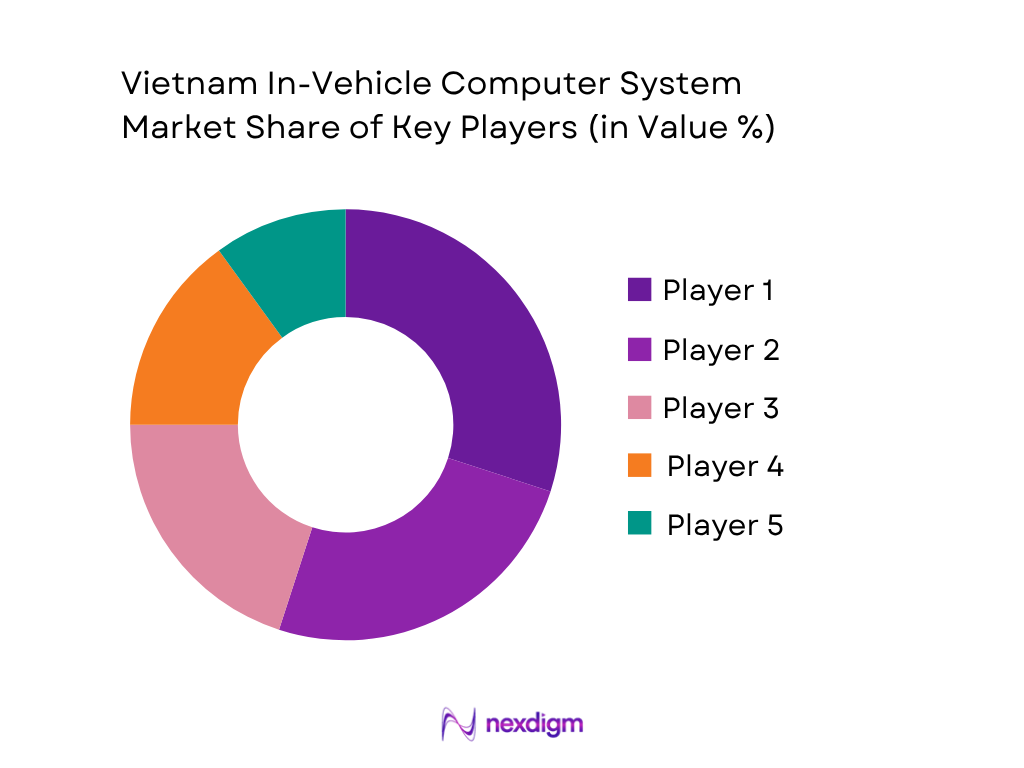
The Vietnam In-Vehicle Computer System Market is characterized by the presence of global automotive electronics suppliers, semiconductor companies, software providers, and local vehicle manufacturers. Major players including Bosch, Continental, Harman, Denso, Qualcomm, and VinFast influence market development through advanced computing platforms, connected vehicle solutions, digital cockpit systems, and EV-focused electronics integration. The competitive environment is shaped by partnerships between OEMs and technology suppliers for developing centralized computing architectures, ADAS platforms, and connected vehicle ecosystems.
| Company | Establishment Year | Headquarters | Major Products | Automotive Computing Capability | Key Vehicle Focus | Technology Strength | Vietnam Market Presence | Strategic Focus |
| Bosch Mobility | 1886 | Germany | ~ | ~ | ~ | ~ | ~ | ~ |
| Continental AG | 1871 | Germany | ~ | ~ | ~ | ~ | ~ | ~ |
| Harman International | 1980 | USA | ~ | ~ | ~ | ~ | ~ | ~ |
| Denso Corporation | 1949 | Japan | ~ | ~ | ~ | ~ | ~ | ~ |
| VinFast | 2017 | Vietnam | ~ | ~ | ~ | ~ | ~ | ~ |
Vietnam In-Vehicle Computer System Market Analysis
Growth Drivers
Expansion of Electric Vehicle Ecosystem and Increasing Demand for Advanced Vehicle Computing
The rapid development of Vietnam’s electric vehicle ecosystem is strengthening demand for advanced in-vehicle computer systems, including digital cockpit computers, battery management computing platforms, telematics units, and centralized vehicle processors. Vietnam recorded approximately 3.2 million registered passenger vehicles in circulation, according to the Vietnam Register, creating a large installed base requiring increasing electronic integration. The country’s EV transition is supported by industrial investments, with Vietnam’s GDP reaching approximately USD 476.3 billion in 2024, according to the World Bank, reflecting rising industrial capacity and consumer purchasing capability. The International Energy Agency reported global electric car sales exceeded 17 million units in 2024, accelerating technology adoption among automotive manufacturers globally. Vietnam’s domestic EV manufacturing ecosystem, particularly through local vehicle manufacturers, is encouraging integration of intelligent vehicle platforms equipped with infotainment computers, ADAS processors, and connected vehicle modules. The increasing focus on smart mobility infrastructure, vehicle connectivity, and software-driven vehicle architectures is creating stronger demand for high-performance computing systems capable of managing multiple automotive functions simultaneously.
Growth of Automotive Manufacturing and Electronics Supply Chain Localization
Vietnam’s expanding automotive manufacturing base is supporting the adoption of in-vehicle computing technologies through increasing vehicle assembly activities and supplier ecosystem development. According to the General Statistics Office of Vietnam, the country’s manufacturing sector contributed approximately 24% of national GDP in 2024, highlighting the importance of industrial production capacity. Vietnam also remained one of Asia’s major electronics manufacturing hubs, with electronics and computer product exports reaching approximately USD 126 billion in 2024, according to Vietnam Customs data. This strong electronics ecosystem supports availability of components such as processors, communication modules, sensors, displays, and embedded computing hardware required for automotive applications. Foreign direct investment continues to strengthen Vietnam’s technology manufacturing capabilities, with the Ministry of Planning and Investment reporting approximately USD 38.2 billion in registered FDI in 2024. Automotive OEMs and Tier-1 suppliers are increasingly leveraging Vietnam’s electronics manufacturing capabilities to integrate advanced vehicle computing systems, supporting development of connected vehicles, digital cockpits, and intelligent transportation solutions.
Market Challenges
Dependence on Imported Automotive Semiconductor and Computing Components
Vietnam’s in-vehicle computer system market faces challenges due to dependence on imported semiconductor components, processors, and automotive-grade electronic hardware. Although Vietnam has developed a strong electronics assembly ecosystem, domestic semiconductor manufacturing remains limited, requiring automotive technology providers to source critical computing components from international suppliers. According to the Ministry of Information and Communications Vietnam, the country’s semiconductor industry strategy focuses on expanding domestic semiconductor capabilities, highlighting the current requirement for greater localization. Vietnam’s electronics sector recorded approximately USD 126 billion in exports in 2024, but a significant portion of this activity remains concentrated around assembly and manufacturing operations rather than advanced semiconductor fabrication. Automotive computing systems require specialized processors meeting automotive safety and reliability standards, increasing dependency on global semiconductor supply chains. Supply chain disruptions, geopolitical risks, and fluctuations in component availability can affect deployment timelines for advanced infotainment systems, ADAS computing modules, and centralized vehicle computing architectures.
Complexity of Automotive Software Integration and Cybersecurity Requirements
The increasing complexity of connected vehicle systems creates challenges for Vietnam’s in-vehicle computer system ecosystem, particularly related to software integration, cybersecurity, and data management. Modern vehicles require integration between infotainment platforms, telematics systems, ADAS applications, cloud services, and vehicle control units, increasing software development requirements. Vietnam’s internet economy continues expanding, with the Ministry of Information and Communications reporting that Vietnam had approximately 78 million internet users in 2024, increasing exposure to connected mobility applications and digital services. The growth of connected vehicles requires stronger cybersecurity frameworks, as vehicle computing systems increasingly process user information, navigation data, and operational vehicle data. The Ministry of Public Security implemented cybersecurity regulations under Vietnam’s Cybersecurity Law, requiring organizations handling digital information systems to strengthen security practices. Automotive manufacturers and suppliers must invest in secure software architectures, encryption technologies, and continuous software updates to ensure reliable operation of connected vehicle computing platforms.
Market Opportunities
Development of Smart Mobility Infrastructure and Connected Vehicle Ecosystem
The expansion of smart mobility infrastructure in Vietnam creates opportunities for in-vehicle computer system adoption through increased demand for connected navigation, vehicle communication, telematics, and cloud-based automotive services. Vietnam’s urban population reached approximately 38 million people in 2024, according to the World Bank, increasing demand for intelligent transportation solutions in major cities including Hanoi and Ho Chi Minh City. The Ministry of Transport Vietnam has been promoting digital transformation initiatives in transportation management, creating a favorable environment for connected vehicle technologies. Increasing smartphone penetration also supports consumer acceptance of connected vehicle features, with Vietnam having more than 78 million internet users in 2024, according to the Ministry of Information and Communications. These conditions encourage automotive manufacturers to integrate advanced computing platforms capable of supporting real-time connectivity, navigation services, driver assistance functions, and vehicle monitoring applications. The growing requirement for efficient urban transportation systems provides opportunities for suppliers offering automotive computing hardware, software platforms, and connected vehicle solutions.
Expansion of Local Electric Vehicle Manufacturing and Advanced Automotive Electronics Development
Vietnam’s emerging electric vehicle manufacturing ecosystem provides opportunities for advanced in-vehicle computing system suppliers as EV platforms require higher levels of electronic integration compared with conventional vehicles. According to the Vietnam Automobile Manufacturers Association, Vietnam’s automotive industry continues expanding with increasing production and assembly activities, creating demand for advanced automotive components. The country’s industrial sector contributed approximately USD 114 billion in manufacturing value added in 2024, according to World Bank economic indicators, supporting development of automotive electronics capabilities. Electric vehicles require specialized computing systems for battery monitoring, energy management, connectivity, digital dashboards, and autonomous driving assistance features. Local EV manufacturers are increasingly adopting intelligent vehicle architectures, creating opportunities for suppliers of automotive processors, cockpit computing platforms, telematics systems, and software solutions. Growth in EV production capability and supporting electronics infrastructure is expected to accelerate adoption of next-generation in-vehicle computer systems across passenger and commercial vehicle segments.
Future Outlook
Over the next decade, the Vietnam In-Vehicle Computer System Market is expected to show significant growth driven by increasing vehicle electrification, expansion of connected mobility infrastructure, and rising demand for intelligent automotive systems. The transition toward software-defined vehicles will encourage adoption of centralized computing platforms, AI-based automotive processors, and advanced connectivity solutions. Growing investments in EV manufacturing and smart transportation systems will further support market expansion.
Major Players
- Bosch Mobility
- Continental AG
- Harman International
- Denso Corporation
- LG Electronics Vehicle Component Solutions
- Panasonic Automotive Systems
- Aptiv PLC
- Valeo SE
- ZF Friedrichshafen AG
- Visteon Corporation
- NXP Semiconductors
- Qualcomm Technologies
- Renesas Electronics Corporation
- Ficosa International
- VinFast
Key Target Audience
- Automotive OEMs (VinFast, Toyota Vietnam, Hyundai Thanh Cong, Thaco Auto, Mitsubishi Motors Vietnam) Automotive Tier-1 Electronics Suppliers
- Automotive Semiconductor and Processor Companies
- Connected Vehicle Technology Providers
- Fleet Management and Mobility Solution Providers
- Investments and Venture Capitalist Firms (VinaCapital Ventures, Openspace Ventures, Monk’s Hill Ventures)
- Government and Regulatory Bodies (Ministry of Transport Vietnam, Ministry of Industry and Trade Vietnam, Vietnam Register)
- Automotive Software and Telematics Solution Providers
Research Methodology
Step 1: Identification of Key Variables
The initial phase involves developing an ecosystem map covering automotive OEMs, Tier-1 suppliers, semiconductor providers, software companies, and connected mobility stakeholders operating within the Vietnam In-Vehicle Computer System Market. Extensive secondary research is conducted through automotive databases, company reports, industry publications, and regulatory sources to identify major market variables including vehicle production, electronics penetration, connectivity adoption, and computing architecture trends.
Step 2: Market Analysis and Construction
This phase focuses on analyzing historical market development through assessment of vehicle sales, in-vehicle electronics adoption rates, system installation volumes, and supplier contribution. The study evaluates demand patterns across passenger vehicles, commercial vehicles, and electric vehicles while analyzing revenue generation from infotainment systems, telematics platforms, digital cockpit solutions, and vehicle computing modules.
Step 3: Hypothesis Validation and Expert Consultation
Market assumptions are validated through discussions with automotive manufacturers, electronics suppliers, technology providers, and industry specialists. Computer-assisted telephone interviews and expert consultations are conducted to understand purchasing behavior, technology adoption barriers, supplier strategies, and future investment priorities within Vietnam’s automotive electronics ecosystem.
Step 4: Research Synthesis and Final Output
The final phase involves consolidating primary and secondary research findings to create a comprehensive market assessment. Data collected from OEMs, suppliers, and technology companies is triangulated to validate market size, segmentation analysis, competitive positioning, and future growth opportunities in the Vietnam In-Vehicle Computer System Market.

- Executive Summary
- Research Methodology (Market Definition and Scope, Vietnam In-Vehicle Computer System Classification, Automotive Computing Architecture Assessment, Vehicle Infotainment System Mapping, Advanced Driver Assistance System Computing Analysis, Vehicle Connectivity Platform Evaluation, Telematics Control Unit Assessment, Digital Cockpit Architecture Mapping, Automotive Electronic Control Unit Integration Analysis)

- Definition and Scope
- Vietnam In-Vehicle Computer System Industry Evolution and Development of Connected Vehicle and Smart Mobility Ecosystem
- In-Vehicle Computer System Architecture, Hardware Configuration and Software Integration Structure
- Vietnam In-Vehicle Computer System Value Chain Analysis
- Vietnam In-Vehicle Computer System Supply Chain Analysis
- Infotainment Computer, Digital Cockpit Computer, Telematics Computer, ADAS Computer, Vehicle Gateway Computer and Central Computing Platform Ecosystem Analysis
- Automotive Computing System Integration Assessment Across Passenger Vehicles, Commercial Vehicles, Electric Vehicles and Autonomous Driving Platforms

- Growth Drivers (Increasing Vehicle Electrification Adoption, Expansion of Connected Vehicle Ecosystem, Rising Demand for Digital Cockpit Systems, Growth of Advanced Driver Assistance System Deployment, Increasing Automotive Electronics Localization, Expansion of Smart Mobility Infrastructure, Rising Consumer Demand for Premium In-Vehicle Technology)
- Market Challenges (High Dependence on Imported Automotive Electronics Components, Limited Domestic Semiconductor Manufacturing Capability, High Cost of Advanced Computing Platforms, Cybersecurity Challenges in Connected Vehicles, Software Integration Complexity, Shortage of Automotive Software Engineering Expertise)
- Market Opportunities (Expansion of Electric Vehicle Manufacturing Ecosystem, Development of Local Automotive Electronics Supply Chain, Increasing Adoption of Centralized Vehicle Computing Architecture, Growth of Automotive Software Platforms, Expansion of Fleet Telematics Solutions, Increasing Demand for Connected Commercial Vehicles)
- Market Trends (Adoption of Software Defined Vehicles, Growth of Central Vehicle Computing Platforms, Increasing Integration of AI-Based Automotive Computing, Expansion of Cloud Connected Vehicle Services, Growth of Automotive Cybersecurity Solutions, Increasing Use of High Performance Automotive Processors, Development of Smart Cockpit Technologies)
- Government Regulations and Standards (Vietnam Automotive Development Strategy, Vehicle Safety Regulations, Automotive Connectivity Standards, Electric Vehicle Development Policies, Data Protection and Cybersecurity Regulations, Automotive Electronics Quality Standards)
- SWOT Analysis
- Porter’s Five Forces Analysis
- PESTLE Analysis
- Stakeholder Ecosystem
- Competition Ecosystem

- By Market Value (2020-2025)
- By In-Vehicle Computer System Installation Volume (2020-2025)
- By Passenger Vehicle In-Vehicle Computer System Deployment Volume (2020-2025)
- By Commercial Vehicle In-Vehicle Computer System Deployment Volume (2020-2025)
- By Electric Vehicle In-Vehicle Computer System Deployment Volume (2020-2025)
- By Connected Vehicle Computing System Deployment Volume (2020-2025)
- By Aftermarket In-Vehicle Computer System Upgrade Volume (2020-2025)
- By Average Selling Price of In-Vehicle Computer Systems (2020-2025)

- By System Type (In Value %)
Infotainment Computer Systems
Digital Cockpit Computer Systems
Telematics Control Unit Computing Systems
Advanced Driver Assistance System Computing Platforms
Vehicle Gateway Computer Systems
Central Vehicle Computing Platforms
Instrument Cluster Computing Systems
Rear Seat Entertainment Computing Systems - By Vehicle Type (In Value %)
Passenger Cars
Premium Passenger Vehicles
Electric Passenger Vehicles
Hybrid Vehicles
Light Commercial Vehicles
Heavy Commercial Vehicles
Buses and Public Transport Vehicles
Specialty and Fleet Vehicles - By Application Type (In Value %)
Vehicle Infotainment Applications
Navigation and Connected Services
Advanced Driver Assistance Applications
Vehicle Diagnostics and Telematics Applications
Digital Instrument Cluster Applications
Vehicle-to-Everything Communication Applications
Autonomous Driving Computing Applications
Fleet Management Applications - By Connectivity Technology (In Value %)
4G LTE Connected Vehicle Systems
5G Automotive Computing Systems
Bluetooth and Wi-Fi Enabled Systems
Vehicle-to-Vehicle Communication Systems
Vehicle-to-Infrastructure Communication Systems
Cloud-Connected Vehicle Platforms - By Sales Channel (In Value %)
Automotive OEM Integration
Tier-1 Automotive Supplier Network
Automotive Electronics Distributors
Independent Automotive Technology Providers
Aftermarket Vehicle Electronics Installers
Online Automotive Electronics Platforms - By Region (In Value %)
Northern Vietnam
Hanoi Automotive Technology Cluster
Central Vietnam
Southern Vietnam
Ho Chi Minh City Automotive Manufacturing Cluster
Binh Duong Automotive Industrial Zone
Hai Phong Manufacturing Cluster

- Market Share of Major Players (By Revenue, System Type, Vehicle Segment, Propulsion Type, OEM Integration Contracts, Connectivity Technology Adoption, Hardware Platform Presence, Software Capability Distribution)
- Cross Comparison Parameters (In-Vehicle Computing Platform Portfolio Breadth, Automotive Processor and Semiconductor Integration Capability, Digital Cockpit Technology Capability, ADAS Computing Performance, Connected Vehicle Platform Integration Capability, OEM Partnership and Supply Network Coverage, Software Development and Over-The-Air Update Capability, Cybersecurity and Data Protection Technology Capability)
- SWOT Analysis of Major Players
- Competitive Positioning Matrix
- Pricing Analysis by System Category and Vehicle Segment
- Detailed Profiles of Major Companies
Harman International – Automotive Infotainment Computers, Digital Cockpit Platforms and Connected Vehicle Solutions
Bosch Mobility – Vehicle Computing Systems, Telematics Platforms and Automotive Electronics Solutions
Continental AG – Automotive Computers, Digital Cockpit Systems and Vehicle Architecture Solutions
Denso Corporation – Automotive Computing Units, Connectivity Systems and Electronic Platforms
LG Electronics Vehicle Component Solutions – Digital Cockpit Systems and Automotive Computing Platforms
Panasonic Automotive Systems – Infotainment Computers and Connected Vehicle Technologies
Aptiv PLC – Vehicle Computing Architecture and Advanced Mobility Systems
Valeo – Smart Cockpit Systems, ADAS Computing and Vehicle Electronics Solutions
ZF Friedrichshafen – Central Vehicle Computing Platforms and Autonomous Driving Systems
Visteon Corporation – Digital Cockpit Computers and Vehicle Electronics Platforms
NXP Semiconductors – Automotive Processing Solutions and Vehicle Computing Semiconductors
Qualcomm Technologies – Automotive Cockpit Platforms and Connected Vehicle Computing Solutions
Renesas Electronics – Automotive Microcontrollers and Computing Platforms
Ficosa International – Telematics Systems and Vehicle Connectivity Solutions
VinFast – Electric Vehicle Computing Platforms and Smart Vehicle Technologies

- End User Segmentation Assessment
- Passenger Vehicle Manufacturer Analysis
- Electric Vehicle Manufacturer Analysis
- Commercial Vehicle Manufacturer Analysis
- Automotive Tier-1 Supplier Analysis
- Fleet Operator and Mobility Service Provider Analysis
- Automotive Aftermarket Electronics Installer Analysis
- Connected Vehicle Service Provider Analysis
- Automotive Software and Technology Solution Provider Analysis

- By Market Value (2026-2035)
- By In-Vehicle Computer System Installation Volume (2026-2035)
- By Passenger Vehicle In-Vehicle Computer System Deployment Volume (2026-2035)
- By Commercial Vehicle In-Vehicle Computer System Deployment Volume (2026-2035)
- By Electric Vehicle In-Vehicle Computer System Deployment Volume (2026-2035)
- By Connected Vehicle Computing System Deployment Volume (2026-2035)
- By Advanced Driver Assistance Computing System Deployment Volume (2026-2035)
- By Aftermarket In-Vehicle Computer System Upgrade Volume (2026-2035)


 Request a Sample
 Ask for Customization
 Get a Quote
 Enquire Now