
 Download PDF
Market Overview
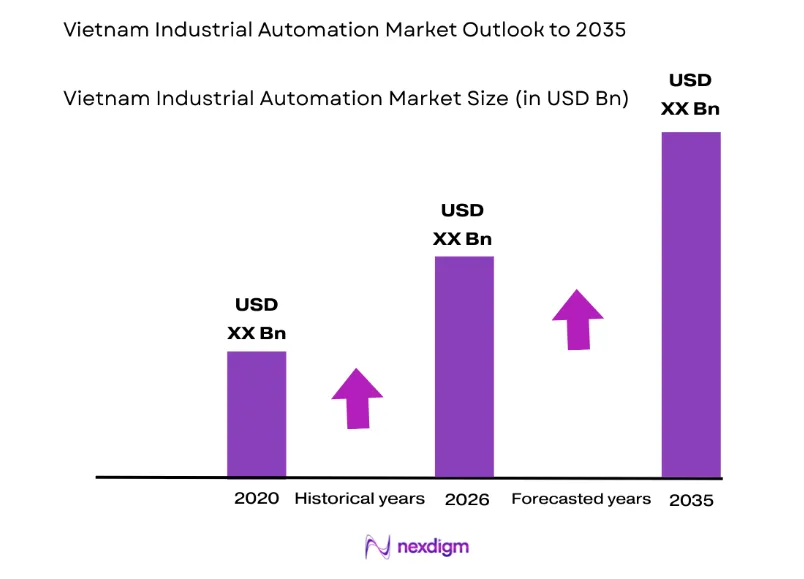
Vietnam’s industrial automation market represents a rapidly expanding component of the country’s manufacturing transformation strategy as industries increasingly adopt advanced automation technologies to improve productivity and operational efficiency. Based on a recent historical assessment, Vietnam’s industrial automation sector generated approximately USD ~ through robotics systems, programmable logic controllers, machine vision technologies, industrial sensors, and factory automation software. Market growth is driven by expanding electronics manufacturing, automotive component production, and increasing investments in smart manufacturing technologies across Vietnam’s industrial zones.
Ho Chi Minh City, Hanoi, Bac Ninh, and Hai Phong have emerged as the dominant industrial automation adoption hubs due to their concentration of electronics manufacturing facilities, automotive production plants, and export-oriented industrial parks. These cities host large multinational manufacturers operating advanced production lines requiring robotics systems, automated material handling equipment, and precision manufacturing technologies. Proximity to global supply chains and strong industrial infrastructure further strengthen automation adoption across Vietnam’s primary manufacturing clusters.
Market Segmentation
By Product Type
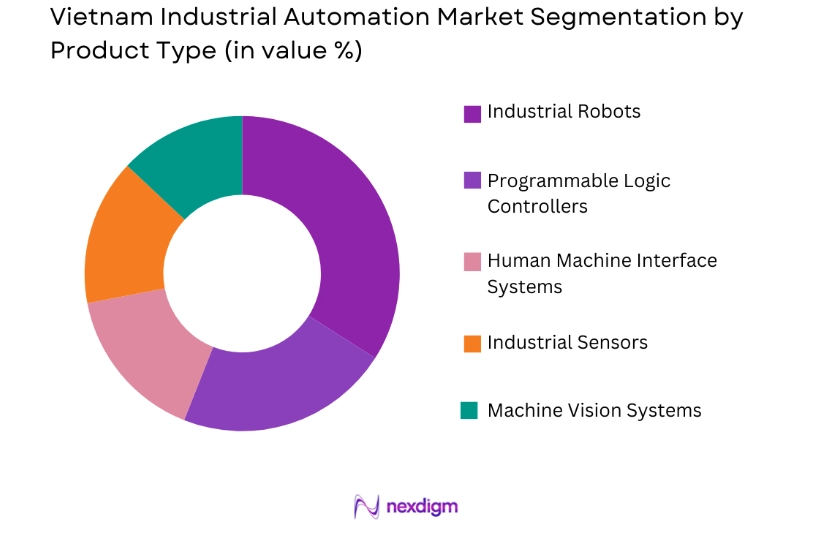
Vietnam Industrial Automation Market market is segmented by product type into Industrial Robots, Programmable Logic Controllers, Human Machine Interface Systems, Industrial Sensors, and Machine Vision Systems. Recently, Industrial Robots has a dominant market share due to factors such as expanding electronics manufacturing, rising automotive component production, and increasing adoption of automated assembly lines across export oriented manufacturing industries. Industrial robots enable manufacturers to improve production precision, increase throughput capacity, and reduce operational downtime across high volume manufacturing operations. Electronics manufacturers operating semiconductor packaging facilities and printed circuit board assembly lines rely heavily on robotic arms capable of performing precision assembly and inspection processes. As global manufacturers continue relocating production facilities to Vietnam, demand for robotics systems supporting automated manufacturing operations continues expanding significantly.
By End Use Industry
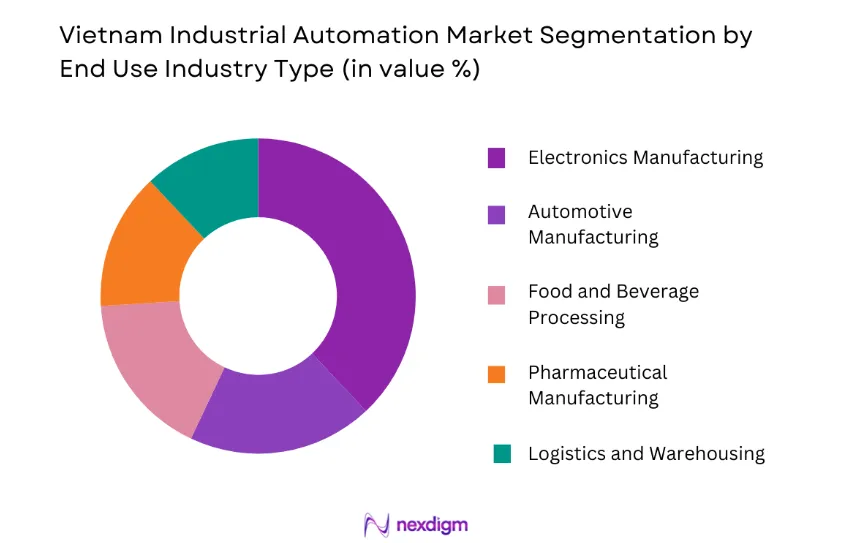
Vietnam Industrial Automation Market market is segmented by end use industry into Electronics Manufacturing, Automotive Manufacturing, Food and Beverage Processing, Pharmaceutical Manufacturing, and Logistics and Warehousing. Recently, Electronics Manufacturing has a dominant market share due to factors such as large scale electronics assembly operations, semiconductor packaging facilities, and global consumer electronics production networks operating across Vietnam’s industrial zones. Electronics manufacturing processes require advanced automation technologies capable of handling delicate components, performing high precision assembly operations, and maintaining consistent product quality during large scale production. Numerous multinational electronics manufacturers operate manufacturing plants across Vietnam producing smartphones, computers, networking equipment, and consumer electronic devices. These facilities rely heavily on robotics systems, automated inspection technologies, and industrial control systems to support high speed manufacturing environments.
Competitive Landscape
Vietnam’s industrial automation market demonstrates a competitive landscape dominated by global automation technology providers supplying robotics systems, industrial control technologies, and factory automation solutions to manufacturing industries. Multinational automation companies collaborate closely with Vietnamese manufacturing firms to deploy advanced automation technologies supporting smart factory development. Market competition remains technology driven, with companies competing through robotics innovation, industrial control software capabilities, and integrated automation platforms.
| Company Name | Establishment Year | Headquarters | Technology Focus | Market Reach | Key Products | Revenue | Automation Integration Capability |
| Siemens AG | 1847 | Germany | ~ | ~ | ~ | ~ | ~ |
| ABB Ltd | 1988 | Switzerland | ~ | ~ | ~ | ~ | ~ |
| Rockwell Automation | 1903 | United States | ~ | ~ | ~ | ~ | ~ |
| Mitsubishi Electric | 1921 | Japan | ~ | ~ | ~ | ~ | ~ |
| Schneider Electric | 1836 | France | ~ | ~ | ~ | ~ | ~ |
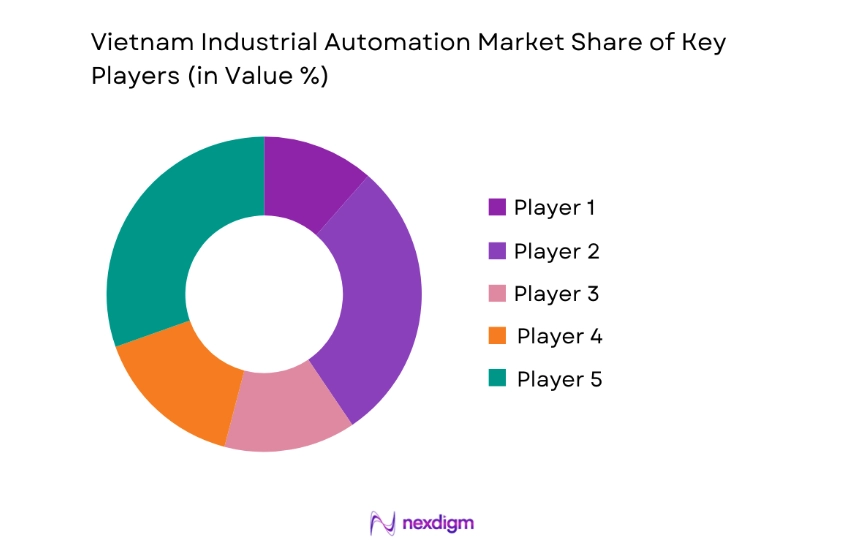
Vietnam Industrial Automation Market Analysis
Growth Drivers
Rapid Expansion of Electronics Manufacturing and Smart Factory Transformation
Vietnam’s electronics manufacturing sector continues expanding rapidly as multinational technology companies establish large scale production facilities across the country, significantly accelerating demand for industrial automation technologies capable of supporting high precision manufacturing operations. Electronics production environments require highly automated manufacturing lines equipped with robotics systems, automated inspection technologies, programmable logic controllers, and machine vision systems capable of maintaining strict production quality standards. Global consumer electronics demand drives manufacturers to deploy automation solutions that improve production speed while maintaining consistent manufacturing accuracy. Many electronics companies operating within Vietnam adopt smart factory transformation strategies designed to digitally integrate robotics systems, industrial sensors, data analytics platforms, and automated control systems throughout manufacturing operations. Smart manufacturing infrastructure improves production efficiency, reduces human error, and allows factories to monitor operational performance through real time industrial data systems. Vietnam’s electronics manufacturing clusters located across northern and southern industrial zones increasingly integrate automation technologies to maintain global production competitiveness. Semiconductor packaging operations, printed circuit board assembly lines, and advanced electronics manufacturing processes require extremely precise automated handling technologies capable of operating continuously within controlled production environments. As electronics manufacturing capacity continues expanding within Vietnam’s export oriented industrial economy, automation adoption across electronics production facilities continues increasing significantly.
Government Supported Industrial Modernization and Manufacturing Digitalization Programs
Vietnam’s government actively promotes industrial modernization policies aimed at transforming the country’s manufacturing sector into a high technology driven industrial economy through the integration of advanced automation technologies. National industrial development strategies encourage manufacturers to adopt robotics systems, digital factory infrastructure, and advanced industrial control technologies capable of improving manufacturing productivity and global competitiveness. Government supported industrial zones provide infrastructure designed specifically for advanced manufacturing industries requiring automated production systems and digital manufacturing capabilities. Manufacturing companies operating within these zones receive policy incentives encouraging the deployment of automation technologies and smart factory solutions. Industrial modernization initiatives also emphasize workforce training programs focused on robotics engineering, automation system integration, and digital manufacturing technologies capable of supporting advanced automated production environments. Government collaboration with international technology companies enables knowledge transfer programs that strengthen domestic automation engineering expertise. As Vietnam seeks to transition from labor intensive manufacturing toward technology driven industrial production, automation adoption across factories becomes increasingly essential for maintaining long term manufacturing competitiveness. The government therefore continues encouraging automation investment across key manufacturing sectors including electronics, automotive components, food processing, and industrial equipment manufacturing industries.
Market Challenges
High Initial Capital Investment Required for Industrial Automation Systems
Industrial automation systems require significant capital investment for robotics equipment, automation software platforms, machine vision technologies, industrial control systems, and factory integration services, creating financial challenges for many manufacturing companies operating within Vietnam’s industrial sector. Small and medium sized manufacturers often face difficulties allocating large capital budgets for automation infrastructure despite recognizing the long term productivity benefits offered by automated production technologies. Automation system implementation requires not only equipment purchases but also factory redesign, integration engineering, employee training programs, and ongoing system maintenance services that increase overall implementation costs. Many local manufacturing companies operating within Vietnam rely on labor intensive production methods due to historically low labor costs and limited access to automation financing options. Advanced automation technologies including collaborative robots, industrial artificial intelligence platforms, and integrated smart factory systems require specialized technical expertise for installation and operation. Limited access to financing mechanisms supporting industrial automation investment may slow automation adoption across smaller manufacturers. Without adequate financial support mechanisms such as technology investment incentives or automation subsidies, the cost barriers associated with automation implementation remain a significant challenge for the broader adoption of industrial automation technologies across Vietnam’s manufacturing ecosystem.
Shortage of Skilled Automation Engineers and Technical Workforce
Vietnam’s rapidly expanding automation market faces workforce challenges due to limited availability of highly skilled automation engineers capable of designing, implementing, and maintaining complex industrial automation systems across modern manufacturing environments. Automation technologies require specialized expertise in robotics programming, industrial control systems engineering, machine vision integration, and advanced manufacturing software platforms. While Vietnam produces a large workforce for manufacturing operations, the number of engineers trained specifically in industrial automation technologies remains relatively limited compared with industry demand. Automation system integration projects often require multidisciplinary engineering teams capable of combining mechanical engineering, electrical engineering, software development, and manufacturing process optimization. Many manufacturers depend on international automation system integrators and foreign engineering specialists to support automation deployment projects. Limited local engineering expertise can slow automation implementation timelines and increase operational costs for manufacturers adopting advanced industrial technologies. Strengthening Vietnam’s automation engineering workforce therefore requires expanded technical education programs, industry training initiatives, and collaboration between automation companies and engineering universities capable of producing skilled automation professionals who can support the country’s growing smart manufacturing sector.
Opportunities
Expansion of Warehouse Automation and Logistics Robotics Technologies
Vietnam’s rapidly expanding e commerce sector and logistics infrastructure create significant opportunities for warehouse automation technologies and logistics robotics systems capable of supporting high volume distribution operations across the country’s supply chain networks. Online retail companies operate large distribution centers requiring automated material handling systems, robotic sorting technologies, automated storage and retrieval systems, and advanced warehouse management software capable of processing thousands of orders daily. Automation technologies improve warehouse efficiency by reducing manual labor requirements and accelerating order fulfillment processes. Logistics companies increasingly deploy automated conveyor systems, autonomous mobile robots, and intelligent warehouse control platforms designed to optimize inventory movement within distribution facilities. Vietnam’s growing e commerce industry significantly increases demand for advanced warehouse automation solutions capable of supporting national and international logistics networks. Automated logistics technologies also enable companies to improve delivery reliability while reducing operational costs associated with manual warehouse operations. As Vietnam continues developing modern logistics infrastructure supporting international trade and digital commerce expansion, warehouse automation technologies represent a major growth opportunity for the industrial automation industry within the country.
Growth of Automotive Manufacturing and Electric Vehicle Component Production
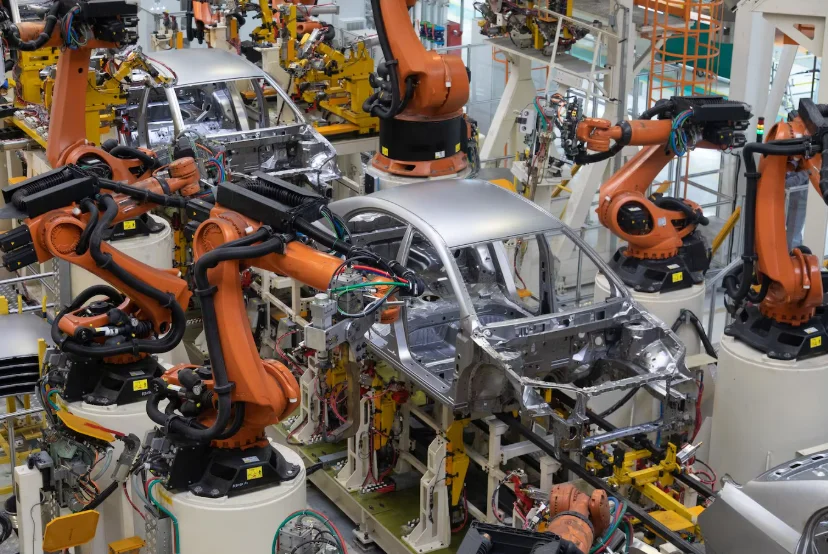
Vietnam’s emerging automotive manufacturing industry presents strong opportunities for industrial automation providers supplying robotics systems and automated manufacturing equipment required for modern automotive production facilities. Automotive manufacturing involves highly automated assembly lines performing welding, painting, material handling, and precision component assembly processes requiring advanced industrial robotics technologies. Domestic automotive companies and international automotive manufacturers increasingly establish production facilities within Vietnam to supply regional vehicle markets. Electric vehicle manufacturing introduces additional automation requirements for battery production, electric drivetrain assembly, and precision electronics manufacturing processes. Automotive production plants rely on automated robotics systems capable of performing repetitive manufacturing tasks with high accuracy and consistent quality. As Vietnam seeks to develop a competitive domestic automotive manufacturing sector, industrial automation technologies will play an increasingly important role in supporting advanced vehicle production capabilities. The expansion of electric vehicle supply chains further increases automation demand across battery manufacturing plants, electronics assembly lines, and automotive component manufacturing facilities operating throughout Vietnam’s developing automotive industrial ecosystem.
Future Outlook
Vietnam’s industrial automation market is expected to expand steadily as manufacturing industries increasingly adopt smart factory technologies and advanced robotics systems. Government industrial modernization programs and expanding foreign investment in electronics and automotive manufacturing will accelerate automation deployment across production facilities. Advancements in robotics, industrial artificial intelligence, and machine vision technologies will further enhance factory productivity. Growing digital manufacturing initiatives and the expansion of logistics automation will also contribute to long term market growth.
Major Players
- Siemens AG
- ABB Ltd
- Rockwell Automation
- Schneider Electric
- Mitsubishi Electric
- Omron Corporation
- Honeywell International
- Emerson Electric
- Bosch Rexroth
- Delta Electronics
- Fanuc Corporation
- Keyence Corporation
- Yaskawa Electric Corporation
- Hitachi Industrial Equipment Systems
- SICK AG
Key Target Audience
- Manufacturing Companies
- Electronics Manufacturing Companies
- Automotive Manufacturing Companies
- Logistics and Warehouse Operators
- Industrial Automation System Integrators
- Investments and venture capitalist firms
- Government and regulatory bodies
Research Methodology
Step 1: Identification of Key Variables
Industrial automation variables including robotics adoption, factory automation investment, manufacturing output, and smart factory technology deployment were identified. These variables formed the analytical basis used to assess automation technology demand across Vietnam’s industrial manufacturing sectors.
Step 2: Market Analysis and Construction
Data was gathered from industry publications, automation company financial disclosures, government manufacturing statistics, and industrial technology reports. These sources enabled the development of a comprehensive market structure reflecting automation adoption trends across manufacturing industries.
Step 3: Hypothesis Validation and Expert Consultation
Industry perspectives were validated through consultation with automation engineers, manufacturing technology specialists, and factory automation system integrators. Their insights helped confirm practical automation adoption patterns within Vietnam’s manufacturing ecosystem.
Step 4: Research Synthesis and Final Output
All validated insights were integrated into a structured analytical framework combining quantitative market data and qualitative industry analysis. The final output delivers a detailed assessment of Vietnam’s industrial automation market dynamics, competitive landscape, and long term growth opportunities.

- Executive Summary
- Research Methodology (Definitions, Scope, Industry Assumptions, Market Sizing Approach, Primary & Secondary Research Framework, Data Collection & Verification Protocol, Analytic Models & Forecast Methodology, Limitations & Research Validity Checks)

- Market Definition and Scope
- Value Chain & Stakeholder Ecosystem
- Regulatory / Certification Landscape
- Sector Dynamics Affecting Demand

- By System Type (In Value%)
Industrial Robotics Systems
Programmable Logic Controllers
Distributed Control Systems
Supervisory Control and Data Acquisition Systems
Industrial Machine Vision Systems - By Platform Type (In Value%)
Manufacturing Automation Platforms
Electronics and Semiconductor Production Platforms
Energy and Utilities Automation Platforms
Logistics and Warehouse Automation Platforms - By Fitment Type (In Value%)
New Industrial Automation Installations
Retrofit Automation for Existing Manufacturing Facilities
Integrated Smart Factory Automation Systems
Modular Industrial Automation Solutions - By End User Segment (In Value%)
Electronics and Semiconductor Manufacturing
Automotive and Industrial Manufacturing
Energy and Utilities Sector

- By Market Value, 2020-2025
- By Installed Units, 2020-2025
- By Average System Price, 2020-2025
- By System Complexity Tier, 2020-2025

- By System Type (In Value%)
Industrial Robotics Systems
Programmable Logic Controllers
Distributed Control Systems
Supervisory Control and Data Acquisition Systems
Industrial Machine Vision Systems - By Platform Type (In Value%)
Manufacturing Automation Platforms
Electronics and Semiconductor Production Platforms
Energy and Utilities Automation Platforms
Logistics and Warehouse Automation Platforms - By Fitment Type (In Value%)
New Industrial Automation Installations
Retrofit Automation for Existing Manufacturing Facilities
Integrated Smart Factory Automation Systems
Modular Industrial Automation Solutions - By End User Segment (In Value%)
Electronics and Semiconductor Manufacturing
Automotive and Industrial Manufacturing
Energy and Utilities Sector

- Market Share Analysis
- Cross Comparison Parameters (Automation Technology Portfolio, System Integration Capability, Industrial Application Coverage, Digital Platform Integration, Pricing Strategy, Regional Service Network, Innovation and R&D Capability)
- SWOT Analysis of Key Competitors
- Pricing & Procurement Analysis
- Key Players
Siemens AG
ABB Ltd
Schneider Electric
Rockwell Automation
Mitsubishi Electric
Honeywell International
Emerson Electric
Yokogawa Electric Corporation
Bosch Rexroth
Omron Corporation
Fanuc Corporation
KUKA AG
Hitachi Industrial Equipment Systems
Delta Electronics
Keyence Corporation

- Electronics Manufacturers Deploying Automation Systems to Improve Production Efficiency
- Automotive Producers Integrating Robotics and Smart Factory Technologies
- Energy Infrastructure Operators Utilizing Automation for Grid and Facility Monitoring
- Logistics Companies Expanding Automated Warehousing and Material Handling Systems

- Forecast Market Value, 2026-2035
- Forecast Installed Units, 2026-2035
- Price Forecast by System Tier, 2026-2035
- Future Demand by Platform, 2026-2035


 Request a Sample
 Ask for Customization
 Get a Quote
 Enquire Now