

 Download PDF
 Download PDF
Market Overview
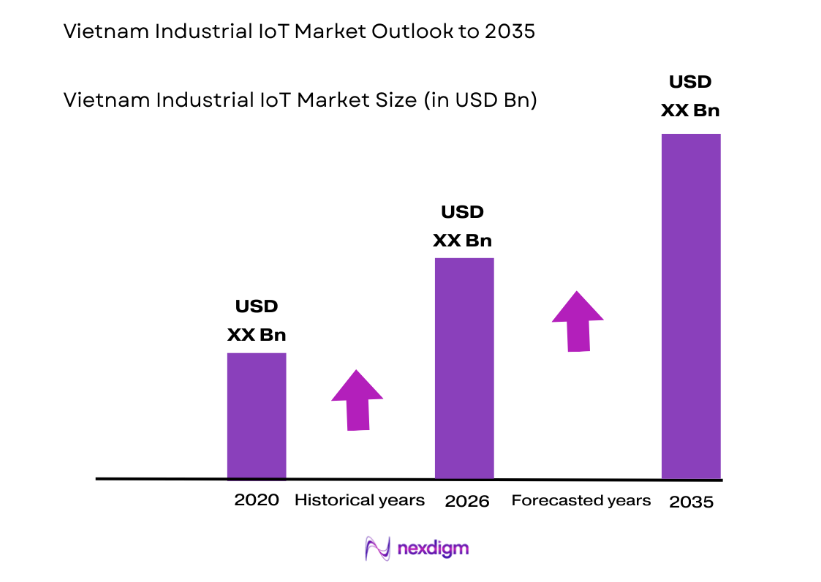
Vietnam’s Industrial Internet of Things market reached approximately USD ~ based on a recent historical assessment compiled from national ICT statistics and global industrial technology databases including reports from the International Telecommunication Union and Vietnam’s Ministry of Information and Communications. Rapid industrial digitalization across electronics manufacturing textile production logistics automation and smart energy infrastructure drives adoption of connected sensors industrial gateways analytics platforms and predictive maintenance technologies that enable real time equipment monitoring operational efficiency and data driven industrial management across Vietnam’s rapidly expanding manufacturing ecosystem.
Industrial IoT deployment across Vietnam concentrates heavily in Ho Chi Minh City Hanoi Hai Phong and Binh Duong where large export oriented manufacturing clusters and industrial parks operate advanced production facilities integrated with automation and digital monitoring platforms. These regions host multinational electronics automotive and industrial manufacturers that require connected industrial systems supporting predictive maintenance production optimization and digital supply chain visibility. Government supported smart manufacturing initiatives and technology parks further accelerate Industrial IoT adoption across export driven industrial corridors.
Market Segmentation
By Component
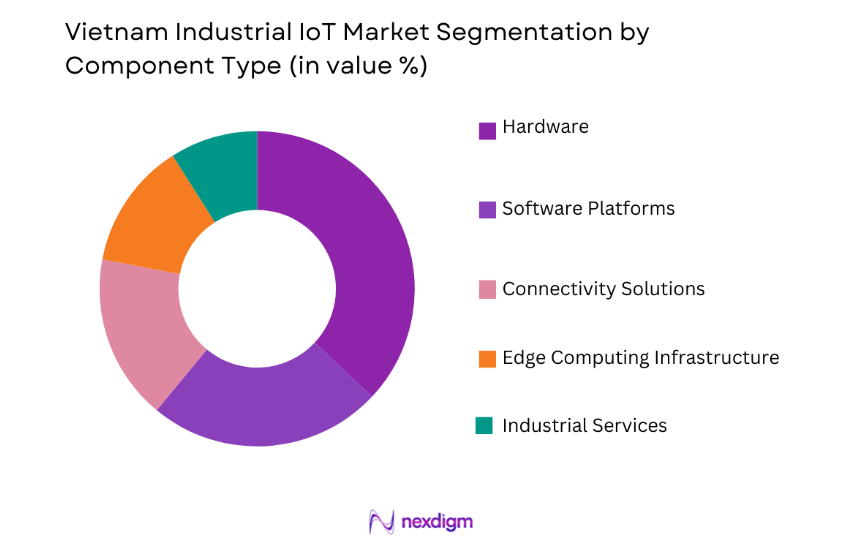
By Component Vietnam Industrial IoT market is segmented by product type into Hardware, Software Platforms, Connectivity Solutions, Edge Computing Infrastructure, and Industrial Services. Recently, Hardware has a dominant market share due to factors such as demand patterns, brand presence, infrastructure availability, or consumer preference. Manufacturing plants across electronics assembly textile production food processing and industrial equipment manufacturing deploy thousands of industrial sensors controllers and communication gateways to collect real time machine data across production environments. Industrial operators prioritize physical device deployment because these sensors and monitoring devices form the foundation of connected manufacturing infrastructure enabling predictive maintenance quality monitoring and automated process control within large production facilities across Vietnam’s rapidly expanding export manufacturing sector.
By End Use Industry
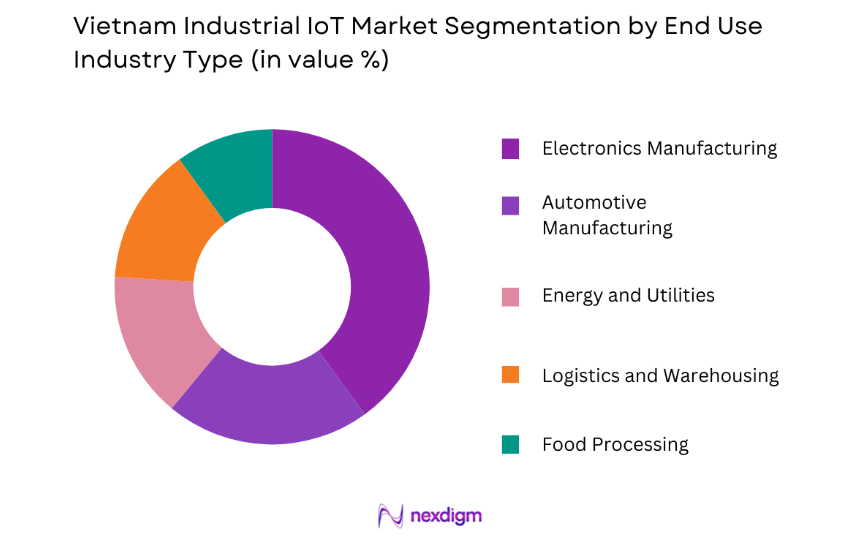
By End Use Industry Vietnam Industrial IoT market is segmented by product type into Electronics Manufacturing, Automotive Manufacturing, Energy and Utilities, Logistics and Warehousing, and Food Processing. Recently, Electronics Manufacturing has a dominant market share due to factors such as demand patterns, brand presence, infrastructure availability, or consumer preference. Vietnam hosts one of Southeast Asia’s largest electronics production ecosystems with multinational companies operating extensive manufacturing facilities producing smartphones semiconductors consumer electronics and telecommunications equipment. These manufacturing operations require advanced digital monitoring systems capable of controlling complex automated production lines monitoring equipment performance and ensuring consistent product quality across high volume assembly processes supporting global electronics export supply chains.
Competitive Landscape
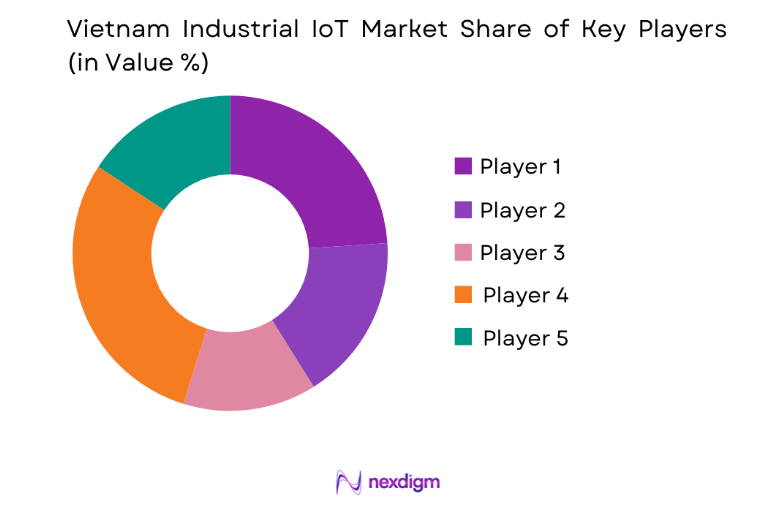
The Vietnam Industrial IoT market demonstrates a competitive structure dominated by global technology companies providing industrial automation platforms cloud infrastructure and connectivity technologies while regional system integrators and telecommunications companies support deployment and system integration services. Multinational automation vendors supply industrial control platforms sensors and analytics systems used across manufacturing plants while Vietnamese technology providers collaborate with telecom operators to deliver connectivity infrastructure and industrial digitalization solutions supporting the country’s rapidly expanding manufacturing economy.
| Company Name | Establishment Year | Headquarters | Technology Focus | Market Reach | Key Products | Revenue | Industrial Platform Ecosystem |
| Siemens AG | 1847 | Germany | ~ | ~ | ~ | ~ | ~ |
| Honeywell International | 1906 | United States | ~ | ~ | ~ | ~ | ~ |
| Cisco Systems | 1984 | United States | ~ | ~ | ~ | ~ | ~ |
| ABB Ltd | 1988 | Switzerland | ~ | ~ | ~ | ~ | ~ |
| Schneider Electric | 1836 | France | ~ | ~ | ~ | ~ | ~ |
Vietnam Industrial IoT Market Analysis
Growth Drivers
Manufacturing Sector Digital Transformation Across Export Oriented Industrial Clusters
Vietnam’s manufacturing sector continues rapidly transitioning toward digitally integrated production environments driven by multinational electronics automotive and industrial equipment manufacturers expanding operations across industrial zones. Factories increasingly deploy Industrial IoT platforms integrating sensors industrial gateways and predictive maintenance analytics to monitor production lines equipment performance and energy consumption in real time. These connected systems allow manufacturers to detect operational inefficiencies identify equipment faults before failures occur and maintain consistent product quality across large scale production environments. Electronics manufacturing plants assembling smartphones semiconductors and communication devices rely heavily on automated assembly systems that require continuous digital monitoring through IIoT infrastructure. Textile and garment factories also integrate connected sensors and machine monitoring systems to optimize production speed and reduce operational downtime. Vietnam’s export oriented manufacturing clusters demand high production efficiency to remain competitive within global supply chains supplying consumer electronics automotive components and industrial equipment. Industrial IoT technologies allow manufacturers to improve operational transparency track machine utilization and integrate production data across supply chain networks. As global manufacturers expand manufacturing capacity within Vietnam the adoption of Industrial IoT platforms supporting smart manufacturing continues increasing significantly across the industrial sector.
Expansion of Industrial Automation and Smart Factory Infrastructure Programs
Vietnam’s government and private sector continue investing heavily in industrial automation and smart manufacturing infrastructure supporting the transition toward advanced manufacturing capabilities. Smart factory development initiatives encourage manufacturers to deploy digital monitoring systems robotics automation and industrial analytics platforms capable of optimizing production operations. Industrial IoT technologies play a critical role in enabling connected manufacturing ecosystems where machines sensors and industrial control systems communicate continuously through digital networks. These connected infrastructures allow factories to implement predictive maintenance programs reduce equipment failure rates and optimize energy consumption across production processes. Industrial parks across northern and southern Vietnam increasingly deploy digital infrastructure supporting automated manufacturing operations and integrated industrial data management. Smart logistics hubs also integrate IoT technologies for warehouse automation inventory tracking and supply chain visibility across export logistics operations. Telecommunications providers support this transformation by expanding industrial connectivity networks enabling reliable data communication across large manufacturing facilities. As Vietnam continues strengthening its position as a global manufacturing hub industrial companies increasingly adopt IIoT platforms supporting digital production systems intelligent maintenance strategies and data driven manufacturing optimization.
Market Challenges
Limited Industrial Digital Infrastructure Across Smaller Manufacturing Enterprises
While large multinational manufacturers rapidly adopt Industrial IoT technologies many smaller domestic manufacturers across Vietnam continue operating traditional production systems that lack digital monitoring infrastructure. Small and medium sized enterprises often face financial and technical constraints preventing them from deploying advanced industrial connectivity platforms sensors and analytics systems required for full IIoT integration. These companies typically rely on manual equipment monitoring and legacy automation systems that generate limited operational data. Transitioning toward connected manufacturing environments requires significant investment in industrial networking infrastructure data management platforms and advanced automation technologies. Workforce training requirements also create challenges because many smaller manufacturers lack specialized engineering personnel capable of managing complex digital production systems. In addition integration of new digital monitoring platforms with existing manufacturing equipment often requires extensive system upgrades. These financial and operational barriers slow IIoT adoption among smaller industrial companies despite the long term efficiency benefits offered by digital manufacturing technologies.
Cybersecurity Risks Associated with Connected Industrial Control System
As Vietnamese industrial facilities increasingly integrate connected sensors cloud analytics platforms and remote monitoring systems cybersecurity risks become more significant across operational technology environments. Industrial IoT networks connect production equipment supply chain systems and enterprise platforms creating complex digital ecosystems that must be secured against cyber threats. Cyberattacks targeting industrial infrastructure could disrupt manufacturing operations compromise production data or interfere with automated production systems. Many industrial facilities still operate legacy control systems that were not originally designed with modern cybersecurity protections making them vulnerable when integrated into connected IIoT networks. Implementing secure network architectures encryption protocols and industrial cybersecurity monitoring platforms significantly increases operational costs for manufacturers. Companies must also continuously monitor network activity update system security protocols and train personnel to manage industrial cybersecurity risks. These security challenges create caution among some industrial operators when deploying large scale IIoT infrastructure within manufacturing environments.
Opportunities
Government Supported Smart Manufacturing and Industry Digitalization Programs
Vietnam continues implementing national industrial development strategies encouraging adoption of digital manufacturing technologies across export oriented industrial sectors. Government initiatives promoting smart manufacturing encourage factories to deploy digital production monitoring systems automated manufacturing platforms and connected industrial infrastructure. Industrial IoT technologies provide the digital backbone supporting these smart manufacturing initiatives by enabling machine connectivity data analytics and real time operational intelligence across manufacturing facilities. Industrial parks and technology zones increasingly integrate digital infrastructure including high speed connectivity industrial cloud platforms and smart logistics systems supporting advanced manufacturing operations. Government policies supporting Industry 4.0 transformation encourage collaboration between technology companies manufacturing enterprises and telecommunications providers to accelerate IIoT deployment across industrial ecosystems. These initiatives create significant opportunities for technology vendors offering industrial sensors connectivity platforms and analytics software capable of supporting digitally integrated production environments.
Integration of Artificial Intelligence and Predictive Industrial Analytics Platforms
The convergence of Industrial IoT with artificial intelligence machine learning and advanced data analytics technologies creates major opportunities for improving manufacturing efficiency and operational intelligence across Vietnam’s industrial sector. IIoT platforms generate large volumes of operational data from sensors production equipment and industrial control systems. Artificial intelligence driven analytics platforms analyze these datasets to identify patterns predict equipment failures optimize production scheduling and detect quality deviations across manufacturing processes. Predictive maintenance systems powered by machine learning algorithms allow factories to anticipate equipment failures before they occur significantly reducing production downtime and maintenance costs. Manufacturers can also integrate AI driven analytics with supply chain management systems improving inventory planning logistics coordination and production forecasting. As Vietnamese manufacturers increasingly adopt digital production technologies the integration of AI powered analytics within Industrial IoT ecosystems will significantly enhance industrial productivity operational transparency and smart manufacturing capabilities.
Future Outlook
Vietnam Industrial IoT market is expected to expand rapidly over the coming years as industrial digitalization accelerates across manufacturing logistics and infrastructure sectors. Increasing investment in smart factories industrial automation and connected production environments will continue strengthening IIoT adoption across export oriented industries. Government support for Industry 4.0 transformation and digital manufacturing programs will further drive deployment of connected industrial technologies. Advances in artificial intelligence edge computing and industrial analytics will enable more intelligent automated manufacturing ecosystems across Vietnam’s growing industrial economy.
Major Players
- Siemens AG
- Honeywell International
- Cisco Systems
- ABB Ltd
- Schneider Electric
- IBM Corporation
- Microsoft Corporation
- Emerson Electric
- Rockwell Automation
- Bosch Rexroth
- Yokogawa Electric Corporation
- Hitachi Industrial Equipment Systems
- Huawei Technologies
- General Electric
- Intel Corporation
Key Target Audience
- Electronics Manufacturing Companies
- Automotive Manufacturing Companies
- Industrial Automation System Integrators
- Logistics and Warehouse Operators
- Energy and Utilities Companies
- Investments and venture capitalist firms
- Government and regulatory bodies
Research Methodology
Step 1: Identification of Key Variables
The research process begins with identifying variables influencing Industrial IoT adoption including industrial automation investment manufacturing output connectivity infrastructure and digital transformation initiatives within Vietnam’s industrial sector. Data sources include government industrial statistics technology adoption reports and industrial infrastructure databases.
Step 2: Market Analysis and Construction
Industrial production data export manufacturing statistics and digital technology adoption indicators are analyzed to construct the Vietnam Industrial IoT market structure. Segmentation models evaluate technology deployment across industrial sectors components and operational applications.
Step 3: Hypothesis Validation and Expert Consultation
Industry analysts automation engineers technology vendors and manufacturing specialists review the research assumptions and validate industrial technology adoption trends ensuring accurate representation of market dynamics and deployment patterns.
Step 4: Research Synthesis and Final Output
Validated research insights are synthesized into a structured market model integrating industrial investment indicators manufacturing sector growth patterns and digital infrastructure development trends to produce the final Vietnam Industrial IoT market report.

- Executive Summary
- Research Methodology (Definitions, Scope, Industry Assumptions, Market Sizing Approach, Primary & Secondary Research Framework, Data Collection & Verification Protocol, Analytic Models & Forecast Methodology, Limitations & Research Validity Checks)

- Market Definition and Scope
- Value Chain & Stakeholder Ecosystem
- Regulatory / Certification Landscape
- Sector Dynamics Affecting Demand

- Growth Drivers
Rapid Expansion of Electronics and Semiconductor Manufacturing Ecosystem
Government Digital Transformation Programs Supporting Smart Manufacturing
Growing Demand for Real Time Industrial Monitoring and Predictive Maintenance Systems - Market Challenges
Cybersecurity Risks Associated with Connected Industrial Infrastructure
High Implementation Costs for Industrial IoT Platforms
Integration Complexity with Legacy Industrial Systems - Market Opportunities
Development of Smart Industrial Zones and Digitally Connected Factories
Expansion of Industrial Analytics Platforms Utilizing Artificial Intelligence
Growing Adoption of Predictive Maintenance Systems in Manufacturing Facilities - Trends
Increasing Adoption of Edge Computing Architectures in Industrial IoT Networks
Growing Integration of Artificial Intelligence and Machine Learning in Industrial Data Platforms - Government Regulations
- SWOT Analysis
- Porter’s Five Forces

- By Market Value, 2020-2025
- By Installed Units, 2020-2025
- By Average System Price, 2020-2025
- By System Complexity Tier, 2020-2025

- By System Type (In Value%)
Industrial IoT Sensors and Devices
Industrial IoT Connectivity Platforms
Industrial IoT Data Analytics Platforms
Industrial IoT Edge Computing Systems
Industrial IoT Cybersecurity Solutions - By Platform Type (In Value%)
Manufacturing and Smart Factory Platforms
Electronics and Semiconductor Production Platforms
Energy and Utilities Infrastructure Platforms
Logistics and Supply Chain Monitoring Platforms - By Fitment Type (In Value%)
New Industrial IoT Infrastructure Deployment
Retrofit IoT Integration for Existing Industrial Facilities
Cloud Based Industrial IoT Platforms
Hybrid Edge Cloud Industrial IoT Architectures - By End User Segment (In Value%)
Manufacturing and Industrial Production
Electronics and Semiconductor Industry
Energy and Utilities Sector

- Market Share Analysis
- Cross Comparison Parameters (IoT Platform Capability, Device Connectivity Portfolio, Industrial Application Coverage, Data Analytics Integration, Cybersecurity Capability, Pricing Structure, Research and Development Strength)
- SWOT Analysis of Key Competitors
- Pricing & Procurement Analysis
- Key Players
Siemens AG
Cisco Systems
IBM Corporation
Microsoft Corporation
Schneider Electric
Honeywell International
ABB Ltd
Emerson Electric
Rockwell Automation
Hitachi Ltd
Bosch IoT Solutions
PTC Inc
Oracle Corporation
General Electric Digital
Huawei Technologies

- Manufacturing Companies Deploying IoT Sensors for Production Monitoring and Optimization
- Electronics Manufacturers Implementing Connected Smart Factory Platforms
- Energy Infrastructure Operators Using IoT Systems for Grid and Facility Monitoring
- Logistics Operators Utilizing IoT Systems for Supply Chain Visibility and Warehouse Management

- Forecast Market Value, 2026-2035
- Forecast Installed Units, 2026-2035
- Price Forecast by System Tier, 2026-2035
- Future Demand by Platform, 2026-2035


 Request a Sample
 Ask for Customization
 Get a Quote
 Enquire Now