
 Download PDF
Market Overview
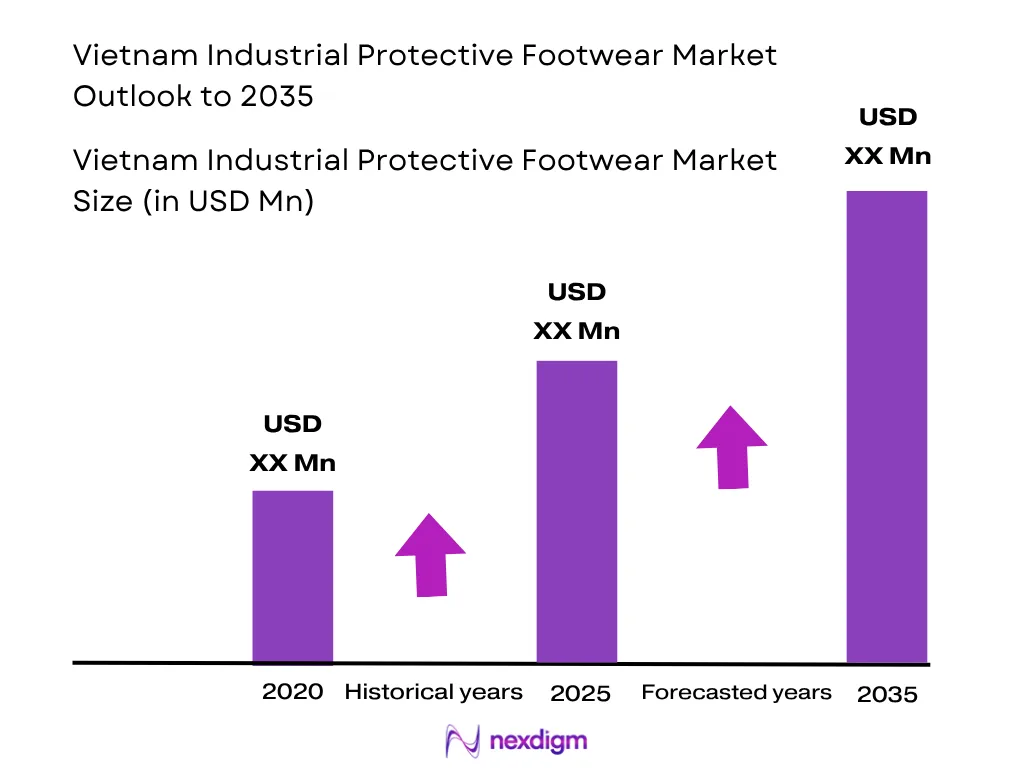
The Vietnam Industrial Protective Footwear market is valued at approximately USD ~ million in 2025. This growth is driven by rapid industrial expansion, government regulations mandating workplace safety, and increasing awareness of personal protective equipment (PPE) adoption. Factors such as Vietnam’s increasing role as a global manufacturing hub and rising foreign direct investments (FDI) have significantly contributed to the market’s growth. The market has seen consistent growth in demand for industrial protective footwear, as sectors like construction, manufacturing, and oil & gas continue to thrive, increasing the need for safety measures and protection in hazardous work environments.
Southern Vietnam, especially the Ho Chi Minh City and Dong Nai regions, dominates the industrial protective footwear market. These regions are home to a large concentration of industrial and manufacturing plants, particularly in electronics, textiles, and automotive sectors. The dominance of these areas is driven by their strategic proximity to key ports, robust infrastructure, and the presence of numerous foreign investments. Additionally, the industrial north around Hanoi also contributes significantly to market growth due to its focus on manufacturing and infrastructure projects. These regions are central to both local and international supply chains, fueling demand for protective footwear across various industries.
Market Segmentation
By Product Type
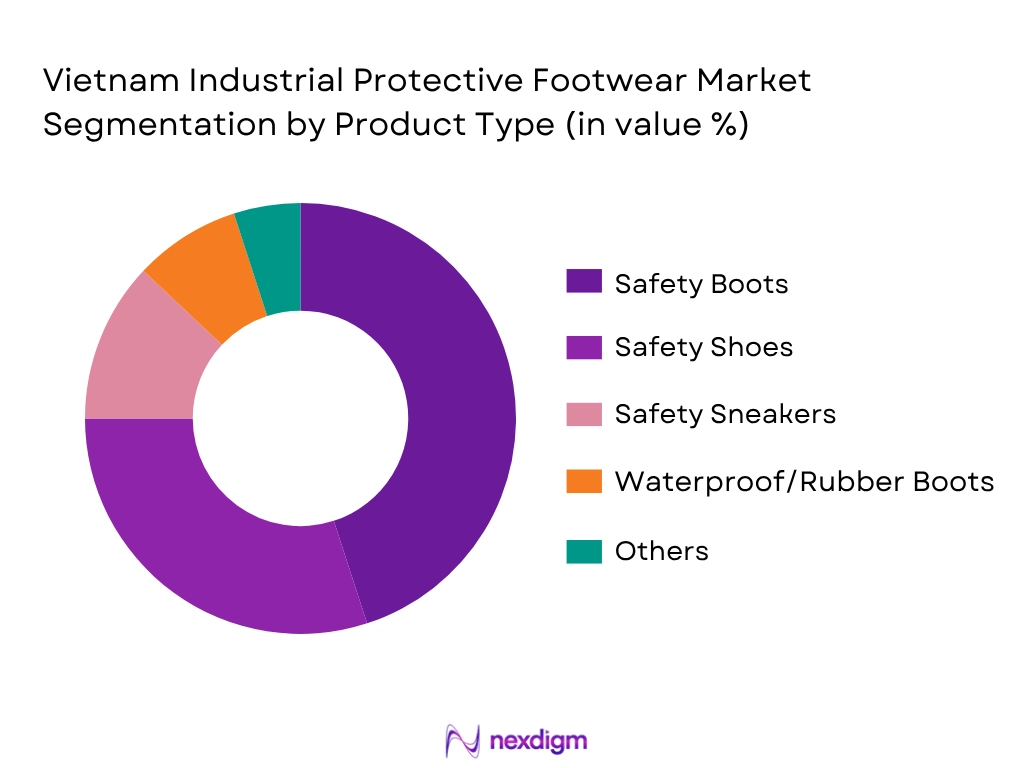
The Vietnam Industrial Protective Footwear market is segmented by product type into safety shoes, safety boots, safety sneakers, waterproof/rubber boots, and others. Safety shoes, especially steel-toe shoes, have the dominant market share due to their widespread adoption across industries such as construction, logistics, and manufacturing. These shoes are favored for their durability and ability to protect workers from heavy equipment and materials. The popularity of safety boots follows closely, particularly in high-risk industries like mining and oil & gas. These boots provide higher ankle protection, making them a preferred choice for workers in environments with heightened risks of foot injuries.
By Safety Feature
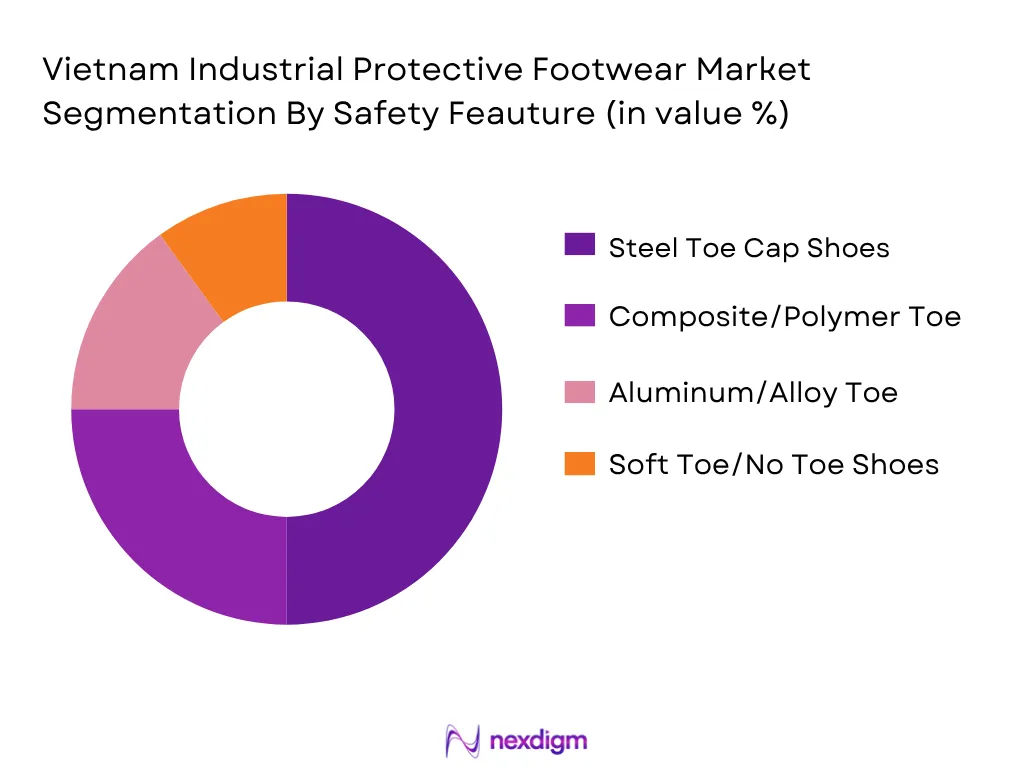
The market is also segmented based on safety features, primarily focusing on the type of toe-cap material. The steel toe-cap shoes dominate the market due to their robustness and excellent protection against impact, compression, and punctures. These shoes are the preferred choice in industries such as construction, mining, and manufacturing, where workers face high-risk environments involving heavy materials. Composite and polymer toe shoes have been gaining traction due to their lighter weight and resistance to electrical hazards, while aluminum/alloy toe shoes are favored in environments requiring lighter footwear with still adequate protection. Soft-toe shoes are often used in less hazardous environments.
Competitive Landscape
The Vietnam Industrial Protective Footwear market is dominated by a mix of local manufacturers and international players. The market’s competitive landscape is characterized by significant consolidation, with key players investing in product innovation and expanding their distribution networks. Local brands are often more cost-competitive, while global brands offer advanced product features such as ergonomic designs and specialized footwear for high-tech sectors like electronics. Major players are increasingly focusing on sustainability and eco-friendly materials in their products, aligning with growing consumer preferences for sustainable options.
| Company Name | Year Established | Headquarters | Product Portfolio | Distribution Network | End-User Clients | Revenue Growth |
| Viet Thang Service Trading Manufacturing | 2005 | Ho Chi Minh City | ~ | ~ | ~ | ~ |
| NBC ECOM Vietnam JSC | 2008 | Hanoi | ~ | ~ | ~ | ~ |
| Unisafe Vietnam Co., Ltd | 2010 | Ho Chi Minh City | ~ | ~ | ~ | ~ |
| Bata Industrials | 1970 | Netherlands | ~ | ~ | ~ | ~ |
| Safety Jogger | 1987 | Belgium | ~ | ~ | ~ | ~ |
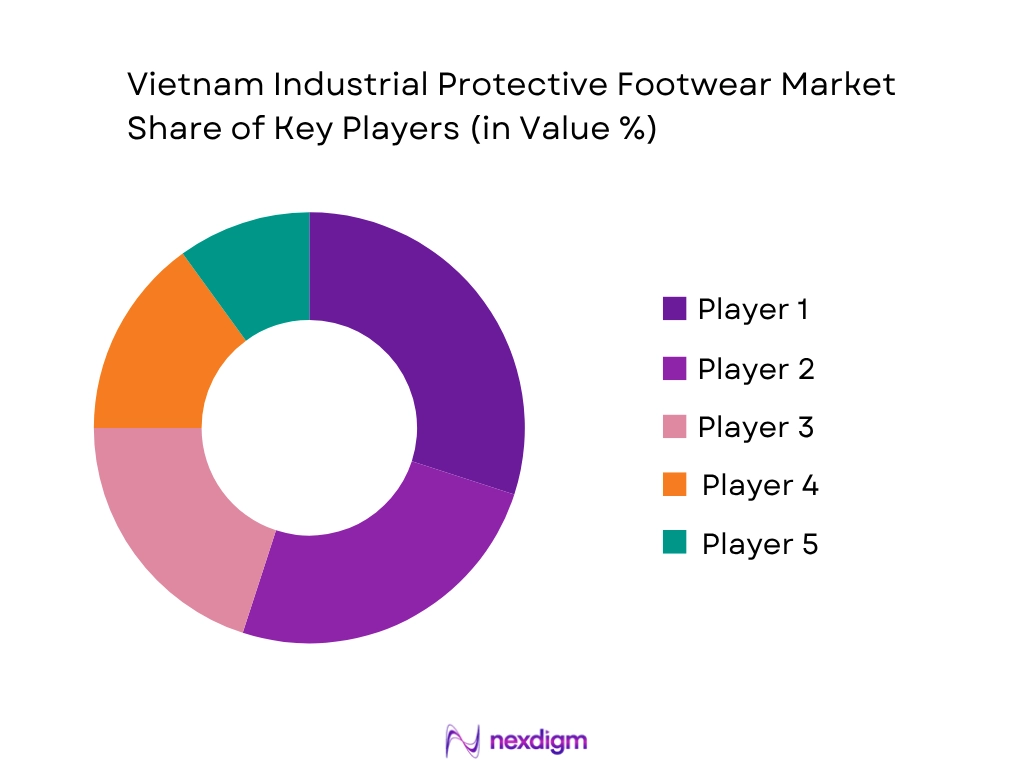
Vietnam Industrial Protective Footwear Market Analysis
Growth Drivers
Rapid Industrial Expansion & FDI Growth
Vietnam’s industrial sector has experienced significant growth, bolstered by increased Foreign Direct Investment (FDI). In 2024, Vietnam attracted USD 23 billion in FDI, according to the Ministry of Planning and Investment. The industrial sector remains the largest recipient of FDI, particularly in manufacturing, textiles, and electronics. As Vietnam continues to be a key player in global supply chains, this influx of investment fuels demand for industrial protective footwear, especially in sectors requiring high safety standards. The Vietnamese government is also enhancing industrial zones, further boosting manufacturing activities, which necessitates protective footwear for workers across various industries.
Infrastructure Development & Urbanization
Vietnam is undergoing rapid infrastructure development, particularly in urban areas. As of 2024, the government has allocated over USD 10 billion towards infrastructure projects, including transportation networks, urban development, and industrial parks. These developments are significantly boosting demand for industrial protective footwear, particularly in construction, logistics, and manufacturing sectors. The expansion of major cities like Ho Chi Minh City and Hanoi, with increased industrial and commercial activity, is a key driver. The demand for protective gear in these sectors, including footwear, grows as more urban construction projects and industrial plants come online.
Market Challenges
Intense Competition from Low-Cost Imports
Vietnam’s industrial protective footwear market faces strong competition from low-cost imports, especially from countries like China, India, and Indonesia. In 2024, Vietnam’s footwear imports are projected to reach USD 500 million, driven by the influx of cheaper alternatives from neighboring regions. These imports create pricing pressures on local manufacturers, especially in the mass-market segment. While locally produced footwear is often more expensive due to higher labor and material costs, the influx of cheaper imports with similar safety features challenges the growth of domestic players in the competitive industrial footwear market.
Fluctuating Raw Material Prices (Rubber, Leather, Metals)
Fluctuations in the prices of raw materials such as rubber, leather, and metals pose a significant challenge to the production of industrial protective footwear. In 2024, global rubber prices have seen volatility, with a rise of 15% over the past year due to supply chain disruptions and natural disasters in major producing countries. Similarly, the cost of leather and metals, which are essential for safety footwear production, have also been affected by global supply chain bottlenecks and inflationary pressures. These price increases increase the overall production cost of footwear and affect manufacturers’ profitability, making it difficult to maintain competitive pricing.
Opportunities
Growth of High-Tech Sectors
Vietnam is witnessing a significant rise in high-tech sectors, particularly electronics and electric vehicles (EV), driving demand for specialized industrial footwear. In 2024, the Vietnamese electronics industry is forecasted to surpass USD 100 billion in exports, a large portion of which comes from high-tech manufacturing plants requiring advanced protective gear. Additionally, the EV sector is expanding rapidly, with companies like Vinfast increasing production. These sectors often require footwear that provides electrostatic discharge (ESD) protection, presenting an opportunity for manufacturers to introduce specialized products, thus fueling future growth in the protective footwear market.
Government-Led Infrastructure & FDI Projects (New Factories, Ports)
The Vietnamese government is heavily investing in infrastructure projects, particularly in the development of new factories, ports, and transportation networks. In 2024, the government allocated USD 5 billion to develop and expand industrial parks in southern Vietnam, especially in regions like Ho Chi Minh City and Dong Nai, known for their high demand for protective footwear. Additionally, Vietnam is upgrading major ports to facilitate global trade, further spurring industrial growth. These projects increase demand for protective footwear across sectors such as logistics, manufacturing, and construction, providing a fertile ground for the market to expand in the coming years.
Future Outlook
Over the next decade, the Vietnam Industrial Protective Footwear market is poised for significant growth driven by the increasing adoption of safety regulations, expanding industrial activities, and a growing emphasis on worker safety across various sectors. The demand for innovative and sustainable safety footwear solutions is expected to rise, particularly in industries like electronics, manufacturing, and construction. Advancements in manufacturing processes, such as the use of lightweight and eco-friendly materials, are likely to further propel market growth. Additionally, the growing importance of e-commerce and digital distribution channels is expected to facilitate easier access to protective footwear across the country.
Major Players
- Viet Thang Service Trading Manufacturing Co., Ltd
- NBC ECOM Vietnam JSC
- Unisafe Vietnam Co., Ltd
- Thien Hoang Production & Trading Co., Ltd
- Thien Ky Tam Labor Protection Co., Ltd
- Bao Minh Garment Production JSC
- Huy Huy Trading One Member Co., Ltd
- Tan Quyen Phat Manufacturing & Trading Co., Ltd
- Eastern Asia Labour Safety Equipment Trading Co., Ltd
- Hans Safety Shoes
- Ziben Safety Shoes
- Sami Safety Shoes
- Bata Industrials
- Safety Jogger
- 3M Vietnam
Key Target Audience
- Industrial Equipment Manufacturers
- Investments and Venture Capitalist Firms
- Government and Regulatory Bodies (Ministry of Labor, Invalids and Social Affairs)
- Construction & Infrastructure Firms
- Oil & Gas Industry Operators
- Manufacturing Sector Companies
- Logistics & Warehousing Companies
- Retailers of Personal Protective Equipment (PPE)
Research Methodology
Step 1: Identification of Key Variables
This phase includes identifying key stakeholders in the Vietnam Industrial Protective Footwear market, followed by an ecosystem map to understand relationships. The research will involve secondary data from industry reports and databases to define crucial market variables such as product types, safety features, and market trends.
Step 2: Market Analysis and Construction
Here, historical data is compiled to assess the market dynamics in terms of value, volume, and growth rate. This analysis will help in constructing a market model to predict future trends. Both top-down and bottom-up approaches will be utilized to validate the data and ensure comprehensive market sizing.
Step 3: Hypothesis Validation and Expert Consultation
The research hypotheses will be validated by conducting expert interviews with industry leaders, manufacturers, and distributors. These consultations will provide operational insights, market challenges, and opportunities that will help refine the market model and forecast accuracy.
Step 4: Research Synthesis and Final Output
This phase involves synthesizing the data from expert consultations, industry reports, and primary research. Detailed insights into product segmentation, distribution channels, and regional performance will be integrated to deliver an accurate market report.

- Executive Summary
- Research Methodology (Market Definitions & Assumptions (Protective footwear scope, standards), Abbreviations & Terminology, Market Sizing Approach (top-down and bottom-up), Data Collection, Secondary data, Industry databases, Primary Research (Expert interviews, surveys), Data Triangulation & Validation, Limitations and Future Outlook)

- Definition and Scope
- Market Genesis
- Timeline of Key Developments
- Supply Chain and Value Chain Analysis
- Industry Regulatory Framework

- Growth Drivers(Rapid Industrial Expansion & FDI Growth, Infrastructure Development & Urbanization, Stringent Workplace Safety Regulations (labor laws, QC standards), Rising Worker Safety Awareness and PPE Adoption)
- Market Challenges(Intense Competition from Low-Cost Imports (price pressures), Fluctuating Raw Material Prices (rubber, leather, metals), Counterfeit/Non-compliant Products (quality enforcement issues), Inadequate Safety Awareness in Smaller Enterprises)
- Opportunities(Growth of High-Tech Sectors (electronics, battery factories needing ESD footwear), Government-Led Infrastructure & FDI Projects (new factories, ports), Export Potential under FTAs (CPTPP, EVFTA), Development of Local Brands and OEM Capabilities)
- Trends(Shift to Sustainable/Eco-Friendly Materials (green manufacturing), Rising E-commerce & Digital Sales Channels, Product Innovation (lighter-weight safety footwear, ergonomic designs), Consolidation and Partnerships (joint ventures, licensing)
- Government Regulation(National Safety Standards – QCVN 36:2019 (Safety Shoes), Import, Tariffs and Trade Agreements (FTA impact on footwear duties), Quality Inspection & Labeling Requirements)
- SWOT Analysis (Strengths, Weaknesses, Opportunities, Threats overview)
- Stakeholder Ecosystem (Regulators, OEMs, Distributors, Industry Associations)
- Porter’s Five Forces Analysis (Competitive rivalry, supplier/buyer power, threats)
- Competition Ecosystem (Market structure, alliance networks)

- By Value (2020-2025)
- By Growth (2020-2025)
- By Volume (2020-2025)
- By Average Selling Price (2020-2025)

- By Product Type (In Value %)
Safety Shoes
Safety Boots (ankle/high-cuts)
Safety Sneakers / Composite Toe Shoes
Waterproof/Rubber Boots
Insulated boots
Metatarsal guards - By Safety Feature (In Value%)
Steel Toe Cap Shoes
Aluminum/Alloy Toe Shoes
Composite/Polymer Toe Shoes
No Toe/Soft Toe Shoes - By End-Use Industry (Value %)
Construction & Infrastructure
Manufacturing & Industrial Plants
Oil, Gas & Petrochemical
Mining, Energy & Utilities
Logistics/Warehousing - By Distribution Channel (Value %)
Industrial Distributors & Wholesalers
Authorized PPE Retailers
E-commerce/Online Sales Channels
Direct Corporate Sales
Government/Institutional Procurement - By Region (Value %)
Northern Vietnam
Central Vietnam
Southern Vietnam
Mekong Delta

- Market Share of Major Players (By value By volume, By Product Type)
- Cross-Comparison Parameters (for major companies) – including: Company Overview (HQ, founding year), Product Portfolio (footwear categories),
- Manufacturing/Production Capacity, Distribution Network (dealers, exporters), Key End-User Clients (sectors served), Pricing Strategy & Margins, Annual Revenues & Market Share, Certifications & Compliance (ISO, ASTM), R&D and Innovation, etc.
- SWOT Analysis of Major Companies
- Pricing Analysis (by SKU and channel)
- Detailed Profiles of Major Companies
Viet Thang Service Trading Manufacturing Co., Ltd
NBC ECOM Vietnam JSC
N&C Safety Co., Ltd
Unisafe Vietnam Co., Ltd
Thien Hoang Production & Trading Co., Ltd
Thien Ky Tam Labor Protection Co., Ltd
Bao Minh Garment Production JSC
Huy Huy Trading One Member Co., Ltd
Tan Quyen Phat Manufacturing & Trading Co., Ltd
Eastern Asia Labour Safety Equipment Trading Co., Ltd
Hans Safety Shoes
Ziben Safety Shoes
Sami Safety Shoes
Bata Industrials
Safety Jogger

- Market Demand & Utilization (Usage rates in key industries – manufacturing, construction)
- Customer Segmentation & Purchasing Power (Budget allocations by sector, company size)
- Regulatory & Compliance Requirements (PPE procurement policies by industry)
- Needs, Desires & Pain Points (Comfort vs protection trade-offs, fitting, cost concerns)
- Decision-Making Process (Procurement authority, buying criteria, tendering process)

- By Value (2026-2035)
- By Volume (2026-2035)
- By Average Price Forecast (2026-2035)


 Request a Sample
 Ask for Customization
 Get a Quote
 Enquire Now