

 Download PDF
Market Overview
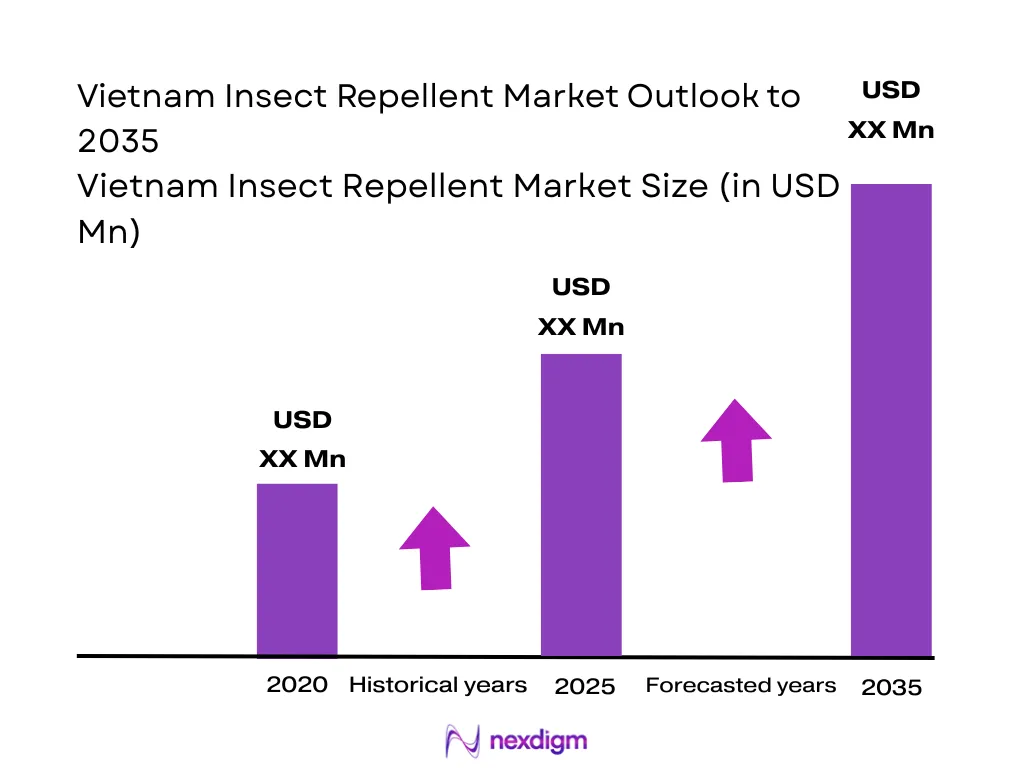
The Vietnam insect repellent market is valued at USD ~ million, based on independent revenue tracking for the mosquito repellent segment that represents the majority of total repellent usage. This valuation reflects market recordings from 2025, supported by worsening vector‑borne disease incidence and increasing consumer spending on health protection products. Demand is driven by continual outbreaks of mosquito‑borne diseases such as dengue fever, chikungunya, and occasional Zika virus clusters, coupled with growing consumer awareness of health risks tied to insect bites. The tropical and humid climate across Vietnam creates conducive breeding conditions for mosquitoes, sustaining year‑round demand for repellents, while rising household disposable income encourages regular preventive purchases rather than sporadic seasonal use. These health risk factors, combined with expanding retail access via modern trade and e‑commerce platforms, contribute to stable revenue growth for insect repellent products across key urban and peri‑urban markets.
Demand for insect repellents in Vietnam is concentrated in regions with high population density, tropical climate, and elevated vector‑borne disease prevalence. Urban centres such as Hanoi, Ho Chi Minh City, Da Nang, and Can Tho dominate consumption due to higher household income levels, stronger retail network presence, and frequent travel and outdoor activity patterns among residents. These cities also report more organised retail channels — supermarkets, pharmacies, and dedicated personal care outlets — ensuring broad product availability. In rural delta and coastal regions, high humidity and permanent standing water make mosquitoes a persistent nuisance and health risk, prompting sustained repellent use despite lower overall purchasing power. The convergence of climatic exposure, dense populations, and expanding retail and distribution infrastructures explains why these dominant regions remain key markets for insect repellent products in Vietnam.
Market Segmentation
By Product Type
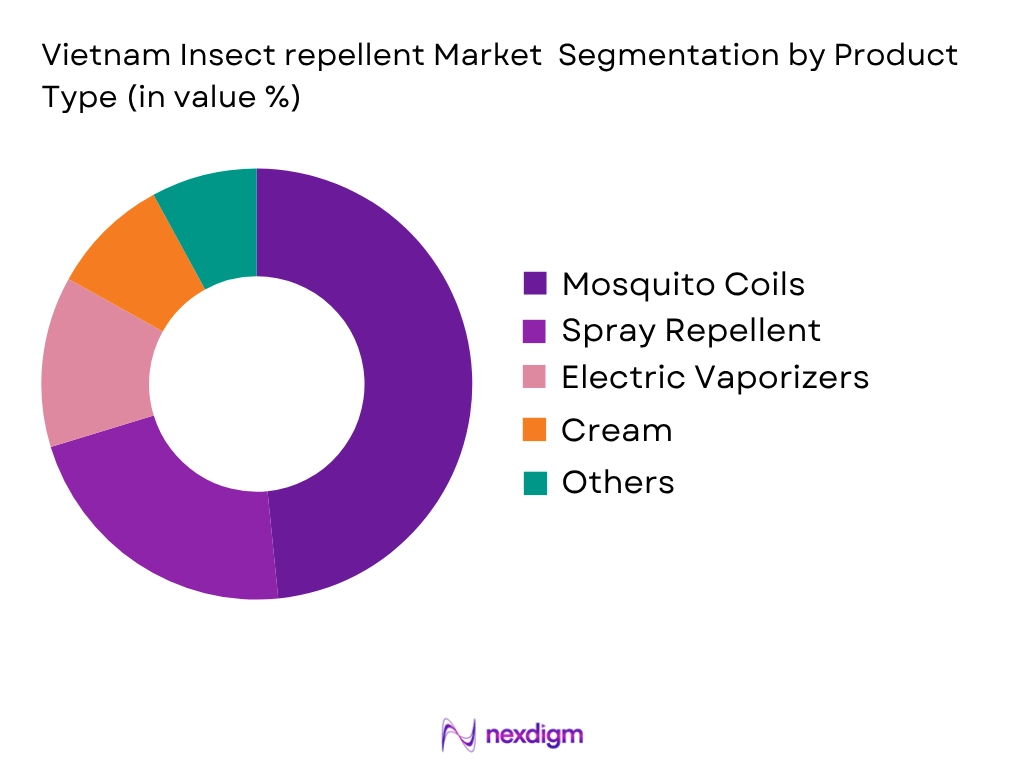
The Vietnam insect repellent market is strongly led by mosquito coils. Coils maintain their dominance because they are widely recognised as cost‑effective solutions and are deeply entrenched in household preventive behaviours across both urban and rural settings. Historically, coils have been the most accessible format due to low unit price points, simple usage requirements, and ready availability in traditional trade outlets. Consumers often pair coil usage with open‑window living practices in tropical climates, reinforcing their adoption. Although contemporary products such as sprays and electric vaporizers offer convenience and cleaner operation, the entrenched familiarity and affordability of coils sustain their substantial share. Sprays are increasingly preferred by urban professionals seeking portability for outdoor use, while electric vaporizers are more common in microwave‑equipped households prioritising indoor protection. Emerging wearable and portable devices appeal to younger, active consumer segments seeking convenience during travel and outdoor activities, but their impact remains more modest relative to traditional coil formats.
By Distribution Channel
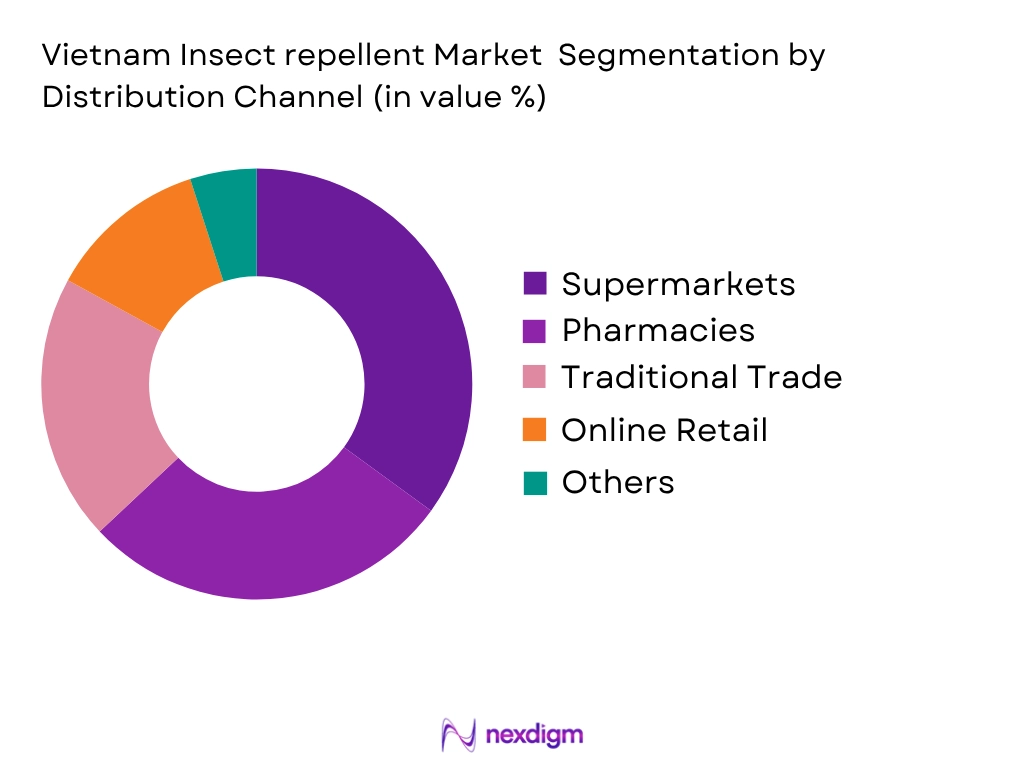
By distribution channel, supermarkets and hypermarkets lead the Vietnam insect repellent market due to evolving consumer shopping behaviours and retail modernisation. The expansion of organised retail across major urban centres provides broad shelf visibility for national and international brand portfolios, enabling consumers to compare products easily and purchase on impulse. Pharmacies and drug stores also hold a strong position, particularly for premium and natural/DEET‑free products that consumers associate with safety and efficacy. Traditional trade contributes appreciably as well, especially in peri‑urban and rural areas where weekly markets and local kirana shops are primary purchase points for value‑oriented consumers. Online retail penetration is rising rapidly as e‑commerce adoption grows, supported by improved logistics and digital payment infrastructure, allowing consumers to access a wider range of product formats and brands with convenience. Specialist stores — including health and personal care boutiques — capture niche segments but represent a smaller share due to limited footprint relative to broader retail networks.
Competitive Landscape
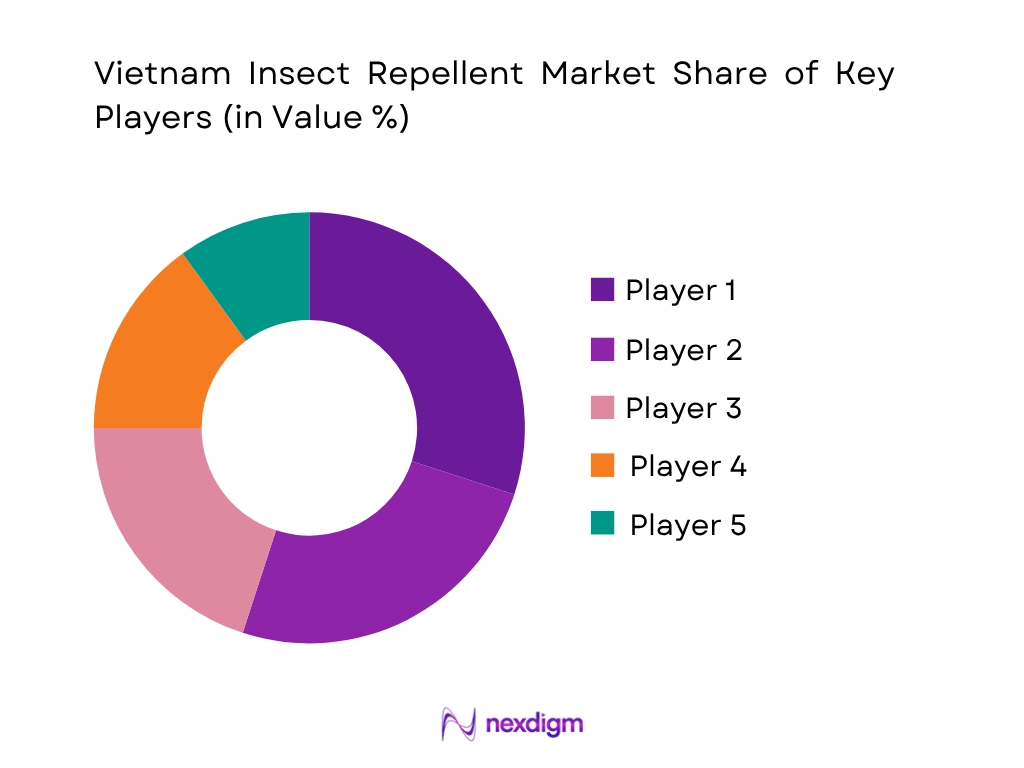
The Vietnam insect repellent market comprises domestic brands competing with multinational firms in product innovation, active ingredient diversity, and distribution reach. The competitive environment involves traditional coil producers, herbal/natural repellent formulators, and international personal care companies. The Vietnam insect repellent market is moderately consolidated, with several established local brands and multinational corporations competing on product efficacy, price, and channel presence. Local companies with deep distribution networks across supermarkets, pharmacies, and traditional trade coexist with global firms leveraging technology, brand equity, and eco‑friendly formulations to capture urban consumers. Competitive differentiation emerges from active ingredient innovation, natural formulation options, and omni‑channel availability.
| Player | Establishment Year | Headquarters | Product Range Depth | Active Ingredient Innovation | Retail Penetration | Online Presence | Regulatory Compliance | Format Innovation |
| SC Johnson & Son | 1886 | Racine, USA | ~ | ~ | ~ | ~ | ~ | ~ |
| Godrej Consumer Products Ltd | 1897 | Mumbai, India | ~ | ~ | ~ | ~ | ~ | ~ |
| Hindustan Unilever Ltd | 1933 | Mumbai, India | ~ | ~ | ~ | ~ | ~ | ~ |
| Remos | 2000s | Vietnam | ~ | ~ | ~ | ~ | ~ | ~ |
| Soffell | 1970s | Japan Region | ~ | ~ | ~ | ~ | ~ | ~ |
Vietnam Insect Repellent Market Overview
Market Drivers
Vector‑borne Disease Landscape and Consumer Response
Vietnam’s insect repellent demand is closely linked to vector‑borne disease prevalence, especially dengue fever, which directly motivates protective consumer behaviour. From January through June, health surveillance records show 30,265 dengue fever cases with 3 recorded deaths, illustrating the substantial disease burden that attracts consumer preventive spending on repellents such as sprays, coils, and lotions. Mosquito activity is particularly intense in the rainy season due to warm, humid conditions that sustain breeding habitats. Although the number of dengue cases in 2025 declined compared with previous years, the peak seasonal incidence remains a primary trigger for households to maintain continual usage of repellents as part of routine health protection behaviour. Public health agencies emphasise vector control measures, which amplify the visibility of repellents as an essential commodity for families and institutions. Repellent usage is also influenced by disease awareness campaigns that emphasise eliminating standing water and adopting personal protection practices, which underpin regular purchasing patterns among consumers in affected regions.
City Dynamics and Demand Patterns
Insect repellent consumption in Vietnam is concentrated in densely populated urban and peri‑urban areas where environmental exposure and lifestyle dynamics accelerate usage. With a total population of 100,987,686, the country’s largest cities — including Hanoi, Ho Chi Minh City, Da Nang, and Can Tho — harbour significant numbers of residents who are exposed to frequent mosquito nuisances due to tropical climatic conditions, open water systems, and dense housing patterns. These metropolises also serve as economic hubs where disposable income levels are supported by a GDP of USD 476,388,230,307, reflecting broader spending capacity for health and wellness products. Urban consumers are more likely to purchase repellents through supermarkets, pharmacies, and online channels, which are more developed compared with rural distribution networks. Commercial establishments such as hotels and offices in these cities also procure repellents for guest comfort and employee safety. The concentration of retail infrastructure and heightened disease awareness in urban centres consolidates demand, making them dominant markets for repellent products in Vietnam.
Market Challenge
Dependence on Seasonal Demand and Climate Variability
A key challenge for the Vietnam insect repellent market is its reliance on seasonal disease cycles driven by climate patterns, which complicates demand forecasting and supply chain management. Dengue fever typically peaks during the rainy season when temperatures and humidity levels provide optimal conditions for mosquito breeding, prompting surges in repellent purchases. Although 30,265 cases were recorded in the first half of the year, the concentration of vector‑borne incidents within defined seasonal windows limits steady year‑round sales momentum. Repellent manufacturers and distributors must manage inventory to align with these spikes, often resulting in excess capacity during off‑peak months. Seasonal purchasing behaviour also increases marketing costs for companies that must educate or remind consumers about product utility primarily during high‑incidence periods. Furthermore, climate variability — such as fluctuating rainfall patterns and unexpected dry spells — can shift vector activity timelines, making inventory planning and distribution logistics more complex. These conditions create revenue unpredictability and heighten operational risk for market participants, especially smaller enterprises with limited working capital.
Distribution and Accessibility Constraints in Rural Regions
Despite urban demand concentration, the insect repellent market faces challenges in ensuring widespread accessibility in rural provinces, which house large portions of Vietnam’s population. With over 100 million residents distributed across urban and rural segments, retail penetration remains uneven: modern trade outlets such as supermarkets and pharmacies are predominantly urban, while rural areas often rely on traditional trade and informal supply chains. This imbalance restricts access to diverse repellent formats and branded options for rural consumers who may benefit from protection against mosquitoes and other insects. Limited electricity and cold chain infrastructure in remote villages complicate distribution of electric vaporizers and premium product formats. Moreover, consumer awareness campaigns that reinforce the importance of repellents are less prevalent outside urban centres, reducing demand stimulation among rural households. These accessibility challenges constrain overall market growth by excluding large demographic segments and impede equitable market penetration across geographic strata. Effective rural channel strategies and partnership models are needed to bridge this gap and support inclusive market expansion.
Opportunities
Rising Household Spending Capacity and Economic Growth
Economic conditions in Vietnam support increasing household expenditure on non‑essential health and wellness products, including insect repellents. National economic statistics report a GDP of USD 476.39 billion in 2024 with a GDP per capita of USD 4,717.3, reflecting rising personal incomes and consumer confidence in discretionary spending categories. Robust macroeconomic performance, coupled with low unemployment and stable inflation, enhances purchasing power across urban and semi‑urban communities. As disposable income rises, households are more likely to invest in preventive health solutions, especially those perceived to protect family wellbeing. Growing personal remittances and net inflows of foreign direct investment also contribute to increased consumer spending capacity. The health and wellness category, which includes repellents, can leverage this economic strength by introducing premium, natural, and extended‑use formats that appeal to higher‑income groups. Differences in living standards between urban and rural consumers offer opportunities to customise product portfolios, driving broader market growth.
Government Public Health Initiatives
Government campaigns targeting vector-borne disease prevention drive awareness and adoption of insect repellents. The Ministry of Health promotes elimination of breeding sites and personal protective measures in dengue-endemic areas, with over 30,000 reported cases prompting targeted outreach. These initiatives increase product visibility and reinforce the role of repellents as essential health protection, especially in urban and high-risk zones. Alignment with public health messaging creates growth opportunities for brands offering natural, safe, and effective solutions.
Future Outlook
Over the forecast period, the Vietnam insect repellent market is expected to continue expanding driven by heightened public health awareness, innovation in active ingredients (including natural and botanical solutions), and growing consumption across urban and rural segments. Increasing digital commerce adoption and modern retail expansion will further strengthen distribution reach, enabling brands to leverage data analytics for targeted marketing and product design. Improved consumer education on vector‑borne diseases and prevention measures will sustain demand stability beyond seasonal peaks. Development of wearable and long‑lasting repellent formats tailored for lifestyle use can attract younger consumers, while regulatory emphasis on product safety and eco‑friendly ingredients will shape future market offerings.
Major Players
- SC Johnson & Son
- Godrej Consumer Products Ltd
- Hindustan Unilever Ltd
- Remos
- Soffell
- Spectrum Brands Holdings
- Dabur Consumer Health
- Vcare Bio Sciences
- AquaGuard Co.
- BioShield Ventures
- Pharma Pacific Groups
- NatureShield Inc.
- Mosfly International
Key Target Audience
- FMCG Product Distributors and Retail Chain Buyers
- Investments and Venture Capitalist Firms
- Personal Care and Household Product Manufacturers
- Supermarket and Pharmacy Category Managers
- Government and Regulatory Bodies
- E‑commerce Marketplace Procurement Leads
- Specialty Store Procurement Heads
- Institutional Buyers
Research Methodology
Step 1: Identification of Key Variables
This phase involved mapping all stakeholders in the Vietnam insect repellent ecosystem, including manufacturers, distributors, retailers, and regulatory authorities, using a combination of secondary sources and proprietary databases to define product categories, consumer segments, and distribution channels.
Step 2: Market Analysis and Construction
Historical revenue and volume data were aggregated from verified market trackers and industry reports to build the base 2024 market size. Channel-wise analysis accounted for modern and traditional trade penetration, while product format sales were triangulated from retail sales tracking data.
Step 3: Hypothesis Validation and Expert Consultation
Preliminary hypotheses regarding market drivers, seasonal demand patterns, and consumer preferences were validated through interviews with industry professionals, regulatory representatives, and retail category managers to refine inputs on adoption behaviours and competitive positioning.
Step 4: Research Synthesis and Final Output
Synthesised findings were reviewed against independent retail audit data and public health surveillance indicators. Cross‑verification ensured consistency across segments, supporting the construction of a validated market outlook and actionable insights for strategic planning.

- Executive Summary
- Research Methodology (Market Definitions and Assumptions Insect Definition Framework), (Abbreviations, Revenue Calculation Approach Retail + Trade HIS, Volume Estimation Model Units Sold + Channel Tracking, Data Source Matrix, Supply Chain Validation Approach, Quality Check and Limitations)

- Definition and Scope
- Genesis of Market Adoption (Consumer Health Behavior in Tropical Zones)
- Seasonal Vector‑Borne Demand Dynamics
- Product Innovation Landscape
- Regulatory and Safety Compliance Environment

- Drivers (Vector‑Borne Disease Awareness, Purchased Protection vs Passive Control, Disposable Income Growth, Lifestyle Shifts toward Outdoor Activity)
- Restraints (Seasonal Demand Volatility, Distribution Inequities, Raw Material Price Fluctuation, Regulatory Barriers)
- Trends (Natural/Plant‑Based Formulations, Multi‑Functional Devices, Digital Marketing Adoption, Multi‑Channel Retailing)
- Regulatory Framework (Product Safety Standards, Labeling & Ingredient Compliance, Import/Export Regulation)
- SWOT Overview
- Porter’s Five Forces
- Value Chain & Ecosystem – Suppliers to Retailers

- By Revenue (2020-2025)
- By Consumption Volume (2020-2025)
- By Average Price by Product Category (2020-2025)
- By Urban vs Rural Revenue Split (2020-2025)

- By Insect Type (In Value %)
Mosquito Repellents
Fly Repellents
Bug
Other Insect Repellents - By Product Type (In Value %)
Coils
Spray Repellents
Lotion
Vaporizers - By Distribution Channel (In Value %)
Supermarkets
Pharmacies
Traditional Trade
E‑commerce - By End‑User (In Value %)
Household Residential
Commercial Offices
Hospitality & Tourism
Healthcare Institutions

- Market Positioning by Revenue & Volume
- Cross‑Comparison Parameters (Company Overview, Product Portfolio Breadth, Active Ingredient Mix, R&D Intensity, Distribution Reach, Channel Partnerships, Online vs Offline Penetration, Regulatory Compliance Profile)
- SWOT Analysis of Key Players
- Pricing & SKU Level Price Bands
- Key Company Profiles
Enesis Group
Godrej Consumer Products Ltd
Hindustan Unilever Ltd
Reckitt Benckiser
Vikram Healthcare
ITC Ltd
Henkel AG & Co.
Spectrum Brands Holdings
Vcare Bio Sciences
AquaGuard Co.
BioShield Ventures
Pharma Pacific Groups
NatureShield Inc.
Pacific BioGuard

- Consumer Behavior & Utilization Patterns
- Purchasing Power Indices & Price Sensitivity
- Indoor vs Outdoor Protection Demand
- Institutional Procurement Requirements
- Path‑to‑Purchase & Decision Drivers

- Revenue Projections (2026-2035)
- Consumption Volume Outlook (2026-2035)
- By Average Price by Product Category (2026-2035)
- By Urban vs Rural Revenue Split (2026-2035)


 Request a Sample
 Ask for Customization
 Get a Quote
 Enquire Now