
 Download PDF
Market Overview
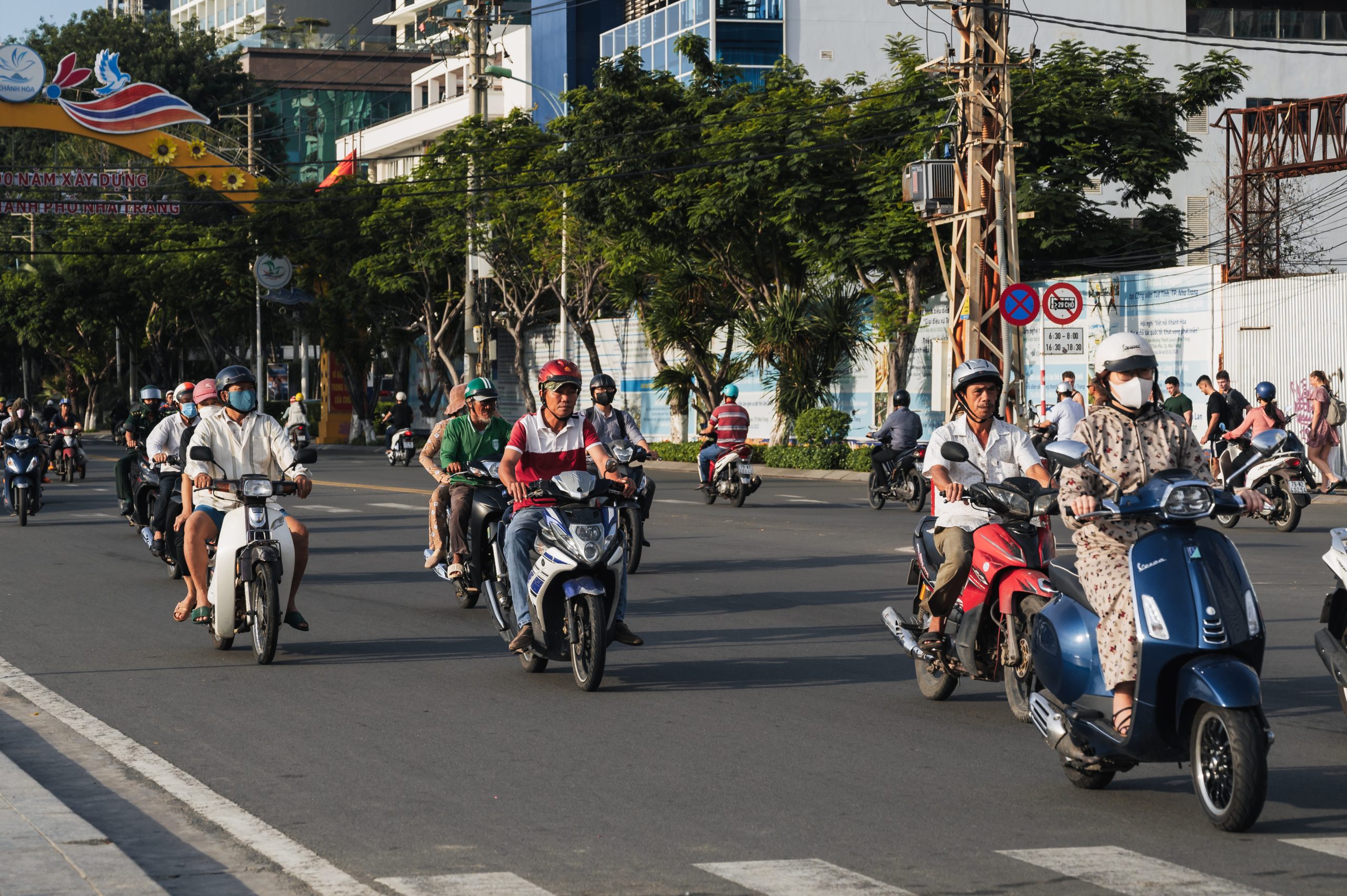
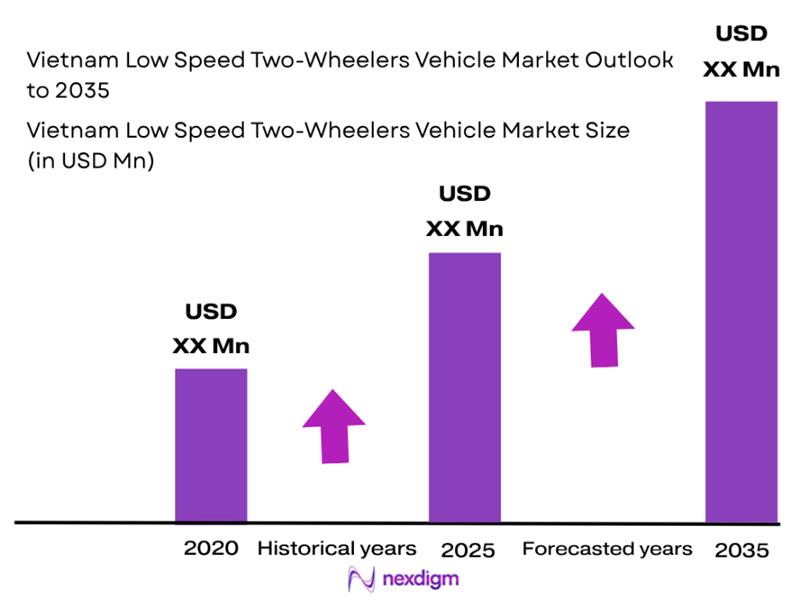
The Vietnam Low Speed Two-Wheelers Vehicle Market is valued at USD 410 million in 2024, based on analysis of electric scooters, electric motorcycles, electric bicycles, and low-powered two-wheel mobility solutions. The market is supported by Vietnam’s large two-wheeler ecosystem, where approximately 2.9 million motorcycles were sold in 2024, creating a strong replacement opportunity for electric and low-speed alternatives. Electric two-wheeler adoption is further supported by lower operating costs, increasing fuel prices, urban congestion, and government initiatives promoting cleaner transportation. VinFast delivered 70,977 electric scooters and e-bikes in 2024, demonstrating increasing consumer acceptance of electric mobility solutions. The Vietnam Low Speed Two-Wheelers Vehicle Market is primarily concentrated in Ho Chi Minh City, Hanoi, Da Nang, and Hai Phong, where population density, traffic congestion, and short-distance commuting requirements create strong demand. Ho Chi Minh City and Hanoi dominate due to their extensive motorcycle usage, developed retail networks, and increasing focus on reducing urban emissions. Hanoi, with nearly 7 million motorcycles, represents a major transition opportunity toward electric mobility as authorities implement measures encouraging cleaner transportation. Ho Chi Minh City benefits from strong demand among commuters, delivery operators, and commercial mobility users due to its dense urban structure.
Market Segmentation
By Vehicle Type
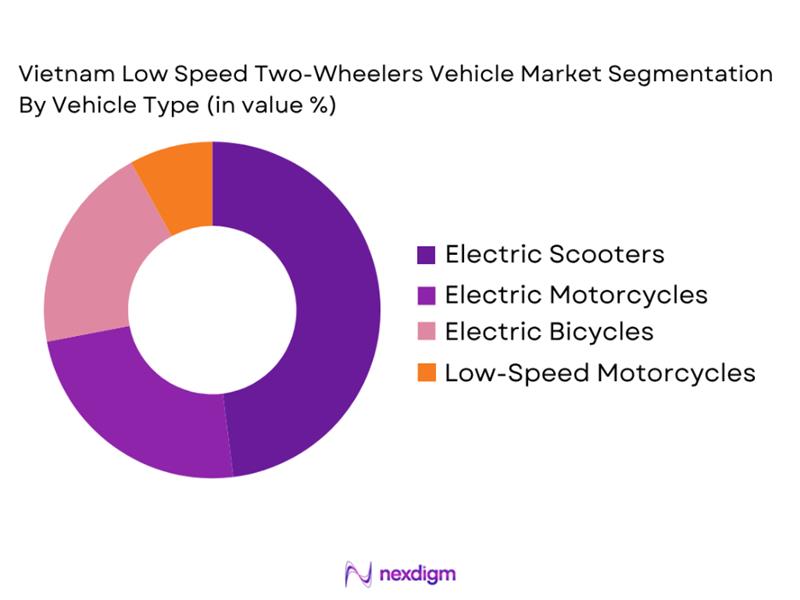
The Vietnam Low Speed Two-Wheelers Vehicle Market is segmented by vehicle type into electric scooters, electric motorcycles, electric bicycles, and low-speed motorcycles. Electric scooters hold the dominant market share in Vietnam due to their affordability, compact design, and suitability for urban commuting. Consumers including students, office employees, and urban households increasingly prefer electric scooters because they require lower maintenance expenses and provide economical daily transportation. Local manufacturers such as VinFast, Pega, and Dat Bike have expanded their product offerings, improving availability across different price categories. The growing availability of lithium-ion battery-powered models with improved range has strengthened consumer confidence. Electric scooters also benefit from Vietnam’s existing motorcycle culture because they provide a familiar riding experience while reducing fuel dependency.
By Application Type
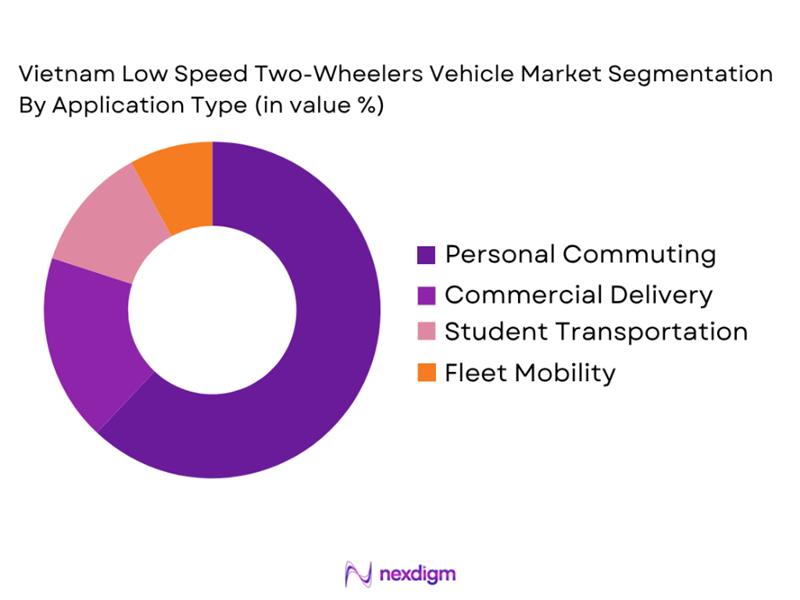
The Vietnam Low Speed Two-Wheelers Vehicle Market is segmented by application type into personal commuting, commercial delivery, student transportation, and fleet mobility. Personal commuting dominates the market due to Vietnam’s long-established dependence on two-wheelers as the primary transportation mode for daily travel. Low-speed electric vehicles are preferred for personal usage because of their lower acquisition cost, simple operation, and suitability for short-distance urban movement. Increasing environmental awareness among younger consumers has encouraged adoption of electric scooters and bicycles for daily mobility. Commercial delivery is also emerging as a significant application segment due to the expansion of food delivery platforms and last-mile logistics requirements. However, personal transportation remains the largest demand contributor because motorcycles continue to represent an essential mobility solution for Vietnamese households.
Competitive Landscape
The Vietnam Low Speed Two-Wheelers Vehicle Market is characterized by competition between domestic electric mobility manufacturers and international electric two-wheeler brands. Local companies such as VinFast, Pega, and Dat Bike benefit from domestic manufacturing capabilities and established consumer understanding, while international brands compete through advanced battery technology, product innovation, and global expertise. The competitive environment is shaped by product affordability, battery performance, dealer network expansion, after-sales support, and technological differentiation.
| Company | Establishment Year | Headquarters | Product Portfolio | Battery Technology | Distribution Network | Manufacturing Capability | Target Customers | Strategic Focus |
| VinFast | 2017 | Hanoi, Vietnam | ~ | ~ | ~ | ~ | ~ | ~ |
| Pega | 2012 | Hanoi, Vietnam | ~ | ~ | ~ | ~ | ~ | ~ |
| Dat Bike | 2019 | Vietnam | ~ | ~ | ~ | ~ | ~ | ~ |
| Yadea | 2001 | Wuxi, China | ~ | ~ | ~ | ~ | ~ | ~ |
| Niu Technologies | 2014 | Beijing, China | ~ | ~ | ~ | ~ | ~ | ~ |
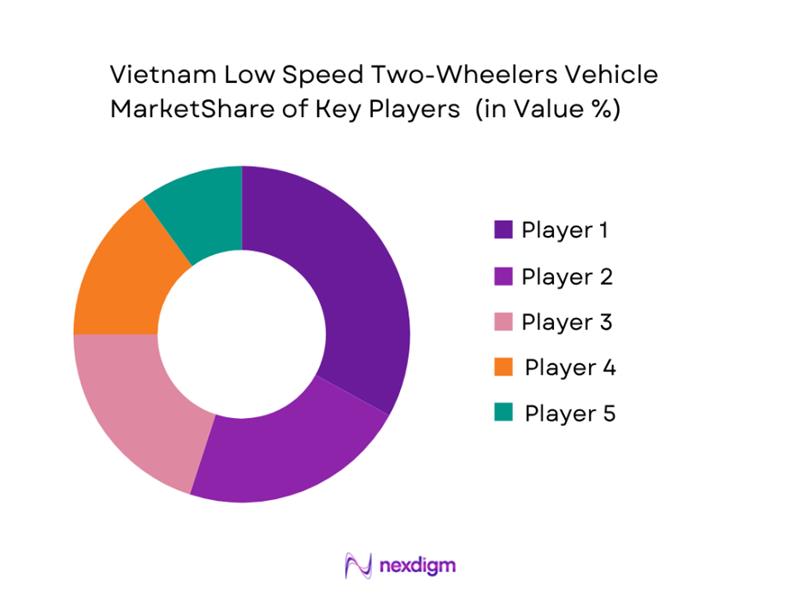
Vietnam Low Speed Two-Wheelers Vehicle Market Analysis
Market Growth Drivers
Urban Traffic Congestion and Demand for Compact Urban Mobility
Urban traffic congestion is increasing demand for low speed two-wheelers in Vietnam as consumers seek compact, affordable, and energy-efficient alternatives for short-distance travel. Vietnam’s urban population reached approximately 38.6 million people, according to World Bank urban development indicators, increasing pressure on transportation infrastructure in major cities such as Ho Chi Minh City and Hanoi. Ho Chi Minh City has more than 9 million registered residents, while the city continues to experience high vehicle density, creating demand for smaller mobility solutions suitable for congested streets. The World Bank reported that Vietnam’s GDP growth remained strong, reaching around 7.1 trillion VND billion in constant economic output terms during recent assessments, supporting higher mobility demand among urban households. Low speed electric two-wheelers benefit from their smaller footprint, lower energy consumption, and suitability for dense urban environments. Increasing investment in urban transportation improvements and sustainable mobility initiatives by Vietnamese authorities is encouraging adoption of lightweight electric vehicles for commuting, student transportation, and short-distance travel. The expansion of urban areas and rising movement of people toward metropolitan regions continue to strengthen demand for practical low-speed mobility solutions.
Increasing Electric Mobility Adoption and Government Support for Green Transportation
Vietnam’s transition toward electric mobility is accelerating due to environmental commitments, rising awareness of emissions reduction, and government initiatives supporting cleaner transportation. Vietnam has committed to achieving net-zero carbon emissions by 2050, creating policy momentum for electrification across transportation segments. According to the International Energy Agency, electric vehicle adoption in Southeast Asia has expanded rapidly, supported by increasing government incentives and infrastructure development. Vietnam recorded more than 1.5 million electric motorcycles and electric bicycles operating on roads, reflecting growing consumer acceptance of electric two-wheelers. The Ministry of Transport has promoted sustainable transportation policies focused on reducing fossil fuel dependence and improving urban air quality. Vietnam’s electricity generation capacity exceeded 80 GW according to national energy statistics, providing a stronger foundation for electric mobility expansion. The increasing availability of domestic electric vehicle manufacturers and improvements in battery technology are supporting wider consumer adoption of low-speed electric two-wheelers. Government initiatives related to emission reduction, renewable energy integration, and sustainable urban transportation are expected to continue strengthening the market ecosystem for electric low-speed vehicles.
Market Challenges
Limited Charging Infrastructure and Battery Replacement Concerns
The Vietnam low speed two-wheelers vehicle market faces challenges due to limited charging infrastructure availability and concerns regarding battery replacement cycles. Although electric two-wheelers require less charging infrastructure compared with electric cars, accessibility remains an important factor affecting consumer confidence. Vietnam’s electricity demand has increased significantly with economic development, with national electricity consumption exceeding 280 billion kWh according to Vietnam Electricity (EVN), highlighting growing pressure on energy infrastructure. Battery-related concerns remain significant because low-speed two-wheelers are highly dependent on battery performance, charging availability, and replacement accessibility. Lithium-ion battery adoption is increasing, but many existing electric two-wheelers continue using conventional battery systems that require periodic replacement. According to Vietnam’s Ministry of Industry and Trade, the country’s energy transition requires improvements in electricity distribution networks and renewable energy integration. Limited public charging points, lack of standardized battery exchange systems, and varying battery quality among manufacturers create uncertainty among consumers. The absence of widespread battery recycling infrastructure also creates environmental concerns, making battery lifecycle management an important challenge for long-term market development.
Consumer Awareness Gap and Competition from Conventional Motorcycles
The Vietnam low speed two-wheelers vehicle market faces strong competition from conventional motorcycles due to Vietnam’s deeply established motorcycle ownership culture and consumer familiarity. Vietnam has more than 77 million registered motorcycles, according to the Ministry of Transport, making motorcycles the dominant personal transportation mode across urban and rural areas. Consumers often prioritize higher speed capability, longer travel range, and established servicing networks offered by traditional motorcycles. Although low-speed electric vehicles provide lower operating requirements and environmental benefits, awareness regarding battery technology, maintenance requirements, and long-term ownership benefits remains limited among some consumer groups. Vietnam’s population exceeded 100 million people according to General Statistics Office data, creating a large transportation market but also increasing competition among different mobility solutions. In addition, variations in product quality, battery performance, and safety standards across low-speed vehicle manufacturers create challenges in building consumer trust. The absence of complete standardization in product specifications and after-sales services makes it difficult for new electric mobility brands to compete against established motorcycle manufacturers with extensive dealer networks and service infrastructure.
Market Opportunities
Battery Swapping Networks and Fleet Electrification
Battery swapping networks and fleet electrification represent significant opportunities for Vietnam’s low speed two-wheelers market as commercial mobility users increasingly require efficient and reliable transportation solutions. Vietnam’s logistics and delivery sector has expanded alongside digital commerce growth, with the World Bank reporting continued development of Vietnam’s digital economy and urban service industries. The country has more than 100 million population, creating strong demand for last-mile delivery services in densely populated cities. Battery swapping solutions can reduce charging downtime and improve operational efficiency for delivery riders, shared mobility operators, and commercial fleets. Vietnam’s government has also emphasized energy transition through policies promoting cleaner transportation systems and reduced fossil fuel dependency. The increasing presence of electric vehicle manufacturers and battery technology providers creates opportunities for developing standardized battery exchange ecosystems. Fleet operators can benefit from predictable vehicle operations, reduced downtime, and improved energy management. Low-speed electric two-wheelers are particularly suitable for delivery applications because of their compact size and suitability for short-distance urban routes. Expansion of commercial electric fleets can accelerate adoption beyond individual consumers and create a broader ecosystem for battery-based mobility solutions.
Rural Mobility Expansion and Smart Connected Electric Vehicles
Rural mobility expansion and integration of smart connected technologies provide growth opportunities for Vietnam’s low speed two-wheelers market by addressing transportation needs beyond major metropolitan areas. Vietnam’s rural population remains significant, with approximately 61 million people living in rural areas according to World Bank population distribution indicators. Low-speed electric vehicles can support affordable mobility in smaller towns and rural communities where short-distance transportation requirements are high. Increasing smartphone adoption also creates opportunities for connected vehicle features such as digital monitoring, navigation assistance, battery tracking, and remote diagnostics. Vietnam had more than 78 million internet users according to digital economy indicators, supporting greater acceptance of technology-enabled mobility solutions. Manufacturers are increasingly developing lightweight electric scooters and bicycles equipped with smart features to attract younger consumers and technology-oriented users. Rural electrification improvements have strengthened the foundation for electric vehicle adoption, with Vietnam achieving electricity access coverage of nearly universal household connectivity according to World Bank energy access data. These developments create opportunities for manufacturers to expand beyond urban markets and introduce connected, affordable, and efficient low-speed mobility solutions across wider geographic regions.
Future Outlook
Over the forecast period, the Vietnam Low Speed Two-Wheelers Vehicle Market is expected to witness significant expansion driven by rising urban mobility requirements, increasing adoption of electric transportation, improvements in battery technology, and supportive government policies. Growing consumer preference for cost-efficient and environmentally friendly mobility solutions is expected to encourage manufacturers to introduce advanced low-speed electric vehicles. Expansion of charging infrastructure, battery innovation, and increased investment from domestic and international players will further support market development.
Major Players
- VinFast
- Pega
- Dat Bike
- Yadea
- Niu Technologies
- Dibao
- Anbico
- DK Bike
- HKBike
- Asama
- Honda Motor Co.
- Yamaha Motor Co.
- Gogoro
- Giant Manufacturing
- Pony Electric Vehicle
Key Target Audience
- Electric two-wheeler manufacturers and OEMs
- Battery manufacturers and energy storage companies
- Two-wheeler component suppliers and technology providers
- Investments and venture capitalist firms (Sequoia Capital, Openspace Ventures, Jungle Ventures)
- Government and regulatory bodies (Vietnam Ministry of Transport, Ministry of Industry and Trade, Vietnam Register)
- Electric mobility infrastructure developers and charging solution providers
- Automotive and mobility service companies
- Fleet operators and last-mile delivery companies
Research Methodology
Step 1: Identification of Key Variables
The initial phase involves developing a comprehensive ecosystem map of the Vietnam Low Speed Two-Wheelers Vehicle Market covering OEMs, battery suppliers, distributors, dealers, consumers, regulatory bodies, and mobility service providers. Extensive secondary research is conducted using industry databases, government publications, vehicle registration information, and proprietary market intelligence sources to identify key market variables.
Step 2: Market Analysis and Construction
In this phase, historical market information related to vehicle sales, production capacity, pricing trends, battery adoption, and distribution structures is compiled and analyzed. The market estimation framework evaluates demand patterns, supply-side capabilities, consumer adoption trends, and revenue contribution across vehicle categories to establish a validated market size.
Step 3: Hypothesis Validation and Expert Consultation
Market assumptions are developed and validated through primary interactions with OEM executives, distributors, battery suppliers, dealers, and mobility industry experts. Computer-assisted telephone interviews and direct consultations provide operational insights related to product demand, pricing strategies, consumer behaviour, and competitive positioning.
Step 4: Research Synthesis and Final Output
The final stage involves consolidating findings from primary and secondary research to validate market estimates and competitive insights. Direct engagement with industry stakeholders helps verify vehicle segment performance, technology adoption, consumer preferences, and future growth opportunities, ensuring a comprehensive assessment of the Vietnam Low Speed Two-Wheelers Vehicle Market.

- Executive Summary
- Research Methodology (Market Definition and Scope, Low Speed Two-Wheeler Vehicle Classification Framework, Market Sizing Methodology, Top-Down Market Estimation Approach, Bottom-Up Market Validation Approach, Demand-Side Market Assessment, Supply-Side Industry Assessment, Primary Interviews with OEMs and Distributors, Dealer Network Assessment, Consumer Survey Framework, Import-Export Data Analysis, Vehicle Registration Data Analysis, Pricing Benchmarking Methodology, Competitive Intelligence Framework, Data Triangulation, Forecasting Model, Assumptions and Limitations)

- Definition and Scope
- Market Ecosystem Overview
- Evolution of Low Speed Two-Wheelers Industry in Vietnam
- Industry Development Milestones
- Vietnam Low Speed Two-Wheeler Value Chain Analysis
- Supply Chain Analysis

- Market Growth Drivers (Urban Traffic Congestion, Rising Fuel Prices, Increasing Electric Mobility Adoption, Growing Student Transportation Demand, Expansion of Last-Mile Delivery Services, Government Support for Green Transportation)
- Market Challenges (Battery Replacement Cost, Limited Charging Infrastructure, Consumer Awareness Gap, Low Product Standardization, Competition from Conventional Motorcycles, Battery Quality Concerns)
- Market Opportunities (Battery Swapping Networks, Fleet Electrification, Rural Mobility Expansion, Premium Electric Two-Wheeler Development, Smart Connected Vehicle Integration)
- Emerging Market Trends (Lithium-Ion Battery Transition, Lightweight Vehicle Design, Connected Electric Vehicles, Youth-Focused Electric Scooter Models, Sustainable Urban Mobility Adoption)
- Government Regulations and Industry Standards (Electric Vehicle Classification, Safety Certification, Road Usage Regulations, Environmental Compliance, Import and Manufacturing Policies)
- SWOT Analysis
- Porter’s Five Forces Analysis
- PESTLE Analysis

- By Market Value (2020-2025)
- By Vehicle Sales Volume (2020-2025)
- By Average Selling Price (2020-2025)
- By Battery Technology Adoption Rate (2020-2025)
- By Domestic Production vs Imported Vehicle Share (2020-2025)

- By Vehicle Type (In Value %)
Electric Bicycles
Electric Scooters
Low-Speed Electric Mopeds
Pedal Assisted Electric Two-Wheelers
Foldable Electric Two-Wheelers
Lightweight Urban Electric Mobility Vehicles - By Battery Type (In Value %)
Lead Acid Battery Vehicles
Lithium-Ion Battery Vehicles
Lithium Iron Phosphate (LFP) Battery Vehicles
Nickel-Based Battery Vehicles
Swappable Battery Vehicles - By Consumer Application (In Value %)
Student Mobility
Daily Urban Commuting
Delivery and Last-Mile Transportation
Elderly Mobility
Recreational and Leisure Usage - By Price Range (In Value %)
Economy Low-Speed Two-Wheelers
Mid-Range Low-Speed Two-Wheelers
Premium Low-Speed Electric Mobility Vehicles - By End User Demographics (In Value %)
Students
Working Professionals
Elderly Consumers
Small Business Owners
Delivery Riders - By Region (In Value %)
Northern Vietnam
Central Vietnam
Southern Vietnam

- Market Share Analysis of Major Players (By Value, Volume, Vehicle Type, Battery Technology, Distribution Channel)
- Cross Comparison Parameters (Product Portfolio Coverage, Low-Speed Vehicle Model Count, Battery Technology Portfolio, Vehicle Range Capability, Motor Efficiency, Dealer Network Expansion, After-Sales Service Coverage, Pricing Competitiveness)
- SWOT analysis of key players
- Pricing Strategy Analysis (Entry-Level Pricing, Premium Pricing, Financing Options, Discount Strategy)
- Detailed Profiles of Major Companies
VinFast
Pega
Yadea
Giant Manufacturing Co.
Niu Technologies
Dibao
Anbico
DK Bike
HKBike
Pony
Asama
Honda Motor Co.
Yamaha Motor Co.
Gogoro
Dat Bike

- Consumer Adoption Assessment
- Consumer Demographic Analysis
- Mobility Behavior Analysis
- Purchase Decision Analysis
- Consumer Awareness Analysis
- Product Attribute Preference Analysis
- Financing and Affordability Analysis
- After-Sales Service Expectations
- Online vs Offline Buying Behavior

- By Market Value (2026-2035)
- By Vehicle Sales Volume (2026-2035)
- By Average Selling Price (2026-2035)
- By Battery Technology Adoption Rate (2026-2035)
- By Domestic Production vs Imported Vehicle Share (2026-2035)


 Request a Sample
 Ask for Customization
 Get a Quote
 Enquire Now