

 Download PDF
 Download PDF
Market Overview
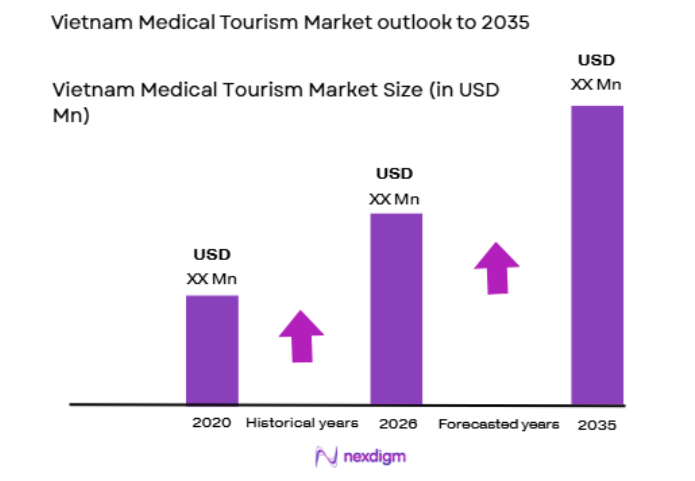
Based on a recent historical assessment, the Vietnam Medical Tourism Market is valued at approximately USD ~ million. The market is primarily driven by the country’s increasing reputation as a destination for affordable yet high-quality healthcare services. Medical tourism in Vietnam is supported by world-class hospitals and clinics offering specialized treatments in areas such as cosmetic surgery, orthopedics, and dental care. Additionally, the country’s strategic location, coupled with the government’s promotion of the medical tourism sector, has helped attract international patients.
Ho Chi Minh City and Hanoi are the dominant cities for medical tourism in Vietnam, owing to their established healthcare infrastructure, international-standard medical facilities, and a growing number of experienced healthcare professionals. These cities are particularly popular with medical tourists from neighboring countries and regions, who seek affordable, high-quality healthcare options. The strong presence of both public and private healthcare institutions in these cities, combined with government-backed initiatives, further accelerates their dominance in the medical tourism sector.
Market Segmentation
By Service Type
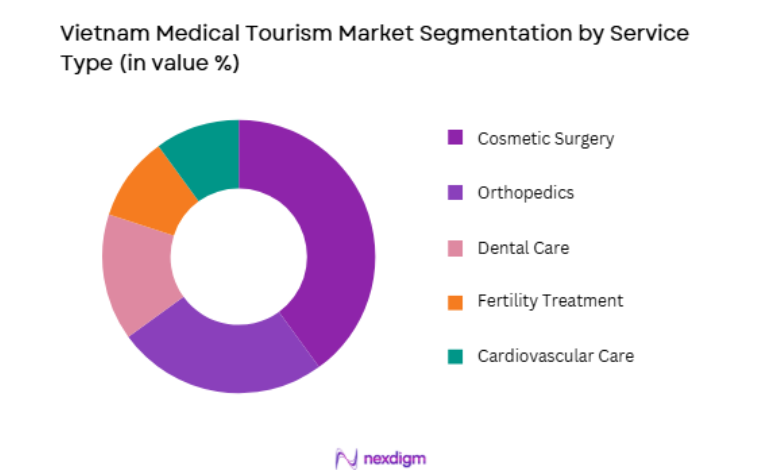
Vietnam Medical Tourism market is segmented by service type into Cosmetic Surgery, Orthopedics, Dental Care, Fertility Treatment, and Cardiovascular Care. Recently, Cosmetic Surgery has a dominant market share due to the high demand for affordable cosmetic procedures, particularly from tourists in neighboring countries seeking treatments at lower costs than in their home countries. Vietnam’s reputation for providing high-quality cosmetic surgery services, including rhinoplasty, breast augmentation, and facelifts, has made it a popular medical tourism destination. This service segment’s dominance is driven by a combination of factors, such as affordability, high-quality care, and the country’s competitive advantage in medical tourism.
By Target Region
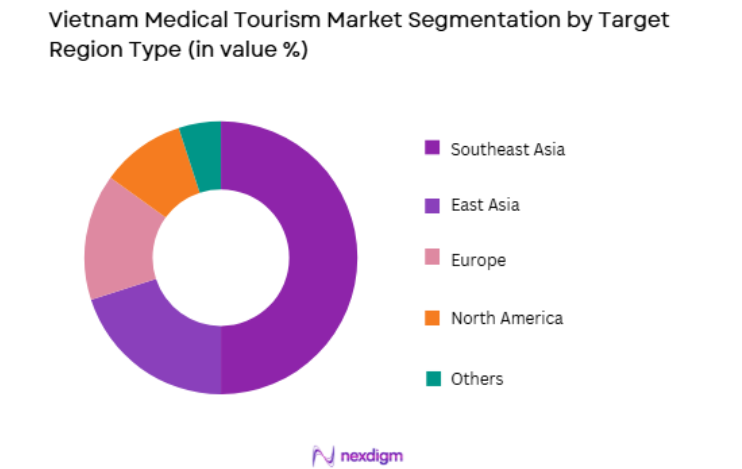
Vietnam Medical Tourism market is segmented by target region into Southeast Asia, East Asia, Europe, North America, and Others. Recently, Southeast Asia has a dominant market share due to its proximity and the relatively low cost of medical services in Vietnam. Many patients from neighboring Southeast Asian countries such as Cambodia, Laos, Thailand, and Myanmar opt for medical treatment in Vietnam, as the cost is often much lower than in their home countries, while the quality of care is comparable to international standards. Additionally, the accessibility of Vietnam’s major cities via direct flights from Southeast Asia contributes to its dominance as a medical tourism hub for the region.
Competitive Landscape
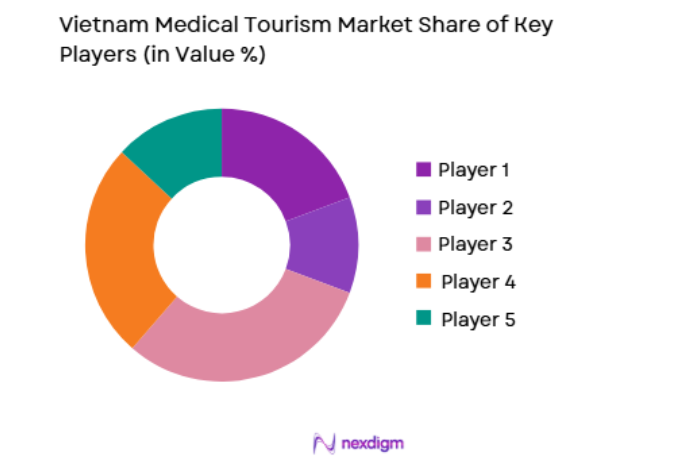
The Vietnam Medical Tourism Market is competitive, with several local and international players offering high-quality medical services. There is an increasing presence of international healthcare providers and hospital chains in Vietnam, as well as partnerships between local hospitals and international insurance companies. The market is also characterized by the entry of global medical tourism agencies, which facilitate international patients’ access to healthcare services in Vietnam. As the market grows, consolidation is expected, with major players acquiring smaller players to strengthen their service offerings and geographical presence.
| Company Name | Establishment Year | Headquarters | Technology Focus | Market Reach | Key Products | Revenue | Market-Specific Parameter |
| Vinmec Healthcare | 2012 | Hanoi | ~ | ~ | ~ | ~ | ~ |
| FV Hospital | 1997 | Ho Chi Minh City | ~ | ~ | ~ | ~ | ~ |
| Medlatec | 1996 | Hanoi | ~ | ~ | ~ | ~ | ~ |
| Hoan My Medical | 2000 | Ho Chi Minh City | ~ | ~ | ~ | ~ | ~ |
| Hanoi Medical University | 1902 | Hanoi | ~ | ~ | ~ | ~ | ~ |
Vietnam Medical Tourism Market Analysis
Growth Drivers
Government Support for Medical Tourism
Government Support for Medical Tourism is a key growth driver in the Vietnam Medical Tourism Market. The Vietnamese government has actively promoted medical tourism as part of its broader strategy to strengthen the country’s healthcare sector and boost its global presence in the tourism industry. Several initiatives, such as the establishment of medical tourism clusters and partnerships with international medical tourism agencies, have enhanced Vietnam’s competitiveness in this sector. Additionally, the government’s investment in medical infrastructure, including the development of international-standard hospitals and clinics, has been crucial in attracting international patients. These efforts have positioned Vietnam as a leading destination for affordable yet high-quality healthcare, which continues to drive the growth of medical tourism.
Affordable Healthcare Services
Affordable Healthcare Services are another significant driver for the growth of the Vietnam Medical Tourism Market. Vietnam offers high-quality healthcare services at a fraction of the cost of treatment in many developed countries. Patients from Southeast Asia, Europe, and North America increasingly choose Vietnam for procedures such as cosmetic surgery, dental care, and fertility treatment due to the substantial cost savings. For example, patients from neighboring countries like Thailand and Cambodia can save up to 50% or more on the cost of medical treatments in Vietnam compared to their home countries. The combination of cost savings and high-quality care has made Vietnam an attractive medical tourism destination, particularly for those seeking elective procedures that would be prohibitively expensive in their home countries.
Market Challenges
Lack of International Accreditation
Lack of International Accreditation is a significant challenge for the Vietnam Medical Tourism Market. Although Vietnam has a growing number of world-class medical facilities, many of them still lack internationally recognized accreditations such as those from the Joint Commission International (JCI) or the International Organization for Standardization (ISO). International patients often prefer hospitals and clinics with these certifications, as they provide assurances of high-quality care and safety standards. The absence of such accreditation for some local facilities may deter medical tourists, especially those from Western countries, from considering Vietnam as their destination of choice for medical treatment. Addressing this challenge by promoting international certifications and improving quality standards will be crucial for the continued growth of medical tourism in Vietnam.
Language and Cultural Barriers
Language and Cultural Barriers also pose challenges to the growth of the Vietnam Medical Tourism Market. While many hospitals in Vietnam provide English-speaking staff, patients from non-English speaking countries may encounter difficulties in communication and understanding the medical procedures. These language barriers can create misunderstandings regarding treatment plans, post-surgery care, and patient expectations. Additionally, cultural differences between medical professionals and international patients may lead to discomfort and lower patient satisfaction. To overcome this challenge, medical tourism agencies and healthcare providers in Vietnam must invest in improving language services and cultural sensitivity training for their staff to ensure a smooth and comfortable experience for international patients.
Opportunities
Integration of Telemedicine and Medical Tourism
Integration of Telemedicine and Medical Tourism presents a significant opportunity for the Vietnam Medical Tourism Market. With the increasing demand for remote healthcare services, integrating telemedicine platforms with medical tourism services could expand Vietnam’s reach as a global medical destination. Telemedicine allows patients to receive pre- and post-treatment consultations remotely, reducing the need for in-person visits. This would not only make it easier for international patients to seek medical treatment in Vietnam but also enhance the continuity of care. Furthermore, telemedicine can help patients monitor their health remotely after treatment, making the whole medical tourism experience more convenient and efficient. This integration will drive the growth of the market by attracting more patients who prefer to combine healthcare with the convenience of digital consultation services.
Emerging Health and Wellness Tourism
Emerging Health and Wellness Tourism is another opportunity for the Vietnam Medical Tourism Market. As global interest in health and wellness continues to rise, there is a growing demand for treatments that combine medical care with relaxation and wellness services. Vietnam’s beautiful landscapes, cultural heritage, and natural resources position the country as an attractive destination for health and wellness tourism. By combining medical services with wellness retreats, spa treatments, and relaxation therapies, Vietnam can attract a broader segment of international patients seeking both medical treatment and a rejuvenating experience. This trend presents an opportunity to diversify medical tourism offerings and expand the target market to include those interested in wellness alongside traditional medical procedures.
Future Outlook
The Vietnam Medical Tourism Market is expected to continue growing in the coming years, driven by government initiatives, affordable healthcare services, and increasing international demand for high-quality medical treatment. The integration of telemedicine with medical tourism services and the expansion of health and wellness tourism will create new opportunities for growth. As the country enhances its healthcare infrastructure and international accreditations, it is poised to become a leading destination for medical tourists from around the world, particularly those seeking cost-effective, high-quality treatments.
Major Players
- Vinmec Healthcare
- FV Hospital
- Medlatec
- Hoan My Medical Corporation
- Hanoi Medical University
- Phyathai Hospitals
- Raffles Medical Group
- Aetna Healthcare
- Sun Life Vietnam
- Global Healthcare Vietnam
- Docter Raksa
- Hoa Sen Healthcare
- TechMed
- 108 Military Hospital
- Bach Mai Hospital
Key Target Audience
- Investments and venture capitalist firms
- Government and regulatory bodies
- Healthcare providers
- Medical tourism agencies
- Medical device manufacturers
- Pharmaceutical companies
- Insurance companies
- Healthcare IT providers
Research Methodology
Step 1: Identification of Key Variables
Key market variables such as healthcare access, medical tourism trends, government policies, and technological advancements were identified to assess the market’s growth drivers and challenges.
Step 2: Market Analysis and Construction
Market analysis was conducted by examining healthcare demand, medical tourism patterns, patient preferences, and government healthcare policies in Vietnam.
Step 3: Hypothesis Validation and Expert Consultation
Assumptions were validated through consultations with healthcare providers, digital health experts, and government officials to confirm emerging trends and market dynamics.
Step 4: Research Synthesis and Final Output
Data was synthesized from primary and secondary sources to provide a comprehensive view of the Vietnam Medical Tourism Market, integrating expert insights, market data, and government initiatives.

- Executive Summary
- Research Methodology (Definitions, Scope, Industry Assumptions, Market Sizing Approach, Primary & Secondary Research Framework, Data Collection & Verification Protocol, Analytic Models & Forecast Methodology, Limitations & Research Validity Checks)

- Market Definition and Scope
- Value Chain & Stakeholder Ecosystem
- Regulatory / Certification Landscape
- Sector Dynamics Affecting Demand

- Growth Drivers
Government Support for Medical Tourism
Increasing Healthcare Quality Standards
Rising Global Healthcare Costs Pushing Patients Abroad - Market Challenges
Limited Awareness Among Potential Medical Tourists
Regulatory and Certification Barriers
High Initial Investment for Healthcare Providers - Market Opportunities
Expansion of Healthcare Infrastructure
Increased Focus on Wellness Tourism
Strategic Alliances Between Healthcare Providers and Travel Agencies - Trends
Growth in Medical and Wellness Tourism Packages
Technological Integration in Medical Services for Tourists - Government Regulations
- SWOT Analysis
- Porter’s Five Forces

- By Market Value, 2020-2025
- By Installed Units, 2020-2025
- By Average System Price, 2020-2025
- By System Complexity Tier, 2020-2025

- By System Type (In Value%)
General Healthcare Services
Specialized Healthcare Services
Cosmetic and Aesthetic Treatments
Dental Services
Alternative Medicine - By Platform Type (In Value%)
Hospitals and Healthcare Providers
Travel Agencies and Tour Operators
Online Healthcare Platforms
Insurance and Medical Financing Platforms
Private Healthcare Networks - By Fitment Type (In Value%)
Pre-scheduled Healthcare Services
On-demand Healthcare Services
Customizable Healthcare Packages
Comprehensive Wellness Packages - By End User Segment (In Value%)
International Tourists
Domestic Patients Seeking Specialized Care
Patients Seeking Cosmetic Procedures

- Market Share Analysis
- Cross Comparison Parameters (System Type, Platform Type, End User Segment, Fitment Type, Procurement Channel, Service Delivery Model, Market Reach, Healthcare Infrastructure Quality, Patient Experience, Healthcare Partnerships)
- SWOT Analysis of Key Competitors
- Pricing & Procurement Analysis
- Key Players
Vinmec Healthcare System
Hoan My Medical Corporation
Bệnh viện Chợ Rẫy
The Vietnam Ministry of Health
Bệnh viện Đại học Y Dược
Medlatec Group
Viet Health Group
Sai Gon General Hospital
Kangnam Hospital
Bệnh viện Từ Dũ
Bệnh viện Phụ Sản Trung Ương
Vietcare International
Vinhomes Healthcare
Ben Thanh Group
Hanoi Medical University Hospital

- Growing Number of International Tourists Seeking Affordable Healthcare
- Patients Seeking High-quality Cosmetic Surgery
- Rising Number of Medical Tourists from Neighboring Countries
- Growth of Senior Citizens Traveling for Healthcare in Vietnam

- Forecast Market Value, 2026-2035
- Forecast Installed Units, 2026-2035
- Price Forecast by System Tier, 2026-2035
- Future Demand by Platform, 2026-2035


 Request a Sample
 Ask for Customization
 Get a Quote
 Enquire Now