
 Download PDF
Market Overview
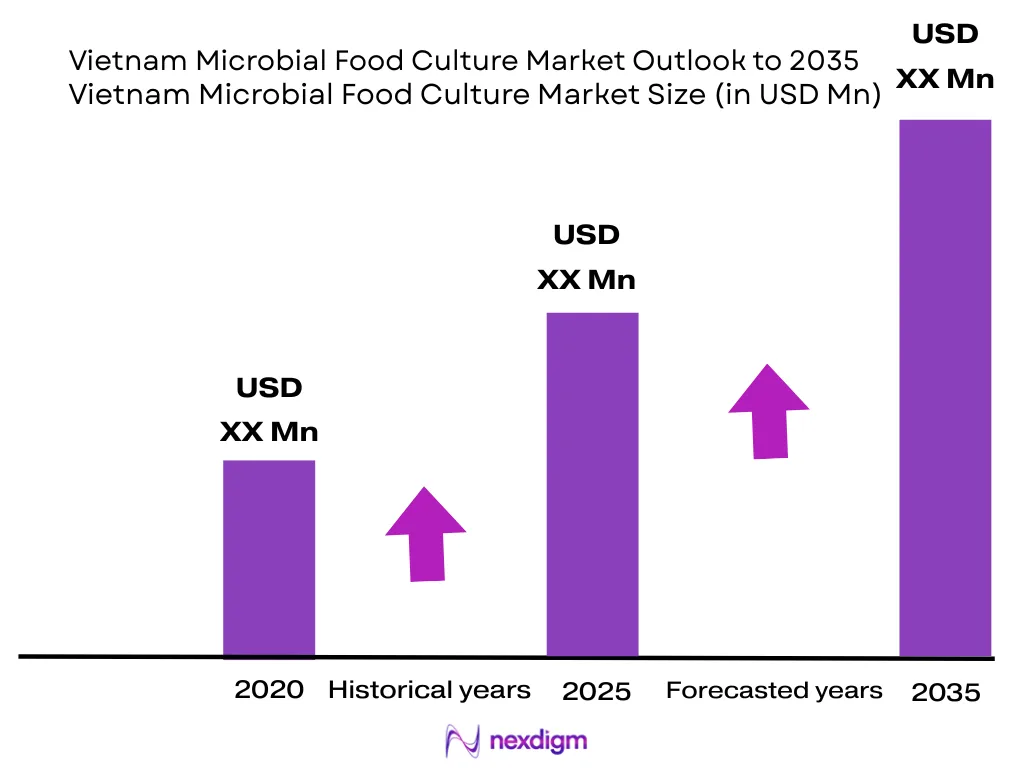
The Vietnam Microbial Food Culture Market is valued at approximately USD ~ million, with a forecast CAGR of % during 2026–2035, subject to proprietary validation. Demand is supported by commercial yoghurt, cultured milk, cheese, bakery, fermented beverage, seafood and traditional-food processing. The category benefits from Vietnam’s established fermentation culture and the transition from variable back-slopping practices toward standardized starter, protective and probiotic cultures that improve acidification, texture, flavour, safety and batch consistency. Ho Chi Minh City, Hanoi, Binh Duong, Dong Nai, Hai Phong, Da Nang and Can Tho form the principal demand centres for microbial food cultures. Their dominance reflects concentrations of dairy factories, beverage manufacturers, industrial bakeries, seafood processors, refrigerated warehouses, import infrastructure and modern retail channels. The southern industrial corridor benefits from proximity to ports and ingredient distributors, while Hanoi and the Red River Delta support northern dairy and packaged-food production. Vietnam’s fermented-food base spans dairy, rice, soy, vegetables, fish and meat applications.
Market Segmentation
By Culture Type
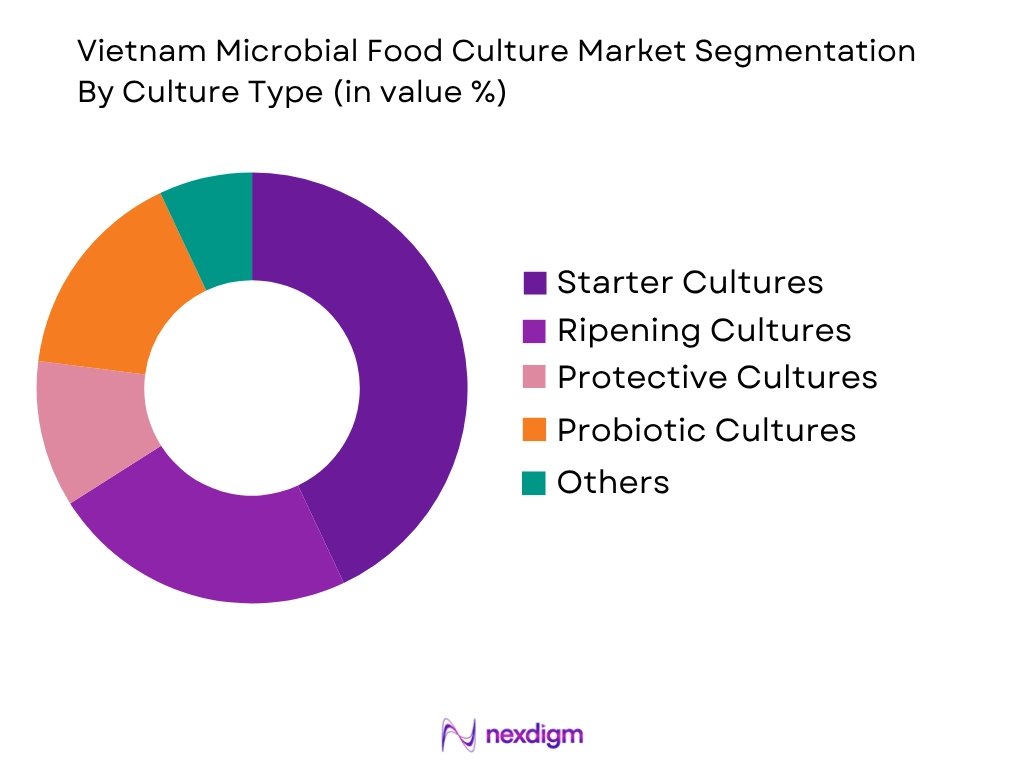
The Vietnam Microbial Food Culture Market is segmented by culture type into starter cultures, probiotic cultures, protective cultures, adjunct and ripening cultures, and customized mixed cultures. Starter cultures represent the dominant sub-segment because they provide the primary fermentation function required by yoghurt, cultured milk, cheese, bakery products, fermented beverages and several traditional foods. Their ability to produce controlled acidification and repeatable flavour makes them more widely applicable than cultures designed solely for ripening or preservation. Direct-vat inoculation systems also allow industrial processors to reduce the contamination risk and variability associated with maintaining mother cultures. Demand is particularly strong in fresh fermented dairy, where cultures determine viscosity, acidity, post-acidification and sensory performance. IFF markets fresh dairy cultures with and without probiotics, while Novonesis supplies mesophilic and thermophilic culture systems for drinkable, set, stirred and ambient fermented milk. Protective cultures are developing as processors seek biological spoilage control, but their adoption remains more specialized and application-dependent.
By Application
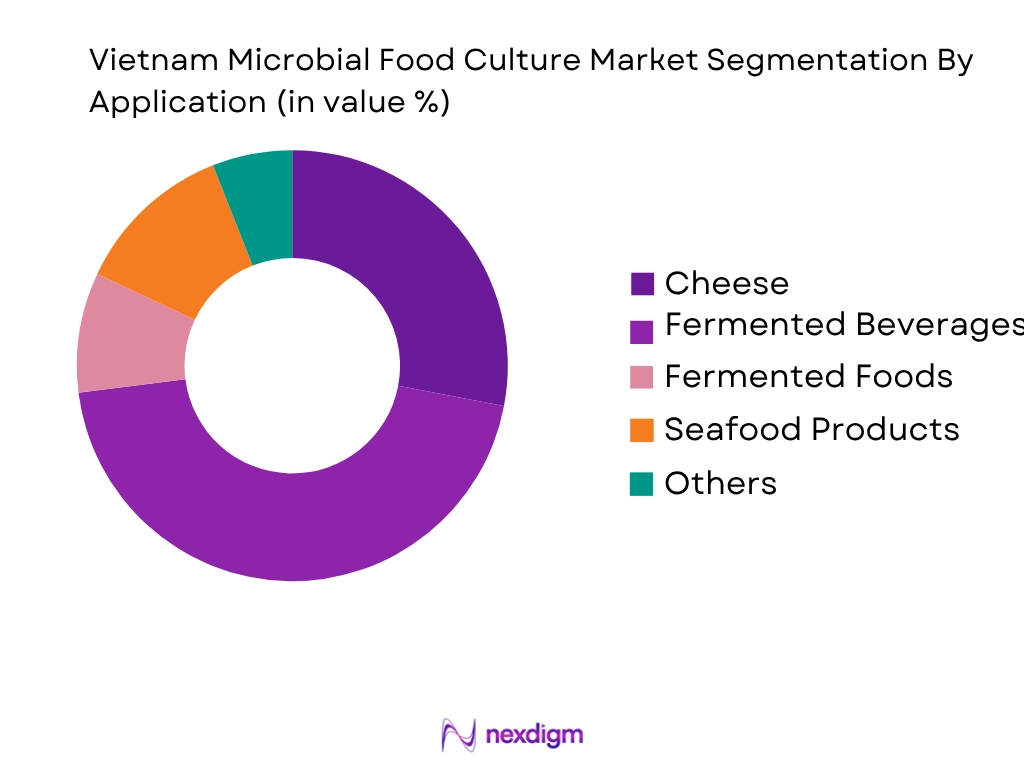
The Vietnam Microbial Food Culture Market is segmented by application into fermented dairy products, bakery and sourdough products, fermented beverages, meat and seafood, traditional fermented foods, and plant-based products. Fermented dairy products hold the dominant position because yoghurt, drinking yoghurt, probiotic cultured milk and other fresh dairy formats require defined cultures for every production batch. Cultures control fermentation time, acid development, texture, flavour and stability, making them integral processing inputs rather than optional additives. Vietnam’s strong consumer familiarity with yoghurt and probiotic drinks supports recurring industrial demand from dairy companies and specialist fermented-drink producers. Commercial suppliers offer culture systems designed for fresh, stirred, set, drinkable and ambient yoghurt, including solutions for low-sugar, lactose-reduced and probiotic formulations. Traditional Vietnamese fermented foods provide a broad future application base, but many producers continue using spontaneous fermentation or reused starters. Consequently, standardized commercial-culture penetration is currently more advanced in organized dairy processing than in fish, rice, vegetable and artisanal meat fermentation.
Competitive Landscape
The Vietnam Microbial Food Culture Market is led primarily by multinational bioscience and fermentation companies supplying through direct commercial relationships, regional offices, ingredient importers and technical distributors. Competition depends on strain-library depth, acidification performance, phage resistance, culture viability, application support and regulatory documentation. Novonesis and IFF have broad dairy-culture portfolios, while dsm-firmenich is prominent in probiotics and health-oriented ingredients. Lallemand and Lesaffrev contribute specialist expertise in yeasts, bacteria and fermentation systems.
| Company | Establishment Year | Headquarters | Core Culture Portfolio | Principal Applications | Product Formats | Technical Capability | Vietnam Route to Market | Strategic Differentiation |
| Novonesis | 2024 as merged entity | Lyngby, Denmark | ~ | ~ | ~ | ~ | ~ | ~ |
| International Flavors & Fragrances | 1958 | New York, United States | ~ | ~ | ~ | ~ | ~ | ~ |
| dsm-firmenich | 2023 as merged entity | Kaiseraugst, Switzerland and Maastricht, Netherlands | ~ | ~ | ~ | ~ | ~ | ~ |
| Lallemand | 1915 | Montreal, Canada | ~ | ~ | ~ | ~ | ~ | ~ |
| Lesaffre | 1853 | Marcq-en-Barœul, France | ~ | ~ | ~ | ~ | ~ | ~ |
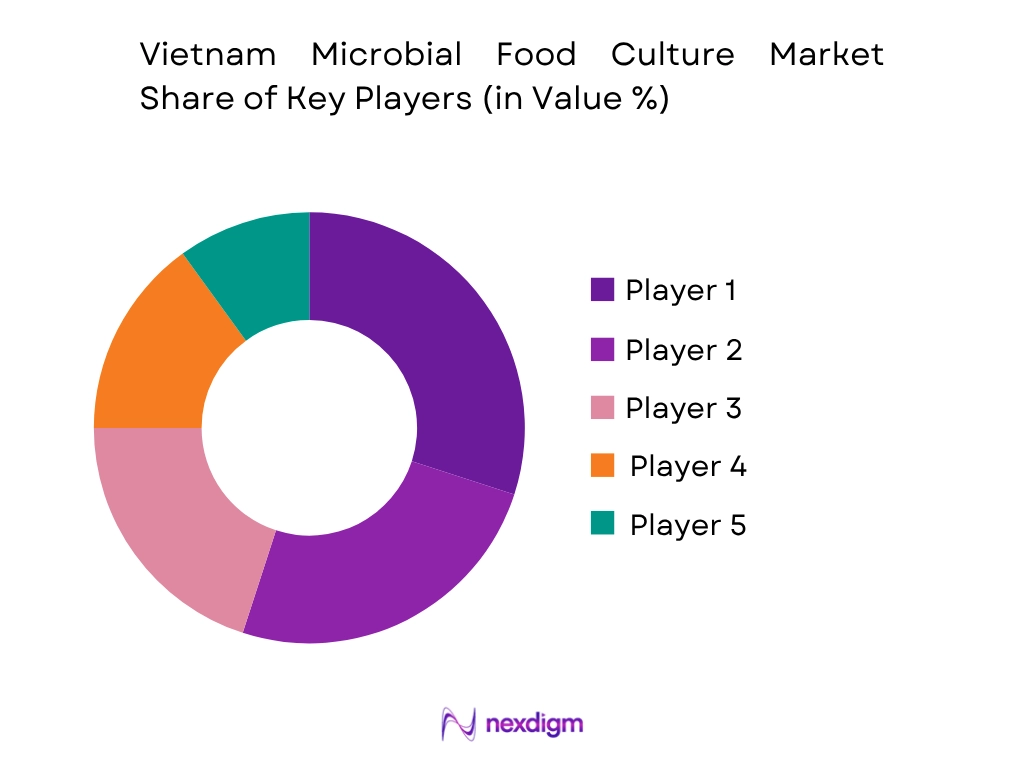
Vietnam Microbial Food Culture Market Analysis
Growth Drivers
Urbanization and Expansion of Packaged Fermented-Food Consumption
Vietnam’s expanding urban consumer base is strengthening demand for standardized microbial cultures used in yoghurt, cultured milk, probiotic beverages, cheese, bread, fermented meat, pickled vegetables and plant-based foods. The National Statistics Office recorded an average population of 101.3 million people in 2024, representing an addition of 1.0345 million people within one year. The World Bank subsequently recorded a population of approximately 102 million people in 2025, demonstrating the scale of the domestic food-consumption base. Urban households in Ho Chi Minh City, Hanoi, Da Nang, Hai Phong, Can Tho, Binh Duong and Dong Nai are increasingly served through supermarkets, convenience stores, food-service operators, digital grocery platforms and refrigerated distribution networks. These channels require products with repeatable texture, flavour, acidity and storage performance, making uncontrolled household fermentation unsuitable for large-volume commercial supply. Commercial starter cultures allow processors to establish defined fermentation times, reduce batch inconsistency and produce the same sensory characteristics across multiple manufacturing locations. The demand effect is reinforced by Vietnam’s broader purchasing capacity. National gross domestic product reached USD 476.3 billion in 2024, while output expanded by 7.09 percentage points, compared with an increase of 5.05 percentage points in 2023. World Bank data placed gross domestic product at USD 514.7 billion in 2025 and output per person at USD 5,066, supporting continued consumption of packaged and value-added food products. Microbial cultures benefit because urban food consumption is not limited to basic nutrition; it increasingly includes convenient products such as drinking yoghurt, spoonable yoghurt, probiotic shots, cheese snacks, sourdough bakery products, fermented sauces and ready-to-consume traditional foods. Each format requires different microbial properties. Drinking yoghurt needs controlled viscosity and limited post-acidification, while set yoghurt requires stable gel formation.
Industrialization of Dairy and Food Processing
Vietnam’s industrialization is accelerating the shift from small-batch fermentation toward controlled processes that depend on commercial starter, probiotic, protective and ripening cultures. The National Statistics Office reported that the country’s industrial production index increased by 8.4 points in 2024, supported by the recovery of processing and manufacturing activity. In the first quarter of 2025, food-processing production increased by 8.6 points, while the wider industrial production index increased by 7.6 points, compared with an increase of 5.9 points in the corresponding period of 2024. These figures indicate that food manufacturing is expanding within a broader industrial system that increasingly uses automated production lines, standardized ingredients, laboratory testing and documented quality controls. The microbial food culture market benefits directly because industrial processors cannot depend on natural fermentation conditions that vary with temperature, season, raw-material quality and the microbial environment of individual factories. Defined cultures allow factories to control acidification speed, fermentation duration, aroma formation, texture development and microbial stability. Industrialization is also supported by foreign capital. Vietnam’s Ministry of Planning and Investment recorded USD 25.35 billion in disbursed foreign direct investment during 2024, the highest annual amount reported at that time. Processing and manufacturing attracted USD 25.58 billion in registered foreign investment, making it the leading recipient among the country’s economic sectors. Although these figures cover manufacturing beyond food, they are relevant to microbial cultures because industrial zones, logistics infrastructure, laboratories, utilities and skilled technical services created by manufacturing investment also support dairy and food-processing facilities.
Market Challenges
Culture Stability, Cold-Chain Integrity and Process Complexity
The principal technical challenge in Vietnam’s microbial food culture market is maintaining strain viability and predictable performance from international production sites through import clearance, distributor storage, transportation and final application. Starter and probiotic cultures contain living microorganisms that can be damaged by unsuitable temperature, moisture, oxygen or repeated handling. Frozen cultures require continuous low-temperature storage, while freeze-dried preparations, although more stable, still need protection from heat and humidity. Vietnam’s long geography, extending across northern, central and southern processing regions, creates multiple logistics stages between ports, warehouses and food factories. The challenge is commercially important because industrial activity continues to expand. The National Statistics Office recorded an industrial production increase of 8.4 points in 2024, while food-processing production increased by 8.6 points during the first quarter of 2025. Larger output increases the number of fermentation batches that depend on cultures arriving with validated viable counts. A culture may remain microbiologically safe but perform inadequately if cell activity declines during distribution. Slow acidification can extend tank occupancy, delay packaging and allow undesirable organisms to grow. In yoghurt, poor culture performance can produce weak gel structure, excessive whey separation or uncontrolled post-acidification. In cheese, it can affect moisture, flavour development and ripening. In fermented meat or seafood, inadequate acidification can compromise product consistency and biological control. Processors must also manage bacteriophages, viruses that infect bacterial starter strains.
Limited Availability of Specialized Fermentation Skills
Vietnam’s microbial food culture market is constrained by a shortage of personnel with combined expertise in food microbiology, fermentation engineering, dairy technology, quality assurance and industrial process control. The country has a large workforce, but general labour availability does not automatically translate into the specialized capability required to select, validate and manage microbial strains. The National Statistics Office recorded a labour force of nearly 53.0 million people in 2024, an increase of 575,400 people from the preceding year. However, during the first six months of 2024, only 28.1 out of every 100 workers held recognized degrees or certificates. The labour force reached 53.5 million people in 2025, adding 589,500 people, but food processors continued to compete with pharmaceutical, biotechnology, electronics and other manufacturing industries for technically trained personnel. Microbial cultures require more than routine production supervision. Staff must understand strain identity, inoculation ratios, rehydration procedures, pH curves, fermentation temperatures, contamination indicators, viable-count testing and interactions between cultures and other ingredients. In dairy applications, technologists need to distinguish between weak starter activity, bacteriophage infection, antibiotic residues, incorrect heat treatment and raw-milk variation. In plant-based foods, they must account for limited fermentable sugar, antinutritional compounds and undesirable flavour precursors.
Market Opportunities
Localized Culture Technology and Advanced Fermentation Systems
Technological advancement creates a substantial opportunity to expand Vietnam’s microbial food culture market by improving strain performance, storage stability, process monitoring and compatibility with local foods. Vietnam already possesses an expanding industrial base capable of absorbing more sophisticated biological systems. The country’s gross domestic product reached USD 476.3 billion in 2024, industrial production increased by 8.4 points, and food-processing output increased by 8.6 points in the first quarter of 2025. These current indicators demonstrate that manufacturers are operating within a growing production economy where improvements in batch efficiency and product consistency have commercial value. The strongest opportunity is not simply importing additional cultures; it is adapting culture systems to Vietnamese substrates, climatic conditions and consumer preferences. Local foods use milk, rice, glutinous rice, soybeans, cassava, vegetables, fish, shrimp, pork and coconut, each of which requires different microbial capabilities. Strain-screening platforms can identify bacteria and yeasts with appropriate acidification, salt tolerance, flavour formation and pathogen-inhibition properties. Genome-based identification can confirm strain identity and screen for undesirable traits before commercialization. Freeze-drying and encapsulation can improve culture survival under Vietnam’s warm and humid distribution conditions, reducing dependence on uninterrupted deep-frozen logistics. Direct-vat inoculation formats can make standardized cultures accessible to medium-sized processors that do not maintain mother-culture facilities. Digital fermentation monitoring provides another opportunity. Sensors can continuously track temperature, pH, dissolved oxygen and fermentation time, enabling processors to identify abnormal culture activity before a batch fails. Such technology is more relevant to microbial food cultures than generic smart-city monitoring because it directly controls microbial performance inside food-processing equipment. Automated dosing systems can reduce inoculation errors, while production software can compare acidification curves across batches and factories. Current labour data reinforce the need for such tools.
International Collaboration and Integration with Global Bioscience Networks
International collaboration offers Vietnam an opportunity to accelerate access to validated strains, fermentation technology, application expertise and export-oriented food standards. The country is already deeply connected to global manufacturing and trade networks. The Ministry of Planning and Investment recorded USD 25.35 billion in disbursed foreign direct investment during 2024, while processing and manufacturing received USD 25.58 billion in registered investment. Vietnam’s merchandise exports reached USD 405.53 billion, imports reached USD 380.76 billion, and the resulting trade surplus was USD 24.77 billion. These figures demonstrate that international partnerships are already central to the country’s industrial model. For microbial food cultures, collaboration can take several forms: distribution agreements with international strain developers, joint application laboratories, contract blending and packaging, licensing of microbial strains, technical training, and co-development projects with Vietnamese food processors. International culture companies possess established strain libraries and experience in yoghurt, cheese, bakery, probiotics, bioprotection and plant-based fermentation. Vietnamese processors contribute knowledge of local raw materials, climate, sensory expectations and traditional production methods. Combining these capabilities can shorten product-development cycles and reduce the risks involved in transferring foreign culture systems directly into local applications. Current trade activity provides a commercial platform for such cooperation. During the first seven months of 2025, Vietnam exported USD 262.44 billion and imported USD 252.26 billion in goods. China supplied USD 101.5 billion of imports, while the United States purchased USD 85.1 billion of Vietnamese exports during that period. Food manufacturers serving international customers must meet specifications for traceability, microbiological safety, shelf stability and reproducibility. Defined cultures can help processors document fermentation conditions and reduce variability compared with spontaneous systems. Collaboration can also support domestic localization.
Future Outlook
The Vietnam Microbial Food Culture Market is expected to expand during 2026–2035 as food processors adopt more controlled fermentation systems. Growth will be linked to fermented dairy diversification, probiotic beverages, clean-label preservation, plant-based foods and the industrial standardization of traditional Vietnamese products. Local application support, reliable cold-chain distribution and regulatory documentation will become central purchasing criteria. Suppliers able to customize cultures for Vietnamese substrates and sensory preferences are likely to secure stronger processor relationships. Direct-vat inoculation cultures should gain adoption because they reduce preparation steps and contamination risks compared with internally propagated starters. Freeze-dried formats are well suited to processors requiring manageable inventory and improved distribution flexibility, while frozen cultures will remain relevant for large plants with validated low-temperature infrastructure. Protective cultures represent a developing opportunity in yoghurt, cheese, bakery and other moisture-sensitive foods. These cultures use fermentation to suppress undesirable yeast and mould growth and can support manufacturers seeking natural freshness solutions. Their adoption will depend on product formulation, storage temperature, packaging and contaminating organisms rather than on a universal preservation effect.
Major Players
- Novonesis
- International Flavors & Fragrances
- dsm-firmenich
- Lallemand
- Lesaffre
- Kerry Group
- Sacco System
- CSK Food Enrichment
- Biochem
- Dalton Biotecnologie
- Mediterranea Biotecnologie
- Angel Yeast
- LB Bulgaricum
- Biena
- AB Biotek
Key Target Audience
- Dairy and fermented-milk manufacturers
- Bakery, sourdough and fermented-beverage producers
- Traditional fermented-food and seafood processors
- Food-ingredient importers and distributors
- Probiotic and functional-nutrition companies
- Investments and venture capitalist firms
- Private-equity and strategic food-industry investors
- Government and regulatory bodies
Research Methodology
Step 1: Identification of Key Variables
The initial phase involves constructing an ecosystem map covering microbial-culture manufacturers, importers, distributors, dairy processors, bakeries, beverage producers, seafood companies and traditional fermented-food businesses. Desk research is used to identify the key variables influencing demand, including culture format, application, dosage, processor scale, fermentation frequency, storage conditions and import dependence.
Step 2: Market Analysis and Construction
Historical demand is compiled by culture type and food application. The bottom-up model evaluates the number and scale of relevant processors, estimated fermentation batches, culture dosage and commercial-culture penetration. The top-down model reviews food-processing output, fermented-product categories, import flows and supplier revenues to construct an independent market benchmark.
Step 3: Hypothesis Validation and Expert Consultation
Preliminary market hypotheses are validated through computer-assisted telephone interviews with culture suppliers, food technologists, microbiologists, quality managers, production personnel and ingredient distributors. These consultations examine purchasing cycles, culture selection, application performance, storage losses, technical-service requirements and the conversion of processors from spontaneous to standardized fermentation.
Step 4: Research Synthesis and Final Output
Supply-side and demand-side findings are triangulated to reconcile differences between supplier shipments and processor consumption. Market values are reviewed by culture type, application, format and region. Company profiles, segment shares and forecasts are then checked against product portfolios, distribution structures, regulatory requirements and industry expert feedback before the final report is prepared.

- Executive Summary
- Research Methodology (Market Definitions and Assumptions, Product Inclusion and Exclusion Criteria, Abbreviations, Market Sizing Approach, Top-Down Analysis, Bottom-Up Analysis, Culture Dosage Consumption Model, Demand-Side Assessment, Supply-Side Assessment, Import-Based Supply Assessment, Primary Industry Interviews, Data Triangulation, Forecasting Framework, Scenario Analysis, Limitations and Future Conclusions)

- Definition and Scope
- Market Evolution and Industry Genesis
- Development of Commercial Fermentation in Vietnam
- Transition from Traditional Back-Slopping to Standardized Cultures
- Role of Microbial Cultures in Vietnamese Food Processing
- Timeline of Major Industry Developments

- Growth Drivers (Expansion of Industrial Dairy Processing, Growth of Yoghurt and Cultured Milk Production, Commercialization of Traditional Fermented Foods, Demand for Consistent Fermentation Performance, Expansion of Functional and Probiotic Foods, Growth of Packaged Bakery Products, Increasing Food-Safety Requirements, Development of Plant-Based Fermented Products)
- Market Challenges (Dependence on Imported Proprietary Strains, Temperature-Controlled Storage Constraints, Culture Viability Loss, Limited Application Expertise, Bacteriophage Contamination, Variability in Local Raw Materials, Difficulty Standardizing Traditional Fermentation, Regulatory Approval Complexity)
- Market Opportunities (Development of Cultures for Vietnamese Fermented Foods, Localization of Culture Blending and Packaging, Indigenous Microbial-Strain Commercialization, Protective Cultures for Clean-Label Preservation, Cultures for Low-Sugar and Lactose-Reduced Dairy, Probiotic Cultures for Functional Beverages, Cultures for Soy and Rice Fermentation, Technical-Service Expansion)
- Market Trends (Shift to Direct-Vat Cultures, Adoption of Freeze-Dried Formats, Multi-Strain Culture Blends, Mild-Acidification Cultures, Exopolysaccharide-Producing Cultures, Culture and Enzyme Integration, Ambient-Stable Fermented Dairy, Phage-Robust Culture Rotation, Genomic Strain Screening, Customized Local Sensory Profiles)
- SWOT Analysis
- Porter’s Five Forces Analysis
- PESTLE Analysis

- By Market Value (2020-2025)
- By Culture Consumption Volume (2020-2025)
- By Active Microbial Preparation Volume (2020-2025)

- By Culture Type (In Value %)
Starter Cultures
Adjunct and Ripening Cultures
Protective and Biopreservation Cultures
Probiotic Cultures
Aroma and Flavour Development Cultures
Mixed and Customized Cultures - By Application (In Value %)
Fermented Dairy Products
Cheese and Ripened Dairy Products
Bakery and Sourdough Products
Fermented Beverages
Meat and Seafood Products
Fermented Vegetables and Pickled Foods - By Distribution Model (In Value %)
Direct Sales by Culture Manufacturers
Authorized Ingredient Distributors
Food-Ingredient Importers
Application-Solution Providers
Digital and Catalogue-Based B2B Procurement - By Region (In Value %)
Southeast Vietnam
Red River Delta
Mekong River Delta
North Central and Central Coastal Vietnam
Northern Midlands and Mountain Areas
Central Highlands

- Market Share of Major Players (By Value, Culture Volume, Application, Culture Type and Customer Segment)
- Cross Comparison Parameters (Culture Portfolio Breadth, Microbial-Strain Library Depth, Food-Application Coverage, Culture Format and Viability Performance, Local Technical-Support Capability, Vietnam Distribution Reach, Regulatory Documentation Strength, Product Innovation and Customization Capability)
- SWOT Analysis of Major Players
- Detailed Profiles of Major Companies
Novonesis
International Flavors & Fragrances
dsm-firmenich
Lallemand
Lesaffre
Kerry Group
Sacco System
CSK Food Enrichment
Biochem
Dalton Biotecnologie
Mediterranea Biotecnologie
Angel Yeast
LB Bulgaricum
Biena
AB Biotek

- Dairy Processor Analysis
- Bakery Manufacturer Analysis
- Fermented Beverage Producer Analysis
- Traditional Fermented-Food Processor Analysis
- Plant-Based Food Manufacturer Analysis
- Culture Procurement Behaviour

- By Market Value (2026-2035)
- By Culture Consumption Volume (2026-2035)
- By Active Microbial Preparation Volume (2026-2035)


 Request a Sample
 Ask for Customization
 Get a Quote
 Enquire Now