

 Download PDF
Market Overview
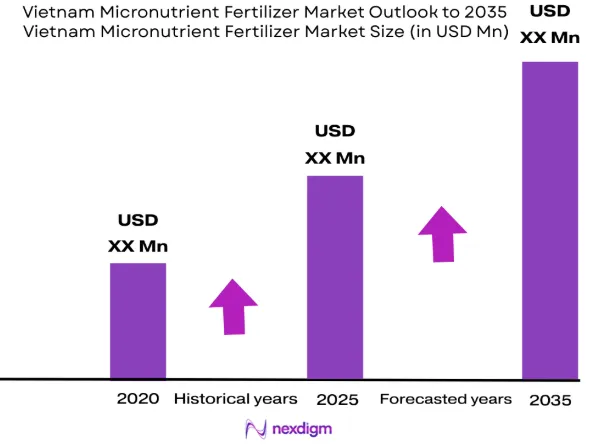
The Vietnam Micronutrient Fertilizer Market was valued at USD ~ million in 2024, increasing from approximately USD ~ million in 2023, supported by rising demand for high-value crop cultivation and soil nutrient management across the country. Vietnam possesses more than 11 million hectares of agricultural land, with rice cultivation covering approximately 7 million hectares, while coffee, pepper, fruits, vegetables, and rubber plantations account for a substantial share of fertilizer consumption. Growing soil micronutrient deficiencies, particularly zinc, boron, and iron shortages in intensive farming regions, have increased adoption of specialized nutrient products. The market is further supported by Vietnam’s agricultural exports exceeding USD 62 billion, creating demand for improved crop quality and productivity.
Market Segmentation
By Nutrient Type
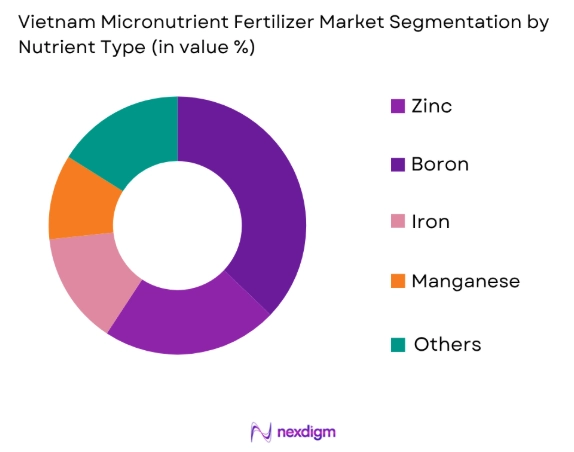
By micronutrient type, the Vietnam micronutrient fertilizer market is segmented into zinc fertilizers, boron fertilizers, iron fertilizers, manganese fertilizers, and others. Zinc fertilizers hold the dominant market share due to widespread zinc deficiencies observed in rice-growing regions of the Mekong Delta and Red River Delta. Vietnam’s intensive rice cultivation cycles and increasing nutrient extraction from soils have accelerated zinc depletion, encouraging farmers to adopt zinc sulphate and chelated zinc products. Additionally, coffee, maize, and fruit crops demonstrate significant yield improvements when zinc deficiencies are corrected. Government-led soil improvement initiatives and growing awareness among farmers regarding balanced nutrient management have further strengthened zinc fertilizer demand. The segment also benefits from compatibility with both soil and foliar applications, making it suitable across diverse crop systems and climatic conditions.
By Crop Type
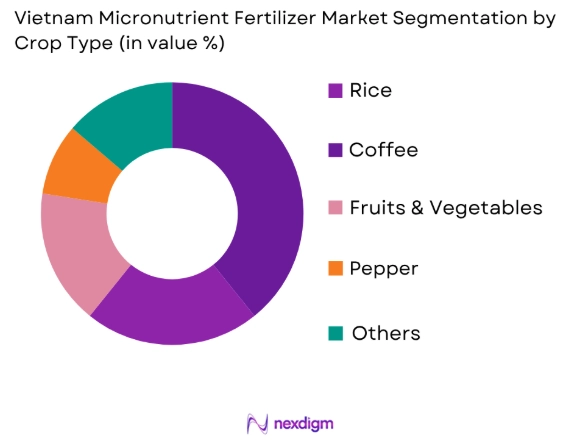
By crop type, the market is segmented into rice, coffee, fruits & vegetables, pepper, and others. Rice dominates the Vietnam micronutrient fertilizer market because it remains the country’s most extensively cultivated crop. Vietnam consistently ranks among the world’s leading rice exporters, requiring high productivity and nutrient optimization across millions of hectares. Continuous multi-cropping practices in the Mekong Delta have increased micronutrient depletion, especially zinc and iron deficiencies. Farmers increasingly utilize micronutrient fertilizers to improve grain filling, root development, stress tolerance, and overall yield quality. Government support for sustainable rice cultivation and export competitiveness has further encouraged adoption. Additionally, climate-related challenges such as salinity intrusion and nutrient imbalances have increased reliance on specialized nutrient management solutions, reinforcing rice’s dominant position within the micronutrient fertilizer market.
Competitive Landscape
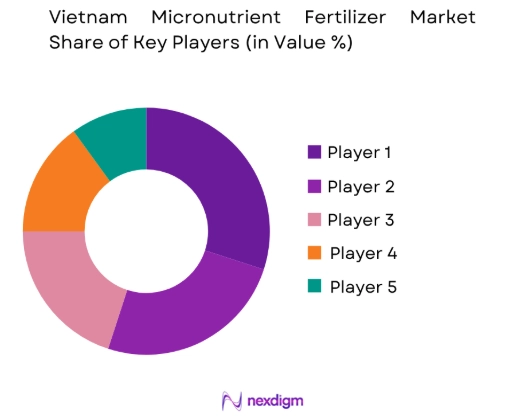
The Vietnam micronutrient fertilizer market is moderately consolidated and characterized by the presence of international fertilizer manufacturers alongside strong domestic producers. Global companies leverage advanced micronutrient technologies and chelated formulations, while domestic firms benefit from established distribution networks and strong relationships with agricultural cooperatives. Competition primarily revolves around product efficacy, nutrient efficiency, crop-specific formulations, dealer penetration, and agronomic support services.
| Company | Establishment Year | Headquarters | Key Micronutrients | Product Portfolio | Distribution Reach | Manufacturing Presence | Crop Focus | Formulation Type |
| Yara International | 1905 | ~ | ~ | ~ | ~ | ~ | ~ | ~ |
| Haifa Group | 1966 | ~ | ~ | ~ | ~ | ~ | ~ | ~ |
| Binh Dien Fertilizer JSC | 1973 | ~ | ~ | ~ | ~ | ~ | ~ | ~ |
| PVFCCo | 2003 | ~ | ~ | ~ | ~ | ~ | ~ | ~ |
| Lam Thao Fertilizers | 1962 | ~ | ~ | ~ | ~ | ~ | ~ | ~ |
Vietnam Micronutrient Fertilizer Market Analysis
Growth Drivers
Expansion of High-Value Crop Cultivation
Vietnam’s micronutrient fertilizer market is significantly supported by the expansion of high-value agricultural crops such as coffee, fruits, vegetables, pepper, and cashew. According to the General Statistics Office of Vietnam, the country maintains more than 11 million hectares of agricultural land, while coffee cultivation alone covers approximately 710,000 hectares and produces over 1.9 million metric tons annually. Vietnam remains one of the world’s largest exporters of coffee, pepper, and cashew products, with agricultural exports exceeding USD 62 billion. Intensive cultivation of these crops accelerates depletion of zinc, boron, iron, and manganese from soils, increasing demand for micronutrient fertilizers. The World Bank reported Vietnam’s GDP exceeded USD 476 billion, while agriculture continues to support millions of livelihoods and export earnings. Fruit and vegetable production surpassed 20 million metric tons, requiring enhanced nutrient management to meet quality requirements in export markets. Commercial farming operations increasingly adopt micronutrient fertilizers to improve fruit size, crop uniformity, stress tolerance, and nutrient uptake efficiency. The concentration of high-value crop production in the Central Highlands, Mekong Delta, and Southeast regions creates strong and sustained demand for specialized micronutrient formulations, making crop diversification and export-oriented agriculture a major growth driver for the Vietnam micronutrient fertilizer market.
Rising Soil Nutrient Deficiencies and Sustainable Farming Initiatives
Increasing soil micronutrient deficiencies across Vietnam’s agricultural regions are driving demand for micronutrient fertilizers. Continuous multi-cropping systems, particularly in rice-producing areas of the Mekong Delta and Red River Delta, have intensified nutrient extraction from soils. Vietnam produces over 43 million metric tons of rice annually from nearly 7 million hectares of cultivated land, creating significant pressure on soil fertility. The Ministry of Agriculture and Rural Development has expanded programs promoting balanced fertilization and sustainable farming practices to improve long-term productivity. According to the Food and Agriculture Organization, fertilizer consumption in Vietnam remains among the highest in Southeast Asia due to intensive crop production systems. The country’s agricultural export value exceeded USD 62 billion, requiring consistent crop quality and yield improvements. Rising awareness regarding deficiencies of zinc, boron, and iron in rice, coffee, pepper, and fruit crops has encouraged greater adoption of micronutrient products. Vietnam’s population exceeds 100 million people, increasing pressure on domestic food production systems. Sustainable agriculture initiatives, improved soil testing practices, and government support for efficient fertilizer use are collectively encouraging farmers to integrate micronutrient fertilizers into nutrient management programs, supporting long-term market growth.
Market Challenges
Dependence on Imported Micronutrient Raw Materials
A major challenge for the Vietnam micronutrient fertilizer market is its dependence on imported raw materials and specialty nutrient compounds. Vietnam imports substantial quantities of zinc, boron, molybdenum, copper, and chelated nutrient ingredients used in fertilizer manufacturing. According to Vietnam Customs data, total merchandise imports exceeded USD 380 billion, reflecting the country’s reliance on international supply chains for industrial and agricultural inputs. Micronutrient fertilizer producers are exposed to fluctuations in global commodity availability, transportation disruptions, and exchange rate movements. The World Bank reported Vietnam’s economy is deeply integrated into international trade networks, making supply continuity dependent on global logistics performance. Fertilizer manufacturers serving Vietnam’s 11 million hectares of agricultural land require uninterrupted access to imported nutrient materials to meet seasonal demand. Delays in sourcing specialized micronutrient compounds can affect production schedules and product availability during critical planting periods. High dependence on imported inputs also creates uncertainty for distributors and retailers serving rice, coffee, fruit, and vegetable farmers. As demand for micronutrient fertilizers grows alongside agricultural modernization, ensuring stable access to imported nutrient ingredients remains a key operational challenge for industry participants.
Limited Adoption Among Smallholder Farmers
Despite increasing awareness of soil nutrition, adoption of micronutrient fertilizers remains uneven among Vietnam’s large population of smallholder farmers. Agriculture in Vietnam consists predominantly of small and fragmented farms, many of which focus primarily on traditional fertilizer applications involving nitrogen, phosphorus, and potassium. The country has more than 9 million farming households, creating challenges for widespread dissemination of advanced nutrient management practices. While commercial plantations and export-oriented producers increasingly utilize micronutrient fertilizers, adoption among smaller farmers remains constrained by limited technical knowledge and insufficient soil testing. Vietnam’s rural population exceeds 60 million people, making extension outreach and farmer education programs critical. The Ministry of Agriculture continues promoting balanced fertilization, yet awareness of zinc, boron, iron, and manganese deficiencies remains inconsistent across regions. Many farmers rely on historical fertilization practices rather than soil-specific nutrient recommendations. This limits market penetration for specialty fertilizer products, particularly in remote agricultural provinces. Expanding farmer training programs, improving agronomic advisory services, and increasing access to affordable soil analysis will be necessary to address knowledge gaps and support broader adoption of micronutrient fertilizers throughout Vietnam’s agricultural sector.
Market Opportunities
Growth of Precision Agriculture and Smart Farming Technologies
The increasing adoption of precision agriculture technologies presents a major opportunity for the Vietnam micronutrient fertilizer market. Vietnam’s government is actively promoting digital transformation across agriculture through smart farming initiatives, satellite monitoring, and digital advisory platforms. With more than 100 million people and extensive agricultural production systems, the country is investing in technologies that improve input efficiency and productivity. According to the Ministry of Information and Communications, internet penetration exceeds 78 million users, supporting wider adoption of digital agricultural solutions. Precision agriculture allows farmers to identify nutrient deficiencies more accurately and apply micronutrient fertilizers based on crop-specific requirements. Vietnam’s coffee, fruit, vegetable, and rice sectors increasingly utilize digital tools to optimize nutrient management and improve export competitiveness. The World Bank highlights digital agriculture as an important component of productivity enhancement and climate resilience. The country’s agricultural exports exceeding USD 62 billion create strong incentives for farmers to improve crop quality through targeted nutrient applications. As precision farming technologies become more accessible, demand for specialized micronutrient products including chelated zinc, boron blends, and water-soluble formulations is expected to increase substantially across major crop-producing regions.
Expansion of Export-Oriented Horticulture and Specialty Crops
Vietnam’s rapidly expanding horticulture and specialty crop sectors create significant opportunities for micronutrient fertilizer manufacturers. Fruits, vegetables, coffee, pepper, and cashew products account for a substantial portion of Vietnam’s agricultural exports. Fruit and vegetable exports alone exceeded USD 5 billion, while coffee exports generated more than USD 5 billion in annual revenue. These crops require precise nutrient management to meet international quality standards related to appearance, shelf life, sugar content, and productivity. Vietnam cultivates fruits and vegetables across millions of hectares, particularly in the Mekong Delta, Southeast Region, and Central Highlands. Increasing integration into global agricultural supply chains encourages producers to adopt advanced nutrient solutions that improve crop quality and consistency. According to the General Statistics Office, agricultural output continues to expand despite land constraints, increasing emphasis on productivity gains rather than acreage expansion. Micronutrient fertilizers play a critical role in addressing deficiencies that limit crop performance. As exporters seek to strengthen competitiveness in markets across Asia, Europe, and North America, demand for crop-specific micronutrient formulations is expected to rise. This creates attractive opportunities for manufacturers offering innovative and performance-oriented nutrient solutions tailored to Vietnam’s high-value agricultural sectors.
Future Outlook
The Vietnam micronutrient fertilizer market is expected to demonstrate sustained growth during the forecast period, supported by increasing emphasis on sustainable agriculture, rising demand for export-quality crops, and growing adoption of precision nutrient management practices. Expansion of coffee, fruit, vegetable, and specialty crop cultivation is expected to generate additional demand for micronutrient solutions. Continued government focus on improving soil health, coupled with advancements in fertigation and foliar nutrition technologies, is likely to accelerate adoption. Increased awareness regarding micronutrient deficiencies and the shift toward higher-value agricultural production systems will further strengthen market growth prospects. Forecast CAGR (2026–2035): 6.8%
Major Players
- Yara International
- Haifa Group
- Nutrien Ltd.
- ICL Group
- Coromandel International
- Aries Agro Limited
- The Mosaic Company
- Koch Agronomic Services
- Binh Dien Fertilizer JSC
- PetroVietnam Fertilizer and Chemicals Corporation (PVFCCo)
- Lam Thao Fertilizers and Chemicals JSC
- Southern Fertilizer JSC
- Duc Giang Chemicals Group
- Van Dien Fused Magnesium Phosphate Fertilizer JSC
- Ba Ha Fertilizer JSC
Key Target Audience
- Micronutrient Fertilizer Manufacturers
- Agricultural Input Distributors and Dealers
- Commercial Crop Growers and Plantation Operators
- Agricultural Cooperatives
- Fertilizer Importers and Exporters
- Investments and Venture Capitalist Firms
- Government and Regulatory Bodies
- Precision Agriculture and Agritech Solution Providers
Research Methodology
Step 1: Identification of Key Variables
The research process begins with identifying major variables influencing the Vietnam micronutrient fertilizer market. Extensive secondary research is conducted to understand fertilizer consumption trends, crop acreage, soil nutrient deficiencies, government regulations, and agricultural productivity indicators. Key stakeholders across manufacturing, distribution, and end-user segments are mapped to establish the market ecosystem.
Step 2: Market Analysis and Construction
Historical market performance is analyzed using a bottom-up and top-down approach. Data on fertilizer production, imports, exports, crop-specific nutrient demand, and farmer adoption patterns are consolidated to estimate market size. Additional analysis is conducted to evaluate pricing trends, nutrient application rates, and regional consumption patterns.
Step 3: Hypothesis Validation and Expert Consultation
Market assumptions are validated through interviews with fertilizer manufacturers, distributors, agronomists, agricultural consultants, and industry experts. These consultations provide insights into product demand, emerging nutrient deficiencies, competitive dynamics, and future growth opportunities. Findings are cross-verified with publicly available agricultural and trade data.
Step 4: Research Synthesis and Final Output
The final stage involves synthesizing primary and secondary research findings into a comprehensive market assessment. Market estimates, forecasts, segmentation analysis, competitive benchmarking, and strategic recommendations are validated through data triangulation techniques to ensure reliability and accuracy.

- Executive Summary
- Research Methodology (Market Definitions and Assumptions, Abbreviations, Market Sizing Approach, Bottom-Up and Top-Down Validation, Primary Research Interviews, Demand-Supply Assessment Framework, Data Triangulation Methodology, Limitations and Future Conclusions)

- Definition and Scope
- Market Evolution and Industry Genesis
- Timeline of Major Industry Developments
- Agricultural Nutrient Management Ecosystem
- Supply Chain and Value Chain Analysis

- Growth Drivers (Rising Soil Micronutrient Deficiencies, Expansion of High-Value Crop Cultivation, Increasing Fertilizer Use Efficiency Requirements, Government Sustainable Agriculture Initiatives, Growth in Export-Oriented Agriculture)
- Market Challenges (Volatility in Raw Material Imports, Limited Farmer Awareness, Counterfeit Fertilizer Products, Climatic Risks Impacting Application Cycles, Fragmented Distribution Network)
- Market Opportunities (Precision Agriculture Adoption, Specialty Fertilizer Innovation, Expansion of Protected Cultivation, Digital Agronomy Platforms, Organic and Sustainable Farming Transition)
- Market Trends (Foliar Nutrition Adoption, Multi-Micronutrient Blends, Chelated Fertilizer Demand, Smart Farming Integration, Crop-Specific Nutrient Solutions)
- Government Regulations (Ministry of Agriculture Fertilizer Standards, Fertilizer Registration Framework, Import Licensing Requirements, Product Quality Compliance, Environmental Protection Regulations)
- SWOT Analysis
- Stakeholder Ecosystem
- PESTLE Analysis
- Porter’s Five Forces Analysis
- Competition Ecosystem

- By Market Value (2020-2025)
- By Volume Consumption (2020-2025)
- By Average Selling Price (2020-2025)

- By Nutrient Type (In Value %)
Zinc Fertilizers
Boron Fertilizers
Iron Fertilizers
Manganese Fertilizers
Copper Fertilizers
Molybdenum Fertilizers
Multi-Micronutrient Blends
Others - By Crop Type (In Value %)
Rice
Coffee
Fruits & Vegetables
Pepper
Rubber
Maize Cashew
Others - By Form Type (In Value %)
Chelated Micronutrients
Non-Chelated Micronutrients
Liquid Micronutrients
Granular Micronutrients
Water-Soluble Micronutrients - By Application Method (In Value %)
Soil Application
Foliar Spray
Fertigation
Seed Treatment
Controlled Release Application - By Distribution Channel (In Value %)
Agrochemical Dealers &Retailers
Cooperatives
Direct Company Sales
E-Commerce Platforms
Agricultural Input Distributors

- Market Share of Major Players (By Value, Volume, Nutrient Portfolio, Crop Coverage, Distribution Reach, Regional Penetration)
- Cross Comparison Parameters (Product Portfolio Strength, Micronutrient Portfolio Breadth, Chelated Product Portfolio, Manufacturing Capacity, Distribution Network Reach, Crop-Specific Product Offering, Import Dependency Level, Regulatory Registration Portfolio)
- SWOT Analysis of Major Players
- Pricing Analysis Basis SKUs (Zinc Sulphate, Borax, Ferrous Sulphate, Manganese Sulphate, Copper Sulphate, Sodium Molybdate, Chelated Zinc EDTA, Chelated Iron EDTA, Multi-Micronutrient Blends, Liquid Micronutrient Formulations)
- Detailed Profiles of Major Companies
Yara Vietnam
Haifa Group
Nutrien Ltd.
ICL Group
Coromandel International
Aries Agro Limited
The Mosaic Company
Koch Agronomic Services
Ba Ha Fertilizer JSC
Binh Dien Fertilizer JSC
PetroVietnam Fertilizer and Chemicals Corporation (PVFCCo)
Southern Fertilizer JSC
Lam Thao Fertilizers and Chemicals JSC
Duc Giang Chemicals Group
Van Dien Fused Magnesium Phosphate Fertilizer JSC

- Crop Nutrition Demand Assessment
- Fertilizer Spending Patterns and Budget Allocation
- Micronutrient Deficiency Management Practices
- Farmer Awareness and Adoption Analysis
- Yield Improvement Expectations
- Decision-Making Framework for Fertilizer Selection
- Brand Preference and Loyalty Assessment
- Precision Farming Adoption Trends

- By Market Value (2026-2035)
- By Volume Consumption (2026-2035)
- By Average Selling Price (2026-2035)


 Request a Sample
 Ask for Customization
 Get a Quote
 Enquire Now