

 Download PDF
Market Overview
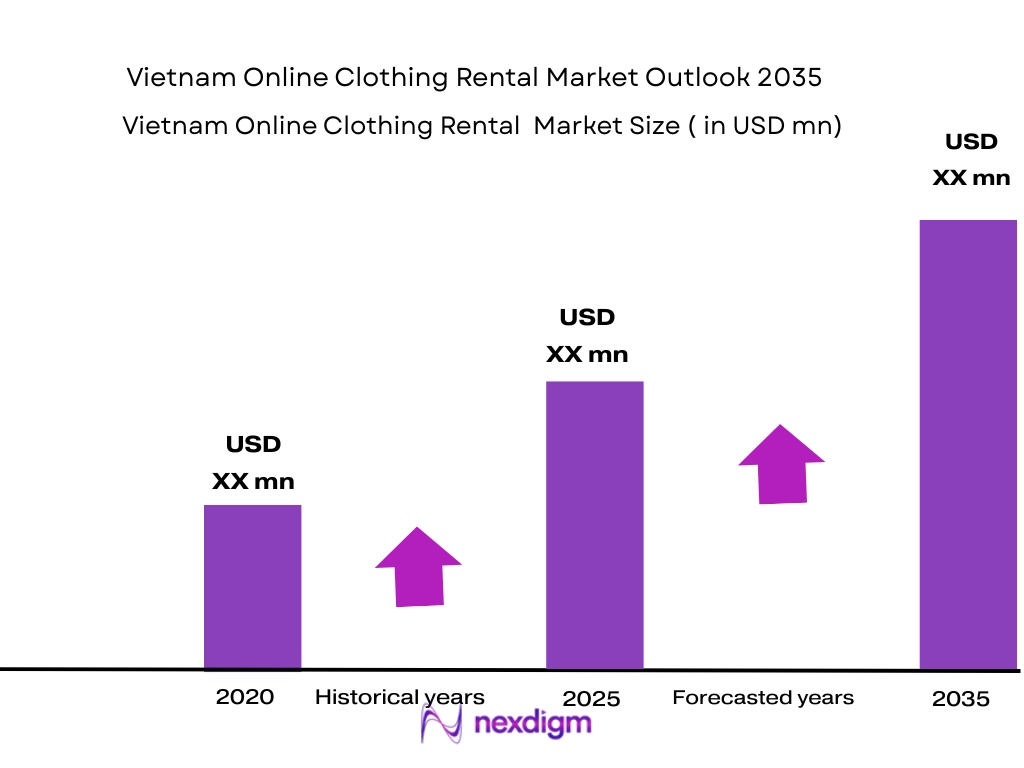
The Vietnam online clothing rental market is valued at USD ~ million, with the sector witnessing steady growth due to increased awareness about sustainable fashion and the rising trend of renting over purchasing. The market is driven by young consumers who are actively seeking cost-effective, environmentally friendly alternatives to owning clothing. Growing urbanization, along with an evolving digital landscape, has made it easier for consumers to rent high-quality apparel online, contributing to market expansion. Additionally, the demand for rental services across various categories like formal wear and event-based rentals continues to rise, influencing market dynamics.
Dominating the online clothing rental market in Vietnam are major urban centers like Ho Chi Minh City and Hanoi. These cities, known for their high disposable incomes, progressive fashion trends, and heavy internet penetration, make them ideal hubs for online retail. The growing presence of tech-savvy younger generations in these regions, coupled with the expanding e-commerce infrastructure, further solidifies their dominance. These metropolitan areas lead the charge as fashion-conscious individuals increasingly turn to digital platforms for convenient, eco-friendly clothing options.
Market Segmentation
By Product Type
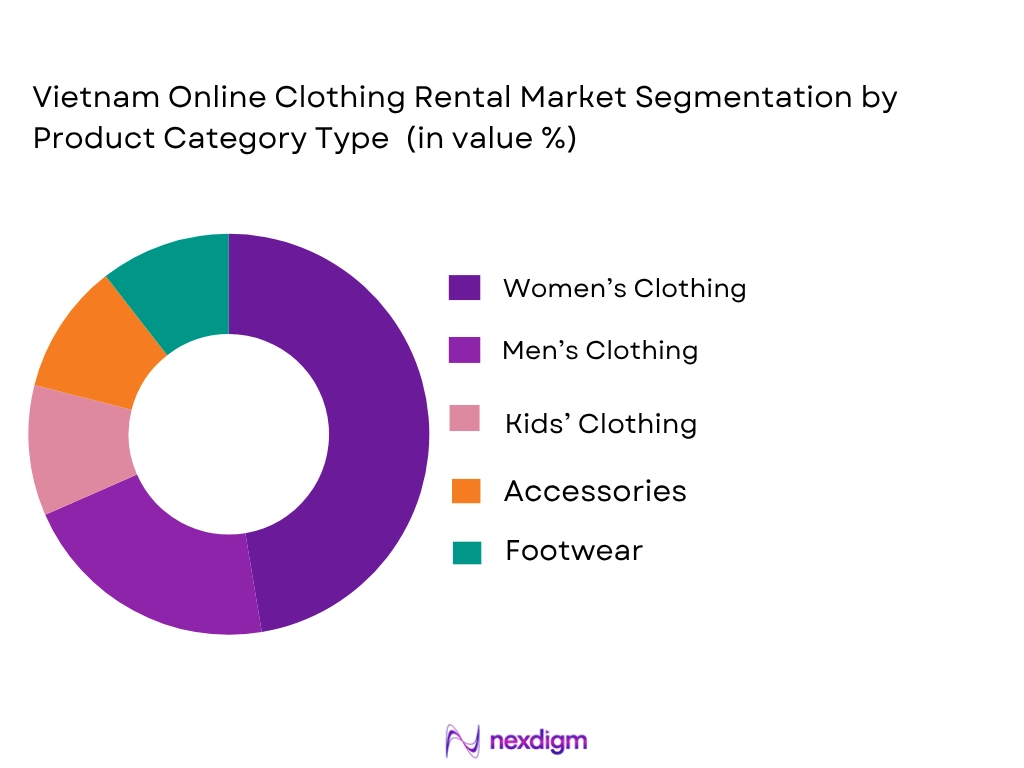
The Vietnam online clothing rental market is segmented by product type into women’s clothing, men’s clothing, kids’ clothing, accessories, footwear, formal wear, casual wear, and evening wear. Among these, women’s clothing holds the dominant share. This can be attributed to the growing trend of women renting outfits for various occasions such as parties, weddings, and office wear. With the increasing adoption of online rental services, the demand for high-quality, fashionable women’s clothing, including dresses, blouses, and formal suits, continues to surge. Additionally, the extensive product variety, customization options, and the appeal of high-end designer wear for rental contribute significantly to the popularity of this segment.
By Distribution Channel
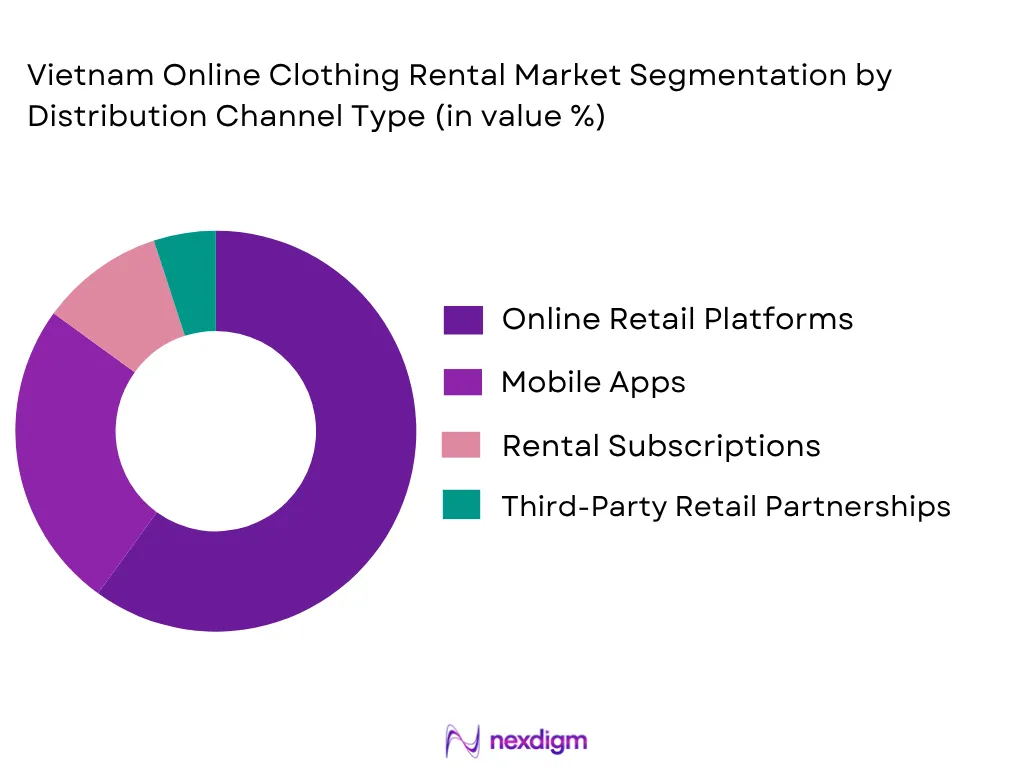
The Vietnam online clothing rental market is segmented by distribution channel into e-commerce platforms, mobile apps, rental subscriptions, direct sales (company websites), and third-party retail partnerships. E-commerce platforms, including both established players and new market entrants, dominate this segment due to the extensive reach and ease of use they offer. The rapid digitalization in Vietnam, combined with the growing reliance on e-commerce, has facilitated the widespread adoption of online rental services. Mobile apps, in particular, provide a seamless experience, allowing consumers to browse, rent, and return clothing with minimal effort, further bolstering this segment’s dominance.
Competitive Landscape
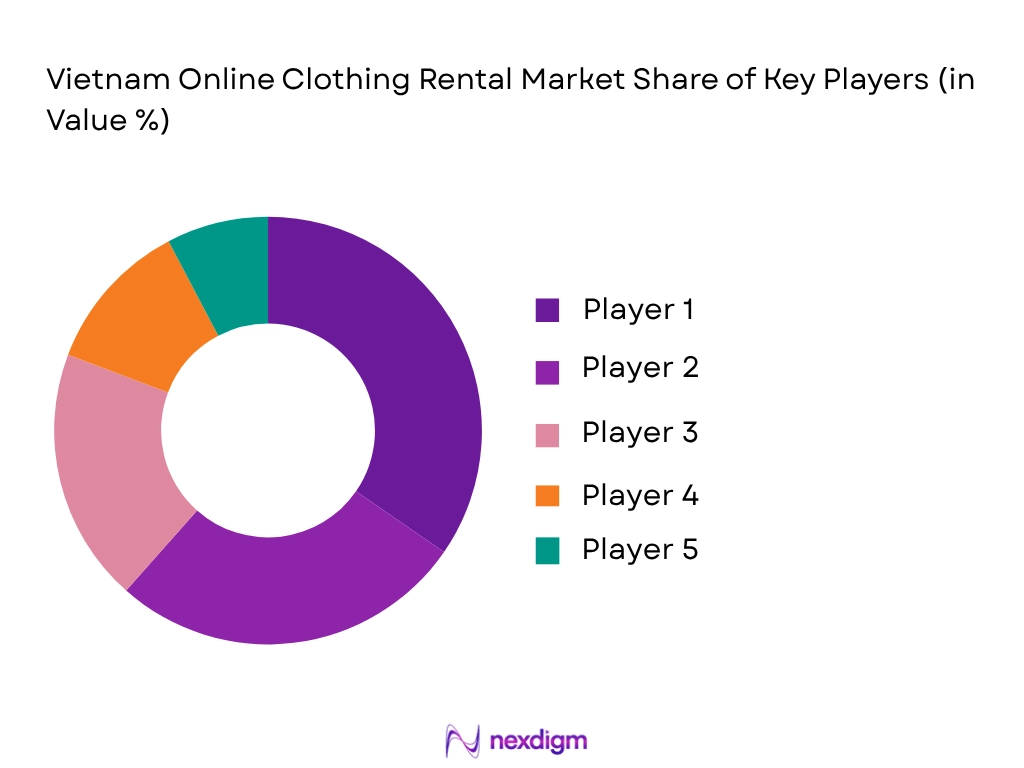
The Vietnam online clothing rental market is dominated by a few key players, including global brands like Rent The Runway and local platforms such as Le Tote. These companies have established themselves through strong e-commerce platforms, offering a wide range of clothing options and reliable delivery services. The competition primarily revolves around product variety, subscription models, and customer service. Some players are also focusing on building loyalty through influencer partnerships and offering a seamless, personalized experience to attract tech-savvy, fashion-conscious consumers.
| Company Name | Establishment Year | Headquarters | Product Offering | Delivery Reach | Subscription Models | Pricing Strategy | Marketing Approach | Digital Platform Capabilities | Customer Satisfaction | Brand Recognition |
| Rent The Runway | 2009 | USA | Women’s Apparel | ~ | ~ | ~ | ~ | ~ | ~ | ~ |
| Le Tote | 2009 | USA | Women’s Apparel | ~ | ~ | ~ | ~ | ~ | ~ | ~ |
| GlamCorner | 2012 | Australia | Women’s Apparel | ~ | ~ | ~ | ~ | ~ | ~ | ~ |
| Zilingo Rent | 2015 | Vietnam | All categories | ~ | ~ | ~ | ~ | ~ | ~ | ~ |
| The Flex Rentals | 2015 | Vietnam | All categories | ~ | ~ | ~ | ~ | ~ | ~~ | ~ |
Vietnam Online Clothing Rental Market Analysis
Growth Drivers
Changing Fashion Trends and Consumer Preferences
The evolving fashion trends and changing consumer preferences are significant drivers of the online clothing rental market in Vietnam. Consumers, especially the younger generation, are increasingly opting for trendy outfits for short-term use rather than investing in expensive items they may only wear once. This shift is further fueled by social media influencers and fashion blogs, which encourage a “wear once, rent again” mentality. As the demand for stylish, short-term fashion grows, online rental platforms provide an accessible, affordable way to keep up with the latest trends without the financial burden of ownership.
Increased Focus on Sustainability and Circular Fashion
With the growing emphasis on sustainability, more consumers are turning to clothing rentals as a solution to reduce their environmental footprint. The circular fashion movement, which encourages reusing, recycling, and renting instead of purchasing, is gaining momentum in Vietnam. This growing environmental awareness among consumers aligns with the rental model, which supports resource efficiency and reduces waste. As the population becomes more conscious of the impact of fast fashion, rental services are seen as a responsible choice, further driving the market’s expansion in Vietnam.
Market Challenges
Consumer Trust and Perceived Hygiene Concerns
A major challenge for the Vietnam online clothing rental market is the consumer concern over the cleanliness and hygiene of rented clothing. Many potential customers are hesitant to rent clothes due to fears of contamination, odors, and inadequate cleaning processes. Despite advances in sanitation practices, such as dry cleaning and sterilization, ensuring that rented clothing meets hygiene standards remains a critical barrier. This issue can undermine consumer confidence and limit market growth, especially in a society where cleanliness and personal care are of utmost importance.
Limited Variety and Size Options
Limited variety and size options present a challenge in the online clothing rental market in Vietnam. Many platforms still struggle to cater to a broad range of body types, especially plus-size consumers. The availability of limited designs and sizes can discourage customers from opting for rental services, as they may not find the right fit or style for their needs. Expanding product ranges, including more inclusive sizing options and diverse styles, is essential for increasing the appeal of rental services to a wider audience and ensuring sustainable market growth.
Opportunities
Expanding the Subscription Model for Consistent Revenue
The subscription model offers a promising opportunity for the Vietnam online clothing rental market to secure consistent, recurring revenue. By allowing customers to pay a fixed amount for unlimited or a set number of rentals per month, rental platforms can build customer loyalty while ensuring steady cash flow. This model provides convenience and flexibility for consumers, particularly those who need regular access to fresh clothing for work or events. It also reduces the burden of one-time rental fees, making it an attractive option for long-term users. As subscription-based services continue to grow in popularity, platforms can leverage this trend to enhance customer retention and increase market penetration.
Growing Demand for Sustainable Fashion
The increasing consumer demand for sustainable fashion presents a major opportunity for the online clothing rental market in Vietnam. As environmental concerns continue to shape purchasing behaviors, more consumers are moving away from fast fashion in favor of eco-friendly, circular alternatives. Renting clothing aligns perfectly with the sustainability movement, as it promotes the reuse of garments and reduces textile waste. By tapping into this growing demand for responsible fashion choices, rental platforms can attract environmentally conscious consumers who prefer to rent instead of buy, thus expanding their customer base and contributing to a more sustainable fashion ecosystem.
Future Outlook
Over the next 5 years, the Vietnam online clothing rental market is expected to show significant growth driven by continuous government support, advancements in digital retail technologies, and increasing consumer demand for sustainable, cost-effective fashion solutions. The market is projected to see an increasing number of players entering the space, fueled by consumer interest in eco-friendly alternatives to fast fashion and the growing trend of renting clothing for special occasions. Enhanced customer experiences through innovations like AI-based personal recommendations and mobile app optimization will further propel market expansion.
Major Players
- Rent The Runway
- Le Tote
- GlamCorner
- Zilingo Rent
- The Flex Rentals
- Klook Fashion Rentals
- Zalora Rent
- H&M Rent
- Rentez-Vous
- MyWardrobeHQ
- Fashion Pass
- Borrow It Binda
- LUXLIRIOUS
- Dress Hire
- Swish Wardrobe
Key Target Audience
- Investors and Venture Capitalist Firms
- Government and Regulatory Bodies
- E-commerce and Online Fashion Platforms
- Clothing Rental Service Providers
- Event Organizers and Planners
- Fashion Designers and Brands
- High-net-worth Individuals
- Retailers Looking to Expand into Rental Services
Research Methodology
Step 1: Identification of Key Variables
The initial phase involves constructing an ecosystem map of key stakeholders in the Vietnam online clothing rental market. This process includes secondary research and utilizing proprietary databases to gather information from industry reports, fashion retail data, and e-commerce analytics to define critical variables.
Step 2: Market Analysis and Construction
In this phase, historical data is compiled and analyzed, focusing on the ratio of online rental services, market penetration, revenue generation, and service quality metrics. These insights are used to create a reliable market construction model.
Step 3: Hypothesis Validation and Expert Consultation
Consultations are held with industry experts and key players in the Vietnamese e-commerce and fashion rental industries through CATIS to validate the hypotheses, gather feedback, and refine market assumptions.
Step 4: Research Synthesis and Final Output
The final phase consolidates insights from multiple clothing rental service providers to understand product segmentation, customer behavior, and regional preferences. This data is cross-verified to ensure accuracy and provide a comprehensive analysis of the market.

- Executive Summary
- Research Methodology (Market Definitions and Scope of Online Clothing Rental Services, Segmentation Framework, Data Collection Approach, Bottom-Up Market Sizing Approach, Top-Down Market Validation, Assumptions on Product Development Trends and Regulatory Landscape, Limitations and Data Triangulation Techniques, TAM/SAM/SOM Modelling Framework Based on Consumer Spending, Product Penetration, and Market Growth)

- Definition and Scope
- Evolution of Online Clothing Rental Industry in Vietnam
- Timeline of Regulatory Changes and Policy Development
- Trade and Supply Chain Lifecycle Integration
- Value Chain Analysis
- Stakeholder Ecosystem

- Growth Drivers
Changing Fashion Trends and Consumer Preferences
Increased Focus on Sustainability and Circular Fashion
Growth of E-Commerce and Digital Platforms
Rising Disposable Income and Urbanization
Demand for Cost-Effective and Flexible Fashion Solutions
Changing Social Norms and Renting Culture - Market Challenges
Consumer Trust and Perceived Hygiene Concerns
Limited Variety and Size Options
High Logistics and Return Costs
Competition from Traditional Retail
Regulatory Challenges in Product Rental and Returns - Opportunities
Expanding the Subscription Model for Consistent Revenue
Growing Demand for Sustainable Fashion
Rising Awareness of Clothing Rental for Events (Weddings, Parties, etc.)
Untapped Rural Markets for Online Rentals
Technological Advancements (AI, AR for Virtual Try-Ons)
Integration with Fashion Influencers and Social Media Platforms - Market Trends
Growth of Rental Subscriptions for Regular Consumers
Adoption of AI for Personalized Rental Recommendations
Use of Augmented Reality (AR) for Virtual Fittings
Rising Popularity of Eco-Friendly, Second-Hand, and Recycled Clothing Rentals
Social Media Integration and Influencer Collaborations - Regulatory Landscape
Vietnam’s Consumer Protection Laws and Their Impact on Online Rentals
Import and Tax Regulations on Fashion and Clothing Products
Standards for Hygiene, Safety, and Quality Compliance in Clothing Rentals
Environmental Regulations and Their Effect on Sustainability in the Rental Industry
Labor and Operational Laws Impacting the Online Rental Service Providers - SWOT Analysis
- Porter’s Five Forces
- Impact of Logistics and Distribution Network
- Retail Partnerships and E-Commerce Integration

- By Value, 2020-2025
- By Volume, 2020-2025
- By Average Price per Unit, 2020-2025

- By Product Category (in Value %)
Women’s Clothing
Men’s Clothing
Kids’ Clothing
Accessories
Footwear - By Distribution Channel (in Value %)
Online Retail Platforms (E-Commerce Websites)
Mobile Apps
Rental Subscriptions
Third-Party Retail Partnerships - By Consumer Demographics (in Value %)
Individual Consumers
Family Consumers
Corporate Consumers (Uniform and Office Wear Rentals)
Event Consumers (Weddings, Parties, etc.)
Institutional Consumers (Hotels, Film & TV Industry, etc.) - By Price Range (in Value %)
Budget Range
Mid-Range
Premium Range - By Region (in Value %)
Northern Region (Hanoi, Hai Phong)
Central Region (Da Nang, Hue)
Southern Region (Ho Chi Minh City, Can Tho, Binh Duong)
Rural and Emerging Markets

- Market Share of Major Players
By Value
By Volume
By Product Category Penetration
By Distribution Channel Penetration - Cross Comparison Parameters (Product Portfolio, Distribution Reach, Innovation Index, Brand Recognition, Marketing Spend, Customer Satisfaction, Service Offering, Digital Platform Capability)
- SWOT Analysis of Major Players
- Pricing Benchmarking
- Detailed Profiles of Major Companies
Rent The Runway Vietnam
Le Tote Vietnam
GlamCorner Vietnam
H&M Rent
The Flex Rentals
Zilingo Rent
Klook Fashion Rentals
Local Boutique Rent Services

- Consumption Patterns and Seasonal Demand
- Price Sensitivity and Consumer Loyalty Analysis
- Pain Points in Clothing Rental Usage
- Consumer Decision-Making Criteria
- End User TAM Analysis

- By Value, 2026-2035
- By Volume, 2026-2035
- By Average Price per Unit, 2026-2035


 Request a Sample
 Ask for Customization
 Get a Quote
 Enquire Now