

 Download PDF
Market Overview
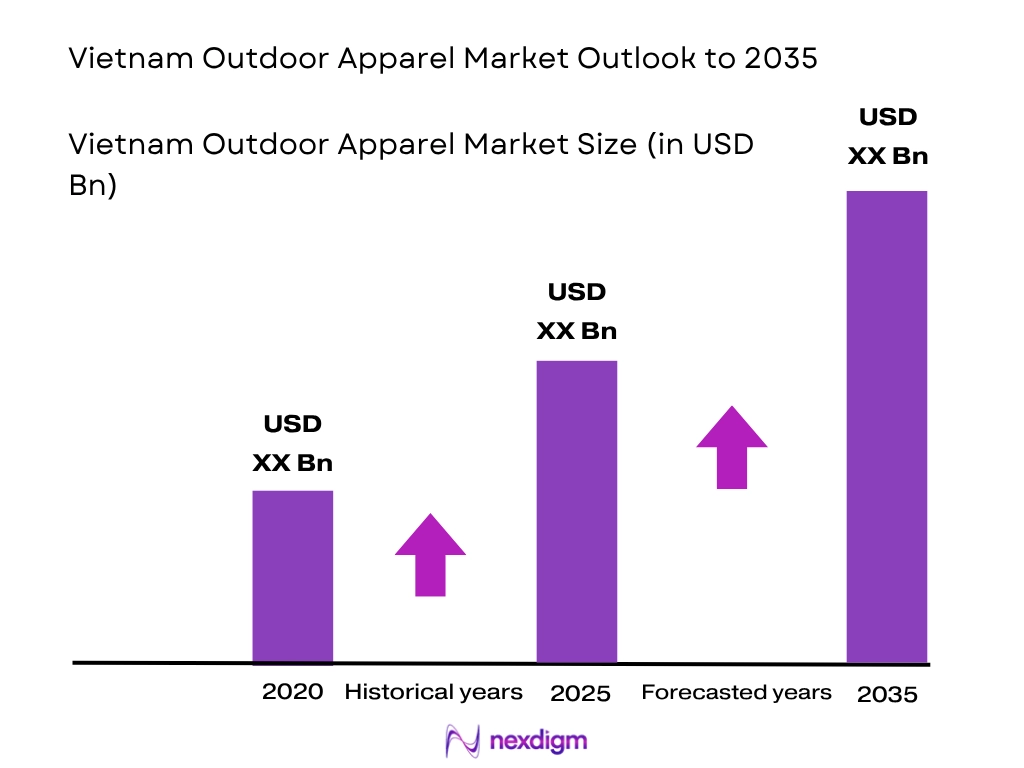
The Vietnam Outdoor Apparel Market is valued at approximately USD ~ billion in 2024, based on Nexdigm’s industry analysis of the broader Vietnam sports equipment and outdoor gear sector, which encompasses outdoor apparel, gear, and accessories. This valuation reflects sustained consumer interest in outdoor activities, rising disposable incomes, and expanding retail channels across the country over the past five years. Key market drivers include increased participation in recreational activities such as hiking and cycling, as well as the influence of health and fitness trends on fashion preferences.
Urban centers like Ho Chi Minh City and Hanoi dominate the Vietnam outdoor apparel market due to larger middle‑class populations, higher consumer spending power, and more developed retail and e‑commerce infrastructure. These cities also host major international and domestic brand outlets and hold a concentrated base of outdoor enthusiasts, making them focal points for product launches, experiential storefronts, and premium segment demand.
Market Segmentation
By Product Type
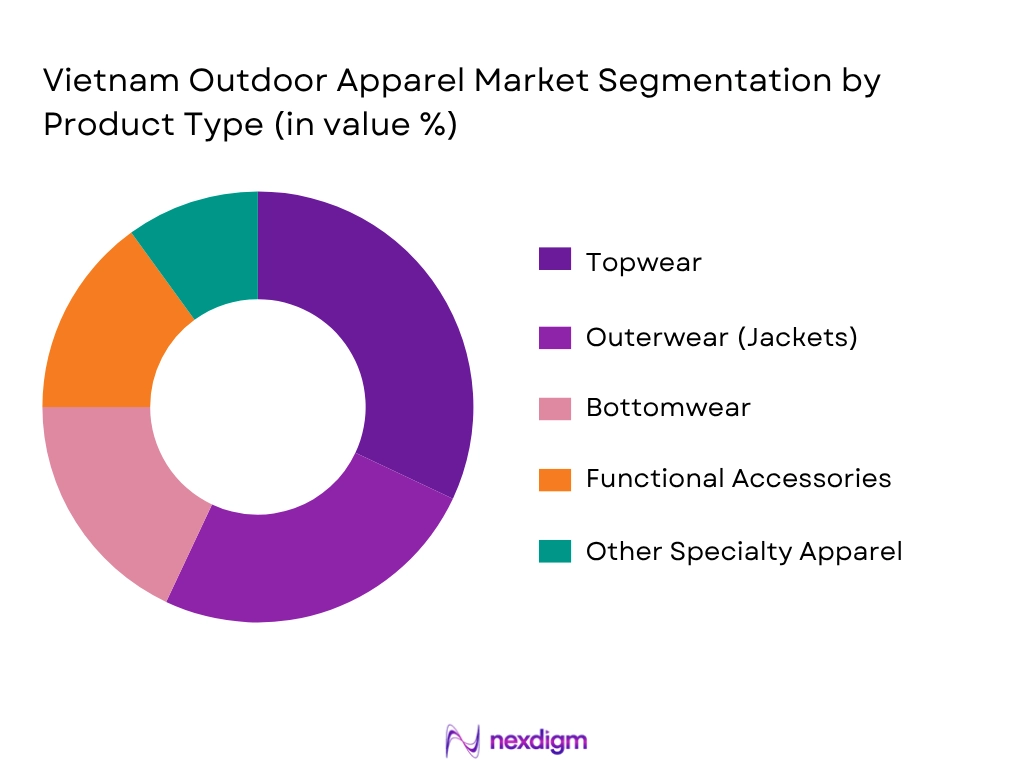
Topwear dominates the market share due to its versatility and broad appeal across different outdoor pursuits and everyday casual use. Consumers often prioritize functionality with moisture‑wicking, UV protection, and comfort features. The accessibility of topwear across price tiers and strong demand facilitated by digital channels further strengthens its lead. Established brands market topwear extensively, and this category often serves as the gateway product for new outdoor apparel consumers.
By Sales Channel
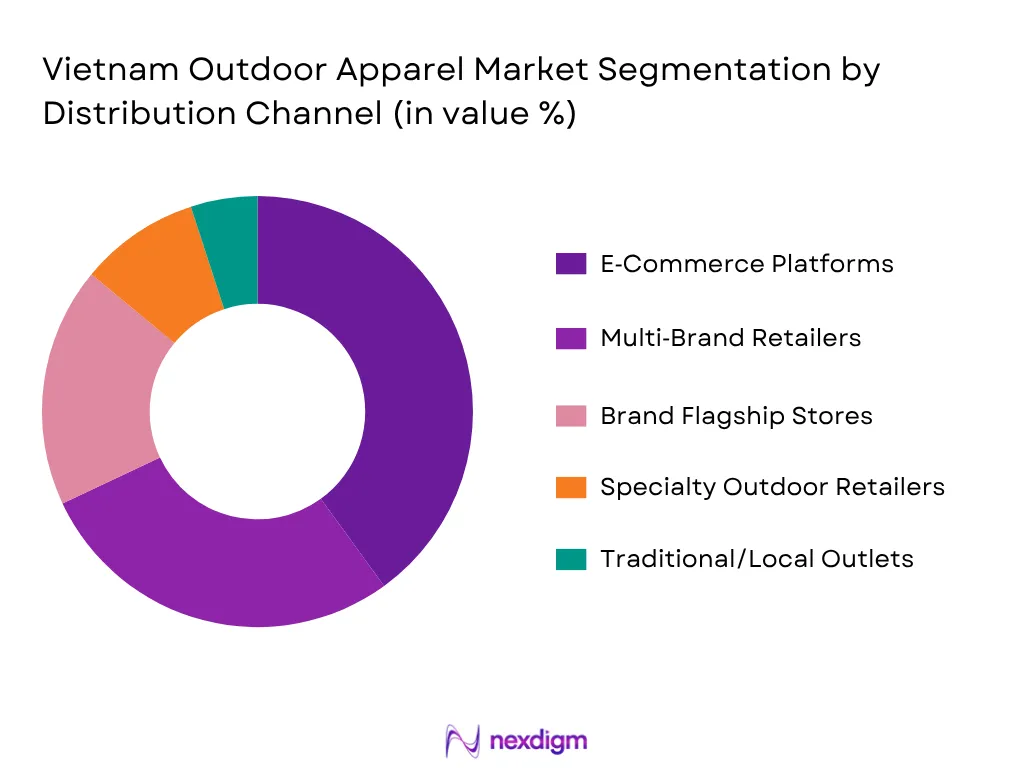
E‑Commerce Platforms hold the largest channel share, driven by changing consumer shopping behaviors and higher internet/mobile penetration. Online retail provides broader assortment visibility and convenience for Vietnamese buyers, especially younger demographics who are active on social commerce channels and marketplaces. This channel also enables smaller outdoor brands to reach national audiences without heavy investment in physical stores. Logistics improvements and mobile payment adoption have further strengthened online channel penetration.
Competitive Landscape
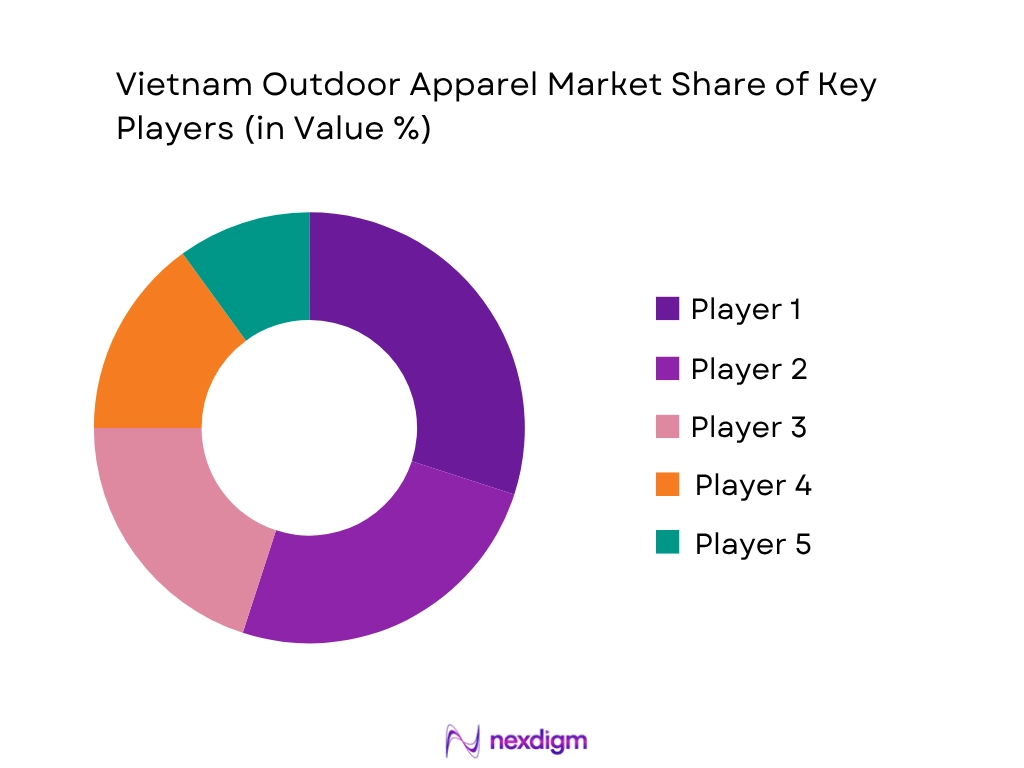
The Vietnam Outdoor Apparel Market features a mix of international brands and emerging local players. Global outdoor brands lead product innovation and premium segment offerings, while local manufacturers and retailers compete in mid‑tier and value segments. In Vietnam, international brands such as The North Face, Columbia, and Patagonia maintain strong visibility through flagship stores and partnerships with multi‑brand retailers. These brands emphasize technical features and performance innovation. In contrast, Decathlon Vietnam has leveraged its wide retail footprint and value pricing to capture broader customer segments. Local brands also contribute to the market but face competitive pressures in brand differentiation and technology adoption.
| Brand | Est. Year | Headquarters | Product Range Breadth | Retail Reach (VN) | Technical Innovation | Channel Strategy | Sustainability Focus |
| The North Face | 1968 | USA | ~ | ~ | ~ | ~ | ~ |
| Columbia Sportswear | 1938 | USA | ~ | ~ | ~ | ~ | ~ |
| Patagonia | 1973 | USA | ~ | ~ | ~ | ~ | ~ |
| Decathlon Vietnam | 1996 | France | ~ | ~ | ~ | ~ | ~ |
| Quechua (Decathlon brand) | 1997 | France | ~ | ~ | ~ | ~ | ~ |
Vietnam Outdoor Apparel Market Analysis
Growth Drivers
Outdoor Participation
In Vietnam, increased participation in physical activities and sports is a measurable force underpinning outdoor apparel demand. According to the Vietnam Department of Sports and Physical Training, in 2024 an estimated 37.5 percent of the population regularly engaged in sports or physical activity, while 28.3 percent of families reported systematic sports participation through clubs and organized events, indicating a broad cultural shift toward active lifestyles. These figures correlate with robust tourism activity, where the General Statistics Office reported 17.5 million international visitors and 110 million domestic tourists in 2024, collectively generating approximately 840,000 billion VND in tourism revenue, which fuels outdoor recreation demand including hiking, adventure tours, and leisure travel. As infrastructure improvements expand access to national parks and coastal regions, and as public health campaigns promote exercise, participation in outdoor pursuits increasingly translates into purchases of specialised outdoor apparel (e.g., technical tops, outdoor jackets, performance bottoms and accessories) tailored to a wide range of activities. The scale of active engagement and leisure travel contributes directly to broader consumer demand dynamics for functional outdoor clothing.
Performance Apparel
Performance apparel is emerging as a core contributor to consumer expenditure within the broader outdoor gear category in Vietnam. While specific outdoor apparel industry revenue figures are scarce, macroeconomic indicators underscore a favourable environment for performance apparel uptake: Vietnam’s total retail sales of goods and consumer services in 2024 reached an estimated VND 6,391.0 thousand billion (approximately USD 251.5 billion) at current prices, reflecting strong overall consumer spending power. The notable recovery in Vietnam’s retail sector is bolstered by the continued growth of discretionary spending undergirded by GDP expansion — the General Statistics Office estimates GDP grew by 7.09 percent in 2024 compared to the previous year, supported in part by an expanding services sector. Consumer demand for performance apparel (characterised by moisture wicking, UV protection, breathability and comfort features) aligns with broader retail growth and a cultural shift toward health and fitness, as evidenced by the strong domestic sports participation rates. As outdoor participation and active lifestyles continue to gain traction among urban and youth consumers, performance apparel benefits from both enhanced visibility through athletic and tourism sectors and the willingness of consumers to invest in specialised garment technologies that support high‑intensity outdoor use. This macro retail backdrop reinforces performance apparel as a meaningful catalyst of market growth.
Market Challenges
Raw Material Prices
The Vietnamese outdoor apparel market’s development is constrained by volatility in the prices and availability of key raw materials that form the basis of performance and technical fabrics. Vietnam’s textile and garment industry, which supplies fabrics and intermediate goods essential to outdoor apparel production, relies heavily on imported raw materials, with estimates indicating nearly 95–100 percent of fibers such as cotton and synthetic yarns come from foreign suppliers, and over 60 percent of fabrics used in exports are foreign‑made. This dependence exposes manufacturers to global commodity price cycles and international supply chain risks. For instance, fluctuations in crude oil prices directly influence the cost of synthetic fibers like polyester and nylon, which are petroleum‑derived. When crude prices exceed USD 100 per barrel, synthetic fiber prices typically rise sharply, escalating input costs for apparel production and squeezing margins. Although global raw material price indices vary, geographic supply disruptions — including port congestion and shifting export policies — can amplify cost pressures. In addition, limited domestic capacity for fiber production and advanced fabric manufacturing places further reliance on imports, leaving manufacturers vulnerable to external pricing movements and complicating cost management for outdoor apparel products, especially those requiring higher‑grade performance textiles.
Supply Chain Disruptions
Supply chain disruptions pose a significant structural challenge for Vietnam’s outdoor apparel ecosystem by extending lead times and elevating operational costs. Vietnam’s textile and garment sectors intimately connected to outdoor apparel supply chains, remain dependent on external sourcing for intermediate inputs. According to industry analyses, Vietnam must import the bulk of its textile raw materials, with domestic production covering only around 52–60 percent of fabric needs despite efforts to expand capacity, highlighting a persistent supply gap. These vulnerabilities are exacerbated by global logistics disruptions; for example, changes in shipping routes due to geopolitical tensions have increased transit times in key maritime corridors by 14–20 days, straining production schedules and inventory planning for apparel manufacturers. Shortages of empty containers and longer transit cycles further complicate delivery reliability, affecting fast‑turnaround supply models that many outdoor apparel brands employ. Domestic infrastructure bottlenecks in weaving, dyeing and fabric processing are identified as longstanding constraints increase reliance on imported components and heighten exposure to international freight volatility. These supply chain disruptions not only inflate costs but also challenge timely market responsiveness, limiting the ability of outdoor apparel producers to adapt to fluctuations in consumer demand or rapidly deploy new product lines.
Opportunities
Sustainable Apparel
Sustainable apparel presents a compelling opportunity within Vietnam’s outdoor apparel market, underpinned by both consumer preferences and broader economic developments. While Vietnam’s textile and garment industry has traditionally focused on export‑oriented manufacturing, there is a growing emphasis on sustainable production practices and circular supply chains. Government and industry stakeholders increasingly recognise the environmental and economic value of sustainability, aligning with global trends toward eco‑friendly materials and production processes. Although specific domestic sustainable apparel figures for Vietnam are limited, supporting indicators point to rising consumer engagement in environmentally sound practices. For example, tourism a sector that often drives demand for sustainable and ethically produced outdoor gear reported 17.5 million international visitors and 110 million domestic tourists in 2024, generating approximately 840,000 billion VND in revenue and contributing to broader consumer awareness of sustainable travel and eco‑conscious consumption. Similarly, retail data showing robust consumer services revenue reflects rising discretionary spending that can extend to premium, sustainable apparel offerings. As global brands integrate recycled materials, reduced water usage, and traceable supply attributes into their product lines, Vietnamese manufacturers can capitalise on this by adopting performance textiles with recycled polyester, organic fibres, and certified low‑impact dyes positioning domestic outdoor apparel as both environmentally responsible and aligned with international buyer expectations.
Direct‑to‑Consumer (DTC)
The Direct‑to‑Consumer (DTC) model represents a distinct growth avenue for outdoor apparel brands in Vietnam, driven by expanding digital infrastructure and evolving consumer purchasing behaviours. Macro retail trends indicate that Vietnam’s total retail and consumer services revenue reached an estimated VND 6,391.0 thousand billion (about USD 251.5 billion) in 2024, demonstrating substantial consumer market activity and robust consumer spending power. Within that, e‑commerce penetration has accelerated, supported by increasing mobile and internet access and the continued rise of online marketplaces that enable brands to engage directly with consumers without traditional retail intermediaries. While outdoor apparel specific e‑commerce data is not separately published, the broader retail environment’s growth — including apparel, sportswear, and lifestyle goods — suggests a receptive market for digitally delivered brand experiences. Additionally, rising domestic tourism has stimulated demand for convenient purchasing channels, especially among active travellers seeking technical gear and performance clothing. By leveraging DTC strategies such as brand‑owned online stores, social commerce, and personalised digital marketing, outdoor apparel companies can capture higher margins, collect consumer data, and build brand loyalty, crucial differentiators in a competitive landscape where traditional retail still dominates but digital engagement offers accelerated reach. Enhanced logistics capacity for direct deliveries further supports the viability of DTC channels as a growth lever.
Future Outlook
Over the next decade, the Vietnam Outdoor Apparel Market is expected to demonstrate robust expansion supported by rising consumer interest in healthy, active lifestyles and increasing participation in outdoor activities like hiking, trekking, and cycling. Enhanced e‑commerce infrastructure and digital engagement will continue to facilitate market accessibility, particularly among younger demographics. Technological advancements in fabric performance and the growing preference for sustainable, functional apparel will further catalyze market growth. Global outdoor brands expanding regional operations and local players innovating within domestic supply chains will contribute to a dynamic competitive environment. Cross‑border retail partnerships and exports may also emerge as growth hubs, particularly as Vietnamese manufacturers gain traction in technical textile production and specialization.
15 Major Players
- The North Face
- Columbia Sportswear
- Patagonia
- Arc’teryx
- Salomon
- Mammut
- Jack Wolfskin
- Quechua (Decathlon)
- Outdoor Research
- Montbell
- BlackYak
- Helly Hansen
- Timberland
- Razer Tactical Outdoor
- CPPC Outdoor Wear
Key Target Audience
- Outdoor & Adventure Retail Brands
- Apparel Manufacturers & OEM Partners
- Merchandising & Sourcing Departments of Global Retailers
- Investments and Venture Capitalist Firms (targeting apparel and active lifestyle sectors)
- Brand Licensing & Distribution Houses
- Government and Regulatory Bodies (Ministry of Industry and Trade; Vietnam Textile & Apparel Associations)
- Multi‑Brand Retail Chains & E‑Commerce Platforms
- Supply Chain & Logistics Service Providers in Apparel Distribution
Research Methodology
Step 1: Identification of Key Variables
The research begins with constructing a comprehensive industry map covering stakeholders in the Vietnam Outdoor Apparel Market. This involves extensive desk research on secondary data, including published market reports, retail sales figures, and consumer behavior studies, to define key market drivers, constraints, and segmentation variables.
Step 2: Market Analysis and Construction
Historical data are compiled and analyzed to assess revenue generation, channel penetration, and product category performance. Retail audit data and sales reports are integrated to validate market size figures and ASP (Average Selling Price) trends, ensuring comprehensive baseline market metrics.
Step 3: Hypothesis Validation and Expert Consultation
Developed market hypotheses are validated through structured interviews with industry practitioners including brand managers, retail executives, and manufacturing leaders. This step provides ground‑level insights into sourcing costs, distribution effectiveness, and consumer preferences, refining quantitative projections.
Step 4: Research Synthesis and Final Output
The final synthesis phase uses both top‑down and bottom‑up approaches to cross‑verify statistics from secondary sources against direct industry feedback. Engagements with manufacturers, retailers, and logistics partners serve to authenticate market estimations, competitive dynamics, and future forecasts.

- Executive Summary
- Research & Analytical Methodology (Market Definitions and Operational Scope, Data Collection Framework, Survey & Retail Audit Method, Estimation & Forecasting Methodology, Synthesis of Primary & Secondary Sources, Analytical Assumptions, Bias & Limitation Controls)

- Scope and Definition of Outdoor Apparel
- Market Genesis and Industry Life Cycle
- Sector Value Chain & Manufacturing Footprint
- Distribution Infrastructur
- Consumer Behavior Trends

- Growth Drivers (Outdoor Participation, Performance Apparel, Premiumization, Omni-Channel Expansion, Sustainable Fabrics, Seasonal Demand, Health & Fitness, Tourism Apparel Demand)
- Market Challenges (Raw Material Prices, Supply Chain Disruptions, Counterfeit Products, Price Sensitivity, Inventory Management, Limited Fabric Awareness, Fragmented Retail, Last-Mile Delivery)
- Opportunities (Sustainable Apparel, Direct-to-Consumer, Rental & Resale, Customization, Wearable Apparel, Private Label Partnerships, Tier-2/3 City Expansion, Tourism Collaborations)
- Emerging Trends (Smart Fabrics, Influencer Marketing, Capsule Collections, Eco Packaging, Urban-Outdoor Hybrid, Activity Personalization, Local Fabric Integration, Youth & Family Focus)
- Regulatory Environment (Import Tariffs, Apparel Standards, Environmental Compliance, Labor & Safety, OEKO-TEX/Bluesign, Advertising Verification, Packaging & Labeling, Children’s Safety)
- Porter’s Five Forces Analysis (New Entrants, Supplier Power, Buyer Power, Substitutes, Competitive Rivalry)
- SWOT Analysis (Market Level) (Strengths: Outdoor Culture, Technical Apparel; Weaknesses: Price Sensitivity, Limited Retail Penetration; Opportunities: Sustainability, E-Commerce Expansion; Threats: Supply Chain Volatility, Counterfeit & Competition)
- Value Chain & Supply Chain Analysis (Materials – Polyester, Nylon, Wool, Recycled & Laminates; Domestic vs Imports; Production Capacity; Logistics Hubs; Retail & Wholesale; Quality & Certification; Returns & Reverse Logistics; E-Commerce Fulfillment)
- Consumer Purchase Behavior & Retail Analytics (Purchase Frequency, Basket Affinity, Brand Loyalty, Online vs Offline, Social Media Impact, Seasonal Buying, Willingness-to-Pay for Technical/Sustainable Features, Activity-Specific Purchases)

- By Market Value (2020-2025)
- By Market Volume (2020-2025)
- By Average Selling Price (2020-2025)

- By Product Category (In Value%)
Top Wear
Bottom Wear
Mid Layer
Outerwear
Accessories - By Material Technology (In Value%)
Performance Fabric
Breathability
Waterproof Rating
Insulation Tech - By End User (In Value%)
Men
Women
Youth
Children - By Channel of Sale (In Value%)
Brand Stores
Multi‑Brand Retailers
Specialty Retailers
E‑Commerce
Offline Marketplaces - By Price Tier (In Value%)
Premium
Mid‑Tier Performance
Value/E‑Tail - By Outdoor Activity Focus (In Value%)
Hiking/Trekking
Mountaineering
Trail Running
Camping
Cycling

- Market Share & Positioning (Revenue Share, Unit Volume Share, Price Tier Positioning, Brand Equity, Technical Apparel Focus, Activity-Specific Focus, Channel Strength, Geographic Coverage)
- Cross-Comparison Parameters (Product Portfolio, Innovation Capability [Material & Tech], Distribution Network, Sustainability Practices, Brand Loyalty Score, Supply Chain Efficiency, Marketing & Digital Engagement, Local Market Adaptation)
- Pricing Analysis (SKU Price Bands, ASP Comparison, Premium vs Mid-Tier vs Value Segments, Discount & Promotion Strategies)
- SWOT Analysis of Key Players (Strengths: Brand Reputation, Technical Innovation; Weaknesses: Price Sensitivity, Limited Local Penetration; Opportunities: D2C & E-Commerce Growth, Sustainability Initiatives; Threats: Competition, Counterfeit Products, Supply Chain Risks)
- Strategic Initiatives & Developments (New Product Launches, Market Expansion, Partnerships & Collaborations, Omnichannel Strategy, Sustainability Projects, Digital Marketing Campaigns, Retail & E-Commerce Expansion)
- Company Profiles of Key Market Players
The North Face
Patagonia
Columbia Sportswear
Arc’teryx
Montbell
Salomon
Mammut
Jack Wolfskin
Quechua
Coltesse
CPPC Outdoor Wear
WeTrek Retail
Decathlon Vietnam
The Outbound Collective
Outdoor Research

- Demographics & Target Segments (Age Groups, Gender, Income Levels, Urban vs Rural, Lifestyle & Outdoor Activity Participation)
- Purchase Behavior & Decision Drivers (Category Preference, Brand Loyalty, Price Sensitivity, Technical Features, Sustainability Awareness, Peer & Social Media Influence, Seasonal & Weather Impact, Activity-Specific Needs)
- Spending Patterns & Budget Allocation (Average Basket Value, Premium vs Mid-Tier Spending, Channel Preference [Online vs Offline], Frequency of Purchase, Multi-Item Bundling, Promotional Impact)
- Channel & Platform Preferences (Brand Stores, Multi-Brand Retailers, Specialty Retailers, E-Commerce Platforms, Offline Marketplaces, Social Commerce Influence)
- Consumer Awareness & Attitude (Brand Recognition, Technical Fabric Understanding, Sustainability & Eco-Friendly Awareness, Willingness-to-Pay for Innovation, Fashion vs Performance Orientation, Adoption of Hybrid/Urban-Outdoor Apparel)
- Customer Journey & Purchase Funnel (Discovery, Research & Evaluation, Trial & Purchase, Post-Purchase Experience, Returns & Exchange Behavior, Referral & Repeat Buying)
- Lifestyle & Activity Segmentation (Hiking/Trekking, Mountaineering, Trail Running, Camping, Cycling, Adventure Tourism, Fitness-Oriented Outdoor Engagement)
Consumer Satisfaction & Pain Points (Product Fit & Comfort, Durability & Quality, Pricing vs Value, Channel Convenience, Delivery & Returns Experience, Availability of Technical Features, Seasonal Stock Limitations)

- By Retail Value (2026-2035)
- By Volume (2026-2035)
- By Average Selling Price Trends (2026-2035)


 Request a Sample
 Ask for Customization
 Get a Quote
 Enquire Now