
 Download PDF
Market Overview
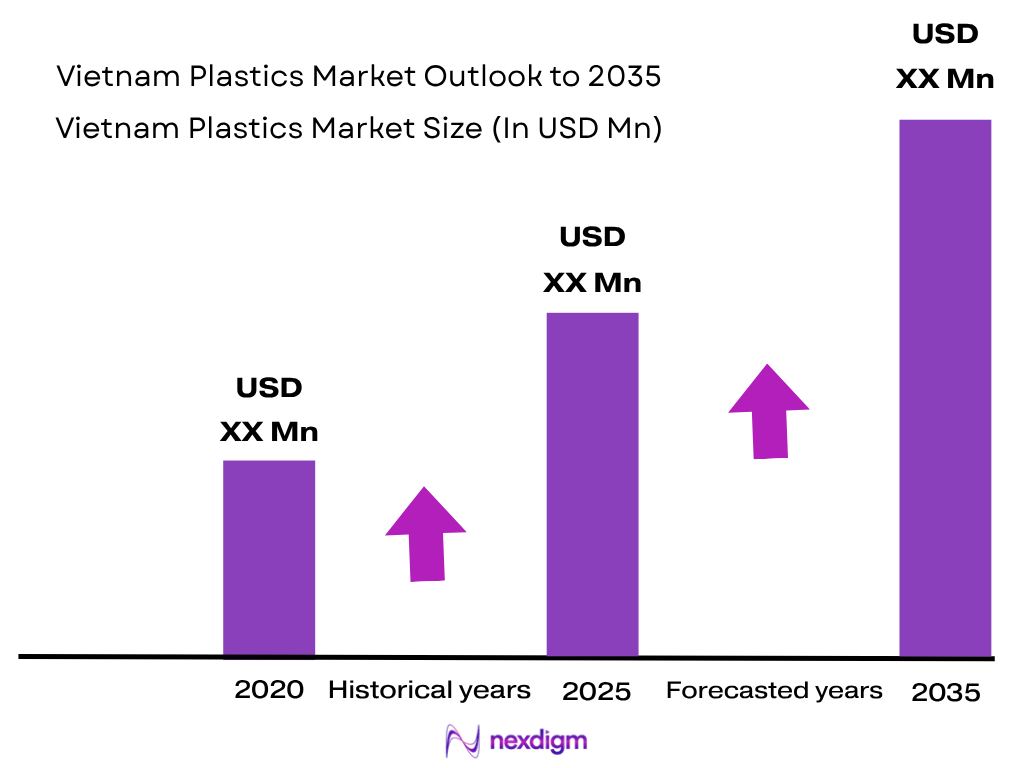
The Vietnam plastics market is valued at ~USD XX billion in 2024, with the placeholder reflecting the commercial market-size figure to be inserted in the final report. The industry is supported by strong manufacturing activity, packaging consumption, construction requirements and export-oriented production. The Ministry of Industry and Trade reported that production of rubber and plastic products increased 27.4 in the first 5 months of 2024, while Vietnam’s plastics industry includes more than 4,000 enterprises and over 250,000 workers.
Southern Vietnam remains the principal plastics manufacturing base because of its concentration of industrial parks, converters, packaging producers and export-oriented manufacturers. Ho Chi Minh City and surrounding Binh Duong, Dong Nai and Long An provide proximity to consumer markets, ports and manufacturing customers. The Vietnam Plastics Association reports more than 4,000 enterprises, with more than 90% classified as small and medium-sized businesses and production strongly concentrated in the southern region. Plastic-product exports reached approximately USD 6.7 billion in 2024, reinforcing the importance of export-linked manufacturing clusters.
Market Segmentation
By Product Type (In Value %)
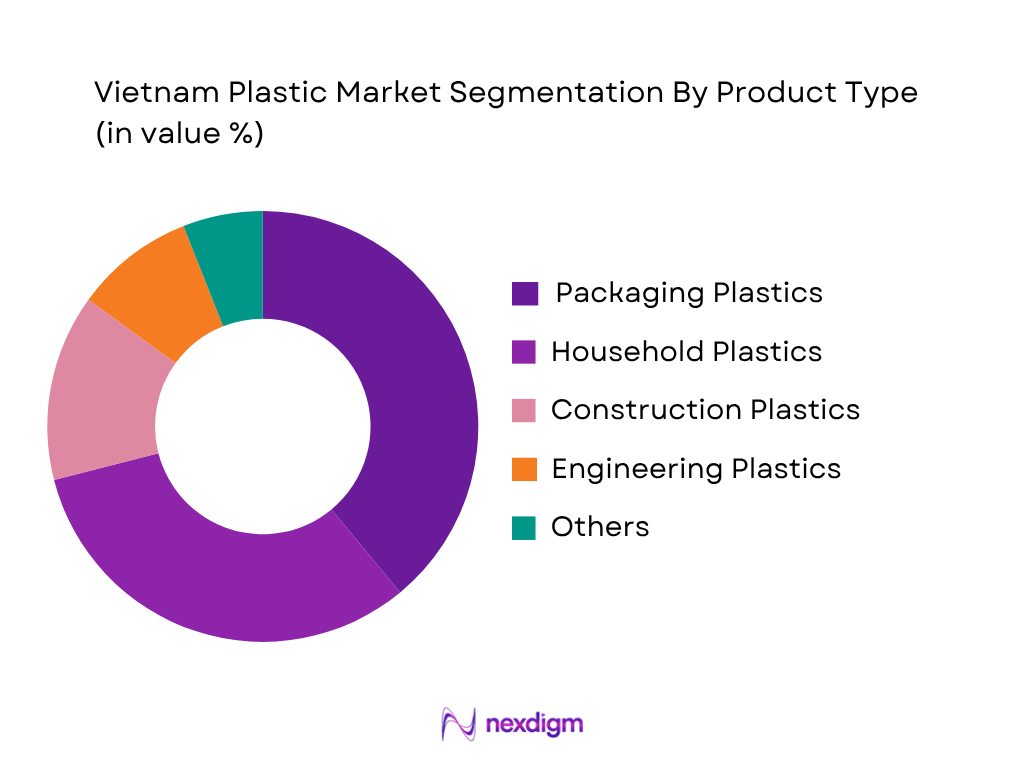
The Vietnam plastics market is segmented into packaging plastics, household plastics, construction plastics, engineering plastics and other plastic products. Packaging plastics dominate with 39%, followed by household plastics at 32%, construction plastics at 14% and engineering plastics at 9%. The Ministry of Industry and Trade identifies packaging as the largest downstream category, encompassing PE, PP and PET-based films, bags and bottles serving food, beverage, retail and supermarket customers. Packaging also benefits from Vietnam’s export-oriented manufacturing base because plastic films, bags and rigid packaging are required across consumer-goods supply chains. The category is supported by food and beverage processing, retail distribution and export manufacturing, while the country’s growing industrial base creates additional requirements for protective and transport packaging. The same industry structure identifies household plastics as the second-largest category, while construction and engineering plastics are increasingly connected with infrastructure, electronics, electrical equipment, automotive and motorcycle manufacturing.
By Polymer Type (In Value %)
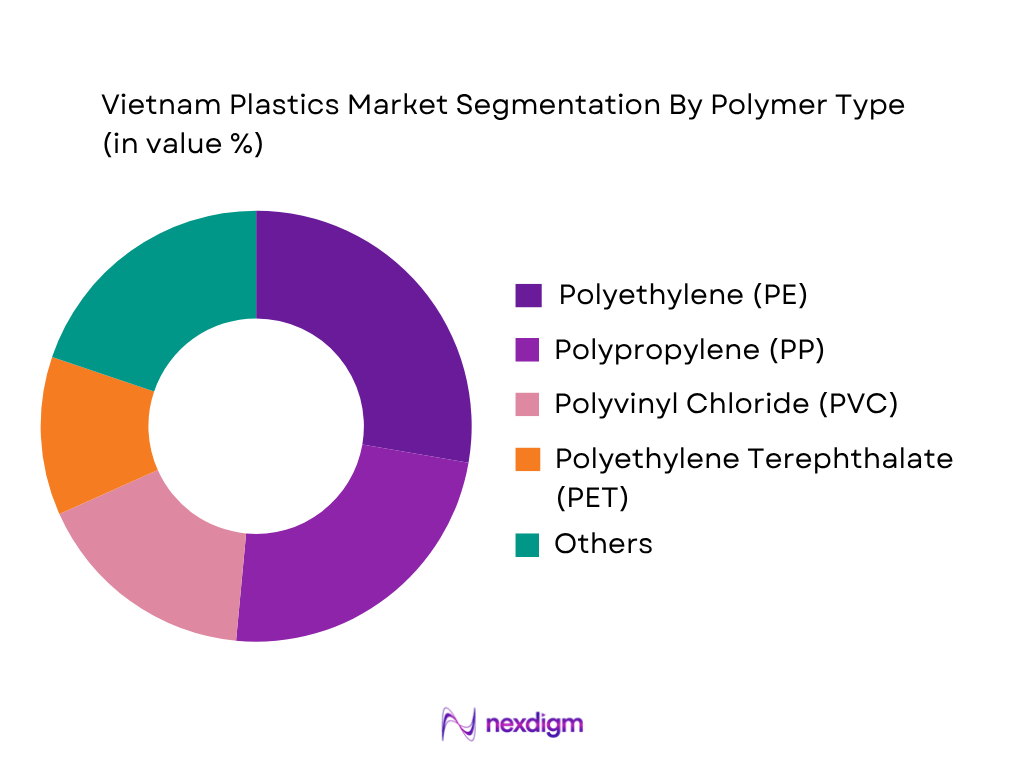
The Vietnam plastics market is segmented into PE, PP, PVC, PET, PS, ABS, PU and engineering and specialty polymers. PE is positioned as the leading polymer at 28%, reflecting its extensive application across flexible packaging, films, bags, containers, pipes and industrial products. PP follows because of its use in food packaging, household goods, woven packaging, automotive components and industrial applications. PVC maintains substantial demand through construction pipes, profiles and building materials, while PET is important for bottles and packaging. Vietnam’s plastics industry remains significantly dependent on imported polymer inputs: the Ministry of Industry and Trade notes that domestic production is self-sufficient in only around 15-35% of raw-material requirements depending on product category. The industry therefore combines domestic resin production with substantial imports of PE, PP, PVC and other materials to support downstream conversion.
Competitive Landscape
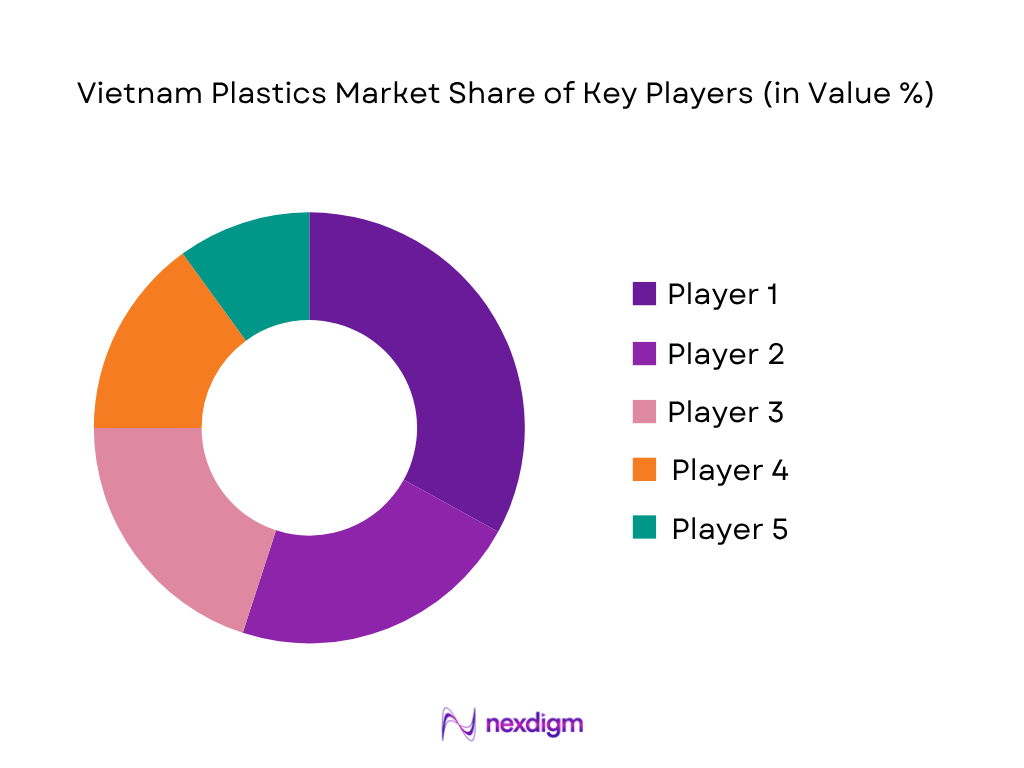
The Vietnam plastics market consists of a large base of domestic converters alongside regional and multinational participants supplying polymers, packaging, construction products, household plastics and engineering applications. Competition is particularly fragmented among downstream manufacturers, while larger companies have stronger positions in construction plastics, packaging and specialized products. Export-oriented companies increasingly compete on product quality, production scale, compliance and international customer relationships. The industry serves more than 170 export markets, while the United States remains an important destination for Vietnamese plastic products.
| Company | Established | Headquarters | Primary Product Focus | Packaging Capability | Construction Plastics | Engineering Plastics | Export Orientation |
| An Phat Bioplastics | 2002 | Hanoi, Vietnam | ~ | ~ | ~ | ~ | ~ |
| Binh Minh Plastics | 1977 | Ho Chi Minh City, Vietnam | ~ | ~ | ~ | ~ | ~ |
| Tien Phong Plastics | 1960 | Hai Phong, Vietnam | ~ | ~ | ~ | ~ | ~ |
| Duy Tan Plastics | 1987 | Ho Chi Minh City, Vietnam | ~ | ~ | ~ | ~ | ~ |
| Rang Dong Plastic | 1960 | Ho Chi Minh City, Vietnam | ~ | ~ | ~ | ~ | ~ |
Vietnam Plastics Market Analysis
Growth Drivers
Packaging Consumption Expansion
Vietnam’s packaging plastics demand is supported by the strong expansion of manufacturing, trade, food processing and consumer distribution. The General Statistics Office recorded USD 405.53 billion in merchandise exports and USD 380.76 billion in merchandise imports in 2024, creating substantial requirements for protective films, bags, bottles, containers and industrial packaging across export supply chains. Electronics and computer-component exports reached USD 72.6 billion, while machinery, equipment and spare parts exports reached USD 52.3 billion, strengthening demand for packaging used in high-volume industrial logistics. Food processing also provides a recurring domestic packaging application, with processed-food manufacturing contributing to an overall manufacturing sector that expanded 9.83 in value added. The Vietnam Plastics Association reported that the plastics industry comprised more than 4,000 enterprises and approximately 250,000 workers, demonstrating the breadth of the domestic conversion base. These indicators support continued requirements for PE films, PP woven products, PET bottles and rigid packaging. The combination of export manufacturing, domestic consumption and increasingly organized retail distribution is therefore strengthening packaging plastics demand and encouraging converters to expand capacity, improve product specifications and develop recyclable packaging formats.
Construction and Infrastructure Development
Construction activity represents an important structural demand driver for Vietnam’s plastics industry through PVC pipes, HDPE pipes, cable conduits, insulation, profiles, waterproofing materials and other polymer-based building products. The General Statistics Office reported that Vietnam’s construction sector increased 7.87 in value added in 2024, while the broader industry and construction sector expanded 8.24. The same official data recorded GDP at VND 11,511.9 trillion, equivalent to USD 476.3 billion, indicating a substantially larger economic base supporting infrastructure and property-related investment. Accumulated assets increased 7.20, demonstrating continued investment activity across the economy. Plastic products also benefited directly from industrial recovery, with the production index for rubber and plastic products increasing 24.9 in 2024. This performance is particularly relevant to construction plastics because infrastructure projects require durable piping, drainage systems, electrical protection and water-management components. Urban development, industrial parks and manufacturing facilities further increase demand for polymer-based construction materials because they offer corrosion resistance, lower installation weight and long service life. Continued construction activity therefore provides a diversified demand base for PVC, HDPE, PP and engineering plastics beyond consumer packaging applications.
Market Challenges
Virgin Polymer Feedstock Volatility
Vietnam’s plastics industry remains exposed to fluctuations in imported polymer feedstock because domestic production does not fully satisfy downstream requirements for major resins such as PE, PP, PVC and PET. This vulnerability becomes more significant when international energy and petrochemical conditions affect resin availability, freight and import costs. The General Statistics Office reported that Vietnam’s merchandise imports reached USD 380.76 billion in 2024, while the manufacturing and processing sector increased 9.83, demonstrating the scale of industrial activity dependent on imported inputs. The production price index for industrial manufacturing materials also increased 3.79 during 2024, indicating continuing input-cost pressure across manufacturing supply chains. The plastics sector consequently faces challenges in maintaining stable conversion margins when resin procurement conditions change rapidly. More than 4,000 plastics enterprises, many of which are small and medium-sized companies, must manage these supply risks while competing in both domestic and export markets. The issue is particularly relevant for packaging converters operating under customer contracts where product specifications and delivery commitments restrict their ability to immediately transfer input-cost changes. Greater domestic petrochemical integration, diversified sourcing and recycled-resin utilization can reduce exposure, but these solutions require additional processing capability, quality control and supply-chain coordination.
Plastic Waste Collection Constraints
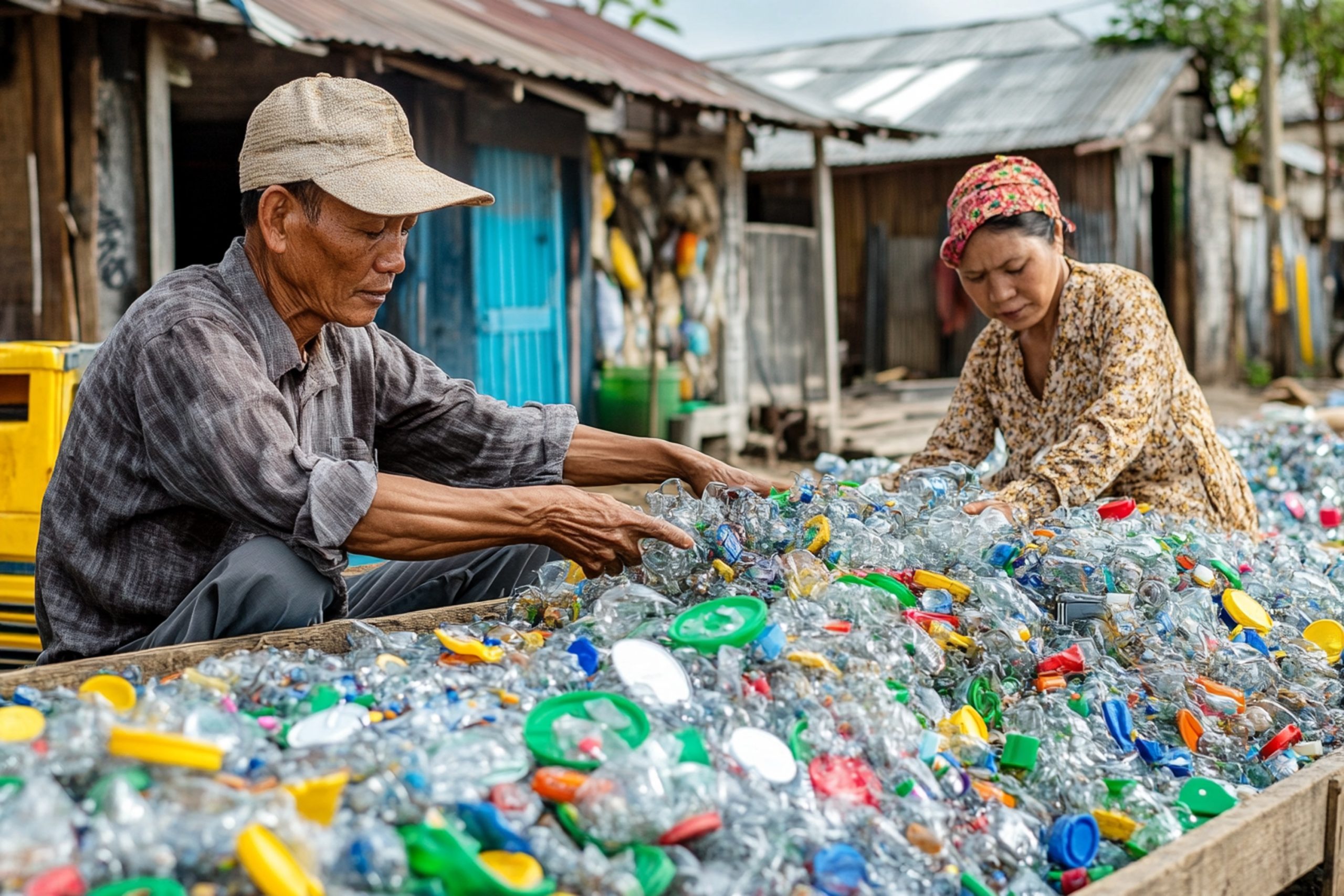
Waste collection, sorting and recycling limitations remain a structural challenge because rapid industrial and consumer activity is generating larger flows of plastic materials while collection and processing systems remain uneven. Vietnam’s General Statistics Office reported that the water supply, waste management and remediation sector increased 9.43 in value added in 2024, reflecting rising activity in environmental-management services, while the industrial production index for water supply, waste management and wastewater treatment increased 10.7. However, the plastics industry’s scale creates a substantially broader material-management requirement: the Vietnam Plastics Association identifies more than 4,000 enterprises and approximately 250,000 workers across the industry. The country also exported plastic products to more than 170 markets, meaning manufacturers increasingly need to comply with international requirements concerning recycled content, recyclability and waste management. Fragmented collection channels can make post-consumer plastics difficult to aggregate by polymer type, contamination level and color, reducing the availability of consistent recycling feedstock. Informal collection networks remain important to material recovery but can create variability in sorting and traceability. These conditions increase the operational complexity of producing recycled resin with stable technical specifications. Strengthening municipal collection, sorting infrastructure, material traceability and professional recycling capacity is therefore important for reducing waste leakage and improving the availability of secondary polymers.
Market Opportunities
Advanced Mechanical Recycling
Vietnam’s expanding manufacturing base and growing environmental requirements create an opportunity to develop higher-capacity mechanical recycling for post-consumer and post-industrial plastics. The General Statistics Office reported that Vietnam’s manufacturing and processing sector increased 9.83 in 2024, while the production index for rubber and plastic products increased 24.9. These figures indicate a large and expanding conversion ecosystem that can generate both recyclable production scrap and demand for recycled feedstock. Vietnam’s merchandise exports reached USD 405.53 billion, while exports of electronics, computers and components reached USD 72.6 billion, increasing the importance of packaging and protective polymer materials within industrial supply chains. Advanced sorting, washing, extrusion and pelletizing can help convert these material streams into higher-quality recycled PE, PP and PET suitable for packaging, household products, industrial components and non-food applications. The opportunity is strengthened by the industry’s scale of more than 4,000 enterprises, which provides a broad potential customer and supplier base for recycling systems. Future investment can focus on automated sorting, optical identification, contamination control and consistent pellet specifications rather than basic material recovery alone. This would allow Vietnamese converters to incorporate more recycled resin while reducing dependence on virgin polymer imports and improving compliance with increasingly stringent customer and environmental requirements.
Chemical Recycling and Circular Polymers
Chemical recycling and circular-polymer systems present an opportunity to address plastic streams that are difficult to process through conventional mechanical recycling, particularly multilayer packaging, contaminated films and mixed polymer waste. Vietnam’s export-oriented economy provides a substantial industrial customer base: merchandise exports reached USD 405.53 billion in 2024, including USD 72.6 billion from electronics, computers and components and USD 53.9 billion from phones and components. These industries require technically consistent packaging and polymer materials while global customers increasingly emphasize circularity and traceable material sourcing. Domestic industrial production also strengthened, with the overall industrial production index increasing 8.4 and manufacturing and processing increasing 9.6. Such expansion creates an opportunity to establish closed-loop polymer supply arrangements connecting waste generators, recyclers, resin producers and plastic converters. Chemical recycling can potentially recover hydrocarbon feedstocks from difficult plastic waste and return them to polymer production, while mass-balance systems can connect circular feedstock with existing petrochemical infrastructure. The opportunity is particularly relevant to Vietnam because the plastics industry already includes more than 4,000 enterprises, providing multiple potential participants across collection, processing, resin production and conversion. Development of traceability, quality standards and industrial-scale processing can therefore support higher-value circular polymer applications.
Future Outlook
Over the coming decade, the Vietnam plastics market is expected to continue evolving from conventional low-value conversion toward higher-value packaging, construction, technical and engineering applications. Export manufacturing, electronics production, food processing and infrastructure development should sustain polymer demand. At the same time, environmental regulation and extended producer responsibility requirements are expected to increase the importance of recycled materials and circular production. The opportunity set should therefore increasingly shift toward recycled resin, sustainable packaging, engineering polymers, lightweight components and advanced processing technologies.
Major Players
- An Phat Bioplastics JSC
- Binh Minh Plastics JSC
- Tien Phong Plastics JSC
- Duy Tan Plastics
- Rang Dong Plastic JSC
- Tan Tien Plastic Packaging JSC
- Tan Phu Plastic JSC
- DNP Holding JSC
- Dong A Plastic Group
- Long Thanh Plastic JSC
- Ngoc Nghia Industry-Service-Trading JSC
- Stavian Chemical
- Stavian Packaging
- Formosa Industries Corporation
- Binh Thuan Plastic Group
Key Target Audience
- Plastic Resin Producers and Petrochemical Companies
- Plastic Packaging Manufacturers and Converters
- Automotive and Electronics Component Manufacturers
- Construction Plastic and Infrastructure Product Manufacturers
- Investments and Venture Capitalist Firms
- Government and Regulatory Bodies (Ministry of Industry and Trade, Ministry of Agriculture and Environment, Vietnam Environment Administration)
- Recycling Companies and Circular Polymer Producers
- Industrial Machinery and Plastic Processing Equipment Manufacturers
Research Methodology
Step 1: Identification of Key Variables
The initial phase involves constructing an ecosystem map covering polymer producers, importers, plastic converters, packaging manufacturers, construction-plastic producers, recycling companies and downstream users. Secondary research is used to identify polymer consumption, production, imports, exports, processing capacity and application-specific demand variables. The objective is to establish the variables required for a Vietnam-specific market model.
Step 2: Market Analysis and Construction
Historical production, consumption, trade and industrial-production indicators are compiled to construct the market baseline. Polymer-level requirements are assessed across PE, PP, PVC, PET, PS, ABS and engineering polymers, while downstream demand is mapped across packaging, household, construction and engineering plastics. Import-export reconciliation is used to validate domestic supply and consumption relationships.
Step 3: Hypothesis Validation and Expert Consultation
Market hypotheses are developed around polymer demand, application growth, manufacturing capacity, import dependency, recycling adoption and export competitiveness. These hypotheses are validated through structured consultations with plastics manufacturers, resin distributors, packaging converters, recycling operators and downstream industrial users. Operational and commercial insights are used to refine the market model.
Step 4: Research Synthesis and Final Output
The final stage integrates top-down macroeconomic indicators with bottom-up company, product, polymer and application analysis. Production, trade and end-use information is triangulated to establish the final market estimates and segmentation structure. The resulting analysis is designed to identify demand pockets, competitive positioning, supply-chain risks and strategic opportunities across the Vietnam plastics ecosystem.

- Executive Summary
- Research Methodology (Market Definition and Scope, Vietnam Plastics Industry Classification, Polymer Resin Mapping, Downstream Application Mapping, Market Sizing Framework, Top-Down Assessment, Bottom-Up Assessment, Demand-Side Analysis, Supply-Side Analysis, Domestic Production Assessment, Import-Export Reconciliation, Primary Industry Interviews, Data Triangulation, Forecasting Framework, Assumptions and Limitations)

- Definition and Scope
- Vietnam Plastics Industry Evolution and Industrial Development Timeline
- Vietnam Plastics Industry Structure and Ecosystem Mapping
- Vietnam Plastics Value Chain Analysis

- Growth Drivers (Packaging Consumption Expansion, Construction and Infrastructure Development, Automotive Lightweighting, Healthcare and Medical Product Demand, Electrical and Electronics Manufacturing, Food and Beverage Packaging Expansion, Domestic Polymer Consumption Growth, Industrial Manufacturing Expansion)
- Market Challenges (Virgin Polymer Feedstock Volatility, Dependence on Petrochemical Feedstocks, Plastic Waste Collection Constraints, Recycling Infrastructure Gaps, Recycled Resin Quality Variability, Energy-Intensive Processing, Informal Recycling Fragmentation, Compliance and Extended Producer Responsibility Requirements)
- Market Opportunities (Advanced Mechanical Recycling, Chemical Recycling and Circular Polymers, Post-Consumer Recycled Resin Development, Bio-Based Polymer Applications, Sustainable Flexible Packaging, Lightweight Automotive Components, High-Performance Engineering Plastics, Domestic Recycling Infrastructure, Circular Polymer Supply Agreements)
- Market Trends (Shift Toward High-Value-Added Plastics, Sustainable Packaging Adoption, Recycled Resin Integration, Bioplastic Development, Manufacturing Localization, FDI-Led Plastics Production, Automotive and Electronics Grade Plastics, Lightweight Material Substitution, Automation of Plastic Processing)
- Government Regulations and Standards (Law on Environmental Protection, Extended Producer Responsibility Requirements, Plastic Packaging Recovery Obligations, Single-Use Plastic Restrictions, Environmental Protection Requirements, Product and Packaging Standards, Waste Classification Requirements, Import Regulations for Plastic Scrap, Recycling Compliance)
- SWOT Analysis
- Porter’s Five Forces Analysis
- PESTLE Analysis

- By Market Value (2020-2025)
- By Plastic Production Volume (2020-2025)
- By Domestic Plastic Consumption Volume (2020-2025)
- By Polymer Resin Consumption Volume (2020-2025)
- By Plastic Product Production Volume (2020-2025)
- By Plastic Product Export Volume (2020-2025)
- By Plastic Product Import Volume (2020-2025)

- By Polymer Type (In Value %)
Polyethylene (PE)
Polypropylene (PP)
Polyvinyl Chloride (PVC)
Polyethylene Terephthalate (PET)
Polystyrene (PS)
Acrylonitrile Butadiene Styrene (ABS)
Polyurethane (PU)
Engineering Plastics
Specialty Polymers
Bioplastics and Bio-Based Polymers - By Product Type (In Value %)
Flexible Plastic Packaging
Rigid Plastic Packaging
Plastic Pipes and Fittings
Plastic Films and Sheets
Plastic Household Products
Plastic Consumer Products
Plastic Automotive Components
Plastic Electrical and Electronics Components
Plastic Industrial Components
Plastic Agricultural Products - By Application (In Value %)
Packaging
Building and Construction
Automotive and Transportation
Electrical and Electronics
Consumer and Household Goods
Healthcare and Medical
Agriculture
Industrial Manufacturing
Furniture and Appliances
Textiles and Other Applications - By Processing Technology (In Value %)
Injection Molding
Extrusion
Blow Molding
Thermoforming
Rotational Molding
Compression Molding
Film Blowing
Recycling and Reprocessing - By End-User Industry (In Value %)
Food and Beverage
Consumer Goods
Construction and Real Estate
Automotive and Motorcycles
Electronics and Electrical Equipment
Healthcare and Pharmaceuticals
Agriculture and Aquaculture
Industrial Machinery and Equipment
Furniture and Home Appliances

- Market Share of Major Players (By Revenue, Polymer Type, Product Category, Application, Processing Technology, Geographic Presence, Domestic Sales, Export Revenue)
- Cross Comparison Parameters (Polymer Portfolio Breadth, Plastic Processing Capacity, Production Facility Footprint, Packaging Product Portfolio, Construction Plastics Capability, Technical and Engineering Plastics Capability, Recycling and Circular Polymer Capability, Domestic and Export Distribution Network)
- Detailed Profiles of Major Companies
Stavian Chemical Joint Stock Company
An Phat Bioplastics JSC
DNP Holding JSC
Binh Minh Plastics JSC
Tien Phong Plastics JSC
Duy Tan Plastics
Rang Dong Plastic JSC
Tan Tien Plastic Packaging JSC
Tan Phu Plastic JSC
Dong A Plastic Group
Long Thanh Plastic JSC
Binh Thuan Plastic Group
Ngoc Nghia Industry-Service-Trading JSC
Stavian Packaging
Formosa Industries Corporation

- Industrial Plastic Consumption Assessment
- Packaging Buyer Analysis
- Construction Plastic Demand Assessment
- Automotive Plastic Demand Assessment
- Electronics Plastic Demand Assessment
- Healthcare Plastic Demand Assessment
- Agricultural Plastic Demand Assessment
- Industrial Buyer Decision Analysis

- By Market Value (2026-2035)
- By Plastic Production Volume (2026-2035)
- By Domestic Plastic Consumption Volume (2026-2035)
- By Polymer Resin Consumption Volume (2026-2035)
- By Plastic Product Production Volume (2026-2035)
- By Plastic Product Export Volume (2026-2035)
- By Plastic Product Import Volume (2026-2035)


 Request a Sample
 Ask for Customization
 Get a Quote
 Enquire Now