

 Download PDF
Market Overview
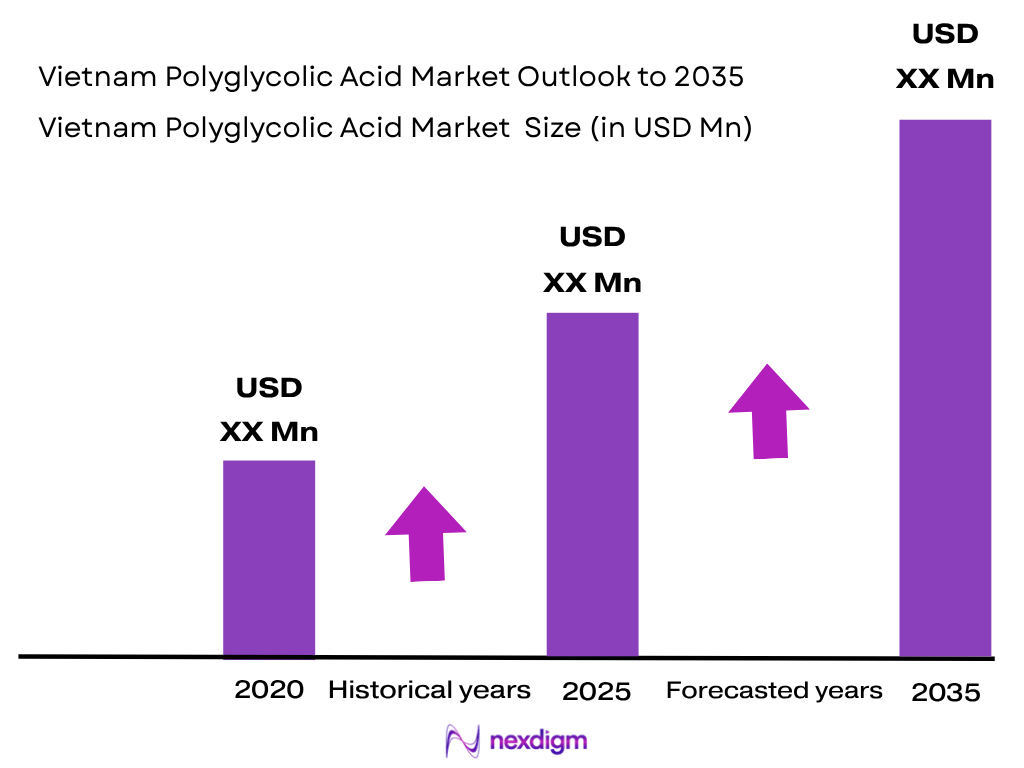
The Vietnam Polyglycolic Acid Market is valued at USD ~ million, based on the defined PGA resin, fiber, film and application scope, with healthcare representing a key demand pathway because PGA is widely used in absorbable surgical sutures and other bioabsorbable applications. Vietnam’s healthcare expenditure exceeded USD 22 billion, while its medical-device market was valued at USD 1.9 billion, creating a substantial downstream ecosystem for specialty medical polymers. The country’s medical-equipment ecosystem also remains import-intensive, supporting opportunities for localized PGA processing and conversion.
Ho Chi Minh City and Hanoi represent the principal commercial and healthcare hubs for Vietnam’s Polyglycolic Acid Market because they concentrate hospitals, medical-device distributors, pharmaceutical companies, manufacturing organizations and regulatory stakeholders. Ho Chi Minh City additionally benefits from its manufacturing and trade ecosystem, while Hanoi provides proximity to central government institutions and major public healthcare facilities. Vietnam had a population of approximately 100.99 million and GDP of USD 476.39 billion, supporting a broad healthcare and industrial base for specialty polymer applications.
Market Segmentation
By Form
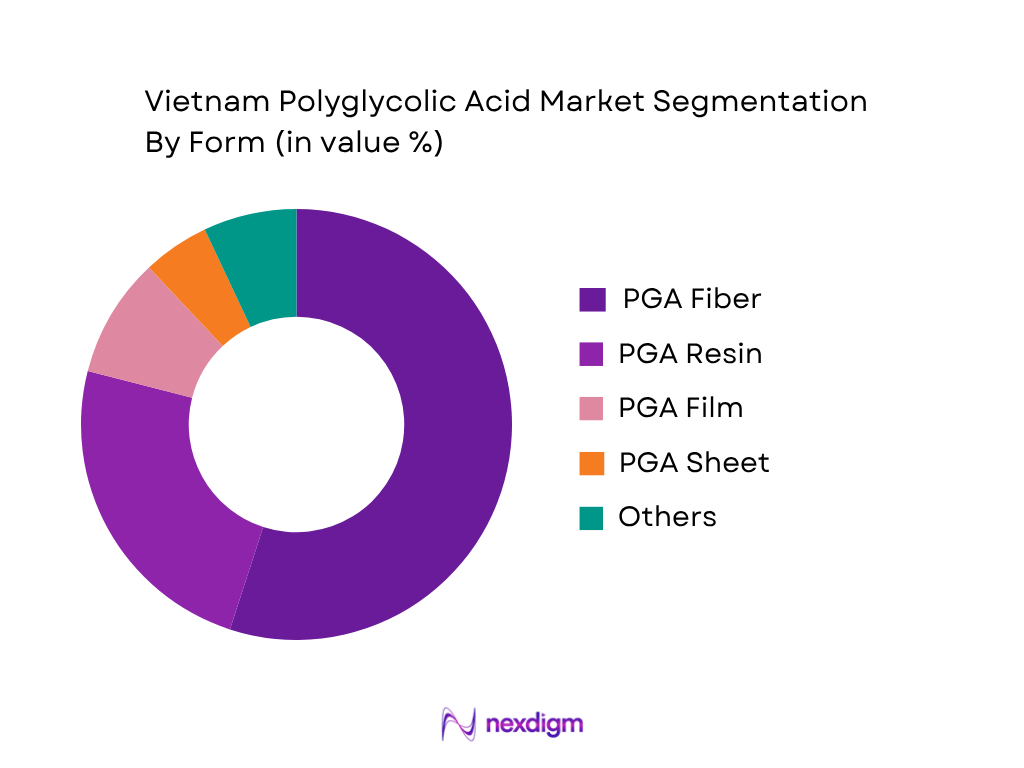
The Vietnam Polyglycolic Acid Market is segmented by form into PGA resin, PGA fiber, PGA film, PGA sheet, PGA rod, PGA composite and PGA-based medical components. PGA fiber is expected to represent the dominant sub-segment because absorbable surgical sutures constitute one of the most established commercial applications of PGA-based materials. PGA offers a combination of biodegradability, tensile performance and controlled hydrolytic degradation that supports its use in surgical closure products. Vietnam’s medical-device ecosystem provides an important downstream route for PGA fiber demand, particularly through surgical consumables and medical-device manufacturing. The Ministry of Health’s medical-device classification database demonstrates active registration and classification activity for surgical sutures, including Class B products, highlighting an established regulatory and commercial pathway for absorbable and non-absorbable surgical consumables. Vietnam’s healthcare expenditure and expanding medical-device ecosystem further support the relevance of medical-grade PGA. Consequently, PGA fiber remains strategically important for manufacturers targeting surgical sutures, while resin and film applications provide additional diversification opportunities across specialty healthcare, packaging and industrial uses.
By End-Use Industry
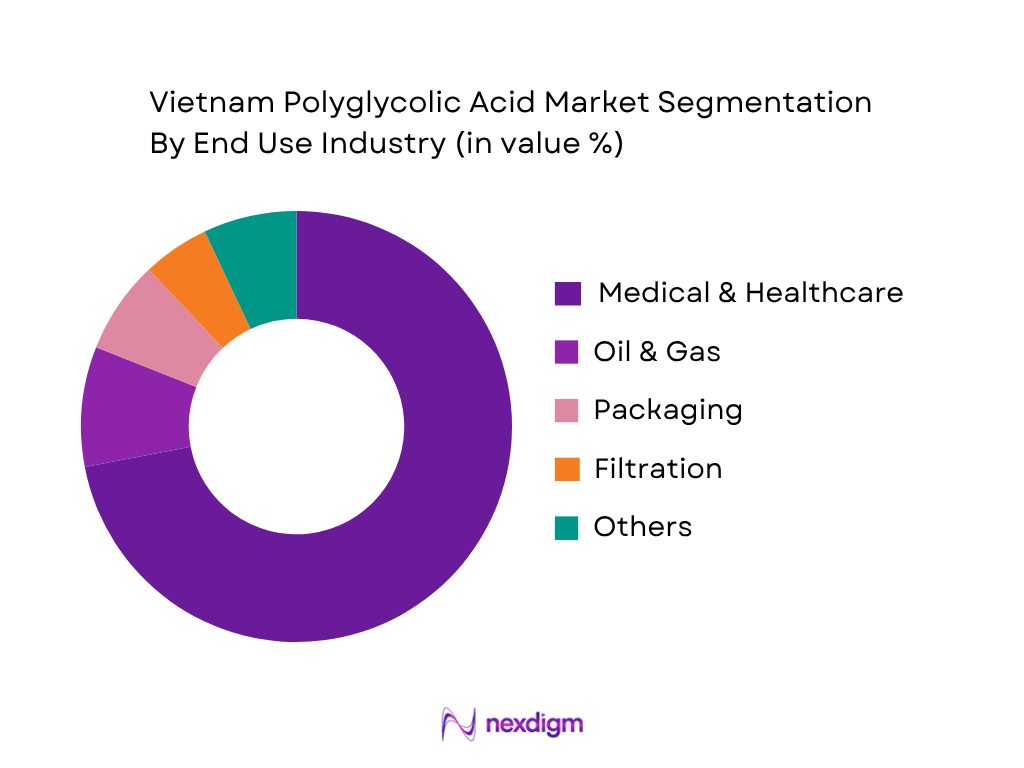
The Vietnam Polyglycolic Acid Market is segmented by end-use industry into medical and healthcare, oil & gas, packaging, filtration, agriculture, industrial manufacturing, civil engineering and other specialty applications. Medical and healthcare is expected to remain the dominant application segment because PGA possesses characteristics particularly suited to absorbable medical products, including surgical sutures, bioabsorbable implants, tissue-engineering structures and controlled-degradation systems. Vietnam’s healthcare ecosystem provides a sizeable downstream base, with healthcare expenditure exceeding USD 22 billion and the medical-device market reaching USD 1.9 billion. Medical equipment imports also account for around 90% of Vietnam’s equipment supply, indicating substantial dependence on international medical technologies and materials. This environment creates opportunities for PGA suppliers that can meet medical-grade specifications and support local device manufacturers. The Ministry of Health is responsible for medical-device regulation, while its public database records thousands of classified medical devices and active surgical-suture registrations. These factors make healthcare the most commercially established application route, although oilfield degradable components, high-barrier packaging, filtration and specialty industrial applications can provide additional avenues for PGA adoption as local processing capabilities mature.
Competitive Landscape
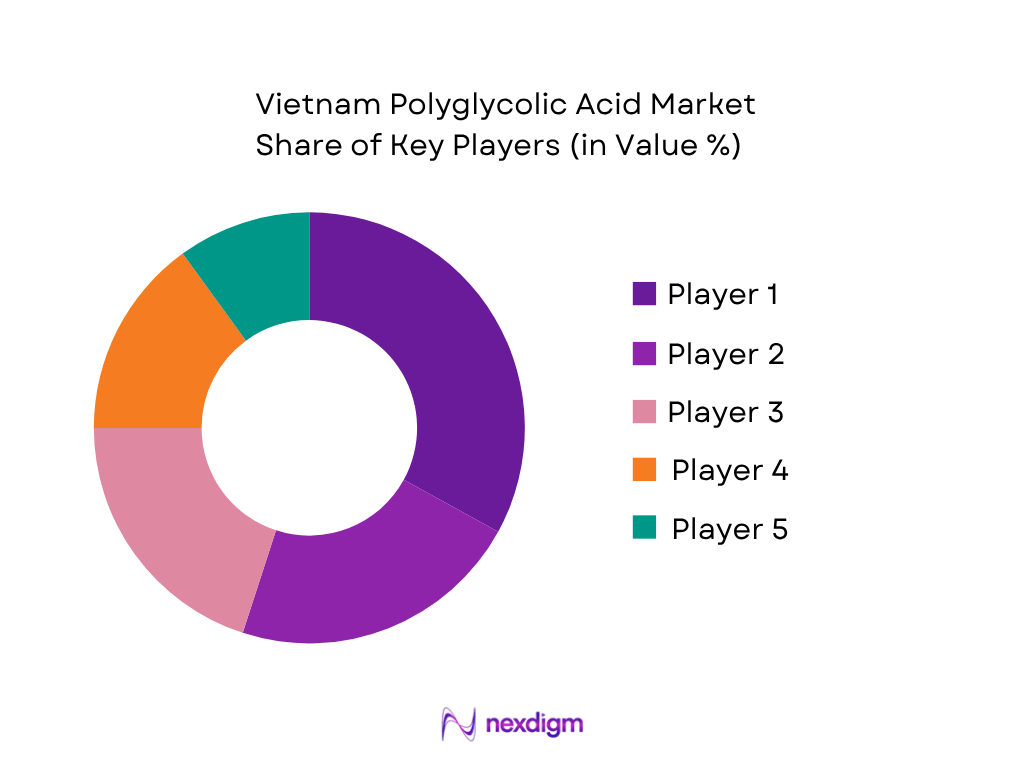
The Vietnam Polyglycolic Acid Market remains characterized by international specialty-polymer manufacturers, medical-device companies, surgical-suture producers and regional distributors rather than a large domestic base of integrated PGA polymer producers. Competition is influenced by medical-grade material qualification, polymer purity, molecular-weight consistency, degradation characteristics, regulatory documentation and the ability to supply downstream medical-device manufacturers. Vietnam’s medical-equipment ecosystem is strongly import-oriented, while the Ministry of Health maintains active classification and registration mechanisms for medical devices. This creates competitive opportunities for companies that combine specialty polymer technology with local distribution, technical support and regulatory capabilities.
| Company | Establishment Year | Headquarters | PGA Product Focus | Vietnam Presence | Manufacturing Position | Key Product / Brand | Regulatory & Quality Position |
| CPT Sutures Co., Ltd. | 2005 | Ho Chi Minh City, Vietnam | ~ | ~ | ~ | ~ | ~ |
| MEDEP JSC | 1989 | Hanoi, Vietnam | ~ | ~ | ~ | ~ | ~ |
| Johnson & Johnson / Ethicon | 1886 | New Brunswick, New Jersey, USA | ~ | ~ | ~ | ~ | ~ |
| B. Braun | 1839 | Melsungen, Germany | ~ | ~ | ~ | ~ | ~ |
| Medtronic | 1949 | Galway, Ireland | ~ | ~ | ~ | ~ | ~ |
Vietnam Polyglycolic Acid Market Analysis
Growth Drivers
Expansion of Healthcare Infrastructure and Surgical Treatment Capacity
Vietnam’s expanding hospital and surgical-treatment infrastructure is strengthening the underlying demand environment for polyglycolic acid used in absorbable sutures, bioresorbable fixation products and other implantable medical devices. The Vietnam Ministry of Health reported that the country had 1,645 hospitals in 2024, including 384 non-public hospitals, while healthcare facilities handled more than 170 million outpatient visits and more than 17 million inpatient treatment episodes during the year. These utilization figures are particularly relevant to medical-grade PGA because inpatient surgery, wound closure, obstetric procedures, gastrointestinal interventions and other invasive treatments create recurring requirements for sterile absorbable materials. A subsequent Ministry of Health assessment placed the national hospital network at 1,665 hospitals, including 384 non-public facilities, and recorded 34 hospital beds per 10,000 people in 2024, confirming the scale of Vietnam’s institutional healthcare infrastructure. The addressable clinical base is reinforced by Vietnam’s population of exactly 100,987,686 people in 2024, according to the World Bank. From the macroeconomic perspective, the World Bank recorded Vietnam’s 2024 GDP at USD 476.39 billion and GDP per capita at USD 4,717.3, providing an expanding economic foundation for hospital investment, advanced procedures and higher utilization of specialty medical consumables. For PGA suppliers, these conditions are significant because medical-grade polymer demand is tied less to general plastics consumption and more directly to the number and sophistication of procedures performed by hospitals. As Vietnam’s healthcare system increasingly undertakes advanced interventions rather than exclusively basic care, domestic medical-device converters require polymers capable of predictable hydrolysis, controlled mechanical-strength retention and biocompatibility. PGA’s established applicability in absorbable surgical sutures places it directly within this expanding treatment ecosystem. The presence of 17 million-plus inpatient episodes annually creates a substantial procedural base through which suture and absorbable-device manufacturers can expand production volumes, qualify additional polymer grades and introduce locally processed PGA components rather than relying solely on finished imported products.
Expansion of Medical-Device Manufacturing and Advanced Device Activity
Vietnam’s widening medical-device manufacturing and regulatory ecosystem is creating an increasingly relevant industrial base for PGA processing into absorbable sutures, meshes, fixation devices and other bioresorbable products. In July 2024, more than 300 medical-device enterprises participated in an official dialogue organized with Vietnam’s Ministry of Health covering manufacturing, importation, product dossiers and circulation procedures. The participation of more than 300 companies demonstrates that Vietnam already possesses a meaningful community of manufacturers, distributors and technical organizations capable of supporting more sophisticated medical-device material supply chains. Ministry of Health registration records also demonstrate active domestic device manufacturing during 2024: for example, manufacturing-eligibility declarations were issued for producers of medical equipment and sterile surgical products, including a 12 September 2024 declaration covering conventional and sterile surgical drapes and a 13 June 2024 manufacturing declaration covering hospital-bed components. Such regulatory activity matters to PGA because absorbable products require similarly controlled manufacturing environments, material traceability, sterilization compatibility and documented quality systems. Vietnam’s wider manufacturing platform is also substantial. The Ministry of Planning and Investment reported USD 25.58 billion of foreign investment registered in processing and manufacturing during 2024, while Vietnam recorded 3,375 newly licensed foreign-invested projects across the economy during the year. The macroeconomic platform supporting further industrialization is equally significant: World Bank data place Vietnam’s 2024 GDP at USD 476.39 billion, GDP per capita at USD 4,717.3, and population at 100,987,686. These indicators support investment in higher-value manufacturing rather than basic assembly alone. PGA requires polymer drying, controlled melt processing, extrusion, fiber orientation, molding and validated sterilization procedures, meaning its adoption depends heavily on a mature technical-manufacturing ecosystem. Vietnam’s existing medical-device companies, expanding manufacturing investment and formal Ministry of Health device-registration infrastructure provide a platform from which specialist processors can progressively enter bioabsorbable applications. This makes expansion of medical-device manufacturing a direct structural driver for demand for qualified PGA resin, fibers, monofilaments and intermediate components used in locally produced absorbable medical devices.
Market Challenges
Dependence on Imported Specialty Polymer Materials and Limited Domestic PGA Processing
Vietnam’s PGA market faces a material supply-chain constraint because the country has a large polymer-processing sector but remains heavily reliant on imported polymer raw materials, making high-specification bioabsorbable resin availability dependent on international supply channels. Vietnam’s General Department of Customs recorded 5,398,481 metric tons of plastics imports valued at USD 7,528,805,691 during the first eight months of 2024. Over the same period, imports of finished plastic products reached USD 5,701,564,327. These figures do not represent PGA specifically, but they provide official evidence that Vietnam’s broader polymer-converting industry depends substantially on external resin and intermediate-product supply, which is particularly relevant for a specialized polymer such as medical-grade PGA that requires tightly controlled molecular weight, residual monomer levels, moisture content and purity. PGA production is considerably more technically demanding than conventional commodity-polymer conversion because glycolide purity, ring-opening polymerization, catalyst control, thermal history and hydrolytic stability materially affect finished-device performance. The challenge becomes more significant in a country with a large medical-device ecosystem: the Ministry of Health brought together more than 300 medical-device enterprises in July 2024 specifically to address difficulties concerning manufacturing, importation and regulatory dossiers. Vietnam’s macroeconomic scale illustrates why supply localization is increasingly important. World Bank data record USD 476.39 billion of GDP in 2024, GDP per capita of USD 4,717.3, and a population of exactly 100,987,686, while the Ministry of Planning and Investment reported USD 25.58 billion of registered foreign investment entering processing and manufacturing during 2024. This combination means Vietnam has substantial downstream industrial activity but must still strengthen upstream specialty-material capability. For PGA processors, dependence on imported resin creates additional challenges involving shipment conditions, moisture protection, inventory management, qualification of alternate material lots and continuity of validated medical-device production. Unlike general plastic processors, medical-device manufacturers cannot readily substitute an unqualified resin when supply is disrupted because changes in polymer grade or manufacturing source can require technical documentation and regulatory assessment. Consequently, limited domestic PGA polymerization and specialist conversion capability remains a significant constraint on development of a fully localized Vietnamese PGA value chain.
Medical Qualification and Regulatory Requirements for Bioabsorbable Devices
Regulatory qualification represents a significant challenge for Vietnam’s PGA market because many commercially important applications of the polymer—absorbable sutures, surgical implants, fixation devices and other bioresorbable products—fall within regulated medical-device categories requiring documented safety, performance and circulation procedures. Vietnam Ministry of Health records illustrate the depth of this framework. On 2 October 2024, the Ministry published new circulation registrations for imported Class C and Class D medical devices including artificial knee-joint and artificial hip-joint systems. On 30 August 2024, separate circulation registrations covered additional imported high-risk devices such as an intracranial aneurysm treatment coil and an artificial heart-valve ring. These examples are relevant to future PGA applications because advanced bioabsorbable implants must pass through comparable regulatory processes involving device classification, technical documentation, manufacturing controls and evidence appropriate to their intended clinical use. The administrative burden is sufficiently material that in July 2024 more than 300 medical-device enterprises attended a Ministry of Health dialogue focused on resolving difficulties associated with manufacturing, importation and regulatory dossiers. For PGA converters, regulatory qualification adds complexity beyond polymer processing itself: resin specifications, degradation characteristics, sterilization behavior, biocompatibility, mechanical properties and production consistency must remain controlled throughout the validated device lifecycle. The size of Vietnam’s treatment system makes these requirements commercially important rather than peripheral. Ministry of Health data show 1,645 hospitals, more than 170 million outpatient visits, and more than 17 million inpatient treatment episodes in 2024. World Bank macroeconomic data further show a 100,987,686-person population, USD 476.39 billion GDP, and USD 4,717.3 GDP per capita in 2024. These indicators support demand for sophisticated treatments but simultaneously increase regulatory expectations for products entering a large healthcare system. Manufacturers therefore cannot treat PGA as an ordinary specialty plastic. Every medical-grade formulation must deliver reproducible degradation and mechanical behavior and must be processed under controlled conditions compatible with regulatory files. This creates entry barriers for companies lacking specialist polymer engineering, clean manufacturing environments, quality-management systems and experience with medical-product qualification, potentially slowing localization even where end-use demand for absorbable technologies is growing.
Market Opportunities
Domestic Absorbable-Suture and Advanced Bioabsorbable Device Manufacturing
Vietnam has a significant opportunity to develop domestic PGA-based absorbable sutures and more advanced bioresorbable medical devices because its current healthcare system already generates the clinical volume required to support specialized device manufacturing. Vietnam’s Ministry of Health reported more than 17 million inpatient treatment episodes and more than 170 million outpatient visits during 2024, across a hospital network containing 1,645 hospitals, including 384 non-public hospitals. Another Ministry assessment subsequently reported 1,665 hospitals at the end of 2024, demonstrating the breadth of facilities potentially consuming surgical sutures and other implantable or procedure-related devices. Hospital-bed availability reached 34 beds per 10,000 people in 2024, while the national healthcare workforce included 14 physicians, 18 nurses and 3.3 university-trained pharmacists per 10,000 people. These current indicators establish a large clinical platform from which future adoption of absorbable sutures, resorbable meshes, temporary fixation components and similar PGA-based technologies can develop without relying on hypothetical future procedure statistics. PGA is particularly suitable for applications requiring temporary mechanical strength followed by hydrolytic degradation, allowing manufacturers to design products that do not require permanent polymer retention or subsequent removal. Vietnam also has a sizeable industrial base capable of progressively supporting this transition. The Ministry of Planning and Investment recorded USD 25.58 billion of registered foreign investment in processing and manufacturing in 2024, alongside 3,375 newly licensed foreign-invested projects across the economy. World Bank data put the country’s 2024 population at 100,987,686, GDP at USD 476.39 billion, and GDP per capita at USD 4,717.3. Taken together, these current statistics indicate sufficient clinical demand, industrial depth and economic scale to justify development of local PGA conversion capability. Future growth can therefore come from moving the Vietnamese medical-device value chain from distribution and assembly toward extrusion of PGA fibers, braiding or monofilament processing, absorbable-device molding, sterilization validation and finished-device production. Greater localization would also create opportunities for manufacturers to build technical expertise around polymer degradation control and medical-grade processing that can later be applied to more complex bioresorbable implants.
Development of Domestic PGA Processing for Medical and High-Performance Applications
Vietnam has an opportunity to establish specialist domestic PGA processing capabilities that can serve medical applications initially and subsequently support high-barrier packaging, degradable industrial components, filtration materials and other technically demanding uses. The strongest current justification comes from the scale of Vietnam’s existing polymer and manufacturing economy. The General Department of Vietnam Customs recorded 5,398,481 metric tons of plastics imports valued at USD 7,528,805,691 during the first eight months of 2024, together with USD 5,701,564,327 of imported plastic products. While these customs categories encompass multiple polymers rather than PGA alone, the figures demonstrate that Vietnam already operates a large downstream plastics-consuming economy and therefore possesses converters, tooling infrastructure, extrusion capability and industrial customers that can support gradual movement into higher-performance specialty polymers. The manufacturing investment environment reinforces this opportunity. Vietnam’s Ministry of Planning and Investment reported USD 25.58 billion of registered investment in processing and manufacturing during 2024. Across all sectors, foreign investors received approvals for 3,375 new projects carrying USD 19.7 billion of newly registered capital, while 1,539 existing projects recorded capital adjustments totaling USD 14 billion. These current industrial indicators create a foundation for investment in specialist drying systems, controlled-atmosphere handling, precision extrusion, polymer characterization and clean processing required for moisture-sensitive PGA. Healthcare provides an immediate high-value application base: Ministry of Health data record 1,645 hospitals, over 17 million inpatient episodes and more than 170 million outpatient visits in 2024, while more than 300 medical-device enterprises participated in the Ministry’s July 2024 industry dialogue. Macroeconomic conditions also support industrial upgrading, with the World Bank recording Vietnam’s 2024 GDP at USD 476.39 billion, population at 100,987,686, and GDP per capita at USD 4,717.3. These existing indicators support future PGA growth without requiring speculative projections. Building domestic competence in resin conditioning, fiber extrusion, injection molding, degradation testing and validated medical processing would allow Vietnamese companies to capture more value locally, reduce dependence on imported finished specialty products and create a technical platform for subsequent development of drug-delivery devices, tissue-engineering structures, specialty filtration media and degradable industrial components.
Future Outlook
Over the forecast period, the Vietnam Polyglycolic Acid Market is expected to benefit from the expansion of healthcare infrastructure, medical-device manufacturing and advanced surgical technologies. Growth should increasingly depend on downstream conversion rather than commodity polymer consumption, particularly through absorbable sutures, bioabsorbable devices and controlled-degradation medical applications. Opportunities are also emerging in specialty packaging, filtration and degradable oilfield components. The combination of a growing domestic healthcare ecosystem and substantial reliance on imported medical technologies creates scope for localized PGA processing, technical partnerships and domestic medical-device manufacturing.
Major Players
- Kureha Corporation
- Corza Medical
- B. Braun
- Ethicon / Johnson & Johnson MedTech
- Stryker
- Medtronic
- Smith+Nephew
- Zimmer Biomet
- CONMED
- Integra LifeSciences
- Teleflex
- Peters Surgical
- Healthium Medtech
- Dolphin Sutures
- Lotus Surgicals
Key Target Audience
- PGA Resin and Specialty Polymer Manufacturers
- Medical Device and Surgical Suture Manufacturers
- Pharmaceutical and Drug Delivery Companies
- Oil & Gas Operators and Oilfield Service Providers
- Packaging and Specialty Polymer Converters
- Investments and Venture Capitalist Firms (Healthcare, MedTech and Advanced Materials Investors)
- Government and Regulatory Bodies (Ministry of Health, Ministry of Industry and Trade, Ministry of Science and Technology)
- Hospital Procurement and Healthcare Supply Organizations
Research Methodology
Step 1: Identification of Key Variables
The initial phase involves mapping the Vietnam Polyglycolic Acid ecosystem across polymer suppliers, medical-device manufacturers, surgical-suture producers, hospitals, distributors, oilfield operators and specialty-material converters. Secondary research is used to establish PGA application boundaries, product classifications, downstream demand variables and regulatory requirements. The assessment also distinguishes PGA resin, fiber, film and medical-component applications.
Step 2: Market Analysis and Construction
Historical market information is compiled through a combination of supply-side production assessment and downstream demand analysis. The methodology evaluates PGA consumption by form, grade, end-use industry and application, while separately assessing imported material, domestic conversion and downstream medical-device utilization. Import and regulatory information is used to validate the structure of the market.
Step 3: Hypothesis Validation and Expert Consultation
Market hypotheses are validated through consultations with polymer manufacturers, medical-device companies, surgical-suture manufacturers, distributors and industry specialists. Interviews focus on material qualification, procurement practices, application requirements, regulatory barriers, technology adoption and competitive positioning. These insights are used to refine assumptions developed during secondary research.
Step 4: Research Synthesis and Final Output
The final stage integrates top-down and bottom-up findings to construct the Vietnam Polyglycolic Acid Market model. Application-level information is reconciled with supply-chain evidence, import activity, medical-device registrations and end-user requirements. Data triangulation is then applied to ensure consistency across market value, volume, segmentation and competitive assessments.

- Executive Summary
- Research Methodology (Market Definition and Scope, PGA Product Boundary, Material Classification, Application Mapping, Market Sizing Framework, Top-Down Assessment, Bottom-Up Assessment, Demand-Side Analysis, Supply-Side Analysis, Primary Industry Interviews, Import–Export Validation, Data Triangulation, Forecasting Framework, Scenario Analysis, Assumptions and Limitations)

- Definition and Scope
- Polyglycolic Acid Characteristics and Functional Performance
- Vietnam PGA Industry Evolution and Development
- Vietnam PGA Industry Ecosystem Mapping
- Domestic Production Versus Import Dependency
- PGA Manufacturing and Processing Infrastructure
- Vietnam PGA Technology Landscape
- PGA Grade and Specification Landscape

- Growth Drivers (Expansion of Medical Device Manufacturing, Increasing Demand for Absorbable Surgical Sutures, Growth of Healthcare Infrastructure, Development of Advanced Bioabsorbable Devices, Expansion of Specialty Polymer Applications)
- Market Challenges (Limited Domestic PGA Production, Dependence on Imported Specialty Materials, High Polymerization Complexity, Glycolide Feedstock Availability, Moisture Sensitivity During Processing, Medical Qualification Requirements, Limited Specialist Processing Capability, Regulatory Requirements)
- Market Opportunities (Advanced Bioabsorbable Medical Devices, Domestic PGA Processing Development, Suture Manufacturing Expansion, Tissue Engineering Applications, Drug Delivery Systems, High-Barrier Packaging, Specialty Filtration, Oilfield Degradable Components)
- Market Trends (Bioabsorbable Material Adoption, Medical Device Localization, PGA Copolymer Development, Controlled Degradation, Medical Device Miniaturization, High-Barrier Polymer Development, Specialty Material Substitution)
- Government and Regulatory Framework (Medical Device Registration, Product Classification, Import Licensing, Manufacturing Licensing, Quality Management Systems, Biocompatibility Testing, Sterilization Standards, Post-Market Surveillance)
- SWOT Analysis
- Porter’s Five Forces Analysis
- PESTLE Analysis

- By Market Value (2020-2025)
- By Volume Consumption (2020-2025)
- By Domestic Production Volume (2020-2025)
- By Import Volume (2020-2025)
- By Export Volume (2020-2025)
- By PGA Resin Consumption (2020-2025)
- By PGA Fiber Consumption (2020-2025)

- By Product Form (In Value %)
PGA Resin
PGA Fiber
PGA Film
PGA Sheet
PGA Rod
PGA Composite
PGA-Based Medical Components
Other PGA Forms - By End-Use Industry (In Value %)
Medical and Healthcare
Oil & Gas
Packaging
Filtration
Agriculture
Industrial Manufacturing
Civil Engineering
Other Specialty Applications - By Medical Application (In Value %)
Absorbable Surgical Sutures
Dental Sutures
Ophthalmic Sutures
Orthopaedic Applications
Bioabsorbable Implants
Tissue Reinforcement Materials
Drug Delivery Systems
Tissue Engineering Scaffolds
Other Medical Applications - By Processing Technology (In Value %)
Ring-Opening Polymerization
Melt Polymerization
Solid-State Polymerization
Extrusion
Fiber Spinning
Film Extrusion
Injection Molding
Compression Molding
Composite Processing - By Grade (In Value %)
Medical Grade
Suture Grade
Oilfield Grade
Packaging Grade
Industrial Grade
High-Performance Grade
Biodegradable Grade

- Market Share of Major Players (By Value, Volume, Product Form, Grade, Medical Application, Industrial Application)
- Cross Comparison Parameters (PGA Product Portfolio Breadth, Medical-Grade Manufacturing Capability, Suture Portfolio Breadth, PGA Processing Technology, Application Portfolio Coverage, Manufacturing and Conversion Capacity, Regulatory and Certification Capability, R&D and Product Innovation Capability)
- SWOT Analysis of Major Players
- Detailed Profiles of Major Companies
B. Braun Vietnam
Johnson & Johnson MedTech / Ethicon
Medtronic Vietnam
Smith+Nephew Vietnam
Sutures India / Unisur Lifecare
Healthium Medtech
Dolphin Sutures
Lotus Surgicals
Peters Surgical
Integra LifeSciences
CONMED
Corza Medical
Teleflex
Zimmer Biomet
Stryker

- Medical End-User Assessment
- Hospital Procurement Behaviour
- PGA Product Attribute Preferences
- Medical Device Manufacturer Requirements
- Industrial End-User Requirements
- End-User Switching Analysis

- By Market Value (2026-2035)
- By Volume Consumption (2026-2035)
- By Domestic Production Volume (2026-2035)
- By Import Volume (2026-2035)
- By Export Volume (2026-2035)
- By PGA Resin Consumption (2026-2035)
- By PGA Fiber Consumption (2026-2035)


 Request a Sample
 Ask for Customization
 Get a Quote
 Enquire Now